

P0365 on 2012-2013 Subaru Impreza 2.0L: Exhaust Cam Sensor Causes & Fixes
On a 2012-2013 Impreza, code P0365 is most often caused by incorrect physical clearance between the exhaust camshaft sensor and the camshaft, a known manufacturing issue. The fix, outlined in Subaru TSB #11-130-13R, requires measuring the air gap and installing a specific shim, not just replacing the sensor. A sensor replacement costs ~$40-$120 for the part, while the shim kit is ~$20-$40.
- P0365 on a 2012-2013 Impreza points to the exhaust camshaft sensor on the passenger side.
- Before replacing the sensor, check for Subaru's TSB regarding incorrect sensor clearance; you may only need to install a small shim.
- Ensure your engine oil is clean and at the correct level, as oil pressure issues can affect the system and trigger this code.
- Symptoms include a rough idle, stalling, and reduced power, but the car is generally drivable to a repair shop.
- If you replace the sensor, also replace the small O-ring to prevent future oil leaks.
What's Unique About the 2012-2013 Subaru IMPREZA
Unlike many vehicles where this code almost always means a bad sensor, the 2012-2013 Impreza with the FB20 engine has a well-documented manufacturing tolerance issue where the physical air gap between the sensor and the camshaft reluctor wheel is out of specification. Subaru issued Technical Service Bulletins (TSBs), most notably #11-130-13R, to address this specific problem. This means the root cause is often a mechanical clearance issue that requires a shim, rather than a purely electrical failure of the sensor itself, making the TSB procedure the critical first diagnostic step.
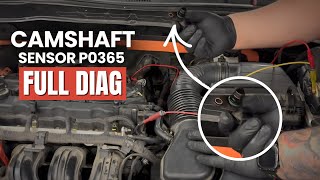
🎬 Watch: How to diagnose this cam sensor code the right way.Diagnostic Flowchart
Tap your situation to follow the diagnostic path that matches what you're seeing on this vehicle.
Symptoms You May Notice
- Check Engine Light illuminated
- Rough idle
- Engine stalling, especially at low RPMs or when coming to a stop
- Difficulty starting the engine or extended cranking (more often associated with intake cam sensor codes)
- Reduced engine power and sluggish acceleration
- Poor fuel economy
- Immediately replacing the camshaft position sensor without first checking the sensor clearance as per TSB #11-130-13R. This is the most common mistake and often results in the code returning because the root cause (the air gap) was not addressed.
Most Likely Causes
- Incorrect Camshaft Position Sensor Clearance 🔴 High Probability → Shop Engine Camshaft Position Sensor This is a known manufacturing tolerance issue documented by Subaru in Technical Service Bulletins (TSB #11-125-12 and the superseding #11-130-13R) for the 2012-2013 Impreza and 2013 XV Crosstrek. The air gap between the sensor and the camshaft reluctor was not always within spec from the factory.
How to confirm: Follow the procedure in TSB #11-125-12 or #11-130-13R. This involves removing the sensor and using a depth gauge or micrometer to measure the clearance between the sensor mounting surface and the reluctor wheel. The target gap is 1.25mm to 1.35mm.
Typical fix: Install the correct thickness shim from Subaru's shim kit (part number 10130AA060) between the sensor and the engine to achieve the proper clearance. A new O-ring (part number 13099AA050) should also be installed.
Est. part cost: $20-$40 for the shim kit and O-ring. - Faulty Exhaust Camshaft Position Sensor 🟡 Medium Probability → Shop Engine Camshaft Position Sensor
How to confirm: After confirming correct sensor clearance, you can test the sensor itself. A common DIY method is to swap it with the identical sensor from Bank 2 (driver's side) and see if the trouble code changes to P0390 (the equivalent code for Bank 2). If the code follows the sensor, the sensor is bad.
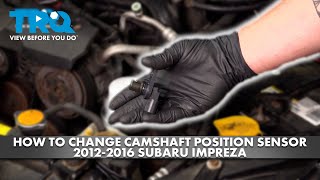
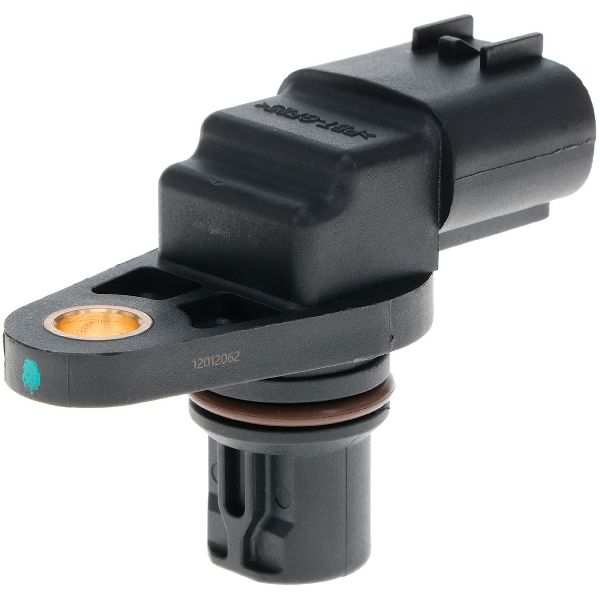
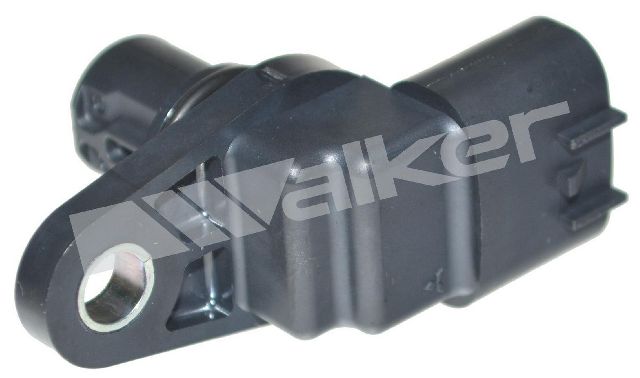
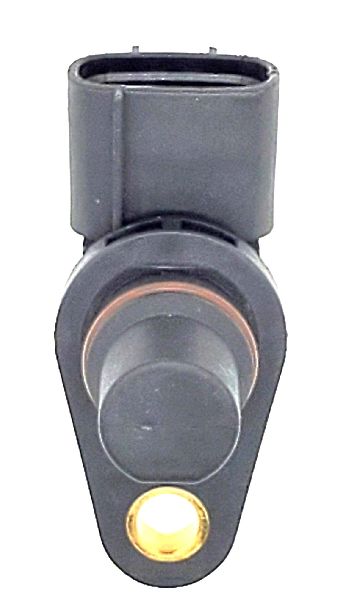
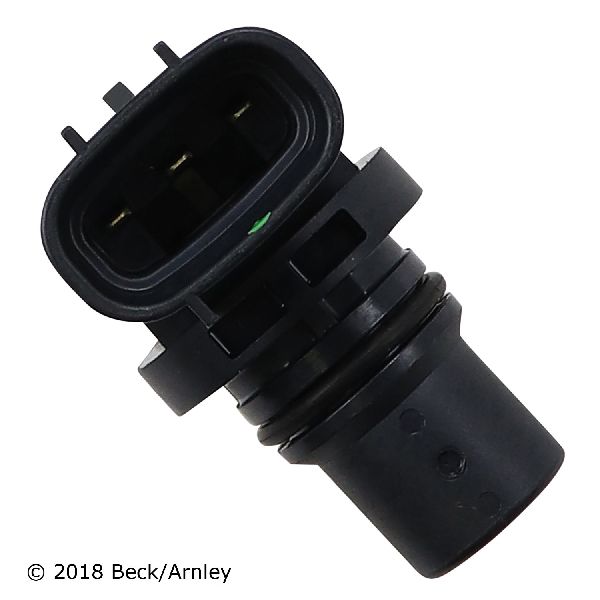
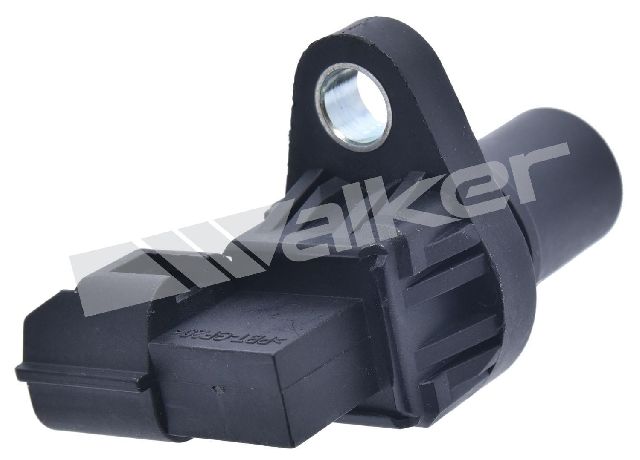
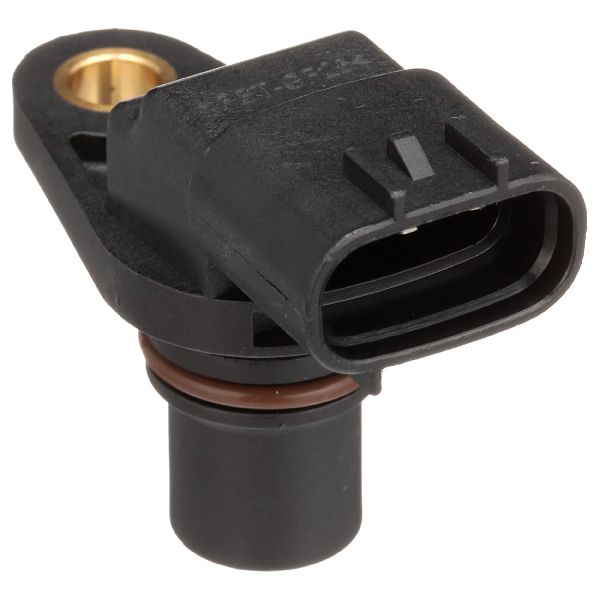
Typical fix: Replace the Bank 1 exhaust camshaft position sensor. 🎬 See this walkthrough on how to replace the sensor yourself. Using a genuine OEM sensor is highly recommended, as some owners report issues with aftermarket parts.
Est. part cost: $70-$120 for an OEM sensor, $30-$60 for an aftermarket one. - Low or Dirty Engine Oil / Clogged AVCS Filters ⚪ Low Probability The camshaft position sensors work with the Active Valve Control System (AVCS), which is operated by oil pressure. Low or sludgy oil can clog tiny mesh filters in the oil banjo bolts that feed the AVCS solenoids, starving them of oil and causing erratic camshaft timing that can trigger position codes. Some technicians and owners recommend removing these filters entirely as a preventative measure, as specified in some Subaru TSBs for other models.
How to confirm: Check the engine oil level and condition. If the oil is old, low, or dirty, this is a likely contributor. Inspecting the small mesh filters in the AVCS oil banjo bolts can reveal clogging or tearing.
Typical fix: Perform an oil and filter change with the correct viscosity oil. If the banjo bolt filters are clogged, they should be cleaned or removed. New copper crush washers are required when reinstalling banjo bolts.
Est. part cost: $40-$80 for an oil change, plus washers if needed. - Wiring or Connector Issue ⚪ Low Probability
How to confirm: Visually inspect the wiring harness and connector leading to the sensor for any signs of damage, corrosion, oil contamination, or loose pins. In some cases, water intrusion into a main harness connector can cause this issue.
Typical fix: Repair the damaged wiring or clean/replace the connector. A user on ScoobyNet.com found their P0365 was caused by water in a multi-wire plug near the turbo.
Est. part cost: $5-$50 for cleaning supplies or a new pigtail connector.
Rare But Worth Checking
- Timing Chain Issue: → Shop Engine Timing Chain A stretched timing chain, a failed tensioner, or incorrect timing after a service can cause the camshaft/crankshaft correlation to be off, triggering this code. This is a more serious mechanical issue and is less likely than other causes.
- Faulty Engine Control Module (ECM): This is extremely rare. One owner on a forum sent their ECU for testing, and no fault was found. All other possibilities, especially the TSB-related clearance issue, should be exhausted before considering the ECM as the cause.
Diagnosis Steps
- Read the code with an OBD-II scanner to confirm P0365 is present.
- Check the engine oil level and condition. An oil change may be a good first step if the oil is old or dirty.
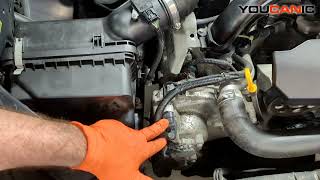
- Inspect the wiring and connector for the Bank 1 (passenger side) exhaust camshaft position sensor. It is the lower sensor on the front timing cover on that side. Ensure the connection is clean and secure.
- Follow the TSB procedure: Remove the 10mm bolt holding the sensor. Carefully measure the sensor clearance to the camshaft reluctor wheel as detailed in TSB #11-125-12 or #11-130-13R.
- If the clearance is not between 1.25mm and 1.35mm, order the Subaru shim kit (10130AA060) and install the correct shim to achieve the target gap.
- If the clearance is correct, the sensor itself is the next likely culprit. Test it by swapping with the Bank 2 sensor and checking if the code changes to P0390. If it does, replace the faulty sensor.
- If the sensor and clearance are good, consider inspecting the AVCS banjo bolt filters for clogs.
- After any repair, install a new O-ring, torque the sensor bolt to 6.4 Nm (4.7 ft-lbs), clear the trouble codes with a scanner, and perform a drive cycle to see if the code returns.
Parts You'll Likely Need
- Camshaft Position Sensor Shim Kit
(OEM #10130AA060)— This is required for the most common, vehicle-specific fix documented in Subaru TSBs #11-125-12 and #11-130-13R to correct the sensor air gap.
Trusted brands: Subaru (OEM)
OEM price range: $20-$40
Aftermarket price range: N/A - Exhaust Camshaft Position Sensor
(OEM #22056AA250)— If the sensor clearance is correct, the sensor itself has likely failed electrically. This part number fits multiple Subaru engines but is listed for this application.
Trusted brands: Subaru (OEM), Denso, Hitachi
OEM price range: $70-$120
Aftermarket price range: $30-$60 - Camshaft Position Sensor O-Ring
(OEM #13099AA050)— This is a one-time use part that should be replaced whenever the sensor is removed to prevent oil leaks, as specified in the TSB.
Trusted brands: Subaru (OEM)
OEM price range: $3-$8
Aftermarket price range: $1-$5
Related Codes That Often Appear With This One
- P0366 — This code indicates a range/performance issue with the same sensor (Bank 1 Exhaust). Both P0365 and P0366 are mentioned together in Subaru's TSBs for this issue.
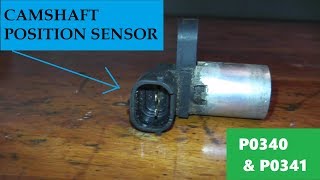
- P0390, P0391 — These are the equivalent codes for the exhaust camshaft position sensor on Bank 2 (driver's side). The sensor clearance issue can affect both banks, so seeing these codes together is not uncommon. 🎬 Watch: A quick overview of these common Subaru camshaft sensor codes.
- P0301, P0302, P0303, P0304 — These are misfire codes for individual cylinders. An incorrect camshaft position signal disrupts proper ignition and fuel timing, which can lead to misfires. The TSBs explicitly list these misfire codes as potential companions.
Technical Service Bulletins (TSBs) & Recalls
- 11-130-13R: A revised and consolidated bulletin from 2014 that provides inspection and repair procedures for various camshaft position and misfire DTCs (including P0365) on multiple FB/FA engine vehicles. It supersedes TSB 11-125-12 and confirms the cause is often incorrect sensor clearance.
- 11-125-12: An earlier bulletin from 2012 specific to the 2012-2013 Impreza and XV Crosstrek for exhaust camshaft DTCs (P0365, P0366, P0390, P0391) caused by out-of-spec sensor clearance
Platform-Specific Known Issues
- A known manufacturing tolerance issue can cause an incorrect air gap for the exhaust camshaft position sensors, which is addressed by Subaru TSBs #11-125-12 and #11-130-13R. The fix involves measuring the gap and adding a specific shim, rather than just replacing the sensor.
Mechanic-Grade Diagnostic Values
- 3-Wire Camshaft Sensor Voltage Check (at the sensor connector, ignition on) — expected: 1. Reference wire: ~5V. 2. Signal wire: ~5V. 3. Ground wire to battery positive: ~12.6V (battery voltage).. Failure: Any reading outside of the expected range indicates a fault in the wiring or the ECM, not necessarily the sensor itself.
- Sensor AC Voltage Output (cranking) — expected: A small AC voltage 'blip' of at least 0.1V should be seen on an AC voltmeter as the engine cranks.. Failure: No voltage signal indicates a dead sensor.
Scan Tool Commands That Help
- Subaru Select Monitor (SSM) or equivalent professional scanner: AVCS Solenoid Duty Cycle / Active Test — After verifying sensor wiring and clearance, a technician can command the Bank 1 exhaust AVCS solenoid to activate. While commanding the solenoid, the technician should watch the live data for 'Bank 1 Exhaust Camshaft Angle'. A change in the angle confirms the mechanical AVCS system is responding and the sensor is reading the change, helping to isolate the problem.
Wiring & Ground Locations
- Main Engine Ground — A thick ground cable that typically attaches from the chassis to one of the upper starter motor mounting bolts on the transmission bellhousing.. A poor main engine ground can cause a voltage differential between the engine block (where sensors are grounded) and the chassis/ECM, leading to erratic sensor readings and multiple fault codes.
- ECU Ground Point — The primary ground points for the ECU are located on the top of the intake manifold.. This is the most critical ground for all engine management sensors. If this connection is loose, corroded, or has high resistance (especially after installing TGV deletes or spacers), it can directly cause sensor circuit codes like P0365.
- Engine Harness Connector — Large multi-wire connectors that join the engine harness to the main body harness, often located near the cylinder heads or firewall.. These connectors are a potential point of failure. Water intrusion and corrosion in one of these main plugs can interrupt the camshaft sensor signal to the ECU, even if the sensor and its pigtail are perfectly fine.
Real Owner Repair Stories
- ScoobyNet.com user 'Steve' (2005 JDM Subaru STi (EJ engine, but principle applies)) — P0365 Check Engine Light
❌ Tried (didn't work) Replacing the camshaft position sensor
✅ What actually fixed it The root cause was a multi-wire plug located near the turbo that was full of water. After unplugging the connector, draining the water, and spraying it with WD-40, the code was resolved.
Model Year Variations Within This Range
- 2012-2013: No significant variations affecting the diagnosis or common causes of P0365 are documented between the 2012 and 2013 Impreza models with the FB20B engine. The TSB addressing the sensor clearance issue applies to both model years.
Helpful Videos
We Have This Part in Stock

The information in this article is provided for general reference and educational purposes only. Vehicle specifications, procedures, and part compatibility can vary by production date, trim level, and region. Always consult your vehicle's factory service manual and verify part numbers before purchasing or performing repairs. Safety-critical components such as airbags, seat belts, and braking systems should be installed by a qualified professional.
- Subaru IMPREZA:
- 🧭 Diagnostic Flowchart
- 🎬 Helpful Videos
- 🛍️ Shop This Part
- What's Unique About the 2012-2013 Subaru IMPREZA
- Symptoms You May Notice
- Most Likely Causes
- Rare But Worth Checking
- Diagnosis Steps
- Parts You'll Likely Need
- Related Codes That Often Appear With This One
- Technical Service Bulletins (TSBs) & Recalls
- Platform-Specific Known Issues
- Mechanic-Grade Diagnostic Values
- Scan Tool Commands That Help
- Wiring & Ground Locations
- Real Owner Repair Stories
- Model Year Variations Within This Range
- 🎟️ Get 5% Off