

P0366 on 2012-2017 Chevrolet Sonic: Exhaust Cam Sensor Causes and Fixes
On a 2012-2017 Chevy Sonic with the 1.8L engine, code P0366 almost always points to a faulty exhaust camshaft position sensor. This is a very common failure, confirmed by GM Technical Service Bulletin #PIP5329C. Replacing the sensor is a straightforward DIY job costing between $25 and $80. Many owners recommend using an OEM ACDelco sensor, as some aftermarket parts have been reported to fail prematurely.
- P0366 on a Chevy Sonic specifically refers to a problem with the exhaust camshaft position sensor.
- The most probable cause is a failed sensor, a known issue backed by a GM service bulletin.
- Replacing the sensor is a simple, low-cost repair that can be done by most DIYers in under 30 minutes with an E10 Torx socket.
- Using an OEM ACDelco sensor is strongly recommended by other owners to ensure a lasting repair.
- If a new sensor doesn't fix the code, inspect the wiring and connector carefully before suspecting rarer issues like a damaged reluctor ring on the camshaft.
- This code is often seen with P0341 (intake cam sensor); if both are present, or for preventative maintenance, consider replacing both sensors at the same time.
What's Unique About the 2012-2017 Chevrolet SONIC

The 1.8L LUW/LWE engine used in the Sonic and the related Chevy Cruze is known for this specific issue. General Motors issued a Technical Service Bulletin (TSB #PIP5329C) acknowledging that code P0366 (and/or P0341 for the intake sensor) is a common problem across several models using this engine family. The bulletin's primary recommendation is to simply replace the affected camshaft position sensor, indicating this is a frequent component failure rather than a more complex wiring or engine computer issue. This high failure rate is widely discussed and confirmed in owner forums.
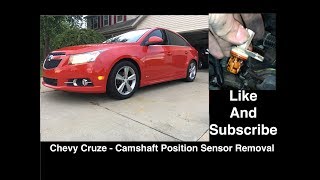
🎬 See how these sensors fail on the 1.8L engine.Diagnostic Flowchart

Tap your situation to follow the diagnostic path that matches what you're seeing on this vehicle.
Symptoms You May Notice
- Check Engine Light is on
- Difficulty starting the engine or no-start condition
- Rough idle or stalling
- Reduced engine power and poor, hesitant acceleration
- Decreased fuel economy
- Engine runs fine only when the faulty sensor is unplugged
- Replacing the Crankshaft Position Sensor (unless code P0335 is also present)
- Replacing the Intake Camshaft Position Sensor (unless code P0341 is also present)
- Assuming a timing belt/chain issue without other correlating codes like P0016 or P0017.
Most Likely Causes

- Failed Exhaust Camshaft Position Sensor 🔴 High Probability → Shop Engine Camshaft Position Sensor This is a known common failure item on this platform, as documented in GM TSB #PIP5329C. The sensor is a Hall effect sensor that can fail internally from heat cycles, vibration, and age. Many owners on forums for the Sonic and Cruze report having to replace one or both sensors.
How to confirm: After confirming no visible wiring damage, replacing the sensor is the most direct diagnostic step. A scan tool may show erratic or zero RPM readings from the exhaust cam sensor while the engine is running. Using an OEM/ACDelco part is highly recommended by forum users to avoid repeat failures.
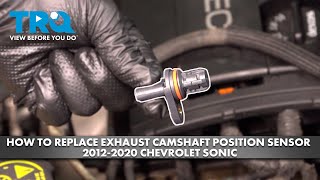
Typical fix: Replace the exhaust camshaft position sensor. It is located on the driver's side of the engine, toward the firewall, held in by a single E10 external Torx bolt. Lubricate the new sensor's O-ring with clean engine oil before installation. 🎬 Watch: Step-by-step exhaust camshaft sensor replacement for your Sonic.
Est. part cost: $25-$80 - Damaged Wiring or Connector 🟡 Medium Probability The sensor connector and wiring are exposed to engine heat and vibration, which can cause wires to become brittle or pins within the connector to lose connection over time. Oil leaks from the valve cover can also contaminate and degrade the connector and wiring insulation.
How to confirm: Visually inspect the sensor's electrical connector and harness for signs of corrosion, melted plastic, or frayed wires. A user on the ScannerDanner forum with a no-start condition on a 2013 Sonic traced the issue to a 5V reference circuit problem, which was only resolved after unplugging the cam sensor, pointing to an electrical fault.
Typical fix: Repair the damaged section of the wiring harness or replace the connector pigtail.
Est. part cost: $10-$30
Rare But Worth Checking
- Damaged Camshaft Reluctor Ring: → Shop Engine Camshaft A Reddit user with a 2013 Sonic 1.8L reported that after replacing sensors and checking wiring, the ultimate cause was a broken tooth on the reluctor ring (tone ring) on the camshaft itself. This is a rare but critical failure. A YouTube video on a similar Chevrolet Tracker with the same engine family shows this exact failure, where a single broken tooth on the ring caused a persistent P0366 code even after sensor replacement. This requires removing the valve cover to inspect.
- Magnetized Cylinder Head Components: TSB #PIP5329C notes a very rare cause where improper welding procedures during a previous front-end collision repair can magnetize metal components in the cylinder head, interfering with the sensor signal. This is an extreme edge case to be considered only after all other diagnostics have failed and requires extensive repairs, potentially including cylinder head replacement.
- Faulty Engine Control Module (ECM): It is possible for the ECM's internal driver for the sensor circuit to fail, but this is highly unlikely and should only be considered after all other possibilities (sensor, wiring, timing, reluctor ring) have been exhaustively ruled out.
Diagnosis Steps
- Read the trouble codes with an OBD-II scanner to confirm P0366 is present. Note any other codes, especially P0341 (intake sensor) or P0335 (crank sensor).
- Visually inspect the exhaust camshaft position sensor and its electrical connector. The sensor is on the driver's side of the engine, near the firewall. Look for loose connections, corrosion, oil contamination, or damaged wires.
- If wiring looks good, the most common and cost-effective next step for this specific vehicle is to replace the exhaust camshaft position sensor, as recommended by GM's TSB. Use an E10 external Torx socket for the retaining bolt. 🎬 Watch this walkthrough of the sensor removal and replacement process.
- Clear the codes with the scanner and test drive the vehicle. If the code does not return, the repair is complete. Note: Some vehicles may require a 'camshaft position sensor variation learn' procedure with a capable scan tool after replacement, though many owners report this is not necessary for a simple sensor swap.
- If the code returns, perform more advanced diagnostics. Use a multimeter to check for a 5-volt reference, a good ground, and a signal wire at the sensor connector.
- If possible, use an oscilloscope to check for a clean square wave signal from the sensor while the engine is running. A missing or erratic signal confirms a bad sensor or wiring issue.
- If all sensor and wiring tests pass, remove the valve cover to visually inspect the mechanical timing and the reluctor ring on the exhaust camshaft for broken or damaged teeth.
Parts You'll Likely Need
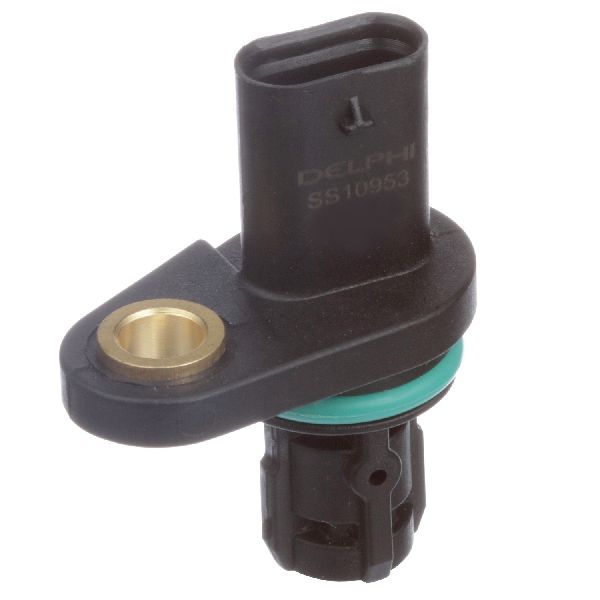
- Exhaust Camshaft Position Sensor
(OEM #55565708)— This is the most common failure part for code P0366 on this engine, as confirmed by a manufacturer TSB. The intake and exhaust sensors are typically the same part number.
Trusted brands: ACDelco (Genuine GM), Delphi, Standard Motor Products (SMP), Bosch
OEM price range: $50-$80
Aftermarket price range: $25-$50 - Intake Camshaft Position Sensor
(OEM #55565708 (often same as exhaust), sometimes listed as 55565709)— Often replaced as a pair with the exhaust sensor due to code P0341 frequently appearing alongside P0366. Proactive replacement can prevent a second repair.
Trusted brands: ACDelco (Genuine GM), Delphi, Standard Motor Products (SMP), Bosch
OEM price range: $50-$80
Aftermarket price range: $25-$50
Related Codes That Often Appear With This One
- P0341 — P0341 is the corresponding code for the intake camshaft position sensor ('A' sensor). TSB #PIP5329C explicitly mentions that P0341 and P0366 can appear together. Since both sensors are identical parts, operate in the same environment, and have the same high failure rate, it is common for both to fail around the same time. Many owners and repair shops recommend replacing both sensors as a pair to prevent a repeat repair visit.
Technical Service Bulletins (TSBs) & Recalls

- PIP5329C: Addresses DTC P0341 and/or P0366 on Sonic, Cruze, and Aveo. Recommends replacing the related camshaft position sensor as the first step. Also notes the rare possibility of magnetized head components after improper collision repair.
Platform-Specific Known Issues
- A General Motors Technical Service Bulletin (TSB #PIP5329C) was issued for the 2012-2017 Sonic with the 1.8L engine for codes P0341 and/or P0366. The bulletin directs technicians to replace the related camshaft position sensor as the primary fix, acknowledging it as a common failure point.
- Owner forums for the Sonic and its platform-mate, the Chevy Cruze, are filled with discussions about P0366, with the vast majority of cases being solved by replacing the sensor. A common recommendation is to use genuine ACDelco parts, as some have experienced issues with cheaper aftermarket sensors.
Mechanic-Grade Diagnostic Values
- Exhaust Camshaft Position Sensor Connector Voltages (Key On, Engine Off, Connector Unplugged) — expected: Pin 1 (Reference Voltage): ~5 Volts. Pin 2 (Low Reference/Ground): 0 Volts (continuity to ground). Pin 3 (Signal): ~5 Volts (on a pull-down design).. Failure: Reference voltage significantly lower than 5V, no continuity to ground on the ground pin, or signal voltage not present can indicate a wiring or ECM issue.
- Exhaust Camshaft Position Sensor Signal (Testing a removed sensor) — expected: With the sensor powered (5V and Ground), the signal wire voltage should switch between ~5V (or reference voltage) and 0V as a piece of metal is passed in front of the magnetic tip.. Failure: If the voltage does not switch, the sensor is faulty. If it is stuck at 0V or 5V, it has failed internally.
Scan Tool Commands That Help
- GDS2 / Tech2 (or capable professional scan tool): Crankshaft Position Variation Learn — This procedure is required to allow the ECM to learn variations between the crankshaft and camshaft reluctor wheels. It must be performed after replacing the ECM, crankshaft, crankshaft damper, or crankshaft position sensor to prevent misfire detection issues and potential timing-related codes like P0315. While not directly for the cam sensor, it is critical if P0366 appears with other timing codes or after major engine work.
Wiring & Ground Locations
- Exhaust Camshaft Position Sensor Connector — On the exhaust camshaft position sensor, located on the left-rear of the cylinder head (driver's side, near firewall).. This is the primary point for visual inspection and electrical testing. Pin 1 is 5V Reference, Pin 2 is Low Reference (Ground), and Pin 3 is the Signal wire.
- G104 — Lower right rear of the engine block.. This is a primary engine ground. A poor connection here can cause erratic behavior in various engine sensors, including the camshaft position sensor.
- G106 / G107 — G106 is on the left rear of the engine block; G107 is on the lower left rear of the block.. These are additional engine block grounds. Verifying they are clean and tight is a key step in diagnosing any electrical issue on the engine, as a bad ground can cause unpredictable voltage drops and sensor signal noise.
- K20 Engine Control Module (ECM) — Left side of the engine compartment.. This is the destination for the sensor's signal and the source of its power and ground reference. Advanced diagnosis involves checking for signal integrity at the ECM connector pins to rule out wiring harness issues.
Real Owner Repair Stories
- Reddit user 'treymcg' in r/MechanicAdvice (2013 Chevrolet Sonic 1.8L) — Persistent P0366 code. Scan tool showed CMP RPM readings sporadically dropping to zero.
❌ Tried (didn't work) Replaced camshaft position sensors., Tested all wiring, found it to be in spec., Initial visual inspection of the reluctor ring.
✅ What actually fixed it A more thorough second inspection of the exhaust camshaft reluctor (tone) ring revealed one broken tooth. The tooth was on the bottom side of the cam when the engine was at Top Dead Center, making it difficult to see on the first inspection. Replacing the damaged camshaft/reluctor ring resolved the code.
OEM Part Supersession History
25195555→55565708— Part revision or supplier change.
Heads up: 55565708 is the current primary OEM part number for both intake and exhaust sensors on this platform. Some aftermarket suppliers may list 55565709 as a valid alternative or specifically for one position, but 55565708 is the most commonly referenced genuine GM part.
Model Year Variations Within This Range
- 2012-2018: The 1.8L engine was available as either LUW (standard) or LWE (PZEV emissions). The LWE version includes an air injection pump for emissions, but this does not affect the camshaft position sensors or the diagnosis for P0366. The 1.8L engine was discontinued for the Sonic starting in the 2019 model year.
Helpful Videos

We Have This Part in Stock


The information in this article is provided for general reference and educational purposes only. Vehicle specifications, procedures, and part compatibility can vary by production date, trim level, and region. Always consult your vehicle's factory service manual and verify part numbers before purchasing or performing repairs. Safety-critical components such as airbags, seat belts, and braking systems should be installed by a qualified professional.
- Chevrolet SONIC:
- 🧭 Diagnostic Flowchart
- 🎬 Helpful Videos
- 🛍️ Shop This Part
- What's Unique About the 2012-2017 Chevrolet SONIC
- Symptoms You May Notice
- Most Likely Causes
- Rare But Worth Checking
- Diagnosis Steps
- Parts You'll Likely Need
- Related Codes That Often Appear With This One
- Technical Service Bulletins (TSBs) & Recalls
- Platform-Specific Known Issues
- Mechanic-Grade Diagnostic Values
- Scan Tool Commands That Help
- Wiring & Ground Locations
- Real Owner Repair Stories
- OEM Part Supersession History
- Model Year Variations Within This Range
- 🎟️ Get 5% Off