

OBD-II Code P0369: Camshaft Position Sensor 'B' Circuit Intermittent
The Ultimate Guide to Meaning, Diagnosis, and Fixes for P0369
- Wiring and connector faults cause up to 70% of P0369 codes, making a live-data 'wiggle test' your most effective first diagnostic step.
- Check your engine oil level immediately; low or dirty oil starves the VVT system and triggers this code, particularly on 2017-2020 Ford 3.5L EcoBoost engines.
- Stop driving at highway speeds immediately, as the intermittent signal causes sudden engine stalling and can destroy a $1,500 catalytic converter within months.
- Never replace the sensor without testing it first, and if replacement is required, spend the extra $30-$50 for an OEM part to prevent immediate code recurrence on sensitive European and Japanese vehicles.
What Does P0369 Mean?
The Powertrain Control Module (PCM) is receiving an unstable, on-and-off signal from the Camshaft Position Sensor 'B' on engine Bank 1. This sensor tracks the exhaust camshaft's exact position to perfectly time fuel injection and ignition. An 'intermittent' signal means the electrical connection drops sporadically, throwing off engine timing and causing noticeable drivability issues.
Technical definition: Camshaft Position Sensor 'B' Circuit Intermittent Bank 1. The PCM detects that the electrical signal from the exhaust camshaft position sensor on the engine bank containing cylinder #1 drops out or fluctuates erratically.
Can I Drive With P0369?
Yes, But With Caution. Short trips to a repair shop are possible, but risky. The engine stalls suddenly when this signal drops, creating a severe traffic hazard, so avoid highways. Ignoring the code long-term causes misfires that melt the catalytic converter, forcing a $1,500+ repair.
Common Causes
- Wiring or Connector Problems (Very Common) — This causes up to 70% of P0369 cases. Engine heat and vibration fray wires or loosen the sensor's connector. Oil contamination inside the connector also disrupts the signal.
- Low or Dirty Engine Oil (Very Common) — Modern engines use oil pressure to adjust camshaft timing (VVT). Low or severely degraded oil starves the VVT phasers, altering camshaft position and forcing the sensor to report an intermittent fault.
- Failing Camshaft Position Sensor (Common) — The sensor fails internally from age and heat cycles. It stops sending a consistent magnetic signal as the engine warms up, resulting in a weak or noisy output.
- Aftermarket Sensor Incompatibility (Common) — European makes (BMW, Audi) and some Japanese vehicles reject the signal quality of cheap, non-OEM sensors. Installing an aftermarket sensor often causes P0369 to return immediately.
- Poor Engine Ground (Less Common) — The sensor circuit requires a solid ground. A corroded engine ground strap introduces electrical resistance, dropping the sensor's voltage intermittently.
- Weak Battery (Less Common) — A failing battery causes severe voltage drops across the electrical system during cranking. The PCM misinterprets this low voltage as an intermittent sensor circuit fault.
- Stretched Timing Chain or Damaged Reluctor (Less Common) — If the timing chain stretches or the camshaft's notched reluctor wheel sustains damage, the camshaft physically falls out of sync with the computer's expectations, triggering the code.
- PCM Software Glitch (Rare) — Specific models, like the 2023-2025 Honda Civic Type R, have known software defects where the PCM misinterprets normal actuator movements as a sensor fault. A dealer software update fixes this.
- Failing Powertrain Control Module (PCM) (Rare) — The vehicle's main computer suffers an internal fault, such as a damaged circuit board trace, preventing it from reading a perfectly good sensor signal.
Symptoms
- Engine Hesitation or Stumbling — The car briefly loses power or stumbles during acceleration before recovering.
- Sudden Engine Stalling — The engine shuts off unexpectedly while driving or stopping, creating a major safety risk.
- Check Engine Light On or Flashing — The light illuminates steadily. A flashing light indicates an active, severe misfire damaging the catalytic converter.
- Rough or Intermittent Idle — The engine idles erratically, with RPMs surging up and down, especially when warm.
- Hard Starting — The engine cranks significantly longer than usual before starting, or fails to start entirely.
- Limp Mode Activation — The vehicle restricts power and limits speed to protect the engine from timing damage.
- Reduced Fuel Economy — Suboptimal engine timing burns excess fuel, dropping average MPG by 8-12%.
Diagnostic Flowchart
Tap your situation to follow the diagnostic path that matches what you're seeing on this code.
Common Fixes & Costs
- Engine Oil and Filter Change — Parts: $40-$90, Labor: $25-$60, ~0.5 hr book time (DIY)
- Clean Connector or Repair Wiring — Parts: $0-$25, Labor: $100-$250, ~1.5 hr book time (Intermediate)
- Replace Camshaft Position Sensor — Parts: $30-$150, Labor: $50-$200, ~1 hr book time (DIY)
- Replace Timing Chain / VCT Phasers — Parts: $400-$1200, Labor: $1200-$2500, ~12 hr book time (Professional)
- Replace Powertrain Control Module (PCM) — Parts: $600-$900, Labor: $200-$300, ~1.5 hr book time (Professional)
Used vs. New Parts: Buying Guide
When a used part is worth it: Never for a permanent repair. A used sensor should only be utilized for temporary, at-home diagnosis to see if swapping the part changes the symptoms.
Donor-vehicle mileage cap: roughly under 50000 miles for the part to have meaningful remaining life.
Donor quality checklist:
- Match the OEM part number exactly.
- Avoid parts with physical damage, oil contamination, or corroded pins.
Decision logic:
- If Part is an electronic sensor under $150 → Always buy new from an OEM or Tier-1 brand (Denso, Bosch). Reliability outweighs the $20 savings.
- If Vehicle is a sensitive European make (BMW, Audi) → Buy a new OEM sensor exclusively. Aftermarket parts guarantee repeat failures.
Warranty tradeoff: Used parts offer a 30-day warranty. New OEM parts carry a 1-2 year manufacturer's warranty.
Worst-case if a used part fails: $200-$400. A faulty used sensor forces you to pay for a new part and labor a second time.
What Happens If You Wait — Timeline
- 0-1 month: Intermittent Check Engine Light during acceleration. Minor engine hesitation. (MPG impact: 0-5%% · Added cost: $0-$50 in wasted fuel)
- 1-3 months: Noticeable engine stumbling, rough idle, and high risk of sudden stalling in traffic. (MPG impact: 8-12%% · Added cost: $50-$150 in wasted fuel)
- 3-6 months: Consistent misfires dump unburnt fuel into the exhaust, overheating and melting the catalytic converter. (MPG impact: 10-15%% · Added cost: $1,200-$2,800 for catalytic converter replacement.)
- 6+ months: The melted catalytic converter clogs the exhaust. Extreme backpressure causes catastrophic engine damage (bent valves, blown head gaskets). (MPG impact: 15-25%+% · Added cost: $4,000-$8,000+ for engine replacement.)
Cost of Not Fixing It
- 0-1 month: Noticeable drop in fuel economy (8-12%), poor acceleration, and high risk of sudden stalling in traffic. (Added cost: $50-$150 in wasted fuel)
- 1-6 months: Ongoing misfires from incorrect timing dump unburnt fuel into the exhaust, melting the internal structure of the catalytic converter. (Added cost: $1200-$2800 for catalytic converter replacement.)
- 6+ months: A melted catalytic converter creates extreme exhaust backpressure, causing catastrophic engine damage like bent valves or blown head gaskets. (Added cost: $4000-$8000+ for engine replacement.)
Diagnosis Steps
- Check Engine Oil Level & Condition
Turn the engine off and wait 15 minutes. Check the dipstick. Low, old, or dirty oil is the most frequent and overlooked cause of VVT-related P0369 codes. Top off or change the oil if necessary.
Tools: Rag (Beginner) - Read Fault Codes & Freeze Frame Data
Use an OBD-II scanner to confirm P0369. Note accompanying codes (e.g., P0344, P0016) and review freeze frame data to identify the exact RPM and temperature when the fault triggered.
Tools: OBD-II Scanner (Beginner) - Visually Inspect the Circuit
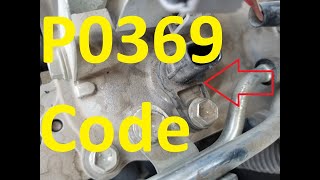
Locate the Camshaft Position Sensor 'B' on Bank 1. Inspect the electrical connector for oil contamination, pushed-out pins, or a loose fit. Trace the wiring harness for melted insulation or chafing.
Tools: Flashlight (Beginner) - [PRO TIP] Perform a Live-Data 'Wiggle Test'
With the engine running, monitor the Camshaft Sensor B signal on your scanner's live data. Gently wiggle the sensor's connector and wiring harness. If the signal drops out or the engine stumbles, you have pinpointed the intermittent short.
Tools: OBD-II Scanner with Live Data (Intermediate) - [DIY TIP] Swap Sensors (If Applicable)
If the intake ('A') and exhaust ('B') sensors on Bank 1 are identical, swap them. Clear codes and drive. If the code changes to P0344 (Sensor 'A'), the sensor is faulty. If P0369 returns, the issue is wiring or mechanical.
Tools: Basic Hand Tools (Intermediate) - Test Connector Voltage
With the key on and engine off, unplug the sensor. Use a multimeter to verify the 5V (or 12V) reference voltage on the power wire and a solid ground on the ground wire.
Tools: Digital Multimeter (Intermediate) - [ADVANCED] Test Ground Circuit Resistance
With the key off, measure resistance between the sensor connector's ground pin and the battery's negative terminal. A reading above 0.2 Ω indicates excessive resistance requiring repair.
Tools: Digital Multimeter (Advanced) - Test Battery Voltage Under Load
A weak battery triggers false sensor codes. Measure battery voltage while cranking the engine. If it drops below 9.6V, replace the battery before chasing sensor faults.
Tools: Digital Multimeter with Min/Max function (Advanced) - [PRO TIP] Back-Probe and Scope the Signal
Use an oscilloscope to back-probe the signal wire with the engine running. A healthy sensor produces a clean 0V to 5V square wave. Dropouts or 'hashy' noise confirm a failing sensor or circuit.
Tools: Oscilloscope, Back-probe Kit (Advanced) - Inspect Mechanical Timing Components
If electronics pass, the fault is mechanical. Inspect the timing chain for slack and the camshaft reluctor wheel for damage or excessive end play (common on Honda V6s).
Tools: Mechanic's Tool Set (Advanced)
When This Code Triggers (Freeze-Frame Conditions)
- Engine Coolant Temp: 170-200°F (Fully warmed up)
- RPM: 1500-2500 (Cruise or light acceleration)
- Engine Load: 30-60% (Steady throttle or gentle acceleration)
- Vehicle Speed: 35-55 mph (Highway or city cruise speeds)
Related Codes
- P0365 — P0365 indicates a constant, hard fault in the same circuit, while P0369 is intermittent. Wiggling the wiring harness may cause an intermittent P0369 to become a hard P0365, confirming a wiring break.
- P0340 / P0344 — These codes apply to the intake ('A') sensor on the same bank. Seeing P0369 and P0344 together strongly suggests a shared power/ground wiring issue or a weak battery affecting both sensors.
- P0016 / P0017 — These are mechanical correlation codes. If P0369 appears with P0016, the PCM sees the sensor signal but the mechanical timing is incorrect (e.g., stretched chain).
Climate & Environmental Factors
- High Humidity / Wet Climates: Moisture accelerates corrosion on wiring connectors, increasing the likelihood of intermittent signal loss. Rain introduces water into unprotected connectors.
- Cold Weather: Cold temperatures make old wiring insulation brittle. A weak battery's performance also degrades in the cold, increasing the chance of a voltage drop that triggers a false P0369.
- Extreme Heat: High under-hood temperatures degrade wiring insulation, leading to shorts. Heat also causes internal sensor components to fail intermittently as the engine warms up.
How to Talk to a Mechanic About This Code
Say this: "I have a P0369 code for the Bank 1 exhaust camshaft sensor. Please perform a live-data wiggle test on the circuit and connector before replacing the sensor. Also, check for any Technical Service Bulletins for this code on my vehicle."
This directs the technician to diagnose the wiring (the most common cause) instead of blindly swapping parts. Checking TSBs quickly identifies known mechanical issues on Honda or Ford models.
Avoid saying:
- 'Just fix whatever's wrong'
- 'My check engine light is on, can you look at it?'
- 'Replace my camshaft sensor'
Questions to ask before authorizing the repair:
- Did you perform a 'wiggle test' on the wiring harness while monitoring live data?
- Did you verify 5V reference and solid ground at the sensor's connector?
- If replacing the sensor, are you using an OEM part?
- If the cause is mechanical, what specific test led you to that conclusion?
Where to Take It: Dealer vs Independent vs Chain
- Dealer:
Highly recommended if your vehicle has a known TSB or is under warranty. Their specialized knowledge is critical for mechanical failures.
Best for: Vehicles under powertrain warranty, Vehicles with known TSBs for P0369 (2016-17 Honda Pilot, 2017-2020 Ford F-150), Complex PCM software updates
Downsides: Labor rates are 50-100% higher than independent shops., Tendency to replace entire wiring harnesses rather than repairing a single wire. (Typical cost: +50% vs. baseline) - Independent Shop:
Best fit for most P0369 scenarios. A skilled independent shop efficiently finds and fixes intermittent wiring faults without dealer overhead.
Best for: Out-of-warranty vehicles requiring wiring or sensor diagnosis., Getting a second opinion on a high-dollar dealer quote.
Downsides: Diagnostic capability varies; ensure they use oscilloscopes for electrical testing. (Typical cost: +0% vs. baseline) - Chain Shop:
AVOID for diagnosing P0369. Acceptable only if you have already diagnosed a bad sensor and just need it bolted on.
Best for: Simple oil changes or battery replacements.
Downsides: Lack advanced diagnostic tools (oscilloscopes) needed to trace intermittent electrical faults., Default to replacing the sensor without proper diagnosis. (Typical cost: -10% vs. baseline)
When to Walk Away From the Repair
If the estimated repair cost exceeds 40-50% of the car's private-party value, sell or trade it in instead of repairing it.
- Car worth $3500, fix is $2500: Walk away. The repair cost is 71% of the car's value.
- Car worth $15000, fix is $450: Fix it. A $450 repair for a wiring issue restores the vehicle's function.
- Car worth $8000, fix is $3500: Borderline. At 44% of the car's value, get a second opinion before authorizing a major mechanical repair like a timing chain.
What Scan Tool You Need for This Code
Minimum: A scanner that graphs live data. A basic code reader is insufficient.
A $20 code reader cannot show intermittent signal drop-outs in real-time. Without live data, you cannot perform a wiggle test and are forced to guess.
Budget: BlueDriver Pro or XTool A30D (~$90-120) — Provides live data graphing via Bluetooth, allowing you to watch the camshaft sensor signal while wiggling wires under the hood.
Mid-range: Foxwell NT510 Elite or Innova 5610 (~$180-350) — Offers full-system diagnostics and accesses manufacturer-specific codes that accompany P0369.
Professional: Autel MaxiCOM MK808BT or XTOOL D7 (~$450-700) — Provides professional-level live data and pairs with oscilloscopes to view the sensor's exact square wave signal.
Rent vs buy: Rent a scanner from an auto parts store for a one-time diagnosis. Buy only if you perform diagnostics multiple times a year.
How to Clear the Code After You Fix It
- Use an OBD-II scan tool to clear the P0369 fault code.
- Ensure the fuel tank is between 15% and 85% full.
- Perform a complete OBD-II drive cycle to run the system's self-tests.
Drive cycle (~30 minutes): Cold start and idle for 5 minutes. Drive at a steady 25 mph for 5 minutes with stop-and-go. Drive at a steady 55 mph for 15 minutes. Let the vehicle cool down completely and repeat if monitors are not set.
Readiness monitors affected: Catalyst Monitor, Oxygen Sensor (O2S) Monitor, Comprehensive Component Monitor (CCM)
Before emissions retest: drive at least 100 miles to fully set monitors.
Watch out for:
- Clearing the code resets all readiness monitors to 'not ready', causing an automatic emissions test failure.
- The code returns immediately if the intermittent wiring fault was not properly secured.
Will This Fail Emissions / State Inspection?
Yes — this code typically fails an OBD-II emissions inspection.
- California: An active P0369 code or 'Not Ready' monitors results in an automatic smog check failure. A complete drive cycle is required after repair.
- New York: The NYS DMV emissions inspection includes an OBD-II scan. P0369 triggers an automatic failure.
- Texas: In emissions-testing counties, this code causes an automatic safety inspection failure.
Most Commonly Affected Vehicles
- Honda Pilot, Odyssey, Ridgeline (2016-2017) — On the J35Y6 V6 engine, P0369 indicates excessive camshaft end play physically damaging the sensor. Honda TSBs ATS161201 and A18010I require replacing the camshaft, thrust cover, and sensor.
- Ford F-150 (2017-2020) — On the 3.5L EcoBoost, this code frequently indicates low engine oil or failing VCT phasers. A startup rattle confirms phaser failure. Covered under Ford CSP 21N03.
- BMW 3-Series (E46), M3/Z4M (S54) (1999-2006) — Highly sensitive to sensor signal quality. Aftermarket sensors cause P0369 to return immediately. Oil leaking through the sensor body into the connector is also frequent.
- Jeep Wrangler, Compass, Patriot (2007-2017) — The 3.6L engine suffers from wiring harness chafing near the firewall, triggering P0369 and limp mode.
- Hyundai / Kia Optima, Sonata (2.4L) (2011-2016) — P0369 is often traced to corrosion or loose pins in the wiring harness, making a 'wiggle test' critical.
- Chevrolet Equinox, Terrain (2.4L) (2010-2017) — Associated with random engine hesitation and stalling due to VVT solenoid or timing chain wear.
- Honda Civic Type R (FL5) (2023-2025) — A PCM software glitch causes P0369 on cold starts with no hardware fault. Honda TSB 24-070 provides a software update.
Manufacturer-Specific Notes
- Honda: On 2016-2017 3.5L V6 engines, P0369 requires replacing the camshaft and thrust cover due to excessive end play destroying the sensor (TSB ATS161201).
- Ford: On 3.5L EcoBoost engines, P0369 strongly indicates low oil or failing VCT phasers. Always check oil levels first. A cold start rattle confirms phaser failure.
- BMW: Using an aftermarket camshaft position sensor guarantees P0369 will return. Always install an OEM sensor.
Real Owner Stories
2016 Honda Pilot with multiple warning lights
While driving, the dash lit up with Emissions and Power Steering warnings. An OBD-II scan revealed P0369. The lights disappeared after restarting but the code stored.
What they tried:
- Replaced the air intake hose.
- Replaced the camshaft position sensor.
Outcome: The code returned. For 2016-2017 Pilots, P0369 indicates a mechanical failure where excessive camshaft end play physically damages the sensor. The fix required replacing the camshaft and thrust cover per Honda TSBs.
Lesson: On 2016-2017 Honda V6s, P0369 signals a serious mechanical failure. Simply replacing the sensor guarantees a repeat failure. Professional measurement of camshaft end play is required.
2013 Ford F-150 EcoBoost with sudden power loss
At 218,000 miles, the check engine light illuminated after driving through a large puddle. The truck idled perfectly but lost power on acceleration, showing codes P0365 and P0369.
What they tried:
- Located Bank 1 Sensor 'B' at the rear of the engine.
- Inspected the sensor and found it covered in fine metallic, magnetic debris.
- Cleaned the original sensor, reinstalled it, and cleared codes.
Outcome: Cleaning the metallic debris off the original sensor completely resolved the issue, restoring power and keeping the codes away.
Lesson: Always remove and inspect the sensor before buying a new one. Metallic debris or oil contamination disrupts the magnetic reading; a simple cleaning often fixes the fault.
2019 Volvo XC40 with battery issues and P0369
After receiving a 'battery save mode' message, the car failed to start (voltage tested at 11.87V). After a jump start, the check engine light illuminated with P0369.
What they tried:
- Tested and replaced the weak 12V battery.
Outcome: Replacing the weak battery permanently resolved the P0369 code.
Lesson: A weak battery causes severe voltage drops during startup, which the PCM misinterprets as a sensor circuit fault. Always test the battery first if P0369 appears alongside slow cranking.
How to Prevent This Code From Triggering
- Perform regular oil changes with manufacturer-specified oil (Every 5,000-7,500 miles) — Clean, correct-viscosity oil prevents VVT phasers from sticking, avoiding the timing correlation issues that trigger P0369.
- Use high-quality OEM sensors for replacement (When replacement is needed) — Modern ECUs reject the imprecise signal quality of cheap aftermarket sensors, causing immediate repeat failures.
- Apply dielectric grease to sensor connectors (During sensor replacement) — Dielectric grease seals connectors from moisture, preventing the corrosion that causes intermittent signal loss.
- Address engine oil leaks promptly (As soon as noticed) — Oil leaking from valve covers contaminates camshaft sensor connectors, degrading the electrical connection.
Frequently Asked Questions
How much does it cost to fix code P0369?
Costs range from $40 for an oil change to $400 for a sensor replacement at a shop. Complex mechanical fixes, like Ford VCT phasers or Honda camshafts, exceed $1,500. Diagnostic fees typically add $100-$150.
What are the most common misdiagnosis mistakes for P0369?
The biggest mistake is replacing the sensor without checking the wiring, which causes 70% of these codes. Mechanics also frequently overlook low engine oil or install cheap aftermarket sensors that the PCM rejects.
Can I replace the camshaft position sensor myself?
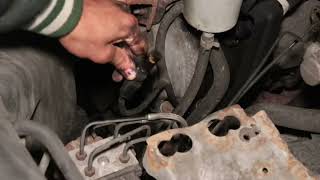
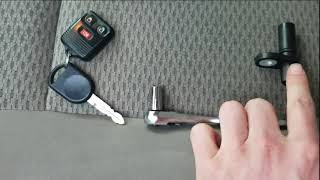
Yes, on most engines the sensor is secured by a single 10mm bolt on top of the valve cover, taking under 30 minutes to swap. However, some transverse V6 engines require removing the intake manifold to access Bank 1.
Why did the code come back after I replaced the sensor?
A returning code means the sensor wasn't the root problem. The actual fault is usually a damaged wiring harness, low engine oil, or a mechanical timing issue like a stretched chain.
What does 'Bank 1' and Sensor 'B' mean?
'Bank 1' identifies the side of a V-engine containing cylinder #1. 'Sensor B' designates the exhaust camshaft position sensor on that specific bank.
Will an oil change fix a P0369 code?
Yes, if low or dirty oil is starving the variable valve timing (VVT) system. Changing the oil and filter to the correct viscosity is the cheapest and most critical first diagnostic step.
Can a weak battery cause a P0369 code?
Yes, a weak battery dropping below 9.6 volts during cranking starves the electrical system. The PCM misinterprets this temporary voltage drop as an intermittent sensor circuit failure.
What happens if I don't fix P0369?
Ignoring P0369 causes sudden engine stalling, creating a severe safety hazard in traffic. Furthermore, the resulting misfires dump unburnt fuel into the exhaust, destroying the catalytic converter and forcing a $1,500+ repair.
Key Takeaways
- Wiring and connector faults cause up to 70% of P0369 codes, making a live-data 'wiggle test' your most effective first diagnostic step.
- Check your engine oil level immediately; low or dirty oil starves the VVT system and triggers this code, particularly on 2017-2020 Ford 3.5L EcoBoost engines.
- Stop driving at highway speeds immediately, as the intermittent signal causes sudden engine stalling and can destroy a $1,500 catalytic converter within months.
- Never replace the sensor without testing it first, and if replacement is required, spend the extra $30-$50 for an OEM part to prevent immediate code recurrence on sensitive European and Japanese vehicles.
Helpful Videos


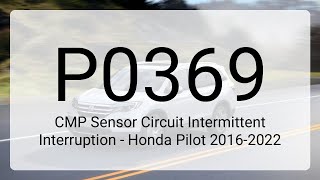
Shop the Parts Behind P0369
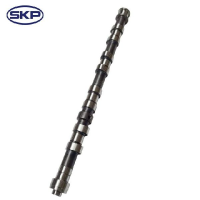
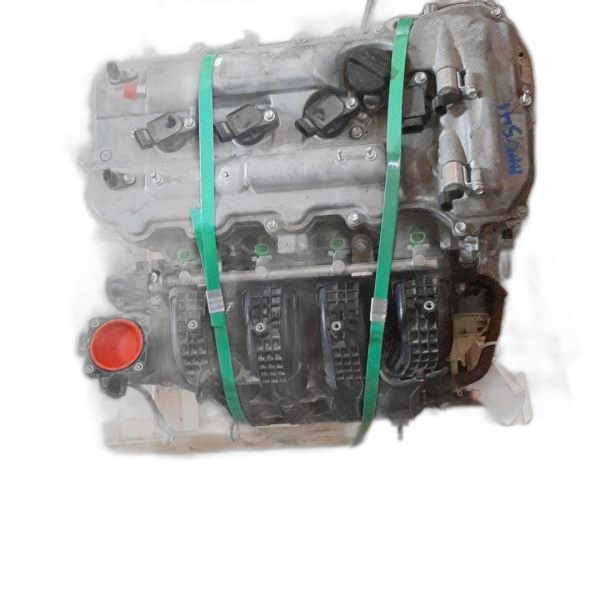
Below are the parts most often responsible for code P0369, ranked by how frequently each one is the actual culprit (per the diagnosis above). Tap any to see what we have for your vehicle.
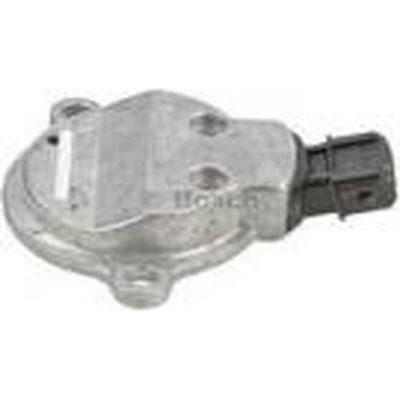
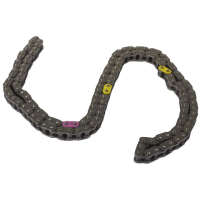
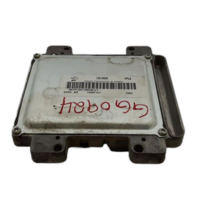





The information in this article is provided for general reference and educational purposes only. Vehicle specifications, procedures, and part compatibility can vary by production date, trim level, and region. Always consult your vehicle's factory service manual and verify part numbers before purchasing or performing repairs. Safety-critical components such as airbags, seat belts, and braking systems should be installed by a qualified professional.
- 🧭 Diagnostic Flowchart
- 🎬 Helpful Videos
- 🛍️ Shop This Part
- What Does P0369 Mean?
- Can I Drive With P0369?
- Common Causes
- Symptoms
- Common Fixes & Costs
- Used vs. New Parts: Buying Guide
- What Happens If You Wait — Timeline
- Cost of Not Fixing It
- Diagnosis Steps
- When This Code Triggers (Freeze-Frame Conditions)
- Related Codes
- Climate & Environmental Factors
- How to Talk to a Mechanic About This Code
- Where to Take It: Dealer vs Independent vs Chain
- When to Walk Away From the Repair
- What Scan Tool You Need for This Code
- How to Clear the Code After You Fix It
- Will This Fail Emissions / State Inspection?
- Most Commonly Affected Vehicles
- Manufacturer-Specific Notes
- Real Owner Stories
- 2016 Honda Pilot with multiple warning lights
- 2013 Ford F-150 EcoBoost with sudden power loss
- 2019 Volvo XC40 with battery issues and P0369
- How to Prevent This Code From Triggering
- Frequently Asked Questions
- How much does it cost to fix code P0369?
- What are the most common misdiagnosis mistakes for P0369?
- Can I replace the camshaft position sensor myself?
- Why did the code come back after I replaced the sensor?
- What does 'Bank 1' and Sensor 'B' mean?
- Will an oil change fix a P0369 code?
- Can a weak battery cause a P0369 code?
- What happens if I don't fix P0369?
- Key Takeaways
- 🎟️ Get 5% Off