

P0369 on 2018-2019 Ford Expedition: Camshaft Sensor, Oil Consumption, and Valve Cover Fixes
On the 2018-2019 Expedition with the 3.5L EcoBoost, code P0369 often signals a deeper issue than a bad sensor. It is frequently linked to excessive oil consumption caused by faulty valve covers or PCV system, as documented in Ford Technical Service Bulletins. The fix may require replacing both valve covers with updated parts, not just the sensor.
- On this specific vehicle, P0369 is a strong indicator of an underlying oil consumption problem.
- Before replacing any parts, check your engine oil level and monitor consumption.
- The most probable fix, according to Ford, is the replacement of both engine valve covers, not the camshaft sensor.
- Simply replacing the sensor without addressing the oil consumption will likely not solve the problem permanently.
- Referencing Ford TSBs 20-2132, 47983, and 47623 is critical for a correct diagnosis.
What's Unique About the 2018-2019 Ford EXPEDITION
For most vehicles, a P0369 code points directly to a failing sensor or its wiring. However, on the 2018-2019 Expedition with the second-generation 3.5L EcoBoost engine, this code is often a symptom of a larger, well-documented problem. Multiple Ford Technical Service Bulletins (TSBs) link P0369 directly to excessive oil consumption. The root cause is often not the sensor itself, but rather a faulty PCV system integrated within defective valve covers that need to be replaced. Ignoring this and simply replacing the sensor will likely result in the code returning.
Diagnostic Flowchart
Tap your situation to follow the diagnostic path that matches what you're seeing on this vehicle.
Symptoms You May Notice
- Check Engine Light is on
- Engine runs rough or idles poorly
- Hesitation or stumbling during acceleration
- Engine may stall intermittently
- Hard starting or extended cranking time
- Noticeable excessive oil consumption with no visible leaks
- Rattling noise from the engine, particularly during acceleration between 2,500-3,500 RPM
- Replacing only the camshaft position sensor without checking for the known oil consumption issue documented in Ford TSBs. The code will likely return if the root cause is the valve covers or PCV system.
- Replacing only the valve cover gaskets. The TSB fix requires replacing the entire valve cover assemblies, as the plastic covers themselves contain the faulty PCV baffling and can warp.
Most Likely Causes
- Defective Valve Covers / Integrated PCV System 🔴 High Probability → Shop Engine Valve Cover Multiple Ford TSBs (20-2132, SSM 47983, SSM 47623) identify this as the primary failure on engines built on or before April 1, 2019. The original valve covers have a flawed design in their integrated PCV baffling, which allows excessive oil to be pulled into the intake, leading to oil consumption that triggers DTC P0369.
How to confirm: Monitor engine oil levels closely. Per Ford's TSB, excessive consumption is defined as more than 1 quart in 3,000 miles. 🎬 See a breakdown of the Ford TSB for oil consumption issues. The official dealer procedure involves a specific oil level test where they mark the dipstick, have the customer drive, and then measure the loss. If the engine is consuming oil without external leaks, this is the most likely cause.
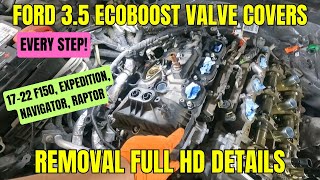
Typical fix: Replace both engine valve covers with updated parts as specified in the TSBs. This is not just a gasket job; the entire cover must be replaced 🎬 Watch: Step-by-step guide to removing these 3.5L EcoBoost valve covers. because the PCV system is part of the cover itself.
Est. part cost: $160-$250 for a pair of OEM valve covers. TSB 19-2232 lists part numbers HL3Z-6582-E (Left) and HL3Z-6582-C (Right). - Faulty Camshaft Position Sensor 🟡 Medium Probability → Shop Engine Camshaft Position Sensor
How to confirm: If oil consumption is normal, this becomes a more likely cause. Test the sensor's signal with a multimeter or oscilloscope. A common DIY method is to swap the exhaust sensor (Sensor B) with the intake sensor (Sensor A) on the passenger side bank and see if the code changes to P0344 (Intake Sensor 'A' Circuit Intermittent). If the code changes, the sensor is faulty.
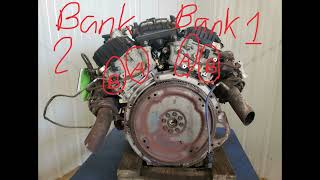
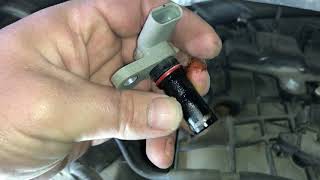
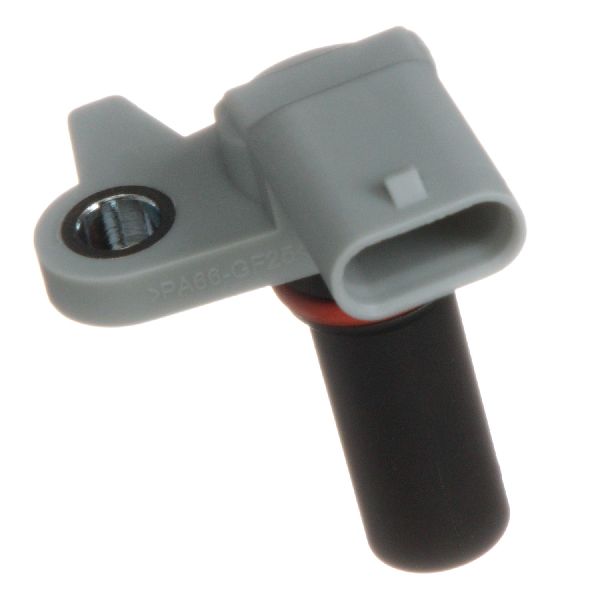
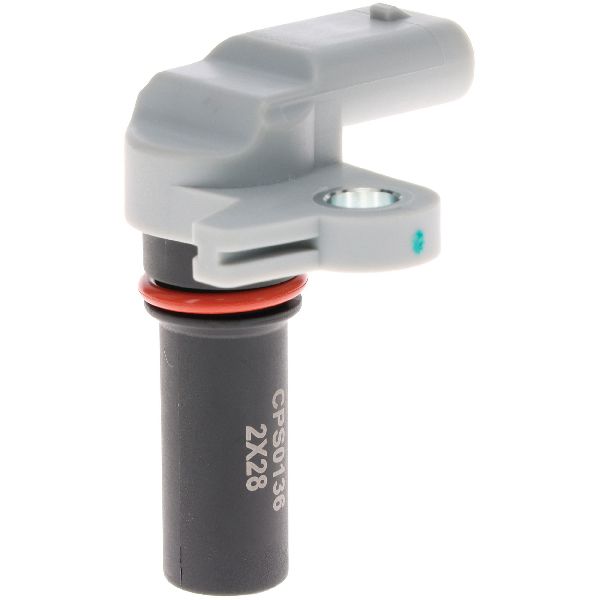
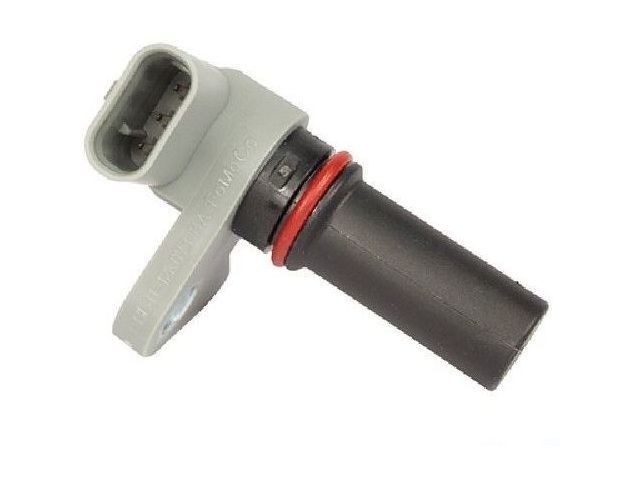
Typical fix: Replace the Camshaft Position Sensor for Bank 1, Sensor B. It is located on the rear of the passenger side valve cover and is typically held by a single 8mm bolt. 🎬 Watch: How to quickly replace a faulty camshaft position sensor.
Est. part cost: $30-$55 for an OEM Motorcraft sensor. - Low or Dirty Engine Oil ⚪ Low Probability The VCT (Variable Camshaft Timing) system, which this sensor monitors, is hydraulically operated by engine oil. Low oil level or pressure can cause erratic VCT operation, leading to timing codes. Ford TSBs specifically instruct technicians to check the oil level after letting the engine sit for at least 15 minutes for an accurate reading before any other diagnostics.
How to confirm: Check the engine oil dipstick on a level surface after the engine has been off for 15+ minutes. If the level is low, this is a likely contributor.
Typical fix: Perform an oil and filter change using the correct grade of oil (Motorcraft SAE 5W-30 Synthetic Blend).
Est. part cost: $50-$90 for oil and a filter. - Wiring or Connector Issue ⚪ Low Probability
How to confirm: Visually inspect the wiring harness and connector going to the Bank 1 exhaust camshaft sensor. Look for any signs of damage, corrosion, oil contamination, or a loose connection. In some cases, the connector clip can break, causing an intermittent connection.
Typical fix: Repair the damaged wiring or clean/replace the connector pigtail.
Est. part cost: $5-$50 for wiring repair supplies.
Rare But Worth Checking
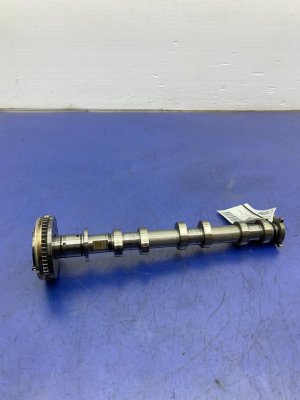
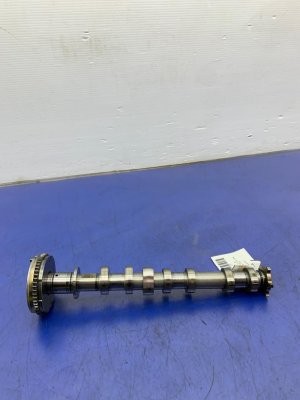
- Slipped Camshaft Tone Ring / Vacuum Pump Drive: → Shop Engine Camshaft On the Bank 1 exhaust camshaft, the tone ring that the sensor reads is integrated into the drive coupler for the mechanical vacuum pump. In rare, documented cases on F-150s with the same engine, this coupler can slip or break loose, rotating independently of the camshaft. This causes a massive timing discrepancy that triggers P0369/P0365 even with a good sensor and correct base engine timing. The fix requires replacing the entire exhaust camshaft.
- Worn VCT Units or Timing Components: TSB SSM 47961 notes that worn Variable Camshaft Timing (VCT) units or other timing system issues can trigger this code, especially if accompanied by engine noise like a cold start rattle. This is a more complex and expensive repair, often involving phaser and timing chain replacement.
- Powertrain Control Module (PCM) Fault: → Shop Engine Control Module (ECM) In very rare cases, the engine computer itself can have an internal fault, but all other possibilities should be exhausted before considering this.
Diagnosis Steps
- Check the engine oil level and condition after letting the vehicle sit on a level surface for at least 15 minutes. If it is low, top it off, clear the code, and monitor consumption closely (is it more than 1 quart per 3,000 miles?).
- If oil consumption is high with no visible leaks, consult Ford TSBs 20-2132, SSM 47983, and SSM 47623. The likely cause is the valve covers and their integrated PCV system.
- If oil level and consumption are normal, inspect the wiring and connector for the Bank 1 (passenger side) exhaust camshaft position sensor for damage, corrosion, or a loose fit.
- If the wiring is good, consider swapping the exhaust sensor with the intake sensor on the same bank. Clear the codes and drive the vehicle. If the code changes to P0344, the sensor is bad.
- If the code P0369 returns after the swap, the problem is likely in the wiring, VCT system, or a mechanical issue like a slipped tone ring.
- If you hear rattling or other abnormal engine noises, investigate for potential issues with the VCT solenoids or timing chain system as per TSB SSM 47961.
Parts You'll Likely Need
- Engine Valve Covers (Set)
(OEM #HL3Z-6582-E (Left), HL3Z-6582-C (Right))— This is the primary fix identified in Ford TSBs for excessive oil consumption that triggers code P0369. Both covers must be replaced as a set to install the updated PCV baffle design.
Trusted brands: Motorcraft
OEM price range: $80-$120 each
Aftermarket price range: $150-$350 for a pair - Camshaft Position Sensor
(OEM #DU-90 (Motorcraft Service P/N))— If the valve covers are not the issue, the sensor itself may have failed. This is the most common cause on vehicles without the oil consumption problem.
Trusted brands: Motorcraft, Bosch, Delphi
OEM price range: $30-$55
Aftermarket price range: $20-$40 - PCV Valve
(OEM #EV-297 or KR3Z-6A666-A)— While the main PCV baffling is in the valve cover, a serviceable valve is also part of the system. TSB 20-2132 points to the PCV system as the cause of oil consumption. It's an inexpensive part to replace during diagnosis, though the valve covers are the more common culprit for this specific TSB.
Trusted brands: Motorcraft
OEM price range: $15-$30
Aftermarket price range: $10-$20
Related Codes That Often Appear With This One
- P0365 — This is the non-intermittent version of the same code ('Camshaft Position Sensor 'B' Circuit Bank 1'). They often appear together, as noted in TSBs 20-2132, SSM 47983, and SSM 47623, indicating a persistent problem with that sensor's circuit.
Technical Service Bulletins (TSBs) & Recalls
- TSB 20-2132: Supersedes TSB 19-2232. Links P0369 to excessive oil consumption due to a PCV system concern in the valve covers on vehicles built on or before April 1, 2019.
- SSM 47983: Links P0369 to excessive oil consumption and instructs to replace both valve covers on engines built on or before April 1, 2019. Causal part is 6582.
- SSM 47623: An earlier version linking P0369 to excessive oil consumption, instructing to replace both valve covers on engines built on or before July 13, 2018.
- SSM 47961: Notes that P0369 can also be caused by low oil level, low oil pressure, or worn VCT units, advising to check oil level before other diagnostics.
Platform-Specific Known Issues
- Excessive Oil Consumption TSBs: The most significant issue for this code on this vehicle is documented in Ford TSBs 20-2132, SSM 47983, and SSM 47623. They state that 2018-2019 Expeditions with the 3.5L EcoBoost built on or before April 1, 2019, may exhibit excessive oil consumption (over 1 quart in 3,000 miles) and trigger P0369. The fix is to replace both valve covers with updated parts, not just the sensor.
- Real Owner Experience (Forum Summary): An owner of a 2019 Expedition MAX experienced hesitation and lagging, which the dealer diagnosed with code P0365. They found the v
Mechanic-Grade Diagnostic Values
- Camshaft Position Sensor (CMP) Signal — expected: A digital square wave switching between approximately 0V and 5V as the engine rotates.. Failure: Signal has dropouts, noise, or is missing entirely when checked with an oscilloscope.
- CMP Sensor Power Supply — expected: Approximately 5V reference voltage at one pin with the key on.. Failure: Voltage is significantly lower than 5V or is absent, indicating a wiring or PCM issue.
- VCT Solenoid Internal Resistance — expected: Approximately 7.8 Ohms (value from a similar Ford engine, may vary slightly).. Failure: Resistance is infinite (open circuit) or near zero (short circuit).
- VCT Advanced Error PID (Live Data) — expected: Using a Ford IDS scan tool, the value should be close to 0° and not deviate by more than +/- 5° for an extended time.. Failure: A large, persistent error angle, or VVT data PIDs are frozen at zero.
Hidden / Shadow Codes Worth Checking
- Mode 6, Test ID $A2-$AF: This is not a specific trouble code, but a test result for misfire counts on individual cylinders. An intermittent cam signal from P0369 can cause misfires that may not be severe enough to set a dedicated misfire code. Checking this data can help confirm the effect of the timing issue. (see via An advanced scan tool with Mode $06 capabilities.)
Scan Tool Commands That Help
- Ford IDS (or equivalent professional scanner): VCT Solenoid Functional Test / Actuator Test — This command attempts to actuate the VCT solenoids. If the command fails to run or has no effect on the engine idle, it can point towards a wiring issue or a mechanical problem preventing VCT operation, such as the slipped tone ring. Some manuals suggest activating the solenoid while the engine is running; a healthy system will cause the engine to run rough or stall.
Wiring & Ground Locations
- CMP Sensor 'B' Connector — On the rear of the passenger side (Bank 1) valve cover. It is a 3-wire connector.. This is the direct connector for the sensor in question. It is a primary point of failure due to heat and vibration, and should be inspected for oil contamination, corrosion, or broken locking tabs.
- Engine Block Ground — A main ground cable typically runs from the battery's negative terminal to a stud or bolt on the engine block.. The CMP sensor circuit relies on a solid engine ground. A poor or corroded engine ground can cause erratic voltage signals and trigger intermittent codes like P0369.
- CMP Sensor Pinout (Typical) — At the 3-wire sensor connector.. Pin 1: Power (approx. 5V). Pin 2: Signal (sends 0-5V square wave to PCM). Pin 3: Ground. Testing voltage and continuity at these pins is a core diagnostic step.
Real Owner Repair Stories
- Snap-on Diagnostics Product Forums & YouTube video (2013 Ford F-150 3.5L EcoBoost (same engine family and failure mode)) — P0365 and P0369 codes present. All VVT data on scan tool was frozen at zero. Functional tests of VVT actuators would not work.
❌ Tried (didn't work) Swapping intake and exhaust cam sensors., Testing wiring from sensor to PCM., Replacing the timing chain and all related components.
✅ What actually fixed it The tone wheel, which is integrated into the vacuum pump drive on the back of the Bank 1 exhaust camshaft, had slipped nearly 90 degrees. The final fix was replacing the entire Bank 1 exhaust camshaft. - YouTube channel 'Cobra Strikes Back' (2013 F-150 3.5L EcoBoost with 218,000 miles) — P0299 (turbo underboost), P0365, and P0369. No power, slow acceleration, but idled beautifully.
❌ Tried (didn't work) Initially suspected major mechanical failure.
✅ What actually fixed it The connector for the Bank 1 exhaust cam sensor was found to be completely disconnected. Additionally, the magnetic tip of the sensor was covered in metallic debris. The fix was to clean the sensor tip and the connector pins with electronic cleaner and securely reconnect it. All codes cleared and power was restored.
"I Checked Everything" — The Actual Cause
- In a well-documented failure for this engine, all electrical tests for the P0369 code can pass, yet the code persists. The root cause was found to be mechanical: the tone ring that the camshaft sensor reads had physically slipped on the camshaft itself. This part is also the drive for the vacuum pump on the Bank 1 exhaust cam. Technicians only found this after using an oscilloscope to compare the cam signals from both banks and noticing a massive discrepancy, or by physically removing the camshaft and seeing the reluctor wheel had rotated out of position.
OEM Part Supersession History
HL3Z-6582-E (Left Valve Cover)→HL3Z-6582-G— Updated design to address issues like the PCV system flaw causing oil consumption.
Heads up: The new part number HL3Z-6582-G is the correct replacement for previous versions including -B, -D, and -E.
Model Year Variations Within This Range
- 2018-Early 2019: Engines built on or before April 1, 2019, are prone to the oil consumption issue caused by the original valve cover design, as documented in TSBs SSM 47983 and SSM 47623. Vehicles built after this date have the updated valve cover design from the factory.
- 2018-2019: These model years use the second-generation 3.5L EcoBoost, which features both port and direct fuel injection. This differs from the first generation (pre-2017) and helps reduce carbon buildup on intake valves, though it does not prevent the oil consumption issue related to the PCV system.
Helpful Videos

Used OEM Parts in Stock
New Aftermarket Parts Available


The information in this article is provided for general reference and educational purposes only. Vehicle specifications, procedures, and part compatibility can vary by production date, trim level, and region. Always consult your vehicle's factory service manual and verify part numbers before purchasing or performing repairs. Safety-critical components such as airbags, seat belts, and braking systems should be installed by a qualified professional.
- Ford EXPEDITION:
- 🧭 Diagnostic Flowchart
- 🎬 Helpful Videos
- 🛍️ Shop This Part
- What's Unique About the 2018-2019 Ford EXPEDITION
- Symptoms You May Notice
- Most Likely Causes
- Rare But Worth Checking
- Diagnosis Steps
- Parts You'll Likely Need
- Related Codes That Often Appear With This One
- Technical Service Bulletins (TSBs) & Recalls
- Platform-Specific Known Issues
- Mechanic-Grade Diagnostic Values
- Hidden / Shadow Codes Worth Checking
- Scan Tool Commands That Help
- Wiring & Ground Locations
- Real Owner Repair Stories
- "I Checked Everything" — The Actual Cause
- OEM Part Supersession History
- Model Year Variations Within This Range
- 🎟️ Get 5% Off