

P0369 on 2011-2019 Ford Explorer 3.5L V6: Intermittent Cam Sensor Causes and Fixes
On the 2011-2019 Ford Explorer with the 3.5L V6, code P0369 is most often caused by a failing Camshaft Position Sensor for the Bank 1 exhaust cam. Before replacing parts, check the engine oil level, as low or dirty oil can disrupt the VCT system and trigger this code. A sensor replacement is a common, affordable DIY fix, but if the issue persists, it could point to wiring problems or more significant mechanical timing issues.
- P0369 on your Explorer points to an intermittent signal from the exhaust camshaft sensor on the firewall side of the engine (Bank 1).
- Before buying parts, always check your engine oil level and condition first. Low or dirty oil is a known cause of this code.
- The most common fix is replacing the faulty camshaft position sensor, which is an accessible and affordable DIY job.
- If a new sensor doesn't fix the issue, carefully inspect the wiring and connector for damage before suspecting more complex mechanical problems.
- A rattling noise on startup combined with this code could indicate a more serious timing chain issue that requires professional attention.
What's Unique About the 2011-2019 Ford Explorer
The 3.5L V6 'Cyclone' engine family in the fifth-generation Explorer is generally reliable, but it is sensitive to oil level and condition. The Variable Camshaft Timing (VCT) system, which adjusts the camshafts, is hydraulically operated. Low or dirty oil can affect the VCT phasers' operation, which can sometimes be misinterpreted as a sensor fault. While P0369 is most often a sensor or wiring issue, it's important to rule out oil-related problems first, as this engine platform is also known for eventual timing chain wear and internal water pump failure, which can present with similar codes.
Symptoms You May Notice
- Check Engine Light is on
- Engine is hard to start or has a long crank time
- Rough idling
- Engine hesitates or stumbles during acceleration
- Potential for the engine to stall, especially at low speeds
- Reduced fuel economy
- Engine runs rough or misfires
- Replacing the wrong sensor (e.g., the intake sensor 'A' or a sensor on Bank 2).
- Replacing the timing chain when the actual issue is just a simple sensor or wiring fault.
- Immediately blaming the sensor without checking the engine oil level and condition first.
- Confusing the Camshaft Position Sensor with the nearby VCT solenoids.
Most Likely Causes
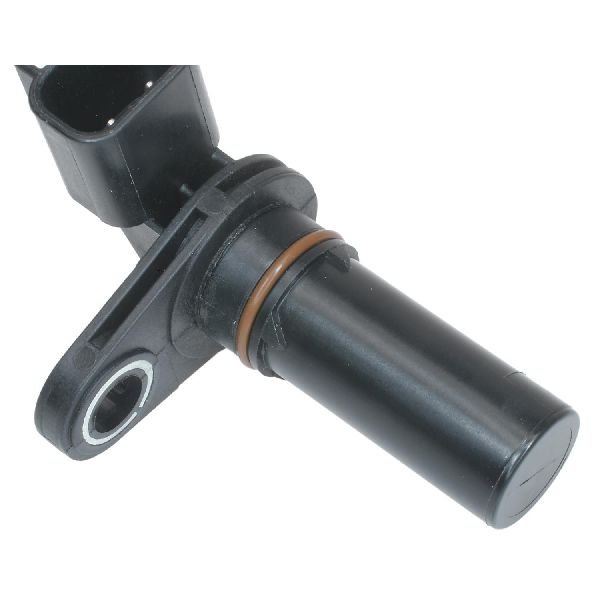
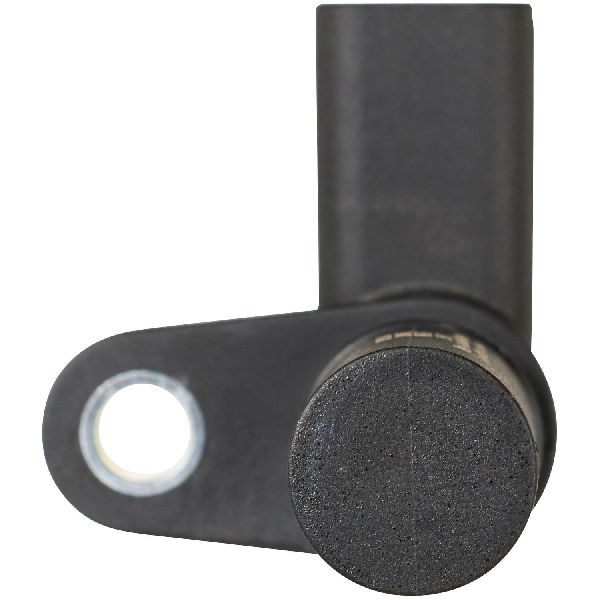
- Faulty Camshaft Position Sensor 🔴 High Probability → Shop Engine Camshaft Position Sensor Sensors are exposed to high heat and vibration in the engine bay, leading to eventual electronic failure. Oil leaks from the valve cover can also contaminate the sensor's connector, causing a poor connection.
How to confirm: The most effective method is to swap the suspect sensor (Bank 1 exhaust) with another one, for example, the Bank 1 intake sensor (if they are identical parts). Clear the codes and drive. If the trouble code changes to P0344 (Camshaft Position Sensor 'A' Circuit Intermittent Bank 1), the sensor is confirmed bad. Visually inspect the removed sensor for oil contamination or physical damage.
Typical fix: Replace the Bank 1 exhaust camshaft position sensor. It is held in by a single 8mm bolt.
Est. part cost: $25-$75 - Wiring or Connector Issue 🟡 Medium Probability The wiring harness is subject to heat and vibration, which can cause wires to fray or the plastic connector to become brittle and fail. Oil contamination can also degrade the connection. Some sources claim wiring issues are the cause in up to 70% of cases for this code. A manufacturer service bulletin, TSB Bulletin #SSM 50116, notes that a wiring harness near the upper brake pedal mount may come in contact with the steering shaft u-joint, potentially setting DTC P0369.
How to confirm: Visually inspect the wiring and connector for any signs of damage, corrosion, or loose pins. Perform a 'wiggle test' on the harness with the engine running while observing live sensor data on a scan tool to see if the signal drops out. Check for continuity and voltage at the connector with a multimeter.
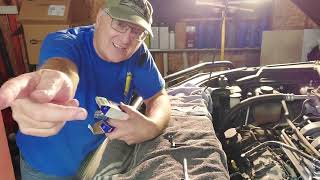
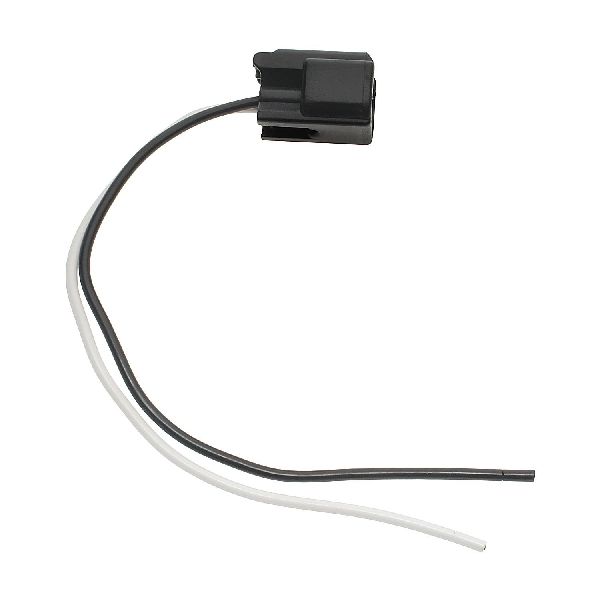
Typical fix: Repair the damaged section of the wiring harness or replace the connector pigtail. 🎬 See: Step-by-step Ford camshaft position sensor B replacement
Est. part cost: $15-$40 - Low or Dirty Engine Oil 🟡 Medium Probability The VCT system uses oil pressure to adjust cam timing. If the oil level is low or the oil is dirty and sludgy, it can cause the VCT phasers to operate slowly or erratically, which the PCM might interpret as a sensor signal issue. Ford has issued TSBs for other models with this engine (like the F-150) directly linking low oil or oil consumption to codes P0365 and P0369. TSB Bulletin #SSM 47961 specifically states that P0369 may be due to low engine oil level or low engine oil pressure.
How to confirm: Check the engine oil dipstick. Ensure the vehicle is on a level surface and has been off for at least 15 minutes for an accurate reading. Note the oil's color and consistency.
Typical fix: Top off or change the engine oil and filter using the correct grade (typically 5W-20) and a quality filter. Clear the code and monitor if it returns.
Est. part cost: $40-$80
Rare But Worth Checking
- Stretched Timing Chain or Failing VCT Phaser: → Shop Engine Timing Chain While less common for just a P0369 code, the 3.5L V6 is known for timing chain issues. If you also hear a rattling noise on startup, this becomes a much higher probability. This is a significant mechanical issue that can cause severe engine damage if ignored. In some cases on the 3.5L engine, the reluctor wheel (tone ring) on the camshaft itself can slip, causing a persistent correlation or circuit code even after sensor and timing chain replacement.
- Failing Powertrain Control Module (PCM): → Shop Engine Control Module (ECM) This is extremely rare. The PCM is the vehicle's main computer, and failure is unlikely. All other possibilities, especially sensor and wiring issues, should be exhaustively ruled out before considering PCM replacement.
Diagnosis Steps
- Read the code with an OBD-II scanner to confirm P0369 is present. Note any other codes.
- Check the engine oil level and condition. Ford recommends waiting 15 minutes after shutting off the engine for an accurate reading. Top off or change the oil if it is low, old, or dirty. Clear the code and see if it returns.
- Locate the Bank 1 exhaust camshaft position sensor. On the 3.5L V6, Bank 1 is the bank of cylinders against the firewall. The exhaust sensor ('B') is typically located on the valve cover.
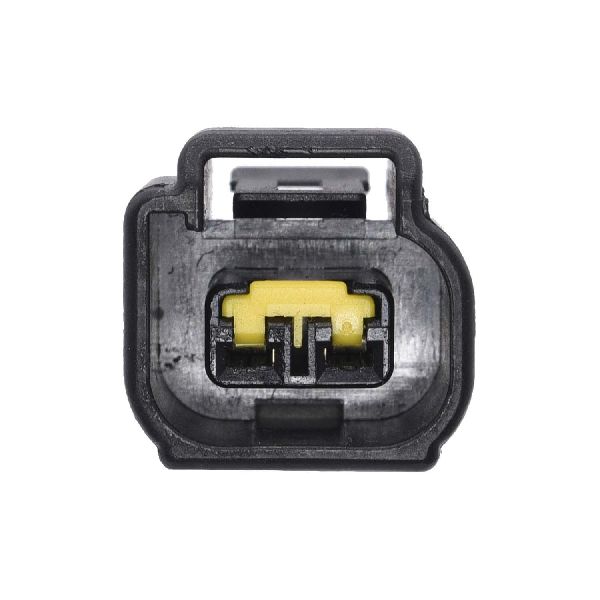
- Inspect the sensor's electrical connector and wiring for any visible damage, corrosion, or oil contamination. Ensure the connector is securely latched.
- If the wiring looks good, a simple diagnostic is to swap the sensor. The intake and exhaust sensors on the same bank are often identical. Swap the Bank 1 exhaust ('B') sensor with the Bank 1 intake ('A') sensor. Clear the codes and drive the vehicle. If the code changes to P0344 (Camshaft Position Sensor 'A' Circuit Intermittent), the sensor you moved is faulty.
- If the P0369 code returns after the swap, the problem lies in the wiring circuit or potentially a mechanical issue.
- Use a multimeter to test for proper voltage and ground at the sensor connector. If the circuit tests good, the issue may be mechanical (timing chain/phaser) and require professional diagnosis.
- For advanced diagnosis, an oscilloscope can be used to view the sensor's signal pattern to check for intermittent dropouts that a multimeter might miss.
Parts You'll Likely Need
- Camshaft Position Sensor (Bank 1, Exhaust)
(OEM #BL3Z-6B288-C)— This is the electronic component that fails most frequently, triggering the P0369 code. The original part number BL3Z-6B288-A has been superseded by BL3Z-6B288-C.
Trusted brands: Motorcraft, Bosch, Delphi, NTK/NGK
OEM price range: $40-$60
Aftermarket price range: $25-$45
Related Codes That Often Appear With This One
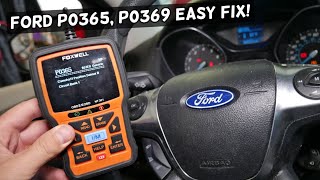
- P0365 — P0365 is 'Camshaft Position Sensor 'B' Circuit Malfunction Bank 1'. P0369 indicates the fault is intermittent, while P0365 indicates a more constant 🎬 Watch: Easy fix for codes P0365 and P0369 or 'hard' fault. They often appear together as they point to the exact same component and circuit.
- P0017 — P0017 is a Crank/Cam correlation code for the same Bank 1 exhaust camshaft. If P0369 appears with P0017, it increases the likelihood of a mechanical timing issue (stretched chain, bad VCT phaser) rather than just a sensor circuit problem.
Technical Service Bulletins (TSBs) & Recalls
- TSB 19-2232 (F-150/Expedition): While for a different model, this TSB addresses excessive oil consumption on the 3.5L EcoBoost engine which can lead to DTCs P0365 and/or P0369, indicating the direct link between oil issues and this code family on this engine platform.
- TSB SSM 47961 (F-150): Directly connects worn VCT units (cam phasers) to codes P0365 and P0369, especially when accompanied by startup rattle noises.
- TSB Bulletin #SSM 50116: Notes that the 14290 harness directly above the steering shaft u-joint near the upper brake pedal mount may come in contact with the shaft, potentially setting DTC P0369.
Platform-Specific Known Issues
- The 3.5L V6 engine family can be susceptible to timing chain stretching and water pump failure (the water pump is internal and driven by the timing chain). While P0369 alone doesn't point directly to this, if it's accompanied by startup rattles or other timing codes (like P0016, P0017, P0018, P0019), the timing system should be inspected by a professional.
- A user on a Snap-on Diagnostics forum with a 3.5L engine reported that after replacing sensors and the timing chain for P0365/P0369, the actual cause was a slipped reluctor wheel on the exhaust camshaft, which required camshaft replacement to fix.
- NHTSA ODI #11592638 describes a case where diagnostic checks for codes P0365 and P0369 found a broken oil pump belt, necessitating an engine replacement.
Mechanic-Grade Diagnostic Values
- Camshaft Position (CMP) Sensor Resistance (2-wire VR type) — expected: 586 - 2,033 Ohms. Failure: A resistance reading outside this range indicates a faulty sensor.
- VCT Solenoid Internal Resistance — expected: 5 - 15 Ohms. Failure: A reading outside this range, or an open circuit (infinite resistance), points to a bad solenoid coil.
- CMP Sensor Connector Voltage (Key On, Engine Off) — expected: Signal wire should show approximately 5V, and the ground wire should have continuity to chassis ground (0 Ohms).. Failure: Voltage below the expected range or high resistance on the ground wire indicates a wiring or PCM issue.
- CMP Sensor Signal Voltage (Oscilloscope) — expected: A clean square wave that toggles between approximately 0V and 5V (for Hall-effect sensors).. Failure: A wave that is missing, has dropouts, or shows low amplitude (e.g., peaking at 5.4V instead of over 10V as noted in one case) indicates a sensor, wiring, or PCM driver fault.
Scan Tool Commands That Help
- Ford IDS / FORScan: VCT Solenoid On/Off Command — This bidirectional control allows a technician to command the VCT solenoids on and off while monitoring engine RPM. A failure to change engine idle characteristics when a solenoid is commanded suggests a stuck or failed solenoid, helping to differentiate a component failure from a wiring issue.
- Ford IDS / FORScan: Monitor VCT_ERR PID — The VCT_ERR (Variable Camshaft Timing Error) PID shows the difference between the desired camshaft angle and the actual angle. If this value consistently exceeds a few degrees for the Bank 1 exhaust cam, it points towards a mechanical timing issue (phaser, chain) rather than an intermittent sensor circuit fault.
Wiring & Ground Locations
- G100 / G101 — On the 3.5L non-turbo engine, G100 is at the front of the engine, and G101 is on the left side of the engine compartment. A poor ground at these locations can cause intermittent sensor signal issues.. The CMP sensors rely on a clean ground path to send an accurate signal to the PCM. A corroded or loose ground at G100 or G101 can introduce electrical noise or voltage drops, causing the intermittent signal fault of P0369.
- CMP Sensor Connector (C139 for Bank 1 Intake, similar for Exhaust) — On the valve cover for the respective camshaft. Bank 1 is against the firewall.. This is the primary point of failure for wiring issues. The connector itself can become brittle, and the pins can lose tension or corrode. The wiring harness near the connector is prone to heat damage, leading to chafing or breaks that cause an intermittent open or short in the signal, ground, or voltage reference circuits.
- PCM Connector — Typically located in the engine bay, often near the firewall or a shock tower.. In rare cases, the pins at the PCM corresponding to the Bank 1 Sensor 'B' can become corroded or loose. A technician would back-probe these pins to confirm if the signal from the sensor is reaching the PCM correctly, ruling out the entire wiring harness in one step.
Real Owner Repair Stories
- Snap-on Diagnostics Product Forums (2013 Ford F-150 3.5L EcoBoost (engine family shares design with Explorer's 3.5L NA)) — Persistent P0365 and P0369 codes.
❌ Tried (didn't work) Swapping intake and exhaust sensors (code did not follow the sensor)., Testing wiring to the PCM (found no problems)., Replacing the entire timing chain and related components due to observed wear.
✅ What actually fixed it The reluctor wheel (tone ring) on the Bank 1 exhaust camshaft had slipped nearly 90 degrees from its original position. This part also serves as the drive coupler for the vacuum pump. The final fix was replacing the entire Bank 1 exhaust camshaft. - ScannerDanner Forum (2014 Ford F-150 3.5L GTDI) — P0365 & P0369 codes present. Scoped signal for the Bank 1 exhaust sensor (CMP12) was low, peaking at 5.4V while the comparison sensor (CMP22) was 12.9V.
❌ Tried (didn't work) Multiple replacements of the camshaft sensor., Checking wiring harness and ground (found to be good).
✅ What actually fixed it The PCM was faulty. The Ford IDS scan tool could not even communicate with it. After replacing and reprogramming a new PCM, the sensor's square wave signal returned to the normal high voltage, and the codes were resolved. - NHTSA ODI #11568033 — An owner reported a rattling sound followed by the check engine light; a diagnostic scan retrieved DTC P0369 (Camshaft Position Sensor “B” Circuit Intermittent Bank 1).
- NHTSA ODI #11466062 — An owner reported that the engine would quit unless they applied gas, with codes P0365 or P0369 occurring; despite having the cam sensor replaced numerous times, the issue persisted.
OEM Part Supersession History
BL3Z-6B288-A→BL3Z-6B288-C— Standard part revision by the manufacturer, likely for improved durability, reliability, or a change in supplier.
Heads up: The new part (BL3Z-6B288-C) is a direct replacement for the old part and is fully compatible. When replacing, ensure you are purchasing the latest revision.DU-95→BL3Z-6B288-C— DU-95 was an engineering part number or an earlier service number that has been consolidated into the main part number stream.
Heads up: BL3Z-6B288-C is the correct service part to order.
Diagnostic Flowchart
Other Known Issues on This Vehicle
Issues unrelated to this code that are worth knowing about as an owner of this generation:
- Internal Timing-Chain-Driven Water Pump Failure 🔴 High → Shop Engine Timing Chain — Common after 75,000-100,000 miles. Failure can cause coolant to mix with engine oil, leading to catastrophic engine damage if not caught early.
- Power Transfer Unit (PTU) Overheating and Failure 🔴 High — Common on AWD models. The PTU fluid can overheat and break down due to proximity to the exhaust, leading to gear failure. Ford considers the fluid 'lifetime' with no drain plug, exacerbating the issue.
- Exhaust Odor / Carbon Monoxide Intrusion into Cabin 🟠 Medium — Widespread issue, particularly noticeable during heavy acceleration or with the rear HVAC on. Caused by body seam sealing issues and aerodynamics. (Ref: TSB 14-0130, TSB 16-0166)
- Electronic Throttle Body Malfunction 🟠 Medium — Common across the generation, causing sudden power loss, hesitation, and the vehicle entering 'limp mode'. Often triggers codes like P2111 or P2112.
- Rear Suspension Toe Link Fracture 🔴 High — Affects 2011-2017 models, leading to a sudden loss of steering control. This was subject to a major safety recall. (Ref: NHTSA Recall 19V-435)
Used vs. New Parts: Buying Guide for This Vehicle
When a used part is the smart pick: For this specific repair, using a used part is generally not recommended. The primary failure part is a relatively inexpensive electronic sensor. The cost savings of a used sensor are minimal and do not justify the risk of receiving a part that is near the end of its life or already faulty.
Donor-vehicle mileage cap: roughly under 80000 miles for the part to have meaningful remaining life.
What to inspect on the donor part:
- If buying a used sensor is unavoidable, inspect the plastic for cracks or brittleness.
- Ensure the connector pins are clean, straight, and free of corrosion.
- Avoid sensors that are covered in oil, which may indicate they came from a leaking engine.
OEM-only on this vehicle (don't cheap out):
- Camshaft Position Sensor
Aftermarket brands forum-validated for this vehicle:
- Motorcraft (OEM)
- NTK/NGK
- Delphi
- Bosch
Brands owners have reported issues with on this vehicle:
- Dorman (for this specific part, forum users have reported a higher failure rate compared to OEM).
- Unbranded, 'white-box' sensors from online marketplaces.
Real Owner Stories
Aggregated from forums and TSBs cited above. Mileages and costs reflect what owners reported in those sources.
2013 Ford F-150 3.5L
Symptoms: P0365 and P0369 codes persisted even after the sensors and the timing chain were replaced.
What fixed it: Replacement of the exhaust camshaft due to a slipped reluctor wheel (reluctor ring).
Source hint: Snap-on Diagnostics Forum
Ford Explorer 3.5L V6
Symptoms: Rough running conditions and Check Engine Light.
What fixed it: Replacement of the Bank 1 sensors located on the firewall side of the engine.
Source hint: explorerforum.com
Ford F-150 3.5L
Symptoms: Startup rattle noises accompanied by codes P0365 and P0369.
What fixed it: Replacement of worn VCT units (cam phasers).
Source hint: TSB SSM 47961
Ford F-150 3.5L
Symptoms: Vehicle would quit unless given gas, with codes P0365 or P0369 occurring.
What fixed it: Multiple cam sensor replacements were attempted, but the owner reported the issue persisted through numerous shop visits.
Source hint: NHTSA ODI #11466062
Related OBD-II Codes
Frequently Asked Questions
Where is the Bank 1 exhaust camshaft position sensor located on my 3.5L Explorer?
Does TSB 19-2232 apply to my 3.5L engine's P0369 code?
Can I test the sensor myself by swapping it with another one?
Is there a TSB regarding startup rattles and P0369 for this engine?
Could my engine oil level be causing this intermittent circuit code?
What should I look for if I suspect a wiring issue on my Explorer?
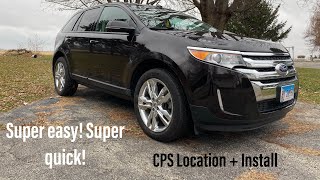
Helpful Videos

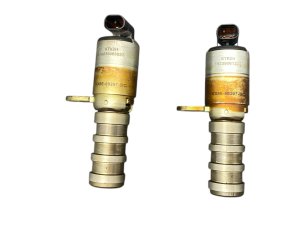
Used OEM Parts in Stock
New Aftermarket Parts Available


The information in this article is provided for general reference and educational purposes only. Vehicle specifications, procedures, and part compatibility can vary by production date, trim level, and region. Always consult your vehicle's factory service manual and verify part numbers before purchasing or performing repairs. Safety-critical components such as airbags, seat belts, and braking systems should be installed by a qualified professional.
- Ford Explorer:
- 🧭 Diagnostic Flowchart
- 🎬 Helpful Videos
- 🛍️ Shop This Part
- What's Unique About the 2011-2019 Ford Explorer
- Symptoms You May Notice
- Most Likely Causes
- Rare But Worth Checking
- Diagnosis Steps
- Parts You'll Likely Need
- Related Codes That Often Appear With This One
- Technical Service Bulletins (TSBs) & Recalls
- Platform-Specific Known Issues
- Mechanic-Grade Diagnostic Values
- Scan Tool Commands That Help
- Wiring & Ground Locations
- Real Owner Repair Stories
- OEM Part Supersession History
- Other Known Issues on This Vehicle
- Used vs. New Parts: Buying Guide for This Vehicle
- Real Owner Stories
- 2013 Ford F-150 3.5L
- Ford Explorer 3.5L V6
- Ford F-150 3.5L
- Ford F-150 3.5L
- Related OBD-II Codes
- Frequently Asked Questions
- 🎟️ Get 5% Off