

OBD-II Code P0372: Timing Reference High Resolution Signal 'A' Too Few Pulses
The Ultimate Guide to Diagnosing and Fixing P0372
- Replacing a faulty crankshaft position sensor resolves P0372 in over 70% of cases, but always inspect the wiring harness first.
- Expect immediate drivability issues like stalling at idle, extended cranking times over 3 seconds, and a lit Check Engine Light.
- Test the sensor circuit with a multimeter to verify a 5V or 12V reference signal before spending $50-$120 on a replacement sensor.
- Use an OBD-II scanner with live data to monitor engine RPM; a reading that drops to 0 RPM while cranking confirms a dead sensor or broken circuit.
What Does P0372 Mean?
Your car's Powertrain Control Module (PCM) is not receiving the correct number of timing pulses from the Crankshaft Position Sensor (CKP). This sensor tells the PCM the exact rotational speed and position of the crankshaft to control fuel injection and ignition timing. The PCM expects a set number of high-resolution pulses for each engine rotation; when pulses drop out or go missing, it triggers P0372.
Technical definition: Timing Reference, High Resolution Signal A - Too Few Pulses. The Powertrain Control Module (PCM) detects that the number of high-resolution pulses from engine position sensor 'A' is less than expected for a given period. This high-resolution signal dictates precise fuel control and ignition timing adjustments.
Can I Drive With P0372?
Yes, But With Caution. You can drive, but the engine stalls unexpectedly, runs rough, or struggles to start. This poses a severe safety risk in traffic. Prolonged driving with misfires overheats the catalytic converter, a secondary repair costing $800 to $2,500.
Common Causes
- Faulty Crankshaft Position Sensor (CKP) (Very Common) — The sensor's internal magnetic coil or Hall-effect components weaken with heat and age, sending an incomplete signal to the computer.
- Wiring Harness or Connector Issues (Common) — Wires chafe against the engine block, or connectors corrode. This interrupts the signal, making the computer think the sensor failed.
- Damaged or Dirty Reluctor Wheel (Less Common) — The sensor reads a toothed wheel to generate its signal. Cracked, bent, or debris-covered teeth cause the sensor to miss readings.
- Stretched Timing Chain or Belt (Less Common) — A stretched timing chain loses physical correlation between the crankshaft and camshaft. The PCM interprets this misalignment as missing pulses.
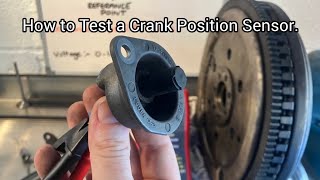
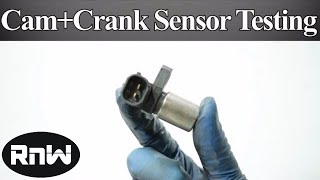
- Faulty Camshaft Position Sensor (CMP) (Less Common) — A failing camshaft sensor causes timing correlation issues that the PCM misinterprets as a crankshaft signal problem. 🎬 See how to test both crankshaft and camshaft sensors for timing issues.
- Failing Fuel Injection Control Module (FICM) (Rare) — On certain diesel engines, the PCM sends a duplicate crank signal to the FICM. A failing FICM corrupts the signal back to the PCM.
- Mechanical Distributor Issues (Older Vehicles) (Rare) — On vehicles with a distributor, a worn internal gear or failing optical sensor generates an erratic signal.
- Failing Powertrain Control Module (PCM) (Very Rare) — An internal fault in the PCM's timing circuit causes it to misinterpret a perfectly good signal from the sensor.
Symptoms
- Engine is Hard to Start or Won't Start — The engine cranks for an extended period before starting, or fails to start entirely because the PCM lacks spark and fuel timing data.
- Rough Idle and Stalling — The engine runs erratically, vibrates heavily, or stalls unexpectedly when coming to a stop or idling.
- Check Engine Light is On — The Malfunction Indicator Lamp (MIL) illuminates immediately upon detecting missing timing pulses.
- Reduced Engine Power and Misfires — The engine hesitates, misfires, and feels significantly weaker during acceleration due to incorrect ignition timing.
- Tachometer Drops to Zero — The dashboard RPM gauge falls to zero while driving, directly reflecting the loss of the crankshaft sensor signal.
Diagnostic Flowchart
Tap your situation to follow the diagnostic path that matches what you're seeing on this code.
Common Fixes & Costs
- Replace the Crankshaft Position Sensor — Parts: $50-$120, Labor: $100-$250, ~1.5 hr book time (DIY)
- Repair or Replace Wiring/Connector — Parts: $15-$50, Labor: $100-$250, ~1.5 hr book time (Intermediate)
- Professional Diagnosis — Parts: $0, Labor: $130-$200, ~1.5 hr book time (Professional)
- Replace the Camshaft Position Sensor — Parts: $40-$100, Labor: $80-$160, ~1.0 hr book time (DIY)
- Replace the Powertrain Control Module (PCM) — Parts: $600-$900, Labor: $200-$300, ~2.0 hr book time (Professional)
Used vs. New Parts: Buying Guide
When a used part is worth it: Never buy a used crankshaft position sensor. The part is inexpensive new, and a used sensor carries an unknown history and high risk of premature failure.
Donor-vehicle mileage cap: roughly under 20000 miles for the part to have meaningful remaining life.
Donor quality checklist:
- Match the part number exactly; do not rely on visual similarity.
- Avoid parts from vehicles scrapped due to engine failure or high mileage.
Decision logic:
- If The part is an electronic sensor like a CKP or CMP sensor → Buy new from an OEM or reputable aftermarket brand (Bosch, Denso). The cost savings are not worth the risk of being stranded.
- If Vehicle is a Chrysler/Dodge/Jeep → Buy an OEM Mopar part. Aftermarket sensors have a high failure rate on these vehicles.
Warranty tradeoff: Used parts have a 30-day warranty. New aftermarket parts offer 1-year to lifetime warranties. New OEM parts carry a 1-2 year warranty.
Worst-case if a used part fails: $250-500 if a used sensor fails, including the cost of a new part, repeated labor, and towing fees.
What Happens If You Wait — Timeline
- 0-2 weeks: Check Engine Light illuminates. The engine cranks slightly longer before starting. The issue is intermittent and barely noticeable. (MPG impact: 0-5%% · Added cost: $0-20 in wasted fuel)
- 2 weeks - 3 months: Symptoms escalate. The engine stumbles during acceleration, idles roughly, and stalls when coming to a stop, especially when hot. (MPG impact: 5-15%% · Added cost: $50-150 in wasted fuel and potential towing.)
- 3-6 months: The vehicle becomes unreliable. Incorrect timing and unburnt fuel from misfires overheat and permanently destroy the catalytic converter. (MPG impact: 15-25%% · Added cost: $1200-$2800 for a new catalytic converter.)
- 6+ months: The vehicle fails to start entirely. If a loose timing chain caused the code, continued driving results in catastrophic engine failure (bent valves). (MPG impact: >25%% · Added cost: $2000-$5000+ for engine repair or replacement.)
Cost of Not Fixing It
- 0-1 month: Noticeable 5-15% drop in fuel economy, hard starting, and severe risk of stalling in traffic. (Added cost: $20-$50 in extra fuel costs.)
- 1-6 months: Persistent misfires from incorrect timing overheat and permanently damage the catalytic converter. (Added cost: $1200-$2800 for a new catalytic converter.)
- 6+ months: Complete vehicle no-start. Potential for catastrophic internal engine damage if a timing chain issue is ignored. (Added cost: $2000+ for engine repair and towing.)
Diagnosis Steps
- Read Codes and Review Freeze Frame Data
Use an OBD-II scanner to confirm P0372. Analyze the freeze frame data to identify the exact engine RPM, load, and temperature when the code triggered. Check for Technical Service Bulletins (TSBs) for known software updates.
Tools: OBD-II Scanner (Beginner) - Check Live Data and Tachometer
Using a scan tool, observe the engine RPM signal (PID). While cranking, watch for the RPM to drop to zero or jump erratically. A healthy engine shows a steady 100-500 RPM while cranking. Zero RPM confirms a dead sensor or broken circuit.
Tools: OBD-II Scanner with Live Data (Beginner) - Thorough Visual Inspection
Inspect the crankshaft position sensor, connector, and wiring harness leading to the PCM. Look for melted plastic, frayed wires, green corrosion on the pins, or heavy oil contamination.
Tools: Flashlight, Mirror (Beginner) - PRO TIP: Tap Test for Intermittent Faults
With the engine running, gently tap the sensor, connector, and wiring harness with a screwdriver handle. If tapping causes the engine to stumble or the RPM signal to drop, you found a loose internal component or poor connection.
Tools: Screwdriver, OBD-II Scanner with Live Data (Intermediate) - Test the Sensor's Circuit with a Multimeter
Disconnect the sensor and turn the key to 'ON'. Probe the connector terminals for the correct reference voltage (5V or 12V) and a solid ground (voltage drop < 0.10V). Check for continuity on the signal wire back to the PCM (< 1 ohm).
Tools: Digital Multimeter, Vehicle-specific repair manual (Intermediate) - Inspect the Reluctor Ring
If accessible through an inspection port, inspect the reluctor ring. Look for damaged teeth, metallic debris buildup, or wobble as you rotate the engine by hand. A single damaged tooth triggers P0372.
Tools: Flashlight, Socket set (to rotate engine) (Intermediate) - Advanced: Test Sensor Signal (Hall-Effect Sensors)
For a 3-wire Hall-effect sensor, backprobe the signal wire with a multimeter set to DC Volts. While cranking, the voltage must rapidly switch between 0V and 5V, creating a square wave.
Tools: Digital Multimeter with backprobe pins (Advanced) - Advanced: Test Sensor Resistance (Magnetic Sensors)
For a 2-wire magnetic sensor, measure resistance between the terminals. Most read between 200 and 1,000 Ohms. A reading of 0 Ohms is a short; infinite (OL) is an open circuit.
Tools: Digital Multimeter (Advanced) - Advanced: Test Sensor AC Voltage (Magnetic Sensors)
Connect a multimeter (set to AC Volts) to the two magnetic sensor pins. Crank the engine. It must generate an AC voltage of at least 200mV (0.2V). No voltage means the sensor failed.
Tools: Digital Multimeter with backprobe pins (Advanced) - Analyze the Signal with an Oscilloscope
An oscilloscope displays the sensor's output waveform. A P0372 fault shows missing pulses, a distorted waveform, or a drop in voltage amplitude, definitively confirming a sensor, reluctor ring, or wiring failure.
Tools: Oscilloscope (Advanced)
When This Code Triggers (Freeze-Frame Conditions)
- Engine Coolant Temp: 180-210°F (Engine at full operating temperature. Failures often occur after heat soak.)
- RPM: 1500-3000 RPM (During cruise, light acceleration, or when RPM is changing.)
- Engine Load: 20-50% (Under light to moderate load, not typically during heavy acceleration.)
- Vehicle Speed: 30-60 mph (Steady state highway or city driving when the signal loss becomes apparent.)
Related Codes
- P0370 — A general malfunction code for the 'A' timing reference circuit. P0372 is more specific, indicating 'too few' pulses.
- P0371 — The opposite of P0372, meaning 'Too Many Pulses'. Points to electrical noise or interference from another component.
- P0373 — Indicates 'Intermittent/Erratic' pulses. Points to an unstable signal caused by a loose wire or corroded connector.
- P0374 — The most severe code, indicating 'No Pulses'. The signal is completely gone, guaranteeing a no-start condition.
- P0340 — Camshaft Position Sensor Circuit Malfunction. If paired with P0372, it strongly indicates a mechanical timing chain/belt issue.
Climate & Environmental Factors
- High Temperature / Heat Soak: Engine heat causes the internal electronics of a crankshaft sensor to fail, leading to signal loss only when hot. Radiant exhaust heat after shutting off the engine exacerbates this 'heat soak' failure.
- Extreme Cold: Extreme cold causes wiring insulation to become brittle and crack. It also freezes condensation inside connectors, compromising the electrical connection.
- Humidity / Moisture: High humidity accelerates corrosion on connector pins and wiring. This corrosion increases circuit resistance, weakening the sensor signal.
How to Talk to a Mechanic About This Code
Say this: "I have a P0372 code and the car stalls when warm. Please check the live RPM data from the crank sensor when the symptom occurs and visually inspect the wiring harness before recommending a new sensor."
This signals you understand the code points to a circuit issue, not just a bad part. It directs the technician to perform a specific diagnostic step, preventing them from blindly swapping parts.
Avoid saying:
- 'Just replace the crankshaft sensor.'
- 'My check engine light is on, can you just fix it?'
- 'I think my computer is bad.'
Questions to ask before authorizing the repair:
- Did you confirm the sensor signal drops out on a scan tool or oscilloscope when the engine is hot?
- Did you inspect the wiring harness and connector for damage or corrosion?
- Is the quote for an OEM part or aftermarket? What is the warranty on the part and labor?
Where to Take It: Dealer vs Independent vs Chain
- Dealer:
Good if the vehicle is under warranty or has a specific known issue. For out-of-warranty cars, an independent shop is more cost-effective.
Best for: Vehicles under warranty, Complex electrical issues on newer cars (2018+), Known manufacturer-specific quirks (VW TDI needle lift sensor)
Downsides: Highest labor rates, Quick to replace entire modules rather than perform targeted wire repairs (Typical cost: +50% vs. baseline) - Independent Shop:
Best fit. A good independent shop with electrical diagnostic experience is perfectly equipped to handle P0372 and is more willing to perform circuit testing.
Best for: Out-of-warranty vehicles, Common diagnostic challenges like P0372, Targeted wiring repairs
Downsides: Quality varies widely; must vet shops by ASE certifications, May lack manufacturer-specific software for brand new cars (Typical cost: +0% vs. baseline) - Chain Shop:
AVOID for diagnosis. High risk of misdiagnosis and paying for parts you don't need.
Best for: Simple jobs like oil changes, tires, and brakes
Downsides: Technician skill is highly variable, High pressure to upsell services, Lack advanced diagnostic tools (oscilloscopes) and electrical training (Typical cost: -10% vs. baseline)
When to Walk Away From the Repair
If the estimated repair cost exceeds 50% of the car's private-party value, seriously consider selling or trading in the vehicle.
- Car worth $4500, fix is $350: Fix it. This is a minor cost to keep a functional vehicle on the road.
- Car worth $3000, fix is $1500: Borderline. The repair is 50% of the car's value. Get a second opinion and consider pending maintenance needs before proceeding.
- Car worth $2000, fix is $1800: Walk away. The repair cost is not justified. Put the money toward a replacement vehicle.
What Scan Tool You Need for This Code
Minimum: Reads and clears codes, shows live data (specifically Engine RPM).
A basic $20 code reader only shows 'P0372'. It won't show live engine RPM, which is critical for confirming the fault is in the crank sensor circuit.
Budget: Ancel BD310 or MotoPower MP69033 (~$40-70) — Provides live data, including a graph of the engine RPM. This is the minimum tool needed to see the signal drop out when the symptom occurs.
Mid-range: BlueDriver Pro or Foxwell NT530 (~$120-250) — Offers detailed live data, graphing, and reads manufacturer-specific codes beyond generic powertrain codes.
Professional: Autel MaxiCOM MK808 / Foxwell NT809 (~$450-600) — Full-system, bi-directional scanners. Their fast data logging and graphing are excellent for capturing the intermittent signal loss that causes P0372.
Rent vs buy: For a one-time diagnosis, borrow a basic scanner from an auto parts store. If you repair your own vehicles, buying a budget pick with live data is a mandatory investment.
How to Clear the Code After You Fix It
- Use an OBD-II scan tool to clear the P0372 code.
- Ensure the fuel tank is between 15% and 85% full.
- Perform a complete drive cycle to allow the vehicle's readiness monitors to run.
Drive cycle (~30 minutes): Start with a cold engine (off for 8+ hours). Idle for 3 minutes with A/C on. Drive in stop-and-go traffic for 10 minutes. Accelerate to 55 mph and hold steady for 5 minutes. Decelerate to 20 mph without using the brake. Repeat highway cruise and deceleration.
Readiness monitors affected: Comprehensive Component Monitor (CCM), Misfire Monitor, Catalyst Monitor
Before emissions retest: drive at least 100 miles to fully set monitors.
Watch out for:
- Disconnecting the battery clears the code but resets all readiness monitors to 'Not Ready', guaranteeing an emissions test failure.
- The code returns immediately if the underlying mechanical or electrical fault is not fixed.
- Skipping the 8-hour 'cold soak' prevents the EVAP monitor from running.
Will This Fail Emissions / State Inspection?
Yes — this code typically fails an OBD-II emissions inspection.
- California: An active P0372 code is an automatic failure. All required readiness monitors must be 'Ready'. A full drive cycle is needed before re-testing.
- New York: An illuminated Malfunction Indicator Lamp (MIL) for any diagnostic trouble code results in an automatic failure.
- Texas: An illuminated Check Engine Light is an automatic fail. For 2001+ vehicles, only one readiness monitor is allowed to be 'Not Ready' to pass.
Most Commonly Affected Vehicles
- Ford F-150, Explorer, Mustang (2004-2024) — Very common on 5.0L and EcoBoost engines. The sensor is often difficult to access, increasing labor time.
- Chevrolet / GMC Silverado, Sierra, Tahoe (1999-2013) — Prone to issues with both the crankshaft position sensor and the wiring harness chafing against the engine block.
- Dodge / Ram / Jeep Ram 1500, Grand Cherokee, Wrangler (1999-2015) — The 4.0L, 4.7L, and 5.7L HEMI engines suffer sensor failures causing stalling. OEM (Mopar) sensors are mandatory.
- Volkswagen Jetta, Golf (TDI) (1997-2006) — On ALH and AHU diesel engines, this code is caused by a failing 'needle lift sensor' in the #3 fuel injector.
- Nissan Altima, Sentra, Frontier (2002-2012) — Crankshaft and camshaft sensor failures are a well-documented issue, often replaced as a pair.
Manufacturer-Specific Notes
- General Motors (GM): On older GM vehicles with distributors, a worn distributor gear or excessive shaft play causes this code, even if the sensors are perfect.
- Chrysler/Dodge/Jeep: OEM (Mopar) sensors are mandatory. Aftermarket sensors have a notoriously high failure rate and incorrect calibration for these PCMs.
- Volkswagen (TDI): On 1.9L TDI engines (ALH, AHU), P0372 is caused by a faulty 'needle lift sensor' in the #3 fuel injector, not the crankshaft sensor.
- Ford: The crankshaft position sensor is often located behind the A/C compressor or starter, significantly increasing labor time for replacement.
Real Owner Stories
2005 Buick LeSabre 3.8L V6
Car started and immediately died when warm. It eventually stalled while driving at 35 mph. A code for the crankshaft position sensor was present.
What they tried:
- Replaced the crankshaft position sensor, but the code and stalling remained.
Outcome: The actual cause was a heat-soak failure in the wiring harness. The wires expanded under high engine bay temperatures, breaking the connection to the PCM.
Lesson: If a new sensor fails to fix P0372, inspect the wiring harness for heat-related expansion and connection loss. Intermittent faults when warm are classic electrical connection issues.
2003 Jeep Liberty 3.7L V6
Vehicle stalled intermittently at idle after 10 minutes of driving. It refused to restart until cooling down for several hours.
What they tried:
- Shop diagnosed a small intake leak but lacked confidence it was the root cause.
Outcome: The failing crankshaft position sensor suffered from heat soak. Replacing the sensor on the right rear side of the cylinder block permanently resolved the stalling.
Lesson: Intermittent hot-stalling followed by a cold-start resolution is a textbook failing crankshaft position sensor. The internal electronics fail at high temperatures.
1997-2006 Volkswagen Jetta TDI (ALH Engine)
Owner experienced hard starting, rough idle, and poor performance, assuming a bad crankshaft sensor.
What they tried:
- Prepared to replace the crankshaft position sensor.
Outcome: On these specific VW diesel engines, P0372 points to a failing 'needle lift sensor' located in the #3 fuel injector, not the crankshaft sensor.
Lesson: Always check vehicle-specific quirks. VW TDI engines use the #3 injector for timing feedback, saving the cost of replacing a perfectly good crankshaft sensor.
General Misdiagnosis Case
A vehicle triggered P0372. The mechanic immediately replaced the crankshaft and camshaft sensors.
What they tried:
- Replaced both sensors at a cost of $300.
Outcome: The code returned immediately. The actual problem was a single bent tooth on the reluctor ring inside the engine.
Lesson: P0372 indicates a circuit problem. Visually inspect wiring, connectors, and the reluctor ring before buying parts. Sensors only report what they see.
How to Prevent This Code From Triggering
- Fix Oil and Coolant Leaks Promptly (During oil changes) — Oil and coolant leaks saturate the sensor and wiring, degrading the plastic housing and insulation over time until the circuit shorts out.
- Inspect Wiring and Grounds (Annually) — Voltage irregularities from bad grounds or frayed wires disrupt the sensor's signal. A solid ground connection guarantees a clean sensor reading.
- Maintain Cooling System (Per manufacturer schedule) — Extreme heat destroys internal sensor electronics. Preventing engine overheating protects the crankshaft sensor from premature 'heat soak' failures.
- Install OEM Replacement Sensors (During replacement) — Cheap aftermarket sensors lack correct calibration and fail prematurely. OEM sensors ensure the PCM receives the exact pulse width it expects.
Frequently Asked Questions
What is the 'A' signal in the code P0372?
The 'A' refers to a specific circuit or signal stream the car's computer is monitoring. Some systems have multiple reference signals (A, B, etc.). 'A' typically refers to the primary high-resolution crankshaft position sensor circuit.
What is a reluctor ring and how does it cause P0372?
A reluctor ring (or tone ring) is a toothed metal wheel that rotates with the crankshaft. As each tooth passes the crankshaft sensor, it generates a pulse. If the ring is cracked, has broken teeth, or is covered in metallic debris, the sensor misses readings and triggers P0372.
What are the most common misdiagnosis mistakes for P0372?
The biggest mistake is immediately replacing the crankshaft sensor without performing a full diagnosis. Technicians often find the true cause is a corroded connector, a frayed wire, a damaged reluctor ring, or a loose timing chain. These issues perfectly mimic a failed sensor.
Can a bad timing belt or chain cause a P0372 code?
Yes. If the timing belt or chain stretches or jumps a tooth, the physical timing of the engine is incorrect. The PCM compares the crankshaft and camshaft sensor signals, and if they misalign, it sets a timing code like P0372.
Can a bad battery cause a P0372 code?
Yes, a weak or failing battery causes low voltage throughout the car's electrical system. This leads to inconsistent or weak signals from sensors and triggers a P0372 code, especially during engine cranking when voltage drops the most.
Is it better to replace the camshaft and crankshaft sensors at the same time?
If your vehicle has over 100,000 miles, replacing both is smart preventative maintenance. They share similar age and construction, and a failing crank sensor sometimes stresses the system, revealing a weakness in the cam sensor.
I replaced the sensor and the code came back. What now?
If a new sensor doesn't fix the problem, the issue is in the wiring, the connector, the reluctor ring, or the mechanical engine timing. Re-inspect the wiring for damage, test the circuit's continuity back to the PCM, and verify the reluctor ring is intact. Using an OEM sensor is also critical for some makes.
Key Takeaways
- Replacing a faulty crankshaft position sensor resolves P0372 in over 70% of cases, but always inspect the wiring harness first.
- Expect immediate drivability issues like stalling at idle, extended cranking times over 3 seconds, and a lit Check Engine Light.
- Test the sensor circuit with a multimeter to verify a 5V or 12V reference signal before spending $50-$120 on a replacement sensor.
- Use an OBD-II scanner with live data to monitor engine RPM; a reading that drops to 0 RPM while cranking confirms a dead sensor or broken circuit.
Helpful Videos
Shop the Parts Behind P0372
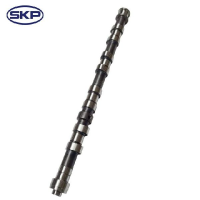
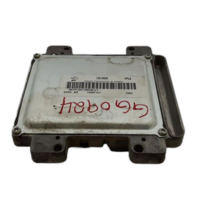
Below are the parts most often responsible for code P0372, ranked by how frequently each one is the actual culprit (per the diagnosis above). Tap any to see what we have for your vehicle.


The information in this article is provided for general reference and educational purposes only. Vehicle specifications, procedures, and part compatibility can vary by production date, trim level, and region. Always consult your vehicle's factory service manual and verify part numbers before purchasing or performing repairs. Safety-critical components such as airbags, seat belts, and braking systems should be installed by a qualified professional.
- 🧭 Diagnostic Flowchart
- 🎬 Helpful Videos
- 🛍️ Shop This Part
- What Does P0372 Mean?
- Can I Drive With P0372?
- Common Causes
- Symptoms
- Common Fixes & Costs
- Used vs. New Parts: Buying Guide
- What Happens If You Wait — Timeline
- Cost of Not Fixing It
- Diagnosis Steps
- When This Code Triggers (Freeze-Frame Conditions)
- Related Codes
- Climate & Environmental Factors
- How to Talk to a Mechanic About This Code
- Where to Take It: Dealer vs Independent vs Chain
- When to Walk Away From the Repair
- What Scan Tool You Need for This Code
- How to Clear the Code After You Fix It
- Will This Fail Emissions / State Inspection?
- Most Commonly Affected Vehicles
- Manufacturer-Specific Notes
- Real Owner Stories
- 2005 Buick LeSabre 3.8L V6
- 2003 Jeep Liberty 3.7L V6
- 1997-2006 Volkswagen Jetta TDI (ALH Engine)
- General Misdiagnosis Case
- How to Prevent This Code From Triggering
- Frequently Asked Questions
- What is the 'A' signal in the code P0372?
- What is a reluctor ring and how does it cause P0372?
- What are the most common misdiagnosis mistakes for P0372?
- Can a bad timing belt or chain cause a P0372 code?
- Can a bad battery cause a P0372 code?
- Is it better to replace the camshaft and crankshaft sensors at the same time?
- I replaced the sensor and the code came back. What now?
- Key Takeaways
- 🎟️ Get 5% Off