

P0390 on 2004-2011 Audi A6 3.2L FSI: Camshaft Sensor Causes and Fixes
This code points to the exhaust camshaft position sensor on the driver's side (Bank 2). It's often a simple fix like a bad sensor or wiring. However, on the 3.2L FSI engine, it can also be an early warning for more serious timing chain issues, so proper diagnosis is key.
- P0390 on this Audi refers to the exhaust camshaft position sensor on the driver's side (Bank 2).
- The easiest first step is to inspect the wiring and swap the sensor with the one from Bank 1 to see if the fault follows the sensor.
- CRITICAL: On the 3.2L FSI, this code is a very common symptom of a stretched timing chain or failing tensioner. Before replacing the sensor, use VCDS to check Measuring Block 93. A phase deviation value beyond -8 degrees indicates a serious mechanical problem that a new sensor will not fix.
What's Unique About the 2004-2011 Audi A6
While a P0390 code on many cars is a straightforward sensor replacement, on the Audi C6 A6 with the 3.2L V6 FSI engine, it demands more careful attention. This engine uses a complex timing chain system located at the rear of the engine. These chains and their tensioners are known to wear over time. A P0390 code can be an early symptom of a stretched timing chain or a failing tensioner, which causes the camshaft's position to deviate from what the ECM expects. Mistaking this for a simple sensor failure can lead to ignoring a much more severe underlying problem that could result in catastrophic engine failure.
Symptoms You May Notice
- Check Engine Light is on
- Engine runs rough or idles poorly
- Hesitation or lack of power during acceleration
- Difficulty starting the engine
- Reduced fuel economy
- Engine may stall intermittently
- Audible rattling noise from the back of the engine on cold startup (if related to timing chains)
- Replacing the sensor without checking timing chain deviation. If the camshaft phase position is off due to a stretched chain, a new sensor will not fix the problem, and the code will return. This is a common experience reported by owners.
Most Likely Causes
- Faulty Exhaust Camshaft Position Sensor (Bank 2) 🔴 High Probability → Shop Engine Camshaft Position Sensor Sensors can fail with age and exposure to heat cycles in the engine bay. Oil leaks from the valve cover can also contaminate the sensor and its connector, causing failure.
How to confirm: After checking wiring, the easiest way to confirm is to swap the suspect sensor with the identical sensor from Bank 1 (passenger side). If the fault code changes to P0365 (Camshaft Position Sensor 'B' Circuit Bank 1), the sensor is bad. A multimeter can also be used to test the sensor's resistance against specifications.
Typical fix: Replace the Bank 2 exhaust camshaft position sensor.
Est. part cost: $30-$100 - Wiring or Connector Issue 🟡 Medium Probability The wiring harness in the engine bay is exposed to heat, vibration, and oil, which can cause wires to become brittle, chafe, or break over time. The connector pins can also corrode or become loose.
How to confirm: Visually inspect the wiring harness leading to the sensor for any signs of damage, chafing, or melting. Unplug the connector and check for corrosion, bent pins, or oil contamination. Use a multimeter to test for proper voltage (5V reference), ground, and signal continuity at the connector.
Typical fix: Repair the damaged section of wiring or replace the connector pigtail. Clean any oil or corrosion from the connector.
Est. part cost: $15-$50 - Worn Timing Chain or Failing Tensioner 🟡 Medium Probability The 3.2L FSI engine is known for issues with its timing chain system, particularly the upper tensioners which can seize or weaken. As the chains stretch or tensioners weaken, the correlation between the camshafts and crankshaft can drift. This causes the cam timing to be physically out of phase, triggering a fault code because the sensor's reading, while accurate, doesn't match the crankshaft's position.
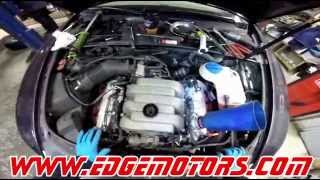
How to confirm: This requires an advanced diagnostic scan tool like VCDS. Navigate to Engine (01) -> Measuring Blocks -> Group 093. Observe the values 🎬 Watch: How to check timing chain deviation using a scanner. for 'Camshaft Adjustment Phase Position' for Bank 1 and Bank 2. Values that are significantly deviated from zero (e.g., beyond -8 degrees) strongly suggest a stretched chain or failing tensioner. A rattling noise from the back of the engine on startup is another key symptom.
Typical fix: This is a major repair that involves replacing the timing chains, tensioners, and guides. The upper tensioners can sometimes be replaced without removing the engine, but a full chain service requires engine removal.
Est. part cost: $500-$1500
Rare But Worth Checking
- Faulty Engine Control Module (ECM): → Shop Engine Control Module (ECM) This is extremely rare. The ECM should only be considered after all other possibilities, including sensor, wiring, and mechanical timing, have been exhaustively tested and ruled out. An ECM software glitch could also be a possibility, which might be fixed by re-flashing the module.
Diagnosis Steps
- Read Fault Codes: Use an OBD-II scanner to confirm P0390 is the primary code. Note any other codes present, especially correlation codes (P0019) or misfire codes (P0304, P0305, P0306).
- Visual Inspection: Open the hood and locate the Bank 2 (driver's side) exhaust camshaft position sensor. It is on the upper timing chain cover. Inspect the sensor's connector and nearby wiring for any obvious signs of damage, oil leaks, or loose connections.
- Swap Test: Unplug and remove the Bank 2 exhaust sensor and the Bank 1 (passenger side) exhaust sensor. They are identical parts. Swap them. Clear the codes and drive the vehicle. If the code returns as P0365 (Bank 1), the sensor you moved is faulty.
- Test the Circuit: If the code remains P0390 after the swap, the problem is likely in the wiring or ECM. Use a multimeter to check the sensor connector for a 5-volt reference, a good ground, and a signal wire.
- Check Mechanical Timing (Advanced): This is the most critical step for this engine. Use a VAG-specific scan tool (like VCDS) and navigate to [01-Engine] -> [Meas. Blocks - 08] -> Group 093. At warm idle, observe the values in the 2nd and 4th fields (Phase Position Bank 1 and Bank 2). If the value for Bank 2 is approaching or has exceeded -8.0° a significant timing chain stretch or tensioner problem is indicated.
- Listen for Startup Rattle: On a cold start (after the car has sat overnight), listen for a distinct metallic rattle from the rear of the engine that lasts for 1-3 seconds. 🎬 See this video to hear the timing chain rattle sound. This is the classic sign of failing upper timing chain tensioners.
- Professional Diagnosis: If timing chain issues are suspected based on VCDS readings or startup noise, consult a professional mechanic who specializes in European vehicles for a definitive diagnosis and repair, as this is an engine-out service for a full replacement.
Parts You'll Likely Need
- Camshaft Position Sensor
(OEM #07L905163C)— This is the most common component to fail for this code when the cause is electrical. It directly generates the signal that the ECM is reporting as faulty. Note: This part number supersedes 06E905163, 07L905163A, and 07L905163B.
Trusted brands: Bosch, Delphi, Hitachi, Genuine Audi
OEM price range: $80-$120
Aftermarket price range: $30-$60 - Upper Timing Chain Tensioners
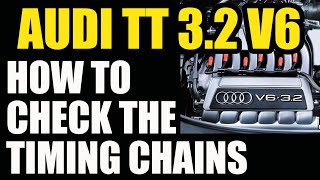
(OEM #06E109217AH (Bank 2), 06E109218AJ (Bank 1))— If diagnosis points to a mechanical timing issue, these are the most common failure points within the timing system that can be replaced without full engine removal. 🎬 Watch: Step-by-step DIY guide for replacing upper timing chain tensioners. TSB 2039995/1 for a similar engine calls for these specific updated parts to resolve startup rattle.
Trusted brands: INA, Genuine Audi
OEM price range: $200-$350 per set
Aftermarket price range: $100-$200 per set
Related Codes That Often Appear With This One
- P0019 — This code indicates 'Crankshaft Position - Camshaft Position Correlation Bank 2 Sensor B'. It is a more specific mechanical timing fault and strongly suggests the issue is with a stretched chain or failed adjuster, not just the sensor circuit.
- P0346 — This is the corresponding code for the intake camshaft position sensor on Bank 2. Seeing both codes together could point to a larger issue affecting the entire cylinder bank, such as a problem with the variable valve timing system or a timing chain guide.
- P0300, P0304, P0305, P0306 — These are random and specific misfire codes for Bank 2 (cylinders 4, 5, and 6). Incorrect camshaft timing due to a bad sensor signal or mechanical issue will disrupt ignition and fuel timing, leading to misfires on the affected bank.
Technical Service Bulletins (TSBs) & Recalls
- TSB 2039995/1 (for 3.0T but relevant): Addresses a 1-3 second rattling noise from the timing chain area on cold start, caused by the upper chain tensioners. It recommends replacing both with optimized parts. This symptom is widely reported on the 3.2L FSI as well.
Platform-Specific Known Issues
- The 3.2L V6 FSI engine is notorious for premature wear of its timing chains and tensioners. A startup rattle from the rear of the engine is a classic symptom. Camshaft position codes are often the first electronic sign of this developing mechanical failure.
- An owner on AudiForums reported a recurring P0390 even after a dealership replaced the sensor. This highlights the common misdiagnosis of treating it as a simple sensor fault when the underlying cause is mechanical timing deviation.
Mechanic-Grade Diagnostic Values
- Camshaft Position Sensor Connector Voltage — expected: Approximately 5.0V between terminal 1 (5V reference) and terminal 3 (ground) with the key on, engine off.. Failure: No voltage or significantly lower voltage suggests a wiring issue or a problem with the ECM's 5V supply circuit.
- Wiring Harness Continuity to ECM — expected: Maximum resistance of 1.5 ohms between the sensor connector pins and the corresponding pins at the ECM connector.. Failure: Resistance higher than 1.5 ohms (or an open circuit) indicates a break or high resistance in the wiring harness.
- Camshaft Adjuster Phase Position (VCDS) — expected: At warm idle, the value in Measuring Block 093, field 4 (Bank 2) should be close to 0°. A value between -8° and +8° is generally acceptable.. Failure: A value that has deviated beyond -8° strongly indicates a stretched timing chain or failing tensioner on Bank 2.
Hidden / Shadow Codes Worth Checking
- 17800/P1392/005010: This is a VAG-specific DTC for "Camshaft Position Sensor Bank 2 (G163): Open Short to Plus". It is more descriptive than the generic P0390 and points specifically towards an electrical fault (open circuit or short to power) rather than a performance/range issue. (see via VCDS (VAG-COM) or other VAG-specific diagnostic tools.)
Scan Tool Commands That Help
- VCDS (VAG-COM): Output Test for Camshaft Adjustment Solenoid (N319) — If a timing deviation is noted in Measuring Block 093 but a full chain replacement is not yet justified, this test can be used to audibly check if the Bank 2 exhaust camshaft adjuster solenoid is actuating. A lack of clicking may indicate a stuck or failed solenoid, which is a less intensive repair than a full timing chain service.
Wiring & Ground Locations
- Engine Ground Point — A small gauge ground wire is attached to one of the bolts on the oil filter housing. Forum users report this is a critical ground point and can be easily missed or left unattached after major service like an engine replacement.. A poor or missing ground connection for the engine sensor harness can introduce electrical noise or incorrect voltage references, potentially causing intermittent sensor fault codes like P0390.
- Camshaft Position Sensor (G301) Connector — On the upper timing chain cover on the driver's side (Bank 2) of the engine. It is a 3-pin connector.. This is the direct connection point for the sensor. Pin 1 is the 5V supply, and Pin 3 is the ground. Testing voltage here is the first step in diagnosing an electrical fault.
Real Owner Repair Stories
- AudiWorld Forums user 'Catamount90' (Audi A6 3.2L) — Camshaft Position Sensor Implausible Signal DTC. VCDS Measuring Blocks showed the actual cam adjustment was 10 degrees when the specified value was 0.
❌ Tried (didn't work) Initial diagnosis pointed towards a major timing issue.
✅ What actually fixed it The user created test leads and applied a direct 12V from the battery to the pins of the stuck Camshaft Adjustment Solenoid. After several pulses (including reversing polarity), the solenoid became unstuck. The car ran smoother, and the fault was resolved, suggesting debris had jammed the solenoid. - AudiForums.com user (2008 Audi A6 Quattro 3.2L at 72,000 miles) — Intermittent P0390 code that would appear weekly and then clear itself after 6-10 drive cycles.
❌ Tried (didn't work) The dealership replaced the camshaft position sensor, but the fault kept returning.
✅ What actually fixed it The forum thread did not have a final confirmed fix, but the user was advised to check for mechanical timing issues (VCDS Block 093) and to swap the camshaft adjuster solenoids between banks to see if the problem moved, pointing away from the sensor itself. This story highlights the common misdiagnosis of replacing the sensor when the issue is mechanical.
Model Year Variations Within This Range
- 2004-2010: The 3.2L FSI engine was available under several engine codes, most commonly AUK and BKH. While functionally very similar and sharing the same core design and issues (timing chains, carbon buildup), there can be minor variations in parts or ECU software. It is always critical to verify parts by VIN. The C6 platform received a facelift for the 2009-2011 model years, which included revised styling and infotainment but largely carried over the 3.2L FSI engine without major mechanical changes.
Diagnostic Flowchart
Other Known Issues on This Vehicle
Issues unrelated to this code that are worth knowing about as an owner of this generation:
- Intake Valve Carbon Buildup 🔴 High — Very common on FSI (direct injection) engines, often requiring cleaning every 50,000-70,000 miles. Symptoms include rough idle, misfires, and loss of power.
- Upper Timing Chain Tensioner Failure 🔴 High — A well-documented failure point. A rattling sound from the rear of the engine for a few seconds on a cold start is the primary symptom. If ignored, can lead to chain jump and catastrophic engine damage. (Ref: While for the similar 3.0T engine, TSB 2039995/1 addresses this exact symptom and recommends replacing upper tensioners.)
- Thermostat Failure 🟠 Medium — Common failure where the thermostat sticks open, preventing the engine from reaching full operating temperature (90°C), especially during highway driving. This leads to poor fuel economy and heating performance.
- Oil Leaks (Valve Cover, Timing Covers) 🟠 Medium — As the engine ages, gaskets and seals become brittle, leading to oil leaks. The valve cover gaskets and upper timing chain cover seals are frequent culprits.
- High-Pressure Fuel Pump (HPFP) Failure 🟠 Medium — The HPFP can wear out over time, leading to fuel delivery issues, rough running, and hesitation.
Used vs. New Parts: Buying Guide for This Vehicle
When a used part is the smart pick: Used parts are generally not recommended for this repair due to the nature of the common failure points. Sensors are electronic and have a finite life, while timing components are wear items. A used camshaft adjuster solenoid could be a viable short-term option if sourced from a low-mileage, documented vehicle, but the risk of it having the same sticking issue is high.
Donor-vehicle mileage cap: roughly under 60000 miles for the part to have meaningful remaining life.
What to inspect on the donor part:
- For a solenoid: Ask for the donor vehicle's VIN to check its service history for regular oil changes.
- Visually inspect the solenoid's screen for any metallic debris or sludge.
- For a sensor: Ensure the connector pins are clean, straight, and free of corrosion. Avoid sensors from engines with heavy oil leaks.
OEM-only on this vehicle (don't cheap out):
- Camshaft Position Sensor: Aftermarket sensors, especially no-name brands, have a high failure rate and can cause persistent or new codes. It is strongly recommended to use OEM (Genuine Audi) or a reputable OE supplier like Bosch or Hitachi.
- Timing Chain Components: Given the labor-intensive nature of a timing chain job, using anything other than high-quality OEM or OE-supplier (like INA) parts is a significant risk that could lead to premature failure and catastrophic engine damage.
Aftermarket brands forum-validated for this vehicle:
- Bosch (for sensors)
- Hitachi (for sensors)
- INA (for timing components)
Brands owners have reported issues with on this vehicle:
- Unbranded, 'white-box' electronic sensors from online marketplaces. Owners frequently report these are dead-on-arrival or fail within a few months.
Real Owner Stories
Aggregated from forums and TSBs cited above. Mileages and costs reflect what owners reported in those sources.
2004-2011 Audi A6 3.2L V6 FSI
Symptoms: A recurring P0390 code that persisted even after the camshaft position sensor was replaced by a dealership.
What fixed it: The underlying cause was identified as mechanical timing deviation, indicating the problem was with the timing chains, not the sensor.
Source hint: AudiForums (cited in vehicle_specific_issues)
2004-2011 Audi A6 3.2L V6 FSI
Symptoms: A 1-3 second rattling noise from the timing chain area on cold start.
What fixed it: The recommended repair is replacing both upper chain tensioners with optimized parts.
Source hint: TSB 2039995/1
Related OBD-II Codes
Frequently Asked Questions
I hear a rattling noise from the back of my engine on startup. Is this related to my P0390 code?
My mechanic wants to replace the camshaft sensor for P0390. Is that always the correct fix?
How can I check for a timing chain problem myself before taking it to a shop?
Which side of the engine is Bank 2 on my Audi A6 3.2L?
Can I just swap the Bank 1 and Bank 2 sensors to test if the sensor is bad?
I saw TSB 2039995/1 mentioned, but it's for a 3.0T engine. Does it apply to my 3.2L FSI?
Helpful Videos
We Have This Part in Stock


The information in this article is provided for general reference and educational purposes only. Vehicle specifications, procedures, and part compatibility can vary by production date, trim level, and region. Always consult your vehicle's factory service manual and verify part numbers before purchasing or performing repairs. Safety-critical components such as airbags, seat belts, and braking systems should be installed by a qualified professional.
- Audi A6:
- 🧭 Diagnostic Flowchart
- 🎬 Helpful Videos
- 🛍️ Shop This Part
- What's Unique About the 2004-2011 Audi A6
- Symptoms You May Notice
- Most Likely Causes
- Rare But Worth Checking
- Diagnosis Steps
- Parts You'll Likely Need
- Related Codes That Often Appear With This One
- Technical Service Bulletins (TSBs) & Recalls
- Platform-Specific Known Issues
- Mechanic-Grade Diagnostic Values
- Hidden / Shadow Codes Worth Checking
- Scan Tool Commands That Help
- Wiring & Ground Locations
- Real Owner Repair Stories
- Model Year Variations Within This Range
- Other Known Issues on This Vehicle
- Used vs. New Parts: Buying Guide for This Vehicle
- Real Owner Stories
- 2004-2011 Audi A6 3.2L V6 FSI
- 2004-2011 Audi A6 3.2L V6 FSI
- Related OBD-II Codes
- Frequently Asked Questions
- 🎟️ Get 5% Off