

P0390 on 2017-2021 Chrysler Pacifica: Camshaft Sensor B Bank 2 Causes and Fixes
On a 2017-2021 Pacifica, code P0390 is often caused by a software issue requiring a dealer to update the Powertrain Control Module (PCM). This is a well-documented issue covered by multiple Technical Service Bulletins (TSBs). If a software update does not resolve the code, the next most likely culprit is a faulty camshaft position sensor or a wiring issue. A sensor replacement is relatively inexpensive and accessible for DIY repair.
- Before buying any parts for a P0390 code, check with a dealer to see if your Pacifica needs a PCM software update per TSB #1805022REVA.
- The code refers to the exhaust camshaft position sensor on the driver's side of the engine.
- If a software update doesn't fix it, the most likely cause is a bad sensor, which is a relatively easy and affordable DIY replacement for those with basic tools.
- Always inspect the wiring and connector for oil damage or corrosion before replacing the sensor.
What's Unique About the 2017-2021 Chrysler PACIFICA

For the Chrysler Pacifica with the 3.6L Pentastar engine, this code is unique because it is frequently triggered by a software glitch rather than a failed part. Chrysler has issued multiple Technical Service Bulletins (TSBs), such as #18-050-22 and #18-002-19 REV A, advising that the Powertrain Control Module (PCM) may need to be reprogrammed (or "flashed") to correct overly sensitive logic that can generate false or intermittent sensor codes. This means that simply replacing the sensor might not fix the problem, making a trip to a dealer or a properly equipped shop a necessary first diagnostic step to check for software updates.
Diagnostic Flowchart

Tap your situation to follow the diagnostic path that matches what you're seeing on this vehicle.
Symptoms You May Notice
- Check Engine Light is on
- Rough or unstable idle
- Engine hesitation or lack of power during acceleration
- Difficulty starting the engine, or long crank times
- Engine stalling
- Reduced fuel economy
- Engine misfires
- Replacing the camshaft position sensor without first checking for required software updates. Many owners replace the part only to have the code return because the root cause was the PCM software.
- Replacing the wrong sensor. The 3.6L Pentastar has four camshaft sensors. P0390 specifically refers to the exhaust camshaft sensor 🎬 Watch: Understanding the causes and fixes for the P0390 code. on Bank 2 (driver's side).
Most Likely Causes

- Powertrain Control Module (PCM) Software Update Needed 🔴 High Probability → Shop Engine Control Module (ECM) As documented in Chrysler TSBs #18-050-22 and #18-002-19 REV A, a software update is specifically designed to address this and other related camshaft sensor codes. The PCM's logic for interpreting sensor signals can be overly sensitive, leading to false codes, especially intermittent ones (P0394). The TSBs change the fault from a one-trip to a two-trip fault, making it less likely to trigger the light for a momentary glitch.
How to confirm: A Chrysler dealer or a qualified repair shop with access to OEM software (wiTECH) can check your vehicle's VIN to see if its PCM has the latest software version and if it's covered by an applicable TSB. This cannot be done with a standard OBD-II scanner.
Typical fix: Flashing (reprogramming) the PCM with the updated software. This is a software-only fix.
Est. part cost: $0-$250 - Faulty Camshaft Position Sensor 🟡 Medium Probability → Shop Engine Camshaft Position Sensor Sensors can fail over time due to heat cycles and internal electronic failure. A common failure mode is for oil to leak past the sensor's internal O-ring and contaminate the electrical connector, causing a short or poor connection.
How to confirm: After confirming the PCM software is up to date, visually inspect the sensor's connector for oil. The sensor can be tested with a multimeter or oscilloscope. A simpler method for DIY diagnosis is to swap the suspect sensor with an identical one from another location (e.g., the intake sensor on the same bank, P0345) and see if the trouble code follows the sensor. 🎬 See this walkthrough on diagnosing and swapping camshaft sensors.
Typical fix: Replace the Bank 2 exhaust camshaft position sensor. It is recommended to use an OEM Mopar part for reliability.
Est. part cost: $25-$90 - Wiring or Connector Issue ⚪ Low Probability The engine wiring harness can be susceptible to damage from heat, oil contamination, or vibrations, leading to a poor connection. The intermittent nature of the fault described in TSBs #18-002-19 REV A and #1806917 points to potential wiring issues.
How to confirm: Visually inspect the wiring harness and connector for the Bank 2 exhaust cam sensor. Check for frayed wires, loose pins, corrosion, or oil inside the connector. Perform a continuity and resistance test on the circuit from the PCM to the sensor connector to check for opens or shorts.
Typical fix: Repair the damaged wiring or clean/replace the connector pigtail.
Est. part cost: $5-$50
Rare But Worth Checking
- Failed Camshaft Phaser: → Shop Engine Camshaft A mechanical issue with the camshaft phaser (part of the VVT system) can cause the camshaft to be out of position, which the sensor correctly reports as a fault. This is often accompanied by other timing-related codes and engine noise.
- Timing Chain Issue: A stretched timing chain or failed tensioner can cause the camshaft timing to be incorrect, triggering this code. This is a more serious mechanical issue and would likely present with other codes and significant engine noise.
- Damaged Tone Ring: The sensor reads a tone ring (reluctor wheel) on the camshaft. If this ring is damaged, cracked, or has debris on it, the sensor will generate an erratic signal. This is uncommon but possible, especially if other engine work was recently performed.
Diagnosis Steps
- Check for Technical Service Bulletins (TSBs). This is the most critical first step. Use the vehicle's VIN to have a dealer check for applicable software updates like TSB #18-050-22 or #18-002-19 REV A. A PCM flash may be the complete and only required fix.
- Scan for other codes. Note any other pending or active codes, as they can provide clues to the root cause (e.g., P0394 for intermittent faults, or other cam codes).
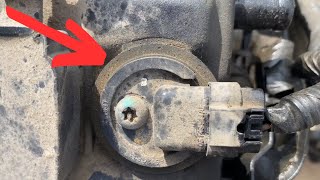
- Inspect the sensor and connector. Locate the exhaust camshaft position sensor on the driver's side (Bank 2) valve cover. It is the rearmost of the two sensors on that cover. 🎬 Watch: How to locate and replace Bank 1 and 2 sensors. Visually inspect the connector for oil contamination, corrosion, or loose pins. Check the wiring harness for any signs of damage from heat or abrasion.
- Swap sensors (if applicable). The intake and exhaust cam sensors on the 3.6L Pentastar are the same part. Swap the suspect exhaust sensor (P0390) with the intake sensor on the same bank (P0345). Clear the codes and drive the vehicle. If the code changes to P0345, the sensor is confirmed to be faulty.
- Test the circuit. Using a multimeter, check for proper voltage (usually 5V reference) and ground at the sensor connector with the key on, engine off. With an oscilloscope, you can observe the square wave signal from the sensor while the engine is running to confirm its operation.
- Investigate mechanical causes. If all electronics check out, the issue may be mechanical. Listen for rattling or ticking noises that could indicate a problem with the camshaft phasers or timing chain components.
Parts You'll Likely Need
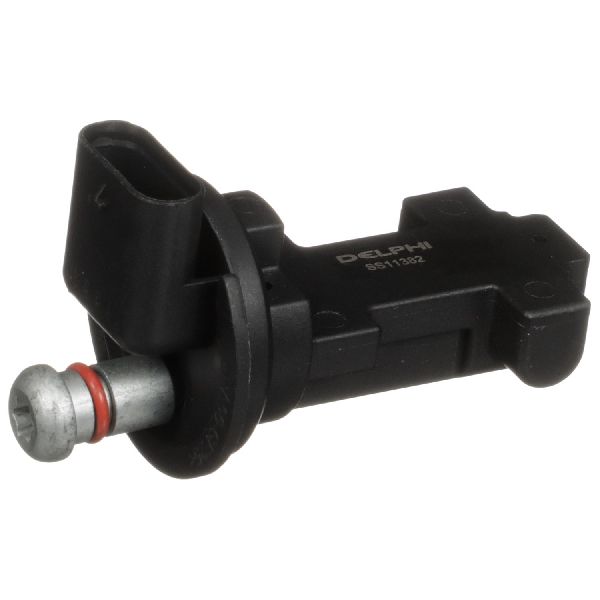
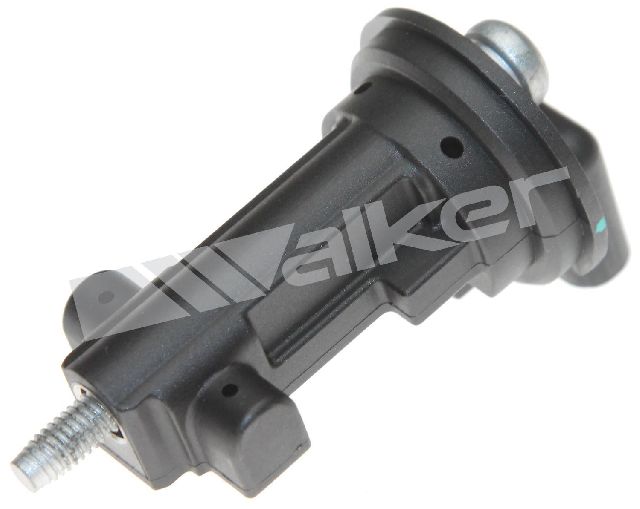
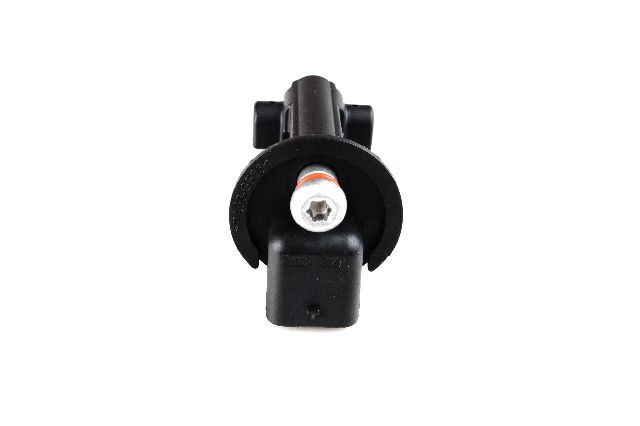
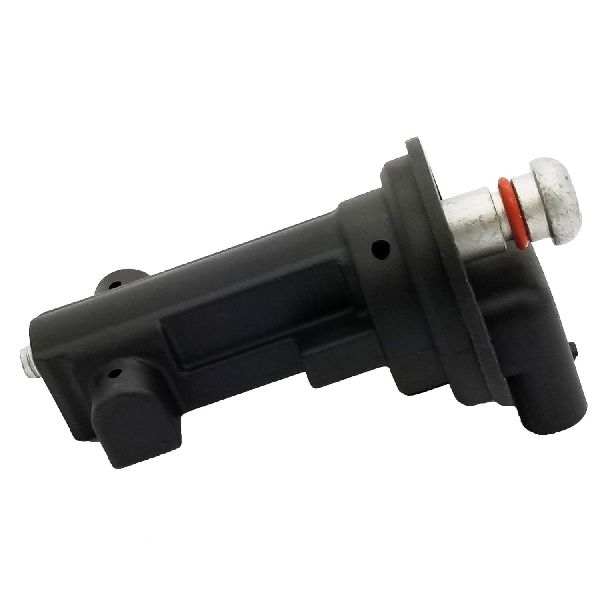
- Camshaft Position Sensor
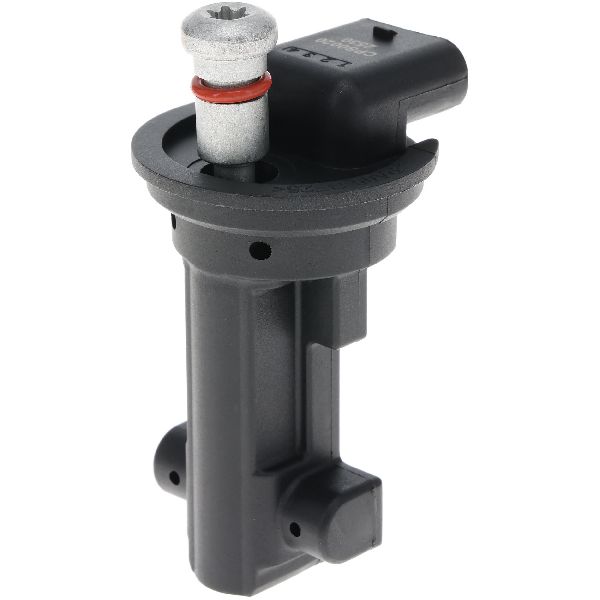
(OEM #68080819AD)— This is the most common hardware failure for this code after software issues have been ruled out. It is responsible for sending the signal that the PCM is not receiving correctly. The part number 68080819AC has been superseded by 68080819AD.
Trusted brands: Mopar, Bosch, NTK/NGK, Delphi
OEM price range: $60-$90
Aftermarket price range: $25-$50
Related Codes That Often Appear With This One
- P0394 — This is the 'intermittent' version of P0390, indicating the fault is not present all the time. They often appear together or alternate, strongly pointing towards a wiring issue or the software glitch addressed by TSBs.
- P0365 — This code is for the Camshaft Position Sensor 'B' (Exhaust) on Bank 1 (passenger side). Seeing both exhaust cam sensor codes together could suggest a common problem like a shared power/ground issue, a systemic problem like a PCM software fault, or a timing issue affecting both banks.
- P0345 — This code is for the Camshaft Position Sensor 'A' (Intake) on Bank 2. If seen with P0390, it could point to an issue affecting the entire cylinder bank, such as a wiring harness problem, a bad ground, or a larger mechanical timing issue.
Technical Service Bulletins (TSBs) & Recalls

- 18-050-22 REV A: Specifically lists P0390 as a code that can be resolved by flashing/updating the PCM software on 2021 Pacifica Hybrid models to correct MIL illumination.
- 18-002-19 REV A: A broader PCM update for 2017 models that changes P0390 and its intermittent counterpart P0394 from a one-trip to a two-trip fault to reduce false MILs.
- 18-024-17 REV C: Similar to the above, this TSB for other 3.6L vehicles (Durango, Grand Cherokee) also changes P0390 to a two-trip fault, showing a pattern in how Chrysler addressed this issue across the engine platform.
Platform-Specific Known Issues
- A primary issue for the 2017-2021 Pacifica is the need for a PCM software update to resolve this code, as specified in TSB #18-050-22 and others. Ignoring this can lead to unnecessary parts replacement.
- The location of the Bank 2 (driver's side) exhaust sensor is on the rear of the valve cover. Access is tight but does not typically require removing the upper intake manifold, though moving some air intake ducting may be necessary for better access.
Mechanic-Grade Diagnostic Values
- Sensor Power Supply Voltage — expected: ~5.0 Volts DC. Failure: Voltage significantly lower than 5.0V or 0V indicates an open or short in the supply circuit.
- Sensor Signal Voltage (bench test) — expected: Switches between ~5.0V (or 4.8V) and near 0V. Failure: Voltage does not change when a piece of metal is passed in front of the sensor tip, indicating a faulty sensor.
- Sensor Signal Voltage (cranking/running) — expected: A fluctuating DC voltage, typically between 0.5V and 1.5V on a multimeter, or a clean square wave on an oscilloscope.. Failure: A steady voltage or no voltage indicates a lack of signal from the sensor.
- Circuit Wiring Resistance — expected: Below 5.0 Ohms. Failure: Resistance above 5.0 Ohms indicates excessive resistance in the wiring between the sensor connector and the PCM.
Scan Tool Commands That Help
- wiTECH: VVT System Test — After verifying the sensor and wiring are good, this function can be used to command the camshaft phasers to move, helping to determine if a mechanical VVT issue (like a stuck phaser) is the root cause, rather than an electrical one.
- wiTECH: PCM Flash/Reprogram — This is the primary function used to apply TSB updates that correct software logic issues known to cause false P0390 codes.
Wiring & Ground Locations
- Bank 2 Camshaft Position Sensor Connector — On the driver's side valve cover, it is the rearmost of the two sensors. It is a 4-pin connector.. This is the main connection point for the sensor. It is prone to oil contamination from valve cover leaks. The 3.6L uses a single sensor body containing two separate sensors (intake and exhaust), hence the 4 wires.
- Sensor Pinout (Typical 3.6L) — At the sensor connector.. Pin 1: (Exhaust) CMP Signal 2. Pin 2: Sensor Ground. Pin 3: (Intake) CMP Signal 1. Pin 4: 5-Volt Supply. For P0390, testing focuses on Pin 1 (Signal), Pin 2 (Ground), and Pin 4 (Supply). Knowing the pinout is critical for accurate electrical testing.
- G911A — Typically located on the left side of the engine block or cylinder head.. This is a common ground point for multiple engine sensors. A loose or corroded G911A can cause erratic sensor readings and trigger various codes, including P0390.
Real Owner Repair Stories
- YouTube channel 'MotorCity Mechanic' (2015 Chrysler 200 with 3.6L Pentastar V6, over 200,000 miles) — Check engine light with camshaft position sensor circuit code (P0340, but diagnosis applies to P0390). The issue appeared after extensive engine work (new camshafts and rockers).
❌ Tried (didn't work) Initial diagnosis pointed towards an electrical issue due to the 'circuit' code definition., Replacing the camshaft position sensor did not fix the problem.
✅ What actually fixed it The root cause was a failed (non-locking) exhaust camshaft phaser. Despite being a circuit code, the fault was mechanical. The phaser was not locking at its base position as it should when the engine is off, causing a discrepancy between the expected and actual cam position on startup, which the PCM interpreted as a circuit fault. Replacing the camshaft phaser resolved the code.
OEM Part Supersession History
5033308AB, 68080819AB, 68080819AC→68080819AD— Likely for improved durability, sealing against oil leaks, or updated internal electronics to be less susceptible to interference.
Heads up: The newest part number, 68080819AD, is backward compatible with vehicles that used the previous numbers. It is always recommended to use the latest revision available.
Model Year Variations Within This Range
- 2017-2020 vs 2021+: The 2021 model year introduced a significant facelift and the option for All-Wheel Drive (AWD) on non-hybrid models. While the base 3.6L engine and sensors remained largely the same, the introduction of AWD added a power transfer unit and other drivetrain components. TSBs are also sometimes year-specific; for example, TSB #18-002-19 REV A applies to 2017 models, while #18-050-22 REV A applies to 2021 models, indicating different software baselines.
Helpful Videos

We Have This Part in Stock


The information in this article is provided for general reference and educational purposes only. Vehicle specifications, procedures, and part compatibility can vary by production date, trim level, and region. Always consult your vehicle's factory service manual and verify part numbers before purchasing or performing repairs. Safety-critical components such as airbags, seat belts, and braking systems should be installed by a qualified professional.
- Chrysler PACIFICA:
- 🧭 Diagnostic Flowchart
- 🎬 Helpful Videos
- 🛍️ Shop This Part
- What's Unique About the 2017-2021 Chrysler PACIFICA
- Symptoms You May Notice
- Most Likely Causes
- Rare But Worth Checking
- Diagnosis Steps
- Parts You'll Likely Need
- Related Codes That Often Appear With This One
- Technical Service Bulletins (TSBs) & Recalls
- Platform-Specific Known Issues
- Mechanic-Grade Diagnostic Values
- Scan Tool Commands That Help
- Wiring & Ground Locations
- Real Owner Repair Stories
- OEM Part Supersession History
- Model Year Variations Within This Range
- 🎟️ Get 5% Off