

P0390 on 2014-2018 Ram 2500: Camshaft Sensor Causes and Fixes
On a 2014-2018 Ram 2500 with a HEMI engine, P0390 almost always means the single camshaft position sensor has failed. It's an easy, inexpensive DIY fix involving a single bolt. Expect to pay $30-$70 for the part. Before replacing, always check the wiring and connector for damage, as this is also a common failure point.
- P0390 on a HEMI-powered Ram 2500 points to the single camshaft position sensor, despite the confusing 'Bank 2' name.
- The most likely fix is replacing the sensor, which is an easy and inexpensive job located on the front-passenger side of the engine.
- Always inspect the sensor's wiring and connector for damage or oil before replacing the part, as this is another common point of failure.
- Do not waste time looking for a second camshaft sensor on a different bank; there is only one.
- If a new sensor and good wiring don't fix the code, be aware of rare possibilities like PCM software glitches or mechanical timing issues.
What's Unique About the 2014-2018 Ram 2500
The 2014-2018 Ram 2500's 5.7L and 6.4L HEMI engines are pushrod designs with a single camshaft in the engine block. Despite this, Ram's diagnostic system uses generic OBD-II code language that refers to 'Bank 2' and 'Sensor B'. This can be misleading, as codes like P0390, P0340, and P0344 all point to the same, single camshaft position sensor. The Cummins diesel engine has a different sensor setup and this code is primarily associated with the gas-powered HEMI V8s.
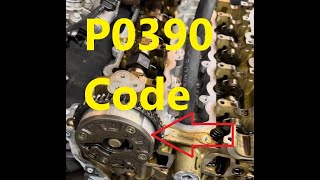
🎬 Watch: Understanding the P0390 code and its common fixes.Diagnostic Flowchart
Tap your situation to follow the diagnostic path that matches what you're seeing on this vehicle.
Symptoms You May Notice
- Check Engine Light is on
- Engine hesitates or stumbles during acceleration, especially under load.
- Rough idle, with RPMs possibly wavering.
- Engine may stall, especially at low speeds or when stopping.
- Reduced fuel economy by an estimated 3-5%.
- Difficulty starting the engine, or the engine won't start at all.
- Misfire-like sensations without a specific misfire code being present.
- Replacing the crankshaft position sensor. The P0390 code is specific to the camshaft sensor circuit, not the crankshaft sensor, though they work in tandem.
- Searching for a 'Bank 2' sensor. On HEMI engines, there is only one camshaft position sensor, so looking for a second one is fruitless.
- Replacing the sensor without first inspecting the connector pigtail and wiring, which is a frequent point of failure.
Most Likely Causes
- Failed Camshaft Position Sensor 🔴 High Probability → Shop Engine Camshaft Position Sensor The sensor is a very common failure item on HEMI engines due to constant heat cycles and potential oil contamination. Its high failure rate is well-documented by owners across multiple platforms using this engine.
How to confirm: The most straightforward way is to replace the sensor, as it's inexpensive and easy to access. Before replacing, inspect the connector for oil or damage. The sensor is located on the front of the engine on the passenger side, held by a single 10mm bolt. You can also test the sensor's resistance with a multimeter; an out-of-spec or infinite reading indicates failure.
Typical fix: Replace the camshaft position sensor. Using an OEM Mopar part is highly recommended as some aftermarket sensors are known to be unreliable. 🎬 See why many owners keep a spare sensor on hand.
Est. part cost: $30 - $70 - Wiring Harness or Connector Damage 🟡 Medium Probability The sensor's wiring runs down the front of the engine, where it is exposed to heat, vibration, and potential oil leaks, which can degrade the insulation or cause the connector to become brittle and fail.
How to confirm: Visually inspect the wiring and connector leading to the sensor for any signs of melting, chafing, corrosion, or loose pins. Wiggle the harness with the engine running or while testing voltage to see if the signal is intermittent. Use a multimeter to check for a 5-volt reference signal and a good ground at the connector with the key on, engine off.
Typical fix: Repair the damaged section of the wiring harness or replace the electrical connector pigtail. Pigtails are available from brands like Dorman.
Est. part cost: $15 - $40
Rare But Worth Checking
- Outdated PCM Software: Chrysler/Ram has issued TSBs for other models (like the Durango) to update PCM software, changing the fault logic for this family of codes to prevent them from being set by a temporary glitch. While not specific to the 2500, it's a known possibility in the FCA family.
- Timing Chain or Phaser Issue: In high-mileage engines, significant timing chain stretch or a failing VVT phaser can cause an erratic signal. This is rare and would typically be accompanied by other timing correlation codes (like P0016) and engine rattling noises.
- Faulty Powertrain Control Module (PCM): → Shop Engine Control Module (ECM) This is extremely rare. The PCM should only be considered after all other possibilities, including the sensor and wiring, have been definitively ruled out through testing.
Diagnosis Steps
- Confirm the P0390 code is present using an OBD-II scanner and check for any other codes.
- Locate the camshaft position sensor on the front of the engine, passenger side, below the alternator.
- Visually inspect the sensor's electrical connector and nearby wiring for any signs of damage, melting, oil contamination, or corrosion.
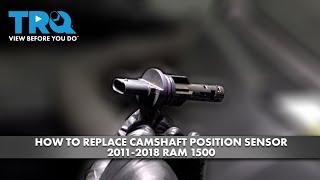
- If the wiring looks good, the most common and cost-effective next step is to replace the sensor. It is held in by a single 10mm bolt. 🎬 Watch: Step-by-step guide to replacing the HEMI camshaft sensor.
- After replacing the sensor, clear the code and test drive the vehicle to see if the code returns.
- If the code returns, use a multimeter to check the connector (with the sensor unplugged and ignition on) for a 5-volt reference signal and a good ground. Gently wiggle the harness during the test to check for intermittent breaks.
- If power and ground are good, the issue may be in the signal wire to the PCM or, in very rare cases, the PCM itself.
- For persistent issues, especially on high-mileage engines, consider mechanical timing problems as a root cause.
Parts You'll Likely Need
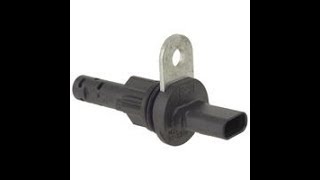
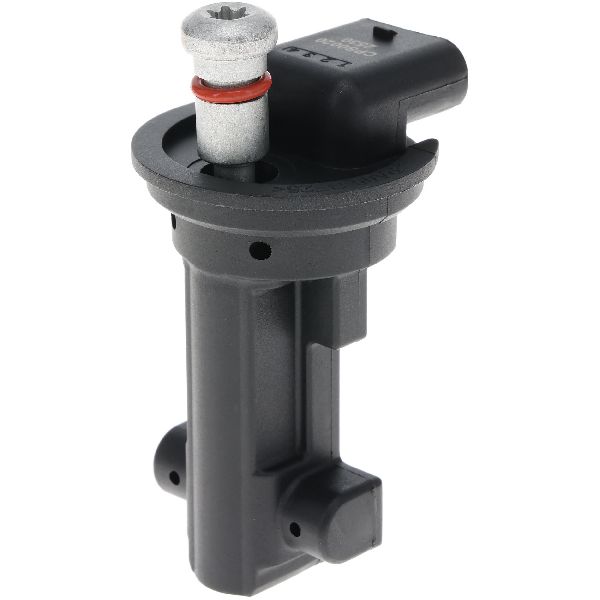
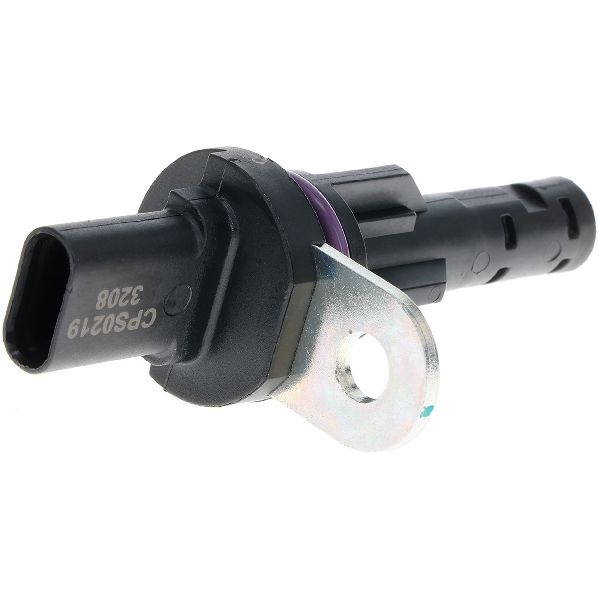
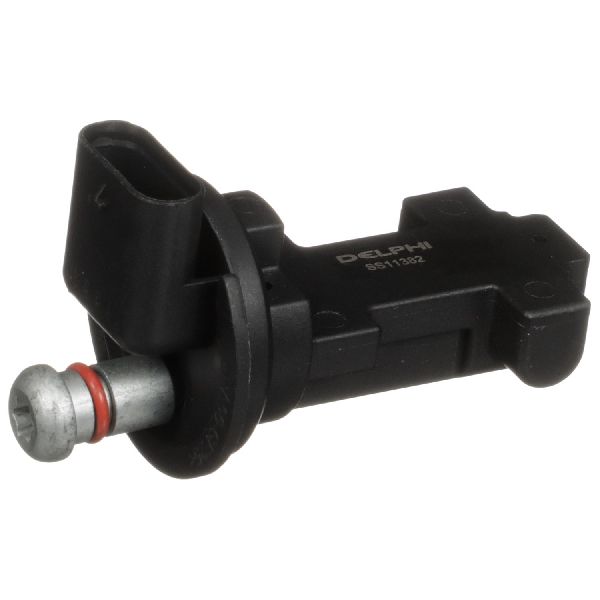
- Camshaft Position Sensor
(OEM #5149054AC (supersedes 5149054AB, 5149054AA))— This is the most common failure point for a P0390 code on this platform due to its high failure rate from heat and age. Note: Some sources list 5149141AF as a compatible part number as well, though 5149054AC is more broadly cited for HEMI engines.
Trusted brands: Mopar, NTK/NGK, Delphi
OEM price range: $50-$80
Aftermarket price range: $30-$60
Related Codes That Often Appear With This One
- P0394 — This code means 'Camshaft Position Sensor 'B' Circuit Intermittent (Bank 2)'. It often appears with P0390, indicating the signal from the same sensor is dropping out rather than being completely absent.
- P0340 / P0344 — These codes refer to 'Camshaft Position Sensor 'A' Circuit'. On HEMI engines where there is only one sensor, these codes can sometimes be triggered for the same fault, pointing to confusion in the PCM's generic naming convention. TSBs often group all these codes together.
- P06DD — This code for 'Engine Oil Pressure Control Circuit Stuck Off' can sometimes appear with cam sensor codes, as oil pressure issues can affect the Variable Valve Timing (VVT) system, which relies on cam position data.
Technical Service Bulletins (TSBs) & Recalls
- 05149141A - Instructs technicians to gather diagnostic data and contact a factory representative when replacing a camshaft position sensor for codes P0340, P0344, P0345, P0349, P0365, P0369, P0390 or P0394 on 2014 engines.
Platform-Specific Known Issues
- The use of generic code definitions ('Bank 2, Sensor B') for a single-camshaft engine is a common point of confusion for owners and technicians.
- A Technical Service Bulletin (TSB #05149141A) was issued for 2014 models, instructing technicians to gather data (Freeze Frame, Cam/Crank Sync Event Monitor) and contact a factory representative when replacing the camshaft position sensor for a P0390 code. This suggests a deeper issue was being investigated by the manufacturer, possibly related to software logic or a bad batch of parts, beyond simple sensor failure.
Mechanic-Grade Diagnostic Values
- Camshaft Position Sensor 5-Volt Supply — expected: 4.5 - 5.2 Volts (Key On, Engine Off). Failure: Voltage below 4.5V or above 5.2V points to a wiring or PCM issue.
- Camshaft Position Sensor Signal Wire Voltage (Static) — expected: 4.5 - 5.0 Volts (Key On, Engine Off, Sensor Unplugged). Failure: Voltage outside this range suggests a wiring issue back to the PCM.
- Camshaft Position Sensor Signal Wire Voltage (Dynamic) — expected: Voltage should drop from ~5V to near 0V when a piece of metal passes in front of the sensor tip.. Failure: No change in voltage indicates a failed Hall effect sensor.
- Sensor Ground Circuit Resistance — expected: Below 5.0 Ohms between the sensor connector's ground pin and a known good chassis ground.. Failure: High or infinite resistance indicates an open or poor ground connection.
Scan Tool Commands That Help
- Appcar DiagFCA / WiTech: Cam Crank Relearn — This routine should be performed after replacing the camshaft or crankshaft sensor to relearn the position relationship. The engine coolant temperature must be above 158°F (70°C) for the procedure to run successfully.
Wiring & Ground Locations
- Camshaft Position Sensor Connector Pinout (Typical 3-Wire) — On the sensor itself, located on the front of the engine block, passenger side.. Correctly identifying the pins is crucial for testing. Pin 1 is typically the 5V supply, Pin 2 is the signal wire, and Pin 3 is the sensor ground. On many Chrysler products, both the supply and signal wires will show ~5V with the key on, engine off.
- K900 Sensor Ground Circuit — This is the circuit designation for the wire running from the sensor connector back to a specific pin on the Powertrain Control Module (PCM).. A fault on this shared ground circuit can affect multiple sensors and cause erratic readings, leading to a P0390 code. Testing continuity on this specific circuit is a key diagnostic step if the sensor itself is good.
- Engine Block to Body/Frame Ground Strap — One primary ground runs from the negative battery terminal to the engine block. Another strap typically connects the firewall to the back of a cylinder head.. A corroded or loose main engine ground can cause a variety of floating or unstable sensor readings, including the camshaft position sensor, leading to intermittent codes like P0390.
Real Owner Repair Stories
- RamForumz user (2014 Ram 1500 5.7L Hemi) — P0394 and P0390 codes, engine stalling.
❌ Tried (didn't work) Replaced camshaft position sensor (code returned), Replaced crankshaft position sensor (code returned), Checked wiring harness for issues (none found)
✅ What actually fixed it The final cause was a failing oil pump. The mechanic determined low oil pressure at idle was causing the VVT system to function incorrectly, which in turn caused the camshaft position to be out of expected range, triggering the sensor codes. Replacing the oil pump resolved the issue.
When the Usual Fixes Don't Work
- While the vast majority of P0390 codes are fixed by replacing the camshaft position sensor or repairing its wiring, there are documented cases where the issue was entirely mechanical. In one instance with a 2014 Ram 5.7L, after replacing both cam and crank sensors did not work, the root cause was identified as a failing oil pump. The resulting low oil pressure at idle was causing the VVT system to fault, leading the PCM to flag the cam sensor's position as incorrect. This highlights that if electrical diagnostics (sensor and wiring) check out, the problem may lie within the engine's mechanical or hydraulic systems that influence cam timing.
OEM Part Supersession History
5149054AA, 5149054AB→5149054AC— Standard part revision and improvement by the manufacturer.
Heads up: 5149054AC is the current recommended replacement for most 5.7L and 6.4L HEMI applications within this year range and is backward compatible.
Helpful Videos

We Have This Part in Stock


The information in this article is provided for general reference and educational purposes only. Vehicle specifications, procedures, and part compatibility can vary by production date, trim level, and region. Always consult your vehicle's factory service manual and verify part numbers before purchasing or performing repairs. Safety-critical components such as airbags, seat belts, and braking systems should be installed by a qualified professional.
- Ram 2500:
- 🧭 Diagnostic Flowchart
- 🎬 Helpful Videos
- 🛍️ Shop This Part
- What's Unique About the 2014-2018 Ram 2500
- Symptoms You May Notice
- Most Likely Causes
- Rare But Worth Checking
- Diagnosis Steps
- Parts You'll Likely Need
- Related Codes That Often Appear With This One
- Technical Service Bulletins (TSBs) & Recalls
- Platform-Specific Known Issues
- Mechanic-Grade Diagnostic Values
- Scan Tool Commands That Help
- Wiring & Ground Locations
- Real Owner Repair Stories
- When the Usual Fixes Don't Work
- OEM Part Supersession History
- 🎟️ Get 5% Off