

P0390 on 2014-2018 Ram 3500: Camshaft Sensor 'B' Circuit (Bank 2) Causes and Fixes
On 2014-2018 Ram 3500s, P0390 points to the single camshaft position sensor or its wiring. For HEMI engines, it's on the front timing cover. For the Cummins, it's on the driver's side of the block. The most likely fix is replacing the sensor itself (~$40-$150) or repairing a damaged wire. A critical TSB (#05149141A) exists, indicating that the root cause is often not the sensor and requires deeper diagnosis.
- P0390 points to the single camshaft position sensor on both HEMI and Cummins engines; the 'Bank 2' text is generic and can be ignored.
- Before replacing the sensor, thoroughly inspect the wiring harness and connector for damage, as this is a very common root cause.
- For the 6.4L/5.7L HEMI, the sensor is on the front of the engine; for the 6.7L Cummins, it's on the driver's side and is difficult to access.
- Due to a history of misdiagnosis (as evidenced by TSB #05149141A), be certain about the diagnosis before spending money on parts.
- If you replace the sensor, using a Mopar OEM part is highly recommended to avoid premature failure of the new part.
What's Unique About the 2014-2018 Ram 3500
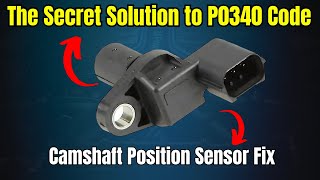
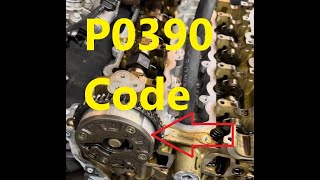
The meaning of P0390 is entirely dependent on your engine, and the code's 'Bank 2, Sensor B' text is misleading for this platform. On the 6.4L and 5.7L HEMI V8s, there is only one camshaft position sensor, so any cam sensor code (including P0390, P0340, P0344, etc.) points to this single sensor or its circuit. On the 6.7L Cummins Inline-6, there is also only one cam sensor, making the 'Bank 2' part of the definition irrelevant. 🎬 Watch: Why the Bank 2 definition is often misleading for P0390. Furthermore, a manufacturer Technical Service Bulletin (TSB #05149141A) exists for a wide range of cam sensor codes on 2014 models, instructing technicians to gather specific data before replacing parts, which strongly suggests that a simple sensor swap may not be the correct fix and that underlying wiring or other complex issues are common.
Diagnostic Flowchart
Tap your situation to follow the diagnostic path that matches what you're seeing on this vehicle.
Symptoms You May Notice
- Check Engine Light is on
- Engine is hard to start or has a long crank time
- Rough idle or stalling, sometimes occurring intermittently or after events like a car wash.
- Poor acceleration and loss of power
- Reduced fuel economy
- Sluggish performance and fluctuating boost pressure (6.7L Cummins)
- Misfire-like sensations or a 'cough' from the engine, even with no misfire codes present.
- Replacing the Crankshaft Position Sensor. This is a different sensor; P0390 is specific to the camshaft circuit. However, on the 6.7L Cummins, the same part number is used for both locations, which can cause confusion.
- Repeatedly replacing the camshaft sensor without checking the wiring. Many owners replace the sensor multiple times only to find the root cause was a damaged wire or a deeper mechanical issue.
Most Likely Causes
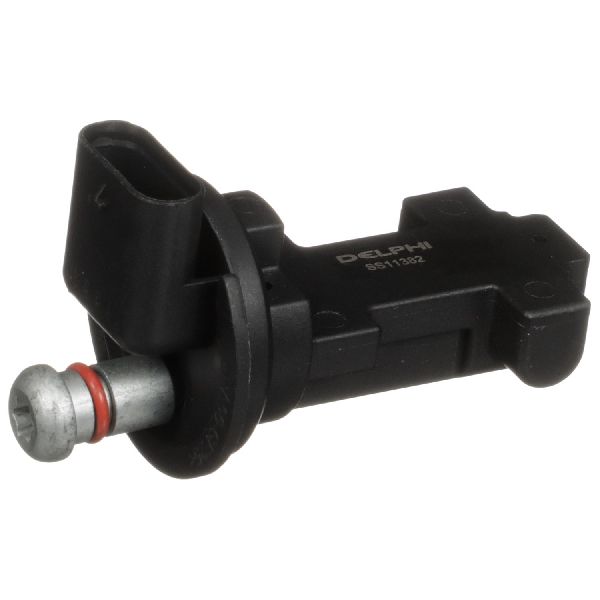
- Failed Camshaft Position Sensor 🔴 High Probability → Shop Engine Camshaft Position Sensor Engine heat cycles and vibration can cause the sensor's internal electronics to fail over time. It is a very common failure item across all engine options.
How to confirm: After confirming the wiring is intact, replacing the sensor is the most direct way to confirm. You can also test the sensor's output with a multimeter for resistance or an oscilloscope for a clean square wave signal.
Typical fix: Replace the camshaft position sensor. Ensure the new O-ring is seated correctly and lubricated with clean engine oil.
Est. part cost: $30-$150 - Wiring Harness or Connector Damage 🔴 High Probability The engine bay is a harsh environment. Wires can chafe against the engine block or other components, and connectors can become contaminated with oil or dirt, leading to a poor connection or short circuit. For the 5.7L HEMI, a known chafe point is where the harness passes near the engine oil filter housing.
How to confirm: Perform a close visual inspection of the wiring harness from the sensor back to the main loom. Look for melted insulation, bare wires, or green corrosion in the connector pins. Wiggle the harness with the engine running to see if it affects the idle.
Typical fix: Repair the damaged section of wire with a new pigtail connector or by soldering and heat-shrinking the broken wire. Use dielectric grease in the connector to prevent future moisture intrusion.
Est. part cost: $15-$50 - PCM Software or Hardware Fault ⚪ Low Probability While rare, the PCM itself can fail. The existence of TSB #05149141A, which asks for data to be sent to engineering, suggests that software updates or PCM analysis were part of the diagnostic process for these codes, indicating a known pattern of complex issues beyond the sensor or wiring.
How to confirm: This is a last resort after all other possibilities (sensor, wiring, mechanical timing) have been exhaustively ruled out by a professional. This often requires bench-testing the PCM.
Typical fix: Reprogramming or replacing the Powertrain Control Module. This requires a dealership or specialized shop.
Est. part cost: $500-$1500
Rare But Worth Checking
- Timing Chain / Mechanical Timing Issue: If the timing chain has stretched or a phaser has failed, the camshaft's actual position will be out of sync with the crankshaft, which can sometimes trigger sensor circuit codes. This is a more serious mechanical issue that will not be fixed by replacing the sensor.
- Damaged Tone Ring: The reluctor wheel (tone ring) on the camshaft that the sensor reads can become damaged or broken, leading to an erratic or missing signal. This is an uncommon but possible mechanical cause.
Diagnosis Steps
- Read the code with an OBD-II scanner and check for any other stored codes.
- Crucially, check for TSB #05149141A. If applicable to your model year, this bulletin advises against immediately replacing the sensor. It instructs technicians to collect 'Freeze Frame' and 'Cam/Crank Sync Event Monitor' data with a diagnostic tool and send it to FCA engineering for analysis before proceeding with repairs.
- Inspect the Wiring: Perform a thorough visual inspection of the camshaft position sensor's wiring harness and connector. For HEMI engines, pay special attention to the area where the harness passes the oil filter housing for signs of chafing. Look for melting, corrosion, or oil contamination.
- Check for Power: Using a multimeter with the key on, engine off, disconnect the sensor and check the connector for a 5-volt reference signal (often on the F856 circuit) and a good ground. The absence of either points to a wiring or PCM issue, not a sensor failure.
- Test the Sensor Signal: For advanced diagnosis, use an oscilloscope to back-probe the signal wire. You should see a clean, repeating square wave pattern as the engine is cranked. Gaps or noise in the pattern indicate a problem.
- Identify Sensor Location: - For 5.7L/6.4L HEMI: The single sensor is on the front timing cover, on the passenger side of the engine block, near the water pump and below the alternator. 🎬 See this walkthrough for replacing the sensor on HEMI engines. - For 6.7L Cummins: The single sensor is on the driver's side of the block, below the high-pressure fuel pump (CP3). Access is tight.
- Replace the Sensor (If Warranted): - HEMI: The sensor is held by a single 10mm bolt and is relatively easy to access. - Cummins: Access is difficult. A proven method to avoid removing the CP3 pump is to work from underneath the truck, unbolt the four 10mm bolts holding the ECM, and move the ECM aside to gain access to the sensor bolt. 🎬 Watch: This clever trick makes Cummins sensor access much easier.
- Clear Codes: After the repair, clear the trouble codes with a scanner and perform a test drive to ensure the code does not return.
Parts You'll Likely Need
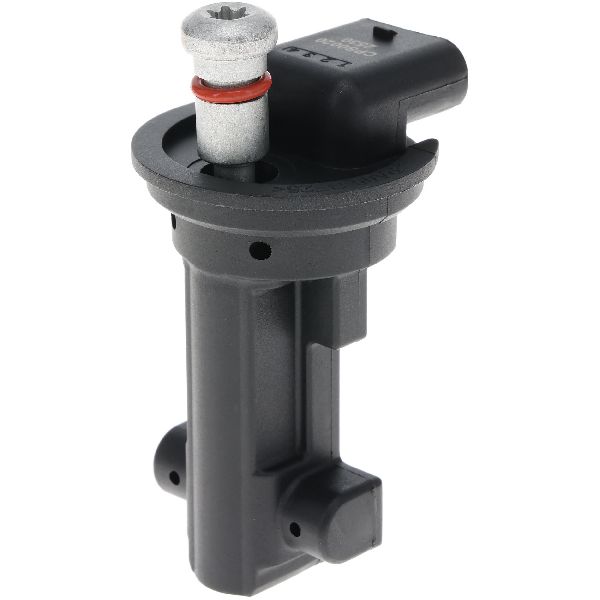
- Camshaft Position Sensor (for 5.7L & 6.4L HEMI)
(OEM #5149054AC (supersedes 5149054AB))— This is the single camshaft sensor used in the HEMI V8 engines. It is the most common component to fail for this code after wiring is checked.
Trusted brands: Mopar, NTK, Delphi
OEM price range: $45-$70
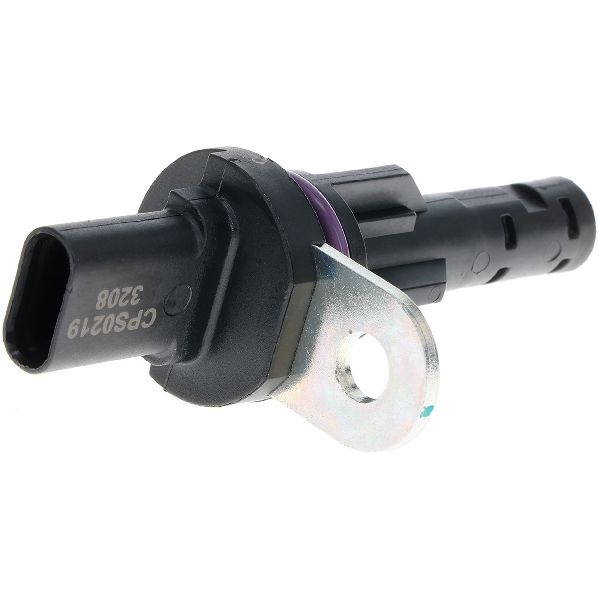
Aftermarket price range: $25-$50 - Camshaft Position Sensor (for 6.7L Cummins)
(OEM #68526830AB (supersedes 68526830AA, 5179099AB, 5179099AA, 5093101AA))— This is the camshaft sensor for the Cummins diesel. It is a frequent failure point causing no-start or poor running conditions. This same part is also used as the crankshaft position sensor.
Trusted brands: Mopar, Cummins, Bosch
OEM price range: $120-$160
Aftermarket price range: $50-$90
Related Codes That Often Appear With This One
- P0340, P0344, P0345, P0349, P0365, P0369, P0394 — These are all camshaft position sensor circuit codes. On HEMI and Cummins engines with a single sensor, any of these codes can be triggered by the same single fault. TSB #05149141A groups all of these codes together.
- P0016 — This code indicates a Crankshaft/Camshaft Correlation issue. It can appear alongside P0390 if there is a mechanical timing problem (like a stretched chain) or a severe sensor signal loss.
Technical Service Bulletins (TSBs) & Recalls
- Bulletin #05149141A: For 2014 models, this TSB covers codes P0340, P0344, P0345, P0349, P0365, P0369, P0390, and P0394. It instructs technicians to capture Freeze Frame and Cam/Crank Sync Event Monitor data and contact FCA engineering before replacing parts.
Platform-Specific Known Issues
- A key issue is the confusing code definition. On both HEMI and Cummins engines in this truck, there is only one camshaft position sensor, but the computer can throw multiple codes (P0340, P0344, P0390, etc.) that all point to the same single sensor or its circuit.
- The existence of TSB #05149141A specifically for camshaft sensor codes on 2014 models is a major indicator of a known issue pattern that may go beyond a simple sensor failure, requiring data capture before repair.
- For the 6.7L Cummins, access to the sensor is notoriously difficult. However, a common technician and owner trick is to remove the ECM from the side of the block to create enough room, rather than removing the CP3 injection pump.
Mechanic-Grade Diagnostic Values
- Camshaft Position Sensor 5V Supply Voltage — expected: 4.8V - 5.2V with key on, engine off, measured at the sensor connector.. Failure: Voltage below 4.8V or absent indicates a problem with the F856 supply circuit wiring or the PCM.
- Camshaft Position Sensor Ground Circuit Resistance — expected: Less than 3.0 ohms between the ground pin at the sensor connector and a clean chassis ground.. Failure: Resistance higher than 3.0 ohms points to a poor ground connection in the K900 circuit, which can cause erratic signals.
- Camshaft Position Sensor Signal (Hall-Effect Bench Test) — expected: With the sensor receiving power and ground, the signal wire voltage should toggle from its high state (~5V) to a low state (~0V) as a piece of metal is passed in front of the sensor tip.. Failure: If the voltage does not switch, the sensor is faulty.
Scan Tool Commands That Help
- wiTECH (or equivalent professional scanner): Data Recorder: 'Freeze Frame' and 'Cam/Crank Sync Event Monitor' — As per TSB #05149141A for 2014 models, this data must be captured before replacing parts. It helps FCA engineering diagnose complex intermittent faults that are not obvious from the code alone.
- High-end OBD-II Scanner: Cam Sensor Relearn / Cam/Crank Relearn — After replacing the camshaft position sensor, some vehicles may require this procedure to calibrate the PCM to the electronic variances of the new sensor. Failure to do so can sometimes result in a no-start or poor running condition even with a good part.
Wiring & Ground Locations
- CMP Sensor Connector (6.7L Cummins) — On the driver's side of the engine block, below the high-pressure fuel pump (CP3).. This is the primary connection point for testing. The three wires are typically Pin 1: F856 5-Volt Supply, Pin 2: K900 Sensor Ground, and Pin 3: K44 CMP Signal.
- CMP Sensor Connector (5.7L/6.4L HEMI) — On the front timing cover, passenger side, below the alternator.. This is the main connection to inspect and test. The circuits are typically a 5-volt supply (F856), sensor ground (K900), and the signal wire.
- Engine Block Ground — The main battery ground cable connects to the left front of the engine block.. A poor main engine ground can cause a variety of floating or noisy ground references for sensors, including the camshaft position sensor, leading to erratic behavior and fault codes.
Real Owner Repair Stories
- YouTube channel '94slowbra' (Ram 3500 with 6.7L Cummins engine) — Sluggish performance, fluctuating boost pressure, and a 'skipping' sensation. The truck threw a camshaft position sensor performance code.
❌ Tried (didn't work) The owner noted that forums often warn against cheap aftermarket sensors, but decided to try one anyway.
✅ What actually fixed it Replacing the camshaft position sensor fixed the problem. The owner used an aftermarket sensor from Amazon. A key tip for the repair was to unbolt the ECM on the side of the block and move it aside to gain access to the sensor's 5mm hex bolt, using a mini ratchet.
"I Checked Everything" — The Actual Cause
- The equivalent for this electrical code is when the sensor and wiring test good, yet the code persists. The existence of TSB #05149141A strongly suggests a pattern where standard diagnostics fail. The bulletin requires technicians on 2014 models to send captured scan tool data to FCA engineering *before* replacing parts. This implies the actual cause is often a more complex, intermittent issue, potentially within the PCM's software or its ability to process the signal, which cannot be found by simple continuity or voltage checks.
When the Usual Fixes Don't Work
- The most common advice for P0390 is to replace the camshaft position sensor. However, strong counter-evidence from the manufacturer exists in the form of TSB #05149141A. This bulletin, covering 2014 models, explicitly advises *against* immediate sensor replacement for P0390 and a host of other cam codes. It directs technicians to first capture and submit diagnostic data to factory engineers. This indicates that in a significant number of cases, the root cause is not a simple sensor failure and that replacing the sensor will not fix the problem. This aligns with many owner reports of replacing the sensor multiple times without resolving the code, which was ultimately traced to a wiring or PCM issue.
OEM Part Supersession History
5093101AA, 5179099AA, 5179099AB, 68526830AA→68526830AB— Standard part revision and improvement over time.
Heads up: For the 2014-2018 6.7L Cummins, 68526830AB is the correct current part number. While newer part numbers exist (e.g., 5491326NX), they are for 2019 and newer models.
Model Year Variations Within This Range
- 2014: This model year is specifically called out in TSB #05149141A for a range of camshaft sensor codes, including P0390. It requires a special diagnostic procedure (capturing data for engineering) before replacing parts, indicating a known complex issue pattern for this year.
Helpful Videos
We Have This Part in Stock


The information in this article is provided for general reference and educational purposes only. Vehicle specifications, procedures, and part compatibility can vary by production date, trim level, and region. Always consult your vehicle's factory service manual and verify part numbers before purchasing or performing repairs. Safety-critical components such as airbags, seat belts, and braking systems should be installed by a qualified professional.
- Ram 3500:
- 🧭 Diagnostic Flowchart
- 🎬 Helpful Videos
- 🛍️ Shop This Part
- What's Unique About the 2014-2018 Ram 3500
- Symptoms You May Notice
- Most Likely Causes
- Rare But Worth Checking
- Diagnosis Steps
- Parts You'll Likely Need
- Related Codes That Often Appear With This One
- Technical Service Bulletins (TSBs) & Recalls
- Platform-Specific Known Issues
- Mechanic-Grade Diagnostic Values
- Scan Tool Commands That Help
- Wiring & Ground Locations
- Real Owner Repair Stories
- "I Checked Everything" — The Actual Cause
- When the Usual Fixes Don't Work
- OEM Part Supersession History
- Model Year Variations Within This Range
- 🎟️ Get 5% Off