

P0390 on 2013 Scion FR-S: Camshaft Position Sensor 'B' Circuit Causes and Fixes
On a 2013 Scion FR-S, code P0390 almost always points to a problem with the exhaust camshaft position sensor on the driver's side (Bank 2). A very common cause for early 2013 models is incorrect sensor clearance, documented in TSB S-SB-0013-14. The fix is typically replacing the sensor and ensuring correct installation, sometimes requiring a specific shim to correct the air gap. Swapping the suspect sensor with the one from the passenger side is a key diagnostic step.
- P0390 on a 2013 FR-S specifically identifies a circuit issue with the exhaust camshaft position sensor on the driver's side of the engine.
- For early 2013 models (before VIN ...721474), a known TSB regarding incorrect sensor clearance is a highly probable cause.
- A highly effective and free diagnostic step is to swap the driver's side exhaust sensor with the passenger's side one to see if the code follows the sensor.
- Before buying parts, inspect the sensor's wiring and connector for obvious damage or oil contamination.
- The misfire codes that often accompany P0390 are usually symptoms, not the root cause. Fix the P0390 code first.
What's Unique About the 2013-2013 Scion FR-S
The 2013 Scion FR-S and its platform mates, the Subaru BRZ and Toyota 86, share the Subaru-designed FA20 boxer engine. Early production models were subject to a Technical Service Bulletin (TSB S-SB-0013-14) for various camshaft sensor codes, including P0390. This was due to incorrect factory clearance between the sensor and the camshaft reluctor wheel. This makes it a known mechanical/installation issue specific to vehicles built before VIN JF1ZNAA1#D#721474, not just a random sensor failure.
Diagnostic Flowchart
Tap your situation to follow the diagnostic path that matches what you're seeing on this vehicle.
Symptoms You May Notice
- Check Engine Light is on
- Rough or unstable idle, sometimes wavering between 600-900 RPM.
- Engine stalling, especially at low speeds or when coming to a stop
- Hesitation or loss of power during acceleration, particularly under load.
- Difficulty starting the engine or extended cranking time.
- Decreased fuel economy.
- Misfire-like sensations, even if no misfire codes are present.
- Replacing spark plugs or ignition coils to fix misfire codes (P0302, P0304) without addressing the P0390 code first. The misfires are often a symptom of the incorrect cam timing information from the faulty sensor circuit.
Most Likely Causes
- Incorrect Camshaft Position Sensor Clearance 🔴 High Probability → Shop Engine Camshaft Position Sensor A known issue on early 2013 models produced before VIN JF1ZNAA1#D#721474, as documented in Scion TSB S-SB-0013-14. The air gap between the sensor and the camshaft reluctor wheel can be out of specification.
How to confirm: Check if the vehicle's VIN is within the affected range. The TSB outlines a procedure to measure the clearance, which should be 1.3 +/- 0.05 mm. If the clearance is incorrect, a shim is required.
Typical fix: Install the correct shim to achieve the proper clearance, or replace the Bank 2 exhaust camshaft position sensor and ensure it's fully seated. The TSB provides a 'Repair Part Set' (shim kit) for this purpose.
Est. part cost: $90-$130 for an OEM sensor, plus the cost of the shim kit if needed. - Failed Camshaft Position Sensor 🔴 High Probability → Shop Engine Camshaft Position Sensor Like any electronic component, the sensor can fail internally over time due to heat and vibration, leading to an incorrect or no signal being sent to the ECM.
How to confirm: Swap the suspect sensor (driver's side exhaust) with a known good one (e.g., the passenger side exhaust sensor, as they are identical parts). Clear the codes. If the trouble code moves to Bank 1 (e.g., P0365), the sensor is faulty.
Typical fix: Replace the Bank 2 (driver's side) exhaust camshaft position sensor. OEM is highly recommended.
Est. part cost: $90-$130 for an OEM sensor, $40-$105 for an aftermarket sensor - Wiring or Connector Issue 🟡 Medium Probability Engine vibration and heat can cause wires to fray, or the connector can become loose, corroded, or contaminated with oil. One owner on ft86club reported P0390 returning after a sensor swap, which was ultimately fixed by splicing in new wires and a new connector.
How to confirm: Visually inspect the wiring harness and connector for the Bank 2 exhaust cam sensor. Check for damage, corrosion, or loose pins. Use a multimeter to test for proper voltage (approx. 5V reference) and ground at the connector.
Typical fix: Repair the damaged wiring or clean/replace the connector.
Est. part cost: $5-$30 for connector repair parts
Rare But Worth Checking
- Timing Chain or Cam Sprocket Issue: A stretched timing chain or a problem with the AVCS cam sprocket (phaser) can cause the camshaft's actual position to be out of sync with what the ECM expects. This usually triggers correlation codes (like P0016/P0018/P0019) in addition to or instead of a circuit code.
- Oil Contamination on Sensor or Connector: Engine oil leaking from the valve cover gasket can seep onto the sensor or into its electrical connector, causing a short or poor connection.
- Engine Control Module (ECM) Fault: → Shop Engine Control Module (ECM) This is extremely rare. The ECM's internal driver for the sensor circuit could fail, but all other possibilities should be exhausted before considering ECM replacement.
Diagnosis Steps
- Read all trouble codes with an OBD-II scanner. Note P0390 and any accompanying codes like P0391 or misfire codes.
- Confirm the location: P0390 refers to the exhaust camshaft position sensor on Bank 2, which is the driver's side (left side) of the FA20 engine. The sensor is on the front of the engine, on the lower corner of the timing cover.
- Visually inspect the sensor's wiring and connector for any signs of damage, fraying, or oil contamination. Ensure the connector is securely plugged in.
- If you have a 2013 model, check if your VIN is earlier than JF1ZNAA1#D#721474. If so, the TSB for incorrect sensor clearance applies and should be investigated.
- Clear the codes and test drive. If the code returns, perform a sensor swap. Unplug and remove the driver's side exhaust sensor and swap it with the passenger's side exhaust sensor (they are identical parts).
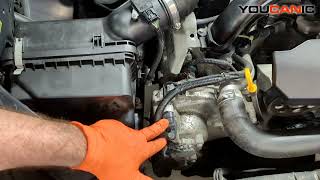
- Clear the codes again and drive the vehicle. If the code changes to P0365 (Camshaft Position Sensor 'B' Circuit Bank 1), the sensor you moved is confirmed to be faulty 🎬 See how to diagnose Subaru camshaft sensor circuit codes. and needs replacement.
- If code P0390 returns after the swap, the issue is not the sensor itself. The problem lies in the wiring harness, connector, or potentially the ECM on the Bank 2 circuit.
- Use a multimeter to test the Bank 2 sensor connector for the correct reference voltage (around 5V) and a good ground connection. Compare readings to the working Bank 1 connector.
- If installing a new sensor (especially on an early 2013 model), ensure it is fully seated to provide the correct clearance. If the TSB applies, measure the clearance and install the appropriate shim as per the TSB instructions.
Parts You'll Likely Need
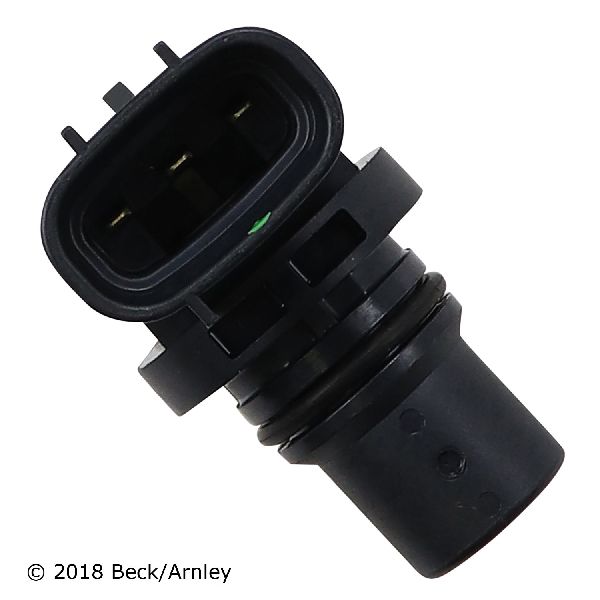
- Exhaust Camshaft Position Sensor
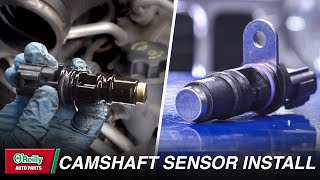
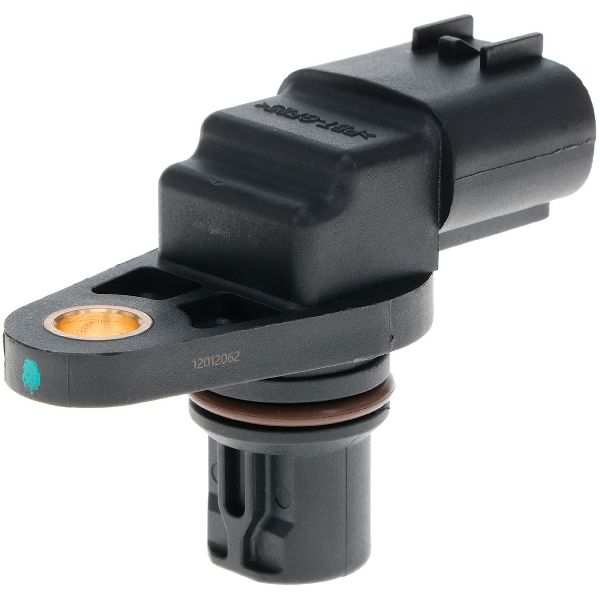
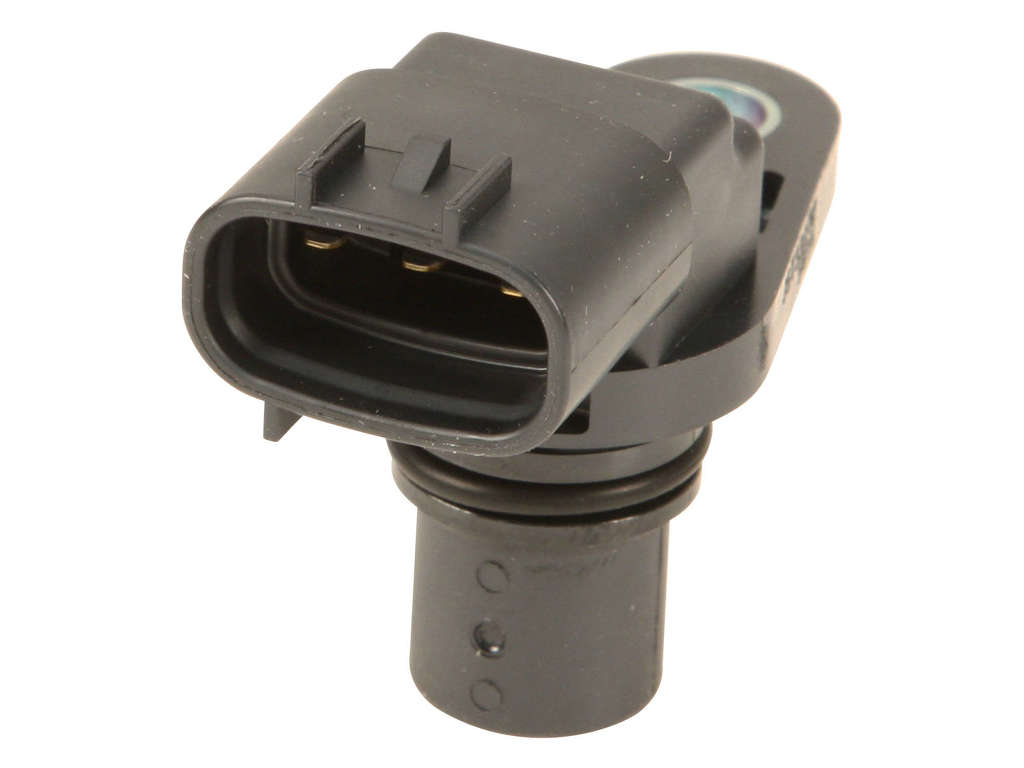
(OEM #SU003-00414 (Toyota) / 22056AA250 (Subaru))— This is the most common failure point for code P0390, either due to internal failure or the known clearance issue on this platform. All four cam sensors on the FA20 engine are the same part. 🎬 Watch: Step-by-step guide to replacing a camshaft position sensor.
Trusted brands: Toyota (OEM), Subaru (OEM), Denso
OEM price range: $90-$130.
Aftermarket price range: $40-$105 - Camshaft Sensor Shim Kit
(OEM #SU003-04600)— Required for early 2013 models if the sensor clearance is out of spec, as per TSB S-SB-0013-14.
Trusted brands: Toyota (OEM)
OEM price range: $10-$20
Related Codes That Often Appear With This One
- P0391 — This code indicates a range/performance issue with the same sensor (Bank 2 Exhaust Cam Sensor), and the root causes are nearly identical. The TSB S-SB-0013-14 also lists this code.
- P0302, P0304 — These are misfire codes for cylinders on Bank 2 (driver's side). Incorrect exhaust cam timing can lead to poor combustion and misfires in those cylinders. The TSB S-SB-0013-14 explicitly lists these codes together.
- P0365, P0366 — These are codes for the exhaust camshaft position sensor on Bank 1 (passenger side). It's not uncommon for sensors on both banks to fail around the same time, or for this code to appear after swapping a faulty sensor from Bank 2 to Bank 1 during diagnosis.
Technical Service Bulletins (TSBs) & Recalls
- S-SB-0013-14 (supersedes S-SB-0033-13): Addresses MIL ON with Camshaft Position Sensor and/or Misfire DTCs due to incorrect sensor clearance on 2013 models.
Platform-Specific Known Issues
- A Technical Service Bulletin (S-SB-0013-14, which supersedes S-SB-0033-13) was issued for 2013 FR-S models built before VIN JF1ZNAA1#D#721474. It states that DTCs P0390, P0391, and others can be caused by the sensor's clearance being out of specification. The fix involves measuring the clearance and installing a shim from kit SU003-04600 to achieve a gap of 1.3 ± 0.05 mm.
Mechanic-Grade Diagnostic Values
- Sensor Signal Voltage (Hall Effect Test) — expected: Approx. 4.8V-5.0V with sensor connected and key on, engine off. Should drop to near 0V when a metal object is placed directly on the sensor tip.. Failure: Voltage does not change when metal is applied, or voltage is stuck at 0V or 5V, indicating a failed sensor.
- Sensor Internal Resistance — expected: 3.7 - 11.1 Ohms between terminals #1 and #2. (Note: This value is from a general technical document and not confirmed for the specific OEM FA20 sensor).. Failure: Reading is outside the specified range (e.g., open circuit/infinite resistance), suggesting internal sensor failure.
- Connector Pin Voltages (Key On, Engine Off) — expected: The 3-pin connector should have: one pin with ~5V (Reference from ECM), one pin with 0V (Ground), and one pin with ~4.8V (Signal).. Failure: Missing reference voltage or ground points to a wiring or ECM issue, not a sensor failure.
Scan Tool Commands That Help
- Toyota Techstream / Advanced OBD-II Scanner: Camshaft Sensor Relearn / Calibration — After replacing a camshaft position sensor, some vehicles may require a relearn procedure for the ECM to recognize the new sensor's specific variance. This can help resolve rough running or a persistent code after the physical repair is complete. Another function may be an AVCS (Active Valve Control System) operational test to command the cam phasers and verify sensor response.
Wiring & Ground Locations
- Main ECU Grounds — On the top of the intake manifold. These are critical as they provide the ground reference for all engine sensors, including the camshaft position sensors.. A poor ground at this location can introduce electrical noise or voltage offsets, causing the ECM to misinterpret the sensor's signal and trigger a P0390 code even if the sensor and its direct wiring are good.
- Engine Block Ground — A grounding strap or wire connecting the main engine block to the chassis.. Ensures the entire engine assembly has a solid ground path to the battery negative terminal. A weak or corroded engine ground can cause a variety of bizarre electrical issues, including sensor circuit faults.
- Sensor Connector — A 3-wire pigtail connecting directly to the camshaft position sensor on the front timing cover.. This is the most common point of failure in the wiring harness. The pins can corrode or the wires can fray from heat and vibration, causing an intermittent or total loss of signal.
OEM Part Supersession History
22056AA250 (Subaru)→No known supersession. This part number appears to be stable.
Heads up: This sensor is used for all four camshaft positions (Intake/Exhaust, Bank 1/Bank 2). Aftermarket cross-reference numbers include 22053-AA270, PC969, 5S13512, and 180-0767.
Model Year Variations Within This Range
- Early 2013: Vehicles built before VIN JF1ZNAA1#D#721474 may have incorrect camshaft position sensor clearance from the factory, as per TSB S-SB-0013-14. This issue requires measuring the air gap and potentially installing a shim, rather than just replacing the sensor.
Helpful Videos
We Have This Part in Stock


The information in this article is provided for general reference and educational purposes only. Vehicle specifications, procedures, and part compatibility can vary by production date, trim level, and region. Always consult your vehicle's factory service manual and verify part numbers before purchasing or performing repairs. Safety-critical components such as airbags, seat belts, and braking systems should be installed by a qualified professional.
- Scion FR-S:
- 🧭 Diagnostic Flowchart
- 🎬 Helpful Videos
- 🛍️ Shop This Part
- What's Unique About the 2013-2013 Scion FR-S
- Symptoms You May Notice
- Most Likely Causes
- Rare But Worth Checking
- Diagnosis Steps
- Parts You'll Likely Need
- Related Codes That Often Appear With This One
- Technical Service Bulletins (TSBs) & Recalls
- Platform-Specific Known Issues
- Mechanic-Grade Diagnostic Values
- Scan Tool Commands That Help
- Wiring & Ground Locations
- OEM Part Supersession History
- Model Year Variations Within This Range
- 🎟️ Get 5% Off