

P0390 on 2008-2022 Toyota Sequoia 5.7L: Cam Sensor 'B' Bank 2 Causes and Fixes
P0390 on a Toyota Sequoia 5.7L V8 points to a fault with the exhaust camshaft position sensor on the driver's side (Bank 2). The most common fix is replacing the failed sensor. If engine work was recently performed, especially cam tower or valve cover gasket jobs, check for swapped intake/exhaust sensor connectors on the driver's side head before buying parts, as they are identical and easily mixed up.
- P0390 specifically refers to the exhaust camshaft position sensor on the driver's side (Bank 2).
- The most likely cause is a failed sensor, which is a relatively easy and inexpensive part to replace.
- Before buying a new sensor, confirm the diagnosis by swapping it with the sensor from the passenger side; if the code follows the sensor (changes to P0365), you've found the problem.
- If you've recently had the engine worked on (especially valve cover or cam tower service), double-check that the intake and exhaust cam sensor connectors on the driver's side valve cover haven't been accidentally swapped.
- The OEM part number for the sensor is 90919-05060, and it is the same for all four camshaft sensor locations on the 3UR-FE engine.
What's Unique About the 2008-2022 Toyota Sequoia
On the 5.7L 3UR-FE engine used in the Sequoia, Tundra, and other Toyota/Lexus models, all four camshaft position sensors (intake and exhaust for both banks) are physically identical and use the same part number (90919-05060) and connector style. This creates a common and well-documented issue where the intake and exhaust sensor connectors on the same bank are accidentally swapped during reassembly after repairs like valve cover gasket replacement or the notorious cam tower sealing. This mistake will immediately trigger camshaft position sensor codes like P0390.
Generation note: The 2008-2022 Toyota Sequoia is all part of the second generation (XK60). While there were cosmetic and feature updates, the 5.7L V8 (3UR-FE) engine and its core components related to this code remained fundamentally the same throughout this period, ensuring diagnostic procedures are consistent across all model years.
Symptoms You May Notice
- Check Engine Light is on
- Flashing "TRAC OFF" light may accompany the Check Engine Light
- Rough or unstable idle
- Hesitation or loss of power during acceleration
- Difficulty starting the engine, or extended cranking time
- Reduced fuel economy
- Engine may stall
- Replacing the wrong sensor (e.g., the intake sensor 'A' instead of the exhaust sensor 'B', or the sensor on Bank 1 instead of Bank 2).
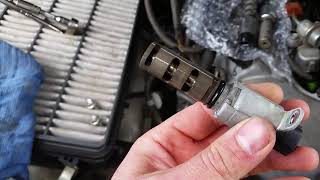
- Replacing the sensor when the actual problem is swapped connectors after a recent repair. 🎬 See how easily these sensor connectors can be swapped
- Replacing cam sensors when a weak battery is causing multiple, simultaneous timing codes to appear.
Most Likely Causes
- Failed Camshaft Position Sensor 🔴 High Probability → Shop Engine Camshaft Position Sensor Sensors are electronic components that operate in a high-heat environment and can fail over time due to thermal stress and age. It is the most frequent point of failure for this specific code.
How to confirm: Swap the Bank 2 exhaust sensor (driver's side, rearward on the valve cover) with the Bank 1 exhaust sensor (passenger side, rearward). Clear the codes. If the code changes to P0365 (Camshaft Position Sensor 'B' Circuit Bank 1), the sensor is confirmed bad. This is a widely endorsed diagnostic method on owner forums.
Typical fix: Replace the faulty camshaft position sensor. All four sensors on the 3UR-FE are the same part, OEM #90919-05060.
Est. part cost: $80-$150 - Swapped Sensor Connectors After a Repair 🟡 Medium Probability The intake and exhaust cam sensors on each bank use identical connectors, making it very easy to plug them in incorrectly after jobs like valve cover gasket or cam tower leak repairs. This is a very common, platform-specific mistake.
How to confirm: Visually inspect the wiring on the driver's side (Bank 2) cylinder head. The intake sensor ('A') is toward the front/center of the engine, while the exhaust sensor ('B') is further outboard/rearward. Ensure the correct harness plug is connected to each. The connectors are close enough to be easily swapped.
Typical fix: Correctly plug the sensor connectors into their respective sensors. This is a zero-cost fix.
Est. part cost: $0 - Wiring or Connector Issue ⚪ Low Probability Toyota's use of soy-based wire insulation in this era can attract rodents, which may chew through the harness, causing an open or short circuit. This is a known issue across many Toyota models.
How to confirm: Visually inspect the wiring harness leading to the Bank 2 exhaust cam sensor for any signs of damage, fraying, or rodent chew marks. Use a multimeter to check for continuity, reference voltage (approx. 5V), and ground at the connector with the key on, engine off.
Typical fix: Repair the damaged section of the wiring harness using butt connectors and heat-shrink tubing, or replace the connector pigtail.
Est. part cost: $10-$50
Rare But Worth Checking
- Failing Battery or Starter: A weak battery or a starter drawing excessive current can cause voltage to drop significantly during cranking, which may intermittently trigger a flood of camshaft and crankshaft sensor codes (P0335, P0340, P0345, P0365, P0390) all at once. If you see multiple codes appear simultaneously, especially during a no-start event, test the battery and starting system before replacing any sensors.
- Faulty Engine Control Module (ECM): → Shop Engine Control Module (ECM) This is very rare, but the ECM's internal driver circuit for the sensor can fail. This should only be considered after all other possibilities (sensor, wiring, connectors) have been definitively ruled out through testing.
- Timing Chain Issue: While the 3UR-FE is known for its durable timing chain, extreme mileage or poor maintenance could lead to a stretched chain or a failed tensioner. This would cause a correlation fault between the crank and cam sensors. This is highly unlikely and would typically present with other codes and significant mechanical noise.
Diagnosis Steps
- Read the code with an OBD-II scanner and confirm P0390 is present. Note any other stored codes.
- If recent engine work was performed (valve covers, cam towers), immediately and carefully inspect the cam sensor connectors on the driver's side (Bank 2) to ensure the intake and exhaust sensor plugs are not swapped.
- Inspect the wiring and connector for the Bank 2 exhaust cam sensor (driver's side, rear of valve cover) for any visible damage, corrosion, or looseness. Check for signs of rodent damage like chew marks.
- If no wiring damage is found, perform a sensor swap. Label the sensors. Move the suspected bad sensor from Bank 2 Exhaust ('B') to the Bank 1 Exhaust ('B') position (passenger side, rear of valve cover).
- Clear the codes, start the engine, and let it run for a minute. Re-scan for codes.
- If code P0365 (Bank 1 Exhaust 'B') appears, the sensor you moved is faulty. Replace it with a new OEM or Denso part.
- If code P0390 returns, the problem is not the sensor. It lies in the wiring harness or the ECM circuit for that sensor.
- If the problem is wiring, use a multimeter to test the connector (key on, engine off). You should find a 5V reference pin, a ground pin (<0.1V), and a signal pin. Repair any open or shorted wires.
- If multiple cam/crank codes (P0335, P0340, P0345, etc.) are present at once, load test the battery and check starter current draw before replacing any sensors.
Parts You'll Likely Need
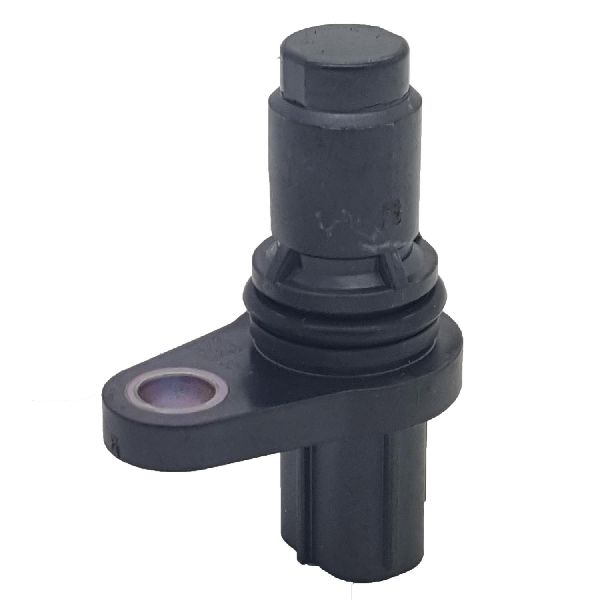
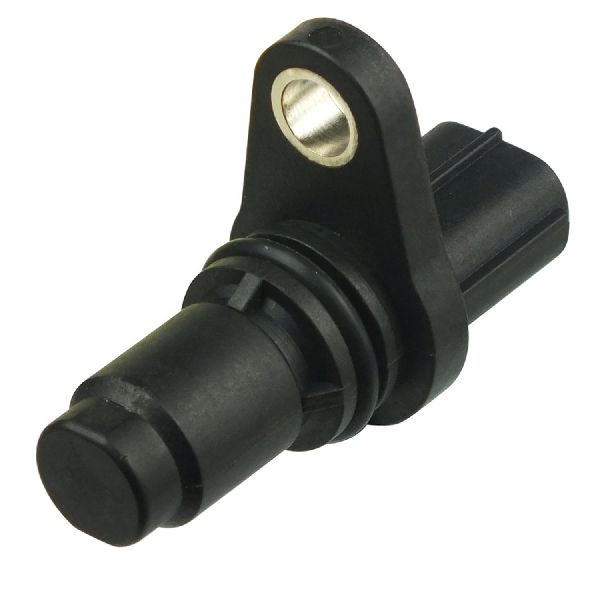
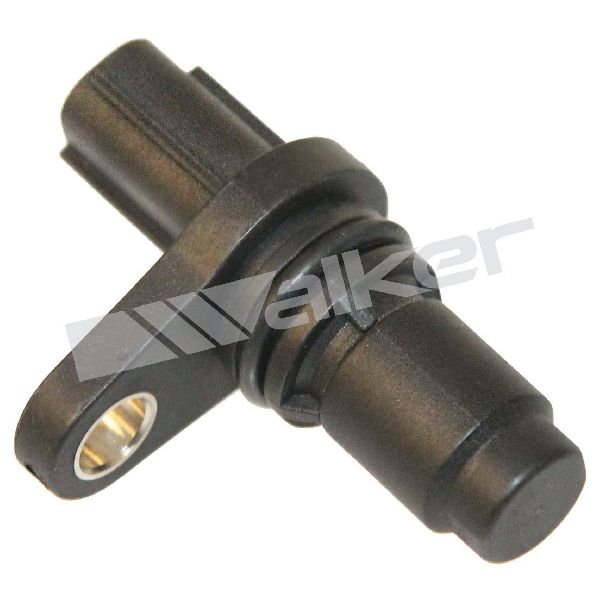
- Camshaft Position Sensor
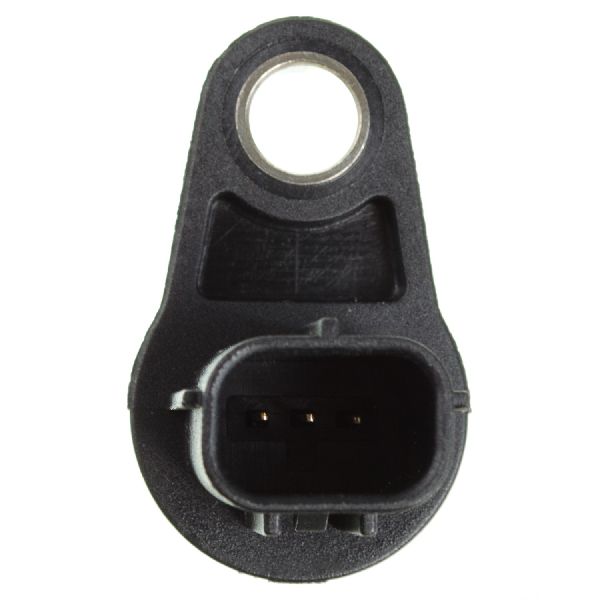
(OEM #90919-05060)— This is the most common cause for P0390. All four cam sensors on the 5.7L V8 are the same part. It is also cross-referenced as Denso part DCPS-0109.
Trusted brands: Toyota (Genuine OEM), Denso (OEM supplier)
OEM price range: $105-$150
Aftermarket price range: $25-$80 - Connector Pigtail — Needed if the connector itself is damaged or if rodent damage is localized at the connector.
Trusted brands: Dorman, Standard Motor Products
OEM price range: $20-$40
Aftermarket price range: $10-$25
Related Codes That Often Appear With This One
- P0365 — This is the code for the Bank 1 exhaust cam sensor. If you swap sensors for diagnosis, P0390 will turn into P0365 if the sensor is bad.
- P0335, P0340, P0345 — If a major electrical issue occurs, such as a weak battery, failing starter, or rodent damage to a main harness, it's common for codes for the crankshaft sensor (P0335) and all other camshaft sensors (P0340, P0345) to appear simultaneously with P0390.
- P0393 — This code (Camshaft Position Sensor 'B' Circuit High Input Bank 2) can appear if a wiring repair is done incorrectly, leading to a short or improper voltage. One owner reported this after a DIY solder repair on the connector.
Technical Service Bulletins (TSBs) & Recalls
- T-SB-0058-18: While not directly for P0390, this TSB addresses ECU logic updates for drivetrain performance issues on related platforms, showing Toyota's willingness to solve issues via software. No specific TSB for P0390 on the Sequoia was found, as it's typically a hard part failure.
Mechanic-Grade Diagnostic Values
- Sensor Signal Voltage (Hall Effect Test) — expected: Switches between approx. 4.8V and near 0V when a metal object is passed in front of the sensor tip (Key On, Engine Off).. Failure: Voltage does not change, or is stuck high or low, indicating a failed sensor.
- Sensor Connector - Reference Voltage — expected: 4.8V - 5.2V between the reference pin and ground pin (Key On, Engine Off).. Failure: No voltage or low voltage indicates a wiring issue or a problem with the ECM's 5V reference circuit.
- Sensor Connector - Ground Circuit — expected: Less than 1.0 Ohm of resistance between the ground pin and a known good chassis ground.. Failure: High or infinite resistance (OL) indicates an open in the ground circuit.
- Sensor Internal Resistance — expected: 0.5 - 1.5 kΩ between specific pins (varies, consult service manual).. Failure: Reading outside the specified range or infinite resistance (OL) suggests a failed sensor.
Scan Tool Commands That Help
- Toyota Techstream: All Readiness — After a repair, use this utility to check the DTC judgment result for P0390 to confirm if the monitor has run and passed, verifying the fix without extensive driving.
- Toyota Techstream: Freeze Frame Data — Always check the freeze frame data associated with P0390. It captures engine conditions (RPM, temp, load) at the exact moment the fault was triggered, which can provide clues as to whether the fault is intermittent or occurs under specific conditions.
- Toyota Techstream: Live Data List (VVT) — While not a direct test for a circuit fault, monitoring the live data for all four cam sensors can reveal erratic readings from the Bank 2 exhaust sensor compared to the others, pointing towards a sensor or wiring issue before it's hard-failed.
Wiring & Ground Locations
- D41 — The electrical connector for the Bank 2 (Driver's Side) Exhaust Camshaft Position Sensor, located on the rear, outboard side of the driver's side valve cover.. This is the primary connector to inspect for damage, corrosion, or being swapped with the nearby intake cam sensor connector (D39).
- Engine Ground Points — Key ground points for the engine harness are typically located on the cylinder heads and the engine block itself. On the 3UR-FE, check for ground straps and bolts on both cylinder heads near the firewall and on the lower block area.. A loose or corroded engine ground can cause floating or incorrect voltage readings for various sensors, including the camshaft position sensor, leading to intermittent and hard-to-diagnose codes like P0390.
- ECM Connector D74 — The specific connector on the Engine Control Module (ECM) where the wires from the Bank 2 exhaust cam sensor terminate. The ECM is located in the engine bay.. If the sensor and wiring at the engine are confirmed good, a continuity test must be performed from connector D41 to D74 to rule out a break in the harness between the sensor and the ECM.
Real Owner Repair Stories
- Tundras.com forum user (2015 Toyota Tundra 5.7L (3UR-FE)) — Cam and crank correlation codes for Bank 2 after performing a head gasket job.
❌ Tried (didn't work) The owner initially suspected the timing was off by a tooth.
✅ What actually fixed it The issue was confirmed to be the intake and exhaust camshaft position sensor connectors on Bank 2 being swapped. Correcting the connectors resolved the codes.
OEM Part Supersession History
90919-05060→90919-T5005— Standard part number evolution and supplier changes over the long production run.
Heads up: No known incompatibilities. Both OEM numbers, as well as the Denso equivalent (DCPS-0109), are functionally identical for this application.
Diagnostic Flowchart
Other Known Issues on This Vehicle
Issues unrelated to this code that are worth knowing about as an owner of this generation:
- Secondary Air Injection Pump/Valve Failure 🔴 High — Very common, especially on earlier models. Moisture gets into the system, causing pumps to seize and valves to stick open, putting the vehicle in limp mode. Often occurs around 80k-150k miles. (Ref: Several TSBs exist, e.g., T-SB-0160-11. A common owner fix is installing a bypass kit from companies like Hewitt-Tech.)
- Camshaft Tower Oil Leak 🟠 Medium → Shop Engine Camshaft — A well-known issue where the sealant between the cylinder head and cam housing fails, causing an oil leak, typically on the passenger side. It's a labor-intensive and costly repair.
- Water Pump Failure 🟠 Medium — The water pump can be a failure point, often identified by a pink crusty residue from dried coolant near the weep hole. While not as frequent as on some other engines, it's a known maintenance item to watch for, often between 90k-120k miles.
- Cracked Exhaust Manifolds / Broken Bolts 🟠 Medium — The exhaust manifold bolts can break due to heat cycles, causing an exhaust leak that presents as a ticking noise, especially when the engine is cold.
- Power Steering Gear Assembly Leak 🔴 High — A manufacturing defect can cause the power steering gear to leak, potentially leading to a loss of power steering assist. (Ref: NHTSA Recall 21V-922 (Toyota Recall 21TB10 / 21TA10))
Used vs. New Parts: Buying Guide for This Vehicle
When a used part is the smart pick: A used OEM sensor from a low-mileage donor vehicle is a viable option if on a tight budget, as OEM sensors are generally reliable. Given the low cost of new aftermarket parts, however, it's often not worth the risk or effort.
Donor-vehicle mileage cap: roughly under 80000 miles for the part to have meaningful remaining life.
What to inspect on the donor part:
- Check for a clean donor vehicle without signs of major oil leaks, which can degrade the sensor's plastic and o-ring.
- Ensure the connector pins are straight and free of corrosion.
- Avoid sensors from engines that show signs of sludge or poor maintenance.
OEM-only on this vehicle (don't cheap out):
- Engine Control Module (ECM)
Aftermarket brands forum-validated for this vehicle:
- Denso (This is the original equipment manufacturer for Toyota, making it the best alternative to a dealer part).
Brands owners have reported issues with on this vehicle:
- Unnamed, no-brand sensors from online marketplaces are a gamble. They may fail prematurely or have slightly different internal resistance, potentially causing performance issues even if they clear the code initially.
Real Owner Stories
Aggregated from forums and TSBs cited above. Mileages and costs reflect what owners reported in those sources.
2008 Toyota Sequoia 5.7L
Symptoms: No crank, no start condition with a single loud click from the starter. The vehicle threw 9 trouble codes including P0335, P0340, P0345, P0365, and P0390.
What fixed it: The discussion points toward a weak battery or failing starter causing a voltage drop, rather than actual sensor failures.
Source hint: Tundras.com - Thread 'No crank, no start, single loud click, codes for crankshaft and camshaft position sensors'
Related OBD-II Codes
Frequently Asked Questions
Which sensor is the Bank 2 exhaust sensor on my 5.7L Sequoia?
I just did a cam tower leak repair and now have P0390. What should I check first?
Is there a specific part number I should use for the replacement sensor?
Can a bad battery cause P0390 on my 2008 Sequoia?
Does T-SB-0058-18 apply to my P0390 code?
Why would rodents chew the wiring for my camshaft sensor?
Helpful Videos
We Have This Part in Stock


The information in this article is provided for general reference and educational purposes only. Vehicle specifications, procedures, and part compatibility can vary by production date, trim level, and region. Always consult your vehicle's factory service manual and verify part numbers before purchasing or performing repairs. Safety-critical components such as airbags, seat belts, and braking systems should be installed by a qualified professional.
- Toyota Sequoia:
- 🧭 Diagnostic Flowchart
- 🎬 Helpful Videos
- 🛍️ Shop This Part
- What's Unique About the 2008-2022 Toyota Sequoia
- Symptoms You May Notice
- Most Likely Causes
- Rare But Worth Checking
- Diagnosis Steps
- Parts You'll Likely Need
- Related Codes That Often Appear With This One
- Technical Service Bulletins (TSBs) & Recalls
- Mechanic-Grade Diagnostic Values
- Scan Tool Commands That Help
- Wiring & Ground Locations
- Real Owner Repair Stories
- OEM Part Supersession History
- Other Known Issues on This Vehicle
- Used vs. New Parts: Buying Guide for This Vehicle
- Real Owner Stories
- 2008 Toyota Sequoia 5.7L
- Related OBD-II Codes
- Frequently Asked Questions
- 🎟️ Get 5% Off