

P0394 on 2016-2017 Dodge Durango: Camshaft Sensor Intermittent Causes and Fixes
P0394 on a 2016-2017 Dodge Durango indicates an intermittent signal from the Bank 2 exhaust camshaft position sensor. The most common fixes are performing a PCM software update as specified in TSB #18-049-20, or replacing the sensor itself. Always check for low or dirty engine oil before replacing parts, as oil pressure is critical for the VVT system that the sensor monitors.
- First, check if your vehicle's computer has been updated per Dodge TSB #18-049-20, as this software flash may fix the code without any parts.
- Before buying parts, ensure your engine oil is full and clean. Low or dirty oil can cause this code.
- If a part is needed, the Bank 2 exhaust camshaft position sensor is the most likely culprit.
- On the 3.6L V6, Bank 2 is the driver's side. On the 5.7L V8, Bank 2 is the passenger's side.
- The code indicates an 'intermittent' problem, which can be caused by a failing sensor, a loose connection, or the sensitive software logic addressed by the TSB.
What's Unique About the 2016-2017 Dodge DURANGO
For this generation of Dodge Durango (and its platform-mate, the Jeep Grand Cherokee), the P0394 code is specifically addressed by Technical Service Bulletin #18-049-20. This bulletin acknowledges that the code can be triggered by overly sensitive fault detection logic in the vehicle's software. The fix is a PCM software update that changes the fault from a 'one-trip' to a 'two-trip' fault, making the system more tolerant of minor, transient signal interruptions that aren't indicative of a real problem. Before replacing any hardware, it is crucial to check if this software update has been performed.
🎬 Watch: Why you shouldn't replace the sensor before checking software.Diagnostic Flowchart
Tap your situation to follow the diagnostic path that matches what you're seeing on this vehicle.
Symptoms You May Notice
- Check Engine Light is on
- Engine may be hard to start or fail to start
- Rough or unstable idle
- Hesitation or loss of power during acceleration
- Possible engine stalling
- Reduced fuel economy
- Remote start feature is disabled
- Replacing the camshaft position sensor without first checking if the PCM software update from TSB #18-049-20 has been performed. The software update alone may fix the problem.
- Assuming the sensor is bad when the root cause is actually a problem with oil pressure/flow (dirty oil, bad VVT solenoid) or a wiring issue.
Most Likely Causes
- PCM Software Requires Update 🔴 High Probability Dodge issued TSBs #18-049-20 and #18-024-17 REV. C to address this code, indicating the original software was too sensitive. The update changes the code from a one-trip to a two-trip fault, preventing it from being set by minor, temporary signal interruptions. This TSB applies to both the 3.6L and 5.7L engines.
How to confirm: A Dodge dealership or a qualified shop with a wiTECH scan tool can check the current PCM software version against the latest available updates mentioned in the TSBs. They can see if the flash has been performed.
Typical fix: Reprogramming (flashing) the Powertrain Control Module (PCM) with the updated software.
Est. part cost: $0 - Faulty Camshaft Position Sensor 🔴 High Probability → Shop Engine Camshaft Position Sensor The sensor is an electronic component that can fail over time due to heat cycles and vibration. Oil contamination from a leaking valve cover gasket can also damage the sensor or its connector. On the 3.6L engine, the Bank 2 (driver's side) sensor is more difficult to access, sometimes requiring removal of the upper intake manifold.
How to confirm: After confirming the PCM software is up to date, a mechanic can test the sensor's signal with an oscilloscope. A common DIY diagnostic step is to swap the Bank 2 sensor with the Bank 1 sensor (they are identical parts) and see if the code follows (e.g., changes to P0369). If the code stays on Bank 2, the sensor is likely not the issue.
Typical fix: Replace the Bank 2 camshaft position sensor.
Est. part cost: $25-$70 - Low Engine Oil Level or Dirty Oil 🟡 Medium Probability The VVT system uses oil pressure, controlled by VVT solenoids (also called oil control valves), to adjust cam timing. If the oil is low, dirty, the wrong viscosity, or if oil passages are sludged up from infrequent changes, the camshaft phasers may not respond correctly. This can cause an erratic signal from the sensor that reads their position, even if the sensor itself is good.
How to confirm: Check the engine oil level on the dipstick and inspect the oil's condition. Ensure the correct oil viscosity (e.g., 5W-20 for the 3.6L) is being used per the owner's manual. Look for signs of sludge under the oil cap.
Typical fix: Perform an oil and filter change with the correct grade of oil. In cases of heavy sludge, an engine flush may be considered.
Est. part cost: $50-$100 - Damaged Wiring or Poor Connection ⚪ Low Probability The sensor's wiring harness can be exposed to engine heat and vibration, potentially leading to chafed wires or a loose/corroded connector over time. Oil leaking into the connector can also disrupt the signal.
How to confirm: Visually inspect the wiring and connector for the Bank 2 camshaft position sensor for any signs of damage, corrosion, or oil saturation. Wiggle the harness while the engine is running to see if it triggers the fault. A multimeter can be used to check for the correct 5V supply and ground at the connector.
Typical fix: Repair the damaged wiring or clean/replace the connector pigtail.
Est. part cost: $10-$50
Rare But Worth Checking
- Failing VVT Solenoid (Oil Control Valve): The VVT solenoid controls oil flow to the phaser. If it becomes clogged with debris or fails electronically, it can't direct the phaser properly, leading to cam position codes. This can happen even if the sensor and phaser are mechanically sound. Testing involves checking resistance and applying 12V to see if the internal plunger actuates.
- Failing Camshaft Phaser: → Shop Engine Camshaft If the code persists after replacing the sensor and updating the PCM, the mechanical phaser itself could be sticking or failing, causing the timing to be incorrect and setting a sensor code. This is a more involved and expensive repair often associated with high mileage or poor oil maintenance.
- Damaged Tone Wheel: The sensor reads a magnetic tone wheel (or reluctor) on the end of the camshaft. In rare cases, this wheel can become damaged, contaminated with metallic debris, or even demagnetized by contact with a strong magnet during other repairs, causing an erratic signal.
- Worn Rocker Arms (3.6L Pentastar): A known issue on high-mileage 3.6L Pentastar engines is the failure of needle bearings in the rocker arms, causing a ticking noise. If a rocker arm seizes, it can cause damage to the camshaft lobe, which in turn can disrupt the reading from the camshaft position sensor, potentially triggering P0394 and other related codes.
Diagnosis Steps
- Check Engine Oil: Verify the engine oil level is full and the oil is clean and of the correct viscosity. An oil change is a cheap first step if the oil is old or dirty.
- Check for TSBs: Ask a Dodge dealer or equipped independent shop to verify if TSB #18-049-20 has been completed. If not, have the PCM reprogrammed. This is a very common fix.
- Inspect Wiring: Visually inspect the wiring harness and connector for the Bank 2, Sensor 2 camshaft position sensor. Look for any signs of melting, chafing, or oil saturation. Check that the connector is securely latched.
- Swap the Sensor: A simple and effective DIY test is to swap the Bank 2 (driver's side on 3.6L) sensor with the Bank 1 (passenger side) sensor. They use the same part number. Clear the codes and drive. If the code returns as P0369 (for Bank 1), the sensor is faulty. If P0394 returns, the problem lies elsewhere.
- Test the VVT Solenoid: Locate the VVT solenoid for the Bank 2 exhaust camshaft. Inspect its screens for sludge. You can test its function by applying 12V and ground to its terminals to see if the internal plunger clicks.
- Replace the Sensor: If the sensor is confirmed to be faulty via the swap test or oscilloscope diagnosis, replace it. It is highly recommended to use an OEM Mopar part.
- Advanced Diagnosis: If the code returns, further diagnosis is needed to check the mechanical camshaft phasers and the tone wheel, which typically requires a professional mechanic with advanced diagnostic tools.
Parts You'll Likely Need
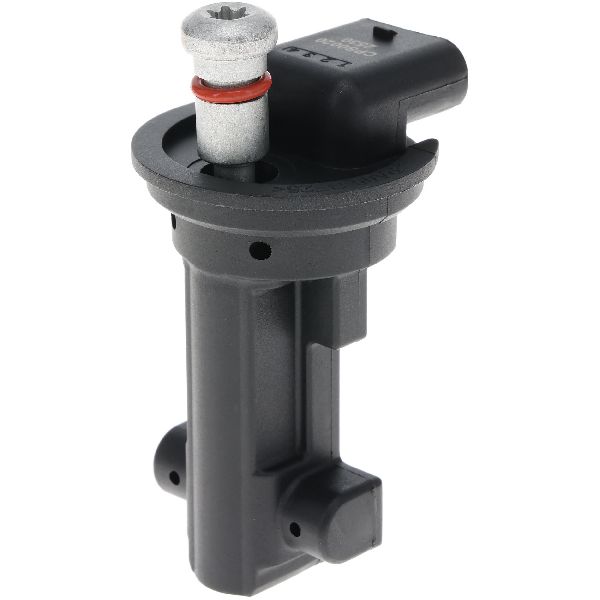
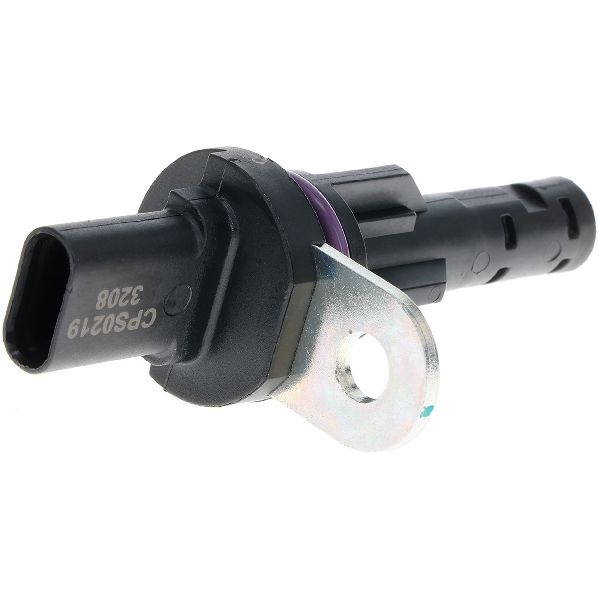
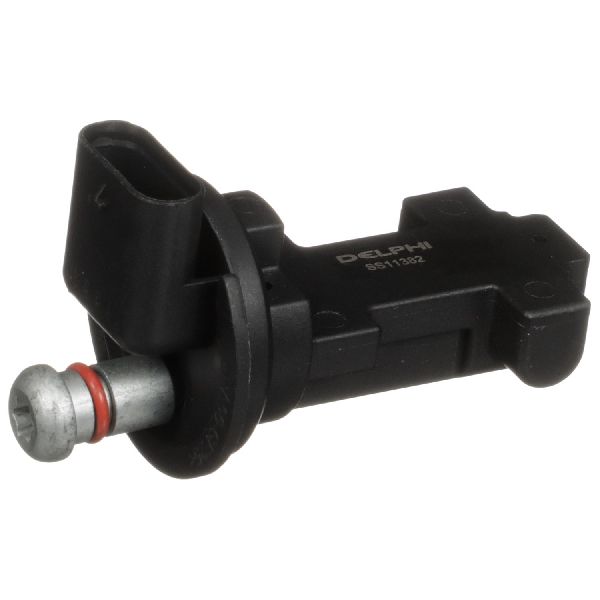
- Camshaft Position Sensor
(OEM #5149141AF)— This sensor is the most common hardware failure for code P0394 after software issues have been ruled out. Both banks on the 3.6L V6 use the same sensor.
Trusted brands: Mopar, Delphi, NTK/NGK
OEM price range: $50-$70
Aftermarket price range: $25-$50 - Engine Oil and Filter — Dirty, low, or incorrect viscosity oil is a frequent cause of VVT-related trouble codes. An oil change is a crucial and inexpensive diagnostic step.
Trusted brands: Pennzoil, Mobil 1, Mopar
OEM price range: $50-$100
Aftermarket price range: $40-$80
Related Codes That Often Appear With This One
- P0390 — This code indicates a general circuit malfunction for the same sensor (Bank 2, Sensor 2), while P0394 specifies an intermittent fault. They often appear together as they point to the same component.
- P0349 — This is an intermittent fault code for the other sensor on the same cylinder head (Bank 2, Sensor 1 - Intake). Issues affecting Bank 2, like oiling problems or wiring harness damage, can cause codes for both sensors.
- P0369 — This is the equivalent intermittent fault code but for Bank 1 (P0369 - Camshaft Position Sensor Intermittent - Bank 1 Sensor 2). Seeing both bank codes simultaneously could point to a systemic issue like oil pressure or a PCM problem.
- P06DD — This code indicates an issue with the dual-stage oil pump, often stuck in low-pressure mode. Since proper VVT function and cam phaser operation are dependent on oil pressure, this code frequently accompanies cam sensor codes like P0394, as low pressure can cause the camshafts to be out of position.
Technical Service Bulletins (TSBs) & Recalls
- 18-049-20: Flash: Powertrain Control Module (PCM) Updates. This TSB involves reprogramming the PCM to change the sensitivity for several camshaft sensor codes, including P0394, from a one-trip to a two-trip fault. It applies to both 3.6L and 5.7L engines.
- 18-024-17 REV. C: Flash: Powertrain Diagnostic and System Enhancements. This is an earlier, superseded version of the software update that also addresses the P0394 code among others.
Platform-Specific Known Issues
- A primary issue for the 2016-2017 Durango is the sensitivity of the PCM's software, which can incorrectly set a P0394 fault. TSB #18-049-20 was released specifically to correct this by changing the fault logic from a one-trip to a two-trip fault.
- On the 3.6L V6 engine, accessing the Bank 2 (driver's side) camshaft position sensor can be difficult and may require removing the upper intake manifold for clearance, unlike the more accessible Bank 1 sensor.
Mechanic-Grade Diagnostic Values
- Camshaft Position Sensor Supply Voltage (at sensor connector) — expected: 4.5 - 5.2 Volts. Failure: Voltage below 4.5V or above 5.2V suggests a wiring or PCM fault.
- Camshaft Position Sensor Ground Circuit Resistance (between sensor connector and ground) — expected: Less than 5.0 Ohms. Failure: Resistance above 5.0 Ohms indicates a poor ground connection.
- Camshaft Position Sensor Signal Wire (Engine Cranking/Running) — expected: Fluctuating digital square wave between ~0V and ~5V (requires oscilloscope).. Failure: A static voltage (stuck at 0V or 5V) points to a failed sensor or a wiring short/open.
Scan Tool Commands That Help
- wiTECH (Chrysler Dealer Tool): VVT System Test — Use this function when the sensor and wiring have been verified as good, but a mechanical issue is suspected. The test commands the VVT phasers to move and measures their response time, which can confirm if a phaser is stuck, slow to respond, or operating correctly, differentiating a sensor fault from a mechanical fault.
- wiTECH (Chrysler Dealer Tool): Flash PCM — Used to reprogram the Powertrain Control Module with updated software as specified in TSBs #18-049-20 and #18-024-17 REV. C. This should be one of the first steps to address the overly sensitive fault logic.
Wiring & Ground Locations
- Bank 2 Camshaft Position Sensor Connector — On the 3.6L V6, it is located on the driver's side rear of the cylinder head, and access may require removing the upper intake manifold. On the 5.7L V8, the single cam sensor is on the front timing cover.. This is the primary connection point for testing power, ground, and signal for the sensor related to code P0394.
- G914A — Commonly located on the right side (passenger side) of the engine block.. This is a shared ground point for multiple engine sensors. A loose or corroded connection at this specific ground can cause intermittent and hard-to-diagnose signal faults for both camshaft and crankshaft position sensors.
Real Owner Repair Stories
- YouTube channel 'Online Mechanic Tips' (Vehicle with 3.6L Pentastar engine and 243,000 miles) — Check Engine Light with code P0394.
❌ Tried (didn't work) Replacing both Bank 1 and Bank 2 camshaft position sensors., Replacing engine mounts., Replacing the oil cooler.
✅ What actually fixed it The root cause was worn-out camshaft phasers. Due to high mileage, the internal spring mechanisms were worn and could not hold timing correctly, causing the camshaft position sensor to report an intermittent fault. Replacing all four cam phasers (two intake, two exhaust) resolved the code. - YouTube channel 'Shriram Karpur' (2015 Chrysler Town & Country (with 3.6L Pentastar) at 116,000 miles) — Check Engine Light with code P0394, engine had significant sludge buildup from poor maintenance.
❌ Tried (didn't work) Replacing the camshaft position sensor., Replacing both camshaft phasers., Replacing the entire camshaft.
✅ What actually fixed it The final culprit was a clogged VVT solenoid (camshaft actuator). Sludge from dirty oil had blocked the oil passages within the solenoid, preventing it from properly controlling oil pressure to the phaser. Replacing the VVT solenoid for Bank 2 finally fixed the P0394 code.
OEM Part Supersession History
5149141AF→No clear supersession found. The part number 05149141AF is often listed, but this appears to be an alternative format rather than a replacement part number.— N/A
Model Year Variations Within This Range
- 2016: The 3.6L V6 engine received an automatic start-stop system in 2016 to improve fuel economy. A Sport mode was also added.
- 2017: The 'GT' trim level was introduced, replacing the previous 'Limited' trim as the volume model. The GT trim came standard with features like leather upholstery and heated seats.
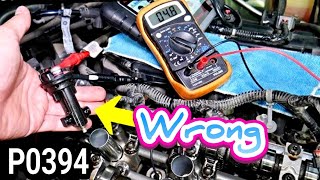
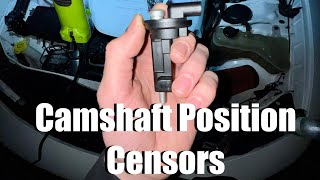
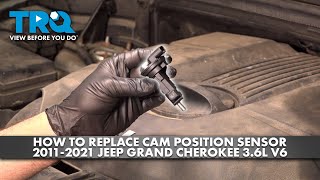
Helpful Videos
We Have This Part in Stock


The information in this article is provided for general reference and educational purposes only. Vehicle specifications, procedures, and part compatibility can vary by production date, trim level, and region. Always consult your vehicle's factory service manual and verify part numbers before purchasing or performing repairs. Safety-critical components such as airbags, seat belts, and braking systems should be installed by a qualified professional.
- Dodge DURANGO:
- 🧭 Diagnostic Flowchart
- 🎬 Helpful Videos
- 🛍️ Shop This Part
- What's Unique About the 2016-2017 Dodge DURANGO
- Symptoms You May Notice
- Most Likely Causes
- Rare But Worth Checking
- Diagnosis Steps
- Parts You'll Likely Need
- Related Codes That Often Appear With This One
- Technical Service Bulletins (TSBs) & Recalls
- Platform-Specific Known Issues
- Mechanic-Grade Diagnostic Values
- Scan Tool Commands That Help
- Wiring & Ground Locations
- Real Owner Repair Stories
- OEM Part Supersession History
- Model Year Variations Within This Range
- 🎟️ Get 5% Off