

P0394 on 2011-2019 Ford Explorer 3.5L: Intermittent Cam Sensor Causes and Fixes
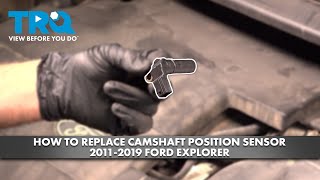
This code indicates an intermittent signal from the Bank 2 exhaust camshaft position sensor. The most common fix is replacing the sensor itself, which costs about $30-$60 for an OEM part. Before replacing, check the wiring connector for damage and ensure your engine oil is clean and full. On Ford engines, this code can also be triggered by a faulty VCT solenoid, so that should be considered if a new sensor doesn't solve the issue.
- P0394 means the exhaust cam sensor signal on the radiator-side cylinder bank is intermittent.
- Before buying parts, check your engine oil level and inspect the sensor's wiring connector for obvious damage.
- The most likely fix is replacing the Bank 2 exhaust camshaft position sensor with an OEM Motorcraft part.
- If a new sensor doesn't fix the issue, the problem could be the VCT solenoid or a wiring fault.
- This is a DIY-friendly repair for those with basic tools; the sensor is accessible after removing the engine air intake tube.
What's Unique About the 2011-2019 Ford Explorer
On many Ford engines, camshaft position codes can sometimes be misleading, pointing to a sensor when the actual problem lies within the Variable Camshaft Timing (VCT) system, often a faulty VCT solenoid gummed up by dirty oil. While a specific TSB for the Explorer's 3.5L V6 directly linking P0394 to a VCT solenoid is not prominent, the engine family is known for VCT issues. TSB 18-2360 for the 5.0L V8, for example, explicitly states that codes P0390/P0394 are caused by a faulty VCT solenoid, not the sensor. Furthermore, manufacturer bulletin SSM 47441 notes that these specific DTCs may be caused by a low engine oil level. Therefore, checking engine oil level and condition is a crucial first step that is more relevant on this platform than on many others.
Symptoms You May Notice
- Check Engine Light is on
- Engine stalls, especially at idle or low speeds
- Rough or erratic idle
- Hesitation or stumbling during acceleration
- Difficulty starting the engine
- Noticeable decrease in fuel economy
- Engine misfire or surging
- Replacing the VCT solenoid when the sensor itself has failed.
- Replacing the PCM when the actual problem is a simple wiring issue.
- Repeatedly replacing the camshaft position sensor with aftermarket parts that fail quickly, when the real issue is a wiring fault or a VCT solenoid problem.
Most Likely Causes
- Faulty Bank 2 Exhaust Camshaft Position Sensor 🔴 High Probability → Shop Engine Camshaft Position Sensor Sensors are electronic components that can fail internally over time due to heat cycles and vibration, leading to intermittent signal loss. This is the most common starting point for diagnosis.
How to confirm: After verifying the wiring is intact, the most straightforward confirmation is to replace the sensor. An advanced diagnostic would involve using an oscilloscope to watch for signal dropouts from the sensor while the engine is running. A multimeter test can also be performed to check resistance against the manufacturer's specifications.
Typical fix: Replace the Bank 2 exhaust camshaft position sensor. It is highly recommended to use an OEM Motorcraft part to ensure compatibility and avoid premature failure, a common complaint with aftermarket sensors.
Est. part cost: $30-$60 - Damaged Wiring or Loose Connector 🟡 Medium Probability The sensor wiring is located in a hot, tight area of the engine bay, making it susceptible to heat damage, chafing, or corrosion over time. The connector pins can also become corroded or loose.
How to confirm: Visually inspect the wiring harness leading to the sensor for any signs of melting, chafing, or breaks. Check that the connector is securely plugged in and that the pins inside are clean and not corroded or bent. Perform a 'wiggle test' on the harness with the engine running to see if it triggers the symptom or a change in engine behavior.
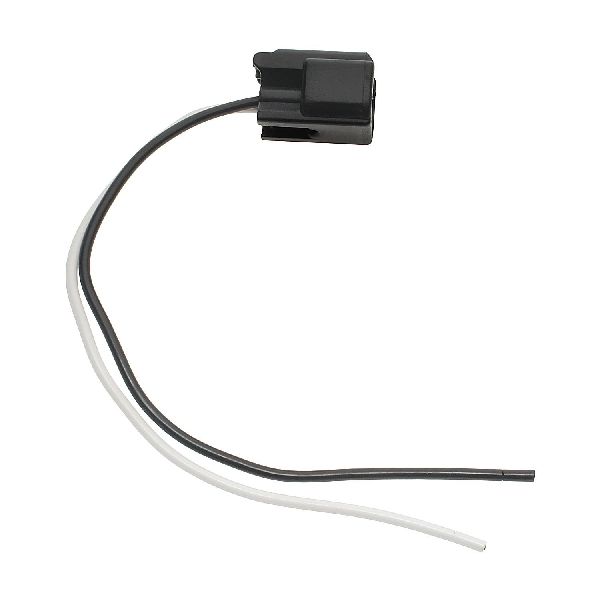
Typical fix: Repair the damaged section of wire or replace the connector pigtail. Apply dielectric grease to the new connection to prevent corrosion.
Est. part cost: $15-$30 - Low or Dirty Engine Oil ⚪ Low Probability The VCT system uses oil pressure to adjust cam timing. If the oil is low, dirty, or the wrong viscosity, the VCT phasers may not respond correctly. Manufacturer bulletin SSM 47441 confirms that P0394 can be caused specifically by low engine oil levels.
How to confirm: Check the engine oil level on the dipstick and inspect its condition. If the oil is very dark, gritty, or below the 'add' line, this could be a contributing factor.
Typical fix: Perform an oil and filter change using the manufacturer-recommended grade of oil (typically 5W-20 or 5W-30 synthetic blend for this engine).
Est. part cost: $40-$70
Rare But Worth Checking
- Failing VCT Solenoid: A VCT solenoid on Bank 2 can get stuck or clogged with debris, causing erratic camshaft movement that the sensor correctly reports as an intermittent problem. While the sensor is reporting correctly, the root cause is the solenoid. This is a known issue on other Ford engines with similar codes, as documented in TSB 18-2360 for the 5.0L V8. A user on Reddit with a 3.5L Explorer reported still having issues after changing the sensor, pointing towards a potential VCT or timing issue.
- Stretched Timing Chain or Failing Cam Phaser: While less common for an intermittent-only code, excessive slack in the timing chain or a failing cam phaser can cause the camshaft position to fluctuate relative to the crankshaft. This could potentially trigger intermittent codes before setting a more serious timing correlation code like P0018/P0019. A rattling noise on a cold start is a key symptom.
- Damaged Camshaft Reluctor Ring: → Shop Engine Camshaft The sensor reads a reluctor ring (or tone ring) on the camshaft. If this ring is cracked, damaged, or has debris on it, it can cause an erratic signal. This is a rare failure and typically requires significant engine disassembly to inspect.
- Failing Powertrain Control Module (PCM): → Shop Engine Control Module (ECM) This is extremely rare, but a fault within the PCM's internal circuitry could cause it to misinterpret the signal from a perfectly good sensor. This should only be considered after all other possibilities have been exhausted and confirmed by a professional.
Diagnosis Steps
- Read the freeze-frame data with a scan tool to understand the engine conditions (RPM, temperature, etc.) when the code was set.
- Check the engine oil level and condition. Top off or change the oil if it is low or dirty. This is a critical and easy first step for any VCT-equipped Ford.
- Locate the Bank 2 camshaft position sensors. On the 3.5L V6, Bank 2 is the cylinder head near the radiator. The sensors are on the driver's side of that head.
- Carefully inspect the wiring harness and connector for the 'B' (exhaust) sensor. Look for any obvious signs of damage, melting, or corrosion. Ensure the connector is seated firmly. Perform a 'wiggle test' on the wiring with the engine running to check for changes.
- If the wiring looks good, the most probable cause is the sensor itself. Replace the Bank 2 exhaust camshaft position sensor with a high-quality OEM (Motorcraft) part.
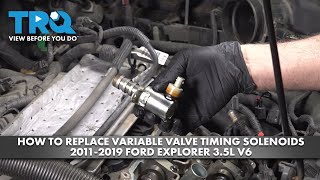
- Clear the code and perform a test drive. If the code returns, the issue may be more complex. The next logical step is to inspect and likely replace the Bank 2 exhaust VCT solenoid. 🎬 See how to replace the VVT solenoids yourself
- If the problem persists, advanced diagnostics are needed. This involves using a lab scope to analyze the sensor signal pattern or investigating potential mechanical timing problems (chain, phasers), which may require professional diagnosis.
Parts You'll Likely Need
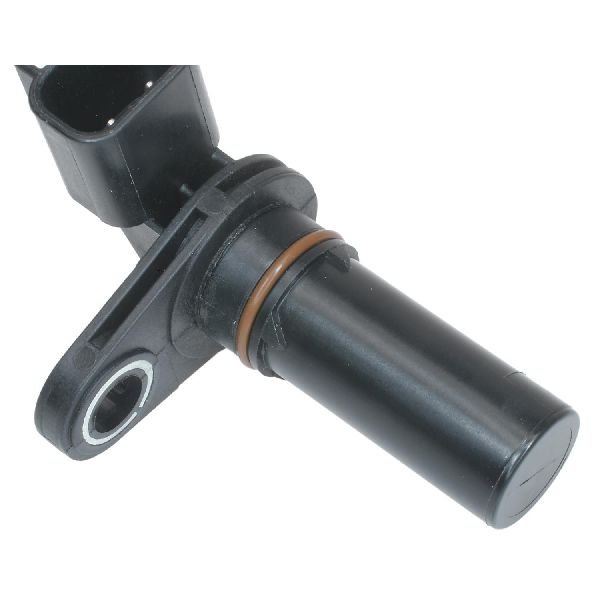
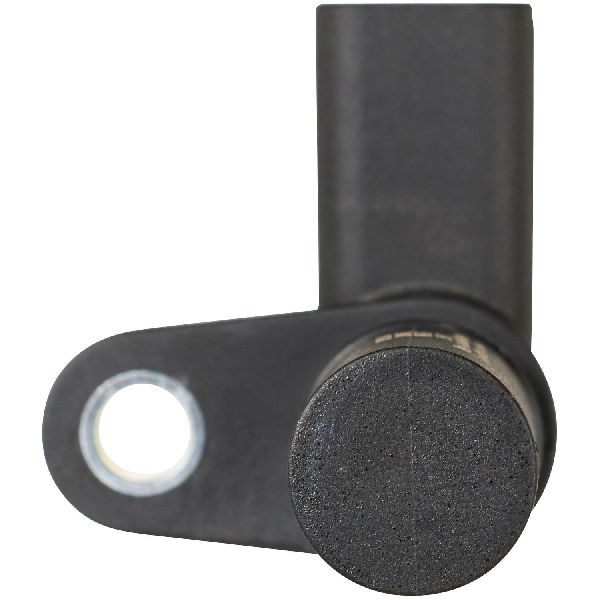
- Camshaft Position Sensor (Bank 2, Exhaust)
(OEM #DU-90)— This is the most common component to fail and cause a P0394 code. Internal electronics can degrade over time, leading to an intermittent signal.
Trusted brands: Motorcraft, Bosch, Denso, Standard Motor Products (SMP)
OEM price range: $30-$60
Aftermarket price range: $20-$45 - VCT Oil Control Solenoid
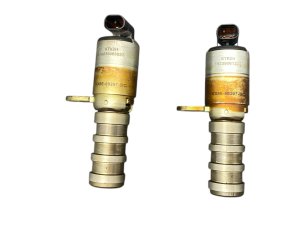
(OEM #AT4Z-6M280-C)— If the sensor and wiring are good, a sticking VCT solenoid is the next most likely cause, as it controls the oil flow that adjusts the camshaft's position. This part is also referred to as a 'Control Valve Solenoid'.
Trusted brands: Motorcraft, Dorman
OEM price range: $45-$70
Aftermarket price range: $25-$50
Related Codes That Often Appear With This One
- P0390 — P0390 is a general circuit malfunction for the same sensor, while P0394 specifies an intermittent fault. They often appear together if the fault condition varies. TSB 18-2360 for other Fords groups these two codes together with the same root cause.
- P0018 / P0019 — These codes indicate a correlation issue between the crankshaft and the Bank 2 camshafts. A failing sensor can cause these, or a timing chain/phaser issue could cause both the correlation code and the sensor circuit code.
Technical Service Bulletins (TSBs) & Recalls
- TSB 18-2360: While this TSB is for the 5.0L engine in the F-150/Mustang, it documents a known Ford issue where P0390/P0394 is caused by a faulty Bank 2 exhaust VCT oil control solenoid, not the sensor itself. This provides crucial context for potential misdiagnosis on other Ford V-engines.
- SSM 47441: This manufacturer bulletin notes that DTCs P0390 and/or P0394 may be caused by low engine oil level and advises ensuring the oil level is between the minimum and maximum marks before performing repairs.
Platform-Specific Known Issues
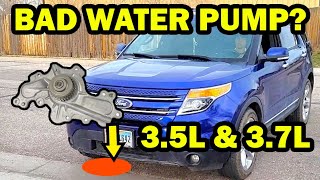
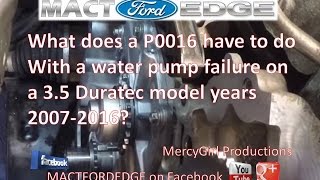
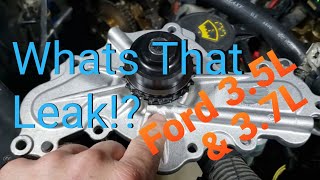
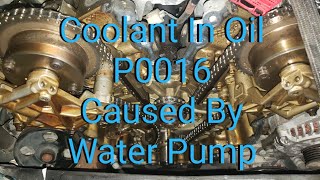
- The internal water pump on the 3.5L Cyclone engine is a major known failure point. It is driven by the timing chain. When its seal fails, it leaks coolant directly into the engine oil. This contamination severely degrades the oil's ability to operate the VCT system and can lead to a variety of timing-related codes, including P0394, before causing catastrophic engine failure. A coolant leak visible near the AC compressor is a tell-tale sign of the pump's weep hole draining externally.
Mechanic-Grade Diagnostic Values
- Camshaft Position (CMP) Sensor Resistance — expected: 586 - 2,033 Ohms. Failure: A resistance reading outside this range, or an open (infinite) reading, indicates a failed sensor.
- Variable Camshaft Timing (VCT) Solenoid Resistance — expected: 5 - 15 Ohms. Failure: A reading outside this range, or an open circuit, points to a bad solenoid coil.
- Minimum Hot Idle Oil Pressure — expected: 15-25 PSI. Failure: Pressure below 15 PSI at hot idle can starve the VCT system, leading to various timing codes.
- CMP Sensor Connector Voltage (Key On, Engine Off) — expected: Approx. 5V on signal wire, 0 Ohms to ground on ground wire.. Failure: Voltage below the expected range or high resistance on the ground wire indicates a wiring or PCM issue.
Scan Tool Commands That Help
- Ford IDS / FORScan: Monitor PIDs: VCT_EXH_DIF_B2, VCT_EXH_CMD_B2, VCT_EXH_ACT_B2 — Use these live data PIDs to diagnose VCT system performance. A large difference (DIF) between the commanded (CMD) and actual (ACT) angle for the Bank 2 exhaust cam, or an actual angle that doesn't respond to engine RPM changes, points towards a faulty VCT solenoid or cam phaser, not just a sensor.
- Power Probe / Jumper Wires: Directly apply 12V power and ground to the VCT solenoid. — With the solenoid removed from the engine, you can manually apply power to its two pins. A healthy solenoid will produce an audible 'click' as its internal plunger moves. No click, or an inconsistent click, indicates the solenoid is stuck or has failed electrically.
Wiring & Ground Locations
- G104 — Right side of engine compartment.. This is a primary engine bay ground point. A loose or corroded connection here can cause intermittent and difficult-to-diagnose electrical issues for various engine sensors, including the camshaft position sensors.
- G101 / G103 — Left side of engine compartment / left front corner of engine compartment.. These grounds also serve the engine harness. Verifying all major engine bay grounds are clean and tight is a crucial step when dealing with any intermittent electronic fault code like P0394.
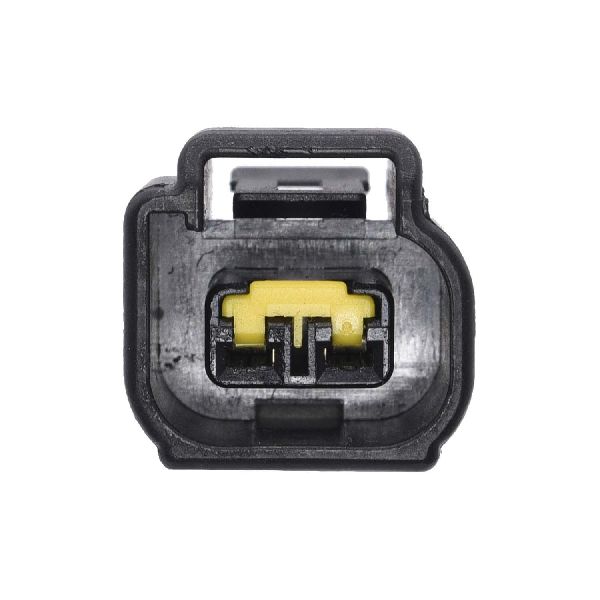
- CMP Sensor Connector — On the Bank 2 (front) valve cover, driver's side. The exhaust sensor is the one closer to the exhaust manifold.. This is the direct connection to the sensor. The connector itself can become brittle from heat, and the pins can corrode. The wiring harness in this area is subject to heat and vibration, and should be inspected for chafing or melting.
Real Owner Repair Stories
- Reddit user on r/MechanicAdvice (2016 Ford Explorer XLT 3.5L) — Sluggish performance in lower gears, check engine light on with P0390 and P0394.
❌ Tried (didn't work) Replacing the camshaft position sensors, Replacing the VVT solenoid, Replacing spark plugs, Clearing codes and disconnecting battery
✅ What actually fixed it The user did not post a final resolution, but the failure of common parts (sensor, solenoid) to fix the issue strongly suggests a more complex underlying problem such as a wiring harness fault, PCM issue, or a mechanical timing problem (stretched chain, failing phaser). This serves as a cautionary tale that this code is not always a simple parts replacement. - NHTSA ODI #11098402 — An owner reported a vehicle exhibiting P0394 along with a long list of other timing and performance codes including P0011, P0019, and P0390; a technician performed power balance and compression tests to determine the extent of the internal engine issues.
OEM Part Supersession History
7T4Z-6B288-A→AT4Z-6B288-A, then DU-90— Standard part evolution and updates by the manufacturer.
Heads up: DU-90 is the current Motorcraft part number and is a direct replacement for the previous versions on this vehicle.
Model Year Variations Within This Range
- 2011-2019: The base 3.5L naturally aspirated V6 engine remained fundamentally the same throughout the 2011-2019 generation, including through the 2016 model year refresh. Diagnostic procedures and common causes for P0394 are consistent across this entire range.
Diagnostic Flowchart
Other Known Issues on This Vehicle
Issues unrelated to this code that are worth knowing about as an owner of this generation:
- Internal Water Pump Failure 🔴 High — Very common, typically after 80,000-120,000 miles. Failure can cause catastrophic engine damage by leaking coolant into the oil. (Ref: No recall, but a well-documented widespread problem. A weep hole leak near the AC compressor is the primary warning sign.)
- Power Transfer Unit (PTU) Failure 🔴 High — Common on AWD models. The PTU fluid overheats due to proximity to the exhaust, leading to seal and gear failure, often requiring a costly replacement. (Ref: No recall, but Ford considers the fluid 'lifetime,' leading to lack of service and premature failure. Aftermarket solutions with drain plugs exist.)
- Exhaust Odor in Cabin 🟠 Medium — Widespread enough to trigger a major NHTSA investigation covering 2011-2017 models. More pronounced during heavy acceleration. (Ref: Multiple TSBs issued (e.g., TSB 16-0166, 17-0044) to reseal body seams and reprogram HVAC, but no formal recall was issued.)
- Electronic Throttle Body Malfunction 🟠 Medium — Common on 5th-gen models, causing sudden power loss, hesitation, and the vehicle entering 'limp mode'. (Ref: No recall, but a known issue often indicated by codes P2111 or P2112.)
- Suspension and Steering Rack Issues 🟠 Medium — Multiple recalls for rear toe links and power steering issues. Premature wear of steering racks and other suspension components is also reported. (Ref: Multiple recalls issued for various model years between 2011-2017.)
Used vs. New Parts: Buying Guide for This Vehicle
When a used part is the smart pick: For this specific repair, using used parts is generally not recommended. The primary failure components are electronic sensors (CMP sensor) and electro-mechanical solenoids (VCT solenoid), which have a finite lifespan and are sensitive to the maintenance history (oil change interval) of the donor vehicle. The cost savings are minimal compared to the risk of installing a part that is near the end of its own service life.
Donor-vehicle mileage cap: roughly under 80000 miles for the part to have meaningful remaining life.
What to inspect on the donor part:
- Verify the donor vehicle had no timing-related engine codes.
- Inspect the engine for signs of oil sludge, which would indicate poor maintenance and likely compromised VCT components.
- For wiring pigtails, ensure the plastic is not brittle and the locking tab is intact.
OEM-only on this vehicle (don't cheap out):
- Camshaft Position Sensor
- VCT Solenoid
Aftermarket brands forum-validated for this vehicle:
- Bosch
- Denso
- Standard Motor Products (SMP)
Brands owners have reported issues with on this vehicle:
- No-name or unbranded 'white-box' parts from online marketplaces are frequently cited in forums as failing prematurely or being dead-on-arrival.
Real Owner Stories
Aggregated from forums and TSBs cited above. Mileages and costs reflect what owners reported in those sources.
2016 Ford Explorer 3.5L
Symptoms: The vehicle was experiencing sluggishness and the P0394 code kept returning.
What fixed it: The owner replaced both the cam sensor and the VCT solenoid, but the issue persisted, suggesting a deeper problem within the timing system itself.
Source hint: Reddit r/MechanicAdvice
Ford Expedition V8 (Similar Ford V-engine)
Symptoms: The P0394 code returned shortly after a repair attempt.
What fixed it: Replacing the aftermarket sensor with an OEM Motorcraft sensor and checking the connector for corrosion while applying dielectric grease.
Source hint: Ford Expedition Forum
2011-2019 Ford Explorer 3.5L — ~100000 miles
Symptoms: Coolant leak visible near the AC compressor and timing-related codes appearing.
What fixed it: This indicates internal water pump failure where the weep hole is draining externally; the pump must be replaced to prevent oil contamination and VCT failure.
Source hint: vehicle_specific_issues
Related OBD-II Codes
Frequently Asked Questions
Does TSB 18-2360 apply to my 2011-2019 Ford Explorer 3.5L?
Should I use aftermarket sensors to fix the P0394 code on my Explorer?
Can a coolant leak cause a P0394 code on the 3.5L Cyclone engine?
Where are the Bank 2 camshaft position sensors located on the 3.5L V6 Explorer?
How does engine oil level affect the P0394 code on my Ford?
What is the 'wiggle test' mentioned for diagnosing this Ford Explorer issue?
Helpful Videos
Used OEM Parts in Stock
New Aftermarket Parts Available


The information in this article is provided for general reference and educational purposes only. Vehicle specifications, procedures, and part compatibility can vary by production date, trim level, and region. Always consult your vehicle's factory service manual and verify part numbers before purchasing or performing repairs. Safety-critical components such as airbags, seat belts, and braking systems should be installed by a qualified professional.
- Ford Explorer:
- 🧭 Diagnostic Flowchart
- 🎬 Helpful Videos
- 🛍️ Shop This Part
- What's Unique About the 2011-2019 Ford Explorer
- Symptoms You May Notice
- Most Likely Causes
- Rare But Worth Checking
- Diagnosis Steps
- Parts You'll Likely Need
- Related Codes That Often Appear With This One
- Technical Service Bulletins (TSBs) & Recalls
- Platform-Specific Known Issues
- Mechanic-Grade Diagnostic Values
- Scan Tool Commands That Help
- Wiring & Ground Locations
- Real Owner Repair Stories
- OEM Part Supersession History
- Model Year Variations Within This Range
- Other Known Issues on This Vehicle
- Used vs. New Parts: Buying Guide for This Vehicle
- Real Owner Stories
- 2016 Ford Explorer 3.5L
- Ford Expedition V8 (Similar Ford V-engine)
- 2011-2019 Ford Explorer 3.5L — ~100000 miles
- Related OBD-II Codes
- Frequently Asked Questions
- 🎟️ Get 5% Off