

P0394 on 2011-2018 Ram 1500: Camshaft Sensor 'B' (Bank 2) Intermittent Signal Causes and Fixes
On 2011-2018 Ram 1500s, P0394 is most often caused by a faulty wiring pigtail to the camshaft position sensor or the sensor itself. Before replacing parts, thoroughly inspect the wiring for damage. An OEM Mopar sensor is strongly recommended if replacement is needed. On high-mileage 3.6L engines, a failing cam phaser can also be the root mechanical cause.
- For code P0394, always inspect the wiring harness and connector pigtail for damage before replacing the sensor itself.
- The meaning of P0394 is different for the 3.6L V6 and 5.7L HEMI. Know your engine to diagnose it correctly.
- If you replace the sensor, use a high-quality OEM Mopar part to avoid potential issues with aftermarket components.
- Check your engine oil level and condition, as low or dirty oil can affect the VVT system and trigger this code.
- If the code persists on an early 3.6L engine, a PCM software update from a dealer might be the required fix.
What's Unique About the 2011-2018 Ram 1500

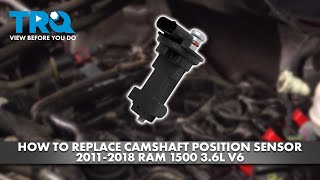
This code presents differently depending on your engine. On the 3.6L V6, Bank 2 is the driver's side, and the sensor reads the exhaust camshaft ('Sensor B'). On the 5.7L HEMI V8, the code is confusing because this single-cam (OHV) engine doesn't have a physical 'Bank 2' or 'Sensor B'; the PCM uses this code for any intermittent fault from the single camshaft sensor located at the front of the engine. 🎬 See how to access and replace the sensor on a 5.7L Hemi. For both engines, the factory TSB #05149141A suggests this code often points to a more complex issue than just a bad sensor, warning technicians against immediate replacement and to contact an expert after collecting specific data with a scan tool.
Diagnostic Flowchart

Tap your situation to follow the diagnostic path that matches what you're seeing on this vehicle.
Symptoms You May Notice
- Check Engine Light is on
- Traction Control light may also illuminate simultaneously
- Engine hesitates or stumbles during acceleration
- Rough idle
- Engine stalls unexpectedly, sometimes when coming to a stop
- Difficulty starting the engine, or extended cranking time
- Reduced fuel economy
- Noticeable loss of engine power, sometimes referred to as 'limp mode'
- Replacing the camshaft position sensor when the actual fault is in the wiring pigtail.
- On the 5.7L HEMI, searching for a second camshaft sensor ('Bank 2, Sensor B') that does not exist.
- Replacing sensors on a high-mileage 3.6L V6 when the root cause is a mechanically failed cam phaser.
- Using non-OEM sensors, which are known to be unreliable and can cause the code to return.
Most Likely Causes

- Damaged or Corroded Camshaft Sensor Wiring/Connector 🔴 High Probability → Shop Engine Camshaft The engine bay environment exposes wiring to heat and vibration, causing wires to chafe or connectors to become brittle and fail over time. This is a very common failure point for this code.
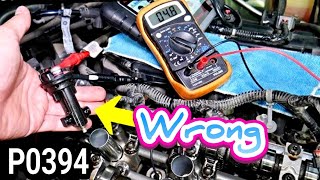
How to confirm: With the engine off, visually inspect the wiring harness leading to the camshaft sensor. Wiggle the connector and harness while checking for a 5V reference signal with a multimeter; inconsistent readings or readings of 0V confirm a wiring fault. A forum user on RamForum.com confirmed this exact issue on their 2014 3.6L after replacing the sensor did not fix the problem. 🎬 Watch this before replacing parts to avoid common diagnostic mistakes.
Typical fix: Repair the damaged section of wire or replace the connector pigtail. Ensure connections are soldered and heat-shrunk for durability. Dorman offers aftermarket pigtail connectors.
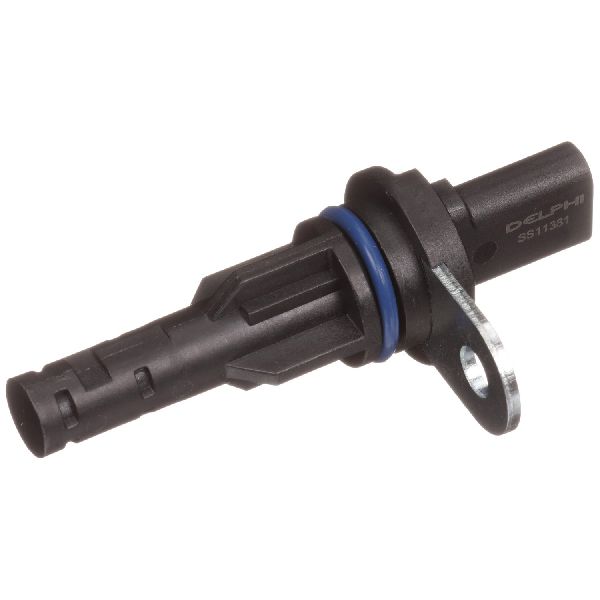
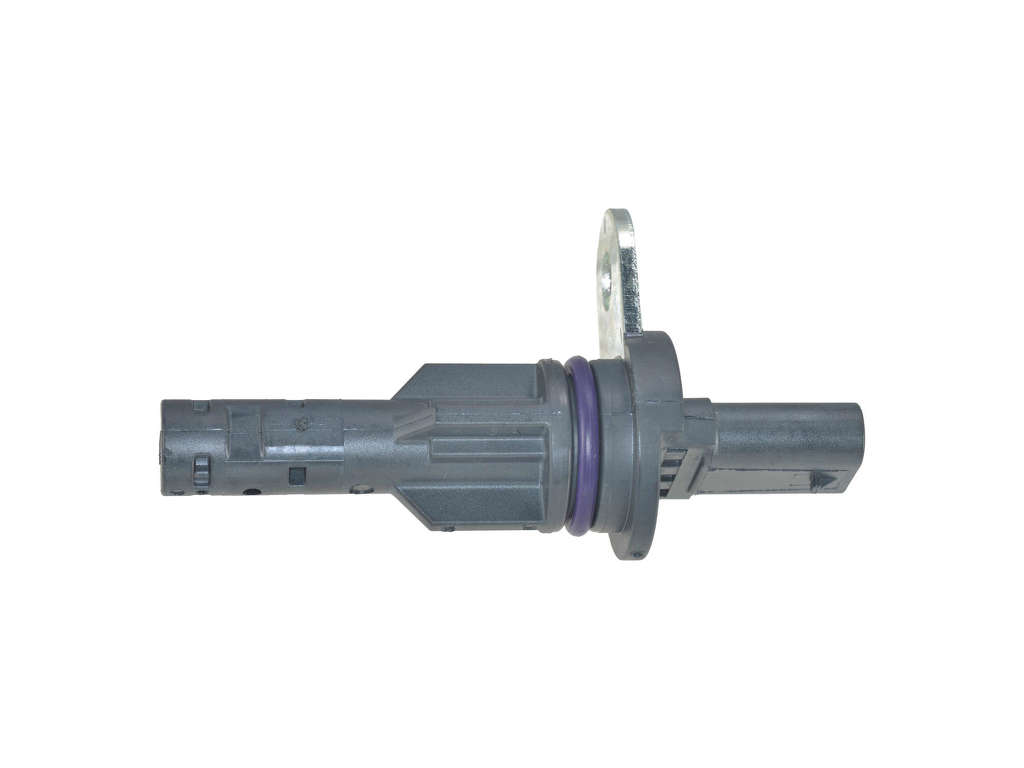
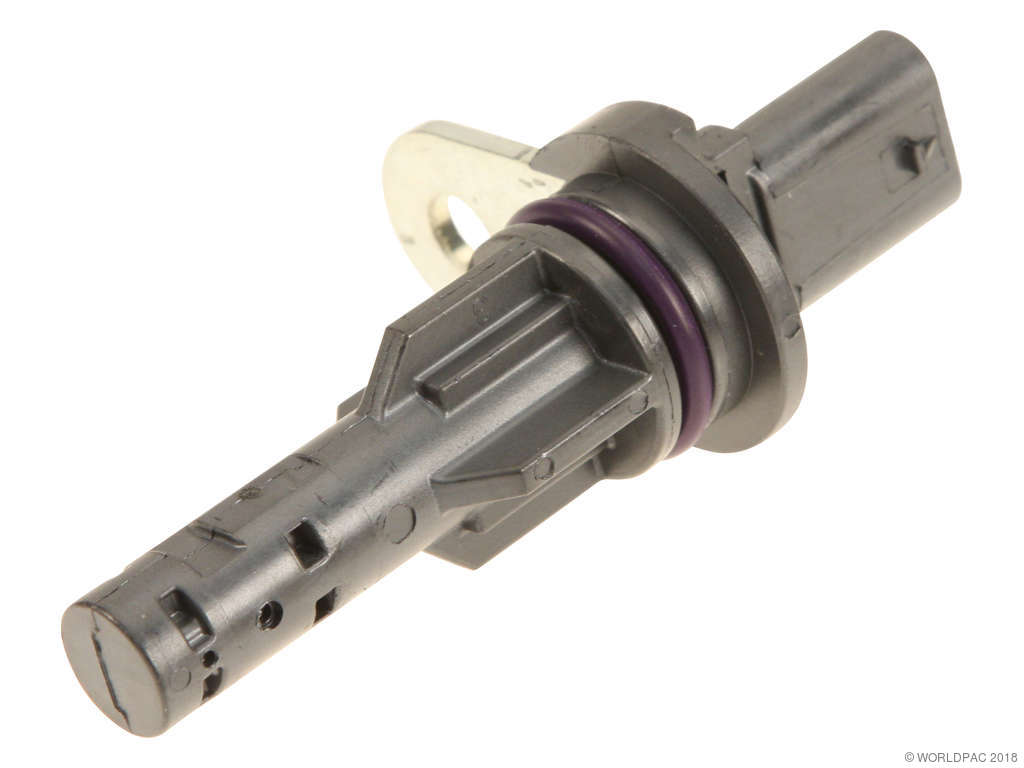
Est. part cost: $15-$40 - Failed Camshaft Position Sensor 🔴 High Probability → Shop Engine Camshaft Position Sensor The sensor is an electronic component that operates in a high-heat environment and can fail with age and mileage. Aftermarket sensors are known to have a high failure rate or cause issues, making OEM parts highly recommended.
How to confirm: After confirming the wiring is good, the sensor is the next likely culprit. It can be tested with a multimeter for resistance, but a definitive test requires a lab scope to view the signal pattern. For most DIYers, replacement is the most straightforward confirmation if wiring is ruled out.
Typical fix: Replace the camshaft position sensor. Using an OEM Mopar sensor (Part #5149141AF) is highly recommended to avoid compatibility issues.
Est. part cost: $30-$100 - Low or Dirty Engine Oil 🟡 Medium Probability The VVT system uses oil pressure to adjust cam timing. If oil is low, dirty, or the wrong viscosity, it can cause the cam phasers to operate slowly or erratically, which the PCM can misinterpret as a sensor signal fault. Sludge buildup from infrequent oil changes is a known cause.
How to confirm: Check the engine oil level and condition on the dipstick. If it is low, black, or sludgy, this could be the cause.
Typical fix: Perform an oil and filter change using the manufacturer-specified oil type (e.g., 5W-20 for 5.7L, 5W-30 for 3.6L) and a quality filter.
Est. part cost: $40-$80 - Failing VVT Solenoid (Actuator) or Cam Phaser ⚪ Low Probability More common on higher-mileage engines (over 100k miles), the VVT solenoids can get clogged with sludge, or the spring-loaded cam phasers can mechanically fail or wear out, causing timing to be physically erratic. The PCM sees this physical timing error and flags the sensor that's reporting it.
How to confirm: This is a more advanced diagnosis. It may involve listening for ticking/rattling noises from the front of the engine or using a scan tool to command the VVT system and observe its response. A mechanic noted that there is no specific code for a bad cam phaser; it will manifest as a sensor code.
Typical fix: Replace the faulty VVT solenoid or the worn cam phaser(s). This is a more labor-intensive and expensive repair, often requiring removal of the valve and timing covers.
Est. part cost: $50-$300 for a solenoid, $200-$500+ for phaser parts.
Rare But Worth Checking
- PCM Software Glitch (Early 3.6L V6): For early models, especially 2011-2012, Chrysler issued TSBs indicating a PCM software glitch could cause various cam sensor codes (P0344, P0369, P0394, etc.). If you've replaced parts and the code returns, a dealer PCM flash update may be the solution. TSB 18-049-20 also applies to 2016-2017 models for similar issues.
- Damaged Camshaft Tone Ring: → Shop Engine Camshaft The magnetic ring on the camshaft that the sensor reads can become damaged, contaminated with debris, or misaligned, causing erratic signals. This requires removing the valve cover (3.6L) or timing cover (5.7L) to inspect and is often part of a larger timing system repair.
Diagnosis Steps
- Check engine oil level and condition. An oil change with the correct viscosity oil is a cheap and easy first step.
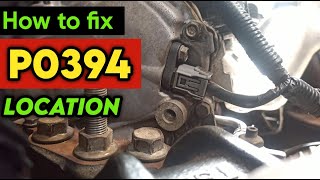
- Visually inspect the camshaft position sensor's wiring harness and connector for obvious signs of damage, melting, or corrosion. On the 3.6L, this is on the driver's side valve cover, towards the rear.
- Disconnect the connector and check for oil contamination or damaged pins. Ensure good pin-to-terminal contact.
- Use a multimeter to test for proper voltage (typically 5V) and ground at the connector. Wiggle the harness during testing to see if the readings fluctuate, which indicates a wiring break.
- If wiring is confirmed to be good, replace the camshaft position sensor. Using an OEM Mopar part (5149141AF) is strongly recommended.
- After replacement, clear the trouble code and perform a test drive. Some vehicles may require a 'camshaft relearn procedure' to be performed with a capable scan tool.
- If the code persists, especially on a high-mileage 3.6L engine with ticking noises, further investigation into the VVT system (solenoids, phasers) for mechanical faults is required.
- For early 3.6L models (especially 2011) or 2016-2017 models, if all else fails, consult a dealer about a potential PCM software update per TSBs 18-024-17 or 18-049-20.
Parts You'll Likely Need

- Camshaft Position Sensor
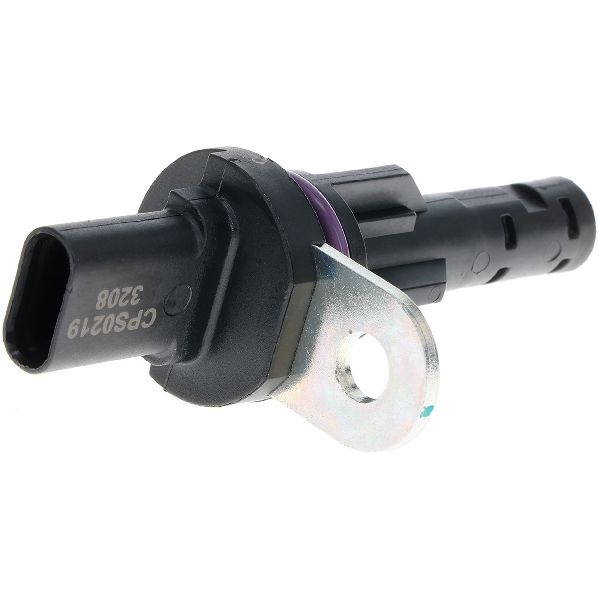
(OEM #5149141AF)— This is one of the most common failure points for this code after wiring issues are ruled out. This part number is applicable to both the 3.6L and 5.7L engines in this range.
Trusted brands: Mopar (OEM)
OEM price range: $45-$70
Aftermarket price range: $25-$50 - Camshaft Position Sensor Connector Pigtail
(OEM #Not consistently available as OEM, aftermarket is common.)— The connector itself or the wires leading to it often become brittle and fail, causing the intermittent signal that triggers the code.
Trusted brands: Mopar, Dorman (e.g., 645-213)
OEM price range: $25-$40
Aftermarket price range: $15-$30
Related Codes That Often Appear With This One
- P0390 — P0390 is a general fault for the same circuit (Camshaft Position Sensor 'B' Circuit Bank 2), while P0394 specifies an intermittent fault. They often appear together and point to the same root cause.
- P0349 — On the 3.6L V6, this code is for the Bank 2 intake cam sensor ('Sensor A'). Since one physical sensor housing reads both cams on that bank, a failing sensor or wiring issue can trigger codes for both intake (P0349) and exhaust (P0394) simultaneously.
- U1424 — This code for 'Implausible Engine Torque Signal' can be triggered alongside P0394 as the PCM loses confidence in its engine data when the cam signal is intermittent. A forum user reported seeing these codes together.
Technical Service Bulletins (TSBs) & Recalls
- 05149141A: Instructs technicians to seek expert advice and collect specific scan tool data before replacing the camshaft position sensor for code P0394, among others.
- 18-049-20: Involves reprogramming the PCM with the latest software for 2016-2017 Dodge Durango and Jeep Grand Cherokee with 3.6L or 5.7L engines to address a list of DTCs including P0394.
- 18-024-17 REV. B: A superseded bulletin, also for 2016-2017 models, to update PCM software to address cam sensor codes and improve drivability.
Platform-Specific Known Issues
- TSB #05149141A: This official bulletin from the manufacturer covers P0394 and specifically advises technicians to contact an expert (named Tom Nies) before replacing the camshaft position sensor. It requires them to pull Freeze Frame and Cam/Crank Sync Event Monitor data, indicating the root cause is often more complex than a simple sensor failure and may point to deeper mechanical or wiring issues that require advanced diagnosis.
Mechanic-Grade Diagnostic Values
- Camshaft Position Sensor 5V Supply (Key On, Engine Off) — expected: 4.5V to 5.2V. Failure: Voltage below 4.5V or above 5.2V indicates a fault in the supply circuit or PCM.
- Camshaft Position Sensor Ground Circuit (Key On, Engine Off) — expected: Approximately 12.6V (Battery Voltage). Failure: A reading significantly lower than battery voltage indicates a poor ground connection.
- Camshaft Position Sensor Signal Wire (Bench Test with Magnet) — expected: Switches between 5V (or supply voltage) and 0V. Failure: If the voltage does not switch when a magnet is passed over the sensor tip, the sensor has failed.
- Resistance between CMP Signal Circuit and Ground — expected: Below 5.0 Ohms. Failure: Resistance above 5.0 Ohms can indicate a wiring issue or short.
Scan Tool Commands That Help
- wiTECH or equivalent professional scanner: View Cam/Crank Sync Event Monitor data — As per TSB #05149141A, this data should be collected before replacing any parts. It helps determine if the intermittent signal is due to a wiring fault, sensor failure, or a mechanical timing issue.
- wiTECH or equivalent professional scanner: Camshaft/Crankshaft Relearn — After replacing a camshaft position sensor, crankshaft position sensor, or any timing components, this procedure may be required to synchronize the new components with the PCM.
- wiTECH, Autel, or other advanced scanner: View Desired vs. Actual Camshaft Position PIDs — To diagnose a potential mechanical issue with a cam phaser. If the actual position deviates significantly (more than 10-11 degrees) from the desired position commanded by the PCM, it points towards a failing phaser or oil flow problem.
Wiring & Ground Locations

- 3.6L Camshaft Position Sensor Connector — On the driver's side (Bank 2) valve cover, near the rear of the engine.. This 4-wire connector is a common failure point. Wires can become brittle from heat. For P0394 (exhaust cam), the relevant wires are Pin 3 and Pin 4.
- 3.6L CMP Connector Pinout — At the sensor connector on the driver's side.. Pin 1 & 2 are for the intake sensor (P0349). Pin 3 & 4 are for the exhaust sensor (P0394). One wire is the 5V supply, and the other is the signal return to the PCM.
Real Owner Repair Stories
- RamForum.com user 'Escotch' (2014 Ram 1500 3.6L with 195,000 miles) — Vehicle went into limp mode on the highway with codes P0394, U1424, and P1DD2. Some intermittent camshaft-related noise was heard.
❌ Tried (didn't work) Replacing the Bank 2 (driver side) camshaft position sensor. The code returned after 20 miles., Inspecting cam phasers and rocker arms, which all appeared to be in good condition with no play.
✅ What actually fixed it The user discovered inconsistent voltage at the sensor connector. Wiggling the wires right at the connector caused the 5V reading to drop to 0V and back, confirming a wiring/pigtail failure was the root cause. The fix was to repair or replace the connector pigtail. - YouTube channel 'Online Mechanic Tips' (High-mileage (243,000 miles) vehicle with 3.6L Pentastar engine) — Persistent P0394 code after visiting another shop.
❌ Tried (didn't work) Replacing both camshaft position sensors., Replacing engine mounts., Replacing the oil cooler., Replacing the thermostat.
✅ What actually fixed it The root cause was a worn-out cam phaser. The mechanic explains that on high-mileage Pentastar engines, the internal springs of the phaser wear out, preventing it from holding timing firmly. The PCM sees this mechanical timing error via the sensor and sets a sensor code because there is no specific code for a bad cam phaser. The fix was to replace all four cam phasers.
OEM Part Supersession History
05149141AE (and earlier revisions like AA, AB, AC, AD)→5149141AF— Standard part evolution for improved reliability and performance.
Heads up: While older revisions may physically fit, it is always recommended to use the latest superseded part number (5149141AF) to ensure compatibility and benefit from any design improvements.
Model Year Variations Within This Range
- 2016-2017: These model years were subject to TSB 18-049-20 (which supersedes 18-024-17), indicating a higher likelihood of a PCM software glitch causing false cam sensor codes. For these specific years, checking for a required PCM reflash at a dealership is a critical diagnostic step if no physical faults are found.
Helpful Videos

We Have This Part in Stock


The information in this article is provided for general reference and educational purposes only. Vehicle specifications, procedures, and part compatibility can vary by production date, trim level, and region. Always consult your vehicle's factory service manual and verify part numbers before purchasing or performing repairs. Safety-critical components such as airbags, seat belts, and braking systems should be installed by a qualified professional.
- Ram 1500:
- 🧭 Diagnostic Flowchart
- 🎬 Helpful Videos
- 🛍️ Shop This Part
- What's Unique About the 2011-2018 Ram 1500
- Symptoms You May Notice
- Most Likely Causes
- Rare But Worth Checking
- Diagnosis Steps
- Parts You'll Likely Need
- Related Codes That Often Appear With This One
- Technical Service Bulletins (TSBs) & Recalls
- Platform-Specific Known Issues
- Mechanic-Grade Diagnostic Values
- Scan Tool Commands That Help
- Wiring & Ground Locations
- Real Owner Repair Stories
- OEM Part Supersession History
- Model Year Variations Within This Range
- 🎟️ Get 5% Off