

P0394 on 2014-2018 Ram 2500: Cam Sensor Intermittent Signal Causes & Fixes
On 2014-2018 Ram 2500s with a HEMI engine, P0394 is most often caused by a faulty camshaft position sensor or its wiring. An OEM Mopar replacement sensor is the most likely fix and is relatively inexpensive and easy to install. Before replacing the sensor, always inspect the wiring harness and connector for damage, and check the engine oil level and condition.
- P0394 on a 2014-2018 Ram 2500 with a HEMI V8 points to an intermittent signal from the single camshaft position sensor.
- The most likely cause is a faulty sensor itself or a damaged wiring connector.
- Before replacing any parts, check your engine oil level and condition, and thoroughly inspect the sensor's wiring harness.
- Using an OEM Mopar sensor (part #5149141AF) for replacement is highly recommended to avoid premature failure of aftermarket parts.
What's Unique About the 2014-2018 Ram 2500
While the code definition refers to 'Bank 2, Sensor B', the 5.7L and 6.4L HEMI V8 engines in the Ram 2500 are pushrod (OHV) designs with a single camshaft in the engine block. Therefore, there is only one camshaft position sensor. The PCM uses the P0394 code to indicate an intermittent signal from this single sensor. This can be confusing, as technicians might look for a second sensor that doesn't exist. The issue is almost always the sensor itself, its wiring, or a problem with the VVT system/cam phaser. On other Mopar vehicles with DOHC engines like the 3.6L V6, P0394 correctly refers to the exhaust camshaft sensor on the driver's side bank, but this does not apply to the HEMI V8.
Diagnostic Flowchart
Tap your situation to follow the diagnostic path that matches what you're seeing on this vehicle.
Symptoms You May Notice
- Check Engine Light is on.
- Engine runs rough or idles poorly.
- Difficulty starting the engine, or engine cranks but won't start.
- Engine stalls, sometimes intermittently, especially when coming to a stop.
- Hesitation, lack of acceleration, or engine surging.
- Reduced fuel economy.
- Erratic RPM behavior.
- Replacing the crankshaft position sensor when the code is for the camshaft sensor.
- Assuming the engine needs major timing chain work before thoroughly diagnosing the sensor, its circuit, and oil pressure/quality.
- Replacing the sensor with a cheap aftermarket part, which often fails again quickly, leading the owner to suspect a deeper issue when it's just a poor-quality part.
Most Likely Causes
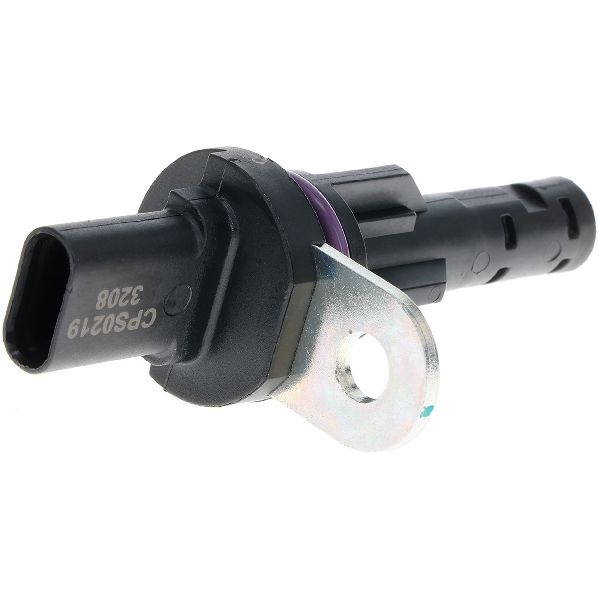
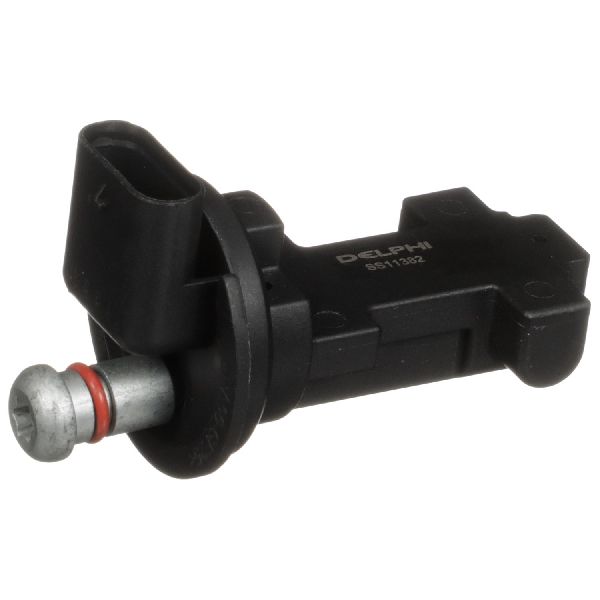
- Faulty Camshaft Position Sensor 🔴 High Probability → Shop Engine Camshaft Position Sensor The sensor is a common failure point due to heat and vibration in the engine bay. Aftermarket sensors are widely reported on forums to be unreliable or fail quickly, making an OEM Mopar replacement a strong recommendation.
How to confirm: After checking wiring, replacing the sensor is a common and relatively inexpensive diagnostic step. A scan tool can monitor the sensor's output; dropouts in the signal confirm an intermittent fault. An oscilloscope is the definitive tool to see a degraded or noisy square wave signal.
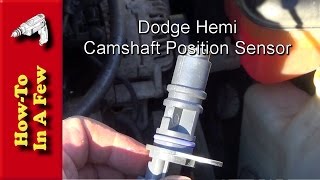
Typical fix: Replace the camshaft position sensor and its O-ring. Ensure the mounting bolt is torqued to specification. 🎬 Watch: Step-by-step guide to replacing the Hemi camshaft sensor.
Est. part cost: $40-$70 - Damaged Wiring or Connector 🟡 Medium Probability The wiring harness and connector pigtail can become brittle, corroded, or fail from engine heat cycles, leading to loose connections or broken wires. Oil contamination in the connector is also a common issue.
How to confirm: Visually inspect the wiring harness leading to the camshaft position sensor for any signs of chafing, melting, or corrosion. Wiggle the connector and harness with the engine running (or while monitoring voltage with the key on) to see if it triggers the symptoms or causes voltage fluctuations. Check for a steady 5V reference signal at the connector.
Typical fix: Repair the damaged section of the harness or replace the connector pigtail. Ensure connections are soldered and protected with heat-shrink tubing for durability.
Est. part cost: $15-$40 - Low, Dirty, or Incorrect Viscosity Engine Oil ⚪ Low Probability The VVT system, which includes the cam phaser and VVT solenoid, is hydraulically operated by engine oil. Low oil level, dirty/sludgy oil, or using the wrong oil viscosity can cause the phaser to respond slowly or erratically, which the PCM can misinterpret as a sensor signal issue.
How to confirm: Check the engine oil level on the dipstick and examine its condition. If it is low, dark, or sludgy, this is a likely contributor.
Typical fix: Perform an oil and filter change using the manufacturer-specified oil grade (e.g., 5W-20 for the 5.7L HEMI) and a quality oil filter with a proper anti-drainback valve.
Est. part cost: $50-$100
Rare But Worth Checking
- Failing VVT Solenoid (Oil Control Valve): The VVT solenoid controls oil flow to the cam phaser. It can get clogged with sludge or fail electrically, causing timing issues that may set a sensor code. This is a separate part from the sensor and the phaser itself.
- Failing Cam Phaser: On higher mileage engines, the mechanical cam phaser can fail, stick, or its internal locking pin can wear out, causing the camshaft timing to be incorrect. This is a more involved and expensive repair that often produces rattling noises. 🎬 Watch: Detailed explanation of the Hemi camshaft removal process.
- Damaged Camshaft Tone Ring: → Shop Engine Camshaft The magnetic ring on the camshaft that the sensor reads can become damaged, contaminated with debris, or misaligned, causing an erratic signal. This requires significant disassembly to inspect.
- PCM Software Glitch: In some cases, particularly on related platforms, a PCM software update is required to fix overly sensitive diagnostic thresholds for cam sensor codes. TSBs like 18-049-20 have been issued for other Mopar vehicles to address this.
- Failing Powertrain Control Module (PCM): → Shop Engine Control Module (ECM) In very rare cases, the PCM itself can be the source of the problem, but all other possibilities (sensor, wiring, oil, mechanical timing) should be exhausted before considering PCM replacement.
Diagnosis Steps
- Check the engine oil level and condition. Top off or change if necessary, using the correct oil viscosity.
- Visually inspect the camshaft position sensor connector and its wiring harness. Look for signs of melting, chafing, corrosion, or oil contamination.
- Perform a 'wiggle test': with the key on (engine off), wiggle the connector and nearby harness while a helper watches the live data on a scan tool or you monitor voltage at the connector. Fluctuations indicate a wiring fault.
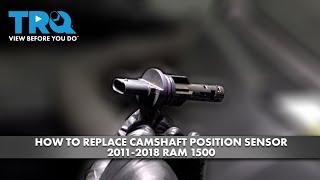
- If wiring seems okay, the most common fix is to replace the camshaft position sensor with a new OEM Mopar part. 🎬 See this walkthrough for replacing the sensor on Ram trucks.
- Use a scan tool to clear the code and perform a test drive, trying to replicate the conditions from the freeze-frame data. If the code returns, further diagnosis is needed.
- For definitive diagnosis, use an oscilloscope to backprobe the sensor's signal wire. Look for a clean 0-5V square wave pattern that is consistent and free of noise or dropouts as engine RPM changes.
- If the sensor and wiring are confirmed good, the issue may lie with the VVT solenoid, the mechanical cam phaser, the tone ring, or, rarely, the PCM. This level of diagnosis may require a professional.
Parts You'll Likely Need
- Camshaft Position Sensor
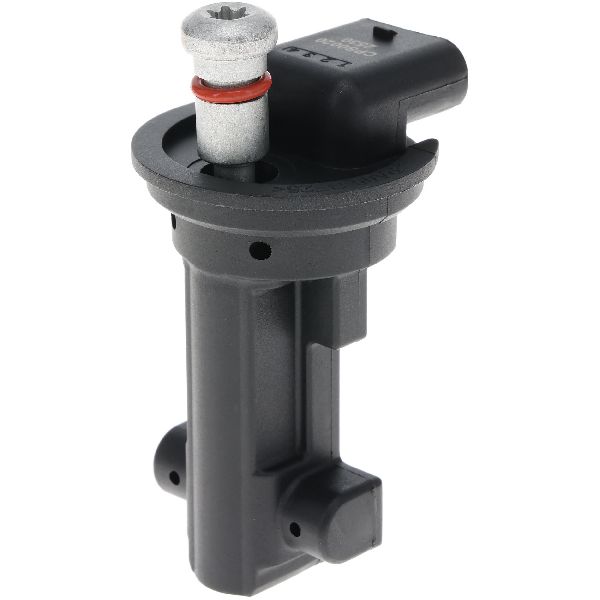
(OEM #5149141AF)— This is the most frequent cause of P0394. The sensor fails internally, providing an intermittent signal to the PCM.
Trusted brands: Mopar
OEM price range: $40-$70
Aftermarket price range: $25-$50 - Camshaft Position Sensor Connector Pigtail — If the 'wiggle test' fails or the connector is visibly damaged/corroded, replacing the pigtail is necessary.
Trusted brands: Dorman, Mopar
OEM price range: $30-$50
Aftermarket price range: $15-$30
Related Codes That Often Appear With This One
- P0390 — P0390 is a general fault for the same circuit (Camshaft Position Sensor 'B' Circuit Bank 2), while P0394 specifies an intermittent fault. They often appear together as the condition worsens.
- U1424 — This code for 'Implausible Engine Torque Signal' can be triggered alongside P0394 as the PCM loses confidence in its engine data when the cam signal is intermittent. This often forces the vehicle into limp mode.
- P0016 — This code indicates a Crankshaft/Camshaft timing misalignment. It can be triggered by the same root causes as P0394, such as a failing cam phaser, VVT solenoid, or stretched timing chain.
Technical Service Bulletins (TSBs) & Recalls
- 05149141A: This is an internal FCA communication rather than a traditional TSB for repair. It directs dealership technicians to contact an FCA engineer before replacing the camshaft position sensor for certain fault codes, including P0394, to aid in data collection on sensor failures.
Platform-Specific Known Issues
- A Technical Service Bulletin (TSB) with a number formatted like a part number, 05149141A, was issued for multiple camshaft position sensor codes, including P0394. It instructs technicians to contact FCA engineering before replacing the sensor to gather data on the failure, highlighting that this is a known area of interest for the manufacturer.
- Owners on forums like HDrams.com and RamForum.com frequently report intermittent stalling with the 6.4L HEMI, sometimes without throwing a code immediately, which can later be diagnosed as a cam sensor issue.
- While the 5.7L and 6.4L HEMI are generally robust, they are sensitive to oil quality and level for the VVT system to function correctly. Neglecting oil changes can directly lead to codes like P0394 due to VVT solenoid or phaser issues.
Mechanic-Grade Diagnostic Values
- Camshaft Position Sensor Connector Pin Voltages (Key On, Engine Off) — expected: Pin 1: 5-volt supply (F856 Circuit, often Yellow/Pink). Pin 2: Sensor ground (K900 Circuit, often Dark Blue/Dark Green). Pin 3: CMP signal (K44 Circuit, often Dark Blue/Gray), should show a 0-5V square wave when the engine is running.. Failure: Voltage below 5V on the supply pin, lack of solid ground on the ground pin, or a signal that is stuck high/low or has noise/dropouts on an oscilloscope.
- Camshaft Position Sensor Signal Waveform — expected: A clean, repeating digital square wave pattern switching between 0 volts and 5 volts when viewed on an oscilloscope. The frequency of the wave should increase proportionally with engine RPM.. Failure: Missing pulses, noise, glitches, or a signal that is stuck at a fixed voltage (e.g., 0.5V) indicates an intermittent connection or a failing sensor.
Scan Tool Commands That Help
- wiTECH, Autel, or equivalent professional scanner: Camshaft/Crankshaft Relearn — After replacing the camshaft position sensor, crankshaft position sensor, or any major timing components, this function may be required to synchronize the new sensor data with the PCM and ensure accurate timing calculations.
- wiTECH, Autel, or equivalent professional scanner: View Desired vs. Actual Camshaft Position PIDs — This is used to diagnose a potential mechanical issue, such as a sticking VVT solenoid or a failing cam phaser. If the actual cam position consistently lags behind or deviates from the desired position commanded by the PCM, it points towards a mechanical or hydraulic fault rather than a sensor electrical fault.
Wiring & Ground Locations
- Camshaft Position Sensor Connector — On the front of the engine block, below the intake manifold, near the water pump.. This is the primary connection point for the sensor. It is susceptible to oil contamination, heat damage, and corrosion, which can cause the intermittent signal of P0394. The three pins are typically 5V Supply, Sensor Ground, and Signal.
- Main Body Ground — On the core support, located near the battery.. A poor main body ground can introduce electrical noise and unstable voltages into various sensor circuits, including the camshaft position sensor, potentially causing intermittent signal faults.
- Engine Block Ground — A large 2/0 gauge cable connects the negative battery terminal to the left front of the engine block.. This is the primary ground reference for the engine and its sensors. Corrosion or a loose connection here can cause a wide range of erratic electrical issues, including sensor codes like P0394.
Real Owner Repair Stories
- Reddit user @brope0623 (Jeep (with related engine architecture)) — Check engine light and limp mode after driving at relatively high RPM.
❌ Tried (didn't work) Replacing the camshaft position sensor.
✅ What actually fixed it The wiring harness was found to be worn through by the steering column, causing a short circuit. Repairing the harness resolved the issue.
OEM Part Supersession History
68092086AA→68603870AA— Standard part number update/revision.
Heads up: This is for the ECU ground strap, which is listed as fitting the 6.4L HEMI V8 in the Ram 2500. The new part is a direct replacement for the old one.5147180AA→5147180AB— Standard part number update/revision.
Heads up: This is for a frame-to-body ground strap used on 6.4L V8 models. The new part is a direct replacement.
Helpful Videos

We Have This Part in Stock


The information in this article is provided for general reference and educational purposes only. Vehicle specifications, procedures, and part compatibility can vary by production date, trim level, and region. Always consult your vehicle's factory service manual and verify part numbers before purchasing or performing repairs. Safety-critical components such as airbags, seat belts, and braking systems should be installed by a qualified professional.
- Ram 2500:
- 🧭 Diagnostic Flowchart
- 🎬 Helpful Videos
- 🛍️ Shop This Part
- What's Unique About the 2014-2018 Ram 2500
- Symptoms You May Notice
- Most Likely Causes
- Rare But Worth Checking
- Diagnosis Steps
- Parts You'll Likely Need
- Related Codes That Often Appear With This One
- Technical Service Bulletins (TSBs) & Recalls
- Platform-Specific Known Issues
- Mechanic-Grade Diagnostic Values
- Scan Tool Commands That Help
- Wiring & Ground Locations
- Real Owner Repair Stories
- OEM Part Supersession History
- 🎟️ Get 5% Off