

P0394 on 2014-2018 Ram ProMaster 3.6L: Intermittent Cam Sensor 'B' Bank 2 Causes and Fixes
This code points to an intermittent signal from the front camshaft position sensor (Bank 2). The most likely cause is a failing sensor or a damaged wiring connector, often contaminated by an oil leak from the engine's oil cooler housing. Always inspect the wiring and check for oil before replacing the sensor. In higher mileage engines, mechanical issues like worn cam phasers can also be the root cause.
- P0394 on a ProMaster 3.6L most often points to the front (Bank 2) camshaft sensor, its wiring, or oil contamination.
- Before replacing the sensor, ALWAYS inspect for oil leaking from the oil filter/cooler housing in the engine valley, as this is a very common root cause.
- Thoroughly inspect the wiring connector and pigtail for damage, corrosion, or looseness, as the 'intermittent' nature of the code frequently points to a connection issue.
- Using an OEM Mopar sensor (part # 5149141AF) is strongly recommended by experienced owners to prevent repeat failures.
- If a new sensor and clean wiring do not solve the code, the issue could be mechanical (cam phaser, tone ring) or require a dealer visit for a potential PCM software update.
What's Unique About the 2014-2018 Ram PROMASTER
On the Ram ProMaster, the 3.6L Pentastar engine is mounted sideways (transversely), which places the Bank 2 camshaft sensor at the front of the engine bay, making it much easier to service than the Bank 1 sensor 🎬 Watch: Locate the Bank 2 sensor on your ProMaster engine. against the firewall. This platform is also known for oil leaks from the plastic oil filter/cooler housing assembly located in the engine's valley. This leak can drip directly onto the Bank 2 sensor and its wiring connector below, causing oil saturation that leads to the intermittent signal and triggers P0394. A manufacturer TSB from 2015 also suggests that intermittent cam sensor codes on this engine can have complex causes beyond a simple part failure, instructing technicians to call a specific engineer before proceeding 🎬 See why you shouldn't replace the sensor without watching this. with replacement.
Diagnostic Flowchart
Tap your situation to follow the diagnostic path that matches what you're seeing on this vehicle.
Symptoms You May Notice
- Check Engine Light is on
- Engine stalls unexpectedly, often at idle or low speeds
- Rough or erratic idle
- Hesitation or stumbling during acceleration
- Difficulty starting the engine, or extended cranking time
- Noticeable loss of engine power or entering 'limp mode'
- Traction Control or Electronic Stability Control (ESC) light may also illuminate
- Audible ticking or rattling noise from the engine, which could indicate a mechanical issue like a failing lifter or cam phaser
- Replacing the sensor without checking for and fixing an oil leak from the oil cooler housing, leading to repeat failure.
- Replacing the crankshaft position sensor, which is a different part with different codes.
- Replacing the wrong camshaft sensor (the difficult-to-access Bank 1 sensor on the firewall instead of the Bank 2 sensor at the front).
- Immediately assuming a major mechanical failure like a bad camshaft or phaser before thoroughly checking the sensor, wiring, and oil contamination.
Most Likely Causes
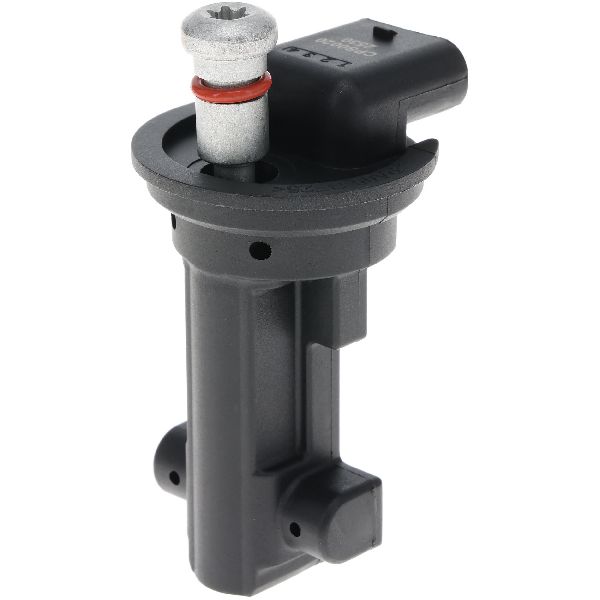
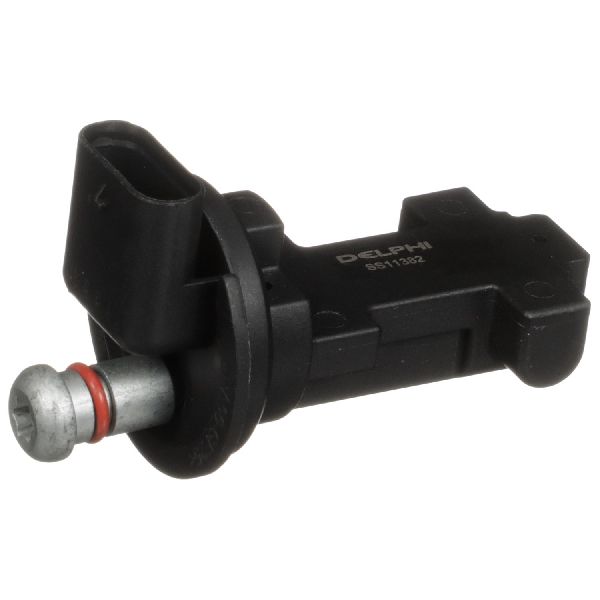
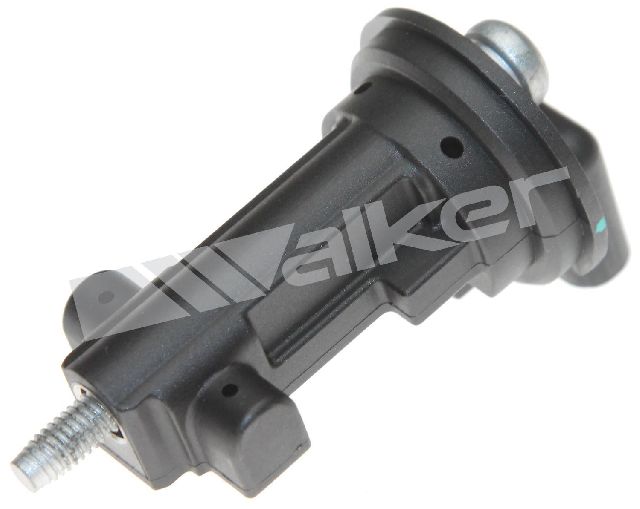
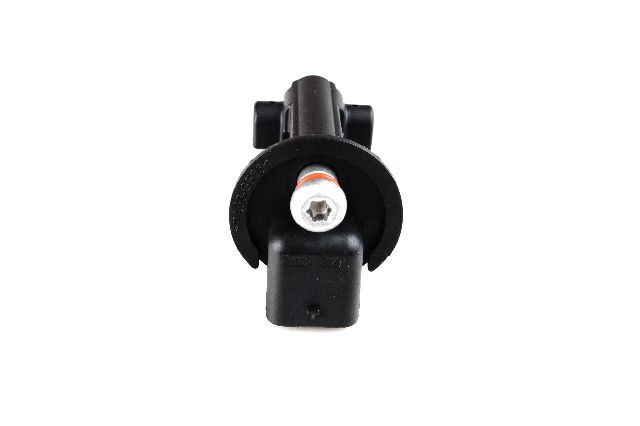
- Failing Camshaft Position Sensor 🔴 High Probability → Shop Engine Camshaft Position Sensor The sensor operates in a high-heat environment and is a common failure point on the 3.6L Pentastar engine. It is a dual-sensor unit reading both intake and exhaust cams.
How to confirm: After verifying the wiring is intact and free of oil, the most common confirmation is replacing the sensor. An oscilloscope can also be used to observe the sensor's square wave signal for dropouts. Swapping the Bank 2 sensor with the Bank 1 sensor is a valid diagnostic step; if the code changes to P0369 (Bank 1), the sensor is faulty.
Typical fix: Replace the Bank 2 (front) camshaft position sensor. Using an OEM Mopar part is highly recommended by owners to avoid compatibility issues.
Est. part cost: $25-$110 - Damaged Wiring or Connector 🔴 High Probability The 'intermittent' nature of the code often points to a wiring issue. The harness has very little slack, and heat can make wires brittle. The connector's locking tab can also break, causing a poor connection.
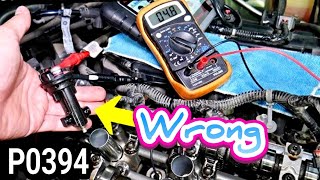
How to confirm: Visually inspect the sensor's connector and pigtail for oil saturation, corrosion, or physical damage. Perform a 'wiggle test' on the harness with the ignition on to see if it triggers the fault or causes voltage readings to fluctuate at the connector pins. Using a multimeter, check for a 5V reference, ground, and signal voltage at the connector.
Typical fix: Clean the connector with electrical contact cleaner. If the connector or wiring is damaged, splice in a new pigtail connector.
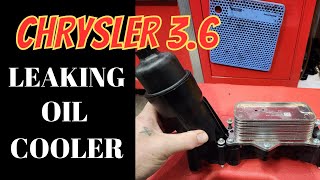
Est. part cost: $15-$40 - Oil Leak from Oil Filter/Cooler Housing 🟡 Medium Probability → Shop Engine Oil Filter Adapter The 3.6L Pentastar engine is notorious for leaks from the plastic oil filter housing assembly. Its location in the 'V' of the engine allows leaking oil to run down and saturate the Bank 2 cam sensor and connector below.
How to confirm: Inspect the engine valley, below the oil filter housing, for signs of fresh or caked-on oil. The sensor itself and its connector will likely be wet with oil. The leak often drips down the back of the engine onto the transmission bell housing.
Typical fix: Replace the entire oil filter/cooler housing assembly and its gaskets. Upgraded aluminum aftermarket versions (e.g., from Dorman) are available 🎬 Watch: How to replace a leaking Pentastar oil cooler housing. to prevent future cracking. Clean or replace the oil-soaked sensor and connector afterward.
Est. part cost: $100-$300
Rare But Worth Checking
- Shifted Camshaft Tone Wheel: → Shop Engine Camshaft A known but rare mechanical failure on Pentastar engines where the magnetic reluctor ring on the camshaft physically moves or gets damaged by debris, causing a persistent timing correlation error that a new sensor won't fix. This is a major repair requiring camshaft replacement.
- Failing Powertrain Control Module (PCM): → Shop Engine Control Module (ECM) In very rare cases, the fault can be internal to the PCM. This should only be considered after all other possibilities (sensor, wiring, mechanical) have been definitively ruled out. Sometimes a PCM software update from a dealer is required to change the fault sensitivity.
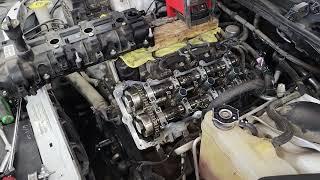
- Worn Cam Phaser or VVT Solenoid: On high-mileage engines, the variable valve timing (VVT) cam phaser can wear out, or the oil control solenoid can become clogged with sludge, causing erratic camshaft movement that the sensor correctly reports as an intermittent signal. This can be caused by poor oil quality or extended oil change intervals.
- Low Oil Pressure to Cylinder Head: A highly unusual but documented cause on 3.6L Pentastars is a missing or loose oil gallery plug located under the valve cover. This causes a drop in oil pressure to the VVT system and cam phasers, which can trigger P0394 and other cam-related codes.
Diagnosis Steps
- Read the code with an OBD-II scanner and confirm P0394 is present. Note any other codes, especially P0390, P0349, or P0345.
- Identify Bank 2 as the cylinder head near the radiator.
- Visually inspect the Bank 2 camshaft position sensor and its electrical connector. Look for heavy oil saturation, which strongly suggests a leak from the oil cooler housing above it.
- Inspect the connector for corrosion, pushed-out pins, or a broken locking tab. Check the wiring harness for signs of chafing, melting, or breaks. Perform a 'wiggle test' on the harness while monitoring sensor voltage.
- Inspect the engine valley, below the oil filter housing, for signs of an oil leak. If a leak is present, the housing must be repaired or replaced before addressing the sensor.
- If wiring looks good and is free of oil, the sensor itself is the most likely culprit. Replace the Bank 2 camshaft position sensor, preferably with an OEM Mopar part.
- If the problem persists after replacing the sensor, the issue may be a more complex mechanical problem (like a worn cam phaser or shifted tone wheel) or a PCM fault, which may require professional diagnosis with an oscilloscope or a dealer visit for potential software updates.
Parts You'll Likely Need
- Camshaft Position Sensor
(OEM #5149141AF)— This is the sensor that generates the signal monitored by the PCM. It is the most common part to fail for this code, especially after confirming the wiring is intact.
Trusted brands: Mopar, Hitachi, Standard Motor Products (SMP), Delphi
OEM price range: $50-$110
Aftermarket price range: $25-$70 - Oil Filter/Cooler Housing Assembly
(OEM #68105583AF (example, verify by VIN))— If the sensor is contaminated with oil, the cause is almost always a leaking oil cooler housing. It must be replaced to permanently fix the issue. Aftermarket aluminum versions exist (e.g., Dorman 926-959).
Trusted brands: Mopar, Dorman
OEM price range: $150-$250
Aftermarket price range: $100-$200
Related Codes That Often Appear With This One
- P0390 — P0390 is a general fault for the same circuit (Camshaft Position Sensor 'B' Circuit Bank 2), while P0394 specifies an intermittent fault. They often appear together and point to the same root cause.
- P0349 — This code is for the intake cam sensor on the same bank ('Sensor A'). Since one physical sensor housing reads both cams, a failing sensor, wiring issue, or oil pressure problem to that head can sometimes trigger codes for both intake (P0349) and exhaust (P0394) simultaneously.
- P0345 — This is the general circuit fault for the intake camshaft sensor on Bank 2. It's common to see all Bank 2 sensor codes appear if there is a systemic issue like a wiring harness problem or low oil pressure to that bank.
Technical Service Bulletins (TSBs) & Recalls
- Bulletin #05149141A: A 2015 TSB that includes P0394 and instructs technicians to contact a specific engineer before replacing the camshaft position sensor, indicating a known complex issue that may not be a simple sensor failure.
- TSB 18-049-20 / 18-024-17 REV. A: While not specific to the ProMaster, these TSBs for other 3.6L Pentastar vehicles involve PCM software updates to change the sensitivity for detecting cam sensor faults, suggesting a software fix may sometimes be necessary.
Platform-Specific Known Issues
- A well-documented issue on the 3.6L Pentastar engine is a cracked or leaking oil filter/cooler housing assembly, which drips oil directly onto the Bank 2 camshaft position sensor, causing this code.
Mechanic-Grade Diagnostic Values
- Camshaft Position Sensor Supply Voltage — expected: Approximately 5.0V with key on, engine off.. Failure: Voltage significantly lower than 5.0V or absent, indicating a wiring or PCM issue.
- Camshaft Position Sensor Ground Circuit Resistance — expected: Less than 3.0 ohms to a known good ground.. Failure: Resistance higher than 3.0 ohms indicates a poor ground connection, which can cause intermittent signals.
- Camshaft Position Sensor Signal Voltage (Hall-Effect Test) — expected: The voltage should switch between 5.0V and 0V when a magnet is brought near and then removed from the sensor tip.. Failure: If the voltage does not switch, or is stuck high or low, the sensor is faulty.
Scan Tool Commands That Help
- wiTECH (Chrysler/FCA Dealer Tool): VVT System Test — This function can command the VVT solenoids and phasers to move, allowing a technician to observe the system's response on live data. It helps determine if the issue is with the control solenoid, the phaser itself, or oil pressure, after the sensor and wiring have been verified.
- High-End Aftermarket Scanners (e.g., Autel): Camshaft Position Desired vs. Actual — This live data parameter is crucial for diagnosing VVT issues. It compares the PCM's target camshaft angle with the actual angle reported by the sensor. A significant, lagging, or erratic deviation on Bank 2 Exhaust points towards a mechanical issue (phaser, solenoid, oil pressure) rather than a sensor circuit fault.
Wiring & Ground Locations
- Primary Engine Ground Strap — A braided metal strap connecting the transmission case to a bolt on the top of the transmission mount, near the driver's side headlight.. This is the main ground for the engine and transmission. A loose or corroded connection here can cause inconsistent voltage and data signals for various engine sensors, including the camshaft position sensor, leading to intermittent faults.
- Camshaft Position Sensor Connector (Bank 2) — On the front of the engine (radiator side), plugged into the valve cover. The 4-wire connector serves both the intake and exhaust cam sensors for Bank 2.. This is the direct connection point for the sensor. It is prone to oil contamination from leaks above, and the wiring pigtail can become brittle from heat. A 'wiggle test' of this connector and harness is a key diagnostic step.
Real Owner Repair Stories
- YouTube channel 'Force Automotive' (Dodge with 3.6L Pentastar engine) — Intermittent cam-crank correlation code that appeared randomly after 20-30 miles of driving.
❌ Tried (didn't work) Checking reluctor wheels with special tool, Swapping spool valves, Inspecting lobes
✅ What actually fixed it The technician found a loose oil galley plug had fallen out from under the valve cover, causing an internal oil pressure loss to the cylinder head's VVT system. Reinstalling the bolt resolved the pressure issue and the code. - Reddit user 'Electronic_Mail318' on r/MechanicAdvice (2013 Jeep Wrangler with 3.6L Pentastar, 157,000 miles) — P0394 and P0369 codes appearing on the highway after an oil change.
❌ Tried (didn't work) Tightening all four oil galley bolts under the valve covers, Replacing camshaft sensors
✅ What actually fixed it The owner suspected an oil flow issue after noticing low oil pressure on a scan tool. Replacing a recently installed, on-sale FRAM oil filter with a different brand (and fresh oil) resolved the codes and restored normal oil pressure, suggesting the VVT system was being starved of oil by a defective/restrictive filter. - YouTube channel 'Online Mechanic Tips' (Vehicle with 3.6L Pentastar, over 100,000 miles (240k in example)) — Persistent cam sensor codes after other shops replaced sensors, motor mounts, and oil cooler.
❌ Tried (didn't work) Replacing camshaft position sensors, Replacing oil cooler assembly
✅ What actually fixed it The root cause was worn out cam phasers. The internal spring mechanism was worn, preventing the phaser from holding timing firmly. The mechanic explained there is no specific code for a bad phaser; it manifests as a sensor code because the sensor correctly reports the resulting timing deviation. Replacing all four cam phasers fixed the problem.
OEM Part Supersession History
5149141AE→5149141AF— Standard part revision and improvement by the manufacturer.
Heads up: The 'AF' revision is the current, correct part and is backward compatible. Using older stock or other part numbers is not recommended.
Model Year Variations Within This Range
- 2014-2015: Early model year ProMasters are generally considered to have more initial quality issues or "kinks" than later models in the 2016-2018 range, though the core 3.6L Pentastar engine design and its common faults (oil cooler, rocker arms) remain consistent across the range.
Helpful Videos
We Have This Part in Stock


The information in this article is provided for general reference and educational purposes only. Vehicle specifications, procedures, and part compatibility can vary by production date, trim level, and region. Always consult your vehicle's factory service manual and verify part numbers before purchasing or performing repairs. Safety-critical components such as airbags, seat belts, and braking systems should be installed by a qualified professional.
- Ram PROMASTER:
- 🧭 Diagnostic Flowchart
- 🎬 Helpful Videos
- 🛍️ Shop This Part
- What's Unique About the 2014-2018 Ram PROMASTER
- Symptoms You May Notice
- Most Likely Causes
- Rare But Worth Checking
- Diagnosis Steps
- Parts You'll Likely Need
- Related Codes That Often Appear With This One
- Technical Service Bulletins (TSBs) & Recalls
- Platform-Specific Known Issues
- Mechanic-Grade Diagnostic Values
- Scan Tool Commands That Help
- Wiring & Ground Locations
- Real Owner Repair Stories
- OEM Part Supersession History
- Model Year Variations Within This Range
- 🎟️ Get 5% Off