

P0400 on 2003-2012 Honda Accord: EGR Flow Malfunction Causes and Fixes
On a 2003-2012 Honda Accord, code P0400 is almost always caused by clogged EGR passages in the intake manifold, not a bad EGR valve. The most common fix is to remove the EGR components and thoroughly clean the carbon buildup from the ports, which is a 2/5 DIY difficulty job. This is a well-known issue on both 4-cylinder and V6 models.
- For a P0400 code on a 2003-2012 Accord, assume the problem is clogged EGR passages in the intake manifold, not a bad EGR valve.
- The fix is usually low-cost, requiring gaskets and cleaning supplies, but involves some labor to access and clean the ports.
- Do not replace the EGR valve without first confirming the passages are completely clear, otherwise the code will likely return.
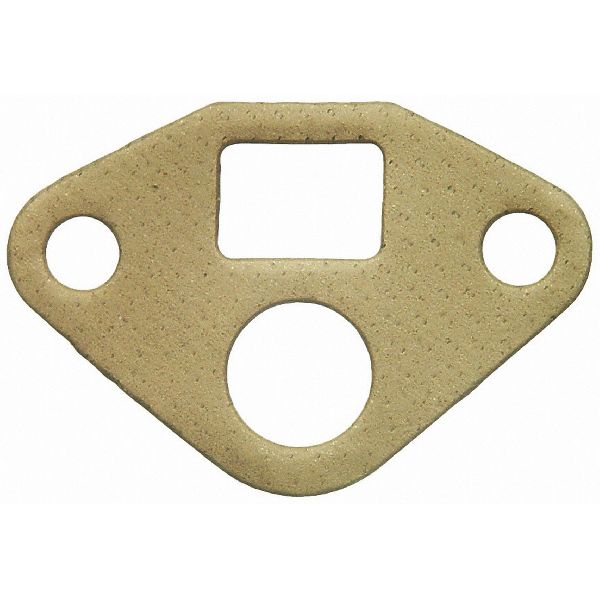
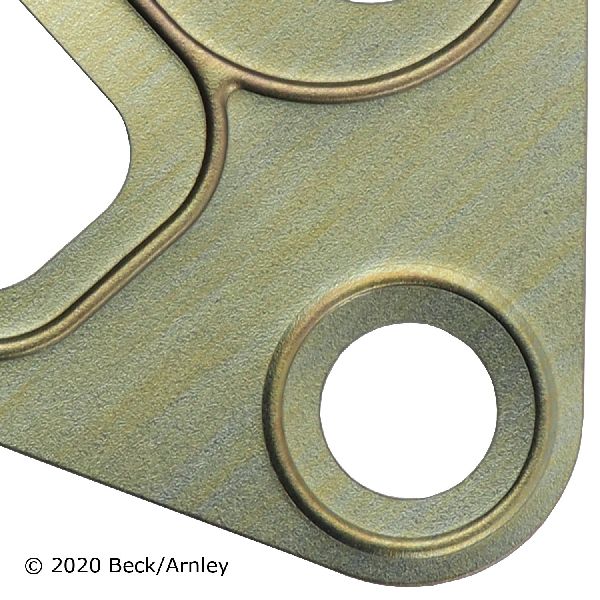
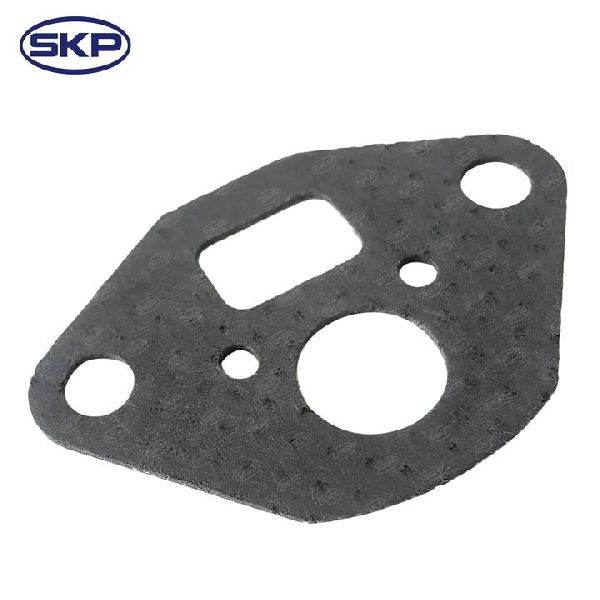
- Always replace the EGR chamber gasket and EGR valve gasket after service to prevent vacuum leaks.
What's Unique About the 2003-2012 Honda Accord
While P0400 is a generic code, on Honda Accords of this era, the root cause is famously and frequently clogged EGR passages within the intake manifold, rather than a failed EGR valve. Over time, carbon deposits from the exhaust build up and restrict or completely block the small ports that distribute gas to each cylinder. This is a well-documented issue across both 4-cylinder (K24) and V6 (J-series) models from this period, to the point where cleaning these passages should be the first assumption. Simply replacing the EGR valve without cleaning the passages will almost certainly result in the code returning.
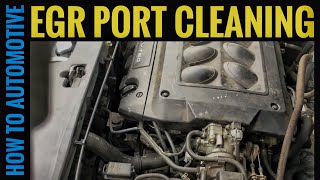
Generation note: This guide covers the 7th Generation (2003-2007) 🎬 See a step-by-step EGR passage cleaning for 7th Gen Accords and 8th Generation (2008-2012) Honda Accord. The issue of clogged EGR passages is common to both generations and affects both 4-cylinder (K24 engine) and V6 (J30/J35 engines) models. The specific location of the EGR valve and the procedure to access the passages may vary slightly between engines and generations, with the V6 often having a cover plate on the intake manifold that provides access to the ports.
Symptoms You May Notice
- Check Engine Light is on
- Rough or fluctuating idle
- Engine hesitation or stumbling during acceleration
- Reduced fuel economy
- Engine pinging or knocking sounds, especially under load
- Failure to pass an emissions/smog test
- Replacing the EGR valve without cleaning the intake manifold passages. This is the most common mistake, as a new valve cannot function if the passages it feeds are completely blocked. The code will almost certainly return.
Most Likely Causes
- Clogged EGR Passages in Intake Manifold 🔴 High Probability Honda engines from this era are known for carbon buildup in the intake manifold's EGR distribution passages. The small ports get easily blocked over time, which restricts flow and triggers the code even if the EGR valve itself is working perfectly. This is so common that it's the first thing any experienced technician will check.
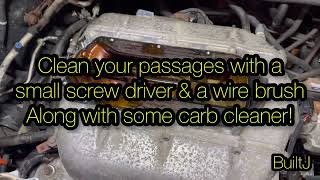
How to confirm: Remove the EGR valve and, on V6 models, the EGR chamber cover plate on the intake manifold 🎬 Watch: Cleaning the EGR passages on a Honda V6 engine (typically held by several 10mm bolts). Visually inspect the small ports leading to the intake runners for heavy, hard carbon buildup. Often, they will be completely blocked and will need to be mechanically cleaned out.
Typical fix: Thoroughly clean the EGR valve, the chamber, and most importantly, the passages in the intake manifold using carburetor cleaner, wire brushes, dental picks, and sometimes even a drill bit (turned by hand) to break up hard deposits. Always replace the associated gaskets after cleaning.
Est. part cost: $10-$30 for cleaner and new gaskets. - Sticking or Faulty EGR Valve 🟡 Medium Probability → Shop Exhaust Gas Recirculation (EGR) Valve The EGR valve itself can become clogged with carbon, causing its internal pintle to stick open or closed. It can also fail mechanically (diaphragm rupture on older vacuum models) or electronically over time.
How to confirm: With the valve removed, check if the pintle moves freely. For vacuum-operated valves, apply vacuum with a hand pump to see if it opens and holds vacuum. For electronic valves, a bi-directional scan tool may be needed to command it open and closed. A simple test for a functioning valve is to apply 12v to it while the engine is idling; the engine should stumble or stall, indicating the passages are clear and the valve is opening.
Typical fix: If the valve is stuck and cannot be freed by cleaning, or if it fails a vacuum test or does not respond to electronic commands, it must be replaced along with its gasket.
Est. part cost: $70-$250 - Damaged or Leaking EGR Vacuum Lines ⚪ Low Probability
How to confirm: Applicable mainly to older models in the range with vacuum-operated EGR valves. Visually inspect all vacuum hoses connected to the EGR valve and control solenoid for cracks, brittleness, or loose connections. A hissing sound near the EGR system at idle can also indicate a leak.
Typical fix: Replace any damaged or leaking vacuum hoses.
Est. part cost: $5-$15
Rare But Worth Checking
- Faulty EGR Control Solenoid: This solenoid controls the vacuum supply to the EGR valve on applicable models. If it fails, the valve won't open, causing a flow malfunction code. It's less common than clogged passages but should be checked if other causes are ruled out.
- Faulty EGR Temperature or Pressure Sensor: Some EGR systems use a dedicated sensor to monitor flow. If this sensor is faulty or coated in carbon, it can send incorrect readings to the ECU, triggering a P0400 code even if flow is normal. This is less common than blockages.
Diagnosis Steps
- Read the trouble codes with an OBD-II scanner and confirm P0400 is present. Note any other codes like P0401.
- Visually inspect the EGR valve, its electrical connector, and all associated vacuum lines (if applicable) for obvious damage, cracks, or disconnections.
- Remove the plastic engine cover.
- Locate the EGR valve. On the V6, it's on the front of the intake manifold. On the 4-cylinder, it's typically on the side.
- Remove the two 12mm nuts or bolts holding the EGR valve and detach it. Inspect the valve and its port for carbon buildup.
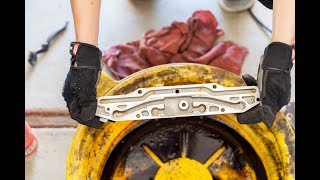
- On V6 models, locate the EGR distribution plate on the intake manifold (a rectangular plate held on by several 10mm bolts). Remove this plate to access the main passages.
- Inspect the passages underneath the plate and leading into the intake runners. On a high-mileage Accord, it is highly likely these will be severely restricted or completely blocked with hard carbon deposits.
- If passages are clogged, proceed with cleaning using carb cleaner, picks, and brushes. A shop vacuum can be used to remove loose debris. If passages are clear, the issue is more likely the EGR valve itself.
- Test the EGR valve. If vacuum type, use a hand pump to ensure the diaphragm moves and holds vacuum. If electronic, you can try commanding it with a scan tool or applying 12v power to see if it actuates and causes the engine to stumble at idle.
- If the valve is faulty, replace it. If the passages were clogged, clean them thoroughly, replace the EGR valve gasket and chamber gasket, and reassemble.
- Clear the trouble code with the scanner and perform a drive cycle (including highway driving) to see if the light returns.
Parts You'll Likely Need
- EGR Chamber Gasket (for V6)
(OEM #17146-RAA-A01 (4-cyl) or 17115-RCA-A01 (V6, 7th gen))— This gasket seals the EGR distribution plate to the intake manifold. It should always be replaced after cleaning the passages to prevent vacuum leaks. The part number varies by engine.
Trusted brands: Honda (OEM), Fel-Pro, Mahle
OEM price range: $10-$25
Aftermarket price range: $5-$15 - EGR Valve
(OEM #18011-RAA-A00 (4-cyl, 7th gen) or 18011-RCA-A00 (V6, 7th gen) or 18011-R70-A00 (V6, 8th gen))— Replaced if it is mechanically stuck, fails a vacuum/electrical test, or is damaged. Often replaced unnecessarily when the actual problem is clogged passages. Part numbers differ significantly between engines and generations.
Trusted brands: Honda (OEM), Standard Motor Products (SMP), Hitachi, Denso
OEM price range: $180-$320
Aftermarket price range: $70-$200 - EGR Valve Gasket
(OEM #18715-PB2-000 (common))— This small gasket seals the EGR valve to its mounting point. It must be replaced whenever the EGR valve is removed to ensure a proper seal. It is often included with a new valve.
Trusted brands: Honda (OEM), Fel-Pro, Victor Reinz
OEM price range: $5-$10
Aftermarket price range: $2-$5
Related Codes That Often Appear With This One
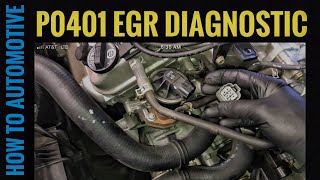
- P0401 — P0401 indicates 'EGR Flow Insufficient Detected.' It is a more specific version of the P0400 general flow malfunction and almost always points to the same root cause on these Hondas: clogged passages.
- P1491 — P1491 is a Honda-specific code for 'EGR Valve Lift Insufficient.' This can also be caused by clogged passages preventing the valve from functioning correctly or a faulty valve itself.
Technical Service Bulletins (TSBs) & Recalls
- TSB 99-085: Issued for 1998-2001 Accord V6 models for EGR port clogging. While for an earlier generation, it establishes a pattern of this specific failure mode in Honda V6 engines.
- TSB 05-026: Issued for 1999-2003 Honda Odyssey models for P0401, instructing technicians to clean the EGR passages.
Platform-Specific Known Issues
- Honda has a history of EGR port clogging issues. A Technical Service Bulletin (99-085) was issued for earlier V6 Accords (1998-2001) extending the warranty for this exact problem. While not directly applicable to 2003+, it highlights the design's long-standing susceptibility to carbon buildup.
- Another TSB (05-026) was issued for 1999-2003 Odyssey models (which share V6 architecture) for the same P0401 issue, again pointing to clogged passages as the root cause.
Mechanic-Grade Diagnostic Values
- EGR Valve Internal Resistance (Electronic Type) — expected: Under 100,000 ohms (100 kΩ). Failure: A reading of 100 kΩ or more indicates the valve's internal circuit is faulty and the valve needs to be replaced. For example, a good valve might read around 1.4 kΩ.
- EGR Valve Connector Voltage (Key On, Engine Off) — expected: ~12V (Battery Voltage). Failure: No voltage at the harness connector indicates a wiring issue, blown fuse, or problem with the PCM, not the EGR valve itself.
Scan Tool Commands That Help
- Honda Diagnostic System (HDS): Snapshot (Fast Sampling) — Used to diagnose intermittent hesitation or suspected EGR flow issues. The technician selects parameters like 'EGR L COMMAND' and 'EGR LIFT', then drives the vehicle. By plotting the commanded value against the actual lift sensor value, a technician can see if the valve is responding correctly or if there's a lag/no response, indicating a clog or faulty valve.
- Honda Diagnostic System (HDS): PCM Reset and Idle Learn Procedure — After replacing the EGR valve or cleaning the passages, the PCM should be reset using the HDS. Following the reset, an idle learn procedure must be performed to allow the engine computer to relearn the idle characteristics with the restored EGR flow.
Wiring & Ground Locations
- G101 — For the 7th Gen (2003-2007), G101 is located on the engine; on the 2.4L it is at the top middle, and on the 3.0L it is at the rear of the engine. For the 8th Gen (2008-2012), it is on the left side of the engine for the L4 and the right front for the V6. This is a critical ground for the ECU/PCM and many sensors.. G101 is the main power and logic ground for the ECU/PCM. A poor connection at this point can cause a wide range of erratic sensor readings and component commands, including those for the EGR system, potentially triggering a P0400 code even if the EGR components are functional.
- PCM (ECU) — Located in the center of the dashboard, underneath the radio/center console area, accessible by removing side panels from the driver and passenger footwells.. This is the location of the Powertrain Control Module that controls the EGR valve. Technicians may need to access the connectors here to perform pin-out testing on the EGR circuit if a wiring fault is suspected between the PCM and the valve.
Real Owner Repair Stories
- Honda-Tech forum user (Vehicle year not specified, but within the relevant generation) — Horrible issue where the car would randomly die and not restart, especially in cold weather.
❌ Tried (didn't work) Initially thought it was a bad connection at the thermostat housing for the G101 ground.
✅ What actually fixed it The G101 ground wire itself was frayed inside the loom. The user ran a temporary new ground wire from the G101 pin at the ECU to the chassis, which solved the problem, confirming the bad wire. The permanent fix was to solder a new wire directly to the ECU wire and bolt it to the chassis.
OEM Part Supersession History
18011-P8A-A00, 18011-P8C-A00, 18011-PXK-020, 18011-PXK-030→18011-RCA-A00— Standard part evolution and consolidation for various V6 models.
Heads up: The listed part numbers are for the 3.0L V6 engine found in the 7th generation Accord and other Honda models. While physically similar, they should not be confused with the 4-cylinder or later 8th generation V6 part numbers.
Model Year Variations Within This Range
- 2003-2007 vs 2008-2012: The physical location of the main ECU ground point, G101, differs between the 7th and 8th generation Accords for both 4-cylinder and V6 engines. For the 7th gen 2.4L, it's at the top middle of the engine, while for the 8th gen 2.4L, it's on the left side of the engine.
Diagnostic Flowchart
Other Known Issues on This Vehicle
Issues unrelated to this code that are worth knowing about as an owner of this generation:
- Automatic Transmission Failure (V6 Models) 🔴 High — Very common on 2003-2005 V6 models, less so on later years but still a weak point. Often fails between 100k-150k miles. (Ref: No official recall, but the issue is widely documented in owner forums and by mechanics.)
- Excessive Oil Consumption (K24 4-Cylinder) 🟠 Medium — Common on 2008-2012 models, particularly after 80,000 miles. Can be caused by stuck piston rings. (Ref: Honda issued TSB 11-033 for some 2008-2011 models and extended the warranty for this issue, but that has since expired.)
- Power Steering Hose Leak 🟡 Low — A high-pressure power steering hose is known to leak fluid onto the alternator, causing a whining noise and eventual alternator failure. Common across the entire 2003-2007 generation.
- VCM (Variable Cylinder Management) Issues (V6 Models, 2008+) 🟠 Medium — The VCM system can cause spark plug fouling, vibration, and excessive oil consumption, leading to internal engine damage over time. A class-action lawsuit was settled regarding this issue. (Ref: Honda TSB 13-081 addresses software updates and potential piston ring replacement.)
- Failing Door Lock Actuators 🟡 Low — Extremely common for one or more door lock actuators to fail, resulting in doors that won't lock or unlock with the remote or power switch.
- Cracked Exhaust Manifold / Catalytic Converter (4-Cylinder) 🟠 Medium — The integrated exhaust manifold/catalytic converter on the 2003-2007 K24 engine is prone to cracking, causing an exhaust leak and noise.
Used vs. New Parts: Buying Guide for This Vehicle
When a used part is the smart pick: A used intake manifold from a junkyard can be a cost-effective option, but ONLY if you are prepared to perform the extensive and difficult cleaning of the EGR passages yourself. The manifold itself is a durable metal part unlikely to fail.
Donor-vehicle mileage cap: roughly under 80000 miles for the part to have meaningful remaining life.
What to inspect on the donor part:
- For an EGR valve, visually inspect the pintle for free movement and the connector for corrosion, but understand that internal electronic failure cannot be seen.
- For an intake manifold, check for any cracks or damage, especially around gasket surfaces and threaded holes.
Aftermarket brands forum-validated for this vehicle:
- Standard Motor Products (SMP)
- Delphi
- Beck Arnley
- Dorman (for V6 models)
Brands owners have reported issues with on this vehicle:
- Unbranded, 'cheap' EGR valves are a gamble. Forum users and mechanics often report premature failure or out-of-the-box issues with the cheapest available options. It is better to clean the original OEM valve if possible, or buy a reputable aftermarket brand.
Real Owner Stories
Aggregated from forums and TSBs cited above. Mileages and costs reflect what owners reported in those sources.
2003-2007 Honda Accord V6 — ~145000 miles
Symptoms: The Check Engine Light came on with an EGR insufficient flow code (P0401) and the car couldn't pass its smog test.
What fixed it: The definitive solution was a DIY cleaning of the EGR passages in the intake manifold, not replacing the valve. The ports were almost completely blocked with carbon.
Source hint: driveaccord.net: Numerous threads, such as 'DIY: EGR valve cleaning 03-07 V6' and 'P0401 EGR insufficient flow - The real fix'
2006 Honda Accord — ~170000 miles
Symptoms: Got a P0400 code and the engine had a rough, fluctuating idle.
What fixed it: Following advice from other owners, I skipped replacing the EGR valve and went straight to cleaning the passages in the intake manifold, which solved the problem.
Source hint: honda-tech.com: Threads in the Accord section echo these findings, with users frequently advising new members with P0400/P0401 to skip replacing the valve initially and go straight to cleaning the passages.
2008 Honda Accord
Symptoms: Check Engine Light was on for P0400.
What fixed it: The accepted answer and successful repair involved a thorough cleaning of the EGR ports. The EGR valve itself was still functional and did not need to be replaced.
Source hint: Reddit (r/MechanicAdvice): A search for 'Honda Accord P0400' reveals many posts where the accepted answer and successful repair involved cleaning the EGR ports, not just replacing the valve.
Related OBD-II Codes
Frequently Asked Questions
I have a P0400 code on my Accord V6. Should I just replace the EGR valve?
Is this EGR port clogging a known factory issue on these Honda V6 engines?
How do I access the EGR passages on my V6 Accord to clean them?
My Accord is hesitating and I hear a pinging sound. Is that related to the P0400 code?
What parts should I buy before I start cleaning the EGR passages?
I have a 2007 Acura TL with this code. Is the repair the same as the Accord?
Helpful Videos
We Have This Part in Stock


The information in this article is provided for general reference and educational purposes only. Vehicle specifications, procedures, and part compatibility can vary by production date, trim level, and region. Always consult your vehicle's factory service manual and verify part numbers before purchasing or performing repairs. Safety-critical components such as airbags, seat belts, and braking systems should be installed by a qualified professional.
- Honda Accord:
- 🧭 Diagnostic Flowchart
- 🎬 Helpful Videos
- 🛍️ Shop This Part
- What's Unique About the 2003-2012 Honda Accord
- Symptoms You May Notice
- Most Likely Causes
- Rare But Worth Checking
- Diagnosis Steps
- Parts You'll Likely Need
- Related Codes That Often Appear With This One
- Technical Service Bulletins (TSBs) & Recalls
- Platform-Specific Known Issues
- Mechanic-Grade Diagnostic Values
- Scan Tool Commands That Help
- Wiring & Ground Locations
- Real Owner Repair Stories
- OEM Part Supersession History
- Model Year Variations Within This Range
- Other Known Issues on This Vehicle
- Used vs. New Parts: Buying Guide for This Vehicle
- Real Owner Stories
- 2003-2007 Honda Accord V6 — ~145000 miles
- 2006 Honda Accord — ~170000 miles
- 2008 Honda Accord
- Related OBD-II Codes
- Frequently Asked Questions
- 🎟️ Get 5% Off