

P0400 on 2015-2020 Subaru Impreza: EGR Flow Malfunction Causes and Fixes
On a 2015-2020 Subaru Impreza, code P0400 often points to a software issue, especially in cold weather, that can be fixed with an ECM update at a dealership. If software isn't the cause, the EGR valve is likely clogged with carbon or has failed. Cleaning the valve and its passages is a common and effective DIY fix before considering replacement.
- Always check for an available ECM software update first, especially if the Check Engine Light appeared during cold weather. This is a known issue per Subaru TSBs.
- The most common physical fault is a carbon-clogged EGR valve. Often, a thorough cleaning can fix the problem without needing to buy a new part.
- If you remove the EGR valve for cleaning or replacement, always use a new gasket upon reinstallation to prevent leaks.
- This is a DIY-friendly repair for those with basic tools, typically requiring only the removal of two bolts to access the EGR valve.
What's Unique About the 2015-2020 Subaru IMPREZA
For this specific generation of Subaru Impreza and its platform mates, a P0400 code doesn't automatically mean a part has failed. Subaru issued Technical Service Bulletins (TSBs) acknowledging that the code can be falsely triggered by the EGR system's self-test logic in sub-freezing temperatures. This makes checking for an available ECM software update a critical first step, potentially saving the cost of an unnecessary EGR valve replacement. Owner forums frequently cite dealers performing this update as the definitive fix.
Diagnostic Flowchart
Tap your situation to follow the diagnostic path that matches what you're seeing on this vehicle.
Generation note: The 2015-2020 range covers the end of the fourth generation (2012-2016) and the start of the fifth generation (2017-2023). Both generations use the FB20D 2.0L engine with a similar electronically controlled EGR system, and the causes and fixes are generally consistent. The cold-weather software issue noted in TSBs applies to vehicles across these years.
Symptoms You May Notice
- Check Engine Light is on
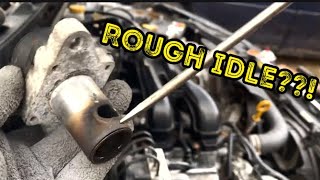
- Rough or fluctuating idle, especially on cold starts, sometimes dropping as low as 200 RPM 🎬 See how cleaning the electronic valve restores a smooth idle. before recovering.
- Engine hesitation or stumbling during acceleration
- Reduced fuel economy
- Engine stalling in some cases, particularly right after startup.
- Engine knocking or pinging noises during driving.
- Replacing the EGR valve when only an ECM software update was needed, especially if the P0400 code only appears in cold weather.
- Replacing oxygen sensors. EGR issues can alter combustion and lead to rich or lean running conditions, which may trigger other codes like P2097, misleading the diagnosis towards O2 sensors.
Most Likely Causes
- Outdated Engine Control Module (ECM) Software 🔴 High Probability Subaru issued TSBs #11-197-20 and #11-200-20R specifically for this issue, noting the code can be set incorrectly because the ECM may test the EGR system in error when ambient/intake air temperatures are below freezing.
How to confirm: A Subaru dealership or a qualified shop with access to Subaru's technical information can check your vehicle's VIN against the TSB applicability to see if the software update has been performed.
Typical fix: Reprogramming the ECM with the updated software file provided by Subaru. This is a dealer-level or specialized shop repair.
Est. part cost: $0 - Clogged or Sticking EGR Valve 🔴 High Probability → Shop Exhaust Gas Recirculation (EGR) Valve The FB20D is a direct injection engine, and like many, can be prone to carbon buildup. The EGR system routes exhaust soot back into the intake, which can cause the valve's pintle to stick or its passages to become restricted with heavy carbon deposits.
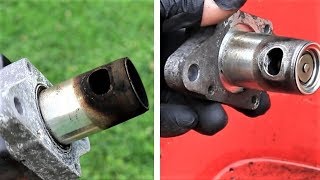
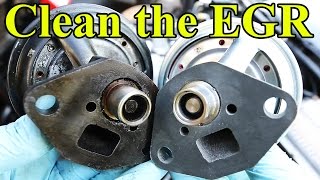
How to confirm: Remove the EGR valve (typically held by two 12mm bolts 🎬 Watch this step-by-step guide to cleaning and replacing the valve.) and visually inspect it and the connecting ports for heavy, black carbon deposits. A valve that is stuck open or closed will cause this code. Manually actuating the pintle with a screwdriver can confirm if it moves freely.
Typical fix: Thoroughly clean the EGR valve and passages with a wire brush and intake/brake cleaner. If cleaning doesn't restore free movement, the valve must be replaced.
Est. part cost: $5-$20 for cleaning supplies - Failed EGR Valve 🟡 Medium Probability → Shop Exhaust Gas Recirculation (EGR) Valve The electronic solenoid that actuates the valve can fail over time due to heat cycles and wear, preventing it from opening or closing correctly, even if it is mechanically clean.
How to confirm: Using a capable bidirectional scan tool, command the EGR valve to open and close while monitoring engine RPM. A lack of change in RPM indicates the valve is not functioning. Some owners also report codes for 'circuit low' which can point to an electrical failure within the valve.
Typical fix: Replace the EGR valve and gasket.
Est. part cost: $150-$230
Rare But Worth Checking
- Clogged EGR Cooler or Passages: → Shop Exhaust Gas Recirculation (EGR) Valve In some cases, particularly at higher mileage, the carbon buildup can occur not just in the valve but also in the associated EGR cooler (if equipped) and the metal pipes leading to and from the valve. A Reddit user with a 2017 Impreza at 91k miles was quoted ~$940 by a dealer for a clogged EGR valve and cooler.
- Damaged Wiring or Connector: The wiring harness to the EGR valve is in the engine bay and can be susceptible to heat damage or corrosion, leading to a poor connection. A visual inspection of the harness and connector pins is worthwhile, especially if cleaning or replacing the valve doesn't solve the issue.
- Cracked or Disconnected Vacuum Lines (if applicable): While these models primarily use electronic EGR valves, some older Subaru platforms relied heavily on vacuum lines for EGR control. Though less common on 2015+ models, it's worth checking any related vacuum hoses for cracks or leaks.
Diagnosis Steps
- Check with a Subaru dealer if TSB #11-197-20 or #11-200-20R applies to your VIN and if the ECM update has been performed. This is the most critical first step, especially for cold-climate vehicles.
- Scan the ECM for any other stored trouble codes to see if they provide additional clues (e.g., P2097, P0011).
- Inspect the EGR valve's electrical connector and wiring for any signs of damage, corrosion, or loose connections.
- Remove the air intake components to access the EGR valve, which is typically located on the engine block.
- Remove the EGR valve (usually held by two 12mm bolts).
- Visually inspect the valve and the intake manifold ports for heavy carbon buildup. A YouTube tutorial by 'Andy's Auto' shows a typical cleaning process.
- Clean the valve, pintle, and ports thoroughly using brake cleaner, a wire brush, and picks. Ensure the valve's pintle moves freely after cleaning.
- If cleaning does not resolve the issue or the valve is mechanically seized or electronically faulty, replace the EGR valve and its gasket.
- After reinstallation, clear the trouble codes and perform a drive cycle, including a cold start, to ensure the code does not return. A successful cold start without a near-stall is a good indicator of a successful repair.
Parts You'll Likely Need
- EGR Valve
(OEM #14710AA780)— This is the primary component of the system. It can fail electronically or become clogged with carbon, requiring replacement if cleaning is ineffective. Note: Part number 14710AA780 is listed for the 2.0L WRX and Forester, not the Impreza. The correct part number for the 2017-2020 Impreza is likely different. Always verify with a dealer using your VIN.
Trusted brands: Subaru (Genuine), Dorman, Standard Motor Products
OEM price range: $150-$230
Aftermarket price range: $100-$180 - EGR Valve Gasket / Seal
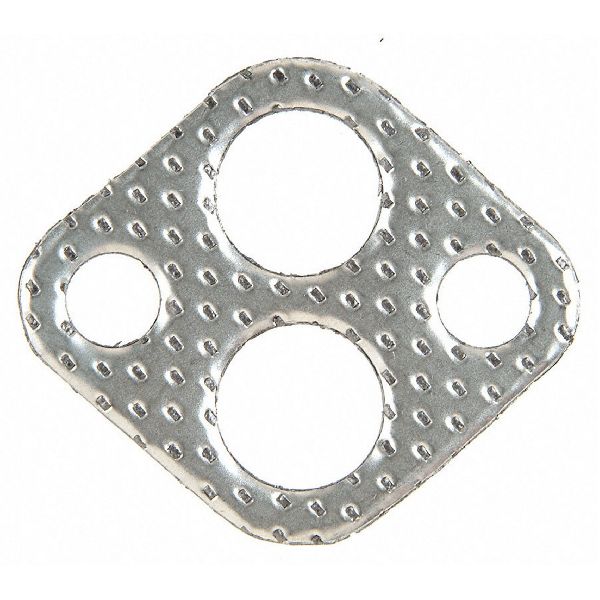
(OEM #14738AA120)— This seal should always be replaced when the EGR valve is removed to prevent exhaust leaks. This part number corresponds to the 14710AA780 valve and may not be correct for the Impreza.
Trusted brands: Subaru (Genuine), Fel-Pro
OEM price range: $3-$8
Aftermarket price range: $2-$5
Related Codes That Often Appear With This One
- P2097 — If the EGR valve is stuck closed, combustion temperatures can rise. The ECM may enrich the fuel mixture to compensate, or the altered combustion characteristics can be misinterpreted by the post-catalyst O2 sensor, triggering a 'Post Catalyst Fuel Trim System Too Rich' code.
- P0011 / P0021 — A separate TSB (#11-198-20R) notes that in some cases, engine surging during EGR operation can cause camshaft timing over-advanced codes. An ECM update was also issued to address this interaction.
Technical Service Bulletins (TSBs) & Recalls
- 11-197-20: Notes that DTC P0400 can be set if the ECM tests the EGR system when ambient/intake air temperatures are below freezing and provides an ECM update for 2015-16 Impreza and 2015-17 Crosstrek.
- 11-200-20R: Announces availability of ECM reprogramming files to address DTC P0400, hard starting, and high-altitude surging for 2017-20 Impreza and 2018-20 Crosstrek, among others.
Platform-Specific Known Issues
- A known software glitch can cause the P0400 code to set during EGR self-tests in ambient temperatures below freezing, as documented in Subaru TSB #11-197-20 and #11-200-20R.
- TSB #11-200-20R also lists an ECM reprogramming to address DTC P0400, along with other issues like hard starting in cold weather and high-altitude surging on other models.
- Owners on Reddit forums for r/subaruimpreza confirm that P0400 is a common issue on the 2017 model year, with many attempting to clean the valve as a first step before going to a dealer.
Mechanic-Grade Diagnostic Values
- EGR Valve Coil Resistance — expected: 19.9 - 23.4 ohms (cold). Failure: A reading outside this range, or an open circuit (infinite resistance), indicates a faulty coil.
- EGR Valve Harness Connector Voltage — expected: ~12V (Battery Voltage). Failure: No voltage at the power pins (e.g., pin 2 and 5 on some models) indicates a problem with the wiring, fuse, or ECM supply, not the valve itself.
Scan Tool Commands That Help
- Subaru Select Monitor (SSM4): MFI OBDII ECM Reprogramming — This is the primary fix if the vehicle is eligible for TSB #11-197-20 or #11-200-20R. It updates the ECM logic to prevent the false P0400 code in sub-freezing temperatures.
- Subaru Select Monitor (SSMIII / SSM4): All Systems Diagnosis / Current Data Display — Used to check the readiness status of the 'EGR system' monitor. If the monitor is 'incomplete', it means the ECM has not yet been able to run the self-test required to confirm a fix.
Wiring & Ground Locations
- Main Engine Ground — The main battery ground cable typically attaches to the engine block via one of the starter mounting bolts on the FB20 engine.. A poor main engine ground can cause a host of electrical issues, including erratic sensor readings and incorrect operation of electronically controlled components like the EGR valve.
- Intake Manifold Grounds — Subaru engines often have one or two ground terminals located on top of the intake manifold.. Since the EGR valve is mounted to the engine and controlled by the ECM, ensuring all engine and sensor grounds are clean and tight is a critical step in diagnosing any electronic fault code.
- EGR Valve Connector Pins — On the 6-pin connector for the EGR valve itself.. Service documents identify specific terminals for testing, such as B1/B2 for power and S1-S4 for the stepper motor coils. Knowing these pin functions is required for accurate resistance and voltage testing at the component.
Real Owner Repair Stories
- Reddit user on r/subaruimpreza (2017 Subaru Impreza, 91,000 miles) — Check engine light with code P0400.
❌ Tried (didn't work) N/A - went to dealer for diagnosis.
✅ What actually fixed it The dealer diagnosed a clogged EGR valve and EGR cooler, quoting ~$940 for replacement. The user was exploring DIY cleaning as a less expensive alternative. Other users with 2017 models reported the same P0400 code. - YouTube channel 'Andy's Auto' (Subaru Impreza (year not specified, but consistent with 2015-2020 models)) — On cold start, engine RPMs would drop to ~200 and nearly stall before recovering. Check engine light with P0400 and a 'circuit low' description.
✅ What actually fixed it The creator removed the EGR valve, noted it was heavily caked with carbon, and cleaned it thoroughly with brake cleaner and a wire brush. After reinstalling the clean valve and clearing the codes, the starting issue was resolved. - LegacyGT.com forum user (2015 Subaru Legacy (shares platform components)) — Persistent P0400 check engine light.
❌ Tried (didn't work) Replacing the EGR valve.
✅ What actually fixed it The user replaced the EGR valve, but the code returned. This indicates the problem was not the valve itself, but likely either clogged EGR passages that were not cleaned during the valve replacement, or the software issue addressed by the TSB. The final fix was not posted.
"I Checked Everything" — The Actual Cause
- The most common scenario fitting this pattern is the software issue described in Subaru TSBs #11-197-20 and #11-200-20R. A technician could perform a full physical inspection, including a smoke test, and find no leaks, clogs, or electrical faults in the EGR system. The P0400 code would still appear in cold weather because the root cause is the ECM's own testing logic being flawed, a problem only fixable with a software update.
When the Usual Fixes Don't Work
- In several documented cases, owners have replaced the EGR valve for a P0400 code only to have the check engine light return. This strongly suggests that for the 2015-2020 Impreza, simply replacing the valve is often not a complete fix. The two most common reasons for the code returning are: 1) Failing to address the underlying software issue via the TSB, especially in colder climates, or 2) Neglecting to clean the associated EGR passages and/or cooler, which can be just as clogged as the valve itself.
OEM Part Supersession History
14710AA770→14710AA830 (for some model years)— Model year change from 4th to 5th generation Impreza.
Heads up: Part number 14710AA770 is listed for the 2015-2017 Impreza. Part number 14710AA830 is listed for 2017-2018 models. Part number 14710AA810, often found in searches, is for the 2.5L engine in the Forester/Legacy/Outback and is incorrect for the 2.0L Impreza. Always verify the correct part number with a VIN.
Model Year Variations Within This Range
- 2015-2016: These model years are covered by Subaru TSB #11-197-20 for the P0400 cold weather software update.
- 2017-2020: These model years are covered by a different TSB, #11-200-20R, for the P0400 software update. There was also a change in the EGR valve part number around 2017, from 14710AA770 to 14710AA830.
Helpful Videos
We Have This Part in Stock

The information in this article is provided for general reference and educational purposes only. Vehicle specifications, procedures, and part compatibility can vary by production date, trim level, and region. Always consult your vehicle's factory service manual and verify part numbers before purchasing or performing repairs. Safety-critical components such as airbags, seat belts, and braking systems should be installed by a qualified professional.
- Subaru IMPREZA:
- 🧭 Diagnostic Flowchart
- 🎬 Helpful Videos
- 🛍️ Shop This Part
- What's Unique About the 2015-2020 Subaru IMPREZA
- Symptoms You May Notice
- Most Likely Causes
- Rare But Worth Checking
- Diagnosis Steps
- Parts You'll Likely Need
- Related Codes That Often Appear With This One
- Technical Service Bulletins (TSBs) & Recalls
- Platform-Specific Known Issues
- Mechanic-Grade Diagnostic Values
- Scan Tool Commands That Help
- Wiring & Ground Locations
- Real Owner Repair Stories
- "I Checked Everything" — The Actual Cause
- When the Usual Fixes Don't Work
- OEM Part Supersession History
- Model Year Variations Within This Range
- 🎟️ Get 5% Off