

P0401 on 2008-2016 Audi A4 2.0L TDI: Insufficient EGR Flow Causes and Fixes
On the 2.0L TDI engine in the B8 A4, code P0401 almost always points to a clogged low-pressure EGR filter, which is a secondary failure caused by a cracked Diesel Particulate Filter (DPF). Soot from the cracked DPF clogs the EGR filter, triggering the code. The correct fix is to replace both the DPF and the EGR filter. Before paying, check if the 'Dieselgate' Extended Emissions Warranty covers this repair.
- P0401 on an Audi A4 2.0L TDI is overwhelmingly caused by physical blockages from carbon soot, not electrical failure.
- The most likely culprit is a clogged EGR cooler. Inspecting and cleaning/replacing it is the primary fix.
- Simply replacing the EGR valve without addressing the cooler is a common misdiagnosis and will likely result in the code returning.
- This repair can be a messy and time-consuming DIY job due to the location of the components and the nature of carbon cleaning.
- Check for any applicable extended warranties or recalls related to the emissions system, especially concerning the 'Dieselgate' settlement, which may cover this repair.
What's Unique About the 2008-2016 Audi A4
The 2.0L TDI engine (common rail variants like CBEA, CJAA, CMEA) in the B8 generation A4 uses a dual-loop EGR system. Unlike many vehicles where P0401 is caused by a carbon-clogged EGR valve, on this platform, the code is overwhelmingly a symptom of a different root cause: a cracked Diesel Particulate Filter (DPF). The cracked DPF allows fine soot particles to pass through and clog a small, downstream low-pressure EGR filter. This is a well-documented failure pattern, and Audi/VW issued a Technical Service Bulletin (TSB 2034898) detailing this exact issue. Therefore, simply cleaning or replacing the EGR valve will not fix the problem; the code will return until the DPF and EGR filter are addressed.
Symptoms You May Notice
- Check Engine Light is on
- Flashing glow plug light on the dashboard
- Vehicle enters 'limp mode' with significantly reduced engine power
- Noticeable decrease in fuel economy
- Rough or unstable idling
- Failed emissions test
- Black smoke from the exhaust during acceleration
- Visible black, greasy soot inside the exhaust tailpipe (a key indicator of a cracked DPF)
- Replacing only the EGR valve or EGR cooler. This is the most common misdiagnosis. If the root cause is a cracked DPF, the new components will not solve the insufficient flow from the low-pressure circuit, and the P0401 code will return.
- Cleaning the low-pressure EGR filter without replacing the cracked DPF. The filter will simply become clogged with soot again in a short amount of time.
- Assuming any EGR-related code means the EGR valve is bad. On this specific TDI engine, P0401 is a strong pointer towards the DPF and low-pressure EGR filter.
Most Likely Causes
- Cracked DPF & Clogged Low-Pressure EGR Filter Very High Probability → Shop Exhaust Gas Recirculation (EGR) Valve This is the primary, well-documented failure pattern for P0401 on this engine. The DPF cracks internally, allowing soot to bypass the filter. This soot then clogs the fine mesh of the low-pressure EGR filter, which is located downstream and is designed to sample 'clean' exhaust. The blockage in this filter is what the ECU detects as 'insufficient flow'.
How to confirm: The definitive diagnostic test is to check for soot. Wipe the inside of the exhaust tailpipe with a finger or a clean cloth. A healthy TDI with a functioning DPF should have a clean tailpipe. If you find black, greasy soot, the DPF has failed. You can also remove the EGR filter from the DPF and inspect the connection point for soot, as outlined in TSB 2034898.
Typical fix: Replacement of both the Diesel Particulate Filter (DPF) and the low-pressure EGR filter (part number often cited as 1K0253120B or similar) is required. It is critical to replace them together. Simply cleaning or replacing the EGR filter will result in it clogging again quickly. Before paying, check with an Audi dealer if your VIN is covered by the 'Dieselgate' Extended Emissions Warranty, as this specific repair is often covered.
Est. part cost: $800-$2500 (for DPF and EGR filter) - Clogged EGR Cooler 🟡 Medium Probability → Shop Exhaust Gas Recirculation (EGR) Valve The 2.0L TDI engine produces significant soot, and the EGR cooler's narrow passages can become blocked by carbon deposits over time, restricting flow independently of the DPF/EGR filter issue.
How to confirm: Remove the EGR cooler assembly. Visually inspect the internal passages for thick, black carbon buildup that restricts or completely blocks airflow. This is often done at the same time as inspecting the EGR valve.
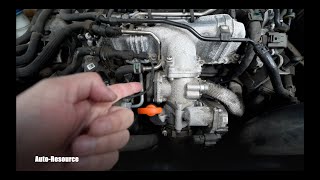
Typical fix: Replacement of the EGR cooler assembly is the most common fix. While cleaning is sometimes possible with specialized chemicals, it is labor-intensive and may not be fully effective. 🎬 See this step-by-step guide for cleaning the EGR valve. The cooler is often integrated with the high-pressure EGR valve in a single assembly (e.g., 03L131512DN).
Est. part cost: $300-$500 - Clogged or Sticking High-Pressure EGR Valve 🟡 Medium Probability → Shop Exhaust Gas Recirculation (EGR) Valve The same carbon that clogs the cooler also builds up on the high-pressure EGR valve pintle and seat, preventing it from opening or closing correctly.
How to confirm: Remove the EGR valve and inspect it for carbon buildup. A diagnostic tool like VCDS can be used to run an EGR system test, commanding the valve open and closed while monitoring airflow data to see if it responds correctly. Freeze frame data from the P0401 code may show a large discrepancy between specified and actual air mass when the EGR is commanded open.
Typical fix: Thoroughly clean the EGR valve with a dedicated cleaner and brushes, or replace the valve entirely. Often, the valve and cooler are replaced together as a single assembly.
Est. part cost: $150-$300 - Faulty EGR Pressure/Temperature Sensor ⚪ Low Probability While less common than clogging, the sensors that measure EGR flow and temperature can fail or provide inaccurate readings to the ECU.
How to confirm: Use a diagnostic scanner to monitor the sensor readings while actuating the EGR valve. The readings should change in response to the valve opening and closing. A faulty sensor may show no change or erratic values.
Typical fix: Replace the faulty EGR sensor.
Est. part cost: $50-$100
Rare But Worth Checking
- Vacuum line leak: On older or vacuum-actuated EGR systems, a cracked or disconnected vacuum line can prevent the EGR valve from opening. While the B8's primary EGR valve is electronic, other components in the system may use vacuum actuation. A visual inspection of all vacuum lines is still a worthwhile check.
- Faulty Exhaust Flap: A malfunctioning exhaust flap, which helps regulate pressure for the EGR system, can in some cases contribute to a P0401 code, though this is far less common than the DPF/filter issue.
Diagnosis Steps
- Read the fault codes with an OBD-II scanner (VCDS is highly recommended for VAG vehicles) to confirm P0401 and check for any other related codes like P2002 or P240F. 🎬 Watch: How to diagnose combined P2002 and P0401 codes.
- Perform the Soot Test (Crucial Step): Thoroughly wipe the inside of the exhaust tailpipe. If you find black, greasy soot, the DPF has failed. This is the most important diagnostic step.
- Check 'Dieselgate' Warranty Status: Contact an Audi dealership with the vehicle's VIN to determine if it is still covered under the Extended Emissions Warranty. This specific failure is frequently covered.
- Review Live Data with VCDS: Monitor specified vs. actual EGR flow and mass airflow (MAF) sensor readings. With P0401, the actual EGR flow will be low, and the MAF reading will be higher than specified when the EGR is supposed to be active.
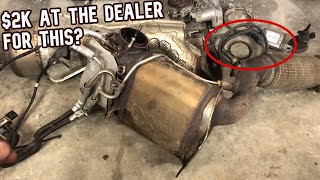
- Follow TSB 2034898 Procedure: If the tailpipe test is inconclusive, remove the low-pressure EGR filter from the DPF and inspect the connection port for soot, as detailed in the TSB. 🎬 Watch: Expert breakdown of common CJAA EGR system failures.
- Visually inspect the high-pressure EGR valve and cooler for heavy carbon buildup if the DPF/soot issue is ruled out.
- Use VCDS to perform an EGR system output test to command the high-pressure EGR valve open and closed and verify its mechanical operation.
Parts You'll Likely Need
- Diesel Particulate Filter (DPF)
(OEM #e.g., 1K0254708GX (part numbers vary by specific model/year))— This is the root cause of the P0401 code in most cases. The internal structure cracks, allowing soot to pass through and clog the EGR filter.
Trusted brands: Genuine VW/Audi, Bosal, Walker
OEM price range: $1200-$2000
Aftermarket price range: $600-$1200 - Low-Pressure EGR Filter Pipe
(OEM #1K0253120B)— This filter becomes clogged with soot from the cracked DPF. It MUST be replaced at the same time as the DPF to resolve the P0401 code.
Trusted brands: Genuine VW/Audi
OEM price range: $100-$150
Aftermarket price range: $50-$80 - EGR Valve and Cooler Assembly
(OEM #03L131512DN)— While not the primary cause of P0401, this assembly can also get clogged with carbon and fail. It is often replaced if the DPF is not found to be the root cause.
Related Codes That Often Appear With This One
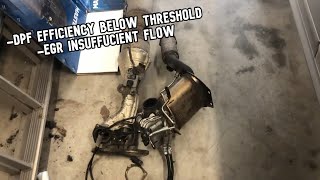
- P2002 — Stands for 'DPF Efficiency Below Threshold'. This code often appears alongside P0401 because a cracked DPF is the root cause of the P0401, and the crack also reduces the DPF's filtering efficiency.
- P2463 — Stands for 'Diesel Particulate Filter Restriction - Soot Accumulation'. This can occur because the ECU stops automatic DPF regeneration when the P0401 code is present, leading to the DPF becoming overloaded with soot.
- P240F — Stands for 'Exhaust Gas Recirculation Slow Response'. This code can also be triggered by the same underlying DPF and EGR filter blockage issues. TSB 2034898 mentions this code alongside P0401 and P2002.
Technical Service Bulletins (TSBs) & Recalls
- TSB 2034898 / 01-18-13: Addresses MIL ON with DTC P0401, P2002, or P240F. Identifies the cause as a restriction in the low-pressure EGR filter due to a cracked/failed DPF. The official fix is to replace the DPF and EGR filter together if soot is found at the connection point.
Platform-Specific Known Issues
- TSB 2034898 / 01-18-13: The Definitive Guide: An official Technical Service Bulletin (TSB 2034898 / 01-18-13) exists for TDI models, noting that MIL ON with DTC P0401 is caused by restrictions in the low-pressure EGR filter due to a cracked DPF. The diagnostic procedure is to swipe the inside of the exhaust at the EGR filter connection. If black soot is present, the TSB mandates replacing the DPF and EGR filter together. It explicitly states not to replace other components like the EGR cooler for this fault.
- Dieselgate Emissions Recall Impact: Many of these vehicles were subject to the 'Dieselgate' emissions recall. A major benefit is the Extended Emissions Warranty that came with the fix. This warranty often covers the entire emissions system, including the DPF, EGR filter, and EGR cooler. Owners experiencing P0401 should always check their VIN with a dealer for warranty coverage before paying for repairs, as this specific failure is a common warranty claim.
- Owner Experience: Replacing EGR Valve is Not the Fix: → Shop Exhaust Gas Recirculation (EGR) Valve A user on the Carly forums shared an experience of paying a shop 500€ to replace the EGR valve for a P0401, only to have the light come back on 25km later. This is a common story and highlights the widespread misdiagnosis of this code on the TDI platform.
- Owner Experience: High Mileage P0401 Journey: A Ross-Tech forum member with a 2014 A4 TDI detailed their P0401 journey starting around 320,000 km. The car failed an emissions test, had the EGR replaced which solved smoke symptoms but not the code, which became persistent. The freeze frame data clearly showed actual air mass (432.1 mg/stroke) being much higher than specified (280.0 mg/stroke) when the EGR was active, confirming insufficient flow.
Mechanic-Grade Diagnostic Values
- Mass Air Flow (MAF) at idle with engine at operating temperature — expected: Below 540 mg/h. Failure: A value of 540 mg/h or greater suggests a significant leak in the charge air system, which can cause DPF issues.
- EGR Valve Position Voltage (VCDS) — expected: Varies between a minimum and maximum value as the valve actuates.. Failure: Voltage does not change or is out of the expected range during an adaptation or basic settings test.
Scan Tool Commands That Help
- VCDS (VAG-COM): EGR Valve Adaptation — After replacing the high-pressure EGR valve assembly, to allow the ECU to learn the new valve's minimum and maximum positions. This is done in [01-Engine] -> [Basic Settings - 04] -> Group 074.
- VCDS (VAG-COM): DPF Replacement Adaptation — This is a critical step after replacing the DPF. It resets the learned soot mass values in the ECU. This function is found in Guided Functions. As per Tech Tip TT 26-13-02, this adaptation must be performed.
- VCDS (VAG-COM): EGR System Basic Settings Test — To functionally test the high-pressure EGR valve. The ECU will cycle the valve open and closed, and you can observe the corresponding change in Mass Air Flow readings to confirm it is operating. A large drop in MAF indicates the valve is opening and allowing exhaust gas to enter.
- VCDS (VAG-COM): Login Code for EGR Adaptation — On some ECUs, a login code is required before performing adaptations. For EGR delete adaptations (not recommended for street use), the code '12233' is often used to enable changes in the adaptation channels.
Wiring & Ground Locations
- Main Engine Ground — Typically a large braided strap from the engine block to the chassis rail in the engine bay.. A poor engine ground can cause erratic behavior in all engine sensors, including the MAF and various EGR sensors, leading to incorrect flow calculations.
- ECU Ground Point — Often located in the plenum chamber (under the windshield cowl) near the ECU itself. For the B8 A4, a key ground point is designated as '764' in the front left wheel housing.. The Engine Control Unit (ECU) relies on a clean ground reference to accurately interpret sensor data and control actuators like the EGR valve. A faulty ground here can cause a wide range of phantom codes.
- High-Pressure EGR Valve Connector — A 5-pin oval connector on the EGR valve/cooler assembly (Part No. 03L131512DN).. Corrosion or damage to these pins can prevent the EGR valve from responding to ECU commands or sending accurate position data back, directly causing flow-related faults.
Real Owner Repair Stories
- Ross-Tech Forums user (2012 Jetta TDI (CJAA engine)) — P0401 code, soot in tailpipes, engine surging, EGTs spiking to 1350°F.
❌ Tried (didn't work) The user correctly identified that the DPF was compromised.
✅ What actually fixed it As a temporary fix to pass a state inspection, the user replaced the clogged low-pressure EGR filter with a clean used one for $40. This cleared the P0401 code and restored normal driving behavior long enough for the readiness monitors to set. The user acknowledged this was not a permanent fix and the DPF was the root cause. - Reddit r/tdi user (2014 Jetta TDI, under 120k miles) — Intermittent Check Engine Light with code P0401, soot in the tailpipe.
❌ Tried (didn't work) N/A, user was diagnosing the issue.
✅ What actually fixed it The user took the vehicle to a VW dealer while it was still under the Dieselgate Extended Emissions Warranty. The dealer replaced the cracked DPF and associated components under warranty at no cost to the owner. The user also confirmed that a loaner vehicle must be provided free of charge under the warranty terms.
OEM Part Supersession History
03L131512BQ, 03L131512CD→03L131512DN, 03L131512DT— Revisions to the EGR valve and cooler assembly to improve reliability and address clogging issues.
Heads up: While physically interchangeable, it is always recommended to use the latest revision part number (e.g., 03L131512DN) when replacing the EGR valve/cooler assembly.1K0254708G→1K0254708GX (Remanufactured)— VW offers remanufactured DPFs as a more cost-effective replacement option. These are OEM units that have been professionally cleaned and certified.
Heads up: For vehicles made before July 2009, the catalytic converter may have been welded to the DPF from the factory. Replacing with a separate DPF requires either cutting and welding or replacing the cat and DPF together.
Model Year Variations Within This Range
- 2013-2016 (B8.5 Facelift): The B8.5 models feature a newer crown-gear center differential and switched from hydraulic to electromechanical power steering. While the core 2.0L TDI engine and emissions system remained fundamentally the same regarding the P0401 issue, the interior MMI system and exterior styling (headlights, grille, bumpers) were updated. These changes do not affect the diagnosis of P0401 but are important for sourcing correct body or interior parts.
Diagnostic Flowchart
Other Known Issues on This Vehicle
Issues unrelated to this code that are worth knowing about as an owner of this generation:
- High-Pressure Fuel Pump (HPFP) Failure 🔴 High — A known critical failure point. Can occur at any mileage but becomes more likely over 80,000 miles. Failure can send metal fragments throughout the entire fuel system. (Ref: There was an extended warranty for some models, but it may have expired for most vehicles.)
- Excessive Oil Consumption 🟠 Medium — More prevalent on the 2.0T TFSI (gasoline) engines of the early B8 generation (2009-2012), but some TDI owners also report higher than average consumption. Often linked to piston rings. (Ref: Class-action lawsuits and settlement programs existed for the TFSI engine, but not formally for the TDI for this specific issue.)
- Timing Chain Tensioner Failure 🔴 High — This is a more widely recognized issue on the 2.0T TFSI gasoline engine, but the TDI is not entirely immune to timing belt/tensioner issues over its service life. The TDI uses a belt that has a scheduled replacement interval, which if ignored, can lead to catastrophic failure.
- Carbon Buildup on Intake Manifold 🟠 Medium → Shop Engine Intake Manifold — Common to all direct-injection engines, including the TDI. Soot from the EGR and crankcase ventilation systems builds up over time, restricting airflow and causing performance issues.
- Automatic Transmission Faults (Multitronic CVT) 🔴 High — Primarily affects Front-Wheel-Drive models equipped with the Multitronic (CVT) transmission, which is known for control unit and clutch pack failures. Quattro models use a more reliable S-Tronic (DSG) or Tiptronic automatic.
Used vs. New Parts: Buying Guide for This Vehicle
When a used part is the smart pick: A used part is generally NOT recommended for the primary P0401 fix. However, a known-clean, low-mileage low-pressure EGR filter pipe (1K0253120B) could be a very cheap, temporary fix to pass an emissions test if the DPF cannot be replaced immediately. For secondary causes, a used high-pressure EGR valve/cooler assembly from a low-mileage donor could be a cost-effective option if its passages are verified to be clear.
Donor-vehicle mileage cap: roughly under 60000 miles for the part to have meaningful remaining life.
What to inspect on the donor part:
- For DPF: NEVER buy a used DPF. Its remaining life is unknown and it could be internally cracked, causing the same P0401 issue.
- For EGR Cooler/Valve: Ask for photos looking through the main cooler passages. Any significant carbon buildup is a red flag. Ensure the electrical connector is free of corrosion or bent pins.
- For Low-Pressure EGR Filter: Must be visually clean with no restriction when blowing through it. Any soot inside means it came from a car with a failed DPF and is useless.
OEM-only on this vehicle (don't cheap out):
- Diesel Particulate Filter (DPF): Due to the complexity, the requirement for adaptation, and the risk of a cracked core, a Genuine VW/Audi (new or remanufactured) part is strongly recommended. Aftermarket DPFs have mixed reviews and may not have the same longevity or precious metal loading, potentially causing future issues.
- Low-Pressure EGR Filter Pipe: Given the low cost of a new OEM part, buying used is generally not worth the risk.
Aftermarket brands forum-validated for this vehicle:
- Bosal (For DPFs, often cited as a quality OEM-alternative brand).
- Walker (Known for exhaust components, offers aftermarket DPFs).
Brands owners have reported issues with on this vehicle:
- Unbranded, cheap DPFs from online marketplaces. These often lack the necessary catalytic coatings and will fail prematurely or cause other engine management issues.
Real Owner Stories
Aggregated from forums and TSBs cited above. Mileages and costs reflect what owners reported in those sources.
2014 Audi A4 2.0L TDI — 198838 miles
Symptoms: Vehicle failed an emissions test. The owner observed smoke symptoms and persistent P0401 code. VCDS logs showed actual air mass at 432.1 mg/stroke versus a specified 280.0 mg/stroke.
What fixed it: The owner replaced the EGR valve which solved the smoke, but the P0401 code remained persistent, confirming the insufficient flow was elsewhere in the system.
Source hint: Ross-Tech Forums
2008-2016 Audi A4 2.0L TDI
Symptoms: Check Engine Light (MIL ON) with code P0401. Diagnostic showed soot at the EGR filter connection point.
What fixed it: Replacement of both the Diesel Particulate Filter (DPF) and the low-pressure EGR filter together as mandated by the service bulletin.
Source hint: TSB 2034898 / 01-18-13
2008-2016 Audi A4 2.0L TDI
Symptoms: P0401 code triggered. The owner paid for an EGR valve replacement.
What fixed it: The EGR valve replacement did not fix the issue; the light returned after only 25km, highlighting a misdiagnosis of the DPF/EGR filter restriction.
Cost: $540-$540
Source hint: Carly forums
2008-2016 Audi A4 2.0L TDI
Symptoms: P0401 code followed by coolant consumption issues after a DPF replacement.
What fixed it: The initial P0401 was addressed by DPF replacement, but the owner suggested the EGR cooler may have been damaged during the repair process.
Source hint: Reddit r/tdi
Related OBD-II Codes
Frequently Asked Questions
Does TSB 2034898 apply to my Audi A4 2.0L TDI if I have a P0401 code?
Will the 'Dieselgate' Extended Emissions Warranty cover my P0401 repair?
Can I just clean the low-pressure EGR filter (part 1K0253120B) to fix the flow issue?
How can I tell if my DPF is cracked without taking the car apart?
My mechanic suggested replacing the EGR valve for my P0401 code; is this the right move?
Helpful Videos
![Audi A4 B8 2.0TDI - EGR Cleaning [How to]](https://img.youtube.com/vi/XG584KQCwyM/mqdefault.jpg)
Used OEM Parts in Stock
New Aftermarket Parts Available


The information in this article is provided for general reference and educational purposes only. Vehicle specifications, procedures, and part compatibility can vary by production date, trim level, and region. Always consult your vehicle's factory service manual and verify part numbers before purchasing or performing repairs. Safety-critical components such as airbags, seat belts, and braking systems should be installed by a qualified professional.
- Audi A4:
- 🧭 Diagnostic Flowchart
- 🎬 Helpful Videos
- 🛍️ Shop This Part
- What's Unique About the 2008-2016 Audi A4
- Symptoms You May Notice
- Most Likely Causes
- Rare But Worth Checking
- Diagnosis Steps
- Parts You'll Likely Need
- Related Codes That Often Appear With This One
- Technical Service Bulletins (TSBs) & Recalls
- Platform-Specific Known Issues
- Mechanic-Grade Diagnostic Values
- Scan Tool Commands That Help
- Wiring & Ground Locations
- Real Owner Repair Stories
- OEM Part Supersession History
- Model Year Variations Within This Range
- Other Known Issues on This Vehicle
- Used vs. New Parts: Buying Guide for This Vehicle
- Real Owner Stories
- 2014 Audi A4 2.0L TDI — 198838 miles
- 2008-2016 Audi A4 2.0L TDI
- 2008-2016 Audi A4 2.0L TDI
- 2008-2016 Audi A4 2.0L TDI
- Related OBD-II Codes
- Frequently Asked Questions
- 🎟️ Get 5% Off