

P0401 on 2011-2018 Audi A6 2.0L TDI: Insufficient EGR Flow Causes and Fixes
On the 2.0L TDI engine, P0401 almost always means the Diesel Particulate Filter (DPF) has cracked, causing soot to clog the low-pressure EGR filter. The fix requires replacing both the DPF and the EGR filter, a costly repair that may be covered by an extended emissions warranty.
- P0401 on an Audi A6 2.0L TDI is not a simple EGR valve issue; it signals a likely failure of the Diesel Particulate Filter (DPF), a pattern confirmed by Audi/VW's own technical service bulletins.
- Before any repairs, check for black soot inside the exhaust pipe. If soot is present, the DPF is almost certainly cracked and needs replacement along with the low-pressure EGR filter.
- This is an expensive repair, but it may be covered under the 'Dieselgate' Extended Emissions Warranty. Always check with an Audi dealer using your VIN first.
- Do not replace just the EGR valve or just the EGR filter, as this will not solve the root cause of the problem and the fault will return.
What's Unique About the 2011-2018 Audi A6
Unlike many vehicles where P0401 points to a simple clogged EGR valve, on the Audi 2.0L TDI engine, it's a strong indicator of a more serious underlying issue. These engines use a dual-loop EGR system, and this code is specific to the low-pressure side. The failure pattern is well-documented in Volkswagen/Audi Technical Service Bulletin (TSB) 01-18-13 (also published as 2034898): the Diesel Particulate Filter (DPF) cracks internally, allowing soot to bypass it. This soot then travels downstream and clogs a fine mesh EGR filter, which triggers the P0401 code. Simply cleaning or replacing the main EGR valve will not solve the problem.
Symptoms You May Notice
- Check Engine Light is on.
- Black, greasy soot visible inside the exhaust tailpipe (a key indicator of a cracked DPF).
- Reduced engine performance or acceleration.
- Decreased fuel economy.
- Rough idle or engine hesitation.
- Often, no other symptoms besides the Check Engine Light are present.
- Replacing only the EGR valve. This will not fix the code if the underlying cause is a cracked DPF, as the new valve will not resolve the flow restriction in the clogged low-pressure EGR filter.
- Replacing only the low-pressure EGR filter. This is a temporary fix at best. The new filter will clog again in a short amount of time if the soot-producing cracked DPF is not also replaced.
- Cleaning the EGR system. While cleaning may temporarily restore some flow, it does not address the root cause of the cracked DPF continuously producing soot, and the clog will return quickly.
Most Likely Causes
- Cracked Diesel Particulate Filter (DPF) Clogging the Low-Pressure EGR Filter 🔴 High Probability → Shop Diesel Particulate Filter (DPF) This is a well-documented failure pattern for this specific VW/Audi 2.0L TDI engine family, as outlined in TSB 01-18-13. The internal ceramic filter media of the DPF becomes brittle and develops cracks, allowing soot to bypass it and clog the downstream low-pressure EGR filter.
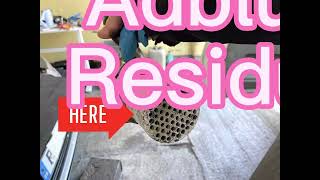
How to confirm: Visually inspect the inside of the exhaust tailpipe by wiping it with a finger. If it is coated in black, greasy soot, the DPF has almost certainly failed. A professional diagnosis involves removing the low-pressure EGR filter and inspecting the DPF outlet for soot, confirming the diagnosis without needing to first remove the entire DPF.
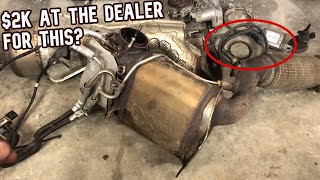
Typical fix: Replace both the Diesel Particulate Filter (DPF) and the low-pressure EGR filter/cooler assembly. 🎬 See this walkthrough of the low pressure EGR cooler replacement. It is critical to replace both parts, as a new EGR filter will quickly clog again if the cracked DPF is not replaced. After replacement, the ECM must be adapted to the new DPF using a diagnostic tool.
Est. part cost: $1500-$2500
Rare But Worth Checking
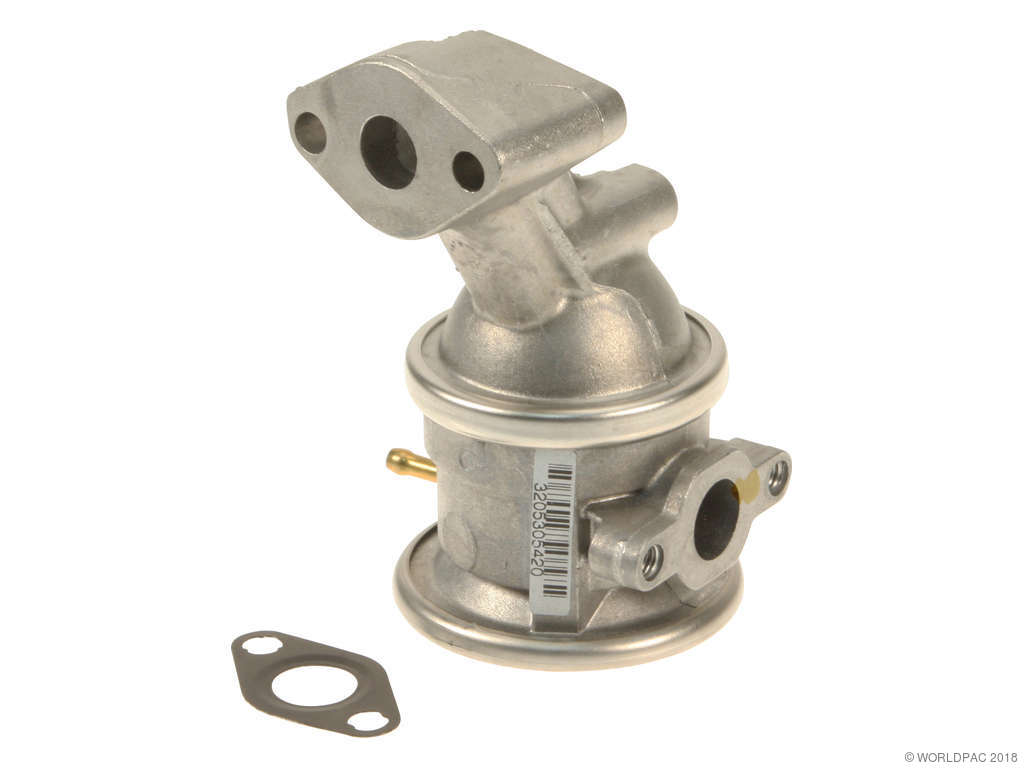
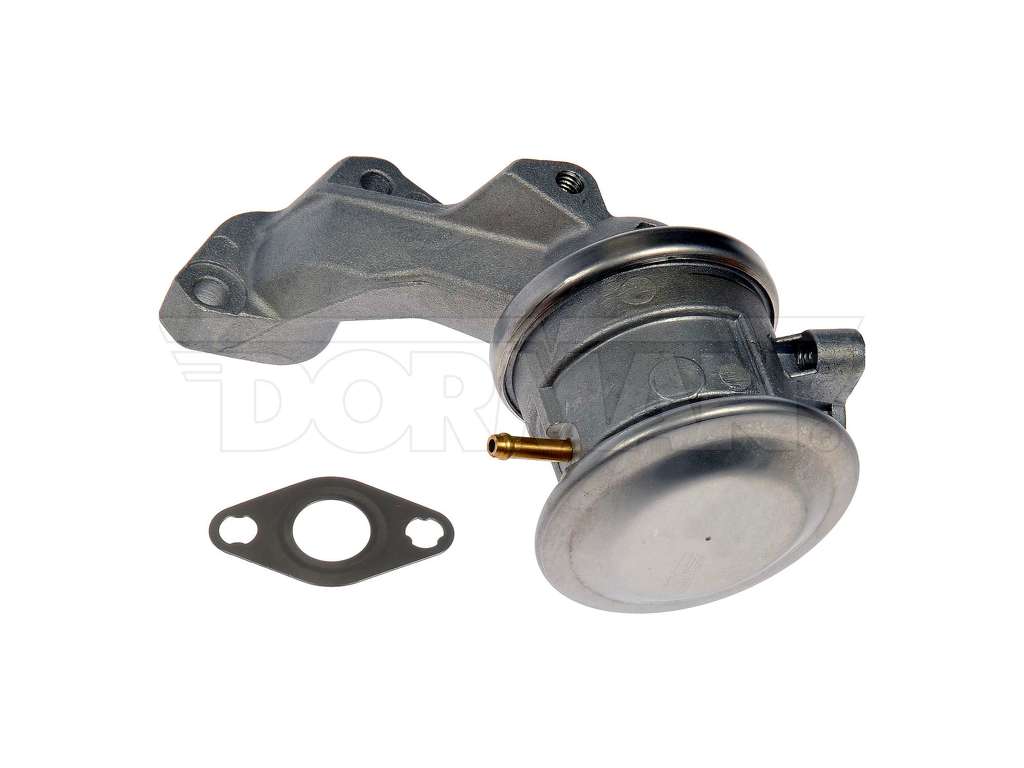
- Failed EGR Valve: → Shop Exhaust Gas Recirculation (EGR) Valve While less common on this engine for this specific code, the EGR valve itself can fail (e.g., stuck closed, diaphragm leak). However, this should only be considered after ruling out the DPF issue.
- Clogged EGR Cooler: → Shop Exhaust Gas Recirculation (EGR) Valve Carbon and soot can build up and clog the EGR cooler, restricting flow. This is almost always a symptom of the cracked DPF, not the root cause.
- Faulty EGR Pressure/Temperature Sensor: A defective sensor could provide incorrect flow readings to the ECM, triggering the code erroneously. This is a possible but uncommon cause.
Diagnosis Steps
- Scan the vehicle for any other fault codes, particularly P2002 and P240F, which strongly point to DPF failure. 🎬 Watch: Diagnosing P2002 and P0401 codes on a TDI engine.
- Inspect the inside of the exhaust tailpipe. The presence of black, greasy soot is a near-certain sign of a cracked DPF.
- If the tailpipe is clean, proceed with more traditional EGR diagnostics.
- Follow the diagnostic procedure in TSB 01-18-13: Remove the low-pressure EGR filter from the DPF and inspect the inside of the exhaust pipe at the connection point for soot.
- If soot is present, the DPF is confirmed to be cracked and both the DPF and EGR filter must be replaced.
- If no soot is found, inspect the EGR filter itself for blockages from other sources.
- With a diagnostic scan tool, command the EGR valve to open and close while monitoring EGR flow data to see if the valve is responding.
Parts You'll Likely Need
- Diesel Particulate Filter (DPF) — This is the root cause of the P0401 code on this engine. The original DPF cracks, allowing soot to pass through and clog the EGR system.
Trusted brands: Genuine VW/Audi, Bosal, Walker
OEM price range: $1200-$2000
Aftermarket price range: $600-$1200 - Low-Pressure EGR Filter / EGR Cooler Assembly
(OEM #04L131512A, 04L131512D, 04L131512BH (part numbers may vary, confirm with VIN))— This filter becomes clogged with soot from the failed DPF, causing the insufficient flow condition. It must be replaced along with the DPF.
Trusted brands: Genuine VW/Audi, Wahler, Mahle, VEMO
OEM price range: $300-$500
Aftermarket price range: $170-$400
Related Codes That Often Appear With This One
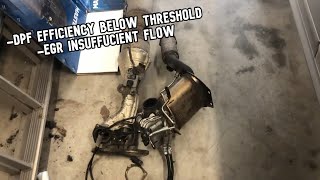
- P2002 — P2002 indicates 'DPF Efficiency Below Threshold'. This code often appears with P0401 because a cracked DPF is the root cause for both issues, and TSB 01-18-13 groups them together.
- P240F — P240F stands for 'EGR Slow Response'. This can be triggered by the same soot blockage in the low-pressure EGR filter that causes P0401. 🎬 Watch: A mechanic's guide to diagnosing P0401 and P240F codes.
Technical Service Bulletins (TSBs) & Recalls
- TSB 01-18-13 / Technical Product Information (TPI) 2034898: Titled 'MIL ON DTC P0401 Exhaust Gas Recirculation Flow Insufficient'. This TSB explicitly details the diagnostic procedure of checking for soot at the DPF outlet to confirm a cracked DPF as the cause for P0401, P2002, and P240F. It mandates the replacement of both the DPF and the EGR filter if soot is found.
Platform-Specific Known Issues
- Many of these vehicles are covered by the 'Dieselgate' Extended Emissions Warranty as part of the TDI settlement. This warranty is transferable to subsequent owners. The warranty period is typically the greater of 10 years/120,000 miles from the in-service date, or 4 years/48,000 miles from the date of the emissions modification. It covers the entire emissions control system, including the DPF and EGR system. Owners experiencing P0401 should contact an Audi dealership with their VIN to check for warranty coverage before paying for any repairs, as this specific failure is often covered completely.
Mechanic-Grade Diagnostic Values
- VCDS Measuring Block 074, Field 3: EGR Potentiometer Voltage — expected: Voltage should change smoothly as the EGR valve is actuated via an output test.. Failure: No voltage change or erratic jumps indicate a faulty EGR valve position sensor.
- VCDS Basic Settings, Group 003 (at idle): Mass Air Flow (MAF) — expected: When EGR is commanded ON, MAF reading should drop significantly. When commanded OFF, MAF reading should rise.. Failure: Little to no change in MAF reading when EGR is cycled indicates a blockage (likely the LP-EGR filter) or a non-responsive EGR valve.
Scan Tool Commands That Help
- VCDS (VAG-COM): Engine (01) -> Basic Settings (04) -> Group 038 (Low-Pressure EGR Test) — This function cycles the low-pressure EGR system, allowing a technician to monitor measuring blocks (like MAF sensor readings) to confirm if the system is flowing. A lack of change in airflow during this test points directly to a blockage.
- VCDS (VAG-COM): Engine (01) -> Output Tests (03) -> Exhaust Gas Recirculation Valve — To physically test the EGR valve's motor and position sensor. You can command the valve to open and close while observing its position percentage in measuring blocks to see if it's mechanically stuck or has a faulty sensor.
- VCDS (VAG-COM): Engine (01) -> Adaptation (10) -> Channel for EGR Adaptation — This is required after replacing the EGR valve or cooler assembly to teach the ECM the new component's flow characteristics and end-stop positions.
Wiring & Ground Locations
- Engine Harness Ground — On the right side of the engine compartment, near the alternator.. A poor ground connection for the engine harness can cause erratic sensor readings and incorrect actuator operation for all engine components, including the electronically controlled EGR valve and its associated sensors.
- Ground point on left A-pillar — Inside the vehicle, on the left A-pillar.. This is a key grounding point for various interior modules. While less likely to be the primary cause, it can contribute to communication errors with the ECM if the connection is compromised.
- EGR Valve Connector — Directly on the EGR valve assembly. It is typically a 5-pin oval or D-shaped connector.. This is the primary point for testing voltage supply and signal wires to the EGR valve. Corrosion or damage here will cause a direct failure of the EGR valve's electronic control.
OEM Part Supersession History
04L131601T→04L131601TX— Part has been remanufactured or revised by the factory. The 'X' suffix typically denotes a factory-reconditioned part in the VAG system.
Heads up: These are generally interchangeable, but the 'TX' part is an officially recognized replacement for the original 'T' part.04L131512A→04L131512D, 04L131512BH— Revisions to the low-pressure EGR cooler/filter assembly to improve durability or flow characteristics.
Heads up: It is critical to confirm the correct part number with the vehicle's VIN, as there are variations based on specific engine codes (e.g., CNHA, CGLC) and production dates.
Model Year Variations Within This Range
- 2011-2015 (Pre-facelift): Primarily equipped with the 177hp 2.0L TDI engine (e.g., CGLC). These models typically do not use an AdBlue (SCR) system.
- 2016-2018 (Facelift): Often equipped with the updated 190hp 2.0L TDI 'Ultra' engine (e.g., CNHA, CZJA, DDDA). These engines are part of the EA288 family and incorporate an AdBlue (SCR) system for NOx reduction in addition to the EGR system. While the P0401 root cause (cracked DPF) is the same, the presence of the SCR system adds complexity to the exhaust system.
Diagnostic Flowchart
Other Known Issues on This Vehicle
Issues unrelated to this code that are worth knowing about as an owner of this generation:
- S-Tronic (DL501) Mechatronic Unit Failure 🔴 High — Can occur at various mileages, often signaled by jerky shifting, gearbox malfunction warnings, or failure to select gears.
- Water Pump / Thermostat Housing Leaks 🟠 Medium — The water pump on the EA288 engine family is a known weak point, with failures of the internal shutter mechanism or bearing. Leaks from the plastic housing are also common. (Ref: TSB 2052657 addresses leak diagnosis between the pump and thermostat housing.)
- MMI Infotainment System Failures 🟡 Low — Owners report various issues including the screen not deploying, blank screens, random reboots, or total failure. Often traced to a blown fuse, faulty control unit, or software glitches.
- Excessive Oil Consumption 🟠 Medium — More prevalent in higher mileage engines, leaks can develop from valve covers, oil pan gaskets, or turbo seals.
Used vs. New Parts: Buying Guide for This Vehicle
When a used part is the smart pick: A used EGR cooler/filter assembly can be a cost-effective option if it is sourced from a very low-mileage vehicle and thoroughly inspected for any signs of soot or carbon buildup, which would indicate the donor car had the same DPF failure.
Donor-vehicle mileage cap: roughly under 75000 miles for the part to have meaningful remaining life.
What to inspect on the donor part:
- For a DPF: Ask for proof of the donor vehicle's mileage. Inspect the inlet and outlet; they should be free of any wet oil or coolant residue. The outlet should be exceptionally clean, with no black soot.
- For an EGR Cooler: Shine a light through the passages. They should be clear and free of heavy carbon deposits. Any visible soot is a red flag.
- Check for any signs of external cracking or repairs on the housings of both components.
OEM-only on this vehicle (don't cheap out):
- Diesel Particulate Filter (DPF). The core issue is a design flaw leading to cracking. Aftermarket DPFs may not have the same longevity or regeneration efficiency as the latest OEM revisions. Using a used DPF is highly risky as it may be near the end of its service life or already have internal cracks not visible from the outside.
Aftermarket brands forum-validated for this vehicle:
- For EGR Cooler Assembly: Wahler, Mahle, Pierburg (often the OEM supplier).
- For DPF (if OEM is not an option): Bosal, Walker are established brands, but verify they meet the specific Euro emissions standard for the vehicle.
Brands owners have reported issues with on this vehicle:
- Unbranded, no-name DPFs from online marketplaces. These often use a lower-quality ceramic core or an insufficient precious metal coating, leading to rapid clogging, failed regenerations, and a return of the fault codes.
Real Owner Stories
Aggregated from forums and TSBs cited above. Mileages and costs reflect what owners reported in those sources.
2012 Audi A6 2.0 TDI 130kw CGLC
Symptoms: Engine management light on with fault code P040100. The owner attempted to fix it by replacing the EGR valve and the DPF sensor, but the light returned after a few days.
What fixed it: The owner was caught in a diagnostic dead end, replacing the EGR valve and DPF sensor without success; a garage later suggested the replacement EGR was faulty, though the root cause in this model is typically a cracked DPF.
Source hint: Audi Owners Club (UK) thread titled 'Egr fault code P040100'
2012 Audi A6 C7 2.0 TDI
Symptoms: Check engine light followed by a glowing heater plug (glow plug) warning light. The vehicle entered limp mode (tryb awaryjny) with a significant loss of power and code 4807 / P0401.
What fixed it: Diagnostic scan confirmed P0401 00 - flow rate too low.
Source hint: Forum Audi A6 / A7 Klub Polska
2012 Audi A6 C7 2.0 TDI CGLC
Symptoms: Visible smoke coming from the engine area due to a physical failure of the emissions hardware.
What fixed it: The owner discovered a cracked DPF housing.
Source hint: Audi-Sport.net thread 'smoke from engine-dpf cracked'
2013 VW Jetta TDI (Platform Mate)
Symptoms: Classic P0401 symptoms including soot visible in the tailpipe.
What fixed it: Discussion confirmed the likely cracked DPF diagnosis and pointed toward the extended emissions warranty for coverage.
Source hint: Reddit (r/tdi) thread 'p0401_dpf'
Related OBD-II Codes
Frequently Asked Questions
Is the P0401 code on my 2011-2018 Audi A6 covered under the 'Dieselgate' settlement?
What does TSB 01-18-13 say about the cause of P0401 on the 2.0L TDI?
Can I just replace the EGR filter to fix the P0401 code?
How can I quickly check if my Audi A6 has a cracked DPF causing this code?
Does the ECM need special programming after fixing the EGR flow issue?
Are there other common issues on the A6 2.0L TDI I should look out for while fixing P0401?
Helpful Videos
Used OEM Parts in Stock
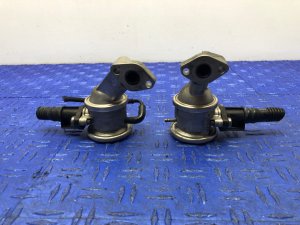
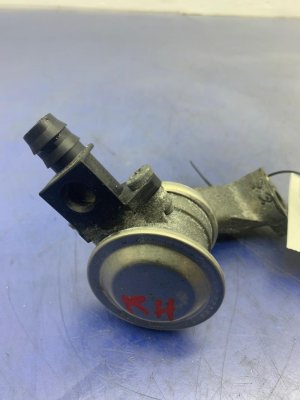
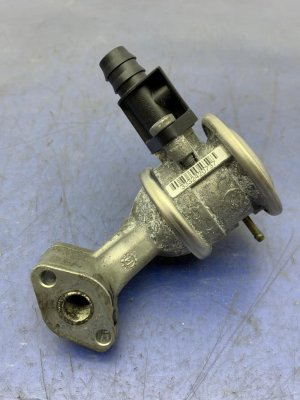
New Aftermarket Parts Available
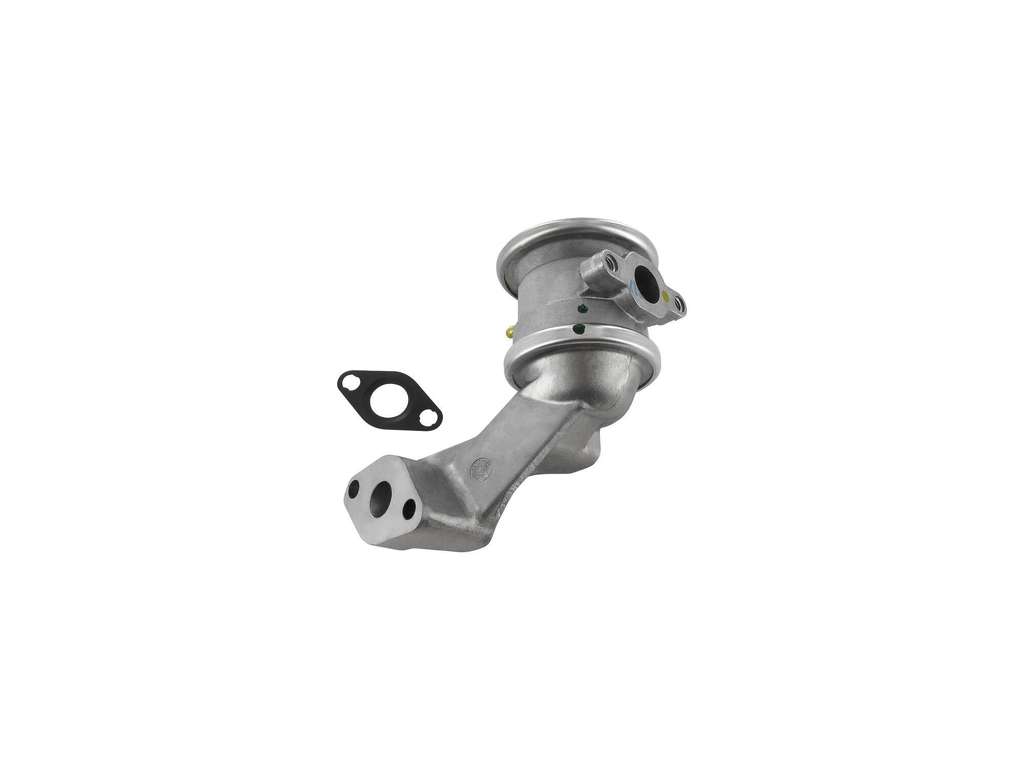

The information in this article is provided for general reference and educational purposes only. Vehicle specifications, procedures, and part compatibility can vary by production date, trim level, and region. Always consult your vehicle's factory service manual and verify part numbers before purchasing or performing repairs. Safety-critical components such as airbags, seat belts, and braking systems should be installed by a qualified professional.
- Audi A6:
- 🧭 Diagnostic Flowchart
- 🎬 Helpful Videos
- 🛍️ Shop This Part
- What's Unique About the 2011-2018 Audi A6
- Symptoms You May Notice
- Most Likely Causes
- Rare But Worth Checking
- Diagnosis Steps
- Parts You'll Likely Need
- Related Codes That Often Appear With This One
- Technical Service Bulletins (TSBs) & Recalls
- Platform-Specific Known Issues
- Mechanic-Grade Diagnostic Values
- Scan Tool Commands That Help
- Wiring & Ground Locations
- OEM Part Supersession History
- Model Year Variations Within This Range
- Other Known Issues on This Vehicle
- Used vs. New Parts: Buying Guide for This Vehicle
- Real Owner Stories
- 2012 Audi A6 2.0 TDI 130kw CGLC
- 2012 Audi A6 C7 2.0 TDI
- 2012 Audi A6 C7 2.0 TDI CGLC
- 2013 VW Jetta TDI (Platform Mate)
- Related OBD-II Codes
- Frequently Asked Questions
- 🎟️ Get 5% Off