

P0401 on 2000-2005 Chevrolet Impala 3.4L V6: EGR Flow Insufficient Causes and Fixes
On a 2000-2005 Impala with the 3.4L V6, P0401 is almost always caused by a clogged EGR passage inside the intake manifold, not a bad EGR valve. The fix is to remove the throttle body and clean out the carbon buildup, which is a DIY job costing under $25 for a new gasket and cleaner.
- Do NOT replace the EGR valve first. The problem is almost certainly a clogged passage in the intake manifold.
- The fix is to remove the throttle body and physically scrape the carbon buildup out of the small EGR port.
- The only part you will almost certainly need is a new throttle body gasket, which costs less than $15.
- This is a common and well-documented issue on the GM 3.4L V6 engine and its many platform mates.
- Failing to fix this will result in a failed emissions test.
What's Unique About the 2000-2005 Chevrolet Impala
Unlike many vehicles where the EGR valve itself fails, the GM 3.4L V6 (LA1) engine is notorious for a different root cause. The design of the upper intake manifold allows a combination of hot exhaust carbon and oily vapors from the PCV system to form hard, thick deposits in a small passage behind the throttle body, completely blocking flow. Owners and mechanics consistently report that replacing the EGR valve does not fix the code, while cleaning this specific passage does. One mechanic described the blockage as a 'termite mound' of carbon.
Symptoms You May Notice
- Check Engine Light is on
- Failing an emissions test
- Slight engine pinging or knocking, especially under load (less common)
- Possible rough idle (rare)
- Slight RPM surging at cruising speeds (reported by some owners).
- Reduced propulsion power or "Shift to Park" messages (though more common on other GM models like the Volt, as seen in NHTSA ODI #11695498).
- Replacing the EGR valve. This is the most common and costly mistake for this code on this engine. A new EGR valve cannot push gas through a blocked passage, so the code will return.
Most Likely Causes
- Clogged EGR Passage in Upper Intake Manifold 🔴 High Probability → Shop Engine Intake Manifold The design of the 3.4L V6's intake manifold creates a chokepoint for carbon from the exhaust gas, which accumulates over time and blocks the small port located just behind the throttle body.
How to confirm: Remove the throttle body (typically three 13mm fasteners). Visually inspect the small EGR port inside the intake manifold. It will likely be packed solid with hard, black carbon deposits. A small wire, pick, or even a zip tie should be able to pass through to the EGR valve mounting port; if it cannot, the passage is confirmed clogged.
Typical fix: With the throttle body removed, use a combination of picks, small screwdrivers, a shop vacuum, and carburetor cleaner to scrape and remove all carbon from the passage until it is clear. Some owners report success using a frayed speedometer cable spun by a drill to ream out the passage. Replace the throttle body gasket upon reassembly.
Est. part cost: $5-$15
Rare But Worth Checking
- Failed EGR Valve: → Shop Exhaust Gas Recirculation (EGR) Valve While this is a common cause on other vehicles, it is a rare cause for P0401 on this specific engine. It should only be considered after the intake passage has been confirmed to be clean and clear.
- Faulty Manifold Absolute Pressure (MAP) Sensor: → Shop Manifold Absolute Pressure Sensor The PCM uses the MAP sensor to check for EGR flow. If the sensor is faulty, it might not register the pressure change. However, a bad MAP sensor will typically trigger its own codes (like P0107 or P0108) and is an unlikely cause for an isolated P0401.
- Cracked or Disconnected Vacuum Lines: A vacuum leak can affect the MAP sensor's ability to get an accurate reading, potentially leading to a P0401 code. This is worth checking on an older vehicle but is less common than the clogged passage.
Diagnosis Steps
- Confirm the P0401 code is present using an OBD-II scanner.
- Purchase a new throttle body gasket (e.g., GM 12597913 or Fel-Pro 61073).
- Disconnect the battery.
- Remove the air intake ducting from the throttle body.
- Disconnect the electrical connectors and cables from the throttle body.
- Remove the three 13mm fasteners holding the throttle body to the upper intake manifold.
- Carefully remove the throttle body and the old gasket.
- Inspect the EGR passage inside the intake manifold, located just behind where the throttle body was mounted. Expect to see it clogged with carbon.
- Using picks, brushes, and a vacuum, carefully clean all carbon out of the passage until it is completely clear. A long zip tie or piece of wire can be used to confirm the passage is open all the way through.
- Use a shop vacuum to carefully remove all loose carbon debris from the intake manifold to prevent it from being ingested by the engine upon startup.
- Clean the throttle body plate and bore while it is removed.
- Install the new throttle body gasket and reinstall the throttle body.
- Reconnect all cables, connectors, and intake ducting.
- Reconnect the battery. Clear the code with the scanner and perform a test drive, including deceleration from highway speed, to confirm the fix.
Parts You'll Likely Need
- Throttle Body Gasket
(OEM #12597913)— This gasket must be replaced when removing the throttle body to access and clean the clogged EGR passage.
Trusted brands: ACDelco, Fel-Pro (p/n 61073)
OEM price range: $10-$20
Aftermarket price range: $5-$10 - Exhaust Gas Recirculation (EGR) Valve
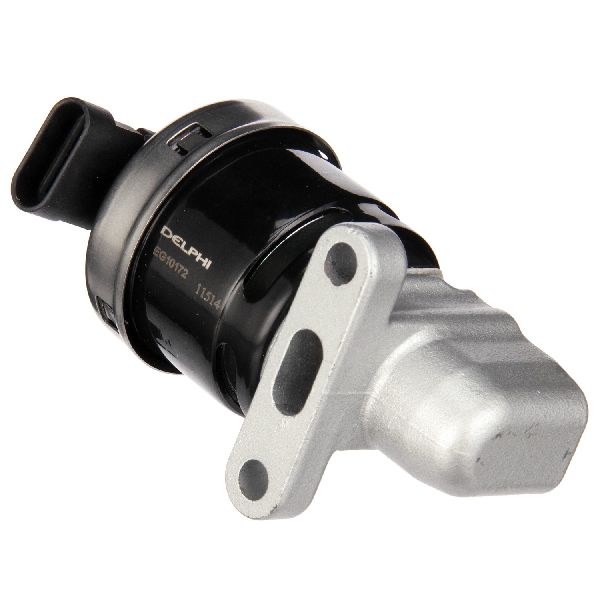
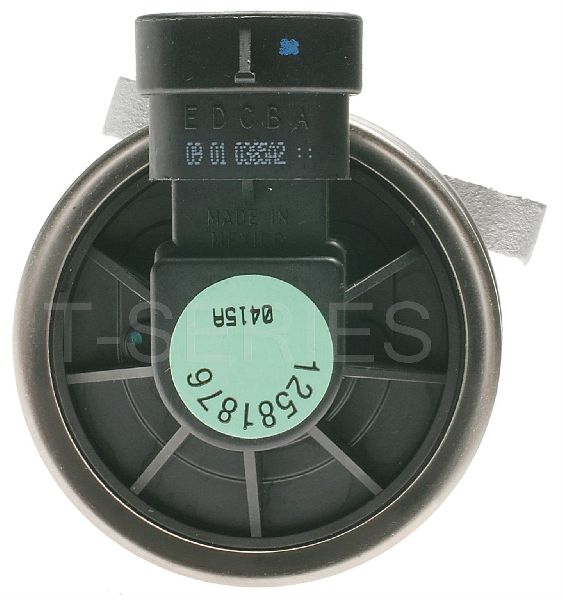
(OEM #17113547)— This is a potential but very unlikely cause of the P0401 code on this engine. It should only be replaced if the intake passage is confirmed to be clear and the valve is proven to be faulty through testing.
Trusted brands: ACDelco, Delphi, Standard Motor Products
OEM price range: $120-$180
Aftermarket price range: $60-$100
Technical Service Bulletins (TSBs) & Recalls
- GM TSB 03-06-01-010B: While not for P0401, this TSB is highly relevant to owners of 3.4L engines. It addresses the extremely common failure of the lower intake manifold gaskets, which causes coolant leaks. The fix requires updated gaskets and torque-to-yield bolts.
Mechanic-Grade Diagnostic Values
- EGR Pintle Position Sensor Signal Voltage (KOEO) — expected: 0.5V to 1.0V. Failure: A reading of 0V or a voltage that doesn't change during actuation indicates a sensor/wiring fault. A voltage significantly higher than 1.0V with the valve commanded closed indicates it is stuck partially open.
- EGR 5V Reference Voltage (KOEO) — expected: 4.8V to 5.2V. Failure: A reading of 0V or significantly low voltage at Pin D (Gray wire) of the EGR connector indicates an open/short in the reference circuit from the PCM, not a bad valve.
- EGR 12V+ Ignition Feed (KOEO) — expected: 12V+ (Battery Voltage). Failure: 0V or low voltage at Pin E (Pink wire) of the EGR connector indicates a problem with the power supply fuse or wiring.
- EGR Solenoid Current Draw (when activated) — expected: 700-1000 milliamps (0.7-1.0 Amps). Failure: No current draw indicates an open circuit in the solenoid. Significantly higher draw suggests a short.
- MAP Sensor Signal Voltage (KOEO) — expected: ~4.5V (at sea level, should match BARO reading). Failure: Voltage stuck low or high (e.g., near 0V or 5V) indicates a faulty sensor or circuit issue.
- MAP Sensor Signal Voltage (Engine Idling) — expected: 1.0V to 1.7V. Failure: Voltage remains high (e.g., above 2.5V) at idle, indicating a bad sensor, a major vacuum leak, or a restricted exhaust.
- MAP Sensor Voltage Change during EGR Bidirectional Test — expected: At idle, commanding the EGR valve 100% open should cause a significant rise in MAP voltage (e.g., from ~2.0V to over 3.0V) and cause the engine to stall or run very rough.. Failure: If the engine idle only changes slightly and the MAP voltage does not rise significantly, it confirms clogged EGR passages (P0401 condition).
Scan Tool Commands That Help
- Tech 2 / Professional Scan Tool: EGR Control / Bidirectional Test — This is the definitive functional test. It allows the technician to manually command the EGR valve open from 0% to 100% while the engine is idling. A functional system with clear passages will cause the engine to stumble or stall and show a corresponding rise in MAP sensor voltage.
- Advanced Scan Tools (e.g., Launch, Autel): EGR Learning Value Reset — After replacing the EGR valve, this function forces the PCM to erase the old learned closed-position voltage and learn the value from the new sensor. This can prevent codes from being set with a new valve if the learned values are out of range.
Wiring & Ground Locations
- EGR Valve Connector (5-Pin) — On the EGR valve itself, located at the top rear of the engine, against the firewall.. This is the primary point for all electrical tests. The pinout is typically: Pin A (EGR Control), Pin B (Sensor Ground), Pin C (Pintle Position Signal), Pin D (5V Reference), Pin E (12V+ Ignition Feed).
- G103 — On a transmission stud on the left (driver's) side of the engine, or on an upper bell housing bolt.. This is a major ground point for the PCM and its sensors. A loose or corroded connection here can cause erratic sensor readings, including the MAP and EGR position sensors, leading to false codes.
- G110 / G114 — Lower left front/rear of the engine block, often on a transaxle stud.. This is another major engine-to-chassis ground point. A poor connection can cause erratic behavior in multiple sensors that use it as a reference, including the EGR valve's internal position sensor.
- MAP Sensor Connector — On the MAP sensor, which is mounted on a bracket near the throttle body and connected to intake vacuum with a rubber hose/tee.. This is the test point for the MAP sensor circuit. The PCM uses the MAP signal to verify EGR flow. A bad connection here can mimic a flow problem.
Real Owner Repair Stories
- YouTube channel 'iworkonauto' (via Go-Parts citation) (2005 Pontiac Montana 3.4L V6 (mechanically identical EGR system)) — P0401 Check Engine Light
❌ Tried (didn't work) Disassembling and re-inspecting the EGR passages, which were confirmed to still be clean and open from a previous repair.
✅ What actually fixed it The EGR valve itself had failed electronically. Even though the passages were clear, the internal sensor/actuator was no longer functioning correctly, requiring replacement of the EGR valve assembly. - YouTube channel 'Fix It All' (2003 Chevrolet Impala) — P0401 Check Engine Light
❌ Tried (didn't work) Initial diagnosis pointed to the common clogged passage, but the owner opted to replace the valve.
✅ What actually fixed it Replacing the EGR valve assembly with a new part from a local auto parts store cleared the P0401 code. This serves as a counter-example to the 'it's never the valve' rule of thumb. - NHTSA ODI #11613414 — An owner reported receiving a check engine light with error code P0401 at approximately 96,500 miles, which was confirmed by a dealership as an issue requiring EGR valve attention.
"I Checked Everything" — The Actual Cause
- The equivalent scenario for a P0401 (insufficient flow) is 'passages are clean, but the code persists.' In one documented case on a mechanically identical 3.4L V6, a P0401 code returned a year after the passages were cleaned. The passages were inspected again and confirmed to be completely clear. The actual cause was an electronic failure within the EGR valve assembly itself. The valve could no longer respond correctly to the PCM's commands, even though there was no physical blockage. This required replacing the EGR valve to resolve the code.
When the Usual Fixes Don't Work
- While the overwhelming consensus is that P0401 on the 3.4L V6 is caused by a clogged intake passage, there are documented cases where this is not true. In one instance, a vehicle with a confirmed-clean passage continued to set the code until the EGR valve itself was replaced due to an internal electronic failure. In another case, a straightforward EGR valve replacement on a 2003 Impala resolved the P0401 code without any mention of passage cleaning. These cases highlight that while cleaning the passage should always be the first step, an actual EGR valve failure is still a possibility and should not be completely dismissed if the code returns after a thorough cleaning.
Documented NHTSA Reports
- NHTSA ODI #11692401: An owner noted that the EGR system caused a P0401 check engine light, describing it as an extremely well-documented issue within the manufacturer's vehicle line.
- NHTSA ODI #11656896: A report describes how a P0401 code caused the vehicle to display a “propulsion power is reduced” message while on the highway, forcing the driver to pull off to find a safe location.
- NHTSA ODI #11650026: A complaint filed with the NHTSA specifically identifies a P0401 error related to the EGR valve not receiving enough fuel.
OEM Part Supersession History
17113547→Not found— N/A
Heads up: While a direct supersession for OEM part number 17113547 was not found, be aware that GM used many visually similar 5-pin electronic EGR valves on different engines of this era. These valves have different internal calibrations and are not interchangeable. Always verify the part number is specified for the 3.4L LA1 engine to avoid performance issues or new trouble codes.
Diagnostic Flowchart
Other Known Issues on This Vehicle
Issues unrelated to this code that are worth knowing about as an owner of this generation:
- Lower Intake Manifold (LIM) Gasket Failure 🔴 High → Shop Engine Intake Manifold — Extremely common, often occurring between 60,000 and 150,000 miles. It is a matter of 'when', not 'if'. (Ref: GM TSB 03-06-01-010B describes the updated gasket and bolt design for the repair.)
- Passlock Anti-Theft System Failure 🟠 Medium — Very common. The 'SECURITY' light illuminates, and the vehicle will not start, requiring a 10-minute wait procedure to reset.
- Pressure Control Solenoid (PCS) Failure in 4T65-E Transmission 🔴 High — Common after 60,000 miles, causing harsh shifting, slipping, and shuddering, especially when hot. (Ref: Code P1811 is often associated with this issue.)
- Instrument Cluster Malfunction 🟡 Low — Frequently reported issue where gauges, especially the speedometer, behave erratically or stop working.
- Rocker Panel and Subframe Rust 🟠 Medium — Common in regions that use road salt. The pinch welds under the doors and the rear suspension mounting points are particularly vulnerable.
Used vs. New Parts: Buying Guide for This Vehicle
When a used part is the smart pick: For this repair, the only part typically needed is a throttle body gasket, which should always be new. If the throttle body itself were damaged during removal, a used throttle body from a junkyard is a perfectly acceptable and cost-effective replacement.
Donor-vehicle mileage cap: roughly under 120000 miles for the part to have meaningful remaining life.
What to inspect on the donor part:
- For a used throttle body, ensure the throttle plate is not bent and moves smoothly.
- Check that the electrical connectors for the TPS and IAC are not cracked or broken.
- Avoid parts from engines that show signs of heavy sludge or coolant contamination.
OEM-only on this vehicle (don't cheap out):
- No parts for this specific P0401 repair require OEM-only sourcing. Quality aftermarket gaskets and EGR valves are widely available and perform well.
Aftermarket brands forum-validated for this vehicle:
- Fel-Pro (for gaskets, specifically part number 61073 for the throttle body)
- ACDelco (OEM supplier)
- Delphi
- Standard Motor Products (SMP)
Brands owners have reported issues with on this vehicle:
- No specific aftermarket brands were consistently cited as problematic for this repair. Avoid unbranded, 'white-box' parts with suspiciously low prices, as their internal electronics and materials may be of poor quality.
Real Owner Stories
Aggregated from forums and TSBs cited above. Mileages and costs reflect what owners reported in those sources.
2003 Chevrolet Impala, 3.4L — 113000 miles
Symptoms: Check Engine Light with P0401 code. No driveability problems reported. Visual inspection of vacuum lines and electrical connections showed nothing; pulling the EGR valve showed only a fine layer of soot.
What fixed it: Cleaned a 'termite mound' looking pile of crud accumulated inside the upper intake where the EGR port comes in. Also replaced the PCV valve and its tube.
Source hint: BAT Auto Technical Forum - 2003 Impala P0401
1999 Oldsmobile Alero, 3.4L V6
Symptoms: Persistent P0401 code; replacing the EGR valve did not resolve the issue.
What fixed it: Used a coat hanger to clear a significant carbon blockage from the port behind the throttle body.
Source hint: Aleromod.com P0401 Fix
2004 Pontiac Grand Am, 3.4L V6
Symptoms: Experiencing P0401 code.
What fixed it: Cleaning the intake passages as per GM TSB recommendations for EGR issues on these engines.
Source hint: Reddit - Pontiac Grand Am P0401
Related OBD-II Codes
Frequently Asked Questions
Does GM TSB 03-06-01-010B apply to my P0401 code on a 3.4L Impala?
I've heard the 3.4L V6 has a specific design flaw causing P0401. What is it?
What specific throttle body gasket should I buy for my 2000-2005 Impala 3.4L?
Can I clean the EGR passage without removing the throttle body?
Is there a specific tool recommended by other owners to clear the blockage?
Why does my Impala surge at cruising speeds when the Check Engine Light is on?
Helpful Videos

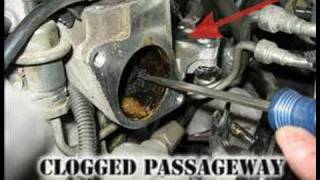

We Have This Part in Stock


The information in this article is provided for general reference and educational purposes only. Vehicle specifications, procedures, and part compatibility can vary by production date, trim level, and region. Always consult your vehicle's factory service manual and verify part numbers before purchasing or performing repairs. Safety-critical components such as airbags, seat belts, and braking systems should be installed by a qualified professional.
- Chevrolet Impala:
- 🧭 Diagnostic Flowchart
- 🎬 Helpful Videos
- 🛍️ Shop This Part
- What's Unique About the 2000-2005 Chevrolet Impala
- Symptoms You May Notice
- Most Likely Causes
- Rare But Worth Checking
- Diagnosis Steps
- Parts You'll Likely Need
- Technical Service Bulletins (TSBs) & Recalls
- Mechanic-Grade Diagnostic Values
- Scan Tool Commands That Help
- Wiring & Ground Locations
- Real Owner Repair Stories
- "I Checked Everything" — The Actual Cause
- When the Usual Fixes Don't Work
- Documented NHTSA Reports
- OEM Part Supersession History
- Other Known Issues on This Vehicle
- Used vs. New Parts: Buying Guide for This Vehicle
- Real Owner Stories
- 2003 Chevrolet Impala, 3.4L — 113000 miles
- 1999 Oldsmobile Alero, 3.4L V6
- 2004 Pontiac Grand Am, 3.4L V6
- Related OBD-II Codes
- Frequently Asked Questions
- 🎟️ Get 5% Off