

P0401 on 2011-2014 Chrysler 200 3.6L: EGR Flow Insufficient Causes and Fixes
On a 2011-2014 Chrysler 200 with the 3.6L V6, code P0401 is almost always caused by carbon buildup clogging the EGR valve, its passages, or the EGR cooler. The fix is to remove and clean the valve and passages; if that fails, the EGR valve assembly and/or the EGR cooler must be replaced. This is a very common issue on the 3.6L Pentastar engine across many Chrysler/Dodge/Jeep models.
- P0401 on your Chrysler 200 3.6L means the EGR system is clogged, not necessarily that the valve itself has failed.
- The most common fix is removing the EGR valve and thoroughly cleaning both the valve and the passages in the intake manifold.
- If cleaning the valve doesn't work, the EGR cooler is highly likely to be clogged and may need to be replaced. This is a very common scenario.
- Always replace the EGR gaskets after service to prevent leaks.
- Do not simply replace the EGR valve without first cleaning the carbon-choked passages, or the code will likely return.
What's Unique About the 2011-2014 Chrysler 200
The 3.6L Pentastar V6 engine, used across many Chrysler, Dodge, and Jeep vehicles, has a known tendency to develop hard carbon deposits in its EGR system. Unlike older, simpler designs, the EGR valve is an electronic unit located near the throttle body, and it works in conjunction with an EGR cooler. Owners and technicians frequently report that simply cleaning or replacing the EGR valve is not enough; the EGR cooler is also extremely prone to clogging and is often the root cause of the insufficient flow, making its inspection a critical step. In many documented cases, cleaning only the valve results in the code returning quickly, with a full cleaning or replacement of the cooler being the ultimate fix.
Symptoms You May Notice
- Check Engine Light is on
- Engine pinging or knocking, especially during acceleration
- Reduced engine power and sluggish acceleration
- Rough or stalling idle
- Decreased fuel economy
- Failing a vehicle emissions test
- Black smoke from the tailpipe under load
- Replacing the EGR valve without cleaning the intake manifold ports or inspecting the EGR cooler. The new valve will not be able to flow exhaust if the passages are still blocked, and the P0401 code will return almost immediately.
- Assuming the EGR valve is faulty when the passages are simply clogged. A thorough cleaning is often all that is required to fix the issue.
Most Likely Causes
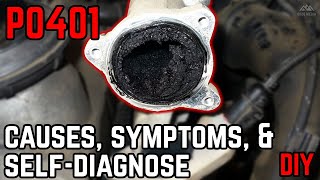
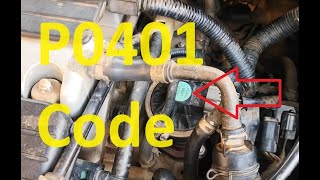
- Clogged EGR Valve and/or Passages 🔴 High Probability → Shop Exhaust Gas Recirculation (EGR) Valve The Pentastar engine's EGR system is known for accumulating hard carbon deposits from exhaust gases, which physically block the passages and prevent the valve's pintle from moving. This is the most common starting point for diagnosis. 🎬 Watch: A quick breakdown of P0401 causes and common fixes.
How to confirm: Remove the EGR valve, located behind the throttle body, and visually inspect the valve's pintle and the ports on the intake manifold for heavy, hard carbon buildup. Often the passages will be completely blocked.
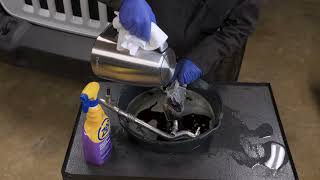
Typical fix: Thoroughly clean the EGR valve and scrape the carbon out of the intake manifold ports using carburetor cleaner, brushes, and picks. Some owners use a speedometer cable in a drill to act as a flexible reamer for the passages. 🎬 See this clever trick for cleaning out stubborn carbon deposits. Always use new gaskets upon reassembly.
Est. part cost: $10-$20 for cleaning supplies and new gaskets. - Clogged EGR Cooler 🔴 High Probability → Shop Exhaust Gas Recirculation (EGR) Valve The same carbon that clogs the valve can also clog the small, radiator-like passages inside the EGR cooler, which is upstream of the valve. This is a very common point of failure on this engine and a frequent reason the P0401 code returns after only cleaning the valve.
How to confirm: If cleaning the EGR valve and its ports doesn't resolve the code, the cooler is the next likely culprit. It can be removed and inspected for blockage. A flow test can be performed, but it's often diagnosed by elimination after the valve has been cleaned and the code returns.
Typical fix: Some attempt to clean the cooler by soaking it in cleaner, but due to its complex internal construction, replacement is often more effective 🎬 Watch: How to remove and clean a clogged EGR cooler. and recommended by technicians and owners who have dealt with the issue.
Est. part cost: $150-$300 for an aftermarket EGR cooler. - Failed EGR Valve ⚪ Low Probability → Shop Exhaust Gas Recirculation (EGR) Valve While less common than clogging, the electronic solenoid or internal position sensor on the valve can fail, preventing it from opening when commanded by the PCM or reporting its position correctly. Mechanical failure (sticking) is more common than a pure electrical failure.
How to confirm: With a capable bidirectional scan tool, command the EGR valve to open while the engine is idling. A functioning valve will cause the engine to stumble or stall. If there is no change in engine RPM, and the passages are confirmed to be clear, the valve is likely faulty.
Typical fix: Replace the EGR valve assembly. This is often done after a cleaning attempt fails to resolve the issue.
Est. part cost: $50-$150 for an aftermarket valve, $120-$200 for an OEM Mopar valve.
Rare But Worth Checking
- Faulty EGR Temperature Sensor:
Diagnosis Steps
- Read the trouble codes with an OBD-II scanner to confirm P0401 is the primary code. Check for any other related codes.
- Visually inspect the EGR valve, its wiring connector, and vacuum lines (if applicable) for obvious damage.
- Allow the engine to cool completely. Remove the engine cover to access the EGR valve, which is located on the driver's side of the intake manifold, just behind the throttle body.
- Disconnect the electrical connector. Remove the bolts holding the EGR valve to the intake manifold and the bolts connecting it to the EGR tube/cooler.
- Remove the EGR valve and inspect it and the intake manifold ports for heavy, hard carbon buildup.
- If significant carbon is found, thoroughly clean the valve and scrape the ports clean. A wire brush, picks, and carburetor cleaner are effective. Ensure the passages are completely clear.
- Reinstall the valve using new gaskets. Clear the code with the scanner and perform a test drive, ensuring the engine reaches operating temperature.
- If the code returns, the EGR cooler is the next most likely cause. Remove the EGR cooler and inspect its passages for blockage. Replacement is often more effective than cleaning.
- If passages are clear and the valve is suspected of electrical failure, use a bidirectional scan tool to command it open while idling. The engine RPM should drop or stumble. If it doesn't, the valve is likely bad. Further electrical testing can be done by checking for 5V reference and a changing signal voltage at the connector.
Parts You'll Likely Need
- EGR Valve
(OEM #68239573AA)— This is the primary component that gets clogged with carbon or fails electronically, causing the P0401 code. Often replaced after cleaning fails to solve the issue.
Trusted brands: Mopar, Standard Motor Products, Dorman
OEM price range: $120-$200
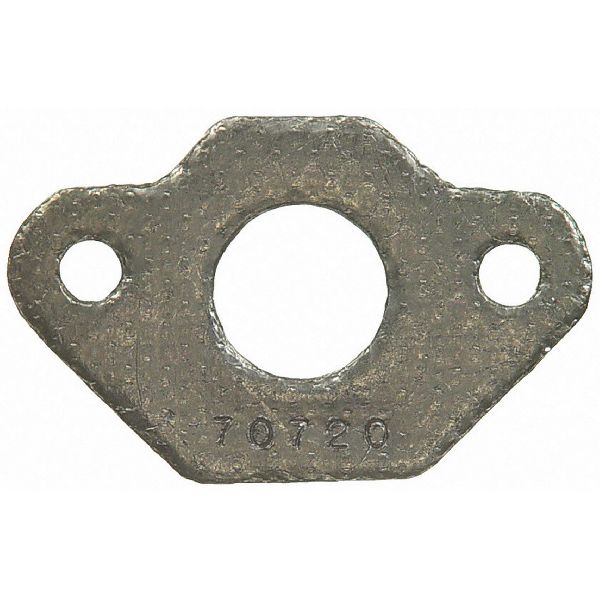
Aftermarket price range: $50-$150 - EGR Valve Gaskets — Gaskets should always be replaced when removing the EGR valve or its connecting tubes to prevent exhaust and vacuum leaks.
Trusted brands: Mopar, Fel-Pro, Mahle
OEM price range: $10-$20
Aftermarket price range: $5-$15 - EGR Cooler — A very common failure point on the 3.6L Pentastar. It clogs with carbon, restricting flow and causing a P0401 even with a clean EGR valve. Replacement is often necessary.
Trusted brands: Mopar, Dorman, Standard Motor Products
OEM price range: $250-$400
Aftermarket price range: $150-$300
Related Codes That Often Appear With This One
- P0402 (EGR Flow Excessive): Can sometimes appear alongside P0401 if the valve is sticking intermittently, causing both insufficient and excessive flow conditions at different times.
Technical Service Bulletins (TSBs) & Recalls
- While no specific TSB for the 2011-2014 Chrysler 200 and P0401 was found, TSB 18-018-13 was issued for other Chrysler vehicles and addresses PCM software updates for emissions system improvements, indicating that software can be a factor in some cases.
- TSB 09-002-14 was issued for early Pentastar engines (2011-2013) for a separate issue involving the left cylinder head, which can cause misfires but is unrelated to the P0401 code.
Platform-Specific Known Issues
- A Chrysler 'Tech Tip' for 2016 models with the 3.6L engine advises technicians to consult with an engineer before replacing parts for a P0401 code, suggesting the diagnosis can be complex even for dealers.
- Owner experiences across multiple forums confirm that cleaning only the EGR valve often leads to the code returning, with subsequent cleaning or replacement of the EGR cooler being the final, successful repair.
Mechanic-Grade Diagnostic Values
- EGR Valve Connector - 5 Volt Reference — expected: Approximately 5.0 volts with key on, engine off.. Failure: No voltage or significantly lower voltage points to a problem with the PCM or the wiring harness.
- EGR Position Sensor Signal Voltage — expected: Approximately 0.7-0.8 volts at idle. Voltage should increase as the scan tool commands the valve to open.. Failure: A voltage stuck below 0.5V suggests a short to ground or an internal sensor failure within the EGR valve assembly.
Wiring & Ground Locations
- EGR Valve Connector — On the EGR valve itself, which is located on the driver's side of the intake manifold, just behind the throttle body.. This 5-pin connector is the primary test point for power, ground, and signal to verify if the valve is receiving commands and sending back position data. A typical pinout includes a 5V supply, signal wire, and sensor ground.
- G300 — Primary body ground located under the driver's seat or in the driver's side kick panel area.. A poor ground at this location can cause a wide range of erratic electrical issues for powertrain components, potentially affecting the EGR system's sensor readings or operation.
- G301 — Body ground located under the front passenger's seat or under the center console.. Similar to G300, this is a critical ground point for various electronic modules. A fault here can lead to difficult-to-diagnose electrical problems that could mimic component failure.
Real Owner Repair Stories
- Fixty YouTube Channel (2022 Jeep Wrangler 3.6L Pentastar (same EGR system design)) — Check Engine Light with code P0401, rough idle, loss of power.
❌ Tried (didn't work) Removing and thoroughly cleaning the EGR valve and its passages.
✅ What actually fixed it The P0401 code returned after cleaning the valve. The final fix was replacing the entire EGR cooler assembly. The creator updated the video description to state: 'ENDED UP REPLACING THE COOLER, DON'T WASTE YOUR TIME ON CLEANING JUST BUY IT'.
When the Usual Fixes Don't Work
- A very common pattern reported by owners and mechanics for the P0401 code on the 3.6L Pentastar is the failure of the 'simple' fix. Many will first remove and clean the EGR valve, as it is the most accessible component and is often visibly caked in carbon. While this seems like the logical first step, the code frequently returns within a few drive cycles. The actual root cause in these cases is a blockage deep within the EGR cooler, where the passages are too small and complex to be cleaned effectively. The counter-intuitive but often correct repair is to bypass the valve cleaning and proceed directly to replacing the EGR cooler assembly, which ultimately resolves the insufficient flow condition.
OEM Part Supersession History
68150053AA→68239573AA— Part was updated by the manufacturer for improved reliability or to resolve a known issue.
Model Year Variations Within This Range
- 2011-2014: These model years use the first-generation 3.6L Pentastar engine, which includes an EGR system. This is distinct from the 'Pentastar Upgrade' (PUG) engine introduced around 2016 on other platforms (like the Grand Cherokee), which featured a revised, cooled EGR system. The diagnosis and common failure points of carbon buildup remain consistent for this earlier design.
Diagnostic Flowchart
Other Known Issues on This Vehicle
Issues unrelated to this code that are worth knowing about as an owner of this generation:
- Cracked Oil Filter/Cooler Housing 🔴 High — Extremely common, often occurs after 60,000-100,000 miles. The plastic housing cracks from heat cycles, causing significant oil and/or coolant leaks down the back of the engine. (Ref: No recall has been issued, despite being a widespread problem. Upgraded aluminum replacement parts are available in the aftermarket.)
- Rocker Arm / Lifter Failure ('Pentastar Tick') 🔴 High — Common across many model years, often presenting as a distinct ticking or tapping noise from the valve covers. If ignored, it can lead to camshaft damage and misfires. (Ref: No specific recall, but the subject of class-action lawsuits. Diagnosis requires valve cover removal to inspect for failed rocker arm bearings.)
- Left Cylinder Head Failure (2011-2013 models) 🔴 High — Affected early production 3.6L engines, causing loss of compression and persistent misfires (e.g., P0300, P0302, P0304, P0306) due to premature valve seat wear. (Ref: Chrysler issued TSB 09-002-14 and a 10-year/150,000-mile extended warranty (X56) to cover cylinder head replacement.)
- Cooling System Problems 🟠 Medium — Failures of the water pump, thermostat, and radiator are reported, leading to overheating conditions.
- Electrical System Malfunctions 🟠 Medium — Owners have reported issues with the Totally Integrated Power Module (TIPM) leading to random stalling, power loss, and other electrical gremlins. (Ref: Several recalls were issued for various electrical components, but issues can still persist.)
Used vs. New Parts: Buying Guide for This Vehicle
When a used part is the smart pick: For the EGR valve itself, a used OEM part from a low-mileage donor vehicle could be a cost-effective option, provided it is thoroughly cleaned and inspected for pintle movement before installation. However, for the EGR cooler, a used part is highly discouraged.
Donor-vehicle mileage cap: roughly under 60000 miles for the part to have meaningful remaining life.
What to inspect on the donor part:
- For an EGR valve, check that the electrical connector pins are clean and straight.
- Manually actuate the pintle (if possible) to ensure it is not seized.
- Inspect the mounting surfaces for flatness and ensure there are no cracks in the housing.
- Avoid any parts that show signs of extreme heat stress, such as discolored plastic on the connector.
Aftermarket brands forum-validated for this vehicle:
- Standard Motor Products (SMP)
- Dorman
Brands owners have reported issues with on this vehicle:
- No-name, unbranded parts sold on marketplace sites are frequently cited as having high failure rates or poor fitment.
Real Owner Stories
Aggregated from forums and TSBs cited above. Mileages and costs reflect what owners reported in those sources.
2019 Jeep Wrangler JL 3.6L Pentastar V6
Symptoms: P0401 Check Engine Light returned immediately after multiple repair attempts.
What fixed it: The owner found that cleaning the valve and even replacing the valve failed because of a deeper blockage, pointing toward the EGR cooler.
Source hint: jlwranglerforums.com thread titled 'Anyone know of a 2019 JL V6 3.6L EGR replacement valve guide or video? P0401 CEL again.'
2011-2014 Chrysler 200 3.6L Pentastar V6
Symptoms: Check Engine Light with P0401; code returned shortly after only the EGR valve was cleaned.
What fixed it: Subsequent cleaning or replacement of the EGR cooler.
Source hint: vehicle_specific_issues
Related OBD-II Codes
Frequently Asked Questions
Does TSB 18-018-13 apply to my 2011-2014 Chrysler 200 regarding the P0401 code?
I cleaned my EGR valve but the P0401 code came back on my Pentastar V6. What should I check next?
Where is the EGR valve located on the 2011-2014 Chrysler 200 3.6L?
Can I just clean the EGR passages myself to save money?
Is the 'Pentastar Tick' related to my P0401 EGR code?
How can I tell if my EGR valve has an electrical failure versus just being clogged?
Helpful Videos

We Have This Part in Stock


The information in this article is provided for general reference and educational purposes only. Vehicle specifications, procedures, and part compatibility can vary by production date, trim level, and region. Always consult your vehicle's factory service manual and verify part numbers before purchasing or performing repairs. Safety-critical components such as airbags, seat belts, and braking systems should be installed by a qualified professional.
- Chrysler 200:
- 🧭 Diagnostic Flowchart
- 🎬 Helpful Videos
- 🛍️ Shop This Part
- What's Unique About the 2011-2014 Chrysler 200
- Symptoms You May Notice
- Most Likely Causes
- Rare But Worth Checking
- Diagnosis Steps
- Parts You'll Likely Need
- Related Codes That Often Appear With This One
- Technical Service Bulletins (TSBs) & Recalls
- Platform-Specific Known Issues
- Mechanic-Grade Diagnostic Values
- Wiring & Ground Locations
- Real Owner Repair Stories
- When the Usual Fixes Don't Work
- OEM Part Supersession History
- Model Year Variations Within This Range
- Other Known Issues on This Vehicle
- Used vs. New Parts: Buying Guide for This Vehicle
- Real Owner Stories
- 2019 Jeep Wrangler JL 3.6L Pentastar V6
- 2011-2014 Chrysler 200 3.6L Pentastar V6
- Related OBD-II Codes
- Frequently Asked Questions
- 🎟️ Get 5% Off