

P0401 on 2011-2019 Ford Explorer 3.5L V6: EGR Flow Insufficient Causes and Fixes
On the 2011-2019 Explorer with the 3.5L naturally aspirated V6, the P0401 code is overwhelmingly caused by carbon-clogged EGR passages inside the lower intake manifold, not a failed EGR valve. The correct repair involves removing the upper and lower intake manifolds to manually clean the ports. This is a labor-intensive job, often costing $500-$900 at a repair shop.
- P0401 on this Explorer is most likely due to clogged EGR passages in the intake manifold, not a bad EGR valve.
- The correct fix involves a few hours of labor to remove the intake manifolds and manually clean out the carbon.
- Do not replace the EGR valve without first confirming the passages are clear; otherwise, the code will likely return.
- The necessary parts (intake gaskets) are inexpensive, but labor will be the main cost of the repair if done at a shop.
- Driving with this code can lead to engine knock and long-term engine damage, so it should be addressed promptly.
What's Unique About the 2011-2019 Ford Explorer
Unlike many older Ford vehicles that used a failure-prone DPFE sensor, the 3.5L V6 in this generation of Explorer has an electronically controlled EGR valve. The system is generally reliable, but its design has a specific, well-documented weakness: the small EGR passages cast into the lower intake manifold are highly susceptible to clogging with hard carbon deposits over time. This blockage is the number one cause of P0401 on this platform, frequently leading to the incorrect and ineffective replacement of the EGR valve itself when the true problem is the clogged passages. The passages become restricted, preventing exhaust gas from reaching the cylinders even when the EGR valve is functioning perfectly.
Symptoms You May Notice
- Check Engine Light is on
- Engine knocking or 'pinging' sound, especially under acceleration or when the engine is under load
- Reduced engine power and poor acceleration
- Rough idle or stalling in some severe cases
- Failure to pass an emissions/smog test
- Replacing the EGR valve without cleaning the intake manifold passages. This is the most common mistake made by both DIYers and some professionals. The new valve is unable to flow exhaust gas through clogged ports, and the P0401 code will inevitably return shortly after the repair.
Most Likely Causes
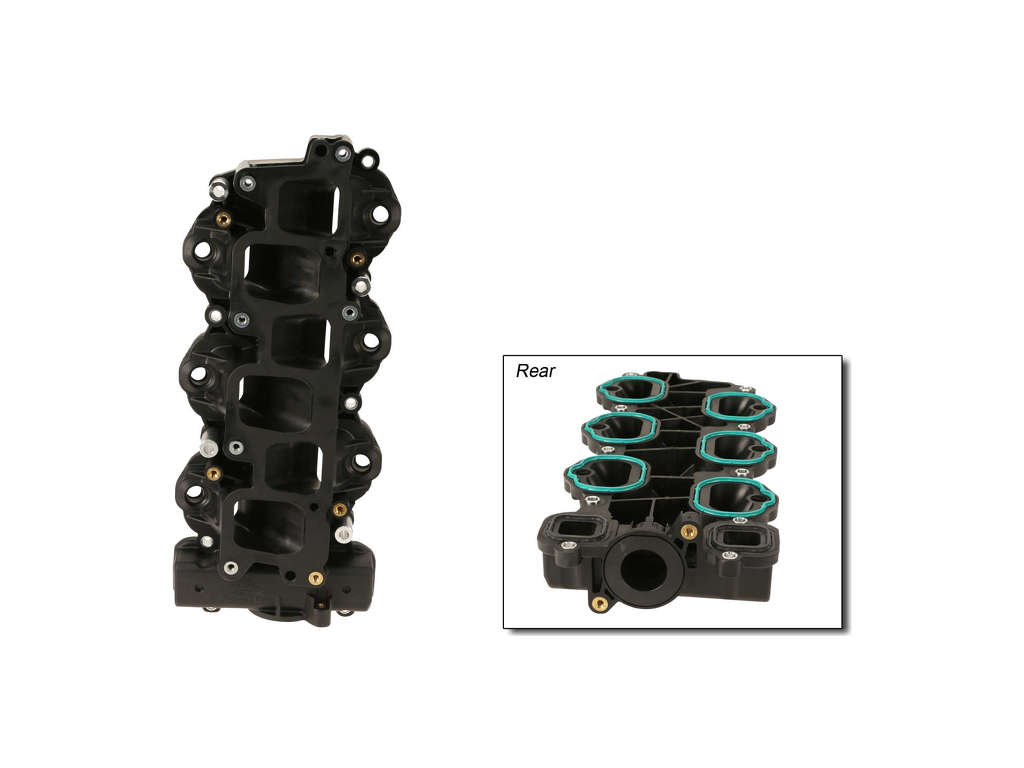
- Clogged EGR Passages in Intake Manifold 🔴 High Probability → Shop Engine Intake Manifold The design of the 3.5L V6 engine's intake manifold includes small, right-angled passages for EGR flow that are highly susceptible to becoming restricted with hard carbon deposits over time. This is a widely documented issue across all vehicles using this engine.
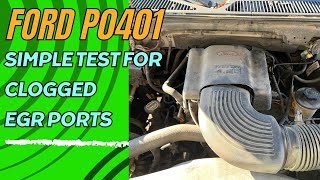
How to confirm: With the engine warm and idling, use a bi-directional scan tool to command the EGR valve to open. If the engine's idle does not become rough or stall 🎬 Watch: A simple test to confirm clogged EGR ports., the passages are clogged, preventing exhaust gas from entering the intake. A definitive visual inspection requires removing the upper intake manifold to see the ports on the lower manifold.
Typical fix: The upper and lower intake manifolds must be removed to access the clogged ports. The hard carbon buildup must be manually cleaned out using picks, brushes, and chemical cleaners 🎬 See this helpful tip for cleaning out carbon buildup. like carburetor cleaner. It is critical to replace the upper and lower intake gaskets during reassembly.
Est. part cost: $60-$100 for a quality upper and lower intake gasket set. - Sticking or Failed EGR Valve 🟡 Medium Probability → Shop Exhaust Gas Recirculation (EGR) Valve The EGR valve itself can become clogged with carbon, causing its internal pintle to stick in the closed position. Less commonly, the electronic solenoid that actuates the valve can fail. While possible, this is far less common than clogged passages on this specific engine.
How to confirm: After removing the EGR valve, visually inspect its pintle for movement. You can try cleaning it and manually actuating it. With a scan tool, you can monitor the EGR_PCT (EGR commanded percentage) and EGR_ERR (EGR error) PIDs to see if the valve is responding as commanded. If it's stuck or the error percentage is high, the valve is likely faulty.
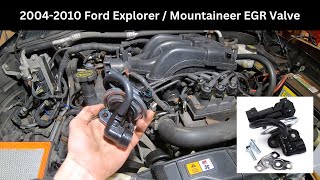
Typical fix: Replace the EGR valve and its gasket. It is strongly recommended to clean the intake passages at the same time, as a new valve cannot solve a clogging issue. Many owners replace the valve as a preventative measure while the intake manifold is off for cleaning.
Est. part cost: $150-$250 for a new OEM Motorcraft EGR valve and gasket.
Rare But Worth Checking
- Faulty Manifold Absolute Pressure (MAP) Sensor: → Shop Manifold Absolute Pressure Sensor The PCM uses the MAP sensor to verify EGR flow. If the MAP sensor is faulty and not reporting pressure changes correctly, it could falsely trigger a P0401 code. This is rare and would likely be accompanied by other performance issues or codes related to the MAP sensor itself.
- Wiring Harness Issue: A damaged wire or poor connection in the circuit for the EGR valve's electronic solenoid can prevent it from opening, leading to an insufficient flow code. This is uncommon but should be checked with a multimeter for continuity and voltage if the valve itself tests good and the passages are clean.
Diagnosis Steps
- Verify the P0401 code is present using an OBD-II scanner.
- Check for any Technical Service Bulletins (TSBs) related to P0401 for your specific VIN.
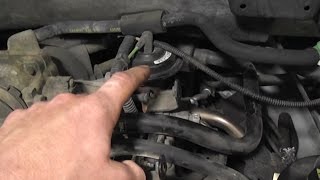
- With the engine fully warmed up and at idle, use the bi-directional control function of a capable scan tool to command the EGR valve 🎬 Watch: How to perform professional EGR flow testing. to open to 50% or more.
- Listen for a distinct change in engine performance. The idle should become significantly rough, and the engine may try to stall. If there is NO change in idle quality, the EGR passages are almost certainly clogged.
- If the engine does stumble, the passages are likely clear. The next step is to suspect a faulty EGR valve or a problem with its control circuit.
- Visually inspect the wiring and connector at the EGR valve for any signs of damage, corrosion, or looseness.
- If passages are confirmed to be clogged, the primary repair is to remove the upper and lower intake manifolds for cleaning. There are numerous video guides available showing this specific process.
- While the intake is off, it is highly recommended to remove and inspect the EGR valve itself. Clean any carbon from the valve and its port, or replace it as a preventative measure given the high labor involved in accessing it.
Parts You'll Likely Need
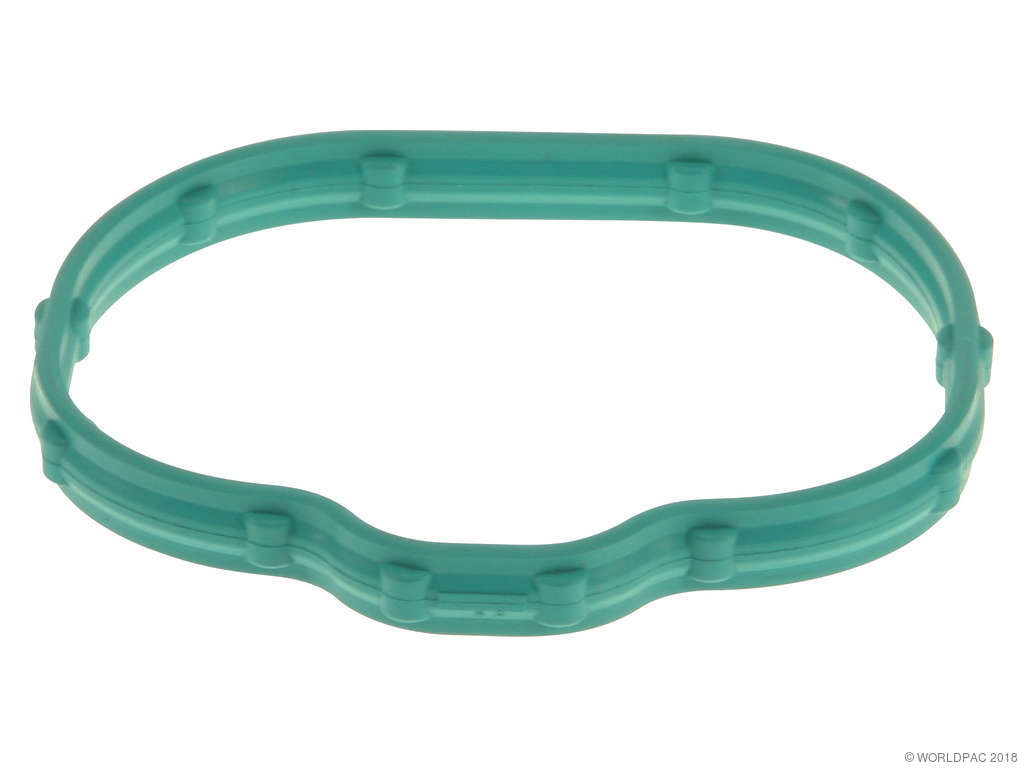
- Intake Manifold Gasket Set (Upper and Lower)
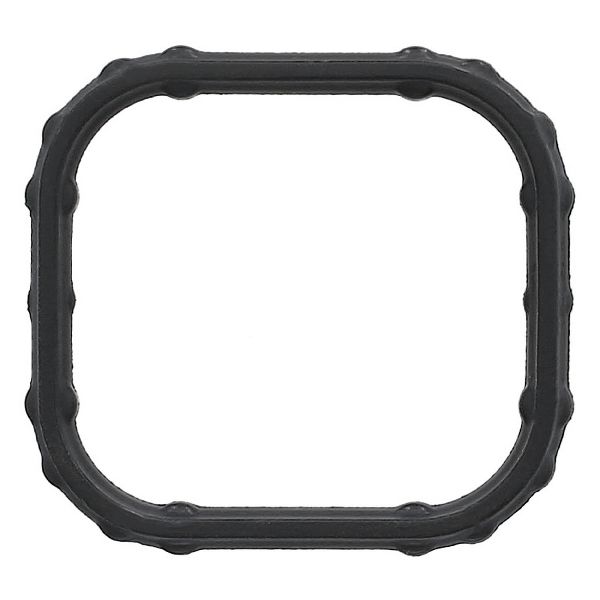
(OEM #Motorcraft CG804 (Lower); Ford AT4Z-9H486-A (Upper))— This is required for the most common repair: removing the intake manifolds to clean the clogged EGR passages. These are single-use gaskets and must be replaced to prevent vacuum leaks.
Trusted brands: Fel-Pro (MS97204), Mahle (MS19931), Motorcraft
OEM price range: $80-$120
Aftermarket price range: $50-$80 - EGR Valve
(OEM #Motorcraft CX-2567 (replaces JL3Z-9D475-A))— This is the second most common cause, but should only be replaced after confirming the passages are clean. It's often replaced preventatively during the intake cleaning job due to the difficult access.
Trusted brands: Motorcraft, Standard Motor Products (SMP), Dorman
OEM price range: $180-$250
Aftermarket price range: $100-$170 - EGR Valve Gasket
(OEM #Included with most new EGR valves.)— Must be replaced any time the EGR valve is removed or replaced to ensure a proper seal against exhaust leaks.
Trusted brands: Motorcraft, Fel-Pro
OEM price range: $10-$20
Aftermarket price range: $5-$10
Related Codes That Often Appear With This One
- P0400 — This is a general EGR Flow Malfunction code. P0401 is a more specific version ('Insufficient Flow'), and both are triggered by the same root cause of clogged passages on this engine.
- P0171 / P0174 — While less common with P0401 (insufficient flow), if the EGR system has an intermittent issue or a related vacuum leak, it can cause 'System Too Lean' codes. These are more common with a stuck-open EGR valve (P0402).
Technical Service Bulletins (TSBs) & Recalls
- While no specific TSB directly addresses the P0401 carbon clogging issue as a recall, TSB 18-2326 mentions P0401 as a possible code in a list of DTCs for F-150s, though the context is different. The issue is so common it is considered a pattern failure by the technician community rather than a specific TSB-addressed problem.
- Manufacturer service bulletin Bulletin #21M04 notes that some vehicles may experience an illuminated malfunction indicator light due to the EGR cooler becoming plugged, specifically citing DTC P0401.
- A manufacturer service bulletin for related Ford models, Bulletin #TSB 24-2263, describes P0401 occurring alongside cooling system symptoms such as internal or external leaks and white smoke from the tailpipe.
- Bulletin #SSM 48345 notes that P0401 may be stored in the PCM due to an EGR Cooler that is leaking coolant into the engine intake and exhaust system.
- Bulletin #TSB 19-2343 indicates that P0401 and P0402 may be exhibited due to various strategies within the powertrain control module (PCM) software, requiring a software update to correct the condition.
Platform-Specific Known Issues
- The 3.5L Cyclone V6 engine platform is well-documented across multiple Ford and Lincoln models for having the EGR passages in the lower intake manifold become clogged with carbon, making P0401 a very common code as these vehicles age past 80,000-100,000 miles.
- This engine family uses an internal, timing-chain-driven water pump. While not directly related to P0401, a failure of this pump can leak coolant into the engine oil, causing catastrophic engine damage. Any major engine work, including the labor-intensive P0401 intake cleaning, provides an opportunity to inspect for signs of this separate, critical issue.
Mechanic-Grade Diagnostic Values
- EGR Valve Connector Power Supply (KOEO) — expected: ~12V (Battery Voltage). Failure: 0V indicates a wiring or fuse issue. Test with key on, engine off, at the EGR valve connector harness.
- EGR Valve Control Wire Voltage (Ground-Side Switched System) — expected: ~12V at KOEO, drops towards 0V when commanded open by scan tool.. Failure: Voltage not changing when commanded indicates a wiring issue, faulty PCM driver, or faulty solenoid.
- EGR Position Feedback Signal Voltage — expected: Approximately 0.7V when closed and 3.5V when fully open.. Failure: Voltage that is stuck, erratic, or does not change smoothly as the valve is actuated indicates a faulty position sensor within the EGR valve assembly.
Scan Tool Commands That Help
- Ford IDS (Integrated Diagnostic System): Automated EGR System Test — This dealer-level function provides a comprehensive, automated test of the entire EGR system. It sequences through KOEO and KOER (Key On Engine Running) checks, actuates the valve, and monitors the response to provide a clear pass/fail result, which is more thorough than a simple manual bidirectional command.
- FORScan or other professional bi-directional scanner: EGR Valve % Command (e.g., EGR_PCT) — Used to manually command the EGR valve open while monitoring engine RPM and MAP sensor data. A lack of RPM drop or MAP change when commanding the valve open points to clogged passages. This is the primary diagnostic step for P0401 on this vehicle.
Wiring & Ground Locations
- EGR Valve Connector — On the EGR valve itself, located at the rear of the engine, typically near the firewall and below the intake air components.. This is the primary point for testing voltage, ground, and command signals sent to the EGR valve. Corrosion or damage here can prevent the valve from opening.
- Example: C213 (Main Harness Connector) — Typically located behind the driver's side left kick panel, where the driver's left foot would be.. Harness-to-harness connectors like this are common points of failure for wiring issues. While C213 is cited for an EVAP circuit, the EGR control wire will pass through similar major connectors. A technician would use a wiring diagram to identify the specific connector and pin to test for continuity between the EGR valve and the PCM.
- Main Engine Ground — Ford vehicles have several main ground points (e.g., G104, G105) bolted directly to the engine block, frame, or firewall. A full wiring diagram is needed for the exact location.. A poor engine or PCM ground can cause a host of erratic electronic issues, including incorrect sensor readings or actuator malfunctions that could potentially trigger a P0401 code.
OEM Part Supersession History
JL3Z-9D475-A→Motorcraft CX-2567— CX-2567 is the Motorcraft service part number for the original equipment Ford part JL3Z-9D475-A.
Model Year Variations Within This Range
- 2011-2019: The 3.5L naturally aspirated V6 and its EGR system design remained fundamentally unchanged throughout the 2011-2019 model years, including after the 2016 facelift. The primary cause (clogged intake passages) and repair procedure are consistent across this entire range.
Diagnostic Flowchart
Other Known Issues on This Vehicle
Issues unrelated to this code that are worth knowing about as an owner of this generation:
- Internal Water Pump Failure 🔴 High — Commonly occurs between 100,000 and 150,000 miles. Failure can cause coolant to mix with engine oil, leading to catastrophic engine damage.
- Exhaust Odor / Carbon Monoxide in Cabin 🔴 High — Widespread issue affecting 2011-2017 models, leading to numerous complaints and an NHTSA investigation. Ford issued TSBs and a complimentary service program to seal the cabin and, in some cases, reprogram the HVAC. (Ref: TSB 16-0166, TSB 17-0044)
- Power Transfer Unit (PTU) Failure 🔴 High — The PTU fluid can overheat and break down, leading to failure of the unit, often before 100,000 miles. Ford claimed the fluid was 'lifetime,' but regular changes are recommended by owners.
- Electronic Throttle Body Malfunction 🟠 Medium → Shop Fuel Injection Throttle Body — Can cause sudden power loss and the vehicle entering 'limp mode'. Often triggers codes P2111 or P2112.
- Power Steering Rack Failure 🟠 Medium — Electronic power steering racks are a common weak point, leading to loss of power steering assistance. Multiple recalls were issued for related components. (Ref: Multiple recalls on related steering components)
- A-Pillar Trim Detachment / Rattle 🟡 Low — The exterior trim pieces on the A-pillars are known to become loose, rattle, or fly off at highway speeds. A recall was issued to address this. (Ref: NHTSA Recall No. 19V435000)
Used vs. New Parts: Buying Guide for This Vehicle
When a used part is the smart pick: A used part is generally NOT recommended for this repair. The primary failure is carbon buildup in the intake manifold, so a used manifold would require the same intensive cleaning as the original, offering no labor savings. The labor to access the EGR valve is high, making a used valve with unknown history a significant risk.
Donor-vehicle mileage cap: roughly under 50000 miles for the part to have meaningful remaining life.
What to inspect on the donor part:
- For an intake manifold, inspect for cracks, warping at gasket surfaces, and stripped threads. Assume it is completely clogged and will require a full cleaning.
- For an EGR valve, check for physical damage, but there is no way to verify the electronic integrity or remaining life without testing.
OEM-only on this vehicle (don't cheap out):
- Intake Manifold Gaskets: Always use new, high-quality gaskets (OEM or top-tier aftermarket like Fel-Pro) to prevent vacuum leaks, as the labor to fix a leak is substantial.
- EGR Valve: Due to the high labor cost for access, using a new OEM (Motorcraft) or a highly reputable aftermarket (Standard Motor Products) valve is strongly advised to avoid premature failure and a repeat job.
Aftermarket brands forum-validated for this vehicle:
- Gaskets: Fel-Pro, Mahle
- EGR Valve: Standard Motor Products (SMP)
Brands owners have reported issues with on this vehicle:
- Unbranded, 'white-box' EGR valves from online marketplaces are a gamble due to the high labor cost if they fail.
Real Owner Stories
Aggregated from forums and TSBs cited above. Mileages and costs reflect what owners reported in those sources.
2011-2019 Ford Explorer 3.5L V6 — ~90000 miles
Symptoms: Check Engine Light on with P0401; engine knocking or 'pinging' sound under acceleration and load; reduced engine power.
What fixed it: Removal of the upper and lower intake manifolds to manually clean out hard carbon buildup in the ports using picks, brushes, and chemical cleaners.
Source hint: vehicle_specific_issues section regarding 3.5L Cyclone V6 engine platform pattern failure
2010 Ford Explorer
Symptoms: P0401 Engine Code
What fixed it: Diagnostic discussion regarding common causes like clogged passages and faulty DPFE sensors on related models.
Source hint: forum_citations: 2010 Ford Explorer - P0401 Engine C
Related OBD-II Codes
Frequently Asked Questions
Is there a specific TSB for the P0401 carbon clogging issue on my 2011-2019 Explorer?
Can I just replace the EGR valve to fix the P0401 code?
Why is the 3.5L V6 engine in my Explorer prone to this specific code?
If I have to remove the intake manifold to clean the ports, is there anything else I should check?
How can I confirm the passages are clogged without taking the engine apart?
Helpful Videos


We Have This Part in Stock


The information in this article is provided for general reference and educational purposes only. Vehicle specifications, procedures, and part compatibility can vary by production date, trim level, and region. Always consult your vehicle's factory service manual and verify part numbers before purchasing or performing repairs. Safety-critical components such as airbags, seat belts, and braking systems should be installed by a qualified professional.
- Ford Explorer:
- 🧭 Diagnostic Flowchart
- 🎬 Helpful Videos
- 🛍️ Shop This Part
- What's Unique About the 2011-2019 Ford Explorer
- Symptoms You May Notice
- Most Likely Causes
- Rare But Worth Checking
- Diagnosis Steps
- Parts You'll Likely Need
- Related Codes That Often Appear With This One
- Technical Service Bulletins (TSBs) & Recalls
- Platform-Specific Known Issues
- Mechanic-Grade Diagnostic Values
- Scan Tool Commands That Help
- Wiring & Ground Locations
- OEM Part Supersession History
- Model Year Variations Within This Range
- Other Known Issues on This Vehicle
- Used vs. New Parts: Buying Guide for This Vehicle
- Real Owner Stories
- 2011-2019 Ford Explorer 3.5L V6 — ~90000 miles
- 2010 Ford Explorer
- Related OBD-II Codes
- Frequently Asked Questions
- 🎟️ Get 5% Off