

P0401 on 2016-2019 Ford F-250: EGR Cooler, PCM, and Fixes for 6.7L & 6.2L
On 6.7L Power Stroke diesels, P0401 is most often a clogged EGR cooler or a needed PCM software update per TSB 19-2343. On 6.2L gas engines, the cause is usually carbon-clogged EGR passages in the intake manifold. The fix varies significantly by engine.
- The first step is to identify your engine. The fix for a 6.7L diesel is completely different from a 6.2L gas engine.
- If you have a 2017-2019 6.7L diesel, your first call should be to a dealer to check for the PCM update mentioned in TSB 19-2343.
- For 6.7L diesels, a clogged EGR cooler is the most common mechanical failure. Replacement is a better long-term solution than cleaning.
- For 6.2L gas engines, the problem is almost always clogged carbon ports in the intake manifold, which is a labor-intensive but low-cost cleaning job.
What's Unique About the 2016-2019 Ford F-250 SD
For the F-250, the cause of P0401 is almost entirely dependent on which engine you have. The 6.7L Power Stroke diesel is famous for its EGR cooler getting clogged with soot, which is the most common hard-part failure. However, many 2017-2019 6.7L trucks simply need a PCM software update as specified by Ford in TSB 19-2343. In contrast, the 6.2L gasoline V8 rarely has EGR cooler issues; its problem is typically carbon buildup inside the intake manifold, blocking the small ports that feed exhaust gas into the cylinders.
Diagnostic Flowchart
Tap your situation to follow the diagnostic path that matches what you're seeing on this vehicle.
Generation note: This range covers two Super Duty generations: 2016 is the end of the 3rd Gen (P473), and 2017-2019 begins the 4th Gen (P558). While the chassis and body are different, the primary causes for code P0401 are more closely tied to the engine type (6.7L Diesel vs. 6.2L Gas) than the truck's generation. Notably, the EGR cooler on the 6.7L was changed in 2015 to be cooled by the primary (high-temp) cooling system instead of the secondary, a design which carried into the 2016+ models.
Symptoms You May Notice
- Check Engine Light is on
- Reduced engine power, sometimes called 'derate' or 'limp mode' (most common on 6.7L diesel).
- Engine knocking or 'pinging' sounds during acceleration (more common on 6.2L gas).
- Rough or unstable idle.
- Code appears intermittently, often after a DPF regeneration cycle on the 6.7L diesel.
- Replacing the EGR valve on a 6.7L diesel when the actual problem is a clogged EGR cooler or a software issue.
- Replacing sensors on a 6.2L gas engine when the root cause is physically blocked EGR passages in the intake.
- Replacing the MAF sensor on a 6.7L diesel. This is rarely the cause, and the PCM software update (TSB 19-2343) should be performed first.
Most Likely Causes
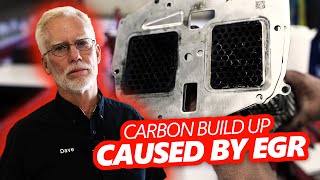
- Clogged EGR Cooler (6.7L Power Stroke Diesel) 🔴 High Probability → Shop Exhaust Gas Recirculation (EGR) Valve The design of the EGR system on the 6.7L engine causes soot and carbon from the exhaust to gradually accumulate and block the small passages inside the cooler, restricting flow. This is a very common failure point.
How to confirm: After ruling out software issues, the EGR cooler must be removed and inspected. Shine a bright light through the core; if you cannot see light through the passages, it is clogged. A completely plugged cooler will be obvious.
Typical fix: Replacement of the EGR cooler is the most reliable repair. 🎬 Watch: This walkthrough shows the right way to replace the cooler. While cleaning is sometimes attempted, the baked-on carbon is difficult to remove completely. Replacement ensures a long-term fix. The bolts connecting the crossover pipe to the exhaust manifold are notorious for breaking and should be heated with a torch before attempting removal.
Est. part cost: $300-$600 - Powertrain Control Module (PCM) Software Update Needed (6.7L Power Stroke Diesel) 🔴 High Probability → Shop Engine Control Module (ECM) Ford issued Technical Service Bulletin (TSB) 19-2343 because the PCM's diagnostic strategy was overly sensitive on some models, causing it to set P0401 (and other codes like P0402, P2074) incorrectly. This applies to 2017-2018 F-Super Duty and some 2019 models built on or before January 9, 2019.
How to confirm: A Ford dealership or a qualified shop with access to Ford's diagnostic software (IDS) can check your vehicle's current software version against the latest available updates and confirm if TSB 19-2343 applies.
Typical fix: The PCM is reprogrammed ('reflashed') with updated software, and a MAF sensor parameter reset must also be performed. Owners should be advised that this update often results in increased Diesel Exhaust Fluid (DEF) consumption.
Est. part cost: $0 (if under warranty) to $200 (dealer labor) - Clogged EGR Passages in Intake Manifold (6.2L Gas V8) 🔴 High Probability → Shop Engine Intake Manifold Over time, carbon from the recirculated exhaust gas builds up where it enters the intake manifold, eventually blocking the small ports completely. This is a common issue on many port-injected engines with EGR systems.
How to confirm: The throttle body and/or the upper intake manifold must be removed to visually inspect the EGR ports. They will be visibly choked with hard, black carbon deposits.
Typical fix: The passages must be manually cleaned out. This involves scraping the carbon buildup from the intake manifold ports. Using a suitable solvent can help dissolve the deposits. The intake manifold gaskets should be replaced during reassembly.
Est. part cost: $20-$50 for gaskets - Faulty EGR Valve (Stuck Closed) 🟡 Medium Probability → Shop Exhaust Gas Recirculation (EGR) Valve The valve itself can fail due to carbon buildup or electronic failure, preventing it from opening when commanded. On the 6.7L, the bypass valve should also be inspected for free movement and to ensure it isn't warped.
How to confirm: A scan tool can be used to command the EGR valve to open while monitoring engine data (MAF, MAP). If the valve is commanded open and there is no change in airflow, and the passages are known to be clear, the valve is likely faulty.
Typical fix: Replace the EGR valve. It is often recommended to replace the valve when replacing a clogged EGR cooler on the 6.7L, as the labor overlaps significantly.
Est. part cost: $150-$400
Rare But Worth Checking
- Cracked or Leaking EGR Vacuum Hoses (6.2L Gas V8): On gasoline engines that use a vacuum-actuated EGR valve, a cracked or disconnected vacuum line will prevent the valve from opening, causing a P0401. This is a simple and cheap fix that should be checked early.
- Faulty DPFE Sensor (6.2L Gas V8): The Differential Pressure Feedback EGR (DPFE) sensor measures pressure to verify flow. Failure of this sensor was a very common issue on older Fords and can still occur, leading the PCM to believe there is no flow even when there is.
- Restricted EGR Mixer (6.7L Power Stroke Diesel): In some cases, even with a clean EGR cooler, the lower intake manifold where the EGR gas mixes with the charge air can become restricted with soot. A technician on the Diesel Technician Society forum reported a case on a 2018 model where cleaning this mixer resolved a persistent P0401 🎬 See how a technician found a hidden blockage the dealer missed. after the cooler passed its flow test.
Diagnosis Steps
- Identify the engine in the truck (6.7L Power Stroke Diesel or 6.2L Gas V8), as the diagnostic path differs significantly.
- For 6.7L Diesel (2017-2019): Check with a dealer or qualified shop for TSB 19-2343. If the vehicle build date (on or before Jan 9, 2019) and DTCs (P0401, P0402, P2074, P0170) match, a PCM reflash is the first and most likely fix.
- For 6.2L Gas: Inspect the vacuum lines running to the EGR valve and control solenoid for any cracks, brittleness, or disconnections.
- For 6.2L Gas: Remove the throttle body to gain access to the EGR ports in the intake manifold. Check for heavy carbon buildup. If blocked, cleaning is required. 🎬 Watch: A simple test to confirm your EGR ports are clogged.
- For 6.7L Diesel: If no software update is available or the code returns, suspect a clogged EGR cooler. Removal and inspection is the next step. Pro-Tip: Before removing the crossover pipe bolts, heat the exhaust manifold around the bolt bosses with a torch to prevent them from seizing and breaking.
- Using a capable scan tool, command the EGR valve to open and close. Observe if the valve responds and if there is a corresponding change in MAF/MAP sensor readings. A lack of change points to a blockage or a failed valve.
- If all passages are clear and the valve is commanded to open but doesn't, or if the valve position sensor readings are incorrect, the EGR valve itself is the likely culprit.
Parts You'll Likely Need
- EGR Cooler
(OEM #BC3Z-9V425-A)— This is the most common part to fail on the 6.7L Power Stroke diesel, causing P0401 due to internal clogging from soot. This part number is for the core/insert and fits 2011-2019 models. Later models (2017+) may use an updated part number starting with HC3Z-9V425.
Trusted brands: Motorcraft, Dorman, MAHLE
OEM price range: $450-$600
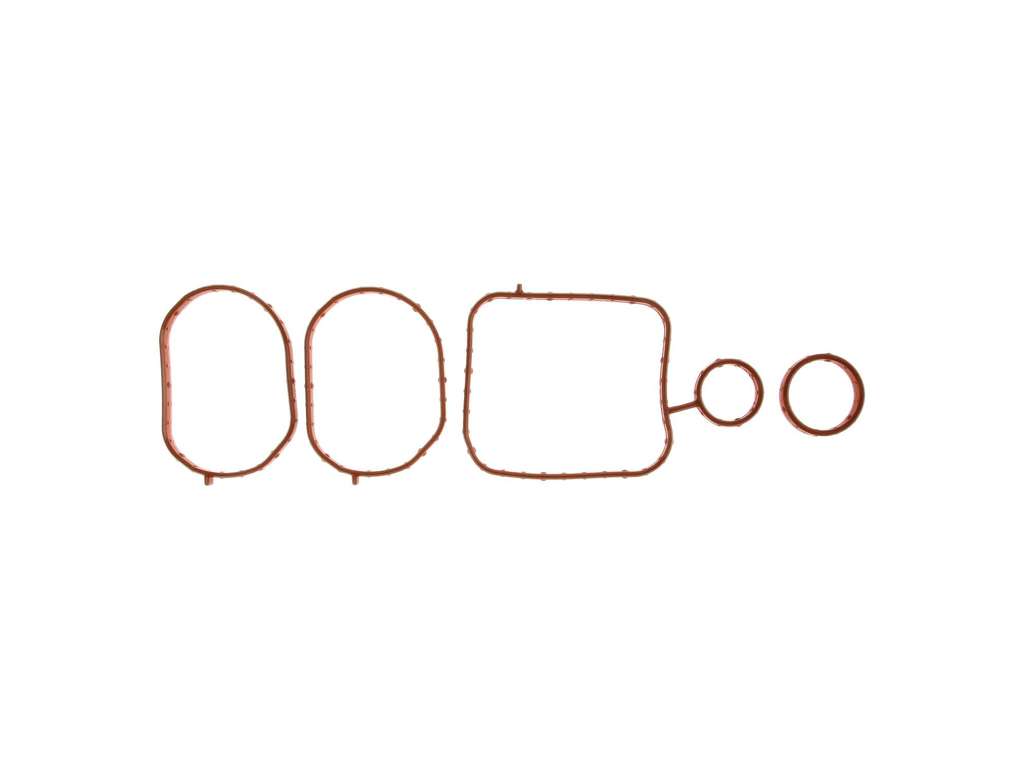
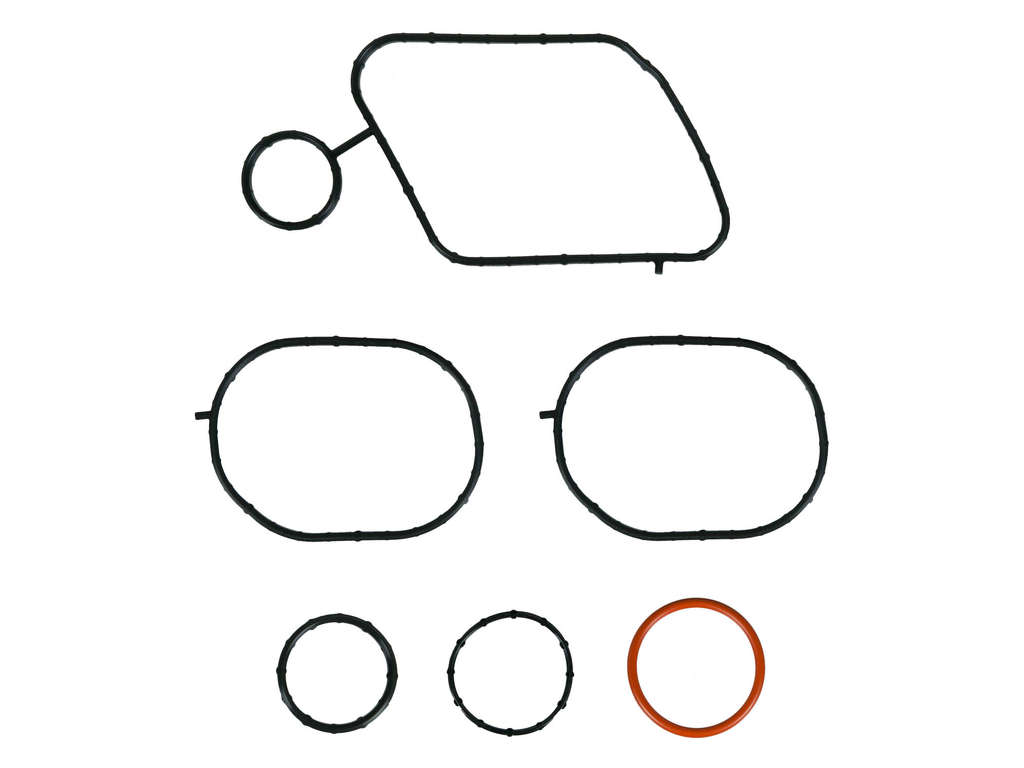
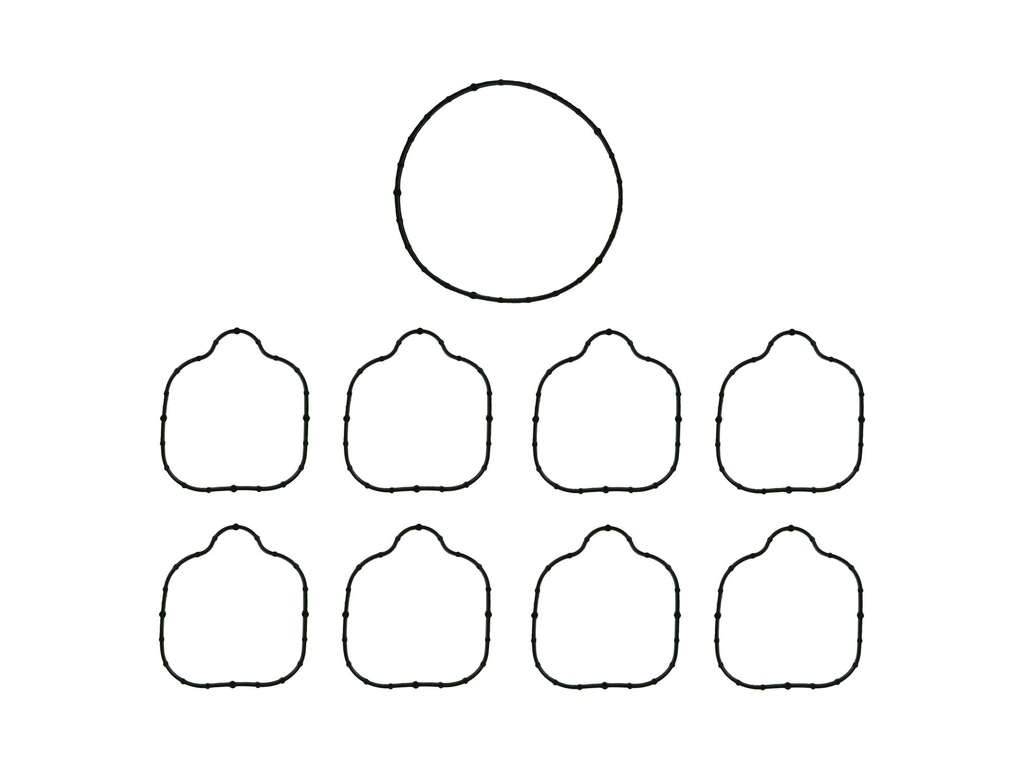
Aftermarket price range: $250-$450 - Intake Manifold Gasket Set — Required when removing the intake manifold on the 6.2L V8 to clean out clogged EGR passages.
Trusted brands: Motorcraft, Fel-Pro
OEM price range: $40-$70
Aftermarket price range: $20-$40
Related Codes That Often Appear With This One
- P0402 — P0402 (EGR Flow Excessive) can appear with P0401 if the EGR valve is sticking intermittently or if there is a PCM software issue, as noted in TSB 19-2343.
- P2074 — This code is related to Manifold Absolute Pressure (MAP) and Mass Air Flow (MAF) sensor correlation. It is also mentioned in TSB 19-2343 as potentially being caused by the same PCM software issue on 6.7L engines.
- P0170 — P0170 (Fuel Trim Malfunction) is another code listed in TSB 19-2343 that can be triggered by the same PCM software sensitivity on the 6.7L engine.
Technical Service Bulletins (TSBs) & Recalls
- TSB 19-2343: Notes that some 6.7L engines may exhibit a MIL with DTCs P2074, P0401, P0402 and/or P0170 due to PCM software, corrected by a reflash.
Platform-Specific Known Issues
- TSB 19-2343: A significant number of 2017-2019 F-250s with the 6.7L engine may trigger a P0401 due to PCM software logic, not a mechanical failure. A dealer reflash is the specified fix.
Mechanic-Grade Diagnostic Values
- MAP Sensor Voltage (Key On, Engine Off) — expected: ~1.0-2.0 Volts (Varies with altitude). Failure: Voltage does not fluctuate when revving the engine, or reads outside the expected range at idle.
- MAP Sensor Reference Voltage — expected: 5 Volts. Failure: Reference voltage is not present or is significantly lower than 5V, indicating a wiring or PCM issue.
- DPFE Sensor Voltage (6.2L Gas) — expected: Should increase as EGR valve is commanded open.. Failure: Voltage does not change when the EGR valve is opened via a scan tool, indicating a faulty sensor if flow is confirmed.
Hidden / Shadow Codes Worth Checking
- Mode $06, TID $81: On some Ford gasoline models, this test ID under Monitor ID $21 relates to the Oxygen Sensor Storage Capacity test, which can be indirectly affected by EGR flow issues. For DPFE systems, Monitor ID $32 is used for hose integrity tests. (see via A scan tool capable of displaying Mode $06 data.)
- P2457: EGR Cooler Efficiency Below Threshold. While not a hidden code, it is a critical companion code. If a KOER self-test triggers P2457 on a 6.7L, Ford's diagnostic procedure points directly to replacing the EGR cooler core. (see via Perform a Key-On-Engine-Running (KOER) self-test using a Ford-compatible scan tool like IDS or FORScan.)
Scan Tool Commands That Help
- Ford IDS / FORScan: Mass Air Flow (MAF) Parameter Reset — This is a required step after reprogramming the PCM per TSB 19-2343 for a P0401 code on 2017-2019 6.7L diesels. The path is typically Toolbox > Powertrain > Service Functions > Reset/Clear Specified Function > MAF Sensor.
- Ford IDS / FORScan: KOER (Key-On-Engine-Running) Self Test — On a 6.7L diesel with a P0401, running this test is a key diagnostic step. If the self-test generates a P2457 code (EGR Cooler Efficiency), it strongly confirms a clogged EGR cooler, bypassing other potential causes.
- Ford IDS / FORScan: EGR Valve Control — This bidirectional command allows a technician to manually open and close the EGR valve while monitoring MAF and MAP sensor data to confirm if the valve is physically responding and if the passages are clear enough to affect airflow.
Wiring & Ground Locations
- EGR Crossover Pipe Bolts — The two 8mm bolts connecting the EGR crossover pipe to the passenger side exhaust manifold on the 6.7L Power Stroke.. These bolts are extremely prone to seizing and breaking during removal for EGR cooler service. Technicians recommend extensive use of penetrating oil and slow, patient work, or using a specialized extraction kit like the ProMaxx tool if they break.
- Engine Bay Grounds — Multiple grounding straps connect the body to the frame and engine block in the Super Duty engine bay.. Poor grounds can cause phantom electrical issues and incorrect sensor readings. While not a primary cause of P0401, ensuring all grounds are clean and secure is a crucial step in diagnosing any electronic fault code.
Real Owner Repair Stories
- Ford Truck Enthusiasts Forum (2011 F-250 6.7L) — P0401 code appears consistently, but only immediately after a DPF regeneration cycle. The code can be cleared but returns after the next regen.
❌ Tried (didn't work) Clearing the code (it would return after the next regen).
✅ What actually fixed it The issue was a nearly-plugged EGR cooler. A forum member explained that during active regeneration, the EGR cooler is bypassed. After the regen finishes, exhaust is routed back through the cooler, and the PCM immediately detects the insufficient flow, triggering the code. The fix was EGR cooler replacement. - Reddit user on r/FordDiesels (2011 F-series 6.7L with 58,000 miles) — Intermittent P0401 code.
✅ What actually fixed it The dealer diagnosed and replaced the clogged EGR cooler. The total cost was approximately $1,579 ($1,125 labor, $454 parts). The owner noted a slight MPG increase after the repair.
When the Usual Fixes Don't Work
- In one documented case involving a 2018 6.7L with a persistent P0401, a technician performed the standard pinpoint tests, which included a flow test of the EGR cooler. The cooler passed the test, indicating it was not clogged. The root cause was eventually found to be a restriction in the lower intake manifold where the EGR gases mix with the charge air, a location not typically inspected as a primary cause.
OEM Part Supersession History
HC3Z-9V425-A→HC3Z-9V425-B— Standard part revision by the manufacturer, likely for improved durability or minor design changes.
Model Year Variations Within This Range
- 2017-2019: For 6.7L diesels built on or before January 9, 2019, a PCM software update (TSB 19-2343) is a primary fix for P0401. This does not apply to 2016 models or later-built 2019 models.
- 2011-2014 (Note for context): Ford issued a Customer Satisfaction Program (21M04) extending the warranty on the EGR cooler to 11 years/120,000 miles for these model years due to clogging issues that set P0401 and P2457, highlighting the long-standing nature of the problem.
Helpful Videos

We Have This Part in Stock


The information in this article is provided for general reference and educational purposes only. Vehicle specifications, procedures, and part compatibility can vary by production date, trim level, and region. Always consult your vehicle's factory service manual and verify part numbers before purchasing or performing repairs. Safety-critical components such as airbags, seat belts, and braking systems should be installed by a qualified professional.
- Ford F-250 SD:
- 🧭 Diagnostic Flowchart
- 🎬 Helpful Videos
- 🛍️ Shop This Part
- What's Unique About the 2016-2019 Ford F-250 SD
- Symptoms You May Notice
- Most Likely Causes
- Rare But Worth Checking
- Diagnosis Steps
- Parts You'll Likely Need
- Related Codes That Often Appear With This One
- Technical Service Bulletins (TSBs) & Recalls
- Platform-Specific Known Issues
- Mechanic-Grade Diagnostic Values
- Hidden / Shadow Codes Worth Checking
- Scan Tool Commands That Help
- Wiring & Ground Locations
- Real Owner Repair Stories
- When the Usual Fixes Don't Work
- OEM Part Supersession History
- Model Year Variations Within This Range
- 🎟️ Get 5% Off