

P0401 on 1995-2001 Ford Ranger: EGR Flow Insufficient Causes and Fixes
On a 1995-2001 Ford Ranger, code P0401 almost always points to a faulty DPFE sensor or clogged EGR passages. Start by checking the two small hoses going to the DPFE sensor for cracks and clogs, then test the sensor itself; a replacement sensor is often the fix and costs between $25 and $70. The updated Motorcraft part is DPFE-15.
- For a P0401 on a 1995-2001 Ranger, suspect the DPFE sensor first. It's the most common point of failure.
- Before buying any parts, inspect the two small rubber hoses going to the DPFE sensor for cracks and ensure the metal ports they connect to are clear of carbon.
- A simple voltage test on the DPFE sensor (KOEO) can quickly confirm if the sensor is bad. The reading should be around 1.0V, not close to 0V or 2.0V.
- If the sensor and its hoses are good, test the EGR valve's operation with a hand vacuum pump to check for clogged passages before replacing the valve.
- When replacing the DPFE sensor, opt for a modern plastic-cased version, as the original metal ones were less reliable.
What's Unique About the 1995-2001 Ford Ranger
Ford Rangers from this era rely on a Differential Pressure Feedback Electronic (DPFE) sensor to measure EGR flow. This system was notoriously problematic. The original metal-cased DPFE sensors were highly susceptible to failure from heat and internal moisture, leading Ford to later issue an updated plastic-bodied sensor (Part No. DPFE-15). Ford even released Technical Service Bulletin (TSB) 01-09-08 regarding erratic DPFE sensor operation. Consequently, a P0401 code on this specific truck is far more likely to be a sensor or sensor-related issue than on many other vehicles where the EGR valve itself is the primary failure point.
Generation note: This range covers the end of the second generation (1995-1997) and the start of the third generation (1998-2001) Ford Ranger. While body styles and some engine options changed (the 2.3L was replaced by a 2.5L in 1998), the fundamental design of the vacuum-operated EGR system with a DPFE sensor remained consistent across all listed engines, making the causes and fixes for P0401 very similar.
Symptoms You May Notice
- Check Engine Light is on
- Engine pinging or knocking, especially during acceleration or under load
- Rough idle or stalling
- Hesitation or stumbling during acceleration
- Reduced fuel economy
- Failure to pass an emissions test
- Replacing the EGR valve when the actual problem is a faulty DPFE sensor or clogged passages. Always diagnose the DPFE sensor and check for clogged ports before replacing the more expensive EGR valve.
Most Likely Causes
- Faulty DPFE Sensor 🔴 High Probability The original metal-cased sensors were prone to failure from moisture and heat cycling. The sensor gives incorrect voltage readings to the PCM, falsely indicating a flow problem. This was so common Ford released an updated plastic sensor.
How to confirm: With the Key On, Engine Off (KOEO), back-probe the sensor's signal wire (often Brown/Light Green). A healthy sensor should read between 0.45V and 1.1V. A reading significantly higher (e.g., 1.9V) or lower (e.g., 0.2V) indicates a failed sensor. 🎬 Watch: How to diagnose and test the DPFE sensor Also, check the reference voltage wire; it should supply a steady 5V.
Typical fix: Replace the DPFE sensor. It is highly recommended to use the updated Motorcraft plastic-cased part (DPFE-15, Ford P/N F77Z-9J460-AB) to prevent repeat failures.
Est. part cost: $25-$70 - Clogged EGR Passages or Hoses 🟡 Medium Probability Carbon from exhaust gases builds up over time, restricting or completely blocking flow. The small ports on the EGR tube where the DPFE hoses connect are especially prone to clogging. There is also a small orifice inside the EGR tube between the two hose ports that can get blocked.
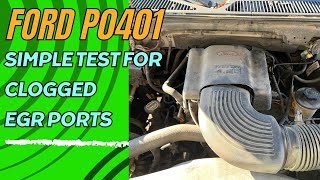
How to confirm: Remove the two small rubber hoses from the DPFE sensor and inspect them for cracks or blockages. Use a small wire or drill bit (turned by hand) to carefully 🎬 See a simple test for finding clogged EGR ports clean the metal ports on the EGR tube they connect to. If the issue persists, remove the throttle body and/or EGR valve to inspect the intake manifold ports for heavy carbon buildup.
Typical fix: Clean the DPFE hose ports on the EGR tube and clean the EGR passages in the intake manifold using carburetor cleaner and small brushes or picks. Replace the rubber DPFE hoses if they are cracked or brittle.
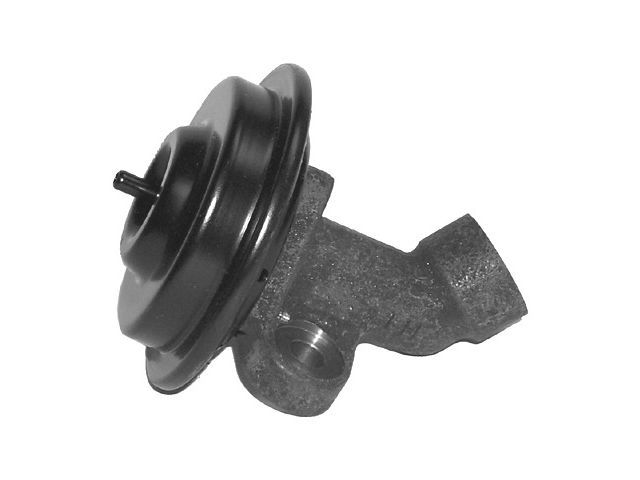
Est. part cost: $5-$20 for hoses and cleaner - Sticking or Failed EGR Valve ⚪ Low Probability → Shop Exhaust Gas Recirculation (EGR) Valve The valve can become caked with carbon and get stuck closed, or the internal vacuum diaphragm can fail, preventing it from opening when commanded.
How to confirm: With the engine idling, apply 5-10 in. Hg of vacuum directly to the EGR valve's vacuum port with a hand pump. If the passages are clear and the valve is working, the engine will stumble badly or stall. If the idle doesn't change, the valve is either stuck or the passages are completely blocked.
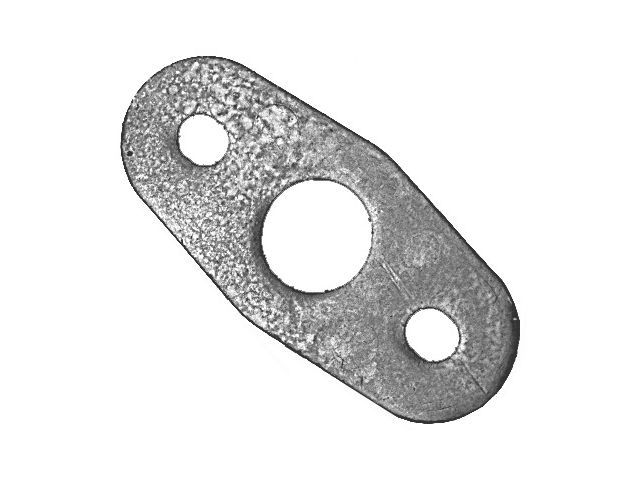
Typical fix: Replace the EGR valve and gasket. Sometimes the valve can be cleaned, but replacement is often more reliable. A common Motorcraft part number is CX-1741. 🎬 Watch: Step-by-step guide to replacing the EGR valve
Est. part cost: $40-$100 - Cracked or Disconnected Vacuum Lines ⚪ Low Probability
How to confirm: Visually inspect all vacuum lines connected to the EGR valve and the EGR Vacuum Regulator (EVR) solenoid for cracks, brittleness, or disconnection.
Typical fix: Replace the damaged vacuum lines.
Est. part cost: $5-$15
Rare But Worth Checking
- Faulty EGR Vacuum Regulator (EVR) Solenoid: This solenoid controls the vacuum supply to the EGR valve. If it fails, it won't allow the EGR valve to open. It can be tested by applying 12V to see if it 'clicks' open and closed and by checking its resistance (should be 20-70 ohms).
Diagnosis Steps
- Read the code with an OBD-II scanner to confirm P0401.
- Visually inspect the two rubber hoses running to the DPFE sensor. Check for cracks, holes, or loose connections. Ensure they are connected to the correct ports (they are often different sizes and must not be reversed).
- Disconnect the hoses and check the metal ports on the EGR tube for carbon blockage. Clean them out with a thin wire, pick, or small drill bit turned by hand.
- With the Key On, Engine Off (KOEO), use a multimeter to back-probe the DPFE sensor's signal wire. The voltage should be between 0.45V and 1.1V. If it's significantly outside this range, the sensor is likely bad. Before condemning it, check for a 5V reference signal on the VREF wire.
- If the sensor voltage is normal, start the engine and let it idle. Connect a hand vacuum pump to the EGR valve's vacuum nipple.
- Apply 5-10 in. Hg of vacuum. The engine should run rough or stall. If it does, the EGR valve is opening and the main passages are clear. If the idle does not change, the EGR valve is stuck or the passages are severely clogged.
- If the engine stalls as expected in the previous step, the issue likely lies with the vacuum supply. Inspect the EGR Vacuum Regulator (EVR) solenoid and its wiring and vacuum lines.
- If the engine idle did not change, remove the EGR valve for inspection. Check if it's stuck and inspect the intake manifold ports for heavy carbon buildup. Clean or replace parts as necessary. On 3.0L engines, this may require removing the upper intake manifold to access the clogged passages.
Parts You'll Likely Need
- DPFE Sensor
(OEM #F77Z-9J460-AB (Motorcraft DPFE-15))— This is the most common failure point for a P0401 code on this vehicle due to a problematic original design. The updated plastic part is more reliable.
Trusted brands: Motorcraft, Standard Motor Products, Delphi
OEM price range: $50-$90
Aftermarket price range: $25-$70 - EGR Valve
(OEM #CX-1741 (for 4.0L) or F6TZ-9D475-E)— Replaced if it is stuck closed due to carbon buildup or if its internal diaphragm has failed.
Trusted brands: Motorcraft, Standard Motor Products
OEM price range: $70-$120
Aftermarket price range: $40-$100 - DPFE Sensor Hoses — These small rubber hoses are exposed to intense heat and can crack, split, or become brittle over time, causing a pressure leak that prevents the sensor from reading correctly.
Trusted brands: Motorcraft, Dorman
OEM price range: $15-$30
Aftermarket price range: $10-$20
Related Codes That Often Appear With This One
- P1401 — This is a Ford-specific code for 'DPFE Sensor Circuit High Input'. It often appears alongside P0401 and strongly points to a failed DPFE sensor with an out-of-spec high voltage reading.
- P0402 — This code means 'EGR Flow Excessive Detected'. It can sometimes appear intermittently with P0401 if the DPFE sensor is failing erratically or the EGR valve is sticking open.
Technical Service Bulletins (TSBs) & Recalls
- TSB 01-09-08: Addresses concerns of intermittent rough idle, stalling, and/or diagnostic trouble codes P1401, P0401, or P0402 by recommending the installation of an improved, moisture-resistant DPFE sensor.
- TSB 99-26-11: Related to P0401 and other EGR codes, this TSB discusses diagnostic procedures and potential PCM re-calibration for certain vehicles to correct EGR monitoring logic, though part replacement is more common for the 1995-2001 Ranger.
- TSB Bulletin #TSB 19-2343: While issued for different Ford models, this bulletin notes that P0401 and P0402 may be due to various strategies within the powertrain control module (PCM) software, requiring a software update to correct the condition.
- TSB Bulletin #21M04: In some Ford vehicles, customers may experience an illuminated malfunction indicator light due to the EGR cooler becoming plugged, which triggers P0401.
- TSB Bulletin #SSM 48345: Describes scenarios where an EGR cooler leaking coolant into the engine intake and exhaust systems can lead to an illuminated MIL with DTC P0401.
- TSB Bulletin #TSB 24-2263: Notes that vehicles may experience an illuminated MIL with DTC P0401 alongside engine cooling system symptoms such as internal or external leaks and white smoke from the tailpipe.
Platform-Specific Known Issues
- 3.0L Vulcan Intake Manifold Clogging: → Shop Engine Intake Manifold On the 3.0L V6 engine, the EGR passages are cast into the lower intake manifold. These passages are prone to becoming completely blocked with hard carbon deposits. Unlike other engines where cleaning is simpler, fixing this on the 3.0L often requires removing the upper intake manifold to gain access to scrape the passages clean, which is a more involved job.
Mechanic-Grade Diagnostic Values
- DPFE Sensor Signal Voltage (KOEO) — expected: 0.45V to 1.1V DC. Failure: Voltage is significantly higher (e.g., >1.5V) or lower (e.g., <0.4V). A high reading often triggers P1401.
- DPFE Sensor Reference Voltage (KOEO) — expected: ~5.0V DC. Failure: Voltage is absent or significantly lower than 5.0V, indicating a PCM or wiring issue.
- DPFE Sensor Ground Circuit — expected: < 100mV DC when measured to battery negative. Failure: High resistance or an open circuit (high voltage reading) indicates a bad ground provided by the PCM.
- EGR Vacuum Regulator (EVR) Solenoid Resistance — expected: 20 to 70 Ohms. Failure: Resistance is outside of this range, indicating a failed solenoid coil.
- EVR Solenoid Control Wire Voltage (KOEO) — expected: ~12V (Battery Voltage). Failure: Both wires on the EVR connector should show battery voltage. The PCM supplies a pulsed ground to activate the solenoid. If one wire lacks 12V, check fuses. If the control wire never drops voltage when commanded, suspect a wiring or PCM issue.
Hidden / Shadow Codes Worth Checking
- Mode $06, Test ID $31 (example): While not a 'shadow code,' Mode $06 data provides raw test results from the PCM's last EGR system monitor test. Technicians can view the measured pressure change value and compare it against the minimum/maximum thresholds set by the manufacturer to see exactly how close to the failure point the system is operating, even before a code is set. (see via A professional scan tool capable of displaying Mode $06 data. The specific Test ID (TID) and Component ID (CID) for the EGR monitor can vary by year and engine.)
Scan Tool Commands That Help
- Ford IDS, Snap-on Solus, or similar professional scanner: EGR Vacuum Regulator (EVR) Solenoid On/Off Test or Output State Control — This is a powerful bidirectional test used at idle. A technician can command the EVR solenoid 'on,' which should apply vacuum to the EGR valve. If the passages are clear and the valve is working, the engine will stumble or stall, and the DPFE voltage PID should rise sharply. This single test can verify the PCM driver, EVR solenoid, vacuum lines, EGR valve, and passage cleanliness.
Wiring & Ground Locations
- G101 — On the RH (passenger side) inner fender, near the battery.. This is a primary body and component ground. A corroded or loose G101 can cause erratic voltage readings and unpredictable behavior from various sensors and solenoids in the engine bay, including the EGR system components.
- DPFE Sensor Ground — A dedicated wire (often Black/White) running from the DPFE sensor connector directly back to the Powertrain Control Module (PCM).. The DPFE sensor's signal voltage is measured relative to this ground. If this specific wire has high resistance or is open, the signal voltage will be skewed, leading to a false P0401 or P1401 code even with a good sensor.
- EVR Solenoid Control — A wire (color varies by year, e.g., Dark Green) running from the EVR solenoid connector to the PCM (e.g., Pin 33).. The PCM provides a pulsed ground on this wire to activate the solenoid. A break in this wire prevents the EGR valve from ever being commanded open, directly causing a P0401.
Real Owner Repair Stories
- Reddit user on r/fordranger (2000 Ford Ranger 3.0L) — P0401 code returned immediately after a fuel injector replacement job.
❌ Tried (didn't work) The user had previously replaced the EGR valve and DPFE sensor to fix an earlier P0401 code.
✅ What actually fixed it The code appeared after the upper air intake manifold was removed and reinstalled. The cause was confirmed to be related to the reinstallation, likely a vacuum leak from a pierced intake gasket or EGR passages that were disturbed or not properly cleaned during the service. - Ford Truck Enthusiasts forum user (1995 Ford Ranger 3.0L 4x4) — Persistent P0401 code.
❌ Tried (didn't work) Replaced EGR valve with OEM part., Replaced DPFE sensor and hoses., Replaced EGR vacuum solenoid.
✅ What actually fixed it The user removed the metal EGR tube that runs from the exhaust manifold, cleaned it thoroughly, and reinstalled it, ensuring the fittings were tight. The problem was a combination of a slight leak at the fitting and potential internal carbon buildup in the tube itself, not just the ports.
"I Checked Everything" — The Actual Cause
- In one documented case, a Ranger owner was chasing an intermittent P0401 accompanied by stalling and no-start conditions. Standard EGR diagnostics, which would include checking for vacuum leaks, revealed no faults. The actual root cause was a failing fuel pump. The drivability symptoms caused by low fuel pressure were being misinterpreted as an EGR system fault, demonstrating that not all P0401s are directly caused by the EGR system itself.
When the Usual Fixes Don't Work
- While the vast majority of P0401 codes on this platform are due to the DPFE sensor or clogged passages, it should not be the only consideration. In a documented case on a Ranger forum, a user experienced a P0401 with stalling. After extensive EGR system diagnosis, the final solution was replacing the fuel pump. This highlights that severe drivability issues from other systems (like fuel delivery) can sometimes manifest in ways that the PCM interprets as an EGR flow problem, leading to a misdiagnosis if the technician has tunnel vision.
OEM Part Supersession History
F4ZZ-9J460-B, F7UZ-9J460-AA, 1L3Z-9J460-AA→F77Z-9J460-AB (Motorcraft DPFE-15)— The original metal-cased sensors were highly prone to failure from internal corrosion and heat stress. The updated F77Z part uses a more durable plastic housing that is more resistant to moisture and heat cycling.
Model Year Variations Within This Range
- 1995-1997: On Rangers equipped with the 2.3L Lima engine, the EGR valve is located on the back of the engine, making access significantly more difficult than on the V6 models or the later 2.5L.
- 1998-2001: The 2.3L engine was replaced by a stroked 2.5L version in 1998. While the engine displacement changed, the DPFE-based EGR system architecture and diagnostic principles for P0401 remained the same as the earlier models.
Diagnostic Flowchart
Real Owner Stories
Aggregated from forums and TSBs cited above. Mileages and costs reflect what owners reported in those sources.
1999 Ford Ranger 2.5L
Symptoms: Check engine light on with code P0401. Driven for months with the light on.
What fixed it: Checking for plugged pressure hoses going to the DPFE sensor and ensuring the tube to the exhaust manifold was clear, along with cleaning the EGR valve.
Source hint: Ranger-Forums thread 'Desperate for advice on P0401 EGR code'
Related OBD-II Codes
Frequently Asked Questions
Is there a specific TSB for the P0401 code on my 1995-2001 Ford Ranger?
Which DPFE sensor should I buy to fix the P0401 code on my Ranger?
Why is the P0401 code harder to fix on the 3.0L Vulcan V6 engine?
How can I test the DPFE sensor on my Ranger with a multimeter?
I replaced the EGR valve on my Ranger but P0401 came back. What else could it be?
Does the Mazda B-Series have the same P0401 issues as the Ford Ranger?
Helpful Videos
We Have This Part in Stock

The information in this article is provided for general reference and educational purposes only. Vehicle specifications, procedures, and part compatibility can vary by production date, trim level, and region. Always consult your vehicle's factory service manual and verify part numbers before purchasing or performing repairs. Safety-critical components such as airbags, seat belts, and braking systems should be installed by a qualified professional.
- Ford Ranger:
- 🧭 Diagnostic Flowchart
- 🎬 Helpful Videos
- 🛍️ Shop This Part
- What's Unique About the 1995-2001 Ford Ranger
- Symptoms You May Notice
- Most Likely Causes
- Rare But Worth Checking
- Diagnosis Steps
- Parts You'll Likely Need
- Related Codes That Often Appear With This One
- Technical Service Bulletins (TSBs) & Recalls
- Platform-Specific Known Issues
- Mechanic-Grade Diagnostic Values
- Hidden / Shadow Codes Worth Checking
- Scan Tool Commands That Help
- Wiring & Ground Locations
- Real Owner Repair Stories
- "I Checked Everything" — The Actual Cause
- When the Usual Fixes Don't Work
- OEM Part Supersession History
- Model Year Variations Within This Range
- Real Owner Stories
- 1999 Ford Ranger 2.5L
- Related OBD-II Codes
- Frequently Asked Questions
- 🎟️ Get 5% Off