

P0401 on 1996-1999 Ford Taurus 3.0L V6: EGR Insufficient Flow Causes and Fixes
On a 1996-1999 Taurus with the 3.0L V6, P0401 is almost always caused by clogged EGR passages behind the throttle body or a faulty DPFE sensor. Start by cleaning the passages, a nearly free fix requiring only a new gasket. If that fails, a new Motorcraft DPFE sensor (part #DPFE-15) and hoses will likely solve the problem for around $40-$75.
- Always check for clogged EGR passages behind the throttle body first; this is the most likely cause and the cheapest fix.
- If passages are clear, the DPFE sensor is the next most likely culprit. Test its voltage before replacing.
- When replacing the DPFE sensor, always replace the two small rubber hoses connected to it.
- Do not replace the EGR valve unless it has been specifically tested and confirmed to be faulty (fails to hold vacuum or is mechanically stuck).
What's Unique About the 1996-1999 Ford Taurus
The 3.0L V6 'Vulcan' engine in this generation of Taurus is notorious for two specific failure points that cause a P0401 code. First, the EGR passages located in the intake manifold, just behind the throttle body, are highly prone to clogging with carbon and oil deposits from the PCV system. Second, the DPFE sensor and its connecting hoses are exposed to intense heat and moisture from the exhaust, making them a very common failure item. This is a well-documented issue across many Ford platforms from this era that use the same DPFE system.
Symptoms You May Notice
- Check Engine Light illuminated
- Engine pinging or knocking sounds, especially during acceleration or under load
- Rough or erratic idle
- Hesitation or lack of power
- Stalling
- Failing an emissions test
- Replacing the EGR valve when the actual problem is clogged passages. This is the most common mistake, as a new valve cannot fix a downstream blockage.
- Replacing the DPFE sensor without first checking for clogged passages or testing the sensor's voltage.
- Replacing the O2 sensors. A non-functioning EGR system can cause high combustion temperatures, which may affect O2 sensor readings, but the O2 sensor is rarely the root cause of P0401.
Most Likely Causes
- Clogged EGR Passages in Intake Manifold 🔴 High Probability → Shop Engine Intake Manifold The design of the intake allows oil vapor and carbon to accumulate and completely block the two small ports where EGR gas enters the air stream. You must remove the throttle body gasket to see and access these clogged channels.
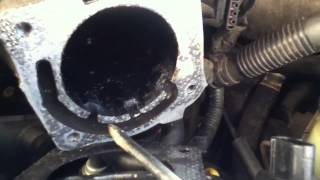
How to confirm: With the engine idling, use a hand pump to apply vacuum to the EGR valve. If the engine does not stumble, run rough, or stall, the passages are almost certainly clogged. Visually, you can remove the throttle body and then the gasket behind it to see the clogged ports.
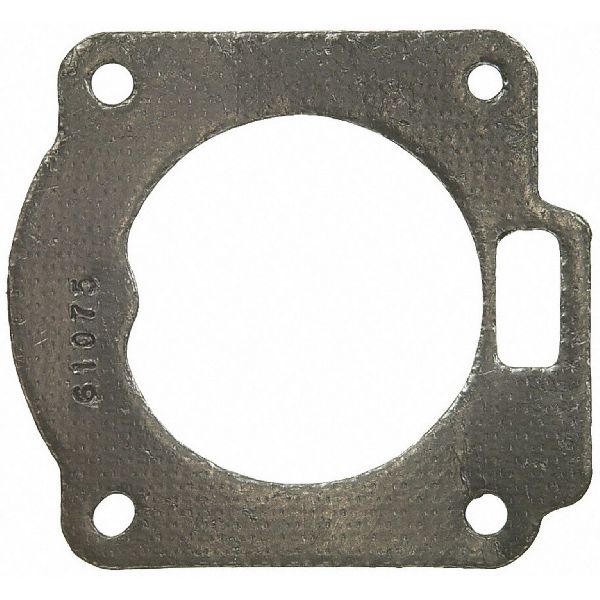
Typical fix: Remove the throttle body, remove the gasket, and manually scrape the hard carbon buildup out of the EGR channels in the intake manifold using a small screwdriver, pick, or drill bit 🎬 Watch: How to clean these clogged EGR ports step-by-step. (turned by hand). Vacuum out the debris. Replace the throttle body gasket.
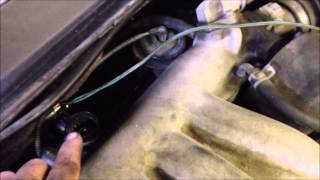
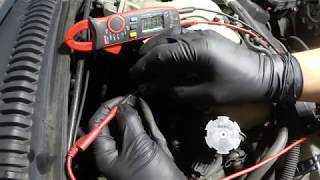
Est. part cost: $5-$15 (for a new throttle body gasket) - Faulty Differential Pressure Feedback (DPFE) Sensor 🔴 High Probability The original metal-cased sensors are highly susceptible to internal electronic failure from heat and corrosion from moisture in the exhaust. Ford has updated this part multiple times. The replacement is often a plastic-cased sensor. 🎬 See this video for a full DPFE sensor diagnostic and fix.
How to confirm: With the key on (engine off), backprobe the sensor's signal wire (Brown/Light Green). It should read between 0.5V and 1.2V. If it's near zero or 5V, it's faulty. A definitive test is to unplug the sensor; the signal on a scan tool should jump to 5V. If it does, the wiring is good and the sensor is bad.
Typical fix: Replace the DPFE sensor. It is highly recommended to replace the two connecting hoses at the same time. The updated Motorcraft part is DPFE-15.
Est. part cost: $30-$75 - Cracked, Burnt, or Clogged DPFE Hoses 🟡 Medium Probability The special high-temperature silicone rubber hoses are subjected to intense heat from the EGR tube and become brittle, leading to cracks, holes, mushiness, or internal collapse which blocks the pressure reading.
How to confirm: Visually inspect the two small hoses that connect the EGR tube to the DPFE sensor. Check for cracks, holes, mushiness, or blockages. The plastic nipples on the old sensor often break off inside the hoses.
Typical fix: Replace both hoses. This should always be done when replacing the DPFE sensor. Ensure you use high-temperature silicone hose, not standard vacuum line.
Est. part cost: $10-$20 - Stuck or Failed EGR Valve ⚪ Low Probability → Shop Exhaust Gas Recirculation (EGR) Valve The valve can get stuck closed due to carbon buildup or the internal diaphragm can rupture, preventing it from opening. However, this is far less common than clogged passages or a bad DPFE sensor.
How to confirm: Apply vacuum to the valve with a hand pump. It should hold the vacuum without leaking down. If it leaks, the diaphragm is bad. If it holds vacuum but the passages are clear and the engine doesn't stumble, the valve itself may be mechanically stuck.
Typical fix: Replace the EGR valve.
Est. part cost: $50-$100
Rare But Worth Checking
- Faulty EGR Vacuum Regulator (EVR) Solenoid: This solenoid controls the vacuum that opens the EGR valve. While less common, it can fail, preventing the EGR valve from ever opening. It can be tested using a scan tool to command it on and off while checking for vacuum output.
- Clogged Orifice in EGR Tube: The metal tube that the DPFE hoses connect to contains a small orifice between the two hose ports. While rare, this orifice can become clogged with carbon, preventing the DPFE sensor from seeing a pressure differential. Cleaning the tube with a wire and solvent can fix this.
Diagnosis Steps
- Verify the Check Engine Light is on and code P0401 is present using an OBD-II scanner.
- Visually inspect the two high-temp silicone hoses going to the DPFE sensor for any cracks, melting, or blockages. Replace if they are not in perfect condition.
- With the engine warm and idling, use a hand vacuum pump to apply 5-10 inHg of vacuum to the EGR valve's vacuum port.
- If the engine stumbles or stalls, the EGR valve and passages are clear. The problem is very likely the DPFE sensor or its wiring. Proceed to testing the DPFE sensor.
- If the engine's idle does not change, the EGR passages are clogged. Remove the throttle body and the gasket behind it. Clean the carbon from the ports thoroughly.
- To test the DPFE sensor: With the key on, engine off, backprobe the signal wire (Brown/Light Green). Voltage should be ~1.0V. If it's near 0V or 5V, the sensor is bad. If the voltage is good, start the engine and apply vacuum to the EGR valve again while monitoring the DPFE signal. The voltage should rise smoothly towards 4.5V. If it doesn't, the sensor is bad.
- If all other components are good, test the EGR valve itself by checking if it holds vacuum. If it doesn't, replace it.
Parts You'll Likely Need
- Differential Pressure Feedback (DPFE) Sensor
(OEM #DPFE-15 (supercedes F77Z-9J460-AB))— This sensor is a very common failure point due to heat and internal corrosion, sending false 'no flow' signals to the computer.
Trusted brands: Motorcraft, Standard Motor Products
OEM price range: $60-$80
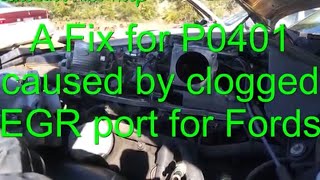
Aftermarket price range: $30-$50 - Throttle Body Gasket — This is required for the most common fix: cleaning the clogged EGR passages behind the throttle body. The old gasket is not reusable. 🎬 Watch: A complete walkthrough of the P0401 fix on a Taurus.
Trusted brands: Motorcraft, Fel-Pro
OEM price range: $10-$20
Aftermarket price range: $5-$10 - DPFE Sensor Hoses — These hoses become brittle and crack from engine heat, causing vacuum leaks that mimic a bad sensor. They should be replaced with the sensor. Must be high-temperature silicone hose.
Trusted brands: Motorcraft, Dorman
OEM price range: $15-$25
Aftermarket price range: $10-$20
Technical Service Bulletins (TSBs) & Recalls
- While no specific TSB for P0401 on this exact model was found, Ford issued TSBs for similar vehicles (like 03-6-1 and 03-2-2 for Rangers) with the same DPFE system, indicating a known issue with the sensor and passages. One forum user mentioned a TSB telling techs to replace the DPFE sensor without further diagnosis if P0401 is present, highlighting how common the failure is.
- Manufacturer service bulletin #TSB 19-2343 notes that for some Ford vehicles, an illuminated MIL with P0401 may be due to various strategies within the powertrain control module (PCM) software.
- Bulletin #21M04 describes a condition where customers may experience an illuminated malfunction indicator light due to the EGR cooler becoming plugged, which triggers DTC P0401.
- Manufacturer bulletin #SSM 48345 indicates that P0401 can be stored in the PCM due to an EGR Cooler that is leaking coolant into the engine intake and exhaust system, which may also cause white smoke from the tailpipe.
- Bulletin #TSB 24-2263 notes that P0401 may be accompanied by various engine cooling system symptoms, including internal or external leaks and over-temperature conditions.
Platform-Specific Known Issues
- The EGR passages behind the throttle body are exceptionally prone to clogging on this engine. It is critical to remove the throttle body gasket to see and clean the two small channels, not just the single large opening visible with the gasket in place.
- The plastic nipples of the original DPFE sensor often become brittle and break off inside the rubber hoses during removal, requiring careful extraction with a pick or small screwdriver.
- Many owners mistakenly replace the EGR valve first, which rarely fixes the P0401 code on this platform. The problem is almost always the clogged passages or the DPFE sensor.
Mechanic-Grade Diagnostic Values
- DPFE Sensor Signal Voltage (KOEO - Key On, Engine Off) — expected: 0.5V to 1.2V (for newer plastic sensor, ~1.0V; for older metal sensor, ~0.45V). Failure: Voltage near 0V, or above 1.2V (especially near 5V) indicates a faulty sensor or wiring issue.
- DPFE Sensor Signal Voltage (EGR valve manually opened at idle) — expected: Voltage should rise smoothly to ~4.5V. Failure: Voltage does not rise, or rises erratically, while the engine stumbles (confirming flow). This points to a bad sensor.
- DPFE Sensor Reference Voltage (VREF) — expected: ~5.0V. Failure: Voltage is significantly lower than 5.0V, indicating a problem with the PCM or the wiring from the PCM.
- EGR Vacuum Regulator (EVR) Solenoid Resistance — expected: 20 to 70 Ohms. Failure: Resistance is outside this range (open or shorted), indicating a failed solenoid coil.
- EVR Solenoid Power Supply (KOEO) — expected: ~12V (Battery Voltage) on both wires at the connector (unplugged, one wire should have 12V, the other is the ground controlled by the PCM). Failure: No voltage on the feed wire points to a fuse or wiring issue. The PCM supplies a pulsed ground to activate the solenoid.
Scan Tool Commands That Help
- Ford IDS / High-End Scan Tool: EVR Solenoid Duty Cycle / On-Off Command — This bidirectional control allows a technician to command the EVR solenoid to open at idle. If the engine runs rough or stalls, it confirms the EGR valve, passages, and vacuum supply are all working, pointing towards a sensor or control issue.
Wiring & Ground Locations
- PCM Connector (1997-1998 3.0L OHV) — The Powertrain Control Module (PCM) is located in the right rear corner of the engine compartment, mounted on the cowl.. Allows for testing the DPFE sensor circuit directly at the computer. The DPFE Signal wire is on Pin 56 (Brown/Light Green), VREF is Pin 90 (Brown/White), and Sensor Ground is Pin 91 (Gray/Red).
- EVR Solenoid Connector — On the rear of the intake manifold.. This is the connection point for testing the EVR solenoid's resistance and for manually commanding the EGR system to check for flow. One wire is for 12V power, the other is the ground signal from the PCM (Pin 33).
Real Owner Repair Stories
- Ford Truck Enthusiasts Forums (1998 Ranger (with same 3.0L Vulcan engine and EGR system)) — Persistent P0401 code.
❌ Tried (didn't work) Cleaned throttle body and EGR passages., Replaced EVR solenoid., Installed a new aftermarket DPFE sensor., Swapped in a known-good used DPFE sensor from a running vehicle.
✅ What actually fixed it The user noted that it is very common for cheap aftermarket DPFE sensors to be faulty out of the box or fail quickly. The problem is often only resolved by using a genuine Motorcraft DPFE sensor.
OEM Part Supersession History
F77Z-9J460-AB (and others)→DPFE-15— The original metal-cased (aluminum) sensors were highly prone to failure from internal corrosion and heat. The superseding part, DPFE-15, is typically a plastic-cased sensor designed for better durability.
Heads up: The baseline KOEO voltage differs between the old metal sensor (~0.45V) and the newer plastic sensor (~1.0V). While the PCM can adapt, using the correct, updated OEM part (DPFE-15) is highly recommended for reliable operation.
Model Year Variations Within This Range
- 1996: The 1996 model uses a 60-pin EEC-IV style PCM connector, while 1997-1999 models use a 104-pin EEC-V connector. This changes the pinout locations for diagnostic testing at the computer.
Diagnostic Flowchart
Other Known Issues on This Vehicle
Issues unrelated to this code that are worth knowing about as an owner of this generation:
- AX4N / 4F50N Automatic Transmission Failure 🔴 High — Very common, especially over 100,000 miles. Often presents as a sudden loss of all forward and reverse gears while driving, caused by stripped torque converter splines or internal pump failure. (Ref: Multiple TSBs and a recall on the torque converter for some models exist.)
- Camshaft Synchronizer Failure 🟠 Medium — Common after 60,000-80,000 miles. The synchronizer, which replaced the distributor, drives the oil pump. Failure begins with a 'chirping' or 'squealing' sound from the engine, often mistaken for a bad belt. If ignored, it can fail completely, causing the oil pump to stop and leading to catastrophic engine damage.
- Front Coil Spring Fracture 🔴 High — Common in states that use road salt ('Salt Belt'). Corrosion causes the front coil springs to break, which can puncture the tire and cause a loss of control. (Ref: Safety Recall 04S17 was issued for 1999-2001 models to install protective shields. An extended warranty (10 years/150,000 miles) was also offered.)
- Head Gasket Failure / Coolant Leaks 🟠 Medium — More common on early Vulcan engines, but can still occur. Leaks can happen at the head gaskets, lower intake manifold gaskets, or water pump. Overheating due to a failing water pump with a corroded impeller is also noted.
Used vs. New Parts: Buying Guide for This Vehicle
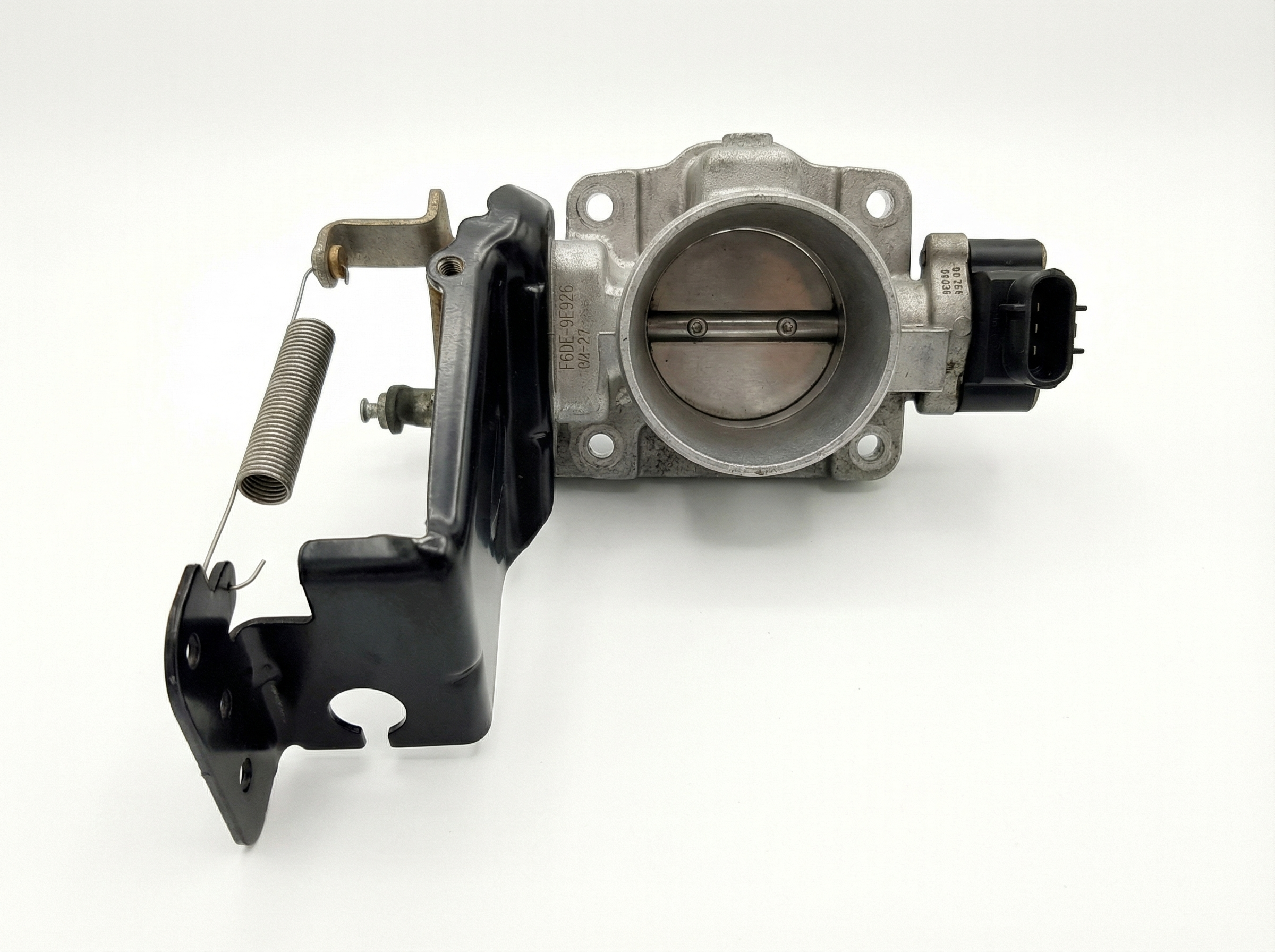
When a used part is the smart pick: Structural components like the EGR tube or the throttle body assembly are generally safe to source from a junkyard, provided they are thoroughly cleaned of carbon buildup before installation. A used EGR valve can also be a viable option if it is tested with a hand vacuum pump to ensure the diaphragm holds vacuum and the valve is not mechanically seized.
Donor-vehicle mileage cap: roughly under 80000 miles for the part to have meaningful remaining life.
What to inspect on the donor part:
- For EGR tubes, check for heavy rust or physical damage; avoid parts with visible cracks.
- When pulling a throttle body, inspect the EGR passage area to see how much carbon is present, as this can indicate the general condition of the donor engine's EGR system.
- Avoid parts from vehicles that show signs of overheating or engine fires.
OEM-only on this vehicle (don't cheap out):
- Differential Pressure Feedback (DPFE) Sensor
Aftermarket brands forum-validated for this vehicle:
- Motorcraft (for all electronic components)
- Fel-Pro (for gaskets)
Brands owners have reported issues with on this vehicle:
- Unnamed or 'white-box' electronic sensors (DPFE). Forum discussions frequently report that cheap aftermarket DPFE sensors are often dead-on-arrival or fail within a short period, making a genuine Motorcraft part the most cost-effective choice in the long run.
Real Owner Stories
Aggregated from forums and TSBs cited above. Mileages and costs reflect what owners reported in those sources.
1996 Ford Taurus LX wagon DOHC 3.0 V6
Symptoms: P0401 EGR low flow fault code. The owner had already replaced every other EGR component but the light remained.
What fixed it: Removing the throttle body and the gasket behind it to reveal and clean hidden clogged passages that were completely blocked with hard carbon.
Source hint: YouTube/Justin “JnJShiffler” video titled '1996 Ford Taurus LX wagon DOHC 3.0 V6 P0401 EGR low flow OBD2 OBDII fault code fix'
1998 Ford Ranger 3.0L Vulcan
Symptoms: Error code P0401; owner performed diagnostic steps on the EGR valve and then moved to the DPFE sensor.
What fixed it: Replacing the DPFE sensor, confirming a cross-platform issue with the 3.0L Vulcan engine's EGR system.
Source hint: Ford Truck Enthusiasts Forums thread titled '98 Ranger 3.0L Error Code P0401'
Related OBD-II Codes
Frequently Asked Questions
I replaced my EGR valve but the P0401 code is still there. What did I miss on my 3.0L Taurus?
What is the specific replacement part number for the updated DPFE sensor?
How can I tell if my EGR passages are clogged without taking the engine apart?
Are there any TSBs for the P0401 code on the Ford 3.0L engine?
Can I use standard vacuum lines to replace my DPFE sensor hoses?
What voltage should I see when testing the DPFE sensor on my Taurus?
Helpful Videos
Used OEM Parts in Stock
New Aftermarket Parts Available



The information in this article is provided for general reference and educational purposes only. Vehicle specifications, procedures, and part compatibility can vary by production date, trim level, and region. Always consult your vehicle's factory service manual and verify part numbers before purchasing or performing repairs. Safety-critical components such as airbags, seat belts, and braking systems should be installed by a qualified professional.
- Ford Taurus:
- 🧭 Diagnostic Flowchart
- 🎬 Helpful Videos
- 🛍️ Shop This Part
- What's Unique About the 1996-1999 Ford Taurus
- Symptoms You May Notice
- Most Likely Causes
- Rare But Worth Checking
- Diagnosis Steps
- Parts You'll Likely Need
- Technical Service Bulletins (TSBs) & Recalls
- Platform-Specific Known Issues
- Mechanic-Grade Diagnostic Values
- Scan Tool Commands That Help
- Wiring & Ground Locations
- Real Owner Repair Stories
- OEM Part Supersession History
- Model Year Variations Within This Range
- Other Known Issues on This Vehicle
- Used vs. New Parts: Buying Guide for This Vehicle
- Real Owner Stories
- 1996 Ford Taurus LX wagon DOHC 3.0 V6
- 1998 Ford Ranger 3.0L Vulcan
- Related OBD-II Codes
- Frequently Asked Questions
- 🎟️ Get 5% Off