

P0401 on 1996-2000 Honda Civic: EGR Insufficient Flow Causes and Fixes
On a 1996-2000 Honda Civic, the P0401 code is almost always caused by clogged EGR passages on the intake manifold. The fix is to remove the intake manifold components and thoroughly clean the carbon buildup from the ports, which is often a more involved DIY job. Replacing the EGR valve alone will not solve the problem.
- The most probable cause of a P0401 code on a 1996-2000 Civic is not the EGR valve, but the EGR passages in the intake manifold being clogged with carbon.
- Do not replace the EGR valve without first inspecting and thoroughly cleaning these passages, or the Check Engine Light will likely return.
- The repair involves removing components to access the intake manifold ports and manually scraping out the carbon buildup. This is a common DIY job for this vehicle.
- While driving with this code is possible, it will cause you to fail an emissions test and may lead to poor engine performance.
- Always replace the relevant gaskets (EGR chamber plate, intake manifold) when performing this service to avoid vacuum leaks.
What's Unique About the 1996-2000 Honda Civic
For the sixth-generation Honda Civic (1996-2000), particularly those with D-series engines (D16Y7, D16Y8, D16Y5), the P0401 code is notoriously caused by the design of the intake manifold's EGR passages. Over time, these small ports become completely blocked with hard carbon deposits. While the EGR valve itself can fail, it is far more common for the passages to be the root cause. This leads many owners to mistakenly replace the valve without cleaning the ports, only for the code to return promptly. Honda even issued a Technical Service Bulletin (TSB 99-085) for V6 models of a similar era with the same issue, highlighting a systemic design challenge with EGR systems of this period. This systemic nature is reflected in manufacturer records for other models of the same era; for instance, NHTSA ODI #10162293 notes that Honda recognized this as a known problem, leading to warranty extensions for similar EGR airflow failures.
Symptoms You May Notice
- Check Engine Light is on
- Failure to pass an emissions/smog test
- Rough idle or stalling in some cases
- Engine hesitation or sluggish acceleration
- Engine pinging or knocking sounds, especially under load
- For HX models with CVT, the green 'shift up' indicator arrow may disappear when the CEL is on.
- Replacing the EGR valve without cleaning the intake manifold passages. This is the most common mistake, as the clogged ports are the typical root cause, not the valve itself. The P0401 code will return if the ports are not cleared.
Most Likely Causes
- Clogged EGR Passages in Intake Manifold 🔴 High Probability → Shop Engine Intake Manifold The design of the intake manifold on this generation of Civic uses small ports for EGR flow that are highly susceptible to clogging with carbon buildup over tens of thousands of miles. This is a well-documented, chronic issue.
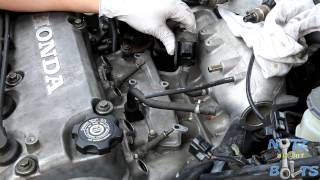
How to confirm: Remove the intake manifold or the EGR chamber plate located under the fuel rail. Visually inspect the small ports leading to each cylinder; they will likely be completely blocked with hard, black carbon deposits. A video by NutzAboutBolts on YouTube provides an excellent visual guide for this inspection.
Typical fix: The intake manifold and/or EGR chamber plate must be removed. The carbon must be manually scraped and cleaned out of the ports using tools like small screwdrivers, picks, wire brushes, an old speedometer cable spun with a drill 🎬 Watch: Step-by-step guide to cleaning your Civic's EGR passages, and carburetor cleaner. A shop vacuum is recommended to prevent debris from falling into the engine. Always replace the EGR chamber gasket (and intake manifold gasket if the whole manifold is removed) after cleaning.
Est. part cost: $10-$40 for gaskets and cleaner. - Faulty or Sticking EGR Valve 🟡 Medium Probability → Shop Exhaust Gas Recirculation (EGR) Valve While less common than clogged passages, the valve can still fail. Carbon can cause the pintle to stick, or the internal diaphragm/solenoid can fail electrically.
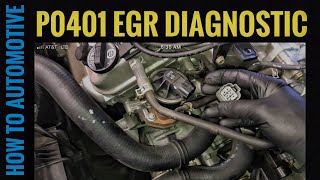
How to confirm: Remove the EGR valve (typically held by two 12mm nuts). You can try cleaning it with carburetor cleaner. You can also apply vacuum to the diaphragm to see if the pintle moves freely. A more definitive test involves applying 12V power to the correct terminals on the valve connector while the engine is idling; the engine should stumble or stall. If it doesn't 🎬 See this diagnostic test to confirm if your valve is working, the passages are clogged. If the passages are known to be clean and the engine still doesn't stumble, the valve is bad.
Typical fix: Clean the valve thoroughly with carburetor cleaner. If cleaning doesn't restore function or if it has failed an electrical test, replace the EGR valve and gasket.
Est. part cost: $50-$150 for aftermarket, $250+ for OEM.
Rare But Worth Checking
- Cracked or Disconnected EGR Vacuum Lines: If the EGR system is vacuum-operated, the rubber hoses that control the valve can become brittle and crack over time, causing a loss of vacuum and preventing the valve from opening. A visual inspection and listening for hissing sounds can identify leaks.
- Faulty EGR Control Solenoid: The electronic solenoid that directs vacuum to the EGR valve can fail. This would prevent the valve from being activated even if the valve itself and the vacuum lines are in good condition. This can be tested with a multimeter or by applying power and listening for a click.
- Faulty MAP Sensor: → Shop Manifold Absolute Pressure Sensor The Manifold Absolute Pressure (MAP) sensor is what the ECU uses to verify EGR flow. If the MAP sensor is faulty and not correctly reporting changes in manifold pressure, it could incorrectly trigger a P0401 code, though it would likely be accompanied by other driveability issues or MAP-specific codes. NHTSA ODI #11361702 describes a scenario where P0401 appeared alongside P0108, requiring both an EGR cleaning and a new MAP sensor to address acceleration issues.
Diagnosis Steps
- Confirm the P0401 code is present using an OBD-II scanner.
- Because clogged passages are the overwhelming cause, the primary diagnostic step is visual inspection. Locate the EGR system on the intake manifold.
- Safely relieve fuel pressure, then remove the fuel rail and the EGR chamber plate from the intake manifold.
- Inspect the small ports on the manifold surface and within the chamber plate. If they are clogged with carbon, this is your problem.
- If the ports are surprisingly clear, inspect the EGR valve. Remove the two 12mm nuts and the valve. Check if the pintle is stuck or if the passages within the valve are blocked.
- Test the EGR valve's function. With the engine idling, apply 12V power and ground to the appropriate pins on the valve. The engine should run rough or stall. If it does, the valve is likely working. If it doesn't, and you've confirmed the passages are clear, the valve is faulty.
- If the valve and passages are good, inspect the vacuum lines running to the EGR control solenoid for any cracks, breaks, or disconnections.
- If all components appear to be in good physical and clean condition, the issue could be with the EGR control solenoid or the MAP sensor, though these are less common failures for this specific code.
Parts You'll Likely Need
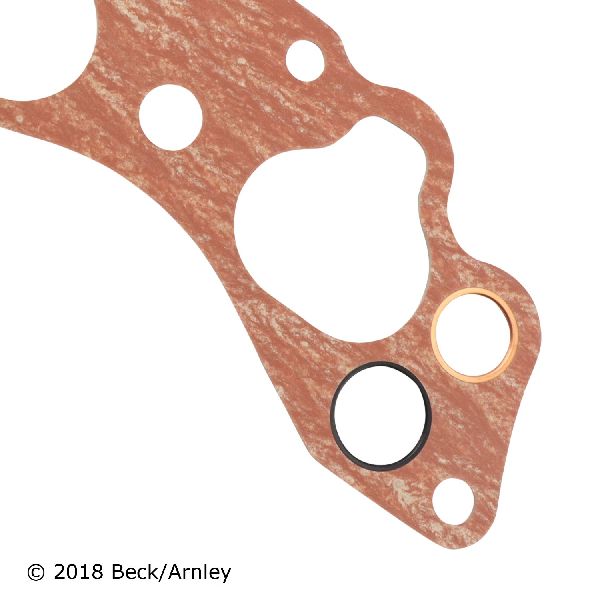
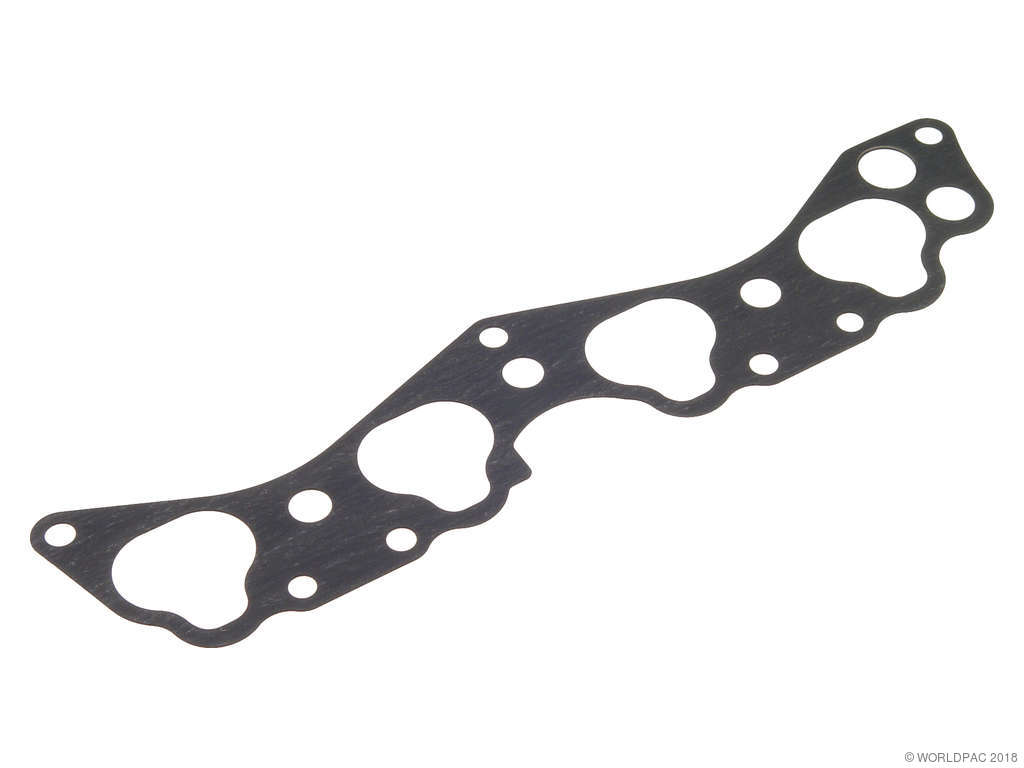
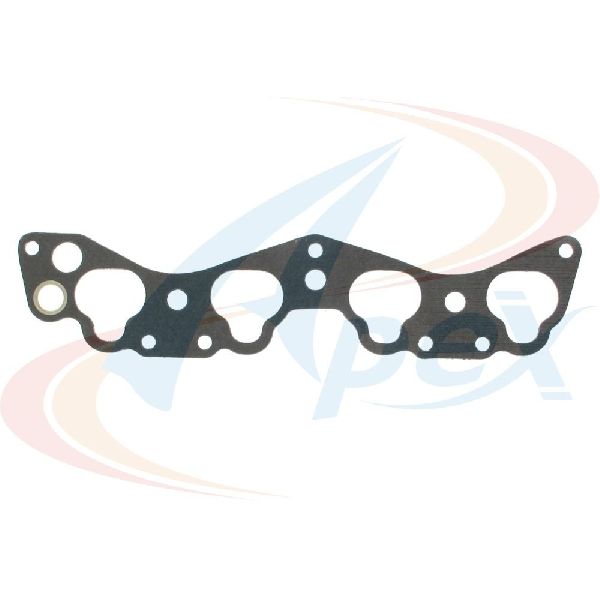
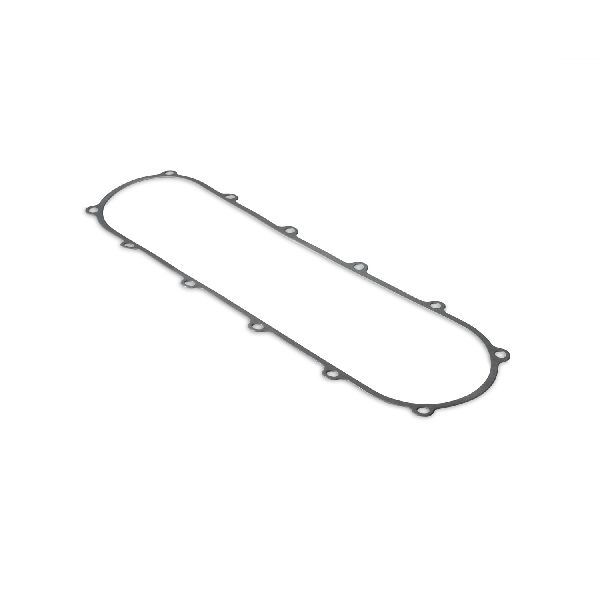
- Intake Manifold Gasket / EGR Chamber Gasket
(OEM #17105-P2P-A01 (D16Y8) or 17105-P2F-A02 (D16Y7). Always verify with VIN.)— This gasket must be replaced whenever the EGR chamber plate or intake manifold is removed for cleaning to prevent vacuum leaks.
Trusted brands: Honda OEM, Fel-Pro, Cometic, Apex
OEM price range: $20-$40
Aftermarket price range: $5-$20 - EGR Valve
(OEM #18011-P2M-305 (For HX M/T, GX) or 18011-P2J-000 (For HX A/T). Part numbers vary significantly by trim (CX, DX, LX, EX, HX, GX). Always verify with VIN.)— Replaced only if the valve is confirmed to be stuck, its diaphragm has failed, or the internal sensor is faulty and cleaning does not resolve the issue.
Trusted brands: Honda OEM, Standard Motor Products (SMP), Denso
OEM price range: $250-$380
Aftermarket price range: $50-$150
Related Codes That Often Appear With This One
- P1491 — P1491 indicates 'EGR Valve Lift Insufficient.' This code is often triggered alongside P0401. If the EGR passages are clogged, the pressure change might be insufficient, and if the valve itself is stuck or failing, it won't lift properly. Both point to a malfunction within the same system.
Technical Service Bulletins (TSBs) & Recalls
- Honda TSB 99-085: While officially for 🎬 Watch: How to repair P0401 on Honda 3.0L V6 engines 1998-2001 Accord V6 models, this bulletin addresses the exact same problem: EGR port clogging causing P0401 and P1491. It details a procedure to drill out the clogged port and install a revised pipe kit, acknowledging the root cause is carbon buildup from certain gasoline properties. This provides strong context for the issue on other Honda engines of the era.
- NHTSA ODI #10146426: A manufacturer service bulletin was noted by an owner regarding insufficient EGR flow (P0401), highlighting that some owners sought clarification on whether specific recall notices were issued for this chronic carbon buildup issue.
Platform-Specific Known Issues
- The EGR ports on the intake manifold are known to clog completely, which is the primary cause for P0401 on this platform. Cleaning these ports is considered a routine maintenance item for higher-mileage 1996-2000 Civics.
- A detailed forum thread on Honda-Tech titled 'P0401... nothing is working' shows a user going through every step, eventually finding success after a thorough port cleaning, reinforcing this as the main issue.
Mechanic-Grade Diagnostic Values
- EGR Valve Lift Sensor Voltage — expected: Approximately 5V between terminals No. 2 and No. 3 of the 6P connector with the key on, engine off.. Failure: No voltage suggests a wiring issue or problem with the ECU's 5V reference circuit.
- EGR Valve Internal Coil Resistance — expected: For Honda EGR valves of this era, resistance should be well under 100,000 ohms (100 kΩ). A test on a similar valve showed readings of 1.4 kΩ and 3.8 kΩ.. Failure: A reading over 100 kΩ or an open circuit (OL) indicates the valve's internal electronics have failed and it needs replacement.
Scan Tool Commands That Help
- Honda Diagnostic System (HDS) or equivalent (e.g., Autel MP808TS): EGR Test (Active Test) — This command allows the technician to manually command the EGR valve to open while monitoring engine RPM. It is used to confirm if the valve is physically responding to the ECU's command and if the passages are clear. If the command is sent and the engine RPM does not change or stumble, it confirms a blockage or a non-functional valve.
- Honda Diagnostic System (HDS) or equivalent: Snapshot Data Logging (EGR L COMMAND vs EGR LIFT) — This function graphs the commanded EGR lift position versus the actual EGR lift sensor reading during a test drive. It is used to diagnose intermittent issues or a lazy valve. If the 'EGR LIFT' graph does not closely follow the 'EGR L COMMAND' graph, it indicates the valve is sticking, slow to respond, or failing.
Wiring & Ground Locations
- G101 — Typically located on the thermostat housing.. This is a primary engine ground, and many sensors, including those in the EGR system, rely on it for a stable reference. A corroded or loose G101 ground can cause erratic sensor readings, potentially leading to false codes. Forum wiring experts note that grounding sensors to the thermostat housing is a questionable design choice due to potential corrosion.
- ECU Connector D, Pin D9 — On the Engine Control Unit (ECU), typically located in the passenger-side footwell.. This is the pin for the EGR Valve Lift Sensor (EGRL). A technician would probe this pin (Black wire on some models) to check for a signal from the sensor back to the ECU.
- ECU Connector A, Pin A8 — On the Engine Control Unit (ECU).. This is the pin for the EGR Control Solenoid Valve (ESOL). The ECU sends a ground signal from this pin to activate the solenoid. Checking for this signal can confirm if the ECU is attempting to control the valve.
- Battery to Chassis/Transmission Ground — The main negative battery cable bolts to the chassis (strut tower area) and a thick ground strap connects the transmission to the chassis.. A poor main ground connection can cause a host of electrical issues, including incorrect sensor readings that could contribute to an EGR code. Ensuring these main grounds are clean and tight is a fundamental step in any electrical diagnosis.
Real Owner Repair Stories
- Honda-Tech forum user 'waaBAAH' (2001 Honda Civic EX) — P0401 code would return a day after being cleared.
❌ Tried (didn't work) Initially planned to clean all passages and the valve.
✅ What actually fixed it The user discovered that the aftermarket intake manifold gasket they had installed did not have a hole for the EGR passage between the cylinder head and the intake manifold. After manually drilling a hole in the gasket to match the port, the problem was resolved. This highlights the importance of using the correct, vehicle-specific gasket. - Reddit user 'RVA_GitR' (2008 Honda Fit Sport MT (similar D-series logic)) — Sputtering, inconsistent idle, and intermittent power loss with no codes being thrown initially.
❌ Tried (didn't work) Replacing iridium spark plugs, Replacing all 4 ignition coils, Performing a valve adjustment
✅ What actually fixed it After the tune-up parts didn't fully resolve the issue, the owner removed the EGR valve (held by two 12mm bolts) and found it was completely caked in carbon. A thorough cleaning with carburetor cleaner and a toothbrush restored normal engine operation and resolved the symptoms. - NHTSA ODI #10078623 describes a recurring P0401 code for insufficient EGR flow that appeared several times starting within the first year of ownership, often accompanied by EVAP system leak codes like P1456, suggesting that EGR issues can be a persistent, long-term challenge for these Honda platforms.
"I Checked Everything" — The Actual Cause
- For this specific P0401 issue on 1996-2000 Civics, the equivalent of a 'smoke test clean' scenario is when a technician confirms the EGR passages are clear, but the code persists. In one documented case, the root cause was an incorrect aftermarket intake manifold gasket that was physically blocking the EGR port between the head and the manifold, a problem that visual inspection of the manifold's runners alone would not reveal.
- In another instance reported in NHTSA ODI #10376625, an owner faced a persistent P0401 code for a clogged EGR system alongside transmission codes like P1739, illustrating how multiple systemic failures can occur simultaneously on high-mileage Honda drivetrains.
Model Year Variations Within This Range
- 1999-2000 (latter half of generation): While most D-series engines in this generation have EGR, some forum users note that EGR systems were more consistently present on the D16Y8 engine in the later years of the generation (1999-2000). Earlier D16Y8 engines may not have an EGR system, making it crucial to visually confirm its presence before ordering parts.
- 1996-2000 (HX Trim w/ CVT vs M/T): The EGR valve assembly is different between the manual transmission and CVT automatic transmission versions of the D16Y5 engine found in the Civic HX. The manual version has an integrated EGR valve, solenoid, and lift sensor in one assembly. The CVT version uses a separate EGR control solenoid.
Diagnostic Flowchart
Other Known Issues on This Vehicle
Issues unrelated to this code that are worth knowing about as an owner of this generation:
- Rear Quarter Panel Rust 🔴 High — Extremely common, especially in regions that use road salt. Rust typically forms in the wheel arch lip and can spread upwards.
- Main Relay Failure 🟠 Medium — A well-known issue on 90s Hondas. Solder joints inside the relay crack over time, especially with heat, leading to intermittent no-start conditions or stalling.
- Automatic Transmission Failure/Harsh Shifting 🟠 Medium — The 4-speed automatic transmission in this generation can develop harsh shifting, slipping, or outright failure. More prevalent on neglected vehicles, but a known weak point compared to the manual transmission.
- Distributor Failure (Ignitor/Coil) 🟠 Medium — The ignitor (Ignition Control Module) or ignition coil, both housed inside the distributor, are common failure points that lead to a no-start or intermittent stalling condition.
- Manual Transmission Input Shaft Bearing (ISB) Noise 🟡 Low — The input shaft bearing in the 5-speed manual transmission can become noisy over time, creating a whirring or grinding noise when the clutch is engaged in neutral. It is often more of an annoyance than a critical failure.
Used vs. New Parts: Buying Guide for This Vehicle
When a used part is the smart pick: A used intake manifold from a junkyard can be a viable option if the original is damaged or excessively difficult to clean. Since it's a non-moving part, its primary value is being physically intact and cleanable. A used EGR valve is a significant gamble and generally not recommended.
Donor-vehicle mileage cap: roughly under 150000 miles for the part to have meaningful remaining life.
What to inspect on the donor part:
- For an intake manifold, inspect for any cracks, especially around mounting points.
- Check that all threaded holes are intact and not stripped.
- If possible, peek inside the EGR port area to gauge the level of carbon buildup; less is better, but assume it will need cleaning regardless.
OEM-only on this vehicle (don't cheap out):
- Intake Manifold Gasket / EGR Gasket: While not strictly 'OEM-only', using a reputable brand like Fel-Pro or genuine Honda is critical to avoid issues like a missing EGR port hole, as documented in repair stories.
Aftermarket brands forum-validated for this vehicle:
- Standard Motor Products (SMP) for EGR valves and connectors.
- Denso for EGR valves.
- Fel-Pro for gaskets.
Brands owners have reported issues with on this vehicle:
- Unbranded, extremely cheap EGR valves and gasket kits from online marketplaces like eBay or Amazon have a higher risk of premature failure or incorrect fitment (e.g., missing gasket holes).
Real Owner Stories
Aggregated from forums and TSBs cited above. Mileages and costs reflect what owners reported in those sources.
1999 Honda Civic EX
Symptoms: Check Engine Light (CEL) with code P0401.
What fixed it: Cleaned the EGR chamber by removing the fuel rail and unbolting the EGR valve and chamber. Scraped away carbon buildup from the four holes in the intake manifold using a small flathead screwdriver and soaked the chamber in cleaner.
Cost: $1-$2
Source hint: Honda-Tech owner report
1996 Honda Civic HX
Symptoms: Code P0401 - EGR Flow Insufficient.
What fixed it: Followed the factory service manual diagnostic steps to address the common EGR passage clogging issue.
Source hint: HondaCivicForum.com thread 'Code P0401 - EGR Flow Insufficient?'
1997 Honda Civic HX
Symptoms: Check Engine Light P0401 for EGR.
What fixed it: Performed a cleaning process on the EGR passages to clear the code.
Source hint: YouTube - Fixbook video 'CHEAP FIX for Check Engine Light P0401 for EGR on 97' Civic (ek) HX'
Related OBD-II Codes
Frequently Asked Questions
Does Honda TSB 99-085 apply to my 1996-2000 Civic?
My Civic HX has a green 'shift up' arrow that disappeared when the Check Engine Light came on. Is this related to P0401?
Can I just clean the EGR valve to fix the P0401 code on my Civic?
What tools do I need to clean the EGR passages on a 1996-2000 Civic?
Is there a specific part I should replace after cleaning the EGR chamber?
How can I test if my EGR valve is actually bad or just the passages are clogged?
Helpful Videos
We Have This Part in Stock


The information in this article is provided for general reference and educational purposes only. Vehicle specifications, procedures, and part compatibility can vary by production date, trim level, and region. Always consult your vehicle's factory service manual and verify part numbers before purchasing or performing repairs. Safety-critical components such as airbags, seat belts, and braking systems should be installed by a qualified professional.
- Honda Civic:
- 🧭 Diagnostic Flowchart
- 🎬 Helpful Videos
- 🛍️ Shop This Part
- What's Unique About the 1996-2000 Honda Civic
- Symptoms You May Notice
- Most Likely Causes
- Rare But Worth Checking
- Diagnosis Steps
- Parts You'll Likely Need
- Related Codes That Often Appear With This One
- Technical Service Bulletins (TSBs) & Recalls
- Platform-Specific Known Issues
- Mechanic-Grade Diagnostic Values
- Scan Tool Commands That Help
- Wiring & Ground Locations
- Real Owner Repair Stories
- "I Checked Everything" — The Actual Cause
- Model Year Variations Within This Range
- Other Known Issues on This Vehicle
- Used vs. New Parts: Buying Guide for This Vehicle
- Real Owner Stories
- 1999 Honda Civic EX
- 1996 Honda Civic HX
- 1997 Honda Civic HX
- Related OBD-II Codes
- Frequently Asked Questions
- 🎟️ Get 5% Off