

P0401 on 2011-2017 Lexus CT200h: EGR Insufficient Flow Causes and Fixes
On a 2011-2017 Lexus CT200h, code P0401 is almost always caused by heavy carbon buildup clogging the entire EGR system. The fix involves a labor-intensive cleaning of the EGR valve, EGR cooler, and intake manifold passages. DIY cleaning costs are low (~$20-$50 for cleaners and gaskets), while a shop may charge between $400 and $1100. Ignoring the issue is a known contributor to eventual head gasket failure.
- P0401 on the CT200h is almost never a simple part replacement; it requires a deep cleaning of the entire EGR system (valve, cooler, and intake manifold).
- This is a very common, well-documented issue. Lexus has issued multiple TSBs and an updated EGR valve to address it.
- Ignoring this code can lead to symptoms like a rough, rattling idle and, in the long term, may contribute to catastrophic head gasket failure.
- While the repair is labor-intensive, it is a manageable DIY project for those with mechanical aptitude, saving hundreds in labor costs.
- When performing the repair, always use new gaskets for all removed components to prevent future leaks.
What's Unique About the 2011-2017 Lexus CT200h
The 2ZR-FXE engine in the Lexus CT200h (which is shared with the Gen 3 Toyota Prius) is notoriously prone to developing heavy carbon deposits throughout the entire EGR circuit. This isn't just a simple part failure; the carbon severely clogs the EGR valve, the EGR cooler's small radiator-like fins, and the tiny distribution passages in the intake manifold. This widespread clogging is the primary reason P0401 is so common on these vehicles and is a known contributor to more severe issues like engine shaking, misfires, and catastrophic head gasket failure if not addressed.
Symptoms You May Notice
- Check Engine Light is on
- Rough, shaking, or vibrating idle, especially on a cold start.
- Loud rattling or clattering noise from the engine area on cold starts, lasting for 1-2 seconds. This is sometimes referred to as the 'death rattle'.
- Reduced fuel economy.
- Engine hesitation or stalling.
- Misfires at low RPM.
- Replacing only the EGR valve without cleaning the EGR cooler and intake manifold passages. The system will remain restricted, and the P0401 code will return shortly after the repair.
- Replacing spark plugs and ignition coils to fix the cold start rattle and misfires without addressing the root cause, which is the clogged EGR system disrupting air distribution.
Most Likely Causes
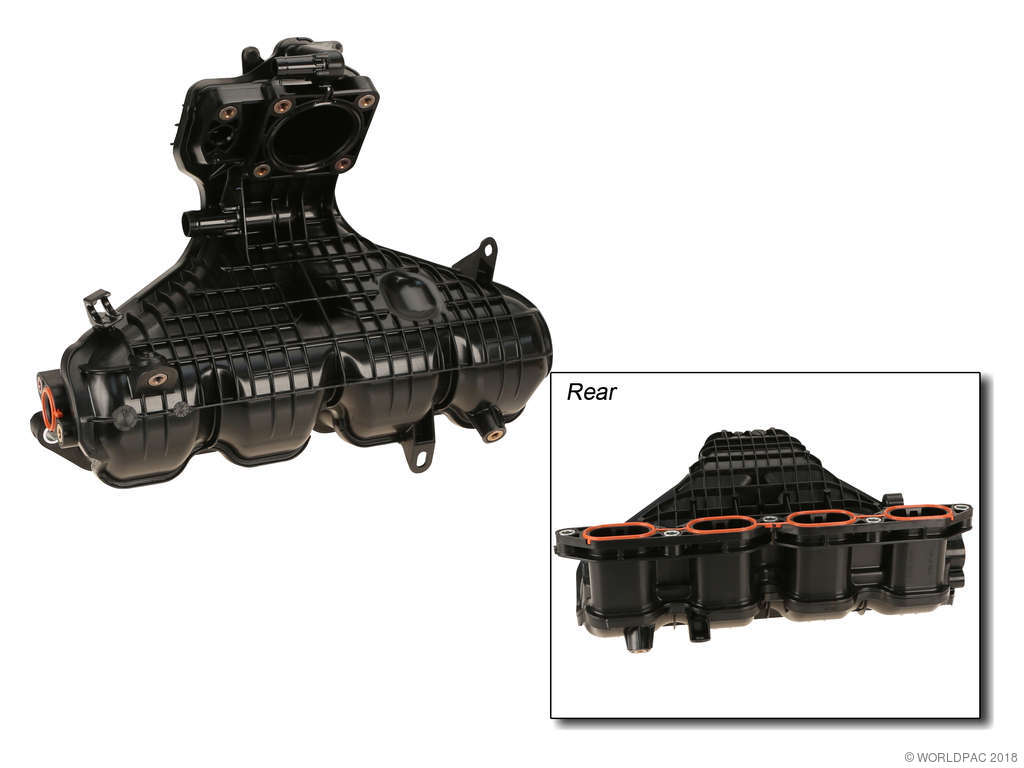
- Clogged EGR Cooler, EGR Valve, and Intake Manifold Passages 🔴 High Probability → Shop Engine Intake Manifold The 2ZR-FXE engine design is highly susceptible to heavy carbon buildup throughout the entire EGR circuit. The EGR cooler has small fins that get completely blocked, and the intake manifold has four small distribution ports that are a final chokepoint for a mixture of carbon and oil from the PCV system. This is a well-documented issue acknowledged by Lexus through multiple Technical Service Bulletins (TSBs).
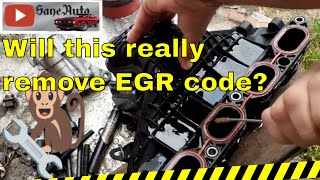
How to confirm: Remove the EGR pipe, EGR valve, EGR cooler, and intake manifold to visually inspect for thick, black carbon deposits. The small EGR ports on the intake manifold for each cylinder are often completely blocked. A diagnostic tip is to temporarily block the EGR pipe with a putty knife; if the cold start rattle stops, the EGR clog is confirmed. 🎬 Watch: See a simulation of the cold start rattle fix.
Typical fix: A thorough cleaning of all components is required. This involves removing the EGR valve, cooler, and intake manifold. Many DIYers soak the stainless steel cooler in a strong cleaner like OxiClean, Purple Power, or oven cleaner for several hours, followed by a pressure washer rinse. The intake manifold passages must be cleared with brushes and solvent. 🎬 Watch: Step-by-step guide to cleaning the intake manifold passages. Simply replacing one part without cleaning the others will likely result in the code returning.
Est. part cost: $20-$60 (for gaskets and cleaning supplies)
Rare But Worth Checking
- Failed EGR Valve (Electrical): → Shop Exhaust Gas Recirculation (EGR) Valve While clogging is the most common issue, the electronic stepper motor on the valve can fail. If cleaning the system does not resolve the code, and the valve cannot be actuated with a scan tool, the valve itself may need replacement.
- Faulty MAP Sensor: → Shop Manifold Absolute Pressure Sensor The ECM uses the MAP sensor to verify EGR flow. If the sensor is faulty, it may not detect the pressure change when the EGR valve opens, triggering P0401 even if the system is clean. This can be tested by back-probing the sensor.
Diagnosis Steps
- Confirm the P0401 code is present using an OBD-II scanner.
- Check for relevant TSBs (L-SB-0028-13, L-SB-0015-16 REV) for your vehicle's VIN.
- Listen for a rough idle or rattling sound from the engine on a cold start.
- Begin disassembly by removing the engine cover, air filter housing, and wiper cowl assembly to access the EGR system.
- Remove the EGR pipe connecting the valve to the intake manifold and inspect for heavy carbon buildup. This is the first and easiest place to see the extent of the problem.
- Remove the EGR valve, EGR cooler, and intake manifold. This will require draining some coolant.
- Visually inspect all components for blockages. Pay close attention to the small, individual EGR ports inside the intake manifold, which are often completely clogged.
- While the intake manifold is off, it is highly recommended to replace the PCV valve (OEM #12204-37010) as it is now easily accessible and contributes to intake buildup.
- If all passages are clear but the code persists, use a high-level scan tool like Toyota Techstream to perform an 'Active Test' to command the EGR valve to open and check for a corresponding change in engine RPM and MAP sensor readings.
- Clean all components thoroughly or replace with new parts. Soaking the cooler in OxiClean or degreaser solution is effective. Use new gaskets for all removed components during reassembly to prevent leaks.
- Clear the trouble code and perform a test drive to confirm the repair.
Parts You'll Likely Need
- EGR Valve Kit (Updated Part)
(OEM #04004-58137)— Lexus released an updated EGR valve kit to address the carbon buildup issue, as noted in TSB L-SB-0015-16 REV. The original valve part number was 25620-37110, which was superseded by 25620-37120. The kit includes the updated valve and necessary gaskets.
Trusted brands: Aisan (OEM), Standard Motor Products (EGV1235)
OEM price range: $350-$500
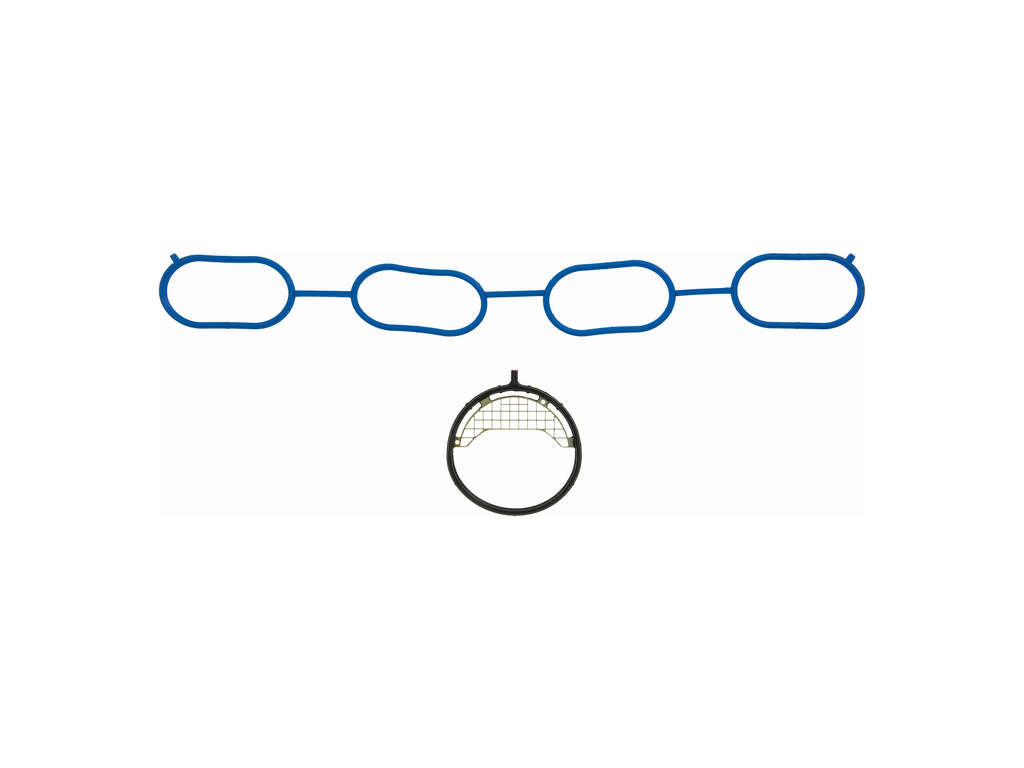
Aftermarket price range: $130-$300 - Intake Manifold Gasket
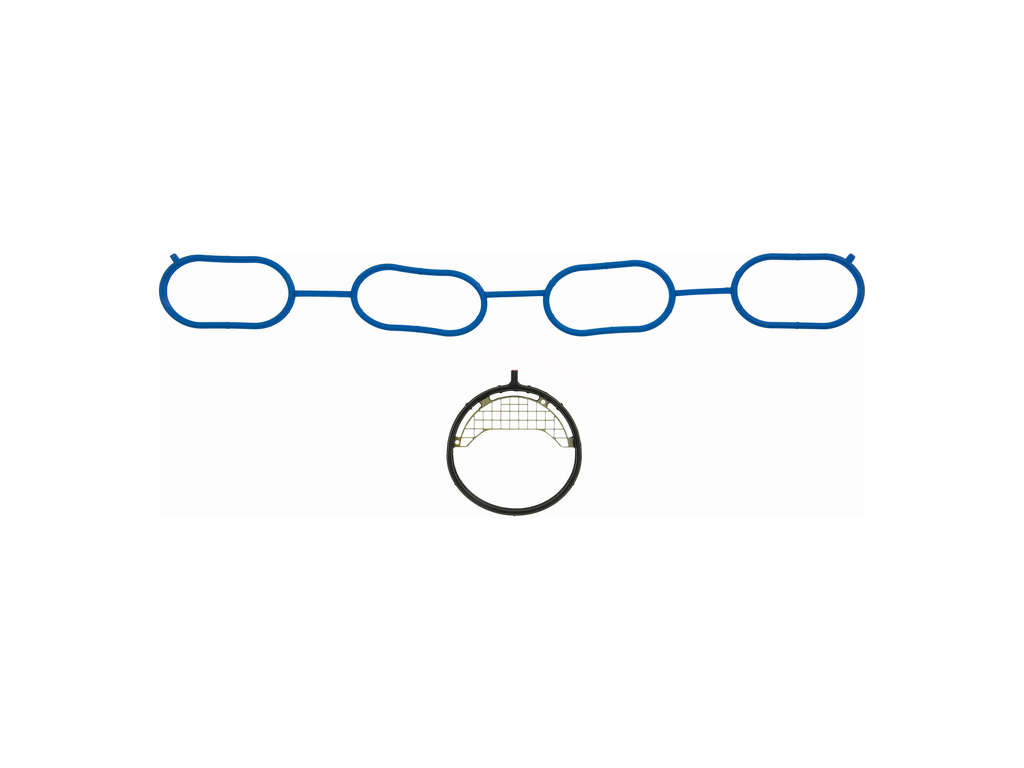
(OEM #17177-0T020 (replaces 17177-37030))— This gasket must be replaced anytime the intake manifold is removed for cleaning to ensure a proper seal.
Trusted brands: Lexus/Toyota OE, Fel-Pro (MS 97144), Mahle (MS19723)
OEM price range: $10-$20
Aftermarket price range: $5-$15 - EGR Gasket Kit
(OEM #25627-37010 (Valve Gasket), 25634-37030 (Valve to Cooler), 25685-37010 (Cooler Gasket))— A set of new metal gaskets for the EGR valve, pipe, and cooler connections is required to prevent exhaust and coolant leaks upon reassembly.
Trusted brands: Lexus/Toyota OE
OEM price range: $15-$30
Aftermarket price range: $10-$20
Related Codes That Often Appear With This One
- P0300, P0301, P0302, P0303, P0304 — If the EGR passages in the intake manifold are unevenly clogged, it can disrupt air/fuel distribution to the cylinders, leading to random or specific cylinder misfires, especially in cylinder 1. TSB L-SB-0019-16 addresses this specific scenario.
- P0A0F — In severe cases, issues related to the clogged EGR system can contribute to engine stumbling or failure to start, which can trigger this code related to the hybrid system.
- P0420 — This code for 'Catalyst System Efficiency Below Threshold' can sometimes appear alongside P0401, as the underlying EGR issue can affect overall emissions performance.
Technical Service Bulletins (TSBs) & Recalls
- L-SB-0015-16 REV: Supersedes L-SB-0028-13. For 2011-2012 models up to VIN JTHKD5BH#C2118326, it addresses P0401, vibration, and cold start tapping noises. Recommends replacing the EGR valve with kit P/N 04004-58137 and reprogramming the ECU.
- L-SB-0028-13: An earlier, now obsolete bulletin for 2011-2012 models acknowledging P0401 and making an improved EGR valve (25620-37120) available. It also mentioned modifying the wiring harness to prevent chafing.
- POL16-02 (ZLF): A Lexus warranty enhancement program that extended coverage for a sticking EGR valve causing P0401 to 10 years or 150,000 miles for some vehicles.
- L-SB-0019-16: Addresses engine misfires (P0300-P0304) for 2011-2016 models, specifically caused by clogged EGR ports in the intake manifold.
Platform-Specific Known Issues
- This entire EGR clogging issue is the most prominent and well-documented problem for the 2011-2017 CT200h. Many owners and independent shops recommend proactively cleaning the EGR circuit every 60,000-80,000 miles to prevent the P0401 code and help mitigate the risk of head gasket failure, another known issue with this engine.
- The link to head gasket failure is theorized to be caused by the clogged EGR passages creating hot spots and uneven cylinder pressures, particularly affecting cylinder #1, which eventually damages the gasket.
Mechanic-Grade Diagnostic Values
- ECM Malfunction Threshold for P0401 — expected: A change of 1.0 kPa (7.5 mmHg) or more in manifold pressure when the EGR valve is commanded open/closed during fuel cut.. Failure: A change of less than 1.0 kPa (7.5 mmHg) will trigger the P0401 code after two consecutive drive cycles.
- EGR Valve Assembly Stud Bolt Torque — expected: 9.5 N·m (84 in·lbf). Failure: Incorrect torque can lead to leaks or damaged threads.
- EGR Pipe to Cooler Nuts Torque — expected: 21 N·m (15 ft·lbf). Failure: Incorrect torque can lead to exhaust leaks.
- EGR Cooler to Exhaust Manifold Nuts Torque — expected: 26 N·m (19 ft·lbf). Failure: Incorrect torque can lead to exhaust leaks.
Scan Tool Commands That Help
- Toyota Techstream: Active Test: 'Control the EGR Step Position' — This function allows a technician to manually command the EGR valve to open to different positions while monitoring MAP sensor data and engine RPM. It is used to verify if the valve is physically moving and if the system has sufficient flow after cleaning or repairs. A significant drop in RPM or stall indicates good flow.
- Toyota Techstream: ECU Flash Reprogramming — Required for 2011-2012 models when replacing the original EGR valve (25620-37110) with the updated version (25620-37120 or kit 04004-58137). Without the ECU update, the vehicle may throw a 'Check Hybrid System' warning and fail to operate correctly.
Wiring & Ground Locations
- EGR Valve Connector — Directly on top of the EGR valve assembly, on the driver's side of the engine.. A poor connection or damaged wiring at this 6-pin connector can prevent the ECM from controlling or monitoring the EGR valve's stepper motor, leading to a P0401 or other EGR-related codes. TSB L-SB-0028-13 noted a potential for harness chafing that required modification with heat-resistant tape.
- MAP Sensor Connector — On the intake manifold.. The ECM relies on the MAP sensor to confirm EGR flow by detecting a change in manifold pressure. A bad connection or faulty wiring at this connector will prevent the ECM from seeing the pressure change, causing it to set P0401 even if the EGR system is flowing perfectly.
Real Owner Repair Stories
- Flawless Fitment Blog Post (2011-2012 Lexus CT200h) — 'Check Hybrid System' warning, car would not go into gear or move.
❌ Tried (didn't work) Installing a brand new, updated EGR valve (P/N 25620-37120) to replace the original (25620-37110)., Resetting the 12V battery and hybrid battery.
✅ What actually fixed it The owner discovered TSB L-SB-0015-16, which states that an ECU update is required for the new valve to be compatible with 2011-2012 models. Instead of getting the update, the owner cleaned and reinstalled the original EGR valve, which resolved the immediate issue. This highlights the critical need for the ECU reprogram when upgrading the valve on early models. - ClubLexus Forum User RobK86 (2011 Lexus CT200h with 180k miles) — P0401 code appearing 200-300 miles after a complete EGR system cleaning.
❌ Tried (didn't work) Replacing the completely clogged EGR cooler with a new part., Thoroughly cleaning the EGR valve, pipe, and intake manifold passages using a borescope to verify., Cleaning the MAP and MAF sensors., Re-cleaning the intake manifold.
✅ What actually fixed it The user confirmed with a diagnostic tool that the EGR valve was opening correctly and causing the engine to nearly stall, proving flow was sufficient. The thread ends without a definitive fix, but the user's last step was to try resetting all fuel trims by disconnecting the 12V battery, as suggested by another user. This story is valuable because it shows that even after a textbook-perfect cleaning, the code can persist, pointing towards a potential ECU logic or sensor calibration issue.
OEM Part Supersession History
25620-37110→25620-37120— The original valve design was highly prone to sticking due to carbon buildup. The new part is an improved design to mitigate this issue.
Heads up: On 2011-2012 models (up to VIN JTHKD5BH#C2118326), installing 25620-37120 requires an ECU reprogram as per TSB L-SB-0015-16 REV. Failure to update the ECU can result in a 'Check Hybrid System' error.L-SB-0028-13→L-SB-0015-16 REV— The revised TSB updated warranty information and consolidated procedures for addressing the P0401 code, rough idle, and cold start rattle on 2011-2012 models.
Heads up: L-SB-0028-13 is now considered obsolete and should be discarded.
Model Year Variations Within This Range
- 2011-2013: These early models are most susceptible to the severe EGR clogging and are the primary subject of TSBs requiring an updated EGR valve and potential ECU reprogram.
- 2014-2017: The 2014 facelift model year saw revisions to the intake manifold design and other related components. While not completely eliminating the problem, these changes are believed to help mitigate the rate of carbon buildup compared to earlier models.
Diagnostic Flowchart
Real Owner Stories
Aggregated from forums and TSBs cited above. Mileages and costs reflect what owners reported in those sources.
2011 Lexus CT200h — 180000 miles
Symptoms: Check Engine Light with P0401 code appeared after cleaning the EGR system. No symptoms were present before the cleaning, despite the old cooler being completely clogged.
What fixed it: The user was still seeking a solution. They had already performed a thorough cleaning of the EGR valve, pipe, and intake manifold, replaced the EGR cooler with a new part, and verified flow using a diagnostic tester.
Source hint: ClubLexus - Thread: 'Changed clogged EGR Cooler, now getting P0401'
2011 Lexus CT200h (2ZR-FXE)
Symptoms: Check Engine Light with P0401 appeared only after a full EGR system cleaning. The code triggers specifically when decelerating near 40-50mph and rpm 950-1100.
What fixed it: The owner was still seeking a fix after replacing the EGR cooler assembly and cleaning all parts, including the intake manifold. They confirmed EGR flow using Techstream.
Source hint: Reddit r/MechanicAdvice - '2011 Lexus CT200h (Gen3 Prius) VVT and EGR questions.'
Lexus CT200h
Symptoms: Owner sought out EGR cleaning services to address the well-known carbon buildup issues on the 2ZR-FXE platform.
What fixed it: Had a hybrid specialist shop perform a full cleaning service, which also included spark plugs and injector cleaning.
Cost: $550-$600
Source hint: Reddit (r/CT200h) - Thread: 'EGR cleaning cost'
Related OBD-II Codes
Frequently Asked Questions
Does Lexus have a Technical Service Bulletin (TSB) for the P0401 code on my 2011-2012 CT200h?
Is there an extended warranty that covers the EGR valve on the 2011-2017 Lexus CT200h?
Why does my CT200h have a loud rattling noise on cold starts along with the P0401 code?
Can a clogged EGR system cause head gasket failure on the 2ZR-FXE engine?
Should I replace the PCV valve while fixing the P0401 code?
How much does it cost to have a shop clean the EGR system on a CT200h?
Helpful Videos
We Have This Part in Stock


The information in this article is provided for general reference and educational purposes only. Vehicle specifications, procedures, and part compatibility can vary by production date, trim level, and region. Always consult your vehicle's factory service manual and verify part numbers before purchasing or performing repairs. Safety-critical components such as airbags, seat belts, and braking systems should be installed by a qualified professional.
- Lexus CT200h:
- 🧭 Diagnostic Flowchart
- 🎬 Helpful Videos
- 🛍️ Shop This Part
- What's Unique About the 2011-2017 Lexus CT200h
- Symptoms You May Notice
- Most Likely Causes
- Rare But Worth Checking
- Diagnosis Steps
- Parts You'll Likely Need
- Related Codes That Often Appear With This One
- Technical Service Bulletins (TSBs) & Recalls
- Platform-Specific Known Issues
- Mechanic-Grade Diagnostic Values
- Scan Tool Commands That Help
- Wiring & Ground Locations
- Real Owner Repair Stories
- OEM Part Supersession History
- Model Year Variations Within This Range
- Real Owner Stories
- 2011 Lexus CT200h — 180000 miles
- 2011 Lexus CT200h (2ZR-FXE)
- Lexus CT200h
- Related OBD-II Codes
- Frequently Asked Questions
- 🎟️ Get 5% Off