

P0401 on 2016-2018 Mazda CX-9: EGR Flow and Software Update Fixes
For a 2016-2018 Mazda CX-9, code P0401 is most often caused by overly sensitive software logic. The primary fix is a simple Powertrain Control Module (PCM) update at a Mazda dealership, which is often covered under the federal emissions warranty (8 years/80,000 miles).
- For a 2016-2018 Mazda CX-9, do not immediately replace the EGR valve for a P0401 code.
- The most probable cause is sensitive software that needs a PCM update from a Mazda dealer, as per TSB #01-017-18-3518.
- Check if your vehicle's VIN is lower than JM3TC******220639 and if the repair is covered by the 8-year/80,000-mile federal emissions warranty.
- If the software update doesn't apply or doesn't fix the issue, then investigate for carbon buildup in the EGR valve and passages.
- The vehicle is safe to drive with this code, but you won't pass an emissions test.
What's Unique About the 2016-2018 Mazda CX-9
On this specific generation of the Mazda CX-9, the P0401 code is frequently a "false positive." Mazda issued a Technical Service Bulletin (TSB 01-017-18) acknowledging that the original software for the engine computer was too sensitive and could trigger the code even when there was no mechanical fault with the EGR system. This means that unlike many other vehicles where P0401 points to a clogged EGR valve, the first step for this CX-9 is to check its software version.
Diagnostic Flowchart
Tap your situation to follow the diagnostic path that matches what you're seeing on this vehicle.
Symptoms You May Notice
- Check Engine Light is on
- No noticeable drivability problems
- Symptom of the light turning on, then off for a few days, then back on is common.
- Replacing the EGR valve before checking for the software update. Many owners could fix the issue with a simple, and often warranty-covered, PCM reflash instead of paying for a new part and labor.
Most Likely Causes
- Outdated Powertrain Control Module (PCM) Software 🔴 High Probability → Shop Engine Control Module (ECM) Mazda TSB #01-017-18-3518 directly states that the detection logic for P0401 was too sensitive on vehicles produced before January 8, 2018. This is the most widely reported fix by owners.
How to confirm: A Mazda dealership or a qualified independent shop with Mazda's diagnostic software (IDS version 108.03 or later) can check the current PCM calibration file name and compare it against the updated versions listed in the TSB.
Typical fix: Reprogramming the PCM with the updated software. This is a quick procedure done at the dealership, often taking less than an hour. The TSB specifies this should be done after rebooting the IDS tool to clear memory.
Est. part cost: $0 - Carbon Buildup in EGR Passages or Valve 🟡 Medium Probability This is a common issue for all EGR systems over time, as they handle soot-filled exhaust gases. Short-trip driving can accelerate this buildup. While less common than the software issue on this specific vehicle, it's the next logical item to check.
How to confirm: If the PCM software is up to date, the next step is to physically inspect the EGR valve and its associated passages for carbon blockages. This requires removing the component for visual inspection.
Typical fix: Remove and clean the EGR valve and clear any carbon from the intake manifold ports. This can be done with brake cleaner or a dedicated EGR cleaner and small brushes. 🎬 Watch: How to de-carbon and clean the intake system If the valve is heavily clogged or fails to operate after cleaning, it must be replaced.
Est. part cost: $5-$20 for cleaners, $280-$410 for a new valve. - Failed EGR Valve ⚪ Low Probability → Shop Exhaust Gas Recirculation (EGR) Valve While less common than software issues or clogging, the electronic stepper motor or the valve pintle can fail mechanically. An earlier TSB (SA-072/17) from 2017 actually recommended replacing the EGR valve if carbon was found, predating the more common software fix.
How to confirm: Using a capable bidirectional scan tool, a technician can command the EGR valve to open and close to see if it responds. A non-responsive valve is faulty. One can also check for flow by observing a drop in Mass Airflow (MAF) sensor readings when the valve is commanded open.
Typical fix: Replace the EGR valve. The OEM part number is PY8V-20-300. 🎬 Watch: Step-by-step guide to replacing the EGR valve
Est. part cost: $280-$410
Rare But Worth Checking
- Clogged EGR Cooler: → Shop Exhaust Gas Recirculation (EGR) Valve
Diagnosis Steps
- Scan the vehicle for trouble codes. Confirm P0401 is the primary code.
- IMPORTANT: Check for applicable TSBs. Specifically, reference Mazda TSB #01-017-18-3518 for VINs lower than JM3TC**220639 (produced before January 8, 2018).
- If the TSB applies, have a Mazda dealer verify the PCM software version. If it is outdated, have them perform the PCM reprogramming procedure. This is the most likely fix and is often covered by the 8yr/80k mile Federal Emissions Warranty.
- If the PCM software is already up to date, or if the TSB does not apply, proceed with physical diagnosis.
- Inspect the EGR valve, connecting pipe, and intake manifold ports for heavy carbon buildup.
- If passages are clogged, remove the EGR valve and thoroughly clean the valve and all associated ports using a suitable cleaner (e.g., brake cleaner) and brushes.
- If passages are clear, test the EGR valve's functionality. Use a bidirectional scan tool to command the valve to open and close while monitoring engine RPM or Mass Airflow (MAF) readings. A working valve should cause a noticeable drop in RPM or MAF g/s reading, or cause the engine to stumble at idle when opened. 🎬 See how to test your EGR valve functionality
- If the valve does not respond to scan tool commands, check for power, ground, and signal at the EGR valve connector. If power and ground are present, the valve has likely failed and needs replacement.
- After any physical repair, clear codes and perform a drive cycle. The TSB for the software update also recommends disconnecting the negative battery cable for 30 seconds after the reflash to reset the fuel control learning data.
Parts You'll Likely Need
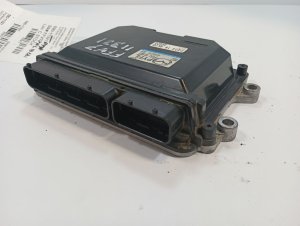
- Powertrain Control Module (PCM) Reprogramming — This is the most common fix, addressing the overly sensitive detection logic as specified by Mazda's TSB.
OEM price range: $0-$200 (Often covered by federal emissions warranty, 8yr/80k miles). Out of warranty, owners report a diagnostic fee plus 0.5-1.0 hour of labor.
Aftermarket price range: N/A - EGR Valve
(OEM #PY8V-20-300)— If the PCM software is up-to-date, the issue is likely a physically clogged or failed EGR valve.
Trusted brands: Mazda OE
OEM price range: $280-$410
Aftermarket price range: $150-$250 - EGR Tube Gasket
(OEM #PY8V-20-318)— This gasket should be replaced whenever the EGR valve or associated piping is removed to prevent exhaust leaks.
Trusted brands: Mazda OE
OEM price range: $10-$15
Aftermarket price range: $5-$10
Technical Service Bulletins (TSBs) & Recalls
- 01-017-18-3518: CHECK ENGINE LIGHT ON WITH DTC P0401 STORED IN MEMORY. States the cause may be overly sensitive detection logic and the fix is a PCM software update using IDS version 108.03 or later.
- SA-072-17: CHECK ENGINE LIGHT ON WITH A DTC P0401. An earlier bulletin from 2017 that instructs technicians to inspect the EGR valve for carbon deposits and replace it if any are found.
Platform-Specific Known Issues
- A Technical Service Bulletin (TSB #01-017-18-3518) was issued for 2016-2018 CX-9 models (VINs below JM3TC**220639) because the PCM's logic for detecting insufficient EGR flow was too sensitive, causing the P0401 code to set erroneously.
- The prescribed fix is a PCM software update, which is covered under the Federal Emissions Warranty (8 years/80,000 miles). Multiple owners have confirmed getting this done for free under warranty.
- An earlier TSB from 2017 (SA-072/17) advised inspecting for carbon and replacing the EGR valve if found, but this was largely superseded by the software update TSB in 2018.
Mechanic-Grade Diagnostic Values
- Mass Airflow (MAF) g/s at idle vs. EGR commanded open — expected: At idle with EGR closed, expect ~12-14 g/s. When EGR is commanded fully open (e.g., 80%) via scan tool, MAF should drop significantly, to approximately 6 g/s.. Failure: If the MAF value does not drop when the EGR valve is commanded open, it indicates a complete blockage (valve not opening, or passages completely clogged). If it drops, but not by much, it indicates a partial restriction in the EGR system (e.g., clogged cooler or passages).
- EGR Valve Resistance (Reference from Diesel Model) — expected: 0.3–100 ohms at 68°F (20°C) between terminals A and E.. Failure: Resistance outside of this range indicates a faulty valve motor.
Hidden / Shadow Codes Worth Checking
- P0401:00: The ':00' is a Failure Type Code (FTC) visible on dealer-level scan tools. It specifies 'No sub type information', meaning it's a general fault detection for the P0401 code. Its presence is noted in the primary TSB. (see via Mazda IDS (Integrated Diagnostic System) or equivalent professional scan tool.)
Scan Tool Commands That Help
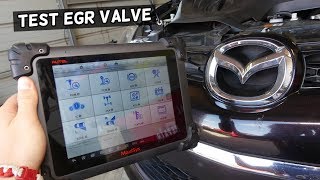
- Mazda IDS / Professional Bidirectional Scanner (e.g., Autel): Active Test: 'EGR exhaust gas recirculation valve stepping motor position' or similar. — Use this after confirming the PCM software is up-to-date. Command the valve open and closed with the engine off to listen for an audible click from the valve motor, which confirms the electrical circuit and motor are functional.
- Mazda IDS / Professional Bidirectional Scanner (e.g., Autel): Active Test: Command EGR valve open in increments (e.g., 20%, 50%, 80%) while monitoring MAF sensor live data. — Use this with the engine running at idle to verify not just that the valve opens, but that exhaust gas is actually flowing. A significant drop in MAF g/s readings confirms flow. This is the definitive test to distinguish a clogged passage/cooler from a failed valve.
- Mazda IDS / Professional Bidirectional Scanner: Special Functions: 'Initializations' or 'EGR Valve Reset' — After replacing the EGR valve, some systems require a reset procedure to learn the new valve's position and flow characteristics. This function tells the PCM that a new component has been installed.
Real Owner Repair Stories
- YouTube channel 'MotoRevs' (2018 Mazda CX-9) — Check Engine Light with code P0401.
❌ Tried (didn't work) The owner considered cleaning the valve but decided against it, opting for a more 'foolproof' replacement to ensure long-term reliability.
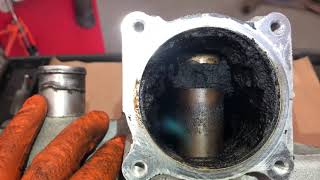
✅ What actually fixed it The owner replaced the EGR valve. The video clearly shows the old valve was extremely clogged with thick carbon buildup, confirming a mechanical blockage/failure rather than a software issue.
"I Checked Everything" — The Actual Cause
- In a case involving a similar Mazda SKYACTIV engine, a technician performed an intake manifold decarb, confirming the EGR ports into the manifold were clear. The P0401 code returned shortly after. The standard procedure (cleaning ports) was insufficient. The actual cause was a restriction further upstream in the EGR cooler. This was diagnosed by observing that the MAF reading only dropped slightly during an EGR active test, indicating a partial flow restriction that a visual inspection of the manifold ports would miss.
When the Usual Fixes Don't Work
- While the most common fix for P0401 on this vehicle is a PCM software update, there are documented cases where the physical EGR valve was the true cause of failure. In one instance, a 2018 CX-9 owner found the code was caused by an EGR valve completely seized with heavy carbon buildup; a replacement of the valve resolved the issue. This confirms that while the software should be the first check, physical inspection and testing remain critical if the software is already up-to-date.
OEM Part Supersession History
PY8V-20-300→PY8V-20-300— No supersession found. The part number appears to be stable for the EGR valve across the 2016-2018 model years.
Model Year Variations Within This Range
- 2016-2018 (pre-Jan 8, 2018 production): Vehicles with VINs lower than JM3TC**220639 are subject to overly sensitive PCM logic for detecting P0401. The fix is a software update per TSB #01-017-18-3518. Vehicles produced after this date have the updated logic from the factory.
Helpful Videos
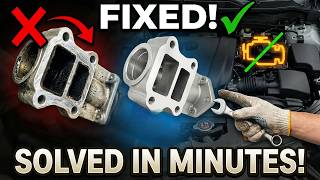
![How to Fix MAZDA P0401 Engine Code in 3 Minutes [2 DIY Methods / Only $4.13]](https://img.youtube.com/vi/NLcUFY4KuaI/mqdefault.jpg)
We Have This Part in Stock

The information in this article is provided for general reference and educational purposes only. Vehicle specifications, procedures, and part compatibility can vary by production date, trim level, and region. Always consult your vehicle's factory service manual and verify part numbers before purchasing or performing repairs. Safety-critical components such as airbags, seat belts, and braking systems should be installed by a qualified professional.
- Mazda CX-9:
- 🧭 Diagnostic Flowchart
- 🎬 Helpful Videos
- 🛍️ Shop This Part
- What's Unique About the 2016-2018 Mazda CX-9
- Symptoms You May Notice
- Most Likely Causes
- Rare But Worth Checking
- Diagnosis Steps
- Parts You'll Likely Need
- Technical Service Bulletins (TSBs) & Recalls
- Platform-Specific Known Issues
- Mechanic-Grade Diagnostic Values
- Hidden / Shadow Codes Worth Checking
- Scan Tool Commands That Help
- Real Owner Repair Stories
- "I Checked Everything" — The Actual Cause
- When the Usual Fixes Don't Work
- OEM Part Supersession History
- Model Year Variations Within This Range
- 🎟️ Get 5% Off