

P0401 on 2003-2006 Mitsubishi Lancer Evolution: EGR Flow Insufficient Causes and Fixes
On the 2003-2006 Lancer Evolution, code P0401 is most often caused by carbon buildup clogging the EGR valve and its passages. A thorough cleaning of the valve and intake manifold ports is the most common fix and costs very little in supplies. If cleaning doesn't work, suspect a faulty EGR solenoid or a cracked vacuum line. In rarer cases, a dried-out MAP sensor O-ring can be the culprit.
- Always start by cleaning the EGR valve and intake manifold passages before buying parts. This is the most common fix and is very inexpensive.
- Thoroughly inspect all vacuum lines for cracks or loose connections. Secure them with zip ties if you are running higher than stock boost.
- If cleaning doesn't work, the EGR solenoid is the next most likely culprit.
- Before replacing expensive parts, check the simple and cheap MAP sensor O-ring on the intake manifold. A leak there can trick the ECU into setting a P0401 code.
What's Unique About the 2003-2006 Mitsubishi Lancer Evolution
The 4G63 engine in the Lancer Evolution uses a straightforward vacuum-operated EGR system. While the causes are typical (carbon, failed parts), the method of detection via the MAP sensor introduces a unique and often-missed failure point: a leaking MAP sensor O-ring. Owners can spend hundreds replacing the EGR valve and solenoid, only to find the issue was a simple, inexpensive seal that prevented the ECU from correctly verifying EGR flow. Additionally, enthusiasts often note that the vacuum lines can pop off under high boost pressures, making a secure connection critical; many recommend using zip ties on all EGR-related vacuum lines. A less common but notable issue is that if the stock 1-bar MAP sensor is upgraded to a 3-bar or 4-bar unit for tuning purposes without correctly disabling the EGR test routine in the ECU flash, the P0401 code will be triggered because the voltage change seen by the ECU is different from what it expects with the stock sensor.
Generation note: This range covers the Lancer Evolution VIII (2003-2005) and Evolution IX (2006). The Evo IX introduced the MIVEC variable valve timing system, but the core EGR system components, including the valve, passages, and solenoid, are the same for both generations, making the diagnosis and repair process identical.
Symptoms You May Notice
- Check Engine Light is on
- Engine pinging or knocking, especially under load or acceleration
- Rough idle, sometimes dropping after the engine warms up
- Slight hesitation or loss of power
- Failure to pass an emissions test
- Immediately replacing the EGR valve without first cleaning the passages or checking the vacuum system. Many owners have spent hundreds on a new valve when the issue was a simple clog, a bad solenoid, a cheap vacuum line, or a $1 O-ring.
Most Likely Causes
- Clogged EGR Valve and/or Intake Manifold Passages 🔴 High Probability → Shop Engine Intake Manifold Like many engines, the 4G63 recirculates carbon-heavy exhaust gas, which naturally builds up over time, restricting flow. The small passages in the intake manifold are particularly susceptible to clogging.
How to confirm: Remove the EGR valve and visually inspect the valve's pintle and the ports on the intake manifold for heavy carbon deposits. The passages can be clogged even if the valve itself looks relatively clean.
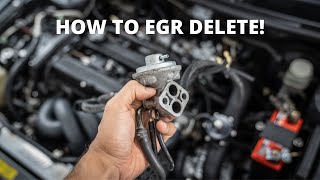
Typical fix: Thoroughly clean the EGR valve and scrape the carbon out of the intake manifold passages using carburetor cleaner, brushes, and picks. Flexible, long-reach tools like rifle cleaning brushes or specialized EGR port cleaning kits (e.g., SUR&R SRREGR312) are highly effective for cleaning the manifold runners without full removal. Replace the EGR gasket upon reinstallation. 🎬 Watch: Step-by-step guide to removing and cleaning your Evo 8 EGR.
Est. part cost: $5-$30 for cleaner, a gasket, and brushes. - Faulty EGR Vacuum Regulator Solenoid 🟡 Medium Probability Solenoids are a common failure item after many years and heat cycles. Several owners on forums reported this as the fix after cleaning the valve didn't work.
How to confirm: Test the solenoid for resistance with a multimeter. You can also try applying 12V power and ground to see if it clicks open and closed. Check that it holds vacuum when de-energized and passes vacuum when energized. The solenoid is located in a difficult-to-reach spot under the intake manifold.
Typical fix: Replace the EGR solenoid.
Est. part cost: $60-$100 - Cracked, Disconnected, or Clogged Vacuum Lines 🟡 Medium Probability
How to confirm: Visually inspect all vacuum lines running between the intake manifold, EGR solenoid, and EGR valve for cracks, loose fittings, or blockages. A very common failure is the hose simply popping off the EGR valve nipple. Pay special attention to a small inline restrictor 'pill' that may be present in one of the hoses, as it can become clogged with debris.
Typical fix: Replace any damaged or clogged vacuum hoses. Ensure all connections are secure, using zip ties for added security on high-boost applications. If the restrictor pill is clogged, it can often be cleaned with carburetor cleaner and compressed air.
Est. part cost: $5-$20 - Leaking MAP Sensor O-Ring ⚪ Low Probability → Shop Manifold Absolute Pressure Sensor The rubber O-ring can become hard and brittle over time, causing a small, unmetered air leak. This prevents the ECU from seeing the pressure drop required to confirm EGR flow, even if the EGR system is working perfectly.
How to confirm: Remove the MAP sensor from the top of the intake manifold (held by one bolt) and inspect the O-ring for cracking, flattening, or brittleness. One owner described the failed O-ring as having 'turned into a c-ring'.
Typical fix: Replace the MAP sensor O-ring. This is a very inexpensive part and is worth checking before replacing more expensive components. One owner spent over $400 on other parts before discovering this was the simple fix.
Est. part cost: $1-$5
Rare But Worth Checking
- Failed EGR Valve Diaphragm: → Shop Exhaust Gas Recirculation (EGR) Valve If applying vacuum directly to the valve with a hand pump causes no change in idle and the passages are confirmed to be clean, the internal diaphragm of the valve may have ruptured.
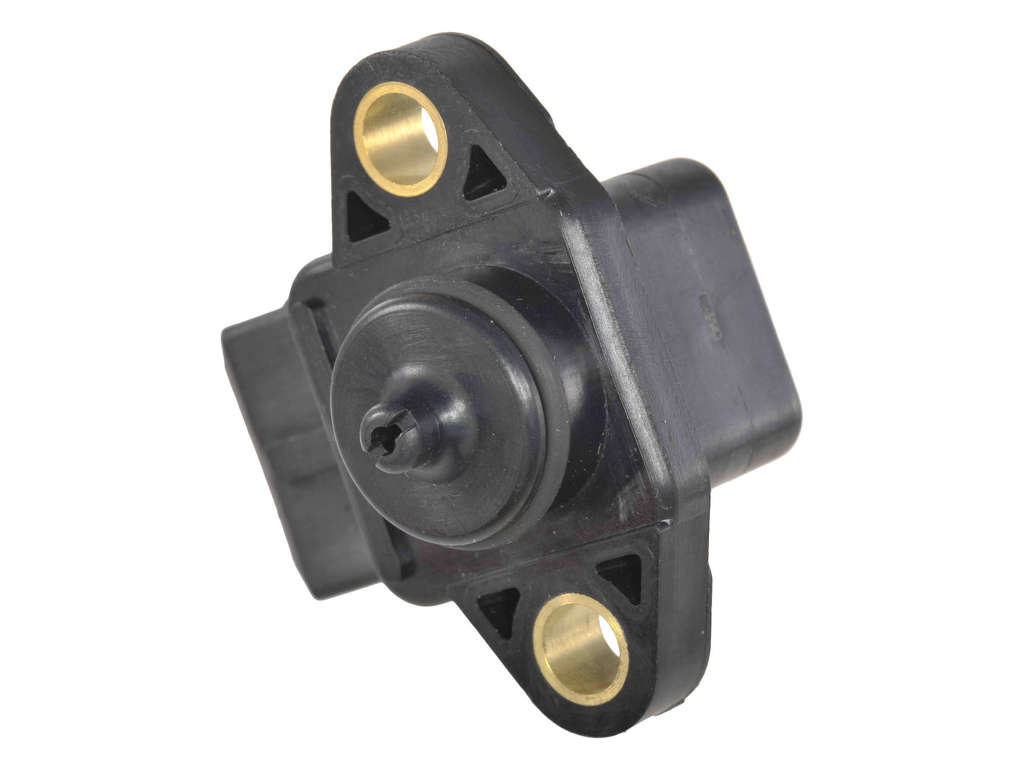
- Faulty Manifold Absolute Pressure (MAP) Sensor: → Shop Manifold Absolute Pressure Sensor If the sensor itself fails, it cannot report the pressure change to the ECU. This will usually be accompanied by other driveability issues or codes and is less common than the O-ring failing.
Diagnosis Steps
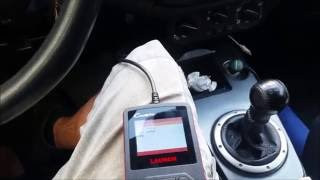
- Confirm the P0401 code is present using an OBD-II scanner. 🎬 See this helpful walkthrough for diagnosing and repairing the P0401 code.
- Visually inspect all vacuum hoses connected to the EGR solenoid and EGR valve. A very common point of failure is the hose popping off the EGR valve itself. Ensure they are properly routed, not cracked or broken, and are securely attached. Consider adding zip ties.
- With the engine idling, use a hand vacuum pump to apply vacuum directly to the EGR valve's port. The engine idle should become rough or stumble. If it does, the valve is opening and the passages are likely clear. If the idle does not change, the passages are likely clogged or the valve is stuck/has a failed diaphragm.
- If the passages are suspected to be clogged, remove the EGR valve (two 12mm nuts). Inspect the ports on the intake manifold and the valve itself for carbon buildup. Clean thoroughly with brushes, picks, and carb cleaner.
- While the system is accessible, remove the MAP sensor (one 8mm or 10mm bolt on top of the intake manifold) and inspect its O-ring for damage. Replace if it appears dry, cracked, or flattened.
- Test the EGR solenoid. Check for a click when applying 12V and verify it controls the flow of vacuum correctly. This is difficult due to its location under the intake manifold.
- If all components test good and passages are clean, check for a clogged restrictor pill inside one of the small vacuum hoses leading to the solenoid.
- After performing repairs, clear the code with the scanner and perform a drive cycle (including periods of cruising and idling when warm) to see if the code returns.
Parts You'll Likely Need
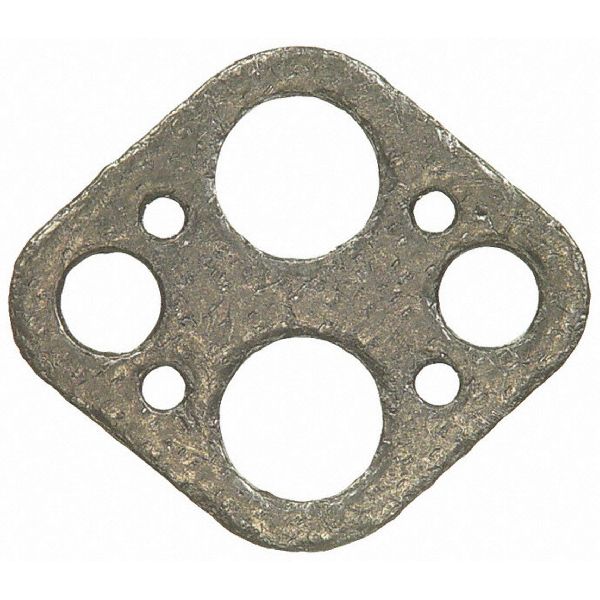
- EGR Valve Gasket
(OEM #MD119127)— This metal gasket should be replaced whenever the EGR valve is removed for cleaning or replacement to ensure a proper seal.
Trusted brands: Mitsubishi OEM, Fel-Pro, Victor Reinz
OEM price range: $5-$10
Aftermarket price range: $2-$5 - EGR Vacuum Regulator Solenoid
(OEM #MR560952)— This solenoid is a common failure point that prevents the EGR valve from opening, and is often the culprit if cleaning the valve doesn't resolve the code. One owner on EvolutionM fixed their P0401 by replacing this part after cleaning and a new valve failed to solve it.
Trusted brands: Mitsubishi OEM, Dorman, Standard Motor Products
OEM price range: $80-$120
Aftermarket price range: $50-$90 - EGR Valve
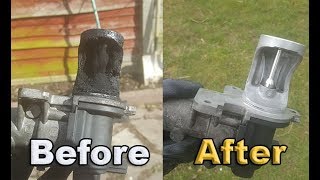
(OEM #MR560582)— If the valve is mechanically stuck, its diaphragm is ruptured, or it's too clogged to be cleaned effectively, replacement is necessary. 🎬 Watch: A masterclass on how to thoroughly clean any EGR valve.
Trusted brands: Mitsubishi OEM
OEM price range: $250-$350
Aftermarket price range: $100-$180 - MAP Sensor O-Ring — A rare but critical failure point. The OEM part is not typically sold separately, but a generic metric O-ring from an assortment kit will work. One owner used a kit from Amazon to find a suitable replacement.
Trusted brands: Generic O-ring kit
OEM price range: N/A
Aftermarket price range: $1-$10
Technical Service Bulletins (TSBs) & Recalls
While specific to other Mitsubishi models, manufacturer service bulletins highlight the brand's approach to this code. For instance, TSB Bulletin #TSB-23-13-004 provides instructions to reprogram the ECU with countermeasure software when the check engine light illuminates with DTC P0401 or P0400.
Platform-Specific Known Issues
- Vacuum Line Security: Due to the high-boost nature of the 4G63T, the vacuum line for the EGR valve is notoriously prone to popping off its nipple, causing an immediate P0401 code. Many owners on forums strongly recommend securing this and other vacuum lines with small zip ties as a preventative measure.
- EGR Solenoid Location: The EGR solenoid is located on the underside of the intake manifold, making it very difficult to access without a vehicle lift. One owner on a forum paid a shop to replace it for this reason.
Scan Tool Commands That Help
- Mitsubishi MUT-II / MUT-III or advanced aftermarket scanner: EGR Solenoid Actuator Test / Active Test — This command allows the technician to manually cycle the EGR solenoid to verify it clicks and passes vacuum without having to physically access the hard-to-reach solenoid. It can also be used while monitoring MAP sensor data to see if the ECU is capable of detecting a pressure change when the system is activated, helping to isolate a sensor issue from a flow issue.
Wiring & Ground Locations
- ECU Pin 6 — On the main engine control unit (ECU) connector.. This is the signal wire that the ECU uses to command the EGR solenoid valve to open. A continuity check from this pin to the EGR solenoid connector can rule out a broken wire in the harness.
- ECU Pin 13 / Pin 26 — On the main engine control unit (ECU) connector.. These are the primary chassis ground pins for the ECU. A poor connection at these pins can cause a variety of erratic issues, including incorrect sensor readings and faulty solenoid operation.
- Intake Manifold Ground — A small wire grounding the intake manifold to the chassis or engine block.. Forum users note that the factory ground wire on the intake manifold is small. Ensuring this ground is clean and secure is important as several sensors, including potentially the MAP sensor which is critical for this code, are grounded through the manifold.
Real Owner Repair Stories
- EvolutionM.net forum user (2003 Lancer ES (Non-turbo, but same EGR principle)) — Check Engine Light with P0401 (low flow).
❌ Tried (didn't work) Replaced the EGR valve, which was found to be completely clogged with carbon., Cleaned out all associated passages., After the light returned, a second mechanic performed a more thorough cleaning with a machine to suck out any remaining deposits.
✅ What actually fixed it The user did not post a final fix, but received a waiver to pass inspection. The story is valuable as it demonstrates that even after replacing a confirmed-bad EGR valve and performing multiple cleanings, the code can persist, pointing towards a secondary failure like the solenoid, a vacuum leak, or a sensor issue that was not yet diagnosed. - NHTSA ODI #10759569 — An owner of a similar Mitsubishi model reported that after taking the vehicle in for a tune-up, failure codes for P0301, P0401, and the EGR appeared. While the codes were initially cleared, the P0301 reappeared even after the vehicle was repaired.
OEM Part Supersession History
K5T48397→MR560952— Part number consolidation and potential minor revision by Mitsubishi.
Heads up: MR560952 is the correct and most current OEM part number for the EGR solenoid for the 2003-2006 Lancer Evolution. K5T48397 may be found on older diagrams or cross-references but MR560952 is the service part.
Model Year Variations Within This Range
- 2006 (Evolution IX): The 2006 Evo IX engine introduced MIVEC (Mitsubishi's variable valve timing) on the intake cam, along with a larger turbo compressor and different coolant passages in the head. This resulted in a different powerband and slightly higher stock horsepower (286 hp vs 276 hp). However, the core EGR system, including the valve (MR560582) and solenoid (MR560952), remained the same as the Evo VIII, making the P0401 diagnosis identical across the 2003-2006 range.
Diagnostic Flowchart
Other Known Issues on This Vehicle
Issues unrelated to this code that are worth knowing about as an owner of this generation:
- Active Yaw Control (AYC/ACD) Pump Failure 🔴 High — Very common, especially on cars driven in wet or winter climates. The pump is located behind the passenger-side rear wheel, where it is exposed to road salt and moisture, leading to corrosion and failure, often under 60,000 miles. (Ref: No recall, but a very common owner complaint. Many specialists offer 'boot relocation kits' to move the pump into the trunk for protection.)
- Transfer Case (T-Case) Whine/Failure 🔴 High — Common, particularly on earlier Evo VIII models, but can affect all years. Failures can occur even at low mileage (under 10,000 miles in some cases) and are often attributed to improper fluid filling or bearing/seal issues. (Ref: No recall, but a widely documented problem. Owners often send their transfer cases to specialists like ShepTrans or TRE for rebuilding.)
- 5th Gear Synchronizer Failure (2003 models) 🟠 Medium — A known defect primarily on 2003 models, causing grinding when shifting into 5th gear. (Ref: Mitsubishi issued a TSB (Technical Service Bulletin) with newly configured parts to address this. TSB No: 03-23-005.)
- Clutch Master Cylinder Failure (Evo X, but relevant) 🟠 Medium — While the main recall was for the 2008-2013 Evo X, clutch hydraulic issues are not unheard of on the earlier models and can lead to difficulty shifting. (Ref: Recall SR-13-009 for Evo X.)
- Front Crossmember Corrosion 🔴 High — Affects vehicles operated in salt-belt states. The front crossmember can rust severely, compromising structural integrity. (Ref: Yes, a safety recall was issued. Owners can check their VIN on Mitsubishi's recall site.)
Used vs. New Parts: Buying Guide for This Vehicle
When a used part is the smart pick: A used EGR valve (MR560582) or EGR solenoid (MR560952) from a reputable JDM or used parts supplier can be a cost-effective option, provided it comes from a low-mileage donor. Since these are not high-wear mechanical parts like an engine block, a functional used component can offer significant savings over a new OEM part.
Donor-vehicle mileage cap: roughly under 80000 miles for the part to have meaningful remaining life.
What to inspect on the donor part:
- For an EGR valve, inspect the pintle and diaphragm port for excessive corrosion or damage. Ask the seller if it has been cleaned or tested.
- For an EGR solenoid, check the plastic housing for cracks and ensure the electrical connector pins are straight and free of corrosion.
- Verify the part number matches exactly (MR560582 for the valve, MR560952 for the solenoid).
- Prefer sellers who offer a short warranty or return period in case the part is non-functional.
OEM-only on this vehicle (don't cheap out):
- While aftermarket solenoids exist, many forum users prefer to stick with a used or new OEM Mitsubishi solenoid (MR560952) due to its critical role and difficult location, minimizing the risk of having to do the job twice.
Aftermarket brands forum-validated for this vehicle:
- Dorman offers replacement EGR solenoids (e.g., 911-850) that are widely available, though OEM is often preferred by enthusiasts for fit and longevity.
Brands owners have reported issues with on this vehicle:
- Unbranded, no-name EGR valves and solenoids from online marketplaces should be avoided. The risk of premature failure is high, and the labor to replace the solenoid in particular makes it not worth the initial cost savings.
Real Owner Stories
Aggregated from forums and TSBs cited above. Mileages and costs reflect what owners reported in those sources.
2003-2006 Mitsubishi Lancer Evolution 2.0L Turbo
Symptoms: The owner spent over $400 on various parts trying to fix a P0401 code, but the light remained on.
What fixed it: Replacing the MAP sensor O-ring, which had 'turned into a c-ring' due to brittleness.
Cost: $1-$5
Source hint: Article context section 'Leaking MAP Sensor O-Ring' citing source
2003-2006 Mitsubishi Lancer Evolution 2.0L Turbo
Symptoms: P0401 code triggered by a vacuum hose failure.
What fixed it: The vacuum hose had simply popped off the EGR valve nipple; it was reattached and secured with zip ties.
Source hint: Article context section 'Vacuum Line Security' citing source
2003-2006 Mitsubishi Lancer Evolution 2.0L Turbo
Symptoms: Check engine light for P0401; cleaning the EGR valve itself did not resolve the issue.
What fixed it: Replacing the EGR vacuum regulator solenoid located under the intake manifold after it failed to click during a 12V test.
Cost: $60-$100
Source hint: Article context section 'Faulty EGR Vacuum Regulator Solenoid' citing sources
Related OBD-II Codes
Frequently Asked Questions
Is there a TSB for the 5th gear grinding issue on my 2003 Mitsubishi Lancer Evolution?
Why does the EGR vacuum line keep popping off my Evo's intake manifold?
I've cleaned my EGR valve but the P0401 code persists. What else should I check on the 4G63?
Where is the EGR solenoid located on the 2003-2006 Evolution, and can I change it myself?
Can a clogged 'restrictor pill' cause a P0401 on my Lancer Evolution?
Is the Active Yaw Control (AYC) pump failure related to the EGR system?
Helpful Videos
We Have This Part in Stock


The information in this article is provided for general reference and educational purposes only. Vehicle specifications, procedures, and part compatibility can vary by production date, trim level, and region. Always consult your vehicle's factory service manual and verify part numbers before purchasing or performing repairs. Safety-critical components such as airbags, seat belts, and braking systems should be installed by a qualified professional.
- Mitsubishi Lancer Evolution:
- 🧭 Diagnostic Flowchart
- 🎬 Helpful Videos
- 🛍️ Shop This Part
- What's Unique About the 2003-2006 Mitsubishi Lancer Evolution
- Symptoms You May Notice
- Most Likely Causes
- Rare But Worth Checking
- Diagnosis Steps
- Parts You'll Likely Need
- Technical Service Bulletins (TSBs) & Recalls
- Platform-Specific Known Issues
- Scan Tool Commands That Help
- Wiring & Ground Locations
- Real Owner Repair Stories
- OEM Part Supersession History
- Model Year Variations Within This Range
- Other Known Issues on This Vehicle
- Used vs. New Parts: Buying Guide for This Vehicle
- Real Owner Stories
- 2003-2006 Mitsubishi Lancer Evolution 2.0L Turbo
- 2003-2006 Mitsubishi Lancer Evolution 2.0L Turbo
- 2003-2006 Mitsubishi Lancer Evolution 2.0L Turbo
- Related OBD-II Codes
- Frequently Asked Questions
- 🎟️ Get 5% Off