

P0401 on 2014-2018 Subaru Forester: EGR Flow Insufficient Causes and Fixes
For a 2014-2018 Subaru Forester, code P0401 almost always points to a faulty or clogged EGR valve, OEM Part Number 14710AA741. Cleaning may work temporarily, but the electronic motor in the valve often fails, requiring full replacement. Expect to pay $150-$300 for a new valve.
- P0401 on a 2014-2018 Forester means the EGR system isn't flowing enough exhaust gas.
- The most likely cause is a carbon-clogged or, more often, an electrically failed EGR valve (Part No. 14710AA741).
- Before replacing the valve, remove it and inspect both the valve and the connecting passages for carbon buildup.
- Cleaning the valve and passages may fix the issue temporarily, but replacement of the EGR valve is often the permanent fix due to internal electronic failure.
- This is a DIY-friendly repair for someone with basic tools, typically taking about an hour. Always use a new gasket (Part No. 14719AA020).
What's Unique About the 2014-2018 Subaru Forester
On the 4th generation Subaru Forester with the 2.5L FB25B engine, the P0401 code is a relatively common issue. While many vehicles can suffer from clogged EGR passages, Foresters of this era are particularly known for the electronic EGR valve itself failing internally. The failure is often in the electronic stepper motor that actuates the valve, not just carbon buildup. For this reason, cleaning the valve and passages can sometimes resolve the issue temporarily, but many owners and technicians report that replacing the entire EGR valve assembly is the most permanent solution.
Symptoms You May Notice
- Check Engine Light is on
- Engine pinging or knocking, especially during acceleration or under load
- Rough idling or stalling
- Reduced fuel economy
- Failure to pass an emissions test
- Replacing the EGR valve without cleaning the corresponding passages in the intake manifold. If the passages are blocked, a new valve will not fix the flow issue.
- Assuming cleaning the valve is a permanent fix. Many owners report the P0401 code returning weeks or months later because the valve's electronic motor was the actual point of failure.
Most Likely Causes
- Faulty or Clogged EGR Valve 🔴 High Probability → Shop Exhaust Gas Recirculation (EGR) Valve The EGR valve on this platform is prone to carbon buildup, which can cause the internal pintle to stick. More commonly, the electronic motor that operates the valve can also fail, preventing it from opening and closing correctly, rendering cleaning ineffective.
How to confirm: Remove the EGR valve (typically held by two bolts) and inspect its inlet and outlet ports for heavy carbon deposits. You can try to manually actuate the valve pintle with a small tool to see if it moves freely. A professional scan tool can also command the valve to open while monitoring engine data for a change, confirming electrical function. Resistance testing across the valve's pins can also identify an electrical failure.
Typical fix: Thoroughly clean the valve and the mating passages with carburetor cleaner. If cleaning doesn't work or the code returns, the valve is likely seized or electrically faulty and must be replaced with a new unit (OEM part 14710AA741).
Est. part cost: $150-$300 - Clogged EGR Passages 🟡 Medium Probability Over time, carbon from the exhaust gas can build up and restrict the small passages in the intake manifold and the pipe leading from the exhaust.
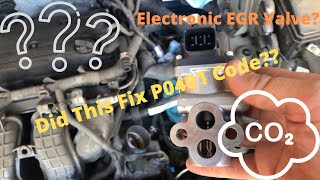
How to confirm: When the EGR valve is removed for inspection, use a small brush or pick to clean and check the passages it connects to. If they are heavily caked with carbon, they are a likely contributor to the insufficient flow. 🎬 See a quick demonstration of diagnosing EGR insufficient flow issues.
Typical fix: Physically clean the carbon out of the EGR pipe and the ports on the intake manifold. This can often be done with brushes and carb cleaner once the EGR valve is removed.
Est. part cost: $5-$20 (for cleaning supplies)
Rare But Worth Checking
- Faulty MAP Sensor: → Shop Manifold Absolute Pressure Sensor The Manifold Absolute Pressure (MAP) sensor helps the ECU determine if the EGR valve is flowing. If the MAP sensor provides incorrect readings, the ECU might mistakenly think there is an EGR flow problem. This is rare and would likely be accompanied by other codes.
- Wiring or Connector Issue: A damaged wire or a corroded connector at the EGR valve can prevent it from receiving the signal to open. This is uncommon but should be checked before replacing the valve.
Diagnosis Steps
- Use an OBD-II scanner to confirm P0401 is the only code present. If other codes exist, address them first.
- Perform a visual inspection of the EGR valve, its electrical connector, and wiring for any obvious damage.
- With the engine off, remove the EGR valve. It is typically mounted to the intake manifold with two 12mm bolts.
- Inspect the valve and the passages it connects to for heavy carbon buildup.
- Clean the EGR valve and passages thoroughly using a quality carburetor cleaner and a brush. Ensure the valve's pintle moves freely after cleaning.
- Reinstall the cleaned EGR valve with a new gasket (OEM part 14719AA020 is recommended). Clear the trouble code with the scanner and perform a test drive to see if the code returns.
- If the code returns after cleaning, the EGR valve is likely electrically faulty and needs to be replaced. The recommended OEM part is 14710AA741. 🎬 Follow this step-by-step guide to replacing a faulty EGR valve.
- If you have an advanced scan tool, you can command the EGR valve to open while monitoring the MAP sensor reading or engine RPM at idle. A change indicates the valve is working; no change suggests a failed valve or a complete blockage.
Parts You'll Likely Need
- EGR Valve
(OEM #14710AA741)— This is the most common failure point for code P0401 on this vehicle. The internal mechanism either clogs with carbon or the electronic actuator fails.
Trusted brands: Subaru (OEM), Standard Motor Products, Holstein
OEM price range: $250-$350
Aftermarket price range: $150-$250 - EGR Valve Gasket
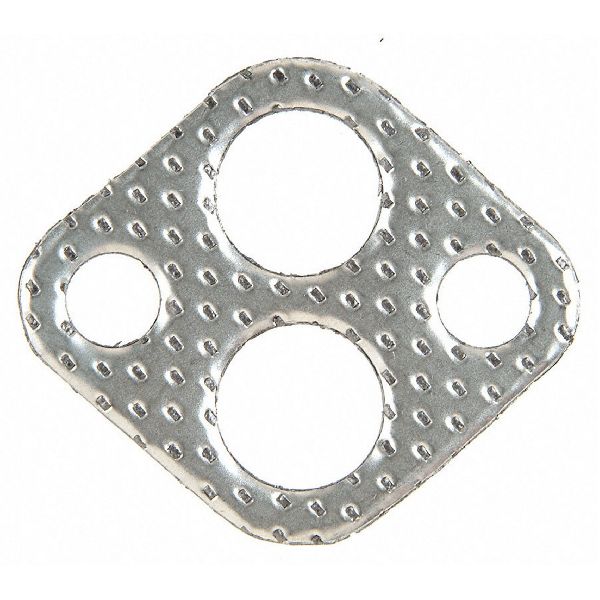
(OEM #14719AA020)— The gasket should always be replaced whenever the EGR valve is removed to prevent exhaust leaks.
Trusted brands: Subaru (OEM), Fel-Pro, Mahle
OEM price range: $10-$20
Aftermarket price range: $5-$15
Platform-Specific Known Issues
- Owner Experience: A common story on forums is an owner first attempts to clean the EGR valve, which resolves the P0401 code for a short period (days to months), but the code eventually returns. Replacement of the valve assembly then permanently resolves the issue, indicating the electronic portion of the valve was the root cause.
- On some Subaru models, a check engine light for an emissions code like P0401 will also cause the traction control and cruise control systems to be disabled, illuminating their respective lights on the dashboard as a safety precaution.
Mechanic-Grade Diagnostic Values
- EGR Valve Actuator Coil Resistance — expected: Approximately 16-24 Ohms. Failure: A reading significantly outside this range (e.g., open circuit/infinite resistance or a dead short/zero resistance) indicates a failed coil in the valve motor.
Scan Tool Commands That Help
- Subaru Select Monitor (SSM): Active Test: 'EGR Valve Check' or 'Test of EGR system' — Use this function with the engine at idle to command the EGR valve to open. A noticeable drop in engine RPM or rough running confirms the valve is physically opening and passages are not completely blocked. No change in engine behavior points to a stuck valve or a complete blockage.
Wiring & Ground Locations
- EGR Valve Connector — On top of the EGR valve, which is mounted to the engine's intake manifold.. This 6-pin connector provides power to the actuator motor and sends the valve position back to the ECU. Corrosion or damage here can interrupt the signal, causing a P0401 code even if the valve itself is functional. Resistance tests are performed at these pins.
Real Owner Repair Stories
- Reddit r/MechanicAdvice (2019 Subaru Crosstrek (uses a similar FB-family engine and EGR system)) — Check Engine Light with code P0401.
❌ Tried (didn't work) Removed and cleaned the EGR valve., Cleaned the intake plates., Replaced intake, EGR pipe, and EGR valve gaskets.
✅ What actually fixed it The code returned after a few weeks. The final, successful repair was replacing both the EGR valve and the EGR cooler assembly.
When the Usual Fixes Don't Work
- While cleaning the EGR valve and passages is a common first step, there is strong evidence from owner experiences that this is often a temporary fix. In one documented case for a similar Subaru engine, the P0401 code returned weeks after a thorough cleaning. The permanent solution required replacing both the EGR valve and the EGR cooler, indicating that the electronic failure of the valve or a blockage in the cooler was the true root cause that cleaning could not address.
OEM Part Supersession History
14710AA741→N/A - Incorrect Part for Application— This part number is widely listed for the 2.0L EE20Z Diesel engine found in some European and other market Foresters.
Heads up: This part is for the DIESEL engine and is incorrect for the 2.5L FB25B gasoline engine specified in this article.14710AA810→14710AA830 (Likely)— Part number 14710AA810 is listed for the FB25 engine. Part number 14710AA830 is listed for FB20/FB25 engines from 2014 onwards, suggesting it may be a newer revision or supersession. Buyers should verify the correct part number with a dealer using their VIN.
Model Year Variations Within This Range
- 2017-2018: The Forester received a facelift for the 2017 model year which included updated styling, interior refinements, and additional safety features. However, the 2.5L FB25B powertrain was not changed, so the causes and fixes for code P0401 remain consistent across the entire 2014-2018 range.
Diagnostic Flowchart
Other Known Issues on This Vehicle
Issues unrelated to this code that are worth knowing about as an owner of this generation:
- Excessive Oil Consumption 🔴 High — Common in earlier years (2014-2015) of this generation, particularly with the 2.5L FB25 engine. Caused by issues with piston ring design. (Ref: Subject of a class-action lawsuit which led to extended warranties and engine replacements for some owners, but no formal recall.)
- CVT Transmission Failure/Hesitation 🔴 High — Widespread enough that Subaru extended the CVT warranty for most vehicles in this generation. Symptoms include shuddering, hesitation, or complete failure. (Ref: TSB 16-115-18 (and others) extended the CVT warranty to 10 years/100,000 miles for many affected vehicles.)
- Premature Rear Wheel Bearing Failure 🟠 Medium — A higher-than-average failure rate is reported by owners and technicians, often presenting as a humming or roaring noise from the rear of the vehicle that changes with speed.
- Failing A/C Condenser 🟠 Medium — The A/C condenser is susceptible to leaks from corrosion or road debris, leading to loss of A/C function. (Ref: Subaru issued Service Program WRB-21R for certain 2017-2018 models to inspect and replace faulty condensers.)
- Cracked Windshields 🟡 Low — Many owners report that the windshields on this generation are unusually prone to cracking from minor impacts.
Used vs. New Parts: Buying Guide for This Vehicle
When a used part is the smart pick: Buying a used EGR valve is not recommended for this vehicle. The primary failure mode is often the internal electronic motor, which is a wear item. A used part carries a high risk of having the same issue or failing shortly after installation.
Donor-vehicle mileage cap: roughly under 40000 miles for the part to have meaningful remaining life.
What to inspect on the donor part:
- Verify the donor vehicle's mileage is very low.
- Inspect for any physical damage to the housing or connector.
- Check that the electrical pins in the connector are clean and not corroded.
- Ask for a warranty or return period from the seller.
OEM-only on this vehicle (don't cheap out):
- EGR Valve
Aftermarket brands forum-validated for this vehicle:
- Standard Motor Products (SMP)
- Denso (if available, as they are often an OEM supplier)
Brands owners have reported issues with on this vehicle:
- Unbranded, low-cost EGR valves from online marketplaces are a significant gamble due to the precise electronic control required for proper function.
Real Owner Stories
Aggregated from forums and TSBs cited above. Mileages and costs reflect what owners reported in those sources.
2019 Subaru Crosstrek
Symptoms: The P0401 code appeared and simultaneously disabled the cruise control and lane assist systems.
What fixed it: The owner had to replace both the EGR valve and the EGR cooler to solve the problem after cleaning proved insufficient.
Source hint: Reddit r/MechanicAdvice thread titled '2019 Subaru Crosstrek - P0401 engine code'
2014-2018 Subaru Forester
Symptoms: Check engine light for P0401; owner attempted to clean the valve which resolved the code for a short period (days to months) before it returned.
What fixed it: Replacement of the valve assembly permanently resolved the issue, as the electronic portion of the valve was the root cause.
Source hint: vehicle_specific_issues: Owner Experience
2019 Subaru Crosstrek
Symptoms: Check engine light (P0401) causing cascading system deactivation including cruise control and lane assist.
What fixed it: Replacement with OEM part 14710AA741 is cited as the definitive fix.
Source hint: Reddit r/subaru
Related OBD-II Codes
Frequently Asked Questions
Why did my traction control and cruise control lights come on at the same time as the P0401 code?
Can I just clean the EGR valve on my Forester to fix the P0401 code?
What specific parts do I need to replace the EGR valve on my 2014-2018 Forester?
Is there a TSB for the CVT transmission issues mentioned in the common problems section?
Are there any other Subaru models that share this specific EGR failure?
Does the A/C condenser failure on 2017-2018 Foresters have a specific repair program?
Helpful Videos
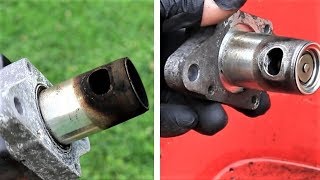
![How to Fix P0401 Engine Code in 3 Minutes [2 DIY Methods / Only $4.13]](https://img.youtube.com/vi/T8PRuzzGR-k/mqdefault.jpg)

We Have This Part in Stock


The information in this article is provided for general reference and educational purposes only. Vehicle specifications, procedures, and part compatibility can vary by production date, trim level, and region. Always consult your vehicle's factory service manual and verify part numbers before purchasing or performing repairs. Safety-critical components such as airbags, seat belts, and braking systems should be installed by a qualified professional.
- Subaru Forester:
- 🧭 Diagnostic Flowchart
- 🎬 Helpful Videos
- 🛍️ Shop This Part
- What's Unique About the 2014-2018 Subaru Forester
- Symptoms You May Notice
- Most Likely Causes
- Rare But Worth Checking
- Diagnosis Steps
- Parts You'll Likely Need
- Platform-Specific Known Issues
- Mechanic-Grade Diagnostic Values
- Scan Tool Commands That Help
- Wiring & Ground Locations
- Real Owner Repair Stories
- When the Usual Fixes Don't Work
- OEM Part Supersession History
- Model Year Variations Within This Range
- Other Known Issues on This Vehicle
- Used vs. New Parts: Buying Guide for This Vehicle
- Real Owner Stories
- 2019 Subaru Crosstrek
- 2014-2018 Subaru Forester
- 2019 Subaru Crosstrek
- Related OBD-II Codes
- Frequently Asked Questions
- 🎟️ Get 5% Off