

P0401 on 2009-2014 Subaru Outback 2.0L Diesel: EGR Insufficient Flow Causes and Fixes
On the Subaru EE20 Boxer Diesel, P0401 is almost always caused by heavy carbon (soot) buildup clogging the EGR valve, EGR cooler, or intake passages. This is especially common on vehicles used for frequent short trips. The fix is a thorough cleaning of the entire EGR path, or replacing the EGR valve if it's seized or electrically failed. Expect multiple dash lights (Check Engine, Traction Control, Parking Brake) to illuminate at once, which is a signature Subaru symptom pattern for this fault.
- P0401 on your Subaru diesel is almost certainly a clogged EGR system from soot, not a bad sensor.
- Don't be alarmed by the 'Christmas tree' of warning lights (Engine, Traction, Park Brake); they are all triggered by this single EGR fault.
- The fix requires cleaning or replacing the EGR valve. For a lasting repair, the EGR cooler and intake passages must also be cleaned.
- This is a labor-intensive DIY job (Difficulty 4/5) due to poor component access. A shop will likely charge for 3-5 hours of labor.
- If you also have a P0409 code, you will need to replace the EGR valve, as its internal motor has failed.
What's Unique About the 2009-2014 Subaru Outback
The EE20 Boxer Diesel engine is known for producing significant soot, which makes its EGR system highly susceptible to clogging. Unlike many gasoline engines where P0401 might point to a faulty sensor, on this diesel, the cause is overwhelmingly a physical blockage from carbon buildup. A unique and often confusing symptom on this platform is the illumination of the Check Engine, Traction Control, and electronic parking brake lights all at once, accompanied by a flashing cruise control light, all triggered by this single EGR fault. This specific light combination is a well-documented Subaru trait that can lead to misdiagnosis by mechanics unfamiliar with the brand.
Symptoms You May Notice
- Check Engine Light is on
- Traction Control/Vehicle Stability Control light is on
- Electronic Parking Brake light is on
- Cruise control light is flashing or disabled
- Reduced engine power or sluggish acceleration
- Rough or uneven idle
- Increased fuel consumption
- Engine knocking or pinging, especially during acceleration
- Replacing the electronic parking brake module. Mechanics unfamiliar with Subaru's warning light strategy may misinterpret the combination of dash lights and incorrectly blame the parking brake system.
- Replacing only the EGR valve without cleaning the EGR cooler and intake passages. The clog often exists in the entire system, and just replacing the valve will not solve the root cause of the insufficient flow. The code may return shortly after the repair.
- Assuming a faulty sensor. While sensors like the MAP can fail, on the EE20 engine, a physical blockage from soot is a far more probable cause for P0401.
Most Likely Causes
- Clogged EGR Valve 🔴 High Probability → Shop Exhaust Gas Recirculation (EGR) Valve The EE20 diesel engine produces a lot of soot, which builds up in the EGR valve over time, especially with frequent short trips where the engine doesn't reach optimal temperature for long periods. This carbon buildup can cause the valve's pintle to stick, preventing it from opening.
How to confirm: Remove the EGR valve from the engine. Visually inspect the inlet and outlet ports for thick, black carbon deposits. The valve should be cleaned or replaced if it is heavily caked with soot or if the internal motor has burned out from trying to move a stuck valve, which often triggers a companion P0409 code.
Typical fix: Remove the valve and thoroughly clean it with a dedicated EGR/carburetor cleaner 🎬 Watch: Two quick DIY methods to clear a P0401 code, brushes, and picks. If cleaning is unsuccessful or the valve is electrically faulty, it must be replaced. Ensure the o-ring/gasket is not damaged by solvents and is replaced if necessary.
Est. part cost: $150-$300 - Clogged EGR Passages and/or EGR Cooler 🟡 Medium Probability → Shop Exhaust Gas Recirculation (EGR) Valve Soot from the diesel exhaust not only clogs the valve but also the entire path, including the EGR cooler and the pipes leading into the intake manifold. The cooler's small internal fins are particularly susceptible to blockage.
How to confirm: When the EGR valve is removed, inspect the connecting pipes and the port on the intake manifold for heavy carbon buildup. The EGR cooler may need to be removed for a full inspection and cleaning. A restricted cooler will prevent adequate flow even with a clean valve. In some cases, the cooler is the primary restriction, not the valve.
Typical fix: Remove the EGR cooler and associated pipes. Clean them thoroughly with EGR cleaner, brushes, and compressed air to remove all soot deposits. This is often done at the same time as cleaning or replacing the EGR valve for a complete repair.
Est. part cost: $0 (if cleaning), $300-$600 (for a new cooler) - Clogged Intake Manifold ⚪ Low Probability → Shop Engine Intake Manifold Over many miles, the combination of EGR soot and oil vapor from the crankcase ventilation (PCV) system can create a thick, tar-like sludge that coats the inside of the intake manifold, severely restricting airflow to the cylinders.
How to confirm: This is harder to confirm without significant disassembly. It's usually diagnosed after cleaning the EGR valve and cooler doesn't resolve the issue. Removing the manifold reveals heavy sludge buildup. This is a known issue on many turbo-diesel engines, not just Subaru.
Typical fix: The intake manifold must be removed from the engine and manually cleaned using scrapers, brushes, and solvents. This is a labor-intensive job but crucial for restoring performance on high-mileage engines.
Est. part cost: $0 (for cleaning)
Diagnosis Steps
- Confirm the P0401 code (and any others like P0409) with an OBD-II scanner.
- Note the specific Subaru symptom pattern: Check Engine, Traction Control, and Parking Brake lights all on at once, with a flashing cruise light.
- Gain access to the EGR system. This will require removing the top-mounted intercooler.
- Disconnect the EGR electrical connector and remove the EGR valve. This can be a difficult job as bolts may be hard to access and require patience and specific tools like wobble extensions.
- Visually inspect the EGR valve and its ports for heavy, dry carbon buildup. Check if the valve pintle moves freely; if it's stuck, it has failed.
- Inspect the EGR cooler and the pipes connecting it to the valve and exhaust manifold for soot blockages. Use a pick or small brush to gauge the level of restriction.
- Inspect the intake manifold ports for oily, tar-like sludge where the EGR gasses mix with crankcase vapors.
- If components are heavily clogged, the primary cause has been found. Proceed with thorough cleaning or replacement of the affected parts.
- If parts are clean but codes persist, investigate the electrical circuit for the EGR valve (relevant for P0409) and check sensor data (MAP) for expected changes during EGR operation using a capable scan tool.
- After cleaning/replacing parts, use new gaskets to prevent leaks. Reassemble everything, clear the codes, and perform a test drive that includes varied engine loads to ensure the lights do not return.
Parts You'll Likely Need
- EGR Valve
(OEM #14710AA740)— This is the most common failure point. It either clogs with soot until it sticks closed, or the internal motor burns out trying to operate a stuck valve. Part number 14710AA741 is a noted supersession.
Trusted brands: Subaru (OEM)
OEM price range: $200-$350
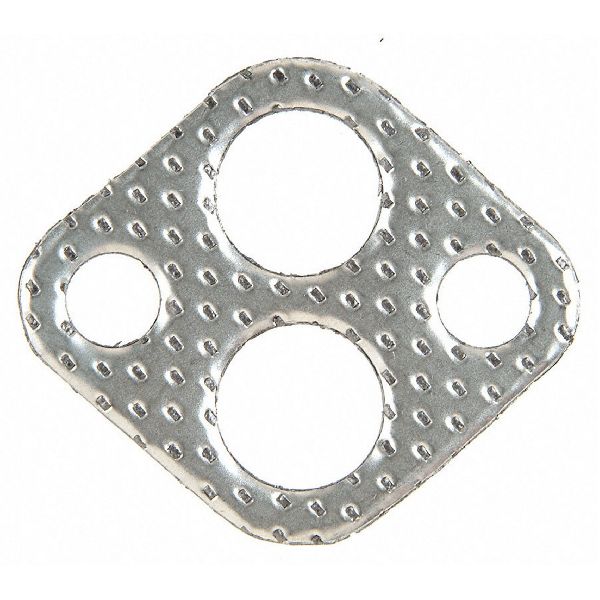
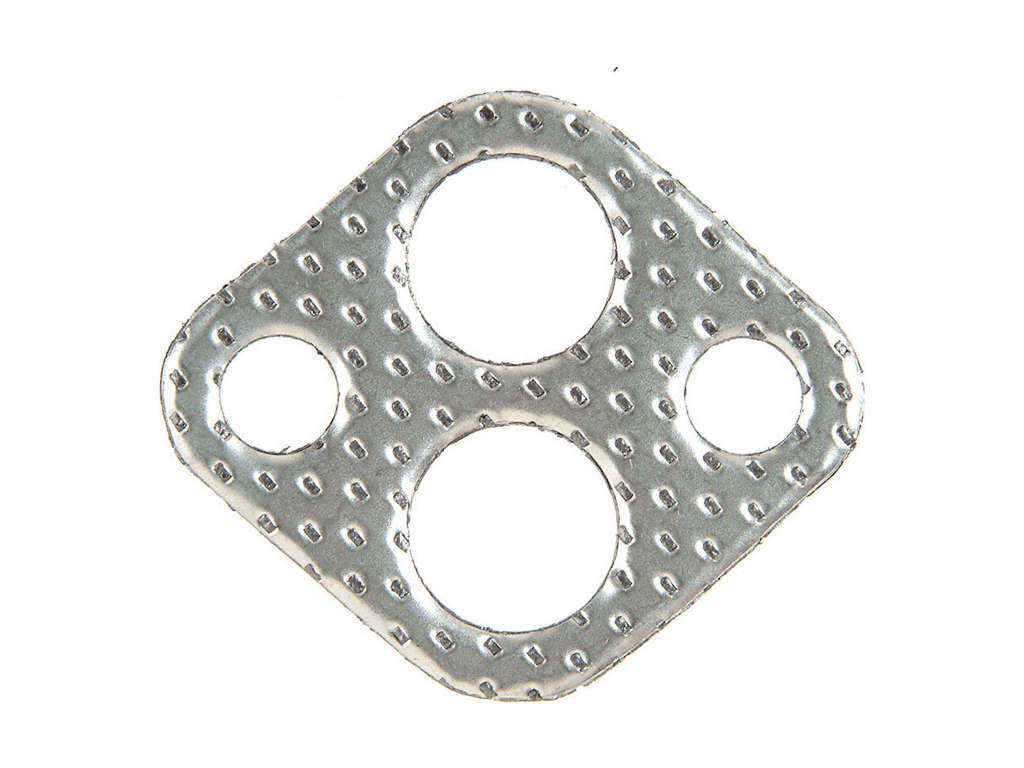
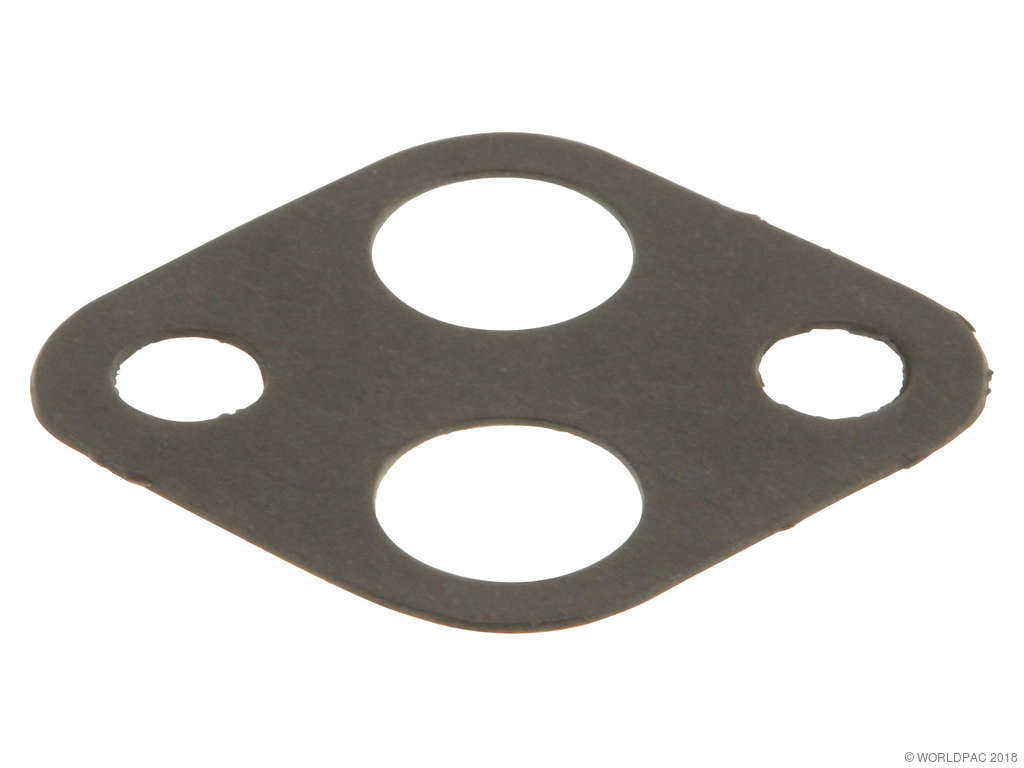
Aftermarket price range: $150-$250 - EGR Valve Gaskets
(OEM #14719AA040, 14738AA110)— The metal gaskets for the EGR valve and pipes should always be replaced whenever the components are removed to ensure a proper, leak-free seal. Reusing old, crushed gaskets is a common cause of future leaks.
Trusted brands: Subaru (OEM)
OEM price range: $10-$25
Aftermarket price range: $5-$15 - EGR Cleaner — A strong chemical cleaner (carburetor or throttle body cleaner) is necessary to dissolve the hardened carbon deposits from the EGR valve, cooler, and intake passages.
Trusted brands: CRC, Liqui Moly, WD-40 Specialist Carb/Throttle Body Cleaner
Aftermarket price range: $15-$25
Related Codes That Often Appear With This One
- P0409 — P0409 ('EGR Sensor 'A' Circuit') often appears with P0401. This happens when the EGR valve is so clogged with carbon that it physically seizes. The valve's internal electric motor then tries to move the stuck valve, overheats, and burns out, creating an electrical circuit fault. Seeing both codes together strongly points to a mechanically failed EGR valve.
Platform-Specific Known Issues
- The EE20 engine's EGR system is notoriously difficult to access, requiring removal of the intercooler and other components, making the job labor-intensive.
- Due to the high frequency of this issue, some owners in regions with lax emissions regulations opt for an 'EGR delete' kit, which physically blocks off the EGR system and requires an ECU remap to prevent codes. This is a common topic in owner forums.
- The combination of EGR soot and PCV oil vapor creates a particularly stubborn sludge in the intake manifold that can be very difficult to clean without removing the manifold completely.
Mechanic-Grade Diagnostic Values
- EGR Valve Motor Coil Resistance — expected: Approximately 22-23 ohms between specific pin pairs.. Failure: No reading or infinite resistance indicates a burned-out motor coil, a common failure when the valve is seized with carbon.
Scan Tool Commands That Help
- Subaru Select Monitor (SSM) or equivalent: Active Test: EGR Valve Check — This bidirectional command allows a technician to manually cycle the EGR valve while the engine is running. A change in engine idle quality or stalling indicates the valve is physically opening and passages are at least partially clear. No change suggests a seized valve or a complete blockage.
- Subaru Select Monitor (SSM) or equivalent: Data Monitor: 'EGR Error' — This live data PID displays the percentage difference between the ECU's commanded EGR position and the actual position reported by the valve's sensor. A consistently high error percentage while the EGR is commanded open points towards a valve that is stuck or struggling to move, even if it hasn't failed completely.
- Subaru Select Monitor (SSM) or equivalent: Compulsory EGR learning — This function is critical after replacing the EGR valve. It forces the ECU to learn the new valve's closed-position sensor voltage. Failing to perform this procedure can cause the ECU to set a P0409 fault code, believing the new, functional valve is out of range.
Wiring & Ground Locations
- EGR Valve Connector — On top of the EGR valve assembly, located on the rear-right of the engine, accessible after removing the intercooler.. The 5-pin connector provides power, ground, and position sensor feedback for the EGR valve's stepper motor. Corrosion or damage to this connector can cause electrical faults (like P0409) that accompany the P0401 flow code.
- Intake Manifold Ground — A primary grounding point for the ECU is located on the top of the intake manifold.. While not a direct cause of P0401, a poor ground at this location can cause a wide range of erratic sensor readings and ECU behavior. When disassembling the top of the engine to access the EGR system, it is critical to ensure this ground is clean and secure upon reassembly.
Real Owner Repair Stories
- Subaru How-To Section forum post (Subaru 2.0L Diesel (EE20)) — Check Engine Light and Traction Control light on, with fault code P0409.
❌ Tried (didn't work) Following incorrect information found online suggesting an optical sensor failure.
✅ What actually fixed it The final fix was replacing the seized EGR valve. The user noted that the internal motor burns out trying to move the stuck valve, which is what triggers the P0409 electrical code alongside the underlying flow issue. They emphasize that buying a used valve is risky as it's likely already failing. - JustAnswer technician response (Subaru with EE20 engine) — P0401 code persists after cleaning pipes/sensors and replacing the EGR valve.
❌ Tried (didn't work) Cleaning MAP and MAF sensors., Replacing the EGR valve.
✅ What actually fixed it The technician advised that the next most likely cause is a blocked EGR cooler. Even with a new valve, if the cooler is clogged with soot, the required amount of gas cannot flow through the system, which will continue to trigger the P0401 code.
OEM Part Supersession History
14710AA740→14710AA741— Likely an internal revision to improve reliability or address the common seizure/motor burnout issue.
Heads up: The parts are interchangeable. 14710AA741 is the recommended replacement for the older 14710AA740.
Model Year Variations Within This Range
- 2008-2014 (Euro 4 / early Euro 5): These models use a single, high-pressure EGR system. The EE20 engines from this era are particularly known for crankshaft reliability issues, in addition to the EGR clogging problem.
- Late 2014 onwards (Euro 5 / Euro 6): Later models introduced a more complex dual-EGR system, adding a low-pressure (LP) EGR loop that pulls exhaust gas from after the Diesel Particulate Filter (DPF). This adds a second EGR valve and cooler, though the high-pressure side remains susceptible to the same soot buildup as earlier models.
Diagnostic Flowchart
Other Known Issues on This Vehicle
Issues unrelated to this code that are worth knowing about as an owner of this generation:
- Crankshaft Failure 🔴 High — Most common on early Euro 4 engines (approx. 2008-2012). Can occur between 50,000 to 80,000 miles (80,000-130,000 km), but is unpredictable. Later Euro 5/6 engines were revised to address this.
- Diesel Particulate Filter (DPF) Clogging & Oil Dilution 🟠 Medium → Shop Diesel Particulate Filter (DPF) — Very common, especially for vehicles used primarily for short city trips. Failure to complete regeneration cycles leads to a flashing DPF light, which on Subarus, often indicates the oil dilution level is too high and requires an oil change and ECU reset.
- Dual-Mass Flywheel (DMF) Failure 🟠 Medium — Common on manual transmission models. Symptoms include rattling/banging noises from the bellhousing, vibrations through the floor, and shuddering on takeoff. Can fail at relatively low mileage.
- Injector Issues 🟡 Low — Injectors can become clogged or fail over time, leading to rough running, misfires, and poor fuel economy. Sometimes requires calibration with a diagnostic tool.
Used vs. New Parts: Buying Guide for This Vehicle
When a used part is the smart pick: For this specific P0401 issue on the EE20, buying a used EGR valve or EGR cooler is strongly discouraged. These components fail due to internal soot accumulation, and a used part from a junkyard is highly likely to be either already clogged or very near the end of its service life.
Donor-vehicle mileage cap: roughly under 30000 miles for the part to have meaningful remaining life.
What to inspect on the donor part:
- If considering a used part against advice, demand proof it was professionally cleaned and tested.
- Visually inspect all ports for any signs of black, dry soot. Any visible buildup is a red flag.
- Attempt to manually move the valve pintle (if accessible); it should move smoothly and spring back without any sticking or grinding.
OEM-only on this vehicle (don't cheap out):
- EGR Valve
Brands owners have reported issues with on this vehicle:
- Unbranded, low-cost EGR valves from online marketplaces are a significant risk. Forum discussions often highlight that these parts may have incorrect calibration or fail prematurely, causing the code to return quickly.
Real Owner Stories
Aggregated from forums and TSBs cited above. Mileages and costs reflect what owners reported in those sources.
2009-2014 Subaru Outback 2.0L EE20 Diesel
Symptoms: Check Engine Light, Traction Control, and Parking Brake lights all on at once, with a flashing cruise light.
What fixed it: Cleaning the EGR valve and associated passages.
Source hint: Reddit (r/subaru)
2008-2014 Subaru Legacy 2.0L EE20 Diesel
Symptoms: P0401 and P0409 codes; lights on the dashboard including the Electronic Parking Brake.
What fixed it: Removing the EGR valve and cleaning it with dedicated EGR/carburetor cleaner, brushes, and picks.
Source hint: Club Subaru España
Related OBD-II Codes
Frequently Asked Questions
Why are my Traction Control and Electronic Parking Brake lights on when the code is for the EGR system?
Can I just clean the EGR valve on my 2012 Outback diesel, or does it have to be replaced?
Is it true that the intake manifold needs to be cleaned to fix P0401 on the EE20 engine?
Why is the labor cost so high for an EGR repair on the 2.0L Boxer Diesel?
What causes the EGR system to clog so frequently on the 2009-2014 models?
Are there any alternative solutions if I keep getting P0401 codes on my EE20?
Helpful Videos
![How to Fix P0401 Engine Code in 3 Minutes [2 DIY Methods / Only $4.13]](https://img.youtube.com/vi/T8PRuzzGR-k/mqdefault.jpg)
We Have This Part in Stock


The information in this article is provided for general reference and educational purposes only. Vehicle specifications, procedures, and part compatibility can vary by production date, trim level, and region. Always consult your vehicle's factory service manual and verify part numbers before purchasing or performing repairs. Safety-critical components such as airbags, seat belts, and braking systems should be installed by a qualified professional.
- Subaru Outback:
- 🧭 Diagnostic Flowchart
- 🎬 Helpful Videos
- 🛍️ Shop This Part
- What's Unique About the 2009-2014 Subaru Outback
- Symptoms You May Notice
- Most Likely Causes
- Diagnosis Steps
- Parts You'll Likely Need
- Related Codes That Often Appear With This One
- Platform-Specific Known Issues
- Mechanic-Grade Diagnostic Values
- Scan Tool Commands That Help
- Wiring & Ground Locations
- Real Owner Repair Stories
- OEM Part Supersession History
- Model Year Variations Within This Range
- Other Known Issues on This Vehicle
- Used vs. New Parts: Buying Guide for This Vehicle
- Real Owner Stories
- 2009-2014 Subaru Outback 2.0L EE20 Diesel
- 2008-2014 Subaru Legacy 2.0L EE20 Diesel
- Related OBD-II Codes
- Frequently Asked Questions
- 🎟️ Get 5% Off