

P0401 on 2013-2017 Subaru Outback 2.5L: EGR Flow Insufficient Causes and Fixes
Code P0401 on a 2013-2017 Subaru Outback almost always points to a carbon-clogged EGR valve or its passages. Often, a thorough cleaning with basic tools and carburetor cleaner can solve the problem for free; if not, replacing the EGR valve is the next step. An OEM replacement valve costs around $130-$190.
- P0401 on your Outback means the EGR system's flow is too low, usually due to carbon buildup.
- Before buying parts, try cleaning the EGR valve and its passages. This is a low-cost fix that often works.
- If cleaning fails or the code returns after 20-30k miles, the EGR valve itself likely needs to be replaced. Use a new gasket for the installation.
- The job is accessible for a DIYer with basic tools; the EGR valve is typically held on by just two 12mm bolts.
- Ignoring this code will lead to a failed emissions test and can cause long-term engine pinging.
What's Unique About the 2013-2017 Subaru Outback
On the 2.5L FB25 engine used in this generation of Outback, the EGR system is entirely electronic, controlled by a stepper motor. Unlike older vacuum-operated systems, the cause is rarely a cracked vacuum hose. The problem is almost always physical: heavy carbon buildup inside the EGR valve assembly or its associated passages, restricting flow. While the valve itself can fail electronically, cleaning is a very common and often successful first step for Subaru owners.
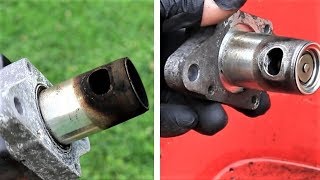
🎬 Watch: How to clean the electronic EGR valve to restore power.Generation note: This range covers two Outback generations: the fourth (2013-2014) and the fifth (2015-2017). While the fundamental cause of P0401 (EGR blockage) is the same for both, the specific EGR valve part number differs. The cleaning procedure is very similar, but component location may vary slightly.
Symptoms You May Notice
- Check Engine Light is on
- Rough or unstable idle
- Engine hesitation or stumbling on acceleration
- Audible engine pinging or knocking, especially under load
- Reduced fuel economy
- Vehicle may fail an emissions inspection
- Replacing oxygen sensors. While O2 sensors are part of the emissions system, they measure exhaust gas content and do not directly cause an insufficient flow code.
- Replacing the catalytic converter. A clogged catalytic converter typically sets other codes (like P0420) and presents with more severe power loss.
Most Likely Causes
- Clogged EGR Valve 🔴 High Probability → Shop Exhaust Gas Recirculation (EGR) Valve The FB25 engine's EGR system recirculates exhaust gases that are rich in carbon. Over time, this carbon soot builds up on the valve's pintle and seat, restricting its movement and blocking flow.
How to confirm: Remove the EGR valve (typically held by two 12mm bolts) and visually inspect it for heavy carbon deposits. The valve should be able to move freely.
Typical fix: Thoroughly clean the valve and its seating surface with carburetor cleaner and wire brushes until all carbon is removed and the internal plunger moves smoothly. A battery terminal cleaner brush can be effective for the inner passages. If cleaning doesn't restore function, the valve must be replaced.
Est. part cost: $0 (for cleaning), $130-$250 (for replacement valve) - Clogged EGR Passages/Cooler 🟡 Medium Probability The same carbon that clogs the valve can also build up in the EGR cooler (if equipped) and the metal tubes that connect the exhaust to the valve and the valve to the intake manifold.
How to confirm: When the EGR valve is removed for cleaning, inspect the port on the engine and the connecting pipes for carbon buildup. Use a small pick or flexible brush (like an old speedometer cable) to see if the passages are blocked.
Typical fix: Clean the passages using pipe cleaners, brushes, and carburetor cleaner. In severe cases, the EGR cooler and pipes may need to be removed for a more thorough cleaning.
Est. part cost: $5-$15 (for cleaning supplies) - Failed EGR Valve (Electronic Failure) ⚪ Low Probability → Shop Exhaust Gas Recirculation (EGR) Valve
How to confirm: If the valve and passages are perfectly clean but the code returns, the internal stepper motor or position sensor in the valve has likely failed. A diagnostic scan tool can test the resistance of the internal coils to confirm an electrical fault.
Typical fix: Replace the EGR valve assembly.
Est. part cost: $130-$250
Rare But Worth Checking
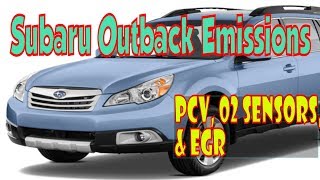
- Faulty PCV Valve: → Shop PCV Valve A failed PCV (Positive Crankcase Ventilation) valve can alter crankcase pressure and affect sensor readings, sometimes leading to a P0401 code in conjunction with other codes like P0171 (System Too Lean). One owner reported this exact scenario on a 2015 Outback. 🎬 See this guide to locate your PCV, EGR, and oxygen sensors.
Diagnosis Steps
- Read the code with an OBD-II scanner and confirm P0401 is present. Note any other codes.
- Locate the EGR valve. On the FB25 engine, it is found under the intake manifold, near the throttle body, held by two 12mm bolts.
- Disconnect the electrical connector and remove the two bolts holding the EGR valve in place.
- Visually inspect the valve and the engine port for heavy carbon buildup.
- If carbon is present, thoroughly clean the EGR valve and the passages with carburetor cleaner, wire brushes, and/or a battery terminal cleaning brush. Ensure the valve's internal pintle can move freely. Soaking the metal parts of the valve for a few hours may help dissolve stubborn deposits. 🎬 Watch: A clever trick for cleaning stubborn carbon from the valve.
- Reinstall the cleaned EGR valve with a new gasket to ensure a proper seal.
- Clear the trouble code with the scanner and perform a test drive, ensuring the engine reaches operating temperature and goes through various driving conditions.
- If the code returns after a thorough cleaning, test the EGR valve's internal resistance. A reading outside the 20-24 ohm range indicates an electrical failure, requiring valve replacement.
- If resistance is good, consider an edge-case failure like a cracked EGR cooler if symptoms like coolant loss are also present.
Parts You'll Likely Need
- EGR Valve
(OEM #14710AA770 (for 2013-2014 models), 14710AA810 (for 2015-2017 models))— This is the component that either gets clogged with carbon or fails electronically, directly causing the P0401 code. Part numbers differ by generation.
Trusted brands: Subaru (Genuine), Dorman, Standard Motor Products
OEM price range: $130-$190
Aftermarket price range: $80-$150 - EGR Valve Gasket
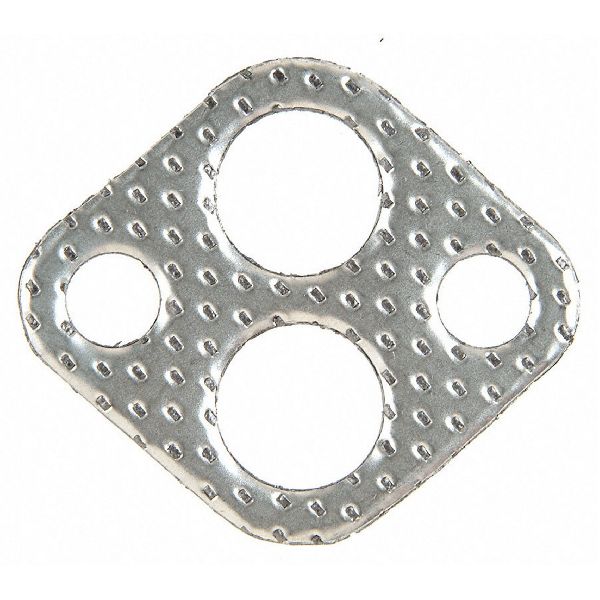
(OEM #14719AA040 (for 2013-2014 models), 14719AA033 (for 2015-2017 models))— A new gasket is required to ensure a proper seal whenever the EGR valve is removed for cleaning or replacement. These are not typically reusable.
Trusted brands: Subaru (Genuine), Fel-Pro
OEM price range: $5-$15
Aftermarket price range: $2-$8
Related Codes That Often Appear With This One
- P0171 — A faulty PCV valve can create a vacuum leak, causing the engine to run lean (P0171) while also potentially triggering a P0401 code due to incorrect pressure readings within the system.
Technical Service Bulletins (TSBs) & Recalls
- TSB 16-119-19: While not directly for P0401, this TSB addresses design changes to the CVT valve body to prevent other DTCs. It is relevant for understanding the overall service history of the vehicle's powertrain.
- TSB 05-84-21R / 05-77-19R: These bulletins address premature front and rear wheel bearing failures by introducing redesigned parts with better sealing, a common issue on this platform.
Platform-Specific Known Issues
- Cleaning vs. Replacement Cycle: A user on subaruoutback.org with a 2015 Outback 2.5i reported getting P0401 at 105,000 miles. A thorough cleaning of the EGR valve resolved the issue. The code returned approximately 30,000 miles later, at which point replacing the valve and gasket provided a permanent fix. This highlights that cleaning is an effective but sometimes temporary solution.
Mechanic-Grade Diagnostic Values
- EGR Valve Internal Coil Resistance — expected: 19.9 to 24 ohms. Failure: A reading significantly outside this range (e.g., open loop/infinite resistance or a dead short/zero resistance) indicates the internal stepper motor has failed.
Diagnostic Flowchart
Other Known Issues on This Vehicle
Issues unrelated to this code that are worth knowing about as an owner of this generation:
- Excessive Oil Consumption 🔴 High — Affects a notable percentage (estimated 5-7%) of early FB25 engines, particularly from 2011-2014. Consumption can exceed 1 quart per 1,200 miles. (Ref: Subaru issued TSBs (e.g., TSB 11 for the FB25) and faced a class-action lawsuit. The fix often involved replacing piston rings or the entire short block.)
- CVT (TR580) Transmission Failure 🔴 High — Common in 2010-2018 models, with failures often occurring between 80,000 and 120,000 miles. Symptoms include shuddering, hesitation, and solenoid failure codes (e.g., P2764). (Ref: Subaru extended the CVT warranty to 10 years/100,000 miles for many affected vehicles and released TSB 16-119-19 regarding valve body design changes.)
- Premature Wheel Bearing Failure 🟠 Medium — A humming or grinding noise from the wheels, especially between 40-70 mph, is a common complaint. Failures can occur well before 100,000 miles. (Ref: Multiple TSBs have been issued (e.g., 05-84-21R for front, 05-77-19R for rear) announcing updated hub/bearing assemblies with better seals to prevent moisture intrusion.)
- Cam Carrier Oil Leak 🟡 Low — A slow oil leak from the cam carrier seal is a known issue on the FB25 engine. It is often not an urgent repair but can be costly (>$2,000) to fix due to the labor involved. (Ref: A TSB was issued for several models, including the Forester and Impreza, to address this leak.)
Used vs. New Parts: Buying Guide for This Vehicle
When a used part is the smart pick: For this specific repair, purchasing a used EGR valve is generally not recommended. The primary failure mode is carbon clogging, and a used part from a salvage yard is highly likely to be just as clogged or have an unknown amount of remaining life. A forum post from a Subaru mechanic warns that a used valve is likely 'knackered before you start'. The only exception might be if the donor vehicle is known to have very low mileage.
Donor-vehicle mileage cap: roughly under 30000 miles for the part to have meaningful remaining life.
What to inspect on the donor part:
- Visually inspect the valve's pintle and passages for any signs of heavy carbon buildup.
- If possible, manually actuate the valve to ensure it moves freely and springs back without sticking.
- Check the electrical connector pins for corrosion or damage.
OEM-only on this vehicle (don't cheap out):
- While aftermarket EGR valves exist, using a Genuine Subaru part is often recommended for longevity and perfect fitment, especially given the critical role it plays in the emissions system.
Aftermarket brands forum-validated for this vehicle:
- Standard Motor Products (SMP)
- Dorman
Brands owners have reported issues with on this vehicle:
- Avoid no-name, unbranded parts from online marketplaces, as their internal electronics and materials may not meet OEM specifications, leading to a quick return of the P0401 code.
Real Owner Stories
Aggregated from forums and TSBs cited above. Mileages and costs reflect what owners reported in those sources.
2015 Subaru Outback 2.5i (FB25) — 105000 miles
Symptoms: Check engine light with P0401 code.
What fixed it: A thorough cleaning of the EGR valve initially resolved the issue, but the valve and gasket eventually required replacement 30,000 miles later for a permanent fix.
Source hint: vehicle_specific_issues: Cleaning vs. Replacement Cycle
2015 Subaru Outback 2.5L (FB25)
Symptoms: P0401 code appearing alongside a P0171 lean code.
What fixed it: The issue was traced to a failed PCV valve.
Source hint: forum_citations: AliExpress (Owner Review)
2015-2017 Subaru Outback 2.5L (FB25)
Symptoms: Carbon buildup in the EGR valve and passages; owners shared pictures of heavy soot restricting flow.
What fixed it: Cleaning the valve and passages is the common first step and often successful.
Source hint: forum_citations: subaruoutback.org - '2015 P0401 EGR insufficient flow'
Related OBD-II Codes
Frequently Asked Questions
Does TSB 16-119-19 apply to my 2013-2017 Outback's P0401 code?
Can I just clean the EGR valve on my FB25 engine instead of spending $130-$250 on a new one?
Is there a specific resistance test for the EGR valve on a 2013-2017 Outback?
Are the wheel bearing TSBs (05-84-21R / 05-77-19R) related to my EGR flow issues?
Could my P0401 code be related to the excessive oil consumption issues known on the FB25 engine?
Helpful Videos


We Have This Part in Stock

The information in this article is provided for general reference and educational purposes only. Vehicle specifications, procedures, and part compatibility can vary by production date, trim level, and region. Always consult your vehicle's factory service manual and verify part numbers before purchasing or performing repairs. Safety-critical components such as airbags, seat belts, and braking systems should be installed by a qualified professional.
- Subaru Outback:
- 🧭 Diagnostic Flowchart
- 🎬 Helpful Videos
- 🛍️ Shop This Part
- What's Unique About the 2013-2017 Subaru Outback
- Symptoms You May Notice
- Most Likely Causes
- Rare But Worth Checking
- Diagnosis Steps
- Parts You'll Likely Need
- Related Codes That Often Appear With This One
- Technical Service Bulletins (TSBs) & Recalls
- Platform-Specific Known Issues
- Mechanic-Grade Diagnostic Values
- Other Known Issues on This Vehicle
- Used vs. New Parts: Buying Guide for This Vehicle
- Real Owner Stories
- 2015 Subaru Outback 2.5i (FB25) — 105000 miles
- 2015 Subaru Outback 2.5L (FB25)
- 2015-2017 Subaru Outback 2.5L (FB25)
- Related OBD-II Codes
- Frequently Asked Questions
- 🎟️ Get 5% Off