

P0401 on 2016-2022 Toyota Prius: EGR Insufficient Flow Causes and Fixes
On the 2016-2022 Prius, code P0401 is almost always caused by heavy carbon buildup clogging the entire EGR system. The fix is not a single part replacement, but a thorough, labor-intensive cleaning of the EGR cooler, EGR valve, and the small EGR passages in the intake manifold. Expect to spend $40-$80 on gaskets and several hours for a DIY cleaning. Skipping the intake manifold cleaning is a common mistake that will cause the code to return.
- P0401 on a 2016-2022 Prius means the EGR system is clogged with carbon; it is not a simple sensor or single part failure.
- A proper fix requires a time-consuming but low-cost cleaning of the EGR cooler, EGR valve, and intake manifold passages.
- Always replace all gaskets when reassembling the EGR system and intake manifold to prevent leaks.
- Ignoring this code can lead to engine knocking and may increase the risk of a much more expensive head gasket failure.
- The job is a difficult DIY (4/5) due to the poor accessibility of the components on the back of the engine.
What's Unique About the 2016-2022 Toyota Prius
The fourth-generation Prius (2016-2022) carries over the 2ZR-FXE engine design from the previous generation, which is notoriously prone to heavy carbon and soot accumulation throughout the entire EGR circuit. While some former Toyota technicians suggest that redesigns in 2014-2015 fixed the vast majority of issues for the Gen 4 models, the fundamental problem of EGR clogging persists, though perhaps less frequently than on Gen 3. A P0401 code on this car is rarely a simple faulty valve; it's a system-wide blockage that requires a comprehensive cleaning of the EGR cooler, valve, and intake manifold passages to properly resolve. Ignoring this issue is widely believed to contribute to head gasket failure due to increased combustion temperatures.
Symptoms You May Notice
- Check Engine Light is on
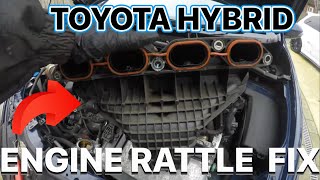
- Engine rattle or knocking sound, often described as 'marbles in a can,' especially on a cold start or under light acceleration. 🎬 Watch: How to identify the classic Prius morning death rattle.
- Rough or vibrating idle, particularly when the engine is cold.
- Reduced fuel economy
- Hesitation or sluggish acceleration
- Replacing only the EGR valve. This will not fix the code if the EGR cooler or intake manifold passages are clogged, which is highly likely.
- Replacing the oxygen sensors. P0401 is strictly related to EGR flow and is not caused by O2 sensors.
- Replacing the catalytic converter. This is a costly and incorrect repair for a P0401 code. A catalytic converter issue would typically set a P0420 code.
Most Likely Causes
- Clogged EGR Cooler 🔴 High Probability → Shop Exhaust Gas Recirculation (EGR) Valve The design of the EGR cooler on the 2ZR-FXE engine features many small, radiator-like fins and passages. While highly effective at cooling gas, these passages are extremely susceptible to becoming completely blocked with hard carbon deposits over time.
How to confirm: The cooler must be removed for inspection. A visual check will show passages blocked with black soot and carbon. When clean, you should be able to see light clearly through the channels. A clogged cooler will show no light.
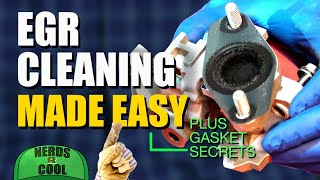
Typical fix: Remove the EGR cooler and soak it for several hours (or even overnight) in a strong cleaning solution. Forum users report success with hot water and OxiClean, Easy-Off oven cleaner, or degreasers like Purple Power. Follow this with a high-pressure water flush (a pressure washer is very effective) to dislodge all carbon. Repeat until water runs clear. 🎬 See a full walkthrough of the EGR cooler cleaning process. Replace all associated gaskets upon reinstallation.
Est. part cost: $20-$40 for gaskets. - Clogged/Sticking EGR Valve 🔴 High Probability → Shop Exhaust Gas Recirculation (EGR) Valve Carbon buildup can cause the valve's pintle to stick, preventing it from opening or closing properly. Toyota issued a TSB (T-SB-0027-16) for this issue on earlier production models of the previous generation, highlighting it as a known problem area. Manufacturer service bulletin TSB Bulletin #ZF3_Toyota POL16 also notes that the EGR valve may stick, illuminating the check engine light and setting DTC P0401.
How to confirm: Remove the valve and inspect for carbon buildup restricting its movement. You can try to manually actuate the valve to see if it moves freely. With a capable scan tool, you can command the valve to open and monitor the MAP sensor reading for a change.
Typical fix: Clean the valve thoroughly with carburetor cleaner and a wire brush, ensuring the valve moves freely. Be careful not to drench the electronic stepper motor portion. If the valve is physically damaged or its internal electronic motor has failed, it must be replaced. Always use new gaskets.
Est. part cost: $20-$30 for gaskets if cleaning; $180-$300 for a new valve. - Clogged Intake Manifold EGR Passages 🟡 Medium Probability → Shop Engine Intake Manifold The EGR system routes exhaust gas into the intake manifold, where it distributes to each cylinder via very small ports. These ports are a final chokepoint and often get clogged with a thick sludge of oil (from the PCV system) and carbon. This is a critical and often-missed failure point.
How to confirm: The intake manifold must be removed. The small, circular EGR ports for each cylinder runner will be visibly blocked.
Typical fix: After removing the manifold, use pipe cleaners, small bottle brushes, and a strong degreaser or intake cleaner to scrub the passages until they are completely clear. Forum users and mechanics stress that skipping this step will almost certainly cause the P0401 code to return, even with a clean valve and cooler. 🎬 Watch: Step-by-step guide to cleaning your intake manifold passages.
Est. part cost: $15-$25 for an intake manifold gasket.
Rare But Worth Checking
- Failed EGR Valve Motor: → Shop Exhaust Gas Recirculation (EGR) Valve In some cases, the EGR system can be perfectly clean, but the electronic stepper motor that actuates the valve fails. If a thorough cleaning does not resolve the code, testing or replacing the valve assembly may be necessary. One owner reported this exact failure after a full system cleaning during a head gasket job; the fix was swapping the stepper motor from a known-good valve.
- Faulty Manifold Absolute Pressure (MAP) Sensor: → Shop Manifold Absolute Pressure Sensor The ECU relies on the MAP sensor to verify EGR flow. If the sensor is faulty and not reporting pressure changes correctly, it can falsely trigger a P0401 code. This is uncommon, but possible.
Diagnosis Steps
- Confirm P0401 is the active code using an OBD-II scanner.
- Listen for an engine rattle or knock on a cold start, a classic symptom of a clogged EGR system on this vehicle.
- Plan for a full system cleaning. The fix almost always requires accessing the entire EGR circuit. This is a 4-8 hour job for a DIYer.
- Gain access to the rear of the engine by removing the windshield wipers and the plastic cowl assembly.
- Partially drain about one gallon of engine coolant to prevent spills when disconnecting hoses from the EGR cooler.
- Remove the intake manifold. Inspect and clean the small EGR ports for each cylinder using brushes and degreaser. Many owners recommend replacing the PCV valve (OEM #12204-37010) at this stage as it is now easily accessible.
- Remove the EGR valve. Inspect for carbon buildup and test for free movement. Clean thoroughly or replace if stuck or electrically failed.
- Remove the EGR cooler and connecting pipes. This is often the most labor-intensive step.
- Soak the EGR cooler and pipes in a cleaning solution (OxiClean solution, oven cleaner) for several hours, then flush with a pressure washer or strong hose until water runs clear.
- Reassemble the entire system using new gaskets for all removed components. Do not reuse old gaskets.
- Refill the coolant and perform a proper bleed procedure to remove air from the system.
- Clear the trouble code with a scanner and perform a test drive, including deceleration from highway speeds, which is a condition where the ECU often tests the EGR system.
Parts You'll Likely Need
- EGR Valve
(OEM #25620-37140)— This valve gets clogged with carbon and can stick. While it can often be cleaned, replacement is sometimes necessary if it's seized or the motor fails.
Trusted brands: Toyota (OEM), Dorman, Standard Motor Products
OEM price range: $250-$350
Aftermarket price range: $150-$250 - EGR Cooler Assembly
(OEM #25601-37020)— This is the component most likely to be severely clogged with hard carbon deposits, causing the insufficient flow condition.
Trusted brands: Toyota (OEM), Dorman
OEM price range: $350-$450
Aftermarket price range: $200-$375 - EGR Gasket Kit
(OEM #04004-58137)— All metal gaskets in the EGR system are single-use and must be replaced anytime the components are removed to prevent exhaust and coolant leaks. This kit often includes the valve and pipe gaskets.
Trusted brands: Toyota (OEM)
OEM price range: $40-$60
Aftermarket price range: $20-$40 - Intake Manifold Gasket
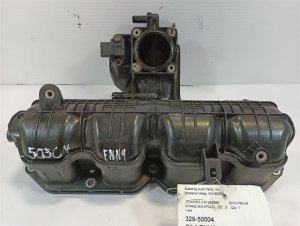
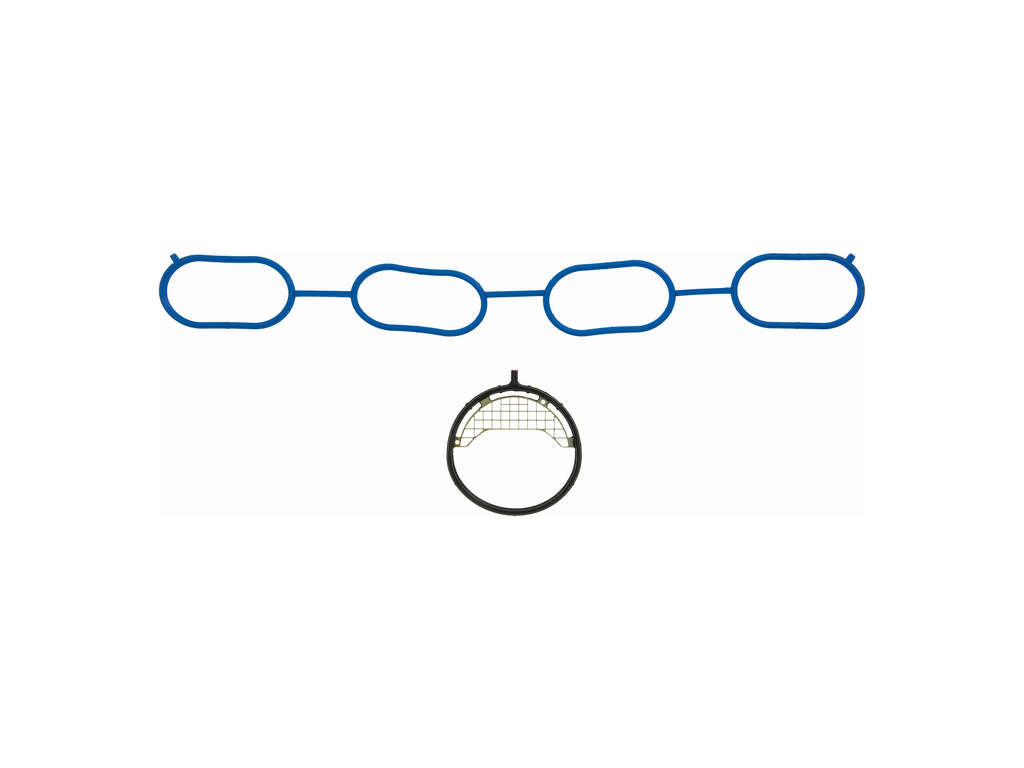
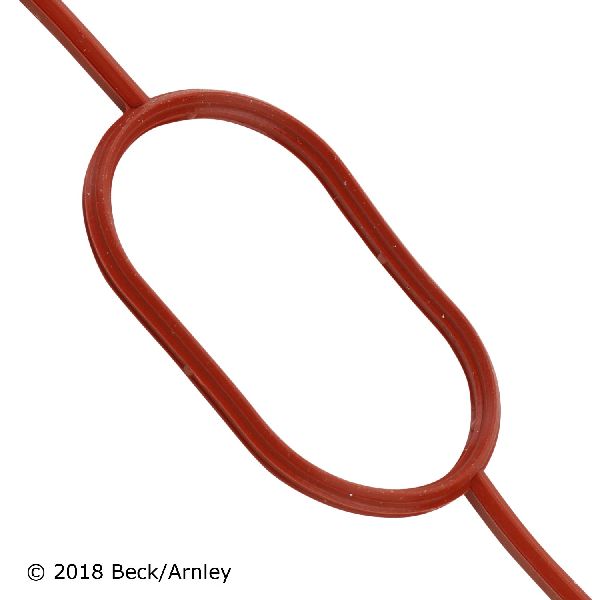
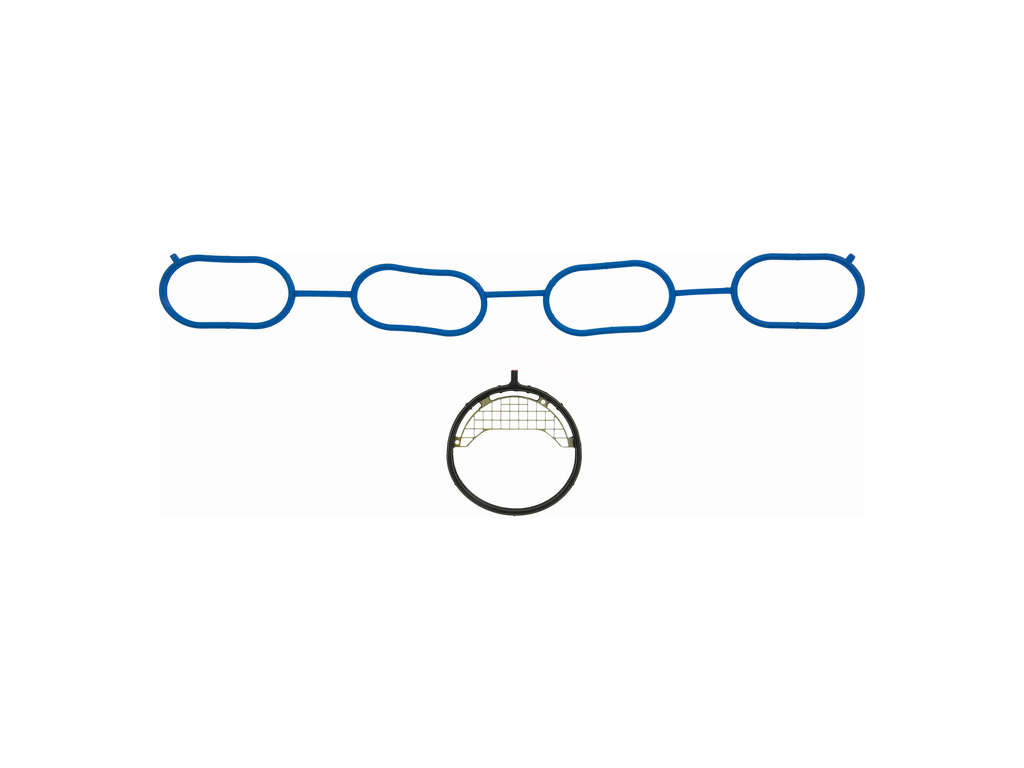
(OEM #17171-25010)— Required when removing the intake manifold to clean the EGR passages. This is a single-use molded rubber gasket.
Trusted brands: Toyota (OEM), Fel-Pro, Mahle, Beck/Arnley
OEM price range: $15-$25
Aftermarket price range: $10-$20
Technical Service Bulletins (TSBs) & Recalls
- T-SB-0027-16
- TSB Bulletin #ZF3_Toyota POL16: Acknowledges that the EGR valve may stick, illuminating the check engine light and setting DTC P0401.
- TSB Bulletin #ZF3_Warranty Pol: Notes that a sticking EGR valve can cause the vehicle to set diagnostic trouble code P0401.
Platform-Specific Known Issues
- Toyota issued Technical Service Bulletin T-SB-0027-16 for some earlier production models (primarily Gen 3) which acknowledged the P0401 code and cold-start rattle caused by a sticking EGR valve due to carbon buildup. While for an older generation, it confirms the manufacturer's awareness of the root cause.
- Ignoring a clogged EGR system is widely believed to contribute to premature head gasket failure on this engine due to the resulting increase in combustion chamber temperatures.
- A common repair mistake is cleaning the EGR valve and cooler but neglecting the intake manifold passages. Owners on forums frequently report the P0401 code returning until the intake manifold is removed and its small EGR ports are thoroughly cleaned.
Mechanic-Grade Diagnostic Values
- Manifold Absolute Pressure (MAP) Change During EGR Test — expected: Greater than 1.0 kPa change. Failure: A pressure change of less than 1.0 kPa when the ECU commands the EGR valve to open during its self-test (typically on deceleration) will trigger P0401.
- EGR Cooler Stud Bolt Torque (to cylinder head) — expected: 9.5 N·m (84 in·lbf). Failure: Improper torque can lead to exhaust leaks or damaged threads.
- EGR Assembly & Pipe Nut/Bolt Torque — expected: 21 N·m (15 ft·lbf) for nuts connecting cooler to valve; 26 N·m (19 ft·lbf) for nuts connecting cooler to exhaust manifold.. Failure: Incorrect torque can cause exhaust or coolant leaks.
Scan Tool Commands That Help
- Toyota Techstream: Active Test: 'Control the EGR Step Position' — This allows a technician to manually command the EGR valve to open in increments. On a clean system, the idle will roughen or stall as the valve opens. If the idle does not change as the step number increases, it confirms a blockage or a non-functional valve.
- Toyota Techstream: Data List: Monitor 'MAP' value — While performing the 'Control the EGR Step Position' active test, monitoring the Manifold Absolute Pressure (MAP) value is critical. A lack of change in the MAP reading as the valve is commanded open points directly to a flow restriction (clog).
Wiring & Ground Locations
- EGR Valve Connector — On the EGR valve assembly, located on the back of the engine, below the cowl assembly.. This 6-pin connector provides power and control signals to the EGR valve's stepper motor. Checking for correct voltage and ground at its pins is a key step in diagnosing a potential electrical fault versus a mechanical clog, especially if the code returns after a thorough cleaning.
- Engine Control Module (ECM) — Located in the engine compartment on the driver's side (LHD vehicles).. The ECM is the source of the command signals for the EGR valve and interprets the data from the MAP sensor to trigger P0401. Verifying wiring integrity between the EGR valve connector and the ECM is the final step if a wiring fault is suspected after all components have been checked.
Real Owner Repair Stories
- Torque News / PriusChat Forum User (2010 Toyota Prius (Gen 3, but same principle applies)) — P0401 code returned immediately after a head gasket replacement, during which the entire EGR system (cooler, valve, manifold) was meticulously cleaned.
❌ Tried (didn't work) Complete and verified cleaning of the entire EGR circuit., Swapping the MAP sensor.
✅ What actually fixed it Replacing the EGR valve's internal stepper motor, magnet, and spring assembly. The valve body itself was clean and the plunger moved freely, but the electronic motor component had failed, preventing it from actuating when commanded by the ECU. - PriusChat Forum User 'ozmatt' (2010 Toyota Prius) — P0401 code returned immediately after a full EGR system cleaning (cooler, valve, manifold), even though the system was only slightly dirty to begin with.
❌ Tried (didn't work) Thorough cleaning of the entire EGR circuit.
✅ What actually fixed it The user suspected a failed stepper motor or a bad MAP sensor, as the code would set like clockwork during the fuel-cut deceleration condition used by the ECU to test the system. Another user suggested the possibility of a missing or leaking EGR gasket, which would allow the commanded gas flow to escape before reaching the manifold, preventing the expected pressure change. The final resolution was not explicitly posted, but the diagnosis pointed away from simple clogging.
Model Year Variations Within This Range
- 2016-2022: No significant variations in the design or function of the 2ZR-FXE EGR system have been identified within the 2016-2022 model years. The clogging issue and repair procedure are consistent across this generation.
Diagnostic Flowchart
Other Known Issues on This Vehicle
Issues unrelated to this code that are worth knowing about as an owner of this generation:
- Spontaneously Cracking Windshield 🟠 Medium — Commonly reported on 2016-2018 models. Numerous owner complaints and class-action lawsuits were filed alleging a manufacturing or design defect causing cracks to appear without impact.
- Brake Booster / Pump Assembly Failure 🔴 High — A recall was issued for some 2019 models. However, owners of other years report failures of the brake booster pump or actuator, leading to warning lights and a potential loss of braking assist. It can be a very expensive repair if not covered by a warranty or customer support program. (Ref: Recall for 2019 models (K1L/K0L))
- Engine Wiring Harness Chafing 🔴 High — A recall was issued for 2016-2018 models where a portion of the engine wire harness could rub against a cover, potentially causing a short circuit and fire risk. (Ref: Recall R/2020/025)
- Hybrid Battery Failure / Degradation 🟠 Medium — Failures are reported typically after 150,000 miles, which may be considered within the normal lifespan for some, but can be a costly surprise. Symptoms include 'Check Hybrid System' warnings and reduced performance.
- Rear Wheel Bearing Failure 🟡 Low — Some owners report a humming or growling noise from the rear of the vehicle at highway speeds, typically starting after 150,000 miles, indicating wheel bearing wear.
Used vs. New Parts: Buying Guide for This Vehicle
When a used part is the smart pick: For this specific repair, buying used parts is generally NOT recommended unless you are prepared to perform the same intensive cleaning on the used part as you would on your original. A used intake manifold is the safest bet, as it's easy to inspect and clean. A used EGR valve or cooler from a salvage yard is highly likely to be just as clogged as the one you are replacing.
Donor-vehicle mileage cap: roughly under 80000 miles for the part to have meaningful remaining life.
What to inspect on the donor part:
- For an EGR Cooler: Shine a bright light through one end. If you cannot see distinct, clear points of light from the other side, it is clogged and requires a multi-day soaking and pressure flushing.
- For an EGR Valve: Manually actuate the pintle to ensure it moves smoothly without sticking. Inspect the electronic connector for corrosion or damage.
- For an Intake Manifold: Visually inspect the four small EGR ports inside the manifold runners. They must be completely clear. If they are clogged, you must be able to clean them fully with brushes and solvent.
- CRITICAL: Always test a cleaned, used EGR cooler for leaks before installation by plugging the outlets and submerging it in water while applying light air pressure. A leak can introduce coolant into the intake, potentially causing catastrophic engine damage.
OEM-only on this vehicle (don't cheap out):
- EGR Valve: Forum consensus strongly advises against aftermarket EGR valves for this vehicle, citing high rates of out-of-the-box failure or failure soon after installation. Stick with a Toyota (OEM) valve if replacement is necessary.
Aftermarket brands forum-validated for this vehicle:
- Dorman makes a replacement EGR cooler (Part # 668-001) that is widely available and reported to be a functional alternative to OEM.
Brands owners have reported issues with on this vehicle:
- Generic, unbranded EGR valves from online marketplaces are frequently reported to fail.
Real Owner Stories
Aggregated from forums and TSBs cited above. Mileages and costs reflect what owners reported in those sources.
Lexus CT200h (2ZR-FXE 1.8L)
Symptoms: The owner replaced a clogged EGR cooler but the P0401 code returned shortly after.
What fixed it: Thoroughly cleaning the intake manifold passages, which were not sufficiently cleaned during the first repair attempt.
Source hint: ClubLexus: 'Changed clogged EGR Cooler, now getting P0401'
2016-2022 Toyota Prius (2ZR-FXE 1.8L)
Symptoms: P0401 code and engine rattle/knock on cold start.
What fixed it: A full system cleaning including removing the windshield wipers and cowl for access, soaking the cooler in OxiClean/oven cleaner, and using a pressure washer to dislodge carbon.
Source hint: PriusChat: 'EGR Valve Cleaning: Best Procedure?' and YouTube: 'TOYOTA PRIUS: P0401/EGR COOLER CLEANING' by Ghetto Garage DIY
Documented NHTSA Reports
Symptoms: An owner reported multiple P0401 codes and was informed by a dealership about a warranty enhancement for this issue limited to 150,000 miles (NHTSA ODI #11119570). Additionally, manufacturer service bulletin T-SB-0027-16 notes that vehicles may exhibit a rough idle or tapping noise from the HV transaxle at cold start due to excess carbon build-up at the valve assembly.
Related OBD-II Codes
Frequently Asked Questions
Does Technical Service Bulletin T-SB-0027-16 apply to my 2016-2022 Prius?
I cleaned my EGR valve and cooler, but the P0401 code came back. What did I miss?
Is there a specific cleaning solution recommended by other Prius owners for the EGR cooler?
What is the 'marbles in a can' sound I hear on cold starts?
Are there any other parts I should replace while the EGR system is disassembled?
Can ignoring the P0401 code lead to more serious engine damage?
Helpful Videos
Used OEM Parts in Stock
New Aftermarket Parts Available


The information in this article is provided for general reference and educational purposes only. Vehicle specifications, procedures, and part compatibility can vary by production date, trim level, and region. Always consult your vehicle's factory service manual and verify part numbers before purchasing or performing repairs. Safety-critical components such as airbags, seat belts, and braking systems should be installed by a qualified professional.
- Toyota Prius:
- 🧭 Diagnostic Flowchart
- 🎬 Helpful Videos
- 🛍️ Shop This Part
- What's Unique About the 2016-2022 Toyota Prius
- Symptoms You May Notice
- Most Likely Causes
- Rare But Worth Checking
- Diagnosis Steps
- Parts You'll Likely Need
- Technical Service Bulletins (TSBs) & Recalls
- Platform-Specific Known Issues
- Mechanic-Grade Diagnostic Values
- Scan Tool Commands That Help
- Wiring & Ground Locations
- Real Owner Repair Stories
- Model Year Variations Within This Range
- Other Known Issues on This Vehicle
- Used vs. New Parts: Buying Guide for This Vehicle
- Real Owner Stories
- Lexus CT200h (2ZR-FXE 1.8L)
- 2016-2022 Toyota Prius (2ZR-FXE 1.8L)
- Documented NHTSA Reports
- Related OBD-II Codes
- Frequently Asked Questions
- 🎟️ Get 5% Off