

P0401 on 2014 Volkswagen Beetle Convertible: EGR Insufficient Flow Causes & Fixes
On 2.0L TDI diesel models, P0401 is almost always a clogged low-pressure EGR filter caused by a cracked Diesel Particulate Filter (DPF), requiring replacement of both. On gasoline engines (1.8T/2.0T), it's typically a carbon-clogged EGR valve that needs cleaning or replacement. Many TDI repairs may be covered under an extended emissions warranty.
- The first step is to identify your engine. The fix for a TDI diesel is completely different and much more expensive than for a gasoline engine.
- For 2.0L TDI diesel owners, check your tailpipe for soot. Soot means you likely need a new DPF and EGR filter, a costly repair that may be covered by an extended emissions warranty.
- For gasoline engine owners, the most likely fix is removing and cleaning the EGR valve and intake passages of carbon buildup.
- Do not replace parts without proper diagnosis. A TDI owner might waste money on an EGR valve, while a gasoline engine owner might replace a valve when only a cleaning was needed.
What's Unique About the 2014-2014 Volkswagen BEETLE CONVERTIBLE
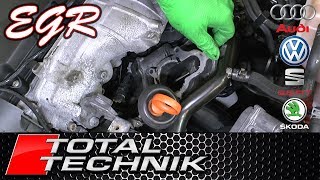
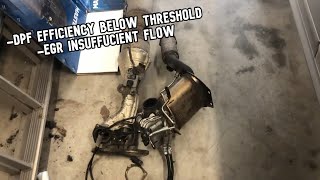
The 2014 Beetle Convertible is unique because it was offered with both gasoline (1.8T, 2.0T) and 2.0L TDI diesel engines, and the cause of P0401 is drastically different between them. On the 2.0L TDI diesel engine (engine code CJAA), the code almost always points to a failure in its specific low-pressure EGR system, which takes exhaust gas *after* it has passed through the DPF. This is famously caused by a cracked Diesel Particulate Filter (DPF) allowing soot to bypass the filter and clog a downstream low-pressure EGR filter, a well-documented failure pattern for this engine. 🎬 Watch: Common CJAA EGR failures and cracked DPF symptoms explained. Gasoline models exhibit more traditional causes, like carbon buildup in the EGR valve itself.
Diagnostic Flowchart
Tap your situation to follow the diagnostic path that matches what you're seeing on this vehicle.
Symptoms You May Notice
- Check Engine Light is on.
- Vehicle will fail an emissions/smog test.
- For TDI models, there are often no other performance symptoms initially.
- For TDI models, you may notice a surging sensation or unusually high exhaust gas temperatures during regeneration cycles.
- For gasoline models, a rough idle, engine hesitation, or poor acceleration may occur.
- On TDI models, replacing only the low-pressure EGR filter without inspecting and replacing the cracked DPF. The new filter will clog again, and the code will return.
- On gasoline models, replacing the EGR valve but failing to clean the clogged carbon passages in the intake manifold.
- On TDI models, replacing the high-pressure EGR valve or cooler when the code P0401 specifically points to the low-pressure circuit.
Most Likely Causes
- For 2.0L TDI Diesel: Clogged Low-Pressure EGR Filter due to a Cracked DPF 🔴 High Probability → Shop Exhaust Gas Recirculation (EGR) Valve The 2.0L TDI (CJAA) engine's Diesel Particulate Filter (DPF) is known to develop internal cracks. This allows soot to bypass the filter and clog the fine mesh of the downstream low-pressure EGR filter, triggering the P0401 code. VW designed this filter specifically to catch soot from a failing DPF.
How to confirm: Check the inside of the exhaust tailpipe for black soot. A healthy DPF system should result in a clean tailpipe. If soot is present, the DPF is almost certainly cracked. This is the primary diagnostic step outlined in VW TSB 01-18-13.
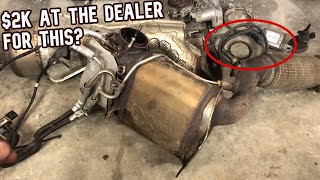
Typical fix: Replace both the Diesel Particulate Filter (DPF) and the low-pressure EGR filter at the same time. Replacing only the filter is a temporary fix that will allow the car to pass an inspection, but the code will return as the cracked DPF continues to shed soot.
Est. part cost: $1400-$2600 - For Gasoline Engines (1.8T/2.0T): Clogged EGR Valve or Passages 🔴 High Probability → Shop Exhaust Gas Recirculation (EGR) Valve All EGR systems recirculate carbon-filled exhaust gas. Over time, this carbon builds up, restricting flow through the EGR valve or the small passages in the intake manifold. This is the most common cause of P0401 on non-diesel engines.
How to confirm: Remove the EGR valve and inspect it and the intake manifold ports for heavy, thick carbon buildup. The valve may be physically stuck closed and unable to move.
Typical fix: Remove the EGR valve and thoroughly clean it and the corresponding passages in the intake manifold with a quality carburetor or throttle body cleaner and scraping tools. If the valve is damaged or fails to function after cleaning, it must be replaced.
Est. part cost: $5-$20 for cleaner, $100-$300 for a new valve - For Gasoline Engines (1.8T/2.0T): Faulty EGR Control Solenoid or Vacuum Lines ⚪ Low Probability The solenoid that controls vacuum to the EGR valve can fail, or the rubber vacuum lines can crack and leak with age, preventing the EGR valve from opening when commanded.
How to confirm: Test the solenoid for proper operation with a multimeter and apply vacuum to the EGR valve with a hand pump to see if it holds vacuum and actuates.
Typical fix: Replace the faulty EGR control solenoid or the cracked vacuum lines.
Est. part cost: $30-$80
Rare But Worth Checking
- Clogged EGR Cooler (TDI): → Shop Exhaust Gas Recirculation (EGR) Valve While less common than a clogged filter, the EGR cooler itself can become internally restricted with soot, causing insufficient flow.
- Defective MAP Sensor: → Shop Manifold Absolute Pressure Sensor The Manifold Absolute Pressure (MAP) sensor helps the ECM infer EGR flow. If it provides incorrect readings, it can falsely trigger a P0401 code, though this will usually be accompanied by other codes.
- Faulty Exhaust Flap (TDI): A malfunctioning exhaust flap (J883) can, in rare cases, contribute to the P0401 code, but the clogged EGR filter is a far more common cause.
Diagnosis Steps
- Identify the engine in the vehicle (2.0L TDI Diesel or a gasoline engine like the 1.8T/2.0T). The diagnostic path depends entirely on this.
- For 2.0L TDI Diesel: Per VW TSB 01-18-13, swipe the inside of the exhaust tailpipe with a clean cloth or your finger. If black soot is present, the DPF has failed internally. Proceed to replace the DPF and the low-pressure EGR filter.
- If the TDI tailpipe is clean, remove and inspect the low-pressure EGR filter (Part No. 1K0253120) for blockage. If it is heavily clogged, replace it, but be aware the DPF may still have a hairline crack that will cause the issue to return.
- For Gasoline Engines: Remove the EGR valve. Inspect the valve and the intake manifold ports for heavy carbon buildup.
- Clean the EGR valve and passages thoroughly. Scrape out heavy deposits before using chemical cleaners. If the valve appears damaged or is seized, replace it along with its gaskets.
- If carbon buildup is not the issue on a gasoline engine, inspect the vacuum lines going to the EGR valve for cracks or leaks.
- Test the EGR control solenoid to ensure it is functioning and sending vacuum to the valve when commanded by the scan tool.
- After any repair, clear the codes with a scanner and perform a test drive, including multiple driving cycles, to ensure the P0401 code does not return.
Parts You'll Likely Need
- Diesel Particulate Filter (DPF)
(OEM #1K0254708GX (or 1K0254706LX))— On 2.0L TDI models, this part is known to crack internally, causing it to shed soot that clogs the EGR system, making it the root cause of P0401. It must be replaced along with the EGR filter.
Trusted brands: Volkswagen OE, Bosal, Walker
OEM price range: $2100-$2500
Aftermarket price range: $700-$1800 - Low-Pressure EGR Filter
(OEM #1K0253120B)— On 2.0L TDI models, this filter becomes clogged with soot from the failing DPF, directly causing the insufficient flow condition. It must be replaced with the DPF per VW TSB 01-18-13.
Trusted brands: Volkswagen OE
OEM price range: $100-$150
Aftermarket price range: $70-$120 - EGR Valve
(OEM #03L131501G (TDI), check dealer for gasoline engine P/N)— On gasoline engines, this valve is the most common failure point, becoming clogged with carbon and sticking closed. It is rarely the cause on TDI models for this specific code.
Trusted brands: Bosch, Pierburg, Delphi, Valeo
OEM price range: $200-$350
Aftermarket price range: $100-$220
Related Codes That Often Appear With This One
- P2002 —
- P240F —
Technical Service Bulletins (TSBs) & Recalls
- 01-18-13 (also referenced as 2034898 / V011421): MIL ON DTC P0401 Exhaust Gas Recirculation Flow Insufficient. This bulletin instructs technicians on how to diagnose P0401 on TDI engines (CBEA, CJAA) by checking for soot from a failed DPF and explicitly states to replace both the DPF and EGR filter together if soot is found.
- VIN4APIN20211026, VIN4APIN20210907, VIN4APIN20210902, VIN4APIN20210831, VIN4APIN20210802: These manufacturer communications log customer complaints of 'MIL-on with P0401' for the 2014 model year, confirming it as a known fault but do not provide diagnostic details.
Platform-Specific Known Issues
- VW TDI Extended Emissions Warranty: Many 2.0L TDI models that received the 'Dieselgate' emissions modification are covered by an extended warranty. This warranty covers the entire emissions system, including the DPF and EGR components that cause P0401. The coverage is typically the greater of 10 years/120,000 miles from the in-service date, or 4 years/48,000 miles from the date of the emissions modification. Owners should contact a VW dealer with their VIN to verify coverage before paying for repairs.
- A specific VW Technical Bulletin (01-18-13, also referenced as 2034898) details the diagnostic procedure for P0401 on TDI models, explicitly linking it to a failed DPF and instructing technicians to check for soot in the tailpipe.
- The provided NHTSA Technical Service Bulletins confirm that P0401 is a documented issue for the 2014 VW Beetle. [VIN4APIN20211026, VIN4APIN20210907, VIN4APIN20210902, VIN4APIN20210831, VIN4APIN20200803, VIN4APIN20200710, VIN4APIN20200624]
Mechanic-Grade Diagnostic Values
- TDI Low-Pressure EGR Flow Test (VCDS) — expected: The deviation in mass airflow between 'EGR ON' and 'EGR OFF' must be at least 100.0 mg/Str.. Failure: A deviation less than 100.0 mg/Str indicates a flow restriction in the low-pressure EGR path (clogged filter or DPF).
- TDI DPF Soot Load Calculated (VCDS) — expected: The value in Measuring Block 241, field 2, should drop significantly after a successful DPF regeneration.. Failure: If the value does not drop, it indicates a failed regeneration or a fundamentally compromised DPF.
- Gasoline Engine EGR Valve Adaptation (VCDS) — expected: In Measuring Block 074, field 4 should display 'ADP OK' after running the basic setting.. Failure: If the status does not change to 'ADP OK', it indicates a problem with the valve's potentiometer or a mechanical jam.
Scan Tool Commands That Help
- VCDS (or equivalent VW diagnostic tool): Engine -> Basic Settings -> Group 003 -> Go! — For TDI models, this activates a low-pressure EGR flow test. The ECU will cycle the system on and off, allowing you to monitor mass airflow readings to verify flow.
- VCDS (or equivalent VW diagnostic tool): Engine -> Adaptation -> Channel 118 (LP EGR) or 123 (HP EGR) — For TDI models, this allows for resetting the learned values of the low-pressure or high-pressure EGR valves after replacement or cleaning.
- VCDS (or equivalent VW diagnostic tool): Engine -> Basic Settings -> Group 074 -> Go! — For gasoline engines, this procedure is used to adapt a new or cleaned EGR valve. The ECU learns the valve's minimum and maximum positions.
- VCDS (or equivalent VW diagnostic tool): Engine -> Output Tests -> EGR Valve (N18) — This allows a technician to manually activate the EGR valve to visually confirm if it is moving or stuck. The component may need to be partially removed to see the valve stem move.
Wiring & Ground Locations
- G652 / Engine-to-Body Ground Strap — A primary ground strap connects the engine block/transmission to the vehicle's chassis, often near the engine or transmission mount.. A poor engine ground can cause erratic behavior in all engine sensors and actuators, including the EGR valve position sensor and control solenoids, potentially leading to incorrect fault codes. Verifying this connection is clean and tight is a fundamental electrical diagnostic step.
- G15 / Cylinder Head Ground — On the engine cylinder head.. This ground is a reference point for multiple sensors mounted on the engine. A faulty connection here can affect sensor readings that the ECU uses to calculate expected EGR flow.
- EGR Valve Connector (TDI) — A 5-pin connector on the high-pressure EGR valve assembly.. While P0401 on a TDI is usually a low-pressure system fault, issues with the high-pressure valve's position sensor wiring can contribute to overall emission system faults. Checking for 5V reference, ground, and signal integrity at this connector is part of a comprehensive diagnosis.
Real Owner Repair Stories
- Ross-Tech Forums user (TDI (unspecified year, but common TDI issue)) — P0401 code, surging, high EGTs, and visible soot in tailpipes.
❌ Tried (didn't work) The user knew the DPF was likely the root cause but needed to pass a state inspection immediately and could not afford the full DPF replacement at the time.
✅ What actually fixed it As a temporary fix to clear the P0401 code and pass inspection, the user purchased a clean, used low-pressure EGR filter for $40 and replaced the clogged original one. This restored normal operation long enough for the car to become 'ready' and pass the test, acknowledging the code would eventually return due to the faulty DPF. - Reddit user 'dannyto1984' (VW Dealer Tech) (2014 VW Jetta with CJAA TDI engine, 246,000 km) — Check Engine Light with P0401, often accompanied by P2002 (DPF Efficiency).
❌ Tried (didn't work) The user warns against the common mistake of only replacing the low-pressure EGR filter.
✅ What actually fixed it The definitive dealer repair for the P0401/P2002 combination is to replace the cracked Diesel Particulate Filter (DPF), the low-pressure EGR filter, and often the high-pressure EGR valve assembly based on the results of a dealer-level flow test.
OEM Part Supersession History
03L131501D, 03L131501E, 03L131501G→03L131501K— Revisions by the manufacturer to improve reliability or address failure modes.
Heads up: These part numbers refer to the high-pressure EGR valve assembly on the CJAA TDI engine. While P0401 is a low-pressure EGR code, this valve is often replaced as part of a comprehensive emissions system repair. The latest version is 03L131501K.
Helpful Videos
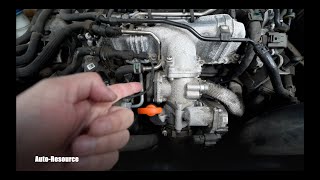
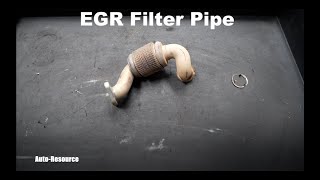

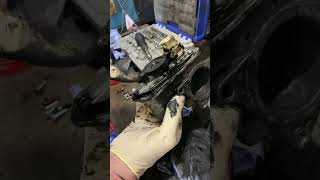
Used OEM Parts in Stock
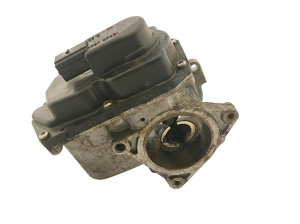
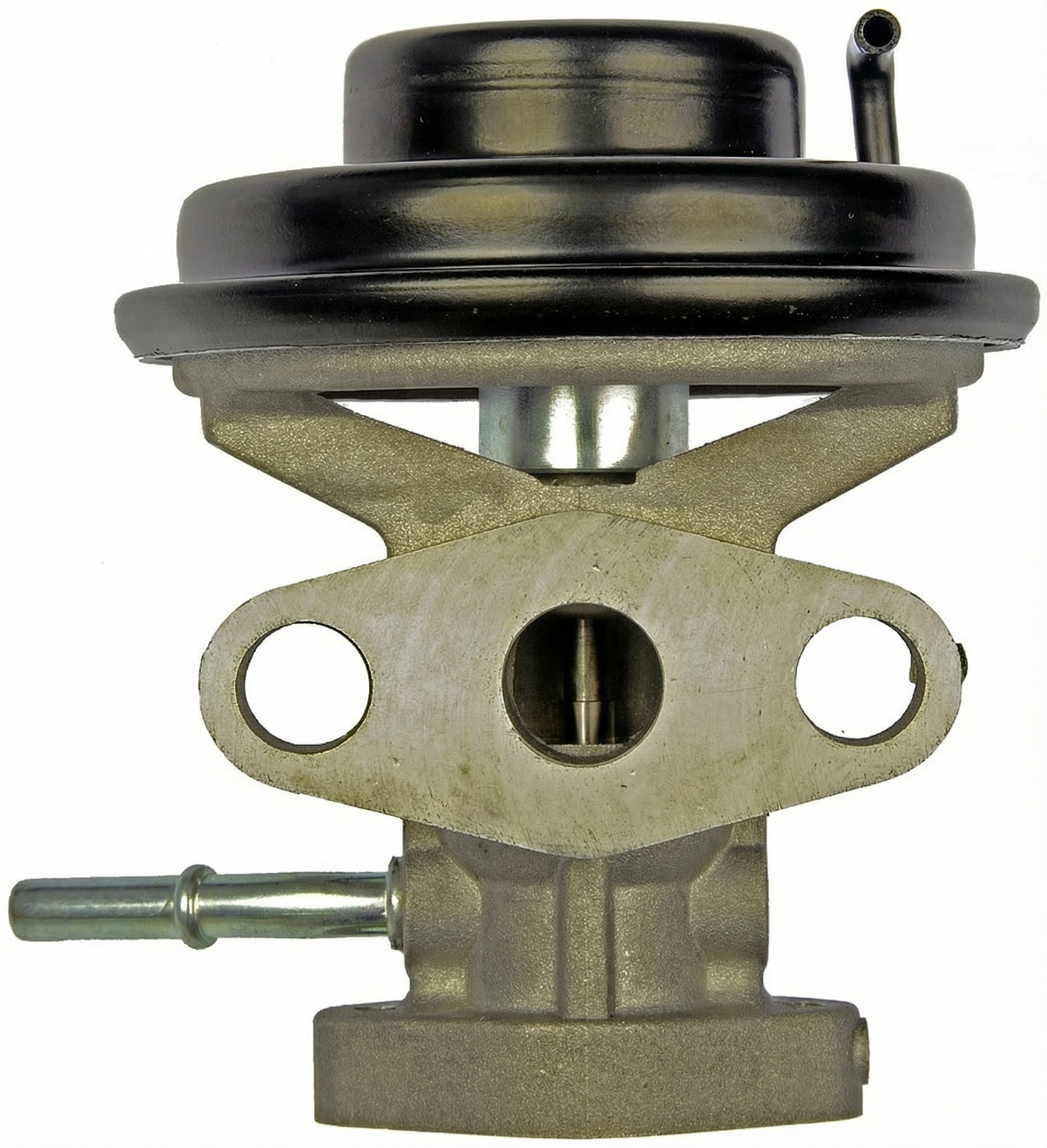
New Aftermarket Parts Available


The information in this article is provided for general reference and educational purposes only. Vehicle specifications, procedures, and part compatibility can vary by production date, trim level, and region. Always consult your vehicle's factory service manual and verify part numbers before purchasing or performing repairs. Safety-critical components such as airbags, seat belts, and braking systems should be installed by a qualified professional.
- Volkswagen BEETLE CONVERTIBLE:
- 🧭 Diagnostic Flowchart
- 🎬 Helpful Videos
- 🛍️ Shop This Part
- What's Unique About the 2014-2014 Volkswagen BEETLE CONVERTIBLE
- Symptoms You May Notice
- Most Likely Causes
- Rare But Worth Checking
- Diagnosis Steps
- Parts You'll Likely Need
- Related Codes That Often Appear With This One
- Technical Service Bulletins (TSBs) & Recalls
- Platform-Specific Known Issues
- Mechanic-Grade Diagnostic Values
- Scan Tool Commands That Help
- Wiring & Ground Locations
- Real Owner Repair Stories
- OEM Part Supersession History
- 🎟️ Get 5% Off