

P0401 on 2007-2016 Volvo V70 2.4L D5 Diesel: EGR Flow Insufficient Causes and Fixes
For a Volvo V70 with the 2.4L D5 diesel engine, code P0401 almost always points to a clogged EGR valve or EGR cooler due to heavy soot buildup. Cleaning the components is a common first step, but due to the labor-intensive nature of the job and the high likelihood of the electronic actuator failing, replacement of the entire EGR valve assembly is often the most effective long-term solution.
- P0401 on a Volvo D5 engine is overwhelmingly caused by physical soot buildup.
- The most likely fix is cleaning or replacing the EGR valve.
- A complete repair must include inspecting and cleaning the EGR cooler and intake passages, not just the valve.
- This is a messy but manageable DIY job for an experienced mechanic; however, its difficulty and the time required may lead many to seek professional service.
- Always use new gaskets during reassembly to prevent leaks.
What's Unique About the 2007-2016 Volvo V70
The Volvo 2.4L D5 engine, particularly the Euro 4 and Euro 5 variants found in the P3 platform V70, is notoriously prone to significant soot and carbon buildup in its emissions systems. The P0401 code on this platform is very frequently a direct result of this soot physically blocking the EGR valve from opening or clogging the small passages within the EGR valve, EGR cooler, and intake manifold. While the code's definition is standard, the root cause on the D5 is almost always a mechanical blockage rather than a complex sensor or electronic failure. The electronic actuator on the EGR valve is also a common failure point, separate from the mechanical valve clogging.
Symptoms You May Notice
- Check Engine Light is on
- Vehicle entering 'limp mode' with a message like 'Engine System Service Urgent'
- Noticeable loss of power and poor acceleration
- Rough or unstable idle
- Engine hesitation or stumbling
- Decreased fuel economy
- Engine knocking or 'pinging' sounds under load
- Replacing the EGR valve without cleaning the EGR cooler and intake passages. If the passages are blocked, a new valve will not fix the 'insufficient flow' problem, and the code will return.
- Replacing the differential pressure sensor without first cleaning its ports. The sensor itself may be fine, but clogged ports will cause it to report incorrect data.
Most Likely Causes
- Clogged or Sticking EGR Valve 🔴 High Probability → Shop Exhaust Gas Recirculation (EGR) Valve Diesel engines produce significant soot, which accumulates in the EGR system. Short-trip driving prevents the engine from getting hot enough to burn off these deposits, accelerating the clogging process. The D5 engine's EGR design is particularly susceptible to this buildup.
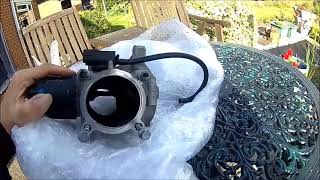
How to confirm: Remove the EGR valve and visually inspect it for heavy, thick carbon buildup that prevents the valve pintle from moving freely. A Volvo-specific diagnostic tool (like VIDA) can be used to actuate the valve and monitor its position, but visual inspection is definitive.
Typical fix: Thoroughly clean the EGR valve and its passages with a dedicated EGR/carb cleaner and brushes. However, if the valve's electronic actuator has failed or cleaning is ineffective, the entire EGR valve assembly must be replaced. Many owners find replacement more effective long-term than cleaning.
Est. part cost: $250-$500 for a new valve assembly. - Blocked EGR Passages or Cooler 🟡 Medium Probability The same soot that clogs the valve also builds up in the connecting pipes and, critically, the EGR cooler. The cooler's small internal passages are easily restricted, leading to insufficient flow even with a perfectly functioning valve.
How to confirm: After removing the EGR valve, inspect the intake manifold port and the EGR cooler for heavy carbon deposits. Airflow should be clear through all passages. The cooler can be removed and flow-tested or visually inspected for blockage.
Typical fix: Remove and clean the EGR cooler and any associated pipes. This is a labor-intensive and messy job often requiring soaking in cleaner or using specialized tools. In severe cases, or if an internal leak is suspected, the cooler must be replaced.
Est. part cost: $300-$600 for a new EGR cooler. - Faulty EGR Position/Pressure Sensor ⚪ Low Probability The sensor that measures EGR flow (often a differential pressure or 'Delta P' sensor on these models) can fail. More commonly, its small ports become clogged with soot, leading to inaccurate readings that mimic a flow issue.
How to confirm: Check the sensor's ports for blockage by removing it and inspecting the orifices leading to the exhaust stream. Use a diagnostic scanner to monitor the sensor's readings while actuating the EGR valve. If the valve moves but the sensor reading doesn't change, the sensor, its ports, or its wiring is suspect.
Typical fix: First, clean the sensor and its ports thoroughly with a small wire or compressed air. If the issue persists, replace the sensor.
Est. part cost: $50-$150 for a new sensor.
Rare But Worth Checking
- Faulty EGR Valve Actuator: → Shop Exhaust Gas Recirculation (EGR) Valve On the D5, the EGR valve has an electronic actuator. While the valve itself is more likely to clog mechanically, the electronic motor can fail, preventing the valve from opening. This failure may not be visible and often requires replacement of the entire EGR valve assembly as the actuator is not sold separately. 🎬 See how to diagnose EGR actuator and positioning faults.
- Leaking EGR Cooler: → Shop Exhaust Gas Recirculation (EGR) Valve A crack in the EGR cooler can cause coolant to leak into the exhaust stream. This can create wet, sticky soot that quickly clogs the system and can also lead to unexplained coolant loss. Check for signs of moisture or white, crystalline residue around the EGR components.
Diagnosis Steps
- Confirm P0401 code with an OBD-II scanner. 🎬 Watch: Troubleshooting the P0401 code on a Volvo diesel. Note any other codes present. A Volvo-specific tool like VIDA/DiCE is highly recommended for more detailed diagnostics.
- Visually inspect the EGR valve area for obvious signs of soot, disconnected vacuum lines (if applicable), or damaged wiring.
- Using a capable scanner, command the EGR valve to open while the engine is idling. A functioning system should cause a change in engine RPM or even cause it to stumble or stall.
- If the engine note doesn't change, the flow is blocked. The next step is disassembly.
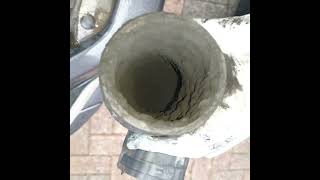
- Remove the intake pipe to the EGR valve and inspect for carbon buildup.
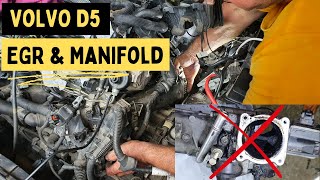
- Remove the EGR valve itself. This is a multi-step process often requiring removal of the top engine brace for access. Inspect the valve mechanism for free movement and check the intake manifold port for heavy blockage. 🎬 Watch: Full walkthrough of EGR and intake manifold cleaning.
- If the valve is heavily coked with dry soot, attempt to clean it thoroughly with carb cleaner and brushes. Ensure the valve moves freely after cleaning. Test the electronic actuator if possible.
- Inspect the EGR cooler and connecting pipes for similar blockages. These must also be cleaned for the repair to be effective.
- Check the small ports for the EGR differential pressure sensor to ensure they are clear of soot.
- After reassembly with new gaskets, clear the code and perform a test drive, ensuring the engine reaches full operating temperature to allow the ECU to verify the fix.
Parts You'll Likely Need
- EGR Valve
(OEM #31293727, 36010129, 31355150)— This is the most common failure point. The valve itself sticks due to heavy soot buildup, or its internal electronic motor fails.
Trusted brands: Volvo (OEM), Bosch, Delphi, Valeo, Pierburg
OEM price range: $400-$600
Aftermarket price range: $250-$450 - EGR Valve Gasket Kit
(OEM #Included with new valve, or sold separately.)— Gaskets must always be replaced whenever the EGR valve or cooler is removed to prevent exhaust and coolant leaks.
Trusted brands: Victor Reinz, Elring, Volvo (OEM)
OEM price range: $30-$50
Aftermarket price range: $15-$30 - EGR Cooler
(OEM #e.g., 31293724 (Varies by model year))— Often clogs with soot at the same time as the valve. If it cannot be cleaned effectively or is found to be leaking coolant, it must be replaced.
Trusted brands: Volvo (OEM), Nissens
OEM price range: $500-$700
Aftermarket price range: $300-$500
Technical Service Bulletins (TSBs) & Recalls
- While no specific TSB for P0401 was found, Volvo uses Technical Service Bulletins to address EGR system diagnostics across various platforms. For instance, TSB Bulletin #K52535491 provides detailed diagnostic and troubleshooting procedures for EGR system components when codes like P0401-00 or P0402-00 are present.
- Manufacturer service documentation, such as Bulletin #KC-411, specifically identifies P0401 as an indicator of "EGR Mass Flow Rate Low," reinforcing that the code is a direct measurement of insufficient exhaust gas recirculation.
- Additionally, Bulletin #K86900043 lists P0401 alongside other EGR fault codes, noting its association with broader emissions equipment diagnostics.
Platform-Specific Known Issues
- Messy and Time-Consuming Repair: Owners and mechanics widely report that accessing, removing, and cleaning the EGR valve, cooler, and associated pipes on the D5 engine is a very messy and labor-intensive job due to extreme soot buildup and tight access. It often requires removing the top engine stabilizer bar for clearance.
- Forum Thread: EGR Cleaning Experience: A thread on the Volvo Owners Club Forum titled 'D5185 EGR and cooler clean' details a user's step-by-step process with photos, showing the heavy contamination and the tools required. URL: https://www.volvoforums.org.uk/showthread.php?t=156752
- Real-World Repair Story: On the SwedeSpeed forums, a user with a 2008 V70 D5 described getting P0401 at 130,000 miles. They initially cleaned the EGR valve, which solved the problem for 20,000 miles before it returned. The second time, they replaced the EGR valve assembly entirely and also cleaned the EGR cooler, which provided a permanent fix. This highlights that cleaning can be a temporary solution.
Mechanic-Grade Diagnostic Values
- EGR Position Sensor reading with ignition on, engine off (KOEO) — expected: Approx. 1-5%.. Failure: A reading significantly higher than 5% (e.g., 16%) or being stuck at 100% indicates a faulty position sensor or stuck valve.
- EGR Valve Commanded Position vs. Actual Position in VIDA — expected: The 'Actual' value should closely track the 'Commanded' value when activating the valve with the scan tool.. Failure: If the commanded value changes but the actual value does not, or moves very slowly, it indicates a stuck valve or a failing actuator motor.
- Voltage at the Differential Pressure (DPFE) Sensor Connector — expected: Two of the pins should show a 5V reference signal from the ECM, with the center pin typically being ground.. Failure: Absence of the 5V signal points to a wiring issue or an ECM problem, not a faulty sensor.
Hidden / Shadow Codes Worth Checking
- ECM-4450: EGR position sensor faulty signal. This is a more specific code pointing directly at the electronic feedback portion of the EGR valve. (see via Volvo-specific diagnostic tools like VIDA/DiCE.)
- ECM-44D0: EGR control qualifier unknown. This code often appears with other EGR faults and suggests the ECM is receiving implausible data from the EGR system. (see via Volvo-specific diagnostic tools like VIDA/DiCE.)
Scan Tool Commands That Help
- Volvo VIDA: EGR Valve Activation/Test — Use this bidirectional command to manually cycle the EGR valve while observing live data for position sensor feedback and listening for mechanical movement. It's a primary step to determine if the failure is mechanical (stuck) or electrical (no response).
- Volvo VIDA: Adaptation of EGR valve — This function is critical after replacing the EGR valve. It allows the ECM to learn the new valve's fully closed and fully open positions. Failure to perform this adaptation can result in the P0401 code returning even with a new part.
Wiring & Ground Locations
- Differential Pressure Sensor Connector — On the passenger side of the engine, connected to the EGR system piping.. The connector pins are prone to moisture and oxidation, which appears as a green dust. This causes a poor electrical connection, leading to incorrect flow readings and triggering P0401 even when there are no mechanical blockages.
- Engine Bay Ground Studs — Located on the top of the driver and passenger side strut towers in the engine bay.. The ECM and its sensors rely on clean ground connections. Corrosion or looseness at these main grounding points can cause erratic sensor readings and unpredictable behavior from components like the electronic EGR valve.
- Central Electronic Module (CEM) — Typically located in the passenger compartment, often under the dashboard/glove box area.. A user reported chasing an EGR-related electrical issue back to a connector at the CEM. Reseating the connector resolved the problem, indicating that connection integrity at the main control module can be a rare but possible cause.
Real Owner Repair Stories
- YouTube user 'dynoguy' (2007 Volvo V50 D5 (Euro 4)) — Intermittent, then permanent, limp mode with 'Engine Service Required' message. Codes 4450 and 44D0 present.
❌ Tried (didn't work) Initial diagnosis pointed to the EGR valve. The valve itself was mechanically free and not excessively clogged.
✅ What actually fixed it The position sensor within the EGR's electronic actuator had failed. The owner purchased a used EGR valve assembly and swapped only the electronic actuator/sensor unit onto their original valve. This resolved the codes and limp mode without replacing the entire expensive assembly. - SwedeSpeed Forums User (2008 V70 D5, 130,000 miles) — P0401, Check Engine Light.
❌ Tried (didn't work) Cleaning the EGR valve only. The fix was temporary and the code returned after 20,000 miles.
✅ What actually fixed it The permanent fix required replacing the entire EGR valve assembly AND thoroughly cleaning the associated EGR cooler, which was also restricted.
"I Checked Everything" — The Actual Cause
- A flow test or visual inspection may show the EGR passages and valve are clear, yet P0401 persists. A documented cause for this is oxidation (green corrosion) inside the electrical connector for the EGR differential pressure sensor. The sensor itself is fine, but the poor connection causes it to send incorrect voltage readings to the ECM, which interprets it as insufficient flow. Cleaning the connector pins with contact cleaner can resolve the fault.
When the Usual Fixes Don't Work
- While the most common advice for a persistent P0401 is to replace the entire EGR valve assembly, this may be unnecessary. In a documented case on a D5 engine, the mechanical valve was functioning correctly, but the integrated electronic position sensor had failed. The owner fixed the issue by sourcing a used EGR valve and transplanting only the electronic actuator unit to the original valve, confirming that a more granular diagnosis can save hundreds of dollars over replacing the complete assembly.
Model Year Variations Within This Range
- 2007-2009 (approx.): These are primarily Euro 4 (D5244T4, 185hp) engines. They introduced the swirl flap system and DPF, which became new, common failure points that can be associated with or misdiagnosed as EGR faults. The EGR system itself is robust but prone to clogging.
- 2009-2016 (approx.): These model years saw the introduction of the Euro 5 D5 engine (e.g., D5244T10). This engine features twin-turbos and a redesigned, more efficient EGR cooler with 25% better heat dissipation. While still prone to P0401 from soot, the failure patterns of the cooler may differ from the earlier Euro 4 version. These engines also use high-pressure piezoelectric injectors.
Diagnostic Flowchart
Other Known Issues on This Vehicle
Issues unrelated to this code that are worth knowing about as an owner of this generation:
- Auxiliary Belt & Tensioner Failure 🔴 High — Common after 80,000 miles. The tensioner can fail, causing the belt to shred. In a worst-case scenario, the shredded belt can get tangled in the timing belt, leading to catastrophic engine damage.
- Swirl Flap Linkage Arm Failure 🟠 Medium — The plastic linkage arm that controls the swirl flaps in the intake manifold is known to wear and break, causing rough running, reduced performance, and fault codes.
- Cracked Intercooler 🟠 Medium — The intercooler can develop cracks, leading to a loss of boost pressure, reduced power, and sometimes an audible hissing or whistling sound. Oil residue around the intercooler is a common sign.
- Leaking Windscreen Seal 🟠 Medium — A widely reported issue where the factory windscreen bond fails, particularly at the top, allowing water to leak into the cabin. This can damage interior electronics if left unaddressed.
- Rear Trailing Arm Bushing Wear 🟡 Low — The large bushings on the rear trailing arms wear out, causing squeaking noises over bumps and affecting rear alignment. It's an expensive repair due to the labor involved.
- DPF (Diesel Particulate Filter) Clogging 🟠 Medium — Common on diesel vehicles used primarily for short trips, where the DPF doesn't get hot enough to perform a regeneration cycle, leading to blockage, limp mode, and costly replacement.
Used vs. New Parts: Buying Guide for This Vehicle
When a used part is the smart pick: A used EGR valve assembly from a reputable salvage yard can be a cost-effective source for the electronic actuator/sensor module. If you have diagnosed your original valve as mechanically sound but electronically failed, swapping just the electronics from a used part is a proven, budget-friendly repair.
Donor-vehicle mileage cap: roughly under 100000 miles for the part to have meaningful remaining life.
What to inspect on the donor part:
- Check for clean, corrosion-free electrical connector pins.
- If possible, manually actuate the valve pintle to ensure it is not seized.
- Ask for the donor vehicle's mileage; lower is always better.
- Avoid parts that show signs of external coolant leaks or heavy, wet oil residue.
OEM-only on this vehicle (don't cheap out):
- While not strictly OEM-only, it is highly recommended to use either a genuine Volvo EGR valve or one from an OEM supplier like Pierburg, Valeo, or Bosch. Cheap, unbranded aftermarket EGR valves are known to have high failure rates, leading to the code returning quickly.
Aftermarket brands forum-validated for this vehicle:
- Pierburg (often the original OEM supplier)
- Valeo
- Bosch
- Delphi
Brands owners have reported issues with on this vehicle:
- Unbranded, low-cost units from online marketplaces like eBay or Amazon.
Real Owner Stories
Aggregated from forums and TSBs cited above. Mileages and costs reflect what owners reported in those sources.
2008 Volvo V70 D5 — 130000 miles
Symptoms: The owner received a P0401 code. They initially attempted to clean the EGR valve, which worked for a period of 20,000 miles before the issue recurred.
What fixed it: The owner replaced the entire EGR valve assembly and performed a thorough cleaning of the EGR cooler.
Source hint: SwedeSpeed forums
Volvo V70 D5 (P3 Platform)
Symptoms: Heavy contamination and soot buildup in the EGR system and cooler, requiring a step-by-step cleaning process with photos.
What fixed it: A detailed DIY cleaning of the EGR and cooler using specialized tools to remove heavy carbon deposits.
Source hint: Volvo Owners Club Forum (volvoforums.org.uk) thread 'D5185 EGR and cooler clean'
Related OBD-II Codes
Frequently Asked Questions
Is cleaning the EGR valve on my D5 engine a permanent fix for P0401?
Why is my V70 D5 showing 'Engine System Service Urgent' and losing power?
Does my driving style affect how often the EGR system clogs on the 2.4L D5?
What specific tool is recommended for diagnosing P0401 on a Volvo V70?
Are there any other major mechanical issues I should check while fixing the EGR system on my D5?
Is it just the EGR valve that clogs, or are other parts involved?
Helpful Videos

The information in this article is provided for general reference and educational purposes only. Vehicle specifications, procedures, and part compatibility can vary by production date, trim level, and region. Always consult your vehicle's factory service manual and verify part numbers before purchasing or performing repairs. Safety-critical components such as airbags, seat belts, and braking systems should be installed by a qualified professional.
- Volvo V70:
- 🧭 Diagnostic Flowchart
- 🎬 Helpful Videos
- What's Unique About the 2007-2016 Volvo V70
- Symptoms You May Notice
- Most Likely Causes
- Rare But Worth Checking
- Diagnosis Steps
- Parts You'll Likely Need
- Technical Service Bulletins (TSBs) & Recalls
- Platform-Specific Known Issues
- Mechanic-Grade Diagnostic Values
- Hidden / Shadow Codes Worth Checking
- Scan Tool Commands That Help
- Wiring & Ground Locations
- Real Owner Repair Stories
- "I Checked Everything" — The Actual Cause
- When the Usual Fixes Don't Work
- Model Year Variations Within This Range
- Other Known Issues on This Vehicle
- Used vs. New Parts: Buying Guide for This Vehicle
- Real Owner Stories
- 2008 Volvo V70 D5 — 130000 miles
- Volvo V70 D5 (P3 Platform)
- Related OBD-II Codes
- Frequently Asked Questions
- 🎟️ Get 5% Off