

P0402 on 2008-2012 Chevrolet Malibu 3.6L V6: Internal EGR Causes and Fixes
On this specific engine, P0402 is a rare code that does NOT point to a bad EGR valve, as it doesn't have one. The issue is almost always a faulty VVT solenoid (camshaft actuator) causing incorrect valve timing. Expect to pay $40-$80 for a single solenoid.
- Do NOT look for an EGR valve on this engine; it does not have one.
- This code points to a problem with the Variable Valve Timing (VVT) system.
- The most likely fix is replacing one or more faulty VVT solenoids (camshaft actuators).
- Always check your engine oil level and condition first, as the VVT system relies on clean oil.
- If you also have codes like P0008 or P0017, the problem is likely a more serious timing chain issue.
What's Unique About the 2008-2012 Chevrolet Malibu
The key difference is the absence of a physical EGR valve. Many generic guides for P0402 will incorrectly tell you to clean or replace an EGR valve. On the 3.6L LLT V6, that part does not exist. The function is handled internally by the camshaft phasers, which are controlled by VVT solenoids (also called camshaft position actuators). A P0402 code on this Malibu is not an EGR valve problem, but a symptom of a potential valve timing, VVT solenoid, or oil pressure/quality issue affecting the VVT system.
Symptoms You May Notice
- Rough or unstable idle, especially when the engine is warm
- Engine stalling when coming to a stop
- Hesitation or stumbling during acceleration
- Reduced engine power
- Decreased fuel economy
- Check Engine Light is on
- Rattling or ticking noise from the engine, especially at idle or on startup.
- Surge or bucking sensations during light throttle and higher loads, as noted in manufacturer documentation for similar Chevrolet systems.
- Searching for and attempting to replace a non-existent EGR valve.
- Replacing oxygen sensors, which are unlikely to be the root cause of this specific code on this engine, though they may be flagged in conjunction with catalyst efficiency codes (P0420, P0430) if the timing issue persists.
Most Likely Causes
- Faulty VVT Solenoid (Camshaft Position Actuator) 🔴 High Probability These solenoids control oil flow to the cam phasers. They are highly sensitive to oil contamination and can get clogged with sludge or debris from infrequent oil changes, causing them to stick. The filter screens on the solenoids can also tear, allowing debris into the VVT system. Electronic failure of the solenoid coil is also common.
How to confirm: With the engine off, unplug and remove the suspect solenoid (there are four total, two intake and two exhaust). Check for sludge or debris on the oil screens. A torn screen is a definitive sign of failure. Use a scan tool to command the solenoids and monitor the camshaft position response; a slow or non-responsive cam points to a bad solenoid. You can also swap a suspect solenoid with a known good one to see if the problem follows.
Typical fix: Replace the faulty VVT solenoid. 🎬 Watch: Step-by-step guide to replacing your VVT solenoids. It is highly recommended to change the engine oil and filter at the same time. Many owners and mechanics choose to replace them in pairs (e.g., both intake solenoids) or all four at once, as they tend to fail around the same time.
Est. part cost: $40-$80 per solenoid - Low or Dirty Engine Oil 🟡 Medium Probability The entire VVT system is dependent on clean oil at the correct pressure to function. The 3.6L LLT engine can be hard on oil, and extending oil change intervals beyond manufacturer recommendations can lead to sludge buildup. Low or sludgy oil can starve the VVT solenoids and cam phasers, preventing them from adjusting cam timing correctly and triggering various timing-related codes, including P0402.
How to confirm: Check the engine oil level and condition via the dipstick. If the oil is low, excessively black, thick, or has a sludgy consistency, this is a very likely contributor to the problem.
Typical fix: Perform an engine oil and filter change using a high-quality 5W-30 full synthetic oil that meets GM's dexos1 specification. In cases of severe sludge, an engine flush may be considered, but should be done with caution.
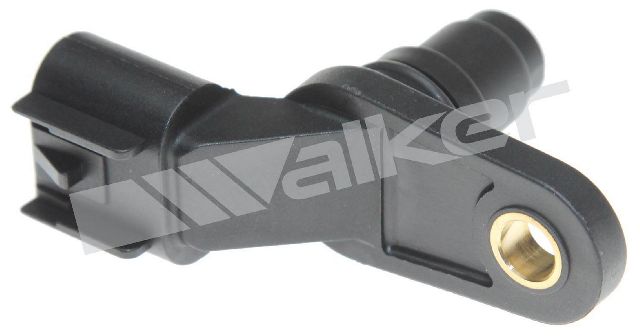
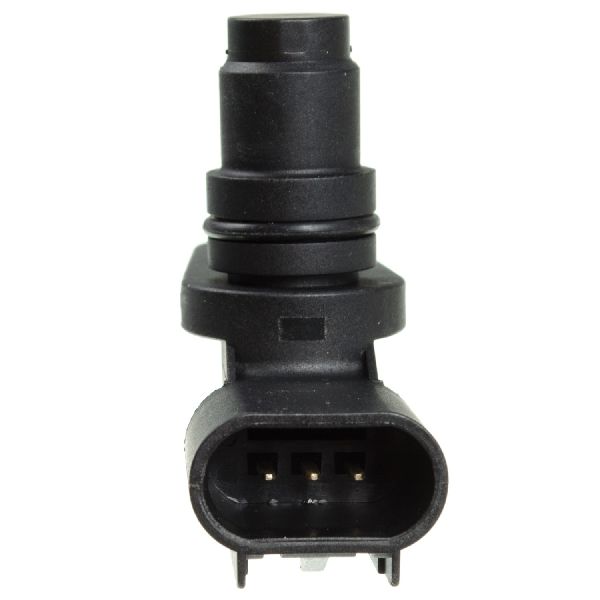
Est. part cost: $50-$100 - Faulty Camshaft Position Sensor 🟡 Medium Probability These sensors report the exact position of the camshafts to the PCM. If a sensor sends incorrect or erratic data, the PCM can misinterpret the cam timing as having an excessive EGR effect, even if the mechanical timing is correct.
How to confirm: Use a scan tool to monitor the data stream from all four camshaft position sensors. Look for erratic readings, dropouts, or a signal that doesn't change smoothly with engine RPM. Swapping a suspect sensor with a known good one from another position on the engine and seeing if the problem or associated codes follow the sensor is an effective diagnostic step.
Typical fix: Replace the faulty camshaft position sensor. 🎬 See how to easily swap out a bad camshaft sensor. They are typically replaced individually as they fail.
Est. part cost: $20-$50 per sensor
Rare But Worth Checking
- Stretched Timing Chains: The 3.6L LLT engine is known for premature timing chain wear, particularly in earlier models (2008-2011). This is often caused by extended oil change intervals. While this typically sets codes like P0008, P0017, or P0018, a severely stretched chain could cause erratic cam timing that the PCM interprets as an EGR flow problem. This is a major and expensive repair detailed in GM TSB 12-06-01-009. 🎬 Learn more about timing chain issues and GM's extended warranty.
- Clogged PCV Orifice: A clogged Positive Crankcase Ventilation (PCV) orifice, which is integrated into the camshaft cover, can cause excessive oil consumption and crankcase pressure. This can lead to rapid oil degradation and sludge formation, which in turn clogs VVT solenoids and triggers timing codes. Some owners have reported success by drilling out the orifice to a slightly larger size to prevent future clogs.
- Faulty Powertrain Control Module (PCM): → Shop Engine Control Module (ECM) In very rare cases, the engine computer itself can fail and generate false trouble codes. This should only be considered after all other possibilities have been exhaustively ruled out by checking wiring and component function. Manufacturer Bulletin #PIP5955 notes that a calibration update may be required to resolve P0402 in some Chevrolet vehicles.
Diagnosis Steps
- Confirm the code with an OBD-II scanner. Note any other codes present, especially VVT or timing correlation codes (P00xx).
- IMPORTANT: Verify that your vehicle has the 3.6L LLT V6 engine and understand it has no external EGR valve.
- Check engine oil level and condition. If low, dirty, or sludgy, perform an oil and filter change with 5W-30 full synthetic oil before proceeding. This alone may solve the issue.
- Inspect the wiring and connectors for all four VVT solenoids and all four camshaft position sensors for any signs of damage, oil contamination, or corrosion.
- Using a capable scan tool, monitor the commanded vs. actual positions for all four camshafts. Observe if any are slow to respond, erratic, or do not match the commanded value.
- Test the VVT solenoids. Remove them for a visual inspection of the screens for sludge, debris, or tears. Clean them if dirty, but replacement is recommended if they are heavily contaminated or the screens are damaged.
- If VVT solenoids appear to function correctly, test the camshaft position sensors by observing their readings on a scan tool or swapping them to see if the problem moves.
- If timing-related codes (like P0008/P0017) are present or if the above steps do not resolve the issue, suspect a more serious timing chain issue that requires professional diagnosis, as outlined in TSB 12-06-01-009.
Parts You'll Likely Need
- Engine Variable Valve Timing (VVT) Solenoid
(OEM #12636175 (Intake/Exhaust), 12679099 (Latest Superseded Part))— This is the most common failure point. These actuators control cam phasing, and a malfunction can cause the valve overlap that the PCM interprets as 'excessive EGR'. GM has updated this part number several times to improve reliability.
Trusted brands: ACDelco (OEM), Delphi, Dorman, DNJ
OEM price range: $60-$90
Aftermarket price range: $35-$65 - Camshaft Position Sensor
(OEM #12684186)— A faulty sensor can provide incorrect data to the PCM, leading to a misdiagnosis of cam timing and triggering the P0402 code. Note: Part number may vary for 2008-2009 models.
Trusted brands: ACDelco (OEM), Standard Motor Products, Dorman
OEM price range: $30-$50
Aftermarket price range: $20-$40
Related Codes That Often Appear With This One
- P0016, P0017, P0018, P0019 — These codes indicate a correlation issue between the crankshaft and camshafts, often pointing to a timing chain problem which can also cause the valve timing issues that trigger P0402.
- P0010, P0011, P0013, P0014, P0020, P0021, P0023, P0024 — These are specific circuit or performance codes for the VVT solenoids (camshaft position actuators). If one of these is present with P0402, it strongly points to a VVT solenoid as the culprit. A Reddit user with a 2011 Malibu reported a P0013 code along with starting issues, which points to the VVT system.
- P062D, P144E, P242B, P2459, P2635 — As noted in Bulletin #23-NA-066, these codes may set alongside P0402 when there is a broader electrical or engine management fault.
Technical Service Bulletins (TSBs) & Recalls
- TSB #12-06-01-009F: Provides information on diagnosing stretched timing chains (codes P0008, P0016, P0017, etc.) and lists the updated timing chain kits. It advises against replacing guides and sprockets unless visibly worn.
- Bulletin #23-NA-213: Outlines procedures to correct concerns of rough idle and surging/bucking under light throttle when P0402 is present.
- Bulletin #23-NA-066: Provides diagnostic procedures for cases where the Malfunction Indicator Lamp is illuminated with P0402 and other related performance codes.
Platform-Specific Known Issues
- The 3.6L LLT V6 engine does not use a conventional EGR valve; it uses cam phasing (Variable Valve Timing) to achieve exhaust gas recirculation internally. This is a critical distinction for diagnosing P0402.
- This engine platform is known for premature timing chain stretch, which can cause a variety of cam/crank correlation codes and may be a root cause if VVT components check out. This is covered under GM TSB 12-06-01-009F.
- The PCV system on the LLT engine features a small, fixed orifice in the valve cover that is prone to clogging, leading to increased oil consumption and sludge, which directly impacts the VVT system's health.
Mechanic-Grade Diagnostic Values
- VVT Solenoid (Camshaft Position Actuator) Resistance — expected: 7 to 13 Ohms at 68°F (20°C). Failure: A reading of 0 Ohms (short), OL/infinite (open), or a fluctuating/unstable reading indicates a failed solenoid coil. One technician found a failed solenoid reading in the mega-ohm range.
- Engine Oil Pressure (Hot) — expected: Minimum 69 kPa (10 PSI) at hot idle (1,000 RPM) and 138 kPa (20 PSI) at 2,000 RPM.. Failure: Pressure below these minimums indicates a mechanical lubrication problem (e.g., worn bearings, failing oil pump, clogged pickup tube) that is starving the VVT system and must be addressed before replacing VVT components.
- Camshaft Position Sensor (CMP) Connector Voltage (Key On, Engine Off) — expected: Pin 3 (5V Reference): 4.8-5.2V. Pin 2 (Signal): 4.8-5.2V. Pin 1 (Low Reference/Ground): Near 0V, with less than 5.0 Ohms resistance to chassis ground.. Failure: Absence of 5V reference, signal voltage outside the specified range, or high resistance on the ground pin points to a wiring harness or ECM problem, not the sensor itself.
- Scan Tool: Desired vs. Actual Camshaft Position Angle — expected: Less than 2-3 degrees of variance at a steady idle.. Failure: A consistent variance greater than 4-5 degrees, or a value that is slow to respond to changes in RPM, points to a sticking VVT solenoid, a failing cam phaser, or a mechanical timing issue (stretched chain).
Scan Tool Commands That Help
- GDS2 / Tech2 or equivalent professional scan tool: Camshaft Position Actuator Control / VVT Solenoid Test — This bidirectional command allows the technician to manually activate each of the four VVT solenoids while monitoring engine RPM and the 'Desired vs. Actual' camshaft angle PIDs. When a solenoid is commanded ON, there should be a noticeable change in engine operation (e.g., rougher idle) and the 'Actual' angle should immediately match the 'Desired' angle. A solenoid that causes no change or shows a slow response is faulty.
Wiring & Ground Locations
- G107 — Located on the center rear of the engine block.. This is a primary engine ground. A loose or corroded connection here can cause unstable sensor readings and erratic behavior from various engine management components, including the VVT and ignition systems. It should be checked, cleaned, and tightened during any complex electrical diagnosis.
- G109 — Located on the left front corner of the engine compartment.. Another critical chassis ground point for engine electronics. A poor connection can introduce electrical noise and voltage drops, potentially affecting ECM calculations and sensor readings.
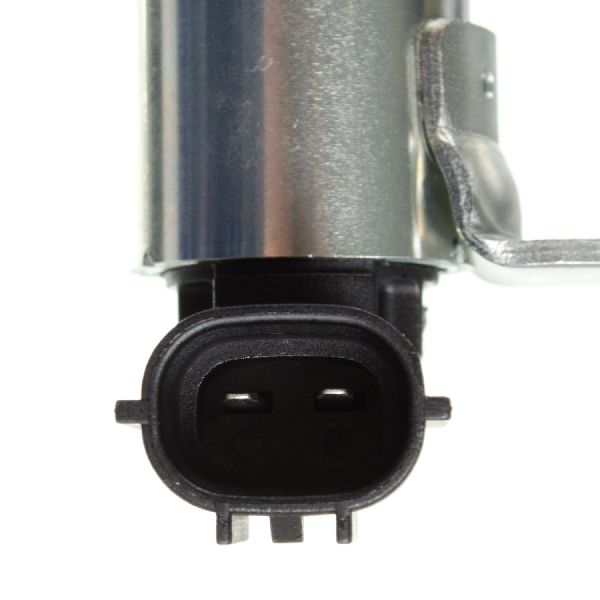
- VVT Solenoid Connectors — Two on the front (Bank 2) and two on the rear (Bank 1) of the engine, inserted into the valve covers.. These 2-pin connectors are the direct electrical interface to the solenoids. They are a primary test point for resistance checks and can become brittle or contaminated with oil over time, leading to poor connections that mimic solenoid failure.
- ECM (Engine Control Module) — Located in the left front of the engine compartment.. All sensor signals and actuator commands originate or terminate here. Verifying clean, tight connections at the ECM is a final step after component-level testing has failed to find a fault. The part number for a 2011 Malibu 3.6L is often 12633264 or 12656244.
Real Owner Repair Stories
- YouTube channel 'GerardBurke' (Holden Malibu with GM 3.6L Ecotec engine (similar to Chevrolet)) — Check Engine Light with VVT codes (P0010, P0011).
✅ What actually fixed it The technician performed a direct resistance test on the VVT solenoids. The good exhaust solenoid measured 12.8 Ohms. The faulty intake solenoid, which was triggering the code, measured 1.6 Mega-Ohms (millions of Ohms), indicating a definitive internal open circuit. Replacing the failed solenoid resolved the issue. - YouTube channel 'Daniels Customs' (2013 Chevrolet Traverse with 3.6L LFX engine (similar VVT system)) — Check Engine Light with codes P0014 and P0016.
❌ Tried (didn't work) Verified oil condition and pressure were good., Removed and tested the VVT solenoid; it tested good for resistance (7.96 Ohms) and activated correctly with a power probe., Checked cam/crank sensor signals with an oscilloscope; signals appeared correct initially.
✅ What actually fixed it After removing the valve cover, the technician discovered the dowel pin for the exhaust camshaft phaser had sheared off. This allowed the camshaft to rotate slightly independent of the phaser, causing a timing correlation error even though the chain and solenoid were functional. The final fix was replacing the failed camshaft phaser. - NHTSA ODI #10302196 — An owner reported that a dealership installed a new calibration update to address a P0402 code, which initially occurred at 7,779 miles and recurred later.
"I Checked Everything" — The Actual Cause
- This diagnostic category is not applicable to a P0402 code on this specific vehicle. A smoke test is used to find vacuum or pressure leaks in a system. Since the 3.6L LLT engine uses an 'internal EGR' via VVT and has no external EGR valve, tubes, or cooler, there is no system to smoke test for this particular code. The diagnosis is entirely focused on the VVT system's oil pressure, electrical integrity, and mechanical timing.
OEM Part Supersession History
12586722, 12588943, 12615613, 12626012→12636175, and later 12679099— Improved design to increase reliability and resistance to failure from oil contamination and internal coil shorts. Later versions may have improved screen materials or coil windings.
Heads up: While all listed parts are for the LLT engine, it is critical not to use a solenoid intended for the older LY7 V6 (which requires a different resistance value of 4.6-7.5 Ohms) as it will not function correctly.
Model Year Variations Within This Range
- 2008-2011: These earlier model years of the LLT engine are significantly more susceptible to premature timing chain stretch. While the P0402 code points to a VVT issue, on these specific years, it should be considered a strong potential indicator of an underlying timing chain problem, especially if accompanied by a startup rattle or codes like P0008/P0017.
Diagnostic Flowchart
Other Known Issues on This Vehicle
Issues unrelated to this code that are worth knowing about as an owner of this generation:
- Premature Timing Chain Stretch 🔴 High — Very common, especially on 2008-2011 models. Often occurs between 70,000 and 120,000 miles. Caused by long oil change intervals and chain design. (Ref: TSB 12-06-01-009F)
- Power Steering System Failures 🟠 Medium — Common issue involving leaking power steering pumps, lines, or the steering rack itself. Some models also had issues with the electric power steering column.
- 6T70/6T75 Transmission Wave Plate Failure 🔴 High — A well-known issue where the 3-5-R wave plate inside the automatic transmission fractures, leading to loss of reverse and 3rd/5th gears. Most common around 60,000-100,000 miles. (Ref: Special Coverage #14404B (Expired))
- Coolant Leaks 🟠 Medium — Leaks are common from the water pump, radiator, coolant reservoir cap, and heater core.
- High Oil Consumption / Clogged PCV 🟠 Medium — The fixed-orifice PCV system can clog, leading to high crankcase pressure and increased oil consumption, which accelerates timing chain wear.
Used vs. New Parts: Buying Guide for This Vehicle
When a used part is the smart pick: For this specific repair, using used parts is strongly discouraged. The only possible exception might be a simple structural bracket or a connector pigtail if a new one is unavailable.
Donor-vehicle mileage cap: roughly under 30000 miles for the part to have meaningful remaining life.
What to inspect on the donor part:
- For any considered part, verify the donor vehicle had a documented history of regular, on-time oil changes.
- Avoid parts from a donor vehicle that shows any sign of engine sludge when looking into the oil filler cap.
- Never buy a used electronic sensor or solenoid for this repair; the risk of premature failure is too high.
OEM-only on this vehicle (don't cheap out):
- VVT Solenoids: While quality aftermarket exists, ACDelco (OEM) is the most trusted choice to avoid repeat issues. The cost savings are not worth the risk of repeated labor.
- Timing Chain Kit: Given the critical nature and high labor cost of this job, using a genuine GM updated timing chain kit or a top-tier aftermarket kit (like Cloyes) is essential. Avoid no-name kits.
Aftermarket brands forum-validated for this vehicle:
- Cloyes: Widely regarded as a high-quality alternative to OEM for timing chain kits.
- Delphi: A reputable OE supplier for many electronic components, including VVT solenoids.
Brands owners have reported issues with on this vehicle:
- Unbranded or 'white-box' VVT solenoids and timing chain kits from online marketplaces. Failure of these components can be catastrophic and lead to engine damage, making the small initial savings a massive financial risk.
Real Owner Stories
Aggregated from forums and TSBs cited above. Mileages and costs reflect what owners reported in those sources.
2011 Chevrolet Malibu 3.6L LLT V6
Symptoms: Hard starting and multiple error codes including a VVT solenoid circuit code.
What fixed it: The owner reported issues related to the VVT solenoid circuit (P0013), which is a common failure point for the VVT system that manages internal EGR on this engine.
Source hint: Reddit r/auto: A user with a 2011 Malibu reported hard starting and multiple codes including P0013
2008-2011 Chevrolet Malibu 3.6L LLT V6 — ~95000 miles
Symptoms: Various cam/crank correlation codes and timing-related issues.
What fixed it: Replacement of the timing chain using updated kits as specified in the technical service bulletin. The TSB advises against replacing guides and sprockets unless visibly worn.
Source hint: TSB #12-06-01-009F
Related OBD-II Codes
Frequently Asked Questions
My 2010 Malibu 3.6L doesn't have an EGR valve; why am I getting a P0402 code for excessive EGR flow?
Does TSB 12-06-01-009F apply to my 2011 Malibu with the 3.6L engine?
Can low oil levels cause the P0402 code on my Chevy Malibu?
Should I replace all four VVT solenoids if only one is failing?
What type of oil should I use to prevent VVT issues in my 3.6L LLT V6?
Helpful Videos
We Have This Part in Stock



The information in this article is provided for general reference and educational purposes only. Vehicle specifications, procedures, and part compatibility can vary by production date, trim level, and region. Always consult your vehicle's factory service manual and verify part numbers before purchasing or performing repairs. Safety-critical components such as airbags, seat belts, and braking systems should be installed by a qualified professional.
- Chevrolet Malibu:
- 🧭 Diagnostic Flowchart
- 🎬 Helpful Videos
- 🛍️ Shop This Part
- What's Unique About the 2008-2012 Chevrolet Malibu
- Symptoms You May Notice
- Most Likely Causes
- Rare But Worth Checking
- Diagnosis Steps
- Parts You'll Likely Need
- Related Codes That Often Appear With This One
- Technical Service Bulletins (TSBs) & Recalls
- Platform-Specific Known Issues
- Mechanic-Grade Diagnostic Values
- Scan Tool Commands That Help
- Wiring & Ground Locations
- Real Owner Repair Stories
- "I Checked Everything" — The Actual Cause
- OEM Part Supersession History
- Model Year Variations Within This Range
- Other Known Issues on This Vehicle
- Used vs. New Parts: Buying Guide for This Vehicle
- Real Owner Stories
- 2011 Chevrolet Malibu 3.6L LLT V6
- 2008-2011 Chevrolet Malibu 3.6L LLT V6 — ~95000 miles
- Related OBD-II Codes
- Frequently Asked Questions
- 🎟️ Get 5% Off