

P0402 on 2002-2005 Ford Explorer 4.6L V8: Causes and Fixes for Excessive EGR Flow
On a 2002-2005 Explorer with the 4.6L V8, code P0402 is almost always caused by a faulty DPFE sensor. Replacing this sensor is a simple, common DIY fix, with the part costing between $25 and $75. A Ford TSB confirms this is the most likely solution.
- For a P0402 code on a 2002-2005 Explorer 4.6L, suspect the DPFE sensor first.
- A Ford TSB directly points to a faulty DPFE sensor as the cause.
- Replacing the DPFE sensor (Part No. 4U7Z-9J460-AA) is a simple DIY job that often solves the problem.
- Symptoms are typically a rough idle or stalling at stops.
- If a new DPFE sensor doesn't fix it, inspect the EGR valve for carbon buildup causing it to stick open.
What's Unique About the 2002-2005 Ford Explorer
For this generation of Ford Explorer with the 4.6L V8, the EGR system's reliability is heavily tied to its tube-mounted DPFE sensor. Ford issued a Technical Service Bulletin (TSB 04-11-1) that directly addresses P0402 on the 2002-2003 models, identifying an intermittently functioning DPFE sensor as the primary cause. The original metal-cased sensors were notoriously prone to failure from internal corrosion caused by exhaust moisture, leading Ford to release an updated plastic-bodied sensor. Because of this well-documented issue, the DPFE sensor is the first and most likely part to suspect, often before the EGR valve itself. A faulty sensor can send a high voltage signal (4-5V) to the PCM even at idle, tricking the computer into thinking the EGR valve is wide open and triggering the P0402 code.
Symptoms You May Notice
- Rough idle or engine shaking at a stop, especially when in gear.
- Engine stalling when coming to a stop or at idle.
- Engine surging or hesitating during acceleration.
- Poor fuel economy.
- Check Engine Light illuminated.
- Engine knocking or pinging noises during driving.
- Replacing the EGR valve when the DPFE sensor is the actual problem. Due to the known high failure rate of the DPFE sensor on this platform and the specific guidance in TSB 04-11-1, it should be considered the primary suspect for a P0402 code.
- Replacing an O2 sensor. An auto parts store employee incorrectly suggested to an owner that P0402 was caused by a bad O2 sensor, which is incorrect. P0402 is specific to the EGR system.
Most Likely Causes
- Faulty DPFE Sensor 🔴 High Probability Ford TSB 04-11-1 specifically identifies this part as the likely cause for P0402 on 2002-2003 models. The original metal-cased sensors were known to fail from heat and internal corrosion, providing incorrect high-voltage readings to the PCM. This failure mode essentially tells the computer there is excessive flow when there is none.
How to confirm: With the ignition on and engine off (KOEO), use a multimeter to back-probe the DPFE sensor's signal wire. A healthy sensor should read between 0.5V and 1.0V. If the voltage is significantly higher, often 4.5V or more, the sensor has failed internally and is sending a false 'excessive flow' signal. This test is a definitive way to condemn the sensor before replacement.
Typical fix: Replace the DPFE sensor and the two small silicone hoses connected to it. The hoses often degrade and can cause leaks. Clear the code and perform a drive cycle. It is highly recommended to use an OEM Motorcraft part or a top-tier aftermarket brand, as cheap sensors are known to be unreliable.
Est. part cost: $25-$75 - EGR Valve Stuck Open 🟡 Medium Probability → Shop Exhaust Gas Recirculation (EGR) Valve Carbon deposits from the exhaust can build up on the EGR valve's pintle, causing it to stick in the open position. This allows exhaust gas to flow into the intake manifold at all times, disrupting the air-fuel mixture and leading to a rough idle and stalling. A manufacturer service bulletin for other Ford platforms, TSB 23-2059, notes that P0402 can be triggered by issues with the fault detection ratio threshold of the differential pressure feedback system.
How to confirm: With the engine idling roughly, gently tap the side of the EGR valve with a screwdriver handle. If the idle smooths out, the valve was likely stuck and just snapped shut. You can also remove the valve for visual inspection to check for carbon buildup and see if the pintle moves freely. With the valve removed, you can apply vacuum with a hand pump to verify it opens and closes smoothly.
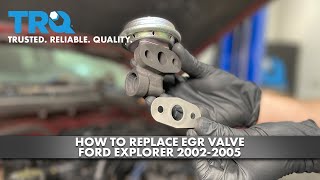
Typical fix: The EGR valve can sometimes be cleaned with carburetor cleaner or a product like WD-40, but if it is heavily caked with carbon or fails to operate smoothly after cleaning, it should be replaced. 🎬 Watch: Step-by-step guide to replacing your EGR valve.
Est. part cost: $50-$150 - Leaking or Damaged EGR Vacuum Lines ⚪ Low Probability The rubber and silicone vacuum lines become brittle over time due to engine heat and can crack or split, causing vacuum leaks that affect EGR system operation. This includes the two small hoses attached to the DPFE sensor itself.
How to confirm: Visually inspect all vacuum lines running to the EGR valve, EGR solenoid (EVR), and DPFE sensor for cracks, brittleness, or loose connections. Pay close attention to the hoses connected to the DPFE sensor. You can also use a smoke machine to test for leaks.
Typical fix: Replace the damaged section of vacuum hose. It is common practice to replace the two small DPFE hoses whenever the sensor is replaced.
Est. part cost: $5-$20
Rare But Worth Checking
- Clogged EGR Ports in Intake Manifold: → Shop Engine Intake Manifold While more commonly a cause for P0401 (Insufficient Flow), severe or uneven carbon blockage can sometimes disrupt pressure in a way that causes the DPFE sensor to read excessive flow. It's worth checking if a new DPFE sensor doesn't solve the issue. Cleaning the passages in the throttle body elbow and intake is a good maintenance item.
- Faulty EGR Vacuum Regulator (EVR) Solenoid: The EVR controls vacuum to the EGR valve. If it gets stuck open, it can apply vacuum to the EGR valve at idle, causing it to open when it should be closed. This will lead to a rough idle and P0402. You can test this by checking for vacuum at the EGR valve's supply hose at idle; there should be none.
- PCM Software Strategies: As noted in TSB 19-2343 for other Ford engines, an illuminated MIL with P0402 may sometimes be due to various strategies within the powertrain control module (PCM) software, requiring a software update to correct the condition.
Diagnosis Steps
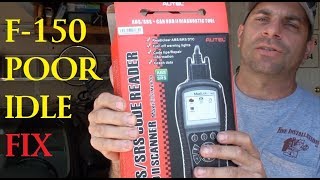
- Retrieve the code with an OBD-II scanner to confirm P0402 is present. 🎬 Watch: Using a scan tool to diagnose a rough idle. Note any other codes, especially P0401 or P1401.
- With the engine at idle, check for symptoms like rough running or stalling.
- Visually inspect the DPFE sensor, EGR valve, and all associated vacuum hoses and electrical connectors for obvious damage, cracks, or loose fittings.
- Test the DPFE Sensor: With the key on and engine off, back-probe the signal wire of the DPFE sensor with a multimeter. The voltage should be around 0.5V-1.0V. If the voltage is high (e.g., 4.5V or higher), the DPFE sensor is faulty and must be replaced. This is the most critical diagnostic step for this vehicle.
- Check for Vacuum at EGR Valve: → Shop Exhaust Gas Recirculation (EGR) Valve Disconnect the vacuum line to the EGR valve at idle. There should be NO vacuum. If there is vacuum, the EGR solenoid (EVR) is likely stuck open and needs replacement.
- If the DPFE sensor tests good, inspect the EGR valve. Remove it and check if the pintle is stuck open with carbon. Clean or replace the valve as needed. Use a hand vacuum pump to ensure it moves freely.
- Inspect the two metal tubes leading to the DPFE sensor for carbon blockage. Clean them out with a small wire or drill bit.
- If the problem persists, inspect the EGR passages in the throttle body elbow and intake manifold for carbon buildup and clean them.
- After any repair, clear the codes with the scanner and take the vehicle on a test drive, including idle periods and acceleration, to ensure the repair was successful.
Parts You'll Likely Need
- EGR Pressure Feedback (DPFE) Sensor
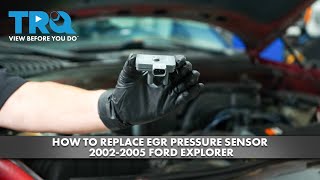
(OEM #4U7Z-9J460-AA)— This is the most common failure item for code P0402 on this vehicle, as confirmed by Ford TSB 04-11-1. The original metal sensors (like F77Z-9J460-AB) were prone to failure and were superseded by this updated plastic part number. 🎬 See how to easily swap out the DPFE sensor.
Trusted brands: Motorcraft, Standard Motor Products (SMP), NTK
OEM price range: $45-$70
Aftermarket price range: $25-$60 - EGR Valve
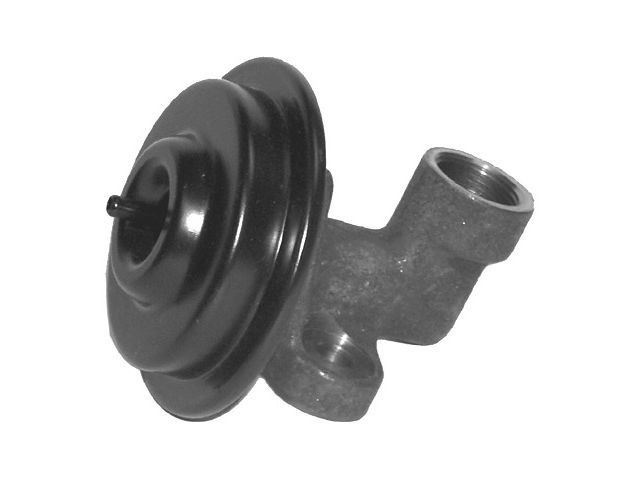
(OEM #2L2Z-9D475-AA)— The second most likely cause, this valve can get stuck open with carbon buildup, causing constant EGR flow and triggering the code.
Trusted brands: Motorcraft, Duralast, Delphi
OEM price range: $100-$150
Aftermarket price range: $50-$100 - DPFE Sensor Hoses — The two small silicone hoses connecting the EGR tube to the DPFE sensor often become brittle, crack, or swell, causing leaks. They should always be replaced with the sensor.
Trusted brands: Motorcraft, Dorman
OEM price range: $10-$20
Aftermarket price range: $5-$15
Related Codes That Often Appear With This One
- P0401 — Insufficient EGR Flow. It's common to see both codes when the DPFE sensor is failing intermittently, sending erratic signals to the PCM that are both too high (P0402) and too low (P0401).
- P1401 — DPFE Sensor Circuit High Voltage. This is a Ford-specific code that points directly to a fault in the DPFE sensor circuit, often confirming the sensor itself has failed by sending a constant high voltage signal.
- P0300-P0308 — Cylinder Misfire. A stuck-open EGR valve allows exhaust to dilute the air/fuel mixture at idle, which can cause rough running and cylinder misfires.
Technical Service Bulletins (TSBs) & Recalls
- TSB 04-11-1: Recommends replacing the tube-mounted DPFE sensor (part 4U7Z-9J460-AA) for P0402 on 2002-2003 Explorer 4.6L models. This TSB covers a wide range of Ford vehicles and EGR-related codes, highlighting the commonality of the sensor failure.
- TSB 24-2014: A manufacturer service bulletin for newer Ford models that includes P0402 in its diagnostic procedures for illuminated malfunction indicator lamps.
Platform-Specific Known Issues
- TSB 04-11-1: The Definitive Guide: A Technical Service Bulletin (TSB 04-11-1) was issued by Ford for 2002-2003 Explorer models with the 4.6L engine (among many other Ford vehicles) for codes P0401, P0402, P1400, or P1401. It identifies the root cause as an intermittently functioning, tube-mounted DPFE sensor. The bulletin explicitly instructs technicians to replace the old sensor with the updated part (4U7Z-9J460-AA) to resolve the issue, confirming this is a known factory defect and the most probable fix.
Mechanic-Grade Diagnostic Values
- EGR Vacuum Regulator (EVR) Solenoid Resistance — expected: 20 - 70 Ohms. Failure: A reading significantly outside this range, or an open/short (OL/0 Ohms), indicates a faulty solenoid coil.
- DPFE Sensor Signal Wire Voltage (Key On, Engine Off) — expected: 0.5V - 1.2V. Failure: A voltage significantly higher than 1.2V (often 4.5V+) indicates the sensor has failed internally and is sending a false 'high flow' signal.
- DPFE Sensor Reference Voltage (VREF) — expected: ~5.0 Volts. Failure: A reading of 0V indicates a problem with the wiring harness or the PCM's 5V reference circuit.
- DPFE Sensor Live Data Voltage (EGR Commanded Open) — expected: Voltage should rise from the baseline (~1.0V) to approximately 4.0V when the EGR is commanded open by a scan tool or during a drive.. Failure: If voltage does not rise, it points to a flow problem (clogged ports/tubes) or a sensor that cannot respond to pressure changes.
Hidden / Shadow Codes Worth Checking
- Mode $06, Test ID $32, TID $84: This is the specific onboard monitor test for 'EGR Monitor High Flow Check'. The PCM runs this test at idle with zero commanded EGR flow. It checks the differential pressure reported by the DPFE sensor. If the value exceeds the calibrated maximum limit, it flags a 'Fail' and sets the P0402 code, indicating a likely stuck-open EGR valve or a sensor that is falsely reporting flow. (see via A professional scan tool capable of reading Mode $06 data.)
Scan Tool Commands That Help
- Ford IDS, Solus Pro, or similar professional scanner: EGR Vacuum Regulator (EVR) Solenoid On/Off Command (or Percentage Command) — This bidirectional control is used to functionally test the system at idle. By commanding the EVR solenoid 'On', you manually allow vacuum to open the EGR valve. If the EGR valve, passages, and tubes are clear, the engine will immediately run rough or stall. This quickly confirms that the system is capable of flowing, pointing the diagnosis towards a control issue (like a bad DPFE or EVR) rather than a blockage.
Wiring & Ground Locations
- G104 — Right rear of the engine compartment.. This is a primary engine ground point. A corroded or loose G104 can cause erratic behavior from various engine sensors, including the DPFE sensor, leading to incorrect voltage readings and false codes. It should be inspected for corrosion and tightness if sensor readings are unstable.
- S105 — In the wiring harness near the breakout to the DPFE sensor connector.. This is a factory splice in the harness. While not a common failure point, harness damage in this area from heat or chafing could cause an intermittent connection for the DPFE sensor's power, ground, or signal wire, leading to a P0402 or related codes.
- DPFE Sensor Connector Pins — The 3-wire connector at the DPFE sensor itself, located on top of the throttle body area.. This is where voltage and resistance tests are performed. The pins are typically: Pin 1 - Signal (variable voltage), Pin 2 - Ground, Pin 3 - VREF (~5V). Verifying power and ground here is essential before condemning the sensor.
Real Owner Repair Stories
- Ford Truck Enthusiasts Forums user 'BB Texas' (2008 Ford Explorer 4.0L V6 (system logic is analogous to the 4.6L V8)) — P0402 code kept returning after reset.
❌ Tried (didn't work) Replaced the entire EGR valve assembly (which includes the DPFE sensor on this model) with a new aftermarket part.
✅ What actually fixed it The user's story serves as a cautionary tale. After replacing the main component with an aftermarket part didn't fix the issue, the forum discussion pointed towards potential incompatibility of the aftermarket sensor, a wiring fault, or a PCM issue. The final resolution was not posted, but the immediate failure of a new aftermarket part is a critical data point for others attempting the repair. - F150online Forums user 'chester8420' (providing diagnostic advice) (Ford truck with similar EGR system) — User 'jerm' reported a recurring P0402 code.
❌ Tried (didn't work) Replacing the EVR solenoid, Replacing the DPFE sensor, Cleaning all lines and the EGR valve
✅ What actually fixed it The expert advice given was that P0402 is set when the PCM specifically commands the EGR valve to close but the DPFE still detects flow. This means the problem is almost certainly a valve that is not seating correctly (stuck open or has debris in the seat), and not a sensor or control issue, since the user had already replaced those parts. The fix is to re-inspect or replace the EGR valve itself, focusing on its mechanical ability to close fully.
Documented NHTSA Reports
- NHTSA ODI #10573470: An owner of a Ford truck with a similar EGR system reported a loss of power or rough running condition, accompanied by the malfunction indicator light and EGR-related diagnostic trouble codes including P0401 and P0402.
- NHTSA ODI #11671585: A report describes a vehicle being towed to an independent mechanic where DTC P0402 and P1061 were retrieved, ultimately leading to a diagnosis that the engine needed replacement.
OEM Part Supersession History
F77Z-9J460-AB (Metal Body)→4U7Z-9J460-AA (Plastic Body)— The original metal-cased sensors were highly susceptible to internal corrosion from moisture in the exhaust gas, leading to sensor failure and incorrect voltage readings. The plastic-bodied sensor was designed to be more resistant to this corrosion.
Heads up: The new plastic sensor is a direct replacement for the old metal one. Many other part numbers like F7UZ-9J460-AA and 1L3Z-9J460-AA were also superseded by this final part number.
Model Year Variations Within This Range
- 2002-2005: For this entire model range, the DPFE sensor is a separate, tube-mounted component, not integrated into the EGR valve. This is a key distinction from some later Ford models where the sensor and valve are a single assembly.
- 2002-2003: Ford's Technical Service Bulletin (TSB 04-11-1) specifically calls out the 2002-2003 model years for the P0402 code caused by a faulty DPFE sensor, providing official documentation of the problem for these early years of the generation.
Diagnostic Flowchart
Other Known Issues on This Vehicle
Issues unrelated to this code that are worth knowing about as an owner of this generation:
- Cracked Tailgate Applique 🟡 Low — Extremely common. A vertical crack often appears in the plastic panel below the rear window, typically near the Ford emblem. It affects nearly all 2002-2005 Explorers and Mountaineers. (Ref: Multiple TSBs (e.g., 05-24-2) were issued, and a class-action lawsuit was filed over this cosmetic defect.)
- 5R55S/W Transmission Failures 🔴 High — Very common, often occurring after 50,000 miles. Symptoms include harsh shifting, delayed engagement (especially reverse), and shift flares between gears. One of the most notorious problems for this generation. (Ref: Common causes are worn servo bores in the transmission case and failing solenoid packs.)
- Timing Chain Guide/Tensioner Failure 🔴 High — Common on the 4.6L 2V engine, especially at higher mileage (80k-150k miles). Symptoms start with a rattling noise on startup that can progress to constant noise, loss of oil pressure at idle, and eventually catastrophic engine failure if ignored. (Ref: Caused by the plastic timing chain guides breaking apart or the hydraulic tensioners failing.)
- Rear Wheel Bearing Failure 🟠 Medium — A known wear item that often fails prematurely, sometimes before 100,000 miles. The symptom is a loud humming or roaring noise from the rear of the vehicle that changes with speed.
Used vs. New Parts: Buying Guide for This Vehicle
When a used part is the smart pick: A used EGR valve from a low-mileage donor vehicle can be a viable option if it is thoroughly inspected. Electronic components like the DPFE sensor and EVR solenoid should always be purchased new due to their high failure rates.
Donor-vehicle mileage cap: roughly under 80000 miles for the part to have meaningful remaining life.
What to inspect on the donor part:
- For a used EGR valve, check that the pintle moves freely and is not seized with carbon.
- Use a hand vacuum pump to ensure the diaphragm holds vacuum and doesn't leak.
- Visually inspect the mounting surfaces and ports for excessive carbon buildup that can't be easily cleaned.
OEM-only on this vehicle (don't cheap out):
- DPFE Sensor: This is the most critical part to buy OEM (Motorcraft). Aftermarket DPFE sensors for this platform are notoriously unreliable, often failing out of the box or within a few months, leading to a repeat of the P0402 code.
Aftermarket brands forum-validated for this vehicle:
- EGR Valve: Delphi, Walker
- DPFE Sensor (if Motorcraft is not an option): Standard Motor Products (SMP), NTK
Brands owners have reported issues with on this vehicle:
- Unnamed or 'white-box' electronic sensors from online marketplaces are highly discouraged for this repair.
Real Owner Stories
Aggregated from forums and TSBs cited above. Mileages and costs reflect what owners reported in those sources.
2001 Ford Explorer 4.6L V8
Symptoms: The owner was seeking a remedy for DTC P0402, with the community consensus noting that the issue was likely the DPFE sensor or the EGR valve itself rather than O2 sensors.
What fixed it: Replacement of the DPFE sensor or EGR valve.
Source hint: Ford Truck Enthusiasts Forums (ford-trucks.com) thread titled 'DTC P0402 What is the remedy?'
1997 Ford Explorer
Symptoms: EGR flow excessive code P0402.
What fixed it: Diagnosis confirmed a failed DPFE sensor by checking voltage with the key on and engine off; a reading near 5.0V indicated the failure.
Source hint: Ford Forum (fordforum.com) thread titled 'egr flow excessive code p0402'
Related OBD-II Codes
Frequently Asked Questions
Does TSB 04-11-1 apply to my 2002 Ford Explorer 4.6L V8?
What is the specific replacement part number recommended by Ford for the P0402 code?
Can I just clean my EGR valve to fix the P0402 'excessive flow' code?
My 2002 Explorer is shaking at stoplights; could this be related to the P0402 code?
Is there a simple electrical test I can do to see if my DPFE sensor is bad?
Should I replace the hoses when I replace the DPFE sensor?
Helpful Videos
We Have This Part in Stock

The information in this article is provided for general reference and educational purposes only. Vehicle specifications, procedures, and part compatibility can vary by production date, trim level, and region. Always consult your vehicle's factory service manual and verify part numbers before purchasing or performing repairs. Safety-critical components such as airbags, seat belts, and braking systems should be installed by a qualified professional.
- Ford Explorer:
- 🧭 Diagnostic Flowchart
- 🎬 Helpful Videos
- 🛍️ Shop This Part
- What's Unique About the 2002-2005 Ford Explorer
- Symptoms You May Notice
- Most Likely Causes
- Rare But Worth Checking
- Diagnosis Steps
- Parts You'll Likely Need
- Related Codes That Often Appear With This One
- Technical Service Bulletins (TSBs) & Recalls
- Platform-Specific Known Issues
- Mechanic-Grade Diagnostic Values
- Hidden / Shadow Codes Worth Checking
- Scan Tool Commands That Help
- Wiring & Ground Locations
- Real Owner Repair Stories
- Documented NHTSA Reports
- OEM Part Supersession History
- Model Year Variations Within This Range
- Other Known Issues on This Vehicle
- Used vs. New Parts: Buying Guide for This Vehicle
- Real Owner Stories
- 2001 Ford Explorer 4.6L V8
- 1997 Ford Explorer
- Related OBD-II Codes
- Frequently Asked Questions
- 🎟️ Get 5% Off