

P0402 on 2000-2007 Ford Taurus 3.0L V6: Causes and Fixes for Excessive EGR Flow
On a 2000-2007 Taurus with the 3.0L Vulcan engine, P0402 is most often caused by a faulty DPFE sensor. This sensor is a known high-failure part on these Fords, with original metal-cased versions being particularly prone to failure. Expect to pay $25-$70 for a quality Motorcraft or aftermarket sensor, and it's a very easy DIY fix that can resolve rough idle and stalling issues.
- For a P0402 code on a 2000-2007 Taurus, suspect the DPFE sensor first.
- This is a very common failure part, and replacing it is a simple, inexpensive DIY job.
- Before buying parts, check if you have the 'bolt-on' or 'clip-on' style sensor.
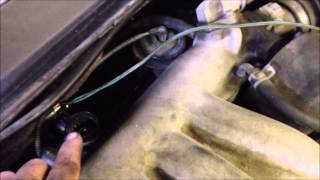
- Always inspect the two small rubber hoses connected to the DPFE sensor for cracks or damage; replace them if they are not pliable.
- Do not replace the more expensive EGR valve unless you have confirmed it is stuck or has failed a vacuum test.
What's Unique About the 2000-2007 Ford Taurus
The Ford Taurus from this era, like many Fords with the 3.0L Vulcan V6, uses a specific component called a Differential Pressure Feedback Electronic (DPFE) sensor to measure EGR flow. This sensor is notoriously prone to failure due to exposure to heat and corrosive exhaust gases, which can cause internal electronics to fail or the housing to degrade. As a result, when a P0402 code appears on a 3.0L Vulcan V6, the DPFE sensor is the most probable cause, often more likely than the EGR valve itself. Owners and even some shops frequently replace the EGR valve unnecessarily when the true culprit is the sensor.
🎬 Watch: Diagnosing a P0402 code on a 2001 Taurus.Symptoms You May Notice
- Rough or unstable idle, especially when the engine is warm
- Engine stalling or dying at idle or when coming to a stop
- Engine surging or hesitation during acceleration
- Illuminated Check Engine Light
- Reduced fuel economy
- Failure to pass an emissions test
- Engine may surge off-idle
- Replacing the EGR valve when the DPFE sensor is the actual cause. This is a very common mistake on these Ford models. Always test the DPFE sensor voltage before replacing the EGR valve.
- Replacing the DPFE sensor with a cheap, low-quality aftermarket part, which may be faulty out of the box or fail within a short period, causing the P0402 code to return.
Most Likely Causes
- Faulty DPFE (Differential Pressure Feedback EGR) Sensor 🔴 High Probability The DPFE sensor is a well-documented, high-failure part on this generation of Ford vehicles. Early versions had a metal (aluminum) case and were extremely susceptible to internal corrosion from moisture in the exhaust. Later plastic-bodied sensors are considered more reliable but still fail. The sensor is exposed to intense heat and corrosive gases, causing the internal electronics or the plastic housing to fail over time.
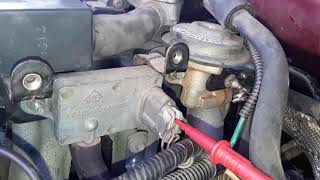
How to confirm: With the Key On, Engine Off (KOEO), back-probe the DPFE sensor's signal wire (typically Brown/Light Green) with a multimeter. A healthy sensor should read between 0.5V and 1.1V. If the reading is significantly higher (e.g., over 1.5V) or near zero, the sensor is almost certainly faulty. A scan tool can also be used to read the DPFE PID, which should show the same voltage range. 🎬 See how to test DPFE sensor voltage with a multimeter.
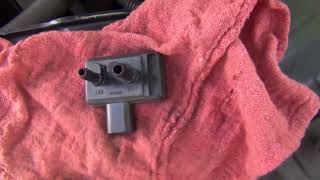
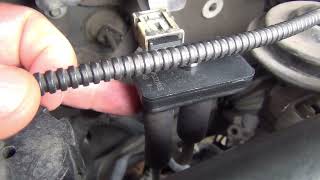
Typical fix: Replace the DPFE sensor. It is typically mounted near the EGR valve. Always inspect and consider replacing the two small rubber or silicone hoses connected to it, as they can become brittle, cracked, or clogged. The plastic nipples on old sensors are known to break off inside the hoses during removal, so be prepared to clean them out. Many owners recommend using only a genuine Motorcraft sensor (DPFE15) to avoid immediate failure of cheap aftermarket parts.
Est. part cost: $25-$70 - EGR Valve Stuck Open 🟡 Medium Probability → Shop Exhaust Gas Recirculation (EGR) Valve Carbon deposits from the exhaust can build up on the EGR valve's pintle or seat, preventing it from closing completely. This allows exhaust gas to flow into the intake at all times, including at idle, which directly causes the 'excessive flow' condition.
How to confirm: With the engine idling roughly, lightly tap the body of the EGR valve with the handle of a screwdriver or a small hammer. If the idle smooths out or changes, the valve is likely sticking. You can also remove the valve (typically two bolts) and visually inspect it for carbon buildup and to see if the pintle moves freely with a screwdriver.
Typical fix: Remove the EGR valve and clean the carbon deposits from the valve and its passages using a dedicated EGR/intake cleaner and a small brush. If the valve is heavily corroded, the diaphragm is ruptured (won't hold vacuum), or it does not operate smoothly after cleaning, it should be replaced.
Est. part cost: $50-$150 - Cracked, Clogged, or Disconnected DPFE Sensor Hoses ⚪ Low Probability The two small rubber hoses connecting the DPFE sensor to the EGR tube are exposed to high heat and can become brittle, crack, or break over time. They can also get clogged with carbon particles, which alters the pressure reading sent to the sensor.
How to confirm: Visually inspect the two small rubber hoses running from the metal EGR tube to the DPFE sensor. Check for cracks, holes, melting, or a loose connection. Remove the hoses and ensure they are clear by blowing through them. Also, check that the plastic nipples on the DPFE sensor itself haven't broken off inside the hoses.
Typical fix: Replace the damaged hoses. High-temperature silicone hose is a good replacement choice. If the plastic nipples on the DPFE sensor are broken, the sensor must be replaced. Ensure the hoses are connected to the correct ports ('HI' and 'REF' on the sensor should correspond to the upstream and downstream ports on the EGR tube).
Est. part cost: $5-$15
Rare But Worth Checking
- Clogged EGR Passages in Intake Manifold: → Shop Engine Intake Manifold While P0401 (Insufficient Flow) is more common for clogged passages, severe blockages can sometimes alter pressure readings in a way that causes the DPFE sensor to report excessive flow, confusing the PCM. This can happen if one DPFE hose port is clogged while the other is clear.
- Faulty EGR Vacuum Control Solenoid: If the solenoid that controls the vacuum supply to the EGR valve fails in the open position, it can cause the EGR valve to open at idle or at the wrong times, leading to excessive flow.
- Leaking EGR Tube O-ring: On the Vulcan V6, the O-ring where the EGR tube enters the lower intake manifold can become brittle and leak, causing a vacuum leak that can sometimes contribute to or be misdiagnosed alongside EGR codes.
Diagnosis Steps
- Read the code with an OBD-II scanner to confirm P0402 is present. Note any other codes like P0401, P1401, or P0300.
- Visually inspect the entire EGR system. Look for obvious issues like disconnected vacuum lines or cracked, melted, or blocked rubber hoses on the DPFE sensor.
- Test the DPFE sensor. With the Key On, Engine Off (KOEO), use a multimeter or scan tool to check the voltage on the signal wire. It should be between 0.5V and 1.1V. A reading above 1.5V or below 0.4V strongly indicates a bad sensor.
- If the DPFE sensor voltage is normal at rest, start the engine. If the idle is rough, lightly tap the EGR valve with a tool handle. If the idle changes, the valve is likely sticking open.
- If the engine idles smoothly, use a hand-held vacuum pump to apply vacuum directly to the EGR valve. The engine should stumble or stall. If it does, the EGR valve is opening and the passages are clear. If it doesn't, the valve is stuck shut or the passages are blocked.
- While applying vacuum in the previous step, monitor the DPFE signal voltage with your scan tool or multimeter. The voltage should rise smoothly as vacuum is applied and the valve opens. If it doesn't change, the sensor or its hoses are faulty.
- If the engine does not stumble when vacuum is applied, remove and inspect/clean the EGR valve and its passages in the intake manifold for carbon buildup.
Parts You'll Likely Need
- EGR Pressure Feedback (DPFE) Sensor
(OEM #DPFE15 (Motorcraft))— This is the most common failure point for P0402 on this specific vehicle due to a known history of sensor failures, especially the original metal-cased design.
Trusted brands: Motorcraft, Standard Motor Products, Walker
OEM price range: $50-$70
Aftermarket price range: $25-$60 - Exhaust Gas Recirculation (EGR) Valve
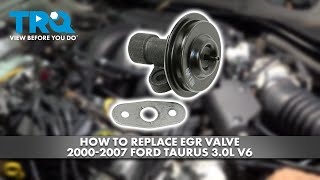
(OEM #EGV578 (Motorcraft equivalent))— This is the second most likely cause, typically due to carbon buildup causing the valve to stick open. It is often replaced when cleaning is not sufficient or the internal diaphragm has failed. 🎬 Watch: Step-by-step EGR valve replacement for the 3.0L V6.
Trusted brands: Motorcraft, Standard Motor Products, BWD
OEM price range: $100-$150
Aftermarket price range: $50-$120
Related Codes That Often Appear With This One
- P0401 — P0401 (Insufficient Flow) can sometimes appear alongside P0402 if the EGR valve is sticking intermittently or if the DPFE sensor is failing erratically, sending conflicting signals to the PCM.
- P1401 — This code for 'DPFE Sensor Circuit High Voltage' is a strong companion to P0402, as it directly indicates the DPFE sensor has failed electronically by sending a voltage reading that is too high.
- P1408 — This code means 'EGR Flow Out Of Self Test Range' and is often triggered by the same faulty DPFE sensor that causes P0402, as the PCM cannot get a plausible reading during its self-test.
- P0300 — A 'Random/Multiple Cylinder Misfire' code can be a direct symptom of excessive EGR flow, as the inert exhaust gas dilutes the air/fuel mixture in the cylinders, preventing proper combustion, especially at idle.
Technical Service Bulletins (TSBs) & Recalls
- TSB 03-2-2: Streamlined diagnostic procedure for vehicles with MIL on and DTCs P0401, P0402, P1400 or P1401. A forum user notes this TSB essentially tells technicians to replace the DPFE sensor without extensive diagnosis due to its high failure rate.
Platform-Specific Known Issues
- Ford issued a technical service bulletin (TSB 03-2-2) for streamlined diagnosis of EGR codes including P0402 on various models, which often pointed towards replacing the DPFE sensor as the primary fix.
- There are two styles of DPFE sensor used: a 'bolt-on' type and a 'clip-on' type. It is important to visually inspect which one your vehicle has before purchasing a replacement part.
- Many owners on forums like TaurusCarClub and Ford Truck Enthusiasts strongly recommend using only the OEM Motorcraft DPFE15 sensor, as many have experienced premature failures or out-of-the-box defects with cheaper aftermarket brands, causing the P0402 code to return quickly.
Mechanic-Grade Diagnostic Values
- EGR Vacuum Regulator (EVR) Solenoid Resistance — expected: 20 - 70 Ohms. Failure: Resistance is infinite (open), near zero (shorted), or outside the specified range.
- DPFE Sensor Signal Voltage (KOEO - Key On, Engine Off) — expected: 0.5V - 1.1V. Failure: A reading over 1.2V, and especially over 1.9V, strongly indicates a failed sensor.
- DPFE Sensor Signal Voltage (Dynamic Test) — expected: Voltage should rise smoothly from its baseline (~1.0V) towards 4.5V - 5.0V as the EGR valve is manually opened with a vacuum pump at idle.. Failure: Voltage does not rise, or rises erratically, while the engine begins to stumble (confirming EGR flow). This points to a faulty sensor.
- DPFE Sensor VREF (Reference Voltage) — expected: ~5.0V. Failure: Voltage is significantly lower than 5.0V, indicating a problem with the PCM or the wiring harness.
Hidden / Shadow Codes Worth Checking
- Mode 6, Test ID $31: This is the onboard diagnostic monitor for the EGR system. It measures lean time during an upstream flow test. For a P0402, the PCM has seen a value from this test that exceeds the pre-programmed threshold for excessive flow. (see via A professional scan tool capable of reading Mode 6 data is required.)
Scan Tool Commands That Help
- Ford IDS or equivalent professional scan tool: EGR Vacuum Regulator (EVR) Solenoid Duty Cycle / On-Off Command — At idle, a technician can use the scan tool to command the EVR solenoid ON. This should cause vacuum to flow to the EGR valve, opening it and causing the engine to run rough or stall. This single action tests the EVR solenoid, the EGR valve's mechanical movement, and the clarity of the EGR passages all at once. While this is happening, the DPFE PID should be monitored to confirm its voltage rises, testing the sensor's response.
Wiring & Ground Locations
- G101 — Left front fender, near the battery.. This is a primary engine bay ground. Corrosion or a loose connection here can create a floating ground, causing erratic voltage readings from sensors like the DPFE, which relies on a stable ground reference provided by the PCM.
- G104 — Left front fender, near the air cleaner assembly.. Another critical ground point in the engine bay. All major grounds should be inspected, cleaned, and tightened when diagnosing any electronic fault code, as a bad ground can mimic the failure of a component.
- DPFE Sensor Connector Pins — On the DPFE sensor itself.. The three pins are typically VREF (5V Reference), Signal (the wire to test for voltage), and Ground. Knowing which pin is which is crucial for accurate testing. The signal wire is often Brown/Light Green.
Real Owner Repair Stories
- YouTube user 'A1fixitguy' (2001 Ford Taurus) — Rough idle and an illuminated Check Engine Light with code P0402.
✅ What actually fixed it The problem was fixed by replacing the DPFE sensor. The user noted two key details: 1) There are 'clip-on' and 'bolt-on' styles, and he was initially sold the wrong one. 2) The plastic nipples of the old sensor broke off inside the rubber hoses and had to be drilled out. The Check Engine Light turned off on its own after about 12 hours of driving. - DoItYourself.com Community Forums (1997 Ford Taurus 3.0L) — Check Engine Light with P0402, later accompanied by P0401. Engine ran smoothly at idle.
❌ Tried (didn't work) Clearing the code multiple times, but it always returned.
✅ What actually fixed it While the original poster did not provide a final update, an expert user in the thread strongly advised that the most likely cause is a bad DPFE sensor, stating, 'They fail with alarming regularity. They're so BAD that Ford recently issued a TSB telling techs not to bother diagnosing the problem, but rather just replace the DPFE if any of the above codes are stored.' This reinforces that the DPFE sensor is the primary suspect.
OEM Part Supersession History
F4ZZ-9J460-B (Typical metal body sensor)→F77Z-9J460-AB (Plastic body, also known as Motorcraft DPFE15)— The original metal-cased DPFE sensors were highly susceptible to internal corrosion and electronic failure from heat and moisture in the exhaust gas. The plastic-bodied sensors are a more robust design.
Heads up: While physically interchangeable, using an old-stock metal sensor is not recommended due to the high likelihood of premature failure. The plastic F77Z-9J460-AB (DPFE15) is the recommended replacement for a long list of older part numbers.
Model Year Variations Within This Range
- 2000-2007: Within this generation, Ford used both a 'bolt-on' style and a 'clip-on' style DPFE sensor. The electrical connector and function are the same, but the physical mounting is different. It is critical to visually inspect the existing sensor on the vehicle before purchasing a replacement to ensure the correct mounting type is acquired.
Diagnostic Flowchart
Other Known Issues on This Vehicle
Issues unrelated to this code that are worth knowing about as an owner of this generation:
- Automatic Transmission Failure (AX4N/AX4S) 🔴 High — Very common, often occurring between 60,000 and 120,000 miles. Failure can be sudden, such as a loss of forward gears due to stripped torque converter splines. (Ref: Numerous TSBs exist, such as one for TCC slippage codes (P0741, P1744).)
- Front Coil Spring Fracture 🔴 High — Common in 'salt belt' states due to corrosion. The spring can break suddenly, potentially puncturing the front tire and causing a loss of control. (Ref: NHTSA Recall 04V332000 / Ford Recall 04S17)
- Camshaft Synchronizer Failure 🔴 High — A frequent problem on the 3.0L Vulcan engine. The first symptom is a 'chirping' or 'squeaking' noise from the passenger side of the engine. If ignored, the part can seize, which stops the oil pump, leading to catastrophic engine failure. (Ref: TSB 02-22-1 addresses diagnosis and installation.)
- Stalling While Idling 🟠 Medium — A common complaint where the engine stalls at stoplights or when idling. This can be difficult to diagnose and is sometimes separate from the P0402 EGR issue, though excessive EGR flow is a primary cause.
Used vs. New Parts: Buying Guide for This Vehicle
When a used part is the smart pick: A used EGR valve from a low-mileage donor vehicle can be a cost-effective option, provided it is thoroughly cleaned and inspected to ensure the pintle moves freely before installation. Other components like the EGR tube or mounting bolts are also good candidates for used parts.
Donor-vehicle mileage cap: roughly under 80000 miles for the part to have meaningful remaining life.
What to inspect on the donor part:
- For an EGR valve, check for excessive rust or corrosion on the housing.
- Attempt to move the internal pintle with a small screwdriver; it should move and not be seized.
- Ensure the vacuum port is not cracked or broken.
- For hoses or wiring, check for any signs of cracking, melting, or brittleness.
OEM-only on this vehicle (don't cheap out):
- DPFE Sensor: Due to the extremely high failure rate of this part and the poor quality of many low-cost aftermarket versions, it is strongly recommended to use a genuine Motorcraft (DPFE15) sensor. Using a used or cheap aftermarket sensor often results in the code returning quickly.
Aftermarket brands forum-validated for this vehicle:
- Standard Motor Products (SMP)
- Walker Products
- Dorman (for hoses and some valves)
Brands owners have reported issues with on this vehicle:
- Unbranded, no-name sensors from online marketplaces are frequently reported by owners to be defective out of the box or fail within a very short time.
Real Owner Stories
Aggregated from forums and TSBs cited above. Mileages and costs reflect what owners reported in those sources.
2001 Ford Taurus 3.0L Vulcan V6
Symptoms: The owner diagnosed a faulty DPFE sensor. During the repair, the plastic nipples of the old sensor broke off inside the rubber hoses.
What fixed it: Replacement of the faulty DPFE sensor.
Source hint: YouTube: Differential Pressure Feedback Sensor Code P0402 2001 Ford Taurus
2003 Ford Taurus 3.0L Vulcan V6
Symptoms: Vehicle triggered both P0401 and P0402 codes simultaneously.
What fixed it: Replacement of the DPFE sensor, following advice that Ford issued a TSB telling technicians to just replace the 'horrible little sensor' for these codes.
Source hint: DoItYourself.com Community Forums: Ford Taurus P401 and P402 codes
2003 Ford Ranger 3.0L Vulcan V6
Symptoms: The P0402 code was present; the owner initially replaced the EGR valve, but the code returned.
What fixed it: Replacing the DPFE sensor resolved the issue after the initial misdiagnosis of the EGR valve.
Source hint: Ford Truck Enthusiasts Forums: EGR Troubles (P0402 & P1408)
2000 Ford Ranger 3.0L Vulcan V6
Symptoms: Code P0402 persisted even after the owner replaced the EGR valve.
What fixed it: The DPFE sensor was identified as the likely culprit, illustrating a common misdiagnosis where the valve is replaced instead of the sensor.
Source hint: Reddit r/MechanicAdvice: Code P0402 EGR Replacment
Related OBD-II Codes
Frequently Asked Questions
Is there a specific Technical Service Bulletin for the P0402 code on my Ford Taurus?
Which specific DPFE sensor should I buy for my 3.0L Vulcan V6 to ensure the code doesn't come back?
I see two different types of DPFE sensors listed for the 2000-2007 Taurus; how do I know which one to get?
Why does the DPFE sensor fail so often on this generation of Taurus?
Can I just clean the EGR valve to fix a P0402 'excessive flow' code?
What should I look out for when replacing the DPFE sensor hoses?
Helpful Videos
We Have This Part in Stock


The information in this article is provided for general reference and educational purposes only. Vehicle specifications, procedures, and part compatibility can vary by production date, trim level, and region. Always consult your vehicle's factory service manual and verify part numbers before purchasing or performing repairs. Safety-critical components such as airbags, seat belts, and braking systems should be installed by a qualified professional.
- Ford Taurus:
- 🧭 Diagnostic Flowchart
- 🎬 Helpful Videos
- 🛍️ Shop This Part
- What's Unique About the 2000-2007 Ford Taurus
- Symptoms You May Notice
- Most Likely Causes
- Rare But Worth Checking
- Diagnosis Steps
- Parts You'll Likely Need
- Related Codes That Often Appear With This One
- Technical Service Bulletins (TSBs) & Recalls
- Platform-Specific Known Issues
- Mechanic-Grade Diagnostic Values
- Hidden / Shadow Codes Worth Checking
- Scan Tool Commands That Help
- Wiring & Ground Locations
- Real Owner Repair Stories
- OEM Part Supersession History
- Model Year Variations Within This Range
- Other Known Issues on This Vehicle
- Used vs. New Parts: Buying Guide for This Vehicle
- Real Owner Stories
- 2001 Ford Taurus 3.0L Vulcan V6
- 2003 Ford Taurus 3.0L Vulcan V6
- 2003 Ford Ranger 3.0L Vulcan V6
- 2000 Ford Ranger 3.0L Vulcan V6
- Related OBD-II Codes
- Frequently Asked Questions
- 🎟️ Get 5% Off