

P0402 on 2014-2015 Kia Sorento 3.3L V6: EGR Flow Excessive Causes and Fixes
On a 2014-2015 Sorento with the 3.3L V6, code P0402 is most often caused by the EGR valve being stuck open due to carbon buildup. This can cause a rough idle or stalling. The fix is usually to replace the EGR valve and clean the related passages.
- P0402 means too much exhaust gas is entering your engine at the wrong time, usually causing a rough idle.
- The most likely cause on your 2014-2015 Sorento 3.3L is a carbon-fouled EGR valve that is stuck open.
- While you can continue driving, stalling at intersections is possible, and it should be addressed to prevent further issues and pass emissions tests.
- The repair is moderately difficult for a DIYer because the EGR valve is hard to access and requires removing the intake manifold.
- Always replace the intake manifold gaskets (OEM P/N 28411-3CFA0) if the manifold is removed, and consider using a genuine Kia EGR valve (OEM P/N 28410-3CFA0) for best results.
What's Unique About the 2011-2015 Kia Sorento
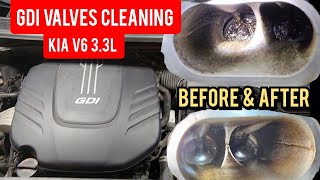
For the Sorento with the 3.3L Lambda V6, there are no widespread, documented recalls or Technical Service Bulletins (TSBs) specifically for the P0402 code. This suggests it's not a common factory defect. However, this is a Gasoline Direct Injection (GDI) engine, which can be more susceptible to carbon buildup on intake components over time. 🎬 See how to clean intake valves on the 3.3L GDI engine. This carbon can cause the EGR valve to stick, which is the leading cause of this code. While the Lambda V6 engine family generally has a good reputation, some owners have reported issues.
Generation note: The user-provided year range of 2011-2015 covers the second generation (XM) of the Kia Sorento. However, the specified 3.3L Lambda V6 engine was only available in the 2014 and 2015 model years, which were part of a significant mid-generation facelift. This guide is specific to those 2014-2015 models.
Symptoms You May Notice
- Check Engine Light is on
- Rough or unstable idle, especially when the engine is warm
- Engine stalling when coming to a stop
- Hesitation or stumbling during acceleration
- Slightly reduced fuel economy
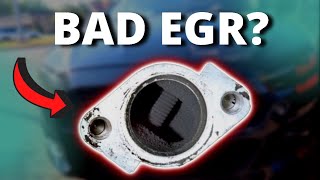
- Engine knocking sounds during acceleration 🎬 Watch: Learn more about common symptoms of a bad EGR valve.
- Replacing the MAP (Manifold Absolute Pressure) sensor first. While a faulty MAP sensor can cause EGR-related codes, it's less common for P0402 than a direct issue with the EGR valve itself.
- Replacing the EGR valve but not cleaning the intake manifold passages. Carbon buildup in the passages can cause flow issues that mimic a faulty valve, leading to the code returning.
Most Likely Causes
- EGR Valve Stuck Open 🔴 High Probability → Shop Exhaust Gas Recirculation (EGR) Valve Carbon deposits from the GDI combustion process can build up on the EGR valve's pintle and seat, preventing it from closing completely. This is the most common failure mode for EGR valves and directly causes excessive flow at idle.
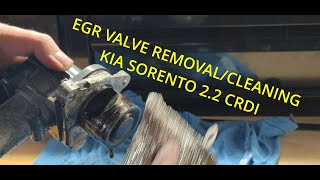
How to confirm: With the engine off and cool, remove the EGR valve and visually inspect its pintle and opening for carbon buildup. Check if the pintle moves freely or is stuck in place. Tapping on the valve body might temporarily free it, leading to a smoother idle on the next start, confirming it's a sticking issue.
Typical fix: The valve can sometimes be cleaned with specialized solvents, but replacement is often the more reliable, long-term solution. It is critical to also clean the mating surfaces and EGR passages in the intake manifold during the repair to prevent a quick return of the problem.
Est. part cost: $150-$300 - Faulty EGR Valve Position Sensor 🟡 Medium Probability → Shop Exhaust Gas Recirculation (EGR) Valve The sensor that reports the EGR valve's position to the ECM can fail or send incorrect data. It might report the valve is closed when it is actually open, leading the ECM to incorrectly flag excessive flow based on feedback from other sensors (like the MAP and O2 sensors).
How to confirm: Use a diagnostic scan tool to monitor the EGR commanded position vs. the actual position reported by the sensor. A discrepancy or erratic readings indicate a potential sensor issue. The sensor's circuit can also be tested with a multimeter for correct voltage and resistance against factory specs.
Typical fix: On the 3.3L Lambda V6, the position sensor is integrated into the EGR valve assembly. Therefore, the entire EGR valve must be replaced. Aftermarket valves can sometimes have compatibility issues, so using a genuine OEM part is recommended.
Est. part cost: $150-$300
Rare But Worth Checking
- Faulty EGR Control Solenoid or Circuit: If the system uses a separate vacuum solenoid, it can fail and apply vacuum to the valve at the wrong time. A short or break in the wiring to an electronic EGR valve could also cause it to open incorrectly.
- Clogged Catalytic Converter: A partially clogged catalytic converter can create excessive exhaust backpressure, forcing more gas than expected through the EGR system when the valve opens, potentially tricking the system into thinking flow is excessive.
- Faulty MAP Sensor: → Shop Manifold Absolute Pressure Sensor The Manifold Absolute Pressure (MAP) sensor helps the ECM infer EGR flow. If the MAP sensor is faulty and provides incorrect readings, the ECM may misinterpret the data and set a P0402 code.
Diagnosis Steps
- Connect an OBD-II scanner to confirm the P0402 code and check for any other pending or stored codes like P0401, P0404, or misfire codes.
- With the engine at idle, observe live data on the scanner. The EGR commanded position should be 0% or 'Off'. If the engine is running rough and MAP sensor readings are abnormal, this strongly points towards the valve being physically stuck open.
- Visually inspect the EGR valve, its wiring harness, and connector for obvious damage, corrosion, or loose connections.
- Turn the engine off. If accessible, you can try tapping the EGR valve body lightly with the handle of a screwdriver to see if it will seat properly. If the idle is smooth on the next startup, this confirms the valve is sticking.
- For a definitive test, remove the EGR valve from the engine. On the 3.3L V6, this requires removing the upper intake manifold (surge tank) for access, as the valve is located at the rear of the engine. 🎬 Watch: This valve cover guide shows how to access the rear engine area.
- Inspect the valve and the EGR passages in the lower intake manifold for heavy carbon buildup. Check if the valve's internal pintle is stuck open or moves sluggishly.
- If the valve is electronic, test the control circuit and position sensor circuit for proper voltage and ground according to the factory service manual.
- If the valve is clean and tests good electrically, the issue may be more complex, such as a faulty MAP sensor providing incorrect data or an exhaust restriction. However, the issue is most often the EGR valve itself.
Parts You'll Likely Need
- EGR Valve
(OEM #28410-3CFA0)— This is the most common failure point. Carbon buildup causes the valve to stick open, leading directly to the 'excessive flow' condition.
Trusted brands: Genuine Hyundai/Kia, Dorman, Standard Motor Products (SMP)
OEM price range: $250-$350
Aftermarket price range: $150-$250 - Upper Intake Manifold Gasket Set
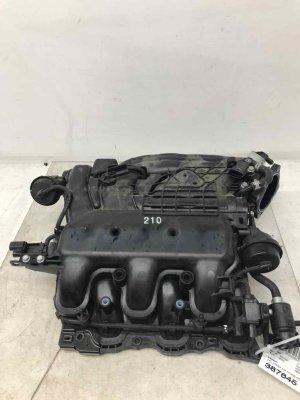
(OEM #28411-3CFA0 (Plenum Gasket))— On the 3.3L V6, the EGR valve is located at the rear of the engine, requiring the removal of the upper intake manifold for access. These gaskets are one-time use and must be replaced to prevent vacuum leaks.
Trusted brands: Genuine Hyundai/Kia, Fel-Pro (MS 98024), Mahle (MS20317)
OEM price range: $40-$70
Aftermarket price range: $25-$50
Related Codes That Often Appear With This One
- P0401 — If the EGR valve is sticking intermittently, it might cause an 'Insufficient Flow' (P0401) code at times and an 'Excessive Flow' (P0402) code at other times.
- P0300-P0306 — Misfire codes can occur if the excessive EGR flow at idle is severe enough to disrupt combustion in one or more cylinders.
- P0404 — This 'EGR Control Circuit Range/Performance' code can be set alongside P0402 if the valve's actual position, due to being stuck, does not match the position commanded by the ECM.
Technical Service Bulletins (TSBs) & Recalls
- TSB FUE035: For some 2014 Sorento models, addresses an intermittent rough idle on cold starts by replacing the V6 fuel injectors. While not directly for P0402, it relates to rough idle conditions.
- TSB ENG143R1: Pertains to replacing the crankshaft pulley and bolt on some 2015 Sorento models to address potential oil leaks or engine noises, not directly related to P0402 but relevant to engine integrity.
Platform-Specific Known Issues
- Owner Experience with Aftermarket Parts: A forum user with a Sorento experiencing EGR codes (P0404) found that an aftermarket EGR valve from a reputable brand did not solve the issue. The problem was only resolved after installing a genuine Kia/Hyundai OEM part, suggesting potential compatibility issues with non-OEM electronics.
Mechanic-Grade Diagnostic Values
- EGR Position Sensor Voltage (Signal Wire) — expected: 0.5V - 1.0V (valve closed) sweeping to 4.0V - 4.5V (valve fully open). Failure: Voltage that is stuck, erratic, or does not sweep smoothly when the valve is actuated indicates a faulty sensor.
- EGR Position Sensor Reference Voltage — expected: 4.8V - 5.2V (Key On, Engine Off). Failure: Voltage outside this range indicates a problem with the ECM or wiring, not necessarily the sensor itself.
- EGR Position Sensor Ground — expected: < 0.1V. Failure: Higher voltage indicates a poor ground connection, which can cause incorrect sensor readings.
- EGR Control Solenoid Resistance — expected: Approximately 22 ohms (value can vary by specific part, but this is a common reference).. Failure: A reading of infinite resistance (open circuit) or very low resistance (short circuit) indicates a failed solenoid coil.
Scan Tool Commands That Help
- Kia GDS (or equivalent professional scanner): EGR Valve Actuation Test / Bidirectional Control — This function allows a technician to command the EGR valve to open and close electronically while monitoring engine RPM and MAP sensor data. If the engine stumbles or stalls when the valve is commanded open at idle, it confirms the valve and passages are clear. If there is no change in engine operation, the valve or passages are blocked (P0401 condition). For P0402, this test can confirm if the valve is physically capable of closing when commanded.
Wiring & Ground Locations
- EGR Valve Connector — At the rear of the engine, on the EGR valve assembly, likely requiring removal of the upper intake manifold to access.. This connector provides power to the control solenoid and relays the valve's position back to the ECM. Corrosion or damage to pins for the 5V reference, ground, or signal wire can cause P0402 or related codes like P0404.
- Main Engine Ground Cable — Typically a heavy gauge wire from the battery negative terminal to the engine block and/or chassis.. A poor main engine ground can cause a variety of electrical issues, including incorrect readings from sensors like the EGR position sensor. While not a direct cause, it's a foundational check for any electronic fault code.
Model Year Variations Within This Range
- 2014-2015: The 3.3L Lambda II GDI V6 engine was introduced to the Sorento lineup as part of the 2014 model year mid-cycle refresh. Earlier second-generation (2011-2013) Sorentos used different engines (2.4L I4, 3.5L V6) and their EGR systems may differ. This guide is specific to the 2014-2015 3.3L V6.
Diagnostic Flowchart
Other Known Issues on This Vehicle
Issues unrelated to this code that are worth knowing about as an owner of this generation:
- Premature Engine Bearing Wear / Seizure 🔴 High — Affects a significant number of 2012-2014 Sorentos, though more commonly associated with the 2.4L 4-cylinder, the V6 is also implicated in some cases. Can occur under 100,000 miles. (Ref: Recall SC147 / NHTSA 17V-224.)
- Head Gasket / Head Bolt Failure 🔴 High — An emerging issue under investigation by NHTSA (PE23-019) for 3.3L Lambda II engines, particularly in 2016-2017 models but potentially affecting earlier years. Can lead to coolant loss, overheating, and loss of motive power. (Ref: Warranty Extension WTY039 (May 2024) for 2014-2015 Sorento.)
- Fuel Injector Failure / Rough Idle on Cold Start 🟠 Medium — Common enough to warrant a TSB. Owners report intermittent rough idle, especially when the engine is cold, which may or may not set a misfire code. (Ref: TSB FUE035)
- Hydraulic Electronic Control Unit (HECU) Fire Risk 🔴 High — Affects a wide range of Kia models including the 2011-2014 Sorento. An electrical short in the HECU can cause an engine compartment fire while parked or driving. (Ref: Recall SC284)
- Carbon Buildup on Intake Valves 🟠 Medium — A common characteristic of GDI (Gasoline Direct Injection) engines, including the 3.3L Lambda V6. Over time (typically 60k-100k miles), buildup can cause hesitation, misfires, and reduced performance.
Used vs. New Parts: Buying Guide for This Vehicle
When a used part is the smart pick: A used OEM EGR valve from a low-mileage donor vehicle can be a cost-effective alternative to a new aftermarket part, which may have electronic compatibility issues. Mechanical components like the intake manifold can also be sourced used without significant risk.
Donor-vehicle mileage cap: roughly under 60000 miles for the part to have meaningful remaining life.
What to inspect on the donor part:
- For an EGR valve, inspect the pintle for freedom of movement and ensure the connector pins are clean and straight.
- Check for any signs of extreme heat damage or cracking on the valve body.
- Verify the part number on the used component matches the OEM part number (28410-3CFA0) exactly.
- When buying an intake manifold, ensure all mounting surfaces are flat and free of deep scratches, and that no plastic components are cracked.
OEM-only on this vehicle (don't cheap out):
- EGR Valve: Due to the integrated position sensor, aftermarket versions can have calibration or communication issues with the Kia ECM, leading to persistent codes. Sticking with a genuine Kia/Hyundai part is highly recommended.
Brands owners have reported issues with on this vehicle:
- While not a specific brand, be cautious of unbranded, low-cost EGR valves from online marketplaces, as they are frequently cited in forums as failing quickly or not working out of the box.
Real Owner Stories
Aggregated from forums and TSBs cited above. Mileages and costs reflect what owners reported in those sources.
2014 Kia Sorento 3.3L V6
Symptoms: The owner experienced a multi-year struggle with EGR system codes including P0404 and P24AE.
What fixed it: The issue was only resolved after replacing an aftermarket EGR valve with a genuine Kia/Hyundai OEM part.
Source hint: KiaForums.com - 'Sorento III – Error P0404 and P24AE – EGR system problem'
Related OBD-II Codes
Frequently Asked Questions
I have a 2014 Kia Sorento with a rough idle; does TSB FUE035 apply to my P0402 code?
Can I use an aftermarket EGR valve to fix the P0402 code on my 3.3L Sorento?
Is the EGR valve easy to access on the 3.3L Lambda V6 engine?
Could my P0402 code be related to the engine bearing recall SC147?
Does the 2015 Sorento have any specific engine issues I should check while fixing the EGR?
Why does my Sorento stall when coming to a stop with this code?
Helpful Videos
We Have This Part in Stock

The information in this article is provided for general reference and educational purposes only. Vehicle specifications, procedures, and part compatibility can vary by production date, trim level, and region. Always consult your vehicle's factory service manual and verify part numbers before purchasing or performing repairs. Safety-critical components such as airbags, seat belts, and braking systems should be installed by a qualified professional.
- Kia Sorento:
- 🧭 Diagnostic Flowchart
- 🎬 Helpful Videos
- 🛍️ Shop This Part
- What's Unique About the 2011-2015 Kia Sorento
- Symptoms You May Notice
- Most Likely Causes
- Rare But Worth Checking
- Diagnosis Steps
- Parts You'll Likely Need
- Related Codes That Often Appear With This One
- Technical Service Bulletins (TSBs) & Recalls
- Platform-Specific Known Issues
- Mechanic-Grade Diagnostic Values
- Scan Tool Commands That Help
- Wiring & Ground Locations
- Model Year Variations Within This Range
- Other Known Issues on This Vehicle
- Used vs. New Parts: Buying Guide for This Vehicle
- Real Owner Stories
- 2014 Kia Sorento 3.3L V6
- Related OBD-II Codes
- Frequently Asked Questions
- 🎟️ Get 5% Off