

P0402 on 2014-2015 Ram ProMaster 3.0L EcoDiesel: EGR Excessive Flow Causes and Fixes
For a 2014-2015 ProMaster with the 3.0L EcoDiesel, code P0402 is most often caused by a sticking EGR valve due to heavy carbon buildup. Cleaning the EGR valve and associated intake passages is the most common fix. In some cases, a PCM software update is required, as outlined in manufacturer TSBs, to correct overly sensitive diagnostic parameters.
- P0402 on a 2014-2015 ProMaster 3.0L EcoDiesel is almost always caused by a sticking EGR valve due to heavy carbon buildup.
- A thorough cleaning of the EGR valve, throttle body, and intake manifold is the most effective repair.
- Before replacing parts, check if your vehicle needs a PCM software update as specified in Ram TSBs #18-038-15 or #18-018-15.
- Symptoms are often severe, including the vehicle going into a low-power 'limp mode' with a flashing throttle light.
- The accompanying P0101 (MAF Sensor) code is typically a symptom of the EGR fault, not a separate problem. Do not replace the MAF sensor first.
What's Unique About the 2014-2015 Ram PROMASTER
The 2014-2015 Ram ProMaster was available with a 3.0L I4 EcoDiesel engine (an Iveco F1C engine), which is where this code is primarily seen. This engine is different from the 3.0L V6 EcoDiesel found in the Ram 1500 and Jeep Grand Cherokee. Unlike many vehicles where P0402 can have various sensor-related causes, on this specific diesel platform, the cause is very frequently the mechanical EGR valve itself sticking open from heavy soot and carbon buildup. The entire intake system, including the manifold and throttle body, can become severely clogged. Additionally, Ram has issued Technical Service Bulletins (TSBs) indicating that this code can be triggered by a software issue, requiring a PCM update from a dealership to adjust the system's sensitivity.
Diagnostic Flowchart
Tap your situation to follow the diagnostic path that matches what you're seeing on this vehicle.
Symptoms You May Notice
- Check Engine Light is on
- Vehicle enters 'limp mode' with drastically reduced power and speed, sometimes limited to under 30-40 MPH.
- Flashing Electronic Throttle Control (ETC) warning light.
- Rough, surging, or unstable idle.
- Engine hesitation or stalling, especially at low speeds.
- Decreased fuel efficiency.
- Noticeable black smoke from the exhaust under acceleration.
- Replacing the MAF sensor when the root cause is a sticking EGR valve. A sticking EGR valve causes incorrect airflow across the MAF, triggering a secondary P0101 code. Mechanics often fix the EGR carbon issue, which makes the P0101 code disappear.
- Replacing the EGR valve without cleaning the intake manifold. If the intake manifold remains clogged with carbon, airflow problems will persist and the code may return.
Most Likely Causes
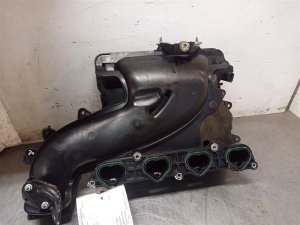
- Sticking/Clogged EGR Valve and Intake Manifold 🔴 High Probability → Shop Engine Intake Manifold The 3.0L EcoDiesel (Iveco F1C) engine is known for producing significant soot that leads to heavy carbon buildup. This buildup physically jams the EGR valve pintle, causing it to stick in the open position. The carbon also clogs the intake manifold and throttle body, further disrupting airflow.
How to confirm: Remove the EGR valve and throttle body assembly. Visually inspect the valve's pintle, the throttle plate, and the intake manifold passages for thick, heavy carbon deposits. The valve should move freely and not be stuck open.
Typical fix: Thoroughly clean the EGR valve, throttle body, and intake manifold passages 🎬 Watch: Quick DIY methods to clean and fix a P0402 code with a suitable degreaser and brushes. If the valve is damaged or cannot be cleaned effectively, it must be replaced. 🎬 See this video for the final EGR valve repair and fix Gaskets should always be replaced.
Est. part cost: $250-$500 for a new valve, $10-$40 for gaskets. - Powertrain Control Module (PCM) Software Update Needed 🟡 Medium Probability → Shop Engine Control Module (ECM) Ram has issued multiple TSBs for the 2014-2015 ProMaster that list P0402 as a code that can be resolved with a PCM software update. This indicates the original software logic was either too sensitive to minor flow variations or had other parameters that needed adjustment.
How to confirm: A Ram dealership or a qualified shop with access to OEM software (wiTECH) can check if the vehicle's PCM has the latest calibration installed by referencing TSBs #18-038-15 REV. B, #18-018-15 REV B, or #18-018-15 REVA. This should be done before replacing any hardware.
Typical fix: Have a dealership or qualified shop re-flash the PCM with the updated software. The process requires a stable power supply (13.2-13.5 volts) to the vehicle and the wiTECH tool.
Est. part cost: $0 if under warranty, otherwise typically 1-2 hours of shop labor ($150-$300). - Faulty Mass Air Flow (MAF) Sensor ⚪ Low Probability An inaccurate MAF sensor can send skewed airflow data to the PCM. Because the EGR valve is stuck open, the engine pulls in less fresh air through the MAF sensor, causing the PCM to flag a MAF performance code (P0101) alongside the P0402. The MAF sensor itself is rarely the root cause.
How to confirm: Diagnostic procedures for this platform may state to address the MAF sensor DTC first, but professional experience shows this is often misleading. The root cause is almost always the EGR fault creating a secondary, misleading MAF code.
Typical fix: This is a common misdiagnosis. The fix is to address the primary EGR problem (cleaning or replacement), which will then resolve the conditions causing the P0101 MAF code.
Est. part cost: $100-$200
Rare But Worth Checking
- Faulty EGR Temperature Sensor:
Diagnosis Steps
- Scan the PCM for trouble codes. Note if P0402 is present with other codes, especially P0101. 🎬 Watch: Diagnostic walkthrough for P0402 and P0101 codes
- Check for TSBs. Before any teardown, contact a dealer or use a service like ALLDATA to check for applicable TSBs, specifically #18-038-15, #18-018-15 REV B, or #18-018-15 REVA, which may recommend a software update as the primary fix.
- If P0101 (MAF Sensor) is present, prioritize the P0402 diagnosis. Although some service information suggests diagnosing the MAF first, on this platform the EGR fault is almost always the root cause.
- Inspect the EGR system physically. This is the most critical step. The engine cover and various tubes must be removed for access. Remove the EGR valve and throttle body.
- Visually inspect for carbon. Check the EGR valve's pintle, the throttle body plate, and deep into the intake manifold ports for heavy, thick soot and carbon buildup. This is the most common failure point.
- Clean all components. If heavy carbon is found, thoroughly clean the EGR valve, throttle body, and the intake manifold. Ensure the valve's pintle moves freely after cleaning.
- Replace if necessary. If the valve is damaged, seized solid, or the code returns after a thorough cleaning, replace the EGR valve assembly and both gaskets.
- If all components are clean and functional, and the code persists, the final step is to have the PCM software updated by a dealership or qualified repair shop as per the relevant TSBs.
Parts You'll Likely Need
- EGR Valve
(OEM #68243232AA (Mopar))— This is the most frequent point of failure for this code on the 3.0L EcoDiesel, typically due to carbon buildup causing it to stick open. Often replaced if it cannot be cleaned or if the internal motor has failed.
Trusted brands: Mopar, Bosch
OEM price range: $350-$500
Aftermarket price range: $250-$400 - EGR Valve Gaskets
(OEM #68211320AA, 68211321AA)— These are single-use gaskets and are required whenever the EGR valve is removed for cleaning or replacement to ensure a proper seal and prevent exhaust leaks.
Trusted brands: Mopar, Fel-Pro
OEM price range: $20-$40
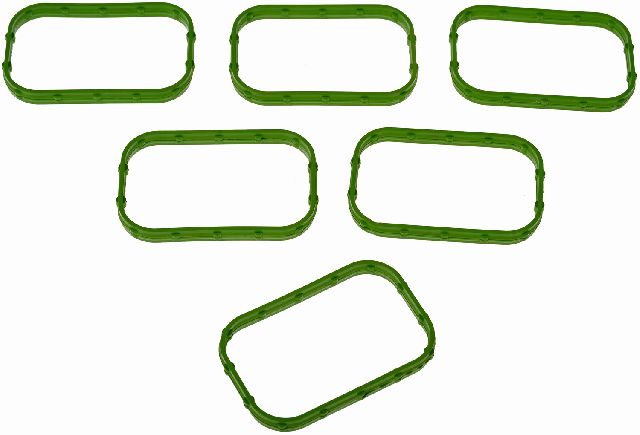
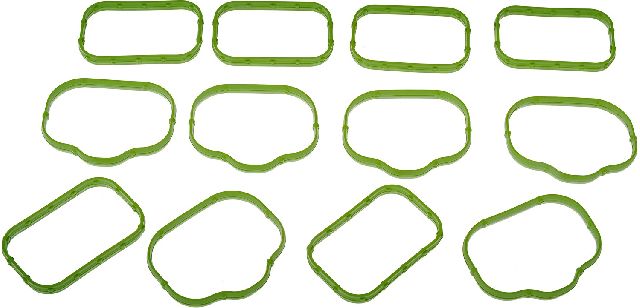
Aftermarket price range: $10-$25 - Intake Manifold Gaskets — Recommended to replace if the intake manifold is removed for a thorough cleaning, which is often necessary to fully resolve the P0402 code.
Trusted brands: Mopar, Victor Reinz
OEM price range: $40-$60
Aftermarket price range: $25-$45
Related Codes That Often Appear With This One
- P0101 — A sticking EGR valve allows exhaust to enter the intake when it shouldn't, reducing the amount of fresh air pulled past the Mass Air Flow (MAF) sensor. This causes the sensor's readings to be out of expected range, triggering a MAF performance code as a direct result of the EGR fault.
- P0401 — This code for 'Insufficient EGR Flow' can appear with P0402 if the EGR valve is intermittently sticking open and then getting stuck closed, causing both insufficient and excessive flow conditions at different times.
- P2459, P2463 — These codes, related to Diesel Particulate Filter (DPF) regeneration frequency and soot accumulation, are mentioned in the same TSB (#18-038-15 REV. B) as P0402, indicating they are part of a common set of software-related issues that can be fixed with a PCM update.
- P0420 — While less common, issues in the EGR system can affect combustion quality, potentially leading to downstream problems that affect the catalytic converter's efficiency over time, triggering a P0420 code.
Technical Service Bulletins (TSBs) & Recalls
- 18-038-15 REV. B
- 18-018-15 REV B
- 18-018-15 REVA
Platform-Specific Known Issues
- The 2014-2015 ProMaster with the 3.0L EcoDiesel is subject to several Technical Service Bulletins (TSBs) where P0402 is one of several codes that can be resolved by a PCM software update. These include TSB #18-038-15 REV. B, #18-018-15 REV B, and #18-018-15 REVA.
- The engine bay is extremely compact, making access to the EGR valve and intake manifold difficult and labor-intensive.
- The root cause is almost always mechanical (carbon buildup) rather than electrical, despite the presence of electronic-related codes like P0101.
Mechanic-Grade Diagnostic Values
- Exhaust Gas Temperature (EGT) Sensor 1/2 Resistance — expected: 200 - 240 Ohms. Failure: A resistance reading outside of this range indicates a faulty sensor.
Scan Tool Commands That Help
- wiTECH (OEM Dealer Tool): Reprogram PCM — Used to apply software updates as specified in TSBs #18-038-15, #18-018-15, etc., which can resolve a P0402 code caused by overly sensitive software logic.
- wiTECH / High-End Aftermarket Scanners: EGR Valve Functional Test / Actuation — To command the EGR valve to open and close while monitoring system data (like MAF sensor readings or EGR position) to see if the valve is physically responding to commands or is stuck.
- AlfaOBD (Advanced DIY Software): Read System Status / Clear Faults — Allows advanced DIY users to read detailed status from the TPMS and other modules, and to clear fault codes after a repair is completed.
- ALLDATA Scan Tool (Professional): EGR Valve Gap / EGR Cooler By-Pass Valve Volts — These are specific data PIDs that allow a technician to monitor the precise commanded gap of the EGR valve and the voltage of the cooler bypass, providing deeper insight into the system's operation beyond just a simple open/close command.
Wiring & Ground Locations
- Engine Ground Strap — Groundstrap from engine to transmission, secured with an M8 bolt.. A poor ground connection can cause erratic behavior in electronically controlled components like the EGR valve and its sensors, leading to incorrect readings and fault codes. Ensuring this primary ground is clean and secure is a fundamental electrical check.
- Body Ground — An electrical ground to the body is secured with an M8x1.25x16 bolt, also used for the negative battery cable.. Multiple systems share body ground points. A loose or corroded ground here can affect the PCM and related sensors, potentially contributing to emissions system faults.
Real Owner Repair Stories
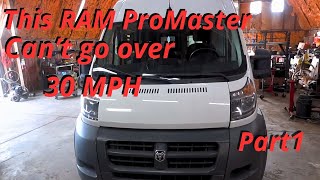
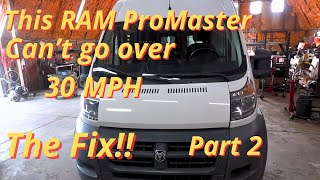
- KIT'S Auto and Truck Repair (YouTube Channel) (Ram ProMaster 3.0L EcoDiesel) — Limp home mode (low power, can't go over 30 MPH), Check Engine Light, and flashing Electronic Throttle Control light. Codes P0402 and P0101 were present.
❌ Tried (didn't work) The mechanic noted that following the service manual's advice to diagnose the P0101 (MAF) code first would have been a misdiagnosis, as the MAF sensor was not the root cause.
✅ What actually fixed it The EGR valve and throttle body were removed and found to be extremely clogged with heavy carbon buildup, physically restricting movement. A thorough cleaning of the EGR valve, throttle body, and intake passages restored proper function and cleared all codes.
Model Year Variations Within This Range
- 2014-2017: The 3.0L I4 EcoDiesel (Iveco F1C) in the ProMaster is a completely different engine from the 3.0L V6 EcoDiesel (VM Motori L630/A630) used in the Ram 1500 and Jeep Grand Cherokee. Parts and specific diagnostic procedures are not interchangeable between them. The TSBs for P0402 apply to both 2014 and 2015 models, indicating no significant design change for this fault within the specified vehicle range.
Helpful Videos
![How to Fix P0402 Engine Code in 3 Minutes [2 DIY Methods / Only $4.26]](https://img.youtube.com/vi/57B5b9uANus/mqdefault.jpg)
Used OEM Parts in Stock
New Aftermarket Parts Available


The information in this article is provided for general reference and educational purposes only. Vehicle specifications, procedures, and part compatibility can vary by production date, trim level, and region. Always consult your vehicle's factory service manual and verify part numbers before purchasing or performing repairs. Safety-critical components such as airbags, seat belts, and braking systems should be installed by a qualified professional.
- Ram PROMASTER:
- 🧭 Diagnostic Flowchart
- 🎬 Helpful Videos
- 🛍️ Shop This Part
- What's Unique About the 2014-2015 Ram PROMASTER
- Symptoms You May Notice
- Most Likely Causes
- Rare But Worth Checking
- Diagnosis Steps
- Parts You'll Likely Need
- Related Codes That Often Appear With This One
- Technical Service Bulletins (TSBs) & Recalls
- Platform-Specific Known Issues
- Mechanic-Grade Diagnostic Values
- Scan Tool Commands That Help
- Wiring & Ground Locations
- Real Owner Repair Stories
- Model Year Variations Within This Range
- 🎟️ Get 5% Off