

P0402 on 2004-2009 Toyota Prius: Excessive EGR Flow Causes and Fixes
On a Gen 2 Prius, P0402 usually indicates an issue with exhaust backpressure, often caused by a cheap or faulty aftermarket catalytic converter. Since this engine has no traditional EGR valve, do not replace EGR components. The fix is often a quality, correctly-flowing catalytic converter.
- The 2004-2009 Prius does NOT have a standard EGR valve; do not attempt to buy or replace one.
- This code is most frequently caused by a cheap or incorrect aftermarket catalytic converter altering exhaust backpressure.
- Diagnosis should focus on the catalytic converter first, followed by the MAP sensor.
- Avoid generic advice for P0402, as it is misleading for this specific vehicle.
- If your catalytic converter was recently stolen and replaced, the new part is the number one suspect.
What's Unique About the 2004-2009 Toyota Prius
The 2004-2009 Toyota Prius (2nd Generation) with the 1NZ-FXE engine does not have a physical EGR valve, EGR cooler, or EGR temperature/pressure sensors. It achieves exhaust gas recirculation by adjusting the intake camshaft timing via the VVT-i system, a feature of its Atkinson Cycle operation. Therefore, the common causes for P0402 on other vehicles, like a stuck-open EGR valve, are not applicable here. The diagnosis must focus on what could make the ECU *think* EGR flow is excessive. This is most often caused by altered exhaust system backpressure (from a non-OEM catalytic converter) which fools the MAP sensor into reporting a larger-than-expected pressure change during the VVT-i valve overlap phase.
Symptoms You May Notice
- Check Engine Light is on
- Reduced fuel economy (e.g., dropping from ~47 MPG to ~38 MPG).
- Rough idle or stalling, especially when the engine is warm
- Hesitation during light acceleration
- A recent catalytic converter replacement, especially after theft.
- Replacing an EGR valve (The vehicle does not have one).
- Cleaning EGR passages (The vehicle does not have a traditional EGR system with passages that clog in the same way as later models).
Most Likely Causes
- Faulty or Incorrect Aftermarket Catalytic Converter 🔴 High Probability Prius catalytic converters are frequently stolen, leading to replacement with aftermarket units. Cheaper aftermarket converters have less of the precious metals needed for the catalytic reaction and can have different flow characteristics than the OEM part. This altered exhaust backpressure confuses the ECU's VVT-i-based EGR calculations, causing it to believe EGR flow is excessive.
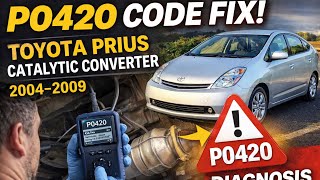
How to confirm: This code often appears immediately or within a few months after a catalytic converter replacement. A mechanic can perform an exhaust backpressure test. If backpressure is out of spec, the converter is the likely cause. The presence of code P0420 alongside P0402 is a strong indicator. 🎬 Watch: How to diagnose and replace a Prius catalytic converter.
Typical fix: Replace the aftermarket catalytic converter with a high-quality, OEM-equivalent unit. In some states like California, only the OEM converter is legal. Using an OEM part is the most reliable fix.
Est. part cost: $400-$1200 - Faulty Manifold Absolute Pressure (MAP) Sensor 🟡 Medium Probability → Shop Manifold Absolute Pressure Sensor
How to confirm: The ECU uses the MAP sensor to verify the effect of EGR. A technician can monitor the MAP sensor's live data with a scan tool to see if its readings are erratic, lazy, or incorrect for given engine loads and RPMs. A faulty sensor can incorrectly report a large pressure drop, mimicking excessive EGR flow.
Typical fix: Replace the MAP sensor. The sensor is located on the intake manifold and is relatively easy to access.
Est. part cost: $50-$150 - Faulty Air/Fuel Ratio (O2) Sensor (Sensor 1) ⚪ Low Probability
How to confirm: The primary A/F sensor helps the ECU determine the state of combustion. If the sensor is lazy or providing incorrect readings, it can contribute to the ECU misinterpreting the EGR flow. This is less likely to be the sole cause but can be a contributing factor, especially if the catalytic converter has been replaced.
Typical fix: Replace the upstream Air/Fuel Ratio sensor. Using a quality brand like Denso is highly recommended.
Est. part cost: $100-$200
Rare But Worth Checking
- VVT-i System Malfunction: An issue with the VVT-i system itself, such as a sticking Oil Control Valve (OCV) or a problem with the camshaft phaser, could theoretically cause incorrect valve timing and trigger this code. This would typically be accompanied by other VVT-related codes (P0010, P0011, P0012, etc.).
- Engine Control Module (ECU) Fault: → Shop Engine Control Module (ECM) In very rare cases, the ECU itself may be faulty, causing it to misinterpret sensor data. This should only be considered after all other possibilities have been exhaustively ruled out.
Diagnosis Steps
- Scan for Codes: Confirm P0402 is the primary code. Note any other codes, especially P0420 or VVT-related codes.
- Check Recent Repairs: Ask the owner if the catalytic converter was recently replaced. If so, this is the primary suspect.
- Inspect Catalytic Converter: Visually inspect the catalytic converter. Look for signs of a cheap, universal-fit aftermarket part rather than a direct-fit OEM or high-quality aftermarket unit. Check for non-OEM welds.
- Test Exhaust Backpressure: If possible, perform an exhaust backpressure test. A reading that is too high or too low compared to OEM specifications points to a faulty converter.
- Analyze Sensor Data: Use a scan tool to monitor live data. Watch the MAP sensor and primary A/F (O2) sensor readings at idle and during a test drive. Compare these readings to known-good values to identify erratic or out-of-spec behavior.
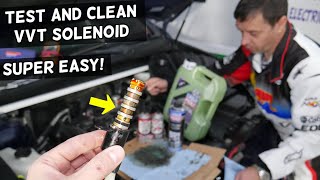
- Inspect VVT-i System: If sensor data is normal and the converter is known to be good, investigate the VVT-i system. Check the oil control valve (OCV) for proper operation 🎬 See this guide on how to test and clean VVT solenoids. and ensure the engine oil is clean and at the correct level, as the VVT-i system is hydraulically operated.
Parts You'll Likely Need
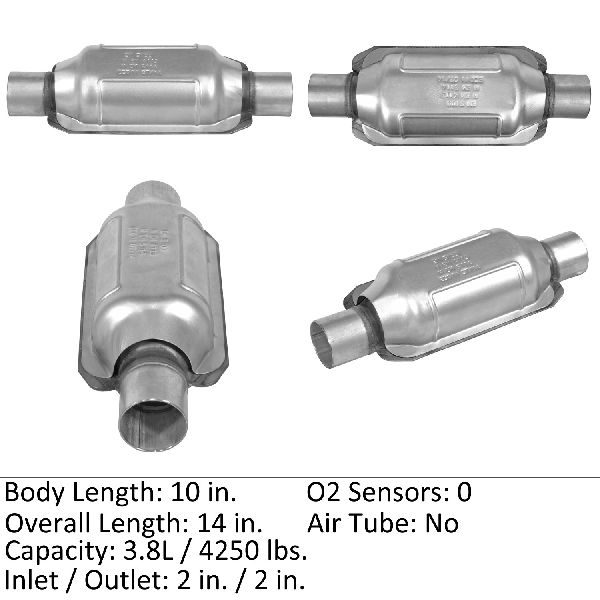
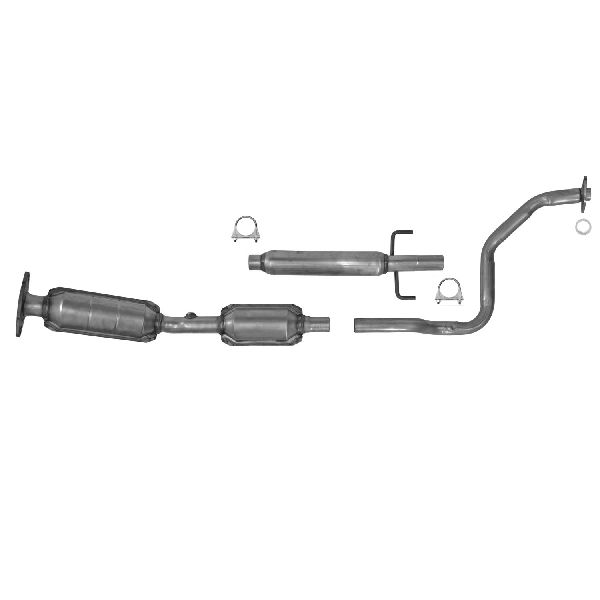
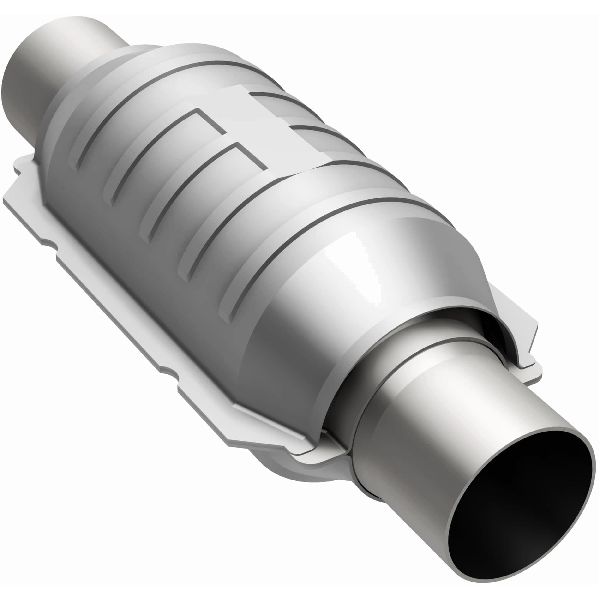
- Catalytic Converter
(OEM #17410-21500)— The most common cause is an aftermarket converter with incorrect flow characteristics, which alters exhaust backpressure and confuses the ECU's EGR calculations.
Trusted brands: OEM Toyota, MagnaFlow (Federal only), Walker (Federal only)
OEM price range: $2300+
Aftermarket price range: $400-$1200 - Manifold Absolute Pressure (MAP) Sensor
(OEM #89421-20200)— This sensor is a key input for the ECU to determine engine load and verify the effect of the VVT-i based EGR. A faulty sensor can lead to a P0402 code.
Trusted brands: Denso (OEM supplier), Standard Motor Products
OEM price range: $100-$180
Aftermarket price range: $50-$120
Related Codes That Often Appear With This One
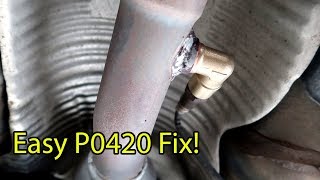
- P0420 — If a cheap or inefficient aftermarket catalytic converter is the cause, it will often trigger both the P0402 (due to incorrect backpressure) and the P0420 (Catalyst System Efficiency Below Threshold) codes. 🎬 Watch: A quick tip for addressing common P0420 efficiency codes.
Platform-Specific Known Issues
- PriusChat Forum Experience after Cat Theft: A user on PriusChat reported getting a P0402 code immediately after having a generic catalytic converter installed following a theft. This highlights the direct link between non-OEM converters and this specific code.
- Reddit User Experience with P0402: On the r/prius subreddit, a user with a P0402 code after installing a generic cat was advised by others that the issue is the non-OEM part's incorrect flow, and that even reputable aftermarket brands like MagnaFlow can sometimes cause this code on a Prius because the ECU is so sensitive to backpressure.
Mechanic-Grade Diagnostic Values
- MAP Sensor Signal Voltage — expected: Key On, Engine Off (KOEO): ~4.5-5.0 Volts. Engine Idling: ~1.0-2.0 Volts.. Failure: Voltage does not drop when the engine starts, or readings are erratic and do not change smoothly with throttle input.
- MAP Sensor Reference Voltage — expected: Approximately 5.0 Volts at the sensor connector with Key On, Engine Off (KOEO).. Failure: Voltage is significantly lower than 5.0V, indicating a wiring or ECU issue.
- VVT Oil Control Valve (OCV) Resistance — expected: 6.9 to 7.9 Ω at 20°C (68°F).. Failure: Resistance is outside the specified range, indicating a faulty OCV solenoid.
Scan Tool Commands That Help
- Toyota Techstream: Active Test: Control the VVT System (Bank 1) — This allows a technician to manually command the VVT phaser to advance or retard timing while monitoring MAP sensor data. It can help determine if the VVT system is mechanically responding to commands, which helps isolate a faulty OCV, phaser, or wiring from a sensor-input problem. This is not a direct EGR test, but a test of the system this car uses to perform EGR.
- Toyota Techstream: Data List: Monitor MAP Sensor (kPa) and Commanded EGR — To observe the live data relationship between the ECU's command for EGR effect (via VVT) and the resulting change in manifold pressure. An incorrect MAP response to VVT changes points towards a MAP sensor issue or an exhaust backpressure problem.
Wiring & Ground Locations
- EA, EB, EC, ED, EE, EF — These are primary ground points located in the engine compartment. EF is on the left side suspension tower, while EA, EB, EC, ED, and EE are on the engine block and frame wire harnesses.. A poor ground at any of these points can cause erratic sensor readings for the MAP, OCV, and other critical engine sensors, leading the ECU to make incorrect calculations for EGR flow.
- C20 (ECM Connector) — The Engine Control Module (ECM) is located behind the right end of the dashboard.. This is the termination point for the MAP sensor and OCV wiring. Technicians may need to back-probe pins here to test for continuity or shorts in the harness. For the 1NZ-FE, OCV pins are OC1+ (Pin 100) and OC1- (Pin 123).
Real Owner Repair Stories
- PriusChat user 'Rbroglie' (2009 Toyota Prius, 162,000 miles) — P0402 code, poor fuel economy (~38 MPG instead of ~47 MPG).
❌ Tried (didn't work) Cleaned MAF sensor, Cleaned throttle body, Replaced upstream A/F sensor (Denso), Replaced downstream O2 sensor (Denso), Replaced PCV valve, Replaced all spark plugs
✅ What actually fixed it The user noted the catalytic converter had been stolen and replaced with a cheap, $120 non-California unit. The forum consensus confirmed that this aftermarket converter's incorrect flow characteristics were the direct cause of the P0402 code, as all other components had been replaced or serviced. The final fix is implied to be replacing the cheap converter with an OEM or high-quality aftermarket one.
OEM Part Supersession History
89421-20200→This part number is still listed as valid for many Toyota models, but it is often cross-referenced with other numbers like 89421-71020 and 89421-12111 for different applications.— Part consolidation across multiple vehicle platforms.
Heads up: While many sensors may physically fit, the calibration can be different. For the 1NZ-FXE, it is critical to use the exact part number specified for the Prius or a cross-referenced part confirmed by Denso (the OEM supplier) to be equivalent. Using a sensor for a different engine (e.g., a Supra Turbo) may result in incorrect voltage scaling.
Model Year Variations Within This Range
- 2006-2009: The Gen 2 Prius received a minor facelift for the 2006 model year, which included revised front and rear lights and some interior trim changes. However, the 1NZ-FXE engine and its VVT-i system, which is the source of the P0402 logic, remained unchanged throughout the 2004-2009 production run. Therefore, the causes and fixes for P0402 are identical across all Gen 2 years.
Diagnostic Flowchart
Other Known Issues on This Vehicle
Issues unrelated to this code that are worth knowing about as an owner of this generation:
- Combination Meter Failure 🟠 Medium — Very common, especially in colder climates. The display for the speedometer and fuel gauge goes blank intermittently or completely. Often triggers code B1271. (Ref: Toyota TSB T-SB-0172-09 Rev2 addresses this with an updated combination meter. A warranty enhancement program (ZUE) was issued but has since expired.)
- Brake Actuator Assembly Failure 🔴 High — A frequent and serious issue where internal malfunctions in the ABS actuator cause brake system warning lights to illuminate and can lead to a change or loss of braking power. (Ref: Toyota issued Warranty Enhancement Program ZG1, extending coverage to 10 years or 150,000 miles. This program has now expired for most vehicles.)
- Inverter Coolant Pump Failure 🔴 High — Common failure. The electric pump that cools the hybrid inverter stops working, which can cause the hybrid system to shut down while driving. Often triggers code P0A93. (Ref: A Limited Service Campaign (LSC 90D) and later a recall were issued to replace the pump. A failed pump can blow the AM2 fuse, disabling the vehicle.)
- Excessive Oil Consumption 🟠 Medium — Many 1NZ-FXE engines begin to consume oil at higher mileage (often after 100k miles), attributed to piston ring design. Consumption of up to 1.1 quarts per 600 miles is considered 'normal' by Toyota, but is a common owner complaint.
- HID Headlight Ballast/Bulb Failure 🟡 Low — On models equipped with HID headlights, flickering or failure of the lights is common. This is usually due to a failed ballast or bulb, which can be expensive to replace with OEM parts.
Used vs. New Parts: Buying Guide for This Vehicle
When a used part is the smart pick: Used parts from a junkyard are a smart choice for sensors like the MAP sensor or the VVT Oil Control Valve (OCV), provided they come from a low-mileage, accident-damaged vehicle where the engine itself was not the cause of scrapping.
Donor-vehicle mileage cap: roughly under 120000 miles for the part to have meaningful remaining life.
What to inspect on the donor part:
- Check the donor vehicle's VIN to confirm the model year and that it's a Prius.
- Look for signs of oil sludge in the engine bay or under the oil cap, as this can affect VVT components.
- For a MAP sensor, ensure the plastic housing is not cracked and the connector pins are clean and straight.
OEM-only on this vehicle (don't cheap out):
- Catalytic Converter: This is the most critical part to buy OEM or a high-quality, CARB-compliant aftermarket unit if outside of California. Standard 'universal' or cheap aftermarket converters are the #1 cause of P0402 and P0420 codes on this vehicle due to incorrect backpressure and catalyst formulation.
Aftermarket brands forum-validated for this vehicle:
- Sensors (A/F, O2, MAP): Denso is the OEM supplier and is highly recommended.
- Catalytic Converter (CARB): MagnaFlow offers CARB-compliant universal converters (e.g., Part #5671405, #5631406) that some owners have used successfully, but welding is required.
- Catalytic Converter (Federal): Walker (e.g., Part #16337) and MagnaFlow are commonly used, but success is mixed regarding check engine lights.
Brands owners have reported issues with on this vehicle:
- Unbranded, low-cost catalytic converters from eBay or Amazon. These are frequently cited as the direct cause of P0402 and P0420 codes shortly after installation.
Real Owner Stories
Aggregated from forums and TSBs cited above. Mileages and costs reflect what owners reported in those sources.
2009 Toyota Prius 1.5L — 162000 miles
Symptoms: Still getting the P0402 code after a series of repairs; noted that the model has no physical EGR valve or differential pressure sensor.
What fixed it: The context indicates this code is typically triggered by the ECU metering exhaust gas via VVT-i and being confused by non-OEM exhaust components.
Source hint: PriusChat.com thread from March 2024 titled '2009 2nd gen code P0402'
2004-2009 Toyota Prius 1.5L
Symptoms: P0402 code appeared immediately after having a generic catalytic converter installed following a theft.
What fixed it: Replacing the generic catalytic converter with a high-quality or OEM unit to restore correct exhaust backpressure.
Source hint: PriusChat Forum Experience after Cat Theft
2004-2009 Toyota Prius 1.5L
Symptoms: P0402 code after installing a generic cat; users noted that the ECU is sensitive to backpressure and flow.
What fixed it: Avoiding generic or even some reputable aftermarket brands like MagnaFlow in favor of parts that match OEM flow specs.
Source hint: Reddit.com (r/prius) thread titled 'Prius 2004/2009 gen 2 cat converter'
Related OBD-II Codes
Frequently Asked Questions
I can't find the EGR valve on my 2004-2009 Prius; where is it located?
Will a high-quality aftermarket catalytic converter like a MagnaFlow prevent the P0402 code?
My Prius is dropping from 47 MPG to 38 MPG along with the P0402 code. Is this normal?
Is there a TSB for the P0402 code on the 2004-2009 Prius?
Can I use a generic catalytic converter if I don't live in California?
Could my engine oil level affect the P0402 code?
Helpful Videos
We Have This Part in Stock


The information in this article is provided for general reference and educational purposes only. Vehicle specifications, procedures, and part compatibility can vary by production date, trim level, and region. Always consult your vehicle's factory service manual and verify part numbers before purchasing or performing repairs. Safety-critical components such as airbags, seat belts, and braking systems should be installed by a qualified professional.
- Toyota Prius:
- 🧭 Diagnostic Flowchart
- 🎬 Helpful Videos
- 🛍️ Shop This Part
- What's Unique About the 2004-2009 Toyota Prius
- Symptoms You May Notice
- Most Likely Causes
- Rare But Worth Checking
- Diagnosis Steps
- Parts You'll Likely Need
- Related Codes That Often Appear With This One
- Platform-Specific Known Issues
- Mechanic-Grade Diagnostic Values
- Scan Tool Commands That Help
- Wiring & Ground Locations
- Real Owner Repair Stories
- OEM Part Supersession History
- Model Year Variations Within This Range
- Other Known Issues on This Vehicle
- Used vs. New Parts: Buying Guide for This Vehicle
- Real Owner Stories
- 2009 Toyota Prius 1.5L — 162000 miles
- 2004-2009 Toyota Prius 1.5L
- 2004-2009 Toyota Prius 1.5L
- Related OBD-II Codes
- Frequently Asked Questions
- 🎟️ Get 5% Off