

P0403 on 2000-2005 Chevrolet Impala 3.8L: EGR Circuit Malfunction Causes and Fixes
P0403 on a 2000-2005 Impala with the 3.8L V6 almost always points to a failed EGR valve assembly. The internal electronics burn out, causing a circuit fault. Replacing the EGR valve is a straightforward DIY job, with the part costing between $70 and $150. Before replacing, check the wiring harness near the valve for shorts, as this is a known issue.
- P0403 is an electrical fault, not a flow problem. Focus your diagnosis on the EGR valve's circuit, its connector, and the wiring harness before replacing the valve.
- The most common fix is replacing the entire EGR valve assembly due to internal electrical failure.
- Check the wiring harness near the valve cover for heat damage or chafing, as this is a known secondary cause.
- This is a DIY-friendly repair due to the accessible location of the EGR valve on the top of the L36 engine.
What's Unique About the 2000-2005 Chevrolet Impala
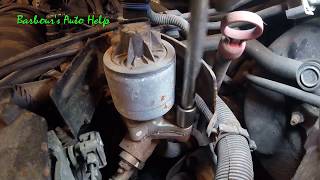
The GM 3.8L V6 (L36) engine is known for its reliability, but the electronic EGR valve is a common failure point as these vehicles age. Unlike codes that point to clogged passages (like P0401), P0403 is almost always an electrical failure of the valve itself or its wiring. The good news is that on the Impala, the EGR valve is mounted in an accessible location on top of the engine, making it one of the easier repairs for a DIY mechanic. 🎬 Watch: Step-by-step EGR valve replacement on a Chevy Impala This issue is shared across many GM vehicles using the 3800 Series II engine.
Symptoms You May Notice
- Check Engine Light is on (the most common symptom).
- Rough idle or stalling if the EGR valve fails in the open position.
- Engine pinging or knocking during acceleration if the valve fails to open.
- Potential to fail an emissions test.
- Reduced fuel economy.
- Sluggish throttle response or hesitation.
- A "Reduced Propulsion" or similar power-loss message on the dashboard, as noted in some GM vehicle reports like NHTSA ODI #11632222.
- Replacing oxygen sensors.
- Replacing the catalytic converter.
- Cleaning EGR passages without testing the electrical circuit (cleaning passages typically addresses P0401, not P0403).
Most Likely Causes
- Faulty EGR Valve Assembly 🔴 High Probability → Shop Exhaust Gas Recirculation (EGR) Valve The electronic solenoid integrated into the valve is a very common failure point due to age and heat cycles. The internal coil burns out, creating an open or shorted circuit. In some instances, an internal mechanical failure such as the EGR valve sticking can cause the circuit fuse to blow, as documented in NHTSA ODI #11632222.
How to confirm: With the engine off and key on, use a multimeter to check for a 5-volt reference and ground at the EGR connector for the position sensor. Check for 12V power at the solenoid control pin (often a pink wire). A lack of voltage points to a wiring issue, but if power and ground are present, the valve's internal coil has likely failed. A scan tool that can command the EGR valve on and off can also confirm the failure.
Typical fix: Replace the EGR valve and its gasket. 🎬 See this video walkthrough for replacing a GM 3.8L EGR valve
Est. part cost: $70-$150 - Damaged Wiring or Connector 🟡 Medium Probability The wiring harness in the engine bay is exposed to heat and vibration, which can cause wires to become brittle, frayed, or shorted, particularly near the valve cover.
How to confirm: Visually inspect the wiring harness leading to the EGR valve for any signs of damage, melting, or corrosion. Unplug the connector and check for bent, corroded, or backed-out pins. Perform a continuity test on each wire from the EGR connector to the PCM if a wiring diagram is available. A user on a Grand Prix forum found the power wire shorted near the front valve cover, which caused the P0403 and destroyed the new EGR valve as well.
Typical fix: Repair the damaged section of wire or replace the connector pigtail.
Est. part cost: $10-$30
Rare But Worth Checking
- Faulty Powertrain Control Module (PCM): → Shop Engine Control Module (ECM) This is rare. The EGR driver circuit inside the PCM can fail, but you should exhaustively rule out the valve and wiring first, as replacing a PCM is expensive and requires programming.
Diagnosis Steps
- Read the code with an OBD-II scanner and confirm P0403 is present.
- Visually inspect the EGR valve, its 5-pin oval connector, and the wiring harness for any obvious damage, corrosion, or loose connections. Pay close attention to the harness where it may rub against the valve cover.
- With the ignition off, disconnect the EGR valve connector.
- Turn the ignition to the 'ON' position (engine off). Use a multimeter to check for a 5-volt reference signal and a 12-volt power signal at the appropriate pins on the connector.
- Check for a good ground connection at the corresponding pin in the connector.
- If power and ground are present, the wiring is likely okay, and the EGR valve itself is the primary suspect. The internal solenoid has likely failed.
- If power or ground is missing, trace the specific wire (using a wiring diagram) back to the PCM to find the open or short in the circuit.
- If you have a capable scan tool, command the EGR valve to open and close to see if it responds. A lack of response points to a bad valve or wiring issue.
- If both the valve and wiring are confirmed to be good, the PCM may be at fault, but this is the least likely scenario.
Parts You'll Likely Need
- Exhaust Gas Recirculation (EGR) Valve
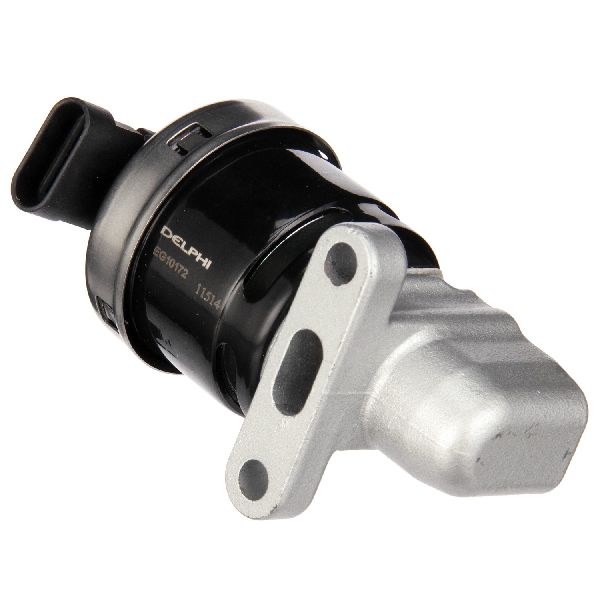
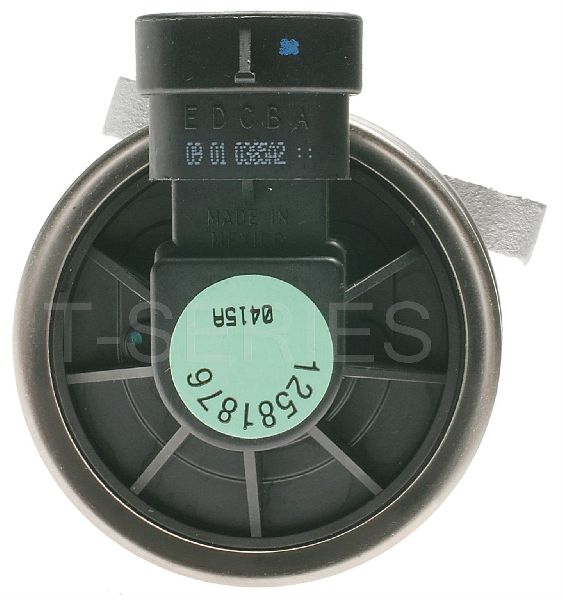
(OEM #17096154, 12578041, 214-1070)— The internal solenoid coil fails electrically, causing an open or short in the control circuit, which is the direct cause of the P0403 code.
Trusted brands: ACDelco (OEM), Delphi, Standard Motor Products (SMP EGV589T)
OEM price range: $120-$180
Aftermarket price range: $70-$150 - EGR Valve Gasket — A new gasket is required to prevent an exhaust leak when replacing the EGR valve. Most new valves include one.
Trusted brands: Fel-Pro, ACDelco
OEM price range: $5-$10
Aftermarket price range: $2-$5
Related Codes That Often Appear With This One
- P0404 — P0404 indicates 'EGR Circuit Range/Performance'. An intermittent electrical fault that triggers P0403 can also cause the valve's position to be out of the expected range, triggering P0404.
- P0405 — P0405 indicates 'EGR Sensor A Circuit Low'. This points to a problem with the pintle position sensor circuit within the same EGR valve assembly and often appears with P0403 if there is a wiring or connector problem. This combination was reported in NHTSA ODI #11448862.
- P1404 — A manufacturer-specific code for 'EGR Valve Closed Position Performance'. It often appears alongside P0403 and indicates the PCM cannot confirm the valve is closed, pointing to a fault within the EGR unit.
Platform-Specific Known Issues
- While not directly related to P0403, the L36 engine in this era is notorious for a failing plastic upper intake manifold (UIM) gasket, which causes internal and external coolant leaks. The leak often occurs near the EGR 'stovepipe' area, where heat from the EGR tube degrades the plastic manifold, allowing coolant to be sucked into the intake. This can lead to misfires, coolant loss, and even engine hydrolock. If you see coolant loss along with this code, you may need to address the UIM as well.
- A recall was issued for valve cover gaskets leaking oil onto the hot exhaust manifold, creating a fire risk (NHTSA Campaign ID: 15V701). While not a direct cause of P0403, it highlights the harsh heat environment the engine wiring is subjected to.
Documented NHTSA Reports
- A manufacturer service bulletin, TSB Bulletin #PIE0489A, was issued to gather engineering information regarding MIL Lamp On conditions specifically when DTC P0403 is set.
- NHTSA ODI #11623968 describes a situation where an owner scan revealed P0403 relating to a failed EGR valve, expressing concern over the availability of replacement parts for certain GM configurations.
- In NHTSA ODI #11681144, an owner reported a Check Engine Light with P0403 and P0405 among other codes, which they associated with an EGR failure to circulate coolant properly.
Mechanic-Grade Diagnostic Values
- EGR Solenoid Coil Resistance — expected: 8 to 9 Ohms at room temperature. Failure: A reading of infinity (open circuit) or near zero Ohms (short circuit) indicates a failed solenoid coil.
- EGR Pintle Position Sensor Voltage (Key On, Engine Off) — expected: 0.6V to 0.9V DC with the valve closed. Failure: Voltage significantly outside this range, or voltage that does not increase smoothly as the valve is commanded open, indicates a faulty position sensor.
- EGR Connector Pin E (Ignition Feed) to Ground — expected: 10V to 12V (Battery Voltage) with Key On, Engine Off. Failure: Low or no voltage points to a problem in the power supply circuit, such as a blown fuse or a break in the pink wire.
- EGR Connector Pin D (5V Reference) to Ground — expected: 4.5V to 5.0V DC with Key On, Engine Off. Failure: No voltage indicates a problem with the PCM or the reference circuit.
Scan Tool Commands That Help
- GM Tech 2 / Professional Bidirectional Scanner: EGR Control / Output Control — This function allows the technician to command the EGR valve to open and close while monitoring sensor data. With the engine idling, commanding the EGR valve open should cause the engine to stumble or stall. If the engine's RPM does not change, it confirms the valve is not opening, pointing to a bad valve or a circuit issue. This is a definitive way to test the valve's mechanical and electrical operation without removing it.
Wiring & Ground Locations
- EGR Valve Connector (5-Pin Oval) — On top of the EGR valve, located on the upper intake manifold, towards the rear of the engine.. This is the primary connection point for all electrical tests. The pins are lettered A-E. Pin A: EGR Control (Gray wire from PCM). Pin B: EGR Position Sensor Ground (Black/White wire). Pin C: EGR Position Signal (Brown/White wire to PCM). Pin D: 5-Volt Reference (Gray wire from PCM). Pin E: Ignition Positive Voltage (Pink wire from fuse block).
- PCM C2 Connector (Blue) — The Powertrain Control Module (PCM) is located inside the factory air filter box.. The control and sensor signal wires for the EGR valve terminate here. For example, on many models, the EGR Control wire (Gray) goes to Pin 16 of the RED PCM connector (RA16). Verifying continuity from the EGR connector to the PCM connector is the final step in diagnosing a wiring break.
- G113 — On a transaxle stud, near the transmission.. This is a major engine and transmission component ground point. While not exclusively for the EGR, a poor connection here can cause a variety of intermittent electrical issues and codes.
Real Owner Repair Stories
- Grand Prix Forums user (Pontiac Grand Prix with 3.8L L36 engine (same platform)) — Persistent P0403 code, Check Engine Light.
❌ Tried (didn't work) Replacing the EGR valve (the code returned).
✅ What actually fixed it The user found the pink power wire to the EGR valve had chafed and was shorting to ground on the corner of the front valve cover. Repairing the damaged section of the wire and protecting it with loom permanently resolved the code. - NHTSA ODI #11448862 — An owner reported that their vehicle would suddenly stop with a message on the console saying the engine was offline, with a scan revealing P0403 and P0405 among a long list of other electrical codes.
OEM Part Supersession History
Varies (e.g., from a RWD 3800 like a Camaro)→Varies (e.g., for a FWD 3800 like an Impala)— Application-specific mounting and connector orientation.
Heads up: While the core electronic EGR valve is similar across many GM 3800 Series II engines, the physical configuration can differ. A common trap is using a valve from a RWD application (like a Camaro/Firebird) on a FWD application (Impala/Grand Prix). While it may bolt on, the electrical connector is often 'clocked' in a different position, which can make it difficult or impossible to connect the wiring harness without modification or excessive strain. Always match the part to the specific FWD application.
Model Year Variations Within This Range
- 2000-2005: The EGR valve, its wiring, and the diagnostic procedure for P0403 are consistent across the 2000-2005 Impala range for the L36 3.8L V6 engine. No significant mid-cycle changes affecting this specific component have been noted.
Diagnostic Flowchart
Other Known Issues on This Vehicle
Issues unrelated to this code that are worth knowing about as an owner of this generation:
- Upper Intake Manifold (UIM) Gasket Failure 🔴 High — Extremely common. Often fails between 80,000 and 150,000 miles. The plastic manifold cracks near the EGR stovepipe, causing internal coolant leaks that can lead to engine hydrolock.
- Passlock Anti-Theft System Malfunction 🟠 Medium — Very common. The system can fail to recognize the key, causing a 'SECURITY' light to flash and preventing the car from starting for a 10-minute interval.
- Intermediate Steering Shaft Clunk 🟡 Low — Common. A 'clunk' or 'pop' is felt and heard through the steering wheel, especially during low-speed turns. Caused by a stick-slip condition in the shaft's sliding joint. (Ref: GM TSB #00-02-35-003N describes the diagnosis and replacement with an updated part.)
- 4T65-E Transmission Pressure Control Solenoid (PCS) Failure 🟠 Medium — Common, especially over 100,000 miles. Leads to harsh shifting, banging into gear from a stop, and can set code P1811. (Ref: GM TSB #08-07-30-040B addresses related harsh engagement issues.)
- Instrument Cluster / Gauge Malfunction 🟡 Low — Frequently reported. The speedometer can behave erratically or fail completely, and other gauges may stop working due to faulty stepper motors in the cluster.
- Valve Cover Gasket Oil Leak 🟠 Medium — Common. The gaskets degrade and leak oil, often onto the hot exhaust manifold, creating a fire hazard. (Ref: NHTSA Recall #15V701000 (superseding earlier recalls) was issued to address this fire risk.)
Used vs. New Parts: Buying Guide for This Vehicle
When a used part is the smart pick: A used OEM EGR valve from a low-mileage donor vehicle can be a cost-effective option, as the failure is typically age and heat-cycle related, not a defect present from day one. However, it is a gamble on the remaining life of the internal electronics.
Donor-vehicle mileage cap: roughly under 80000 miles for the part to have meaningful remaining life.
What to inspect on the donor part:
- Verify the donor vehicle's mileage if possible.
- Inspect the connector for any cracks, melting, or broken tabs.
- Check the pintle for free movement (if possible) and ensure it's not seized with carbon.
- Ensure the part is from an identical FWD application (Impala, Grand Prix, Regal) to avoid connector clocking issues.
Aftermarket brands forum-validated for this vehicle:
- ACDelco (Original Equipment)
- Delphi
- Standard Motor Products (SMP)
- SKP
Brands owners have reported issues with on this vehicle:
- Be wary of extremely low-priced, no-name EGR valves from online marketplaces. Forum and video reports suggest they may function initially but often come with poor quality gaskets and have a high premature failure rate.
Real Owner Stories
Aggregated from forums and TSBs cited above. Mileages and costs reflect what owners reported in those sources.
2000-2003 Pontiac Grand Prix 3.8L V6
Symptoms: The owner experienced a persistent P0403 code and discovered that a new replacement EGR valve was destroyed shortly after installation.
What fixed it: Found a shorted power wire to the EGR valve located near the front valve cover. Repairing the wiring harness resolved the circuit failure.
Source hint: Grand Prix Forums - 'P0403 EGR Demon - FIXED'
Related OBD-II Codes
Frequently Asked Questions
I have a P0403 and I'm losing coolant; could these be related on my 3.8L Impala?
Is there a recall for the wiring issues that might cause my EGR code?
Can I use a used EGR valve from a Buick LeSabre to fix my Impala's P0403?
My Impala is 'banging' into gear and has a P0403; are they the same problem?
Where is the most common place for the EGR wiring to fail on the 3.8L V6?
What should I check first on the EGR connector for a P0403?
Helpful Videos

We Have This Part in Stock


The information in this article is provided for general reference and educational purposes only. Vehicle specifications, procedures, and part compatibility can vary by production date, trim level, and region. Always consult your vehicle's factory service manual and verify part numbers before purchasing or performing repairs. Safety-critical components such as airbags, seat belts, and braking systems should be installed by a qualified professional.
- Chevrolet Impala:
- 🧭 Diagnostic Flowchart
- 🎬 Helpful Videos
- 🛍️ Shop This Part
- What's Unique About the 2000-2005 Chevrolet Impala
- Symptoms You May Notice
- Most Likely Causes
- Rare But Worth Checking
- Diagnosis Steps
- Parts You'll Likely Need
- Related Codes That Often Appear With This One
- Platform-Specific Known Issues
- Documented NHTSA Reports
- Mechanic-Grade Diagnostic Values
- Scan Tool Commands That Help
- Wiring & Ground Locations
- Real Owner Repair Stories
- OEM Part Supersession History
- Model Year Variations Within This Range
- Other Known Issues on This Vehicle
- Used vs. New Parts: Buying Guide for This Vehicle
- Real Owner Stories
- 2000-2003 Pontiac Grand Prix 3.8L V6
- Related OBD-II Codes
- Frequently Asked Questions
- 🎟️ Get 5% Off