

P0403 on 2006-2010 Dodge Charger 3.5L: EGR Circuit Malfunction Causes and Fixes
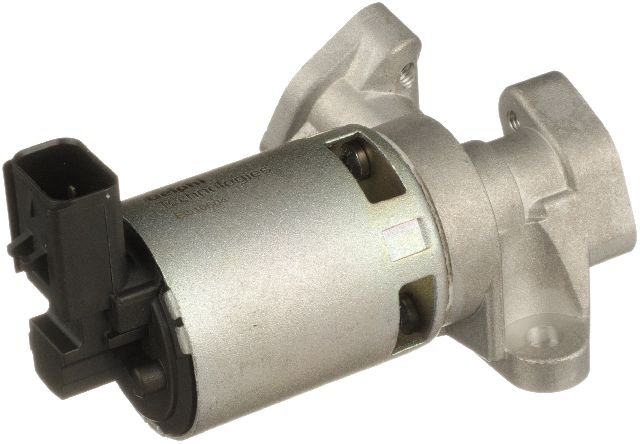
P0403 on a 2006-2010 Dodge Charger 3.5L almost always means the electronic portion of the EGR valve has failed. The most reliable fix is to replace the entire EGR valve assembly (OEM Part #4593892AA). The part costs between $70 for an aftermarket unit and $300 for an OEM part. The repair is labor-intensive due to the valve's location against the firewall.
- P0403 is an electrical circuit code, not a flow code. The problem is in the EGR valve's solenoid or its wiring.
- The most likely fix is to replace the entire EGR valve assembly. The current OEM part number is 4593892AA.
- The repair is considered difficult for a DIYer due to the valve's location at the back of the engine, requiring removal of the upper intake manifold.
- Always inspect the wiring and connector for heat damage or corrosion before replacing the valve.
- Always replace both the EGR valve gasket and the EGR tube gasket when installing a new valve to prevent future leaks.
What's Unique About the 2006-2010 Dodge Charger
On the Dodge Charger with the 3.5L V6, the P0403 code is a straightforward issue that overwhelmingly points to the failure of the EGR valve assembly itself. The main challenge with this vehicle is not diagnosis, but the physical labor required for the repair. The valve is located in a difficult-to-access spot at the rear of the engine against the firewall, underneath the intake plenum. Mechanics and DIYers often note that removing the upper intake manifold is necessary, and special care must be taken with the EGR tube that connects to the intake to avoid creating new leaks.
Symptoms You May Notice
- Check Engine Light is on
- Rough or unstable idle, especially when the engine is warm
- Engine stalling when coming to a stop
- Hesitation or sluggish acceleration
- Engine knocking or pinging sounds under load (if valve is stuck closed)
- Odor of fuel from the exhaust if the valve is stuck open causing a rich condition.
- Replacing only the EGR gaskets without replacing the valve. If the code is P0403, the problem is electrical, and new gaskets will not fix it.
- Cleaning a heavily carboned-up EGR valve. While cleaning can sometimes solve flow-related codes (P0401, P0402), it will not fix the internal electrical failure (open/shorted solenoid) indicated by P0403.
Most Likely Causes
- Failed EGR Valve Assembly 🔴 High Probability → Shop Exhaust Gas Recirculation (EGR) Valve The electronic solenoid integrated into the EGR valve is the common failure point. Due to its location, it is subjected to extreme heat cycles which degrade the internal electronics and windings over time, leading to an open or short in the control circuit.
How to confirm: After confirming the wiring is intact, use a bidirectional scan tool to command the EGR valve open and closed. If it doesn't respond audibly with a click or change engine idle, or if resistance tests on the valve's pins are out of manufacturer specification (e.g., infinite resistance indicating an open circuit), the valve is bad.
Typical fix: Replace the entire EGR valve assembly and both the valve-to-head and tube-to-intake gaskets. Due to the high labor cost to access the part, cleaning is not recommended for a P0403 electrical fault.
Est. part cost: $70-$300 - Damaged Wiring or Connector 🟡 Medium Probability The wiring harness to the EGR valve is situated at the back of the engine in a high-heat area, making it susceptible to becoming brittle, chafed, or melted over time. The connector pins can also corrode.
How to confirm: Visually inspect the wiring harness and the 5-pin connector going to the EGR valve for any signs of damage, melting, or corrosion. Use a multimeter to check for proper voltage (typically a 5V reference and/or 12V supply) and ground at the connector with the key on. Wiggle the harness while testing to check for intermittent breaks.
Typical fix: Repair the damaged section of wire or replace the connector pigtail. Ensure the repair is properly insulated against heat.
Est. part cost: $15-$40
Rare But Worth Checking
- Failed Powertrain Control Module (PCM): → Shop Engine Control Module (ECM) This is very rare. Before condemning the PCM, all other possibilities, including wiring and the EGR valve itself, must be exhaustively ruled out. A PCM failure would typically be accompanied by other unrelated codes and drivability issues.
Diagnosis Steps
- Read the code with an OBD-II scanner and confirm P0403 is present. Note any other codes, especially P0404 or P0406, as they strongly point to the EGR valve assembly itself.
- Perform a thorough visual inspection of the EGR valve's electrical connector and wiring harness. Look for any obvious signs of melting, chafing, or corrosion. The harness is tucked behind the engine and can be difficult to see.
- With the ignition on and engine off, disconnect the EGR connector. Use a multimeter to check for the correct voltage on the power supply wire and a good ground on the ground wire as per the vehicle's wiring diagram.
- Check the resistance of the EGR valve's control circuit pins. Compare the reading to the manufacturer's specification. An open circuit (infinite resistance) or a short (near-zero resistance) indicates a failed valve solenoid.
- If you have a capable bidirectional scan tool, attempt to actuate the EGR valve solenoid. Listen for a click or observe a change in engine idle if it's running. No response points to a bad valve or a wiring issue.
- If the valve and wiring test good, the final, though unlikely, possibility is a fault in the PCM's driver circuit. This requires advanced diagnostics to confirm.
Parts You'll Likely Need
- EGR Valve
(OEM #4593892AA)— This is the most common cause of a P0403 code on this engine, as the internal electronics fail over time. This part number supersedes 4593574AA, 4593574AB, 4593574AC, 4593834AA, 4593834AB, and 4593834AC.
Trusted brands: Mopar, Standard Motor Products (SMP), Delphi, Dorman
OEM price range: $150-$300
Aftermarket price range: $70-$150 - EGR Valve Gasket (to Head)
(OEM #5277928)— A new gasket is required to ensure a proper seal between the new EGR valve and the cylinder head to prevent exhaust leaks. Most new valves include this.
Trusted brands: Mopar, Fel-Pro, Mahle
OEM price range: $5-$15
Aftermarket price range: $2-$10 - EGR Tube Gasket (to Intake)
(OEM #4593582AB)— This gasket seals the EGR tube to the intake plenum. It must be replaced whenever the tube is disconnected to prevent vacuum or exhaust leaks. This is a critical step often overlooked.
Trusted brands: Mopar, Mahle, Fel-Pro
OEM price range: $5-$15
Aftermarket price range: $3-$10
Related Codes That Often Appear With This One
- P0406 — P0406 indicates 'EGR Sensor A Circuit High'. Since the position sensor is integrated into the EGR valve assembly on this engine, an internal electrical failure that triggers P0403 can often damage the position sensor circuit simultaneously, causing both codes to appear.
- P0404 — P0404 indicates 'EGR Control Circuit Range/Performance'. This code can appear with P0403 if the valve's electrical fault causes its movement to be erratic or not correspond with the PCM's commands.
Technical Service Bulletins (TSBs) & Recalls
- While no TSB is issued specifically for P0403, TSB 18-003-07 Rev. A exists for some 3.5L platforms to address other performance issues via a PCM reflash, indicating that software updates are a potential, though unlikely, factor in engine control diagnostics.
Platform-Specific Known Issues
- Real-World Repair Experience: An owner on a popular forum detailed their experience replacing the EGR valve to fix P0403 and P0406 codes. They confirmed the job is very difficult due to the location. The process requires removing the upper intake manifold. A key challenge is reinstalling the EGR tube into the intake manifold without kinking the new gasket, which can cause a massive vacuum leak. The advice given was to attach the tube to the intake first, then carefully lower the intake assembly onto the engine while guiding the other end of the tube into the new EGR valve.
Mechanic-Grade Diagnostic Values
- EGR Connector Pin Voltages (Key On, Engine Off) — expected: Pin 1 (K34 EGR Signal): Varies. Pin 2 (F856 5V Supply): 5.0 Volts. Pin 3 (K900 Sensor Ground): 0 Volts. Pin 4: Not Used. Pin 5 (Z902 Ground): 0 Volts. Pin 6 (K35 EGR Control): Varies based on PCM command.. Failure: Voltage on Pin 2 significantly lower than 5V indicates a supply issue. Voltage on Pin 3 or 5 above 0V indicates a bad ground. No voltage change on Pin 6 during an actuation test indicates a PCM or wiring fault.
- EGR Control Circuit Resistance — expected: Greater than 100 ohms between the (K35) EGR Control circuit and ground.. Failure: Resistance below 100 ohms indicates a short to ground in the wiring or the EGR solenoid itself.
Scan Tool Commands That Help
- Chrysler wiTECH or equivalent bidirectional scanner: EGR Valve Solenoid Duty Cycle / EGR System Test — This command is used to manually actuate the EGR valve solenoid. A technician can monitor the EGR position sensor voltage and listen for an audible click from the valve to determine if the valve's electrical solenoid is responding to PCM commands. Failure to respond confirms a fault in the valve or its wiring.
Wiring & Ground Locations
- EGR Valve Connector (C1) — At the EGR valve, located on the rear of the passenger-side cylinder head, underneath the intake manifold.. This is the primary connection point for all power, ground, and signal wires for the EGR valve. Corrosion or damage here is a common cause of P0403.
- G105 — On the engine near the harness breakout for ignition coil #5.. This is a primary engine ground point. A loose or corroded connection here can affect the ground reference for various sensors and actuators, including the EGR valve's ground circuit (Z902), potentially causing intermittent circuit codes.
- G106 — On the left (driver's) side of the engine block.. Another critical engine ground. Poor continuity at this point can lead to floating grounds and unpredictable electrical behavior for components grounded to the block.
- EGR Connector Pinout — At the 5-pin connector for the EGR valve.. Pin 2 is the 5V Supply (F856), Pin 3 is Sensor Ground (K900), Pin 5 is the main Ground (Z902), and Pin 6 (on a 6-pin connector diagram, often Pin 5 on a 5-pin layout) is the EGR Control circuit (K35). Testing for correct voltage and ground at these specific pins is essential for diagnosis.
Real Owner Repair Stories
- How to Automotive (YouTube) (2005-2010 Chrysler/Dodge with 3.5L V6) — Check Engine Light with EGR-related codes.
❌ Tried (didn't work) The video focuses directly on the replacement, implying diagnosis pointed straight to the valve.
✅ What actually fixed it The problem was resolved by replacing the entire EGR valve assembly, along with the required gaskets for the valve-to-head and the tube-to-intake connections. The video emphasizes the difficulty of the job due to the location and the necessity of removing the upper intake manifold for access.
OEM Part Supersession History
4593574AA, 4593574AB, 4593574AC, 4593834AA, 4593834AB, 4593834AC→4593892AA— Part consolidation and potential design revisions for improved reliability.
Heads up: All listed part numbers are interchangeable. 4593892AA is the latest, most commonly available revision from Mopar.
Diagnostic Flowchart
Other Known Issues on This Vehicle
Issues unrelated to this code that are worth knowing about as an owner of this generation:
- Shifter Stuck in Park ('Pink Thingy' Failure) 🔴 High — Very common on 2005-2007 models with the 5-speed NAG1 transmission. The plastic interlock lever becomes brittle and breaks, immobilizing the vehicle. (Ref: No recall for this specific mechanical failure. Often confused with the 2012-2014 electronic shifter recall.)
- Front Suspension Clunk (Worn Tension Struts) 🟠 Medium — Extremely common. The fluid-filled bushings on the front tension struts fail, causing a clunking or popping noise over bumps. Can occur as early as 20,000 miles.
- Engine Ticking (Rocker Arm Assembly Failure) 🟠 Medium — A well-documented issue where dowel pins in the rocker arm shafts shear, leading to oil starvation and a loud ticking/tapping noise from the top of the engine.
- Timing Belt Maintenance 🔴 High — Not a failure, but a critical maintenance item. The 3.5L EGG is an interference engine. If the timing belt is not replaced at the ~100,000-mile interval, a snapped belt will cause catastrophic engine damage.
- Oil Cooler Seal Leaks 🟡 Low — The seals between the oil cooler and the engine block can degrade over time, causing oil leaks in the engine valley.
Used vs. New Parts: Buying Guide for This Vehicle
When a used part is the smart pick: Buying a used EGR valve is not recommended for this repair. The P0403 code indicates an electrical failure within the valve's solenoid, which is a common wear item due to heat and vibration. A used part from a junkyard has an unknown remaining lifespan and is likely to fail in the same manner as the original part, leading to repeated, labor-intensive repairs.
What to inspect on the donor part:
- Not applicable as used purchase is not advised.
OEM-only on this vehicle (don't cheap out):
- While not strictly 'OEM-only', using a Mopar-branded EGR valve (4593892AA) is highly recommended for the highest probability of a one-time fix. The labor involved is too high to risk a faulty aftermarket part.
Aftermarket brands forum-validated for this vehicle:
- Standard Motor Products (SMP) part #EGV1149 is reported by users to be a reliable alternative to OEM.
- Delphi is also a reputable OEM supplier with a strong aftermarket presence.
Brands owners have reported issues with on this vehicle:
- Some users have reported premature failures with certain Dorman replacement EGR valves for similar Chrysler applications, leading to the code returning sporadically after a few months. While Dorman is a major supplier, for this specific high-labor part, sticking to OEM or a top-tier brand like SMP is a safer bet.
Real Owner Stories
Aggregated from forums and TSBs cited above. Mileages and costs reflect what owners reported in those sources.
2007 Dodge Charger 2.7L/3.5L
Symptoms: The vehicle was reporting both P0403 and P0406 codes simultaneously.
What fixed it: The owner replaced the EGR valve, though they noted that if codes persist, the wiring harness must be checked for faults.
Source hint: DodgeForum.com: A user with a 2007 Charger reported getting both P0403 and P0406 codes.
2006-2010 Dodge Charger 3.5L V6
Symptoms: P0403 and P0406 codes present; difficulty reaching bolts against the firewall and high labor effort required.
What fixed it: Replacement of the EGR valve assembly, which required removing the upper intake manifold to access the part.
Source hint: LXForums.com: Numerous owner experiences confirm the EGR valve as the primary failure point for these codes.
2006-2010 Dodge Charger 3.5L V6
Symptoms: P0403 code appeared immediately after a mechanical repair.
What fixed it: The issue was caused by a mechanic breaking the EGR valve housing during a previous installation, leading to an electrical circuit fault.
Source hint: Chrysler-Forum.com (UK): A user experienced a P0403 code after a mechanic replaced the EGR valve but broke the housing.
Dodge Manufacturer Reference
Symptoms: A vehicle was found to be missing the EGR valve entirely, resulting in DTCs P0403 and P0404.
What fixed it: As noted in NHTSA ODI #11701888, the vehicle required the installation of a new EGR valve to resolve the circuit and performance codes.
Source hint: NHTSA ODI #11701888
Related OBD-II Codes
Frequently Asked Questions
Does TSB 18-003-07 Rev. A fix the P0403 code on my 3.5L Charger?
Can I just clean the EGR valve on my 2006-2010 Charger to clear P0403?
Why is the EGR valve failure so common on the Dodge 3.5L V6 engine?
Is there a specific part number recommended for the replacement EGR valve?
I'm seeing P0403 and P0406 together; does this mean I have two different problems?
What is the biggest risk when replacing the EGR valve on this specific engine?
Helpful Videos
![How to Fix P0403 Engine Code in 3 Minutes [2 DIY Methods / Only $4.12]](https://img.youtube.com/vi/xWfDZqYRHyw/mqdefault.jpg)
We Have This Part in Stock


The information in this article is provided for general reference and educational purposes only. Vehicle specifications, procedures, and part compatibility can vary by production date, trim level, and region. Always consult your vehicle's factory service manual and verify part numbers before purchasing or performing repairs. Safety-critical components such as airbags, seat belts, and braking systems should be installed by a qualified professional.
- Dodge Charger:
- 🧭 Diagnostic Flowchart
- 🎬 Helpful Videos
- 🛍️ Shop This Part
- What's Unique About the 2006-2010 Dodge Charger
- Symptoms You May Notice
- Most Likely Causes
- Rare But Worth Checking
- Diagnosis Steps
- Parts You'll Likely Need
- Related Codes That Often Appear With This One
- Technical Service Bulletins (TSBs) & Recalls
- Platform-Specific Known Issues
- Mechanic-Grade Diagnostic Values
- Scan Tool Commands That Help
- Wiring & Ground Locations
- Real Owner Repair Stories
- OEM Part Supersession History
- Other Known Issues on This Vehicle
- Used vs. New Parts: Buying Guide for This Vehicle
- Real Owner Stories
- 2007 Dodge Charger 2.7L/3.5L
- 2006-2010 Dodge Charger 3.5L V6
- 2006-2010 Dodge Charger 3.5L V6
- Dodge Manufacturer Reference
- Related OBD-II Codes
- Frequently Asked Questions
- 🎟️ Get 5% Off