

P0403 on 2008-2011 Ford Focus 2.0L: EGR Circuit Malfunction Causes and Fixes
On a 2008-2011 Ford Focus, P0403 is an electrical fault in the EGR circuit. Before replacing the EGR valve, check for a blown 15A fuse (F26) in the under-hood fuse box, especially if you also have a P0443 code. The blown fuse is often caused by a shorted downstream O2 sensor wire. If the fuse is good, the EGR valve assembly is the most likely cause.
- P0403 is an electrical circuit code, not a flow code.
- ALWAYS check fuse F26 (15A) in the under-hood fuse box first, especially if you also have codes P0443 or O2 sensor heater codes.
- If the fuse is good, the most likely cause is a failed EGR valve assembly.
- Do not waste time cleaning the EGR valve or passages to fix a P0403 code.
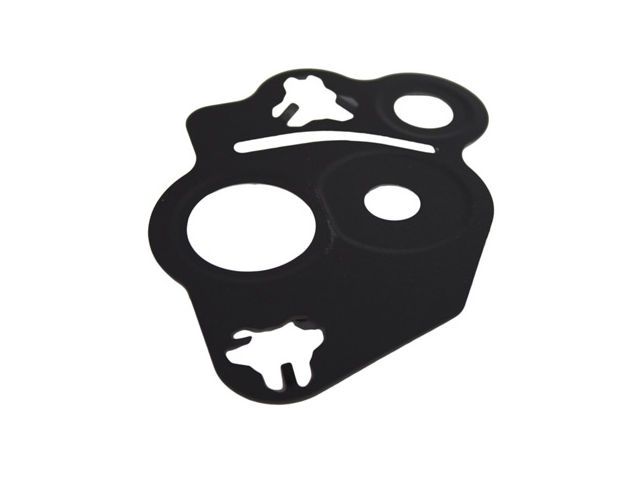
- Always replace the EGR valve gasket when replacing the valve.
What's Unique About the 2008-2011 Ford Focus
For the 2008-2011 Ford Focus, the P0403 code is frequently linked to other seemingly unrelated codes, like P0443 for the EVAP system or O2 sensor heater codes (P0135, P0141). This is because these components often share the same power circuit and fuse (F26, 15A). A short in any one of these components, most commonly the downstream O2 sensor wiring harness rubbing against the chassis or exhaust, can blow the shared fuse, causing multiple circuit-related trouble codes to appear at once. This makes checking the fuse and inspecting O2 sensor wiring a critical first step that can save significant time and money.
Symptoms You May Notice
- Check Engine Light is on
- Rough or unstable idle, sometimes hunting for RPM
- Engine stalling, especially when coming to a stop
- Hesitation or reduced power during acceleration
- Pinging or knocking sounds from the engine (spark knock)
- Vehicle may enter 'limp mode' with reduced performance
- Odor of fuel from the exhaust
- Replacing the EGR valve without first checking the shared fuse (F26). If codes like P0443 or O2 heater codes are also present, the fuse and a potential short circuit are the most likely cause.
- Cleaning the EGR passages. P0403 is an electrical code, not a flow code (P0401). While carbon buildup can cause other EGR problems, it will not cause a P0403 unless it physically jams the valve, which is less common than an electrical failure.
Most Likely Causes
- Blown Fuse (F26) 🔴 High Probability The EGR valve solenoid shares a 15A power circuit (fuse F26 in the engine bay fuse box) with other components like the EVAP purge solenoid and O2 sensor heaters. A short in any of these components or their wiring will blow the fuse.
How to confirm: Check the 15A fuse in position F26 of the under-hood fuse box. If it is blown, this is a strong indicator. Also, check for the presence of codes P0443, P0135, or P0141, which often appear with P0403 when this fuse blows.
Typical fix: Replace the blown fuse. If the fuse blows again, you must find the short circuit. Thoroughly inspect the wiring for the downstream (post-catalyst) O2 sensor, as it is commonly damaged or melted from contact with the exhaust or chassis, causing a short to ground.
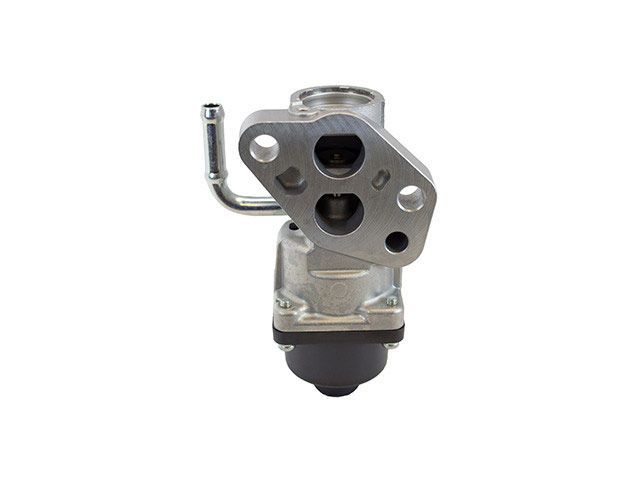
Est. part cost: $1-$5 - Faulty EGR Valve Assembly 🔴 High Probability → Shop Exhaust Gas Recirculation (EGR) Valve The electronic solenoid integrated into the EGR valve is a common failure point. The internal coil can develop an open circuit or a short, triggering the P0403 code.
How to confirm: After confirming the fuse and wiring are good, test the EGR valve. Using a multimeter set to Ohms, check the resistance between the two pins on the EGR valve connector. A good solenoid should read between 26 and 40 Ohms. An infinite (OL) or zero reading indicates a failed solenoid. 🎬 Watch: Step-by-step guide to testing an EGR solenoid You can also briefly apply 12V power and ground to the pins to listen for an audible 'click'.
Typical fix: Replace the entire EGR valve assembly. The solenoid is not sold separately. Always use a new gasket.
Est. part cost: $75-$150 - Damaged Wiring or Connector 🟡 Medium Probability The wiring harness near the EGR valve and especially the O2 sensors is exposed to intense heat and vibration, which can cause wires to fray, insulation to melt, or pins in the connector to become corroded or loose.
How to confirm: Visually inspect the wiring leading to the EGR valve and O2 sensors for any signs of melting, chafing, or breaks. Unplug the connector and check for corrosion, moisture, or pushed-out pins. Wiggle the harness with the engine running to see if it affects the idle.
Typical fix: Repair the damaged section of wire or replace the connector pigtail.
Est. part cost: $15-$30
Rare But Worth Checking
- Faulty Powertrain Control Module (PCM): → Shop Engine Control Module (ECM) This is very rare. The PCM's internal driver for the EGR circuit can fail, but every other possibility should be exhausted before condemning the PCM.
Diagnosis Steps
- Scan for trouble codes. Note if P0443 or any O2 sensor heater codes (P0135, P0141) are present alongside P0403, as this strongly suggests a shared power issue.
- Open the hood and locate the engine compartment fuse box.
- Inspect fuse F26 (a 15-amp mini fuse). If it is blown, replace it.
- If the fuse was blown, start the engine. If the code immediately returns and the fuse blows again, you have a persistent short circuit. The most common location is the downstream O2 sensor wiring harness where it may be melted or chafed against the exhaust or body.
- If the fuse is good, locate the EGR valve on the cylinder head, near the firewall.
- Visually inspect the electrical connector and wiring going to the EGR valve. Look for any signs of damage, melting, or corrosion.
- If the wiring looks good, disconnect the connector. Use a multimeter to check for 12V power at one pin with the key on, engine off. The other pin is the control wire that the PCM grounds to activate the solenoid.
- With the multimeter set to measure resistance (Ohms), test the EGR valve itself across its two electrical pins. The reading should be between 26-40 Ohms. A reading of infinite resistance (OL) means the solenoid coil is open and the valve is bad.
- If all tests pass, the issue may be an intermittent wiring problem or, in very rare cases, a faulty PCM.
Parts You'll Likely Need
- EGR Valve
(OEM #1S7Z-9D475-A)— The internal electronic solenoid fails, causing an electrical circuit fault. 🎬 Watch: How to replace a faulty Ford EGR valve This is the most common part to fail if the fuse is not the issue.
Trusted brands: Motorcraft, Standard Motor Products (EGV1053), Dorman (911-117), Delphi
OEM price range: $120-$160
Aftermarket price range: $70-$120 - Mini Fuse (15A) — The EGR solenoid shares a circuit with other components, and a short in any of them can blow this fuse, which is a very common cause for P0403 on this vehicle.
Trusted brands: Bussmann, Littlefuse
OEM price range: $1-$5
Aftermarket price range: $1-$5 - EGR Valve Gasket
(OEM #1S7Z-9D476-AA)— This should always be replaced when the EGR valve is removed to prevent exhaust leaks.
Trusted brands: Motorcraft, Fel-Pro
OEM price range: $5-$10
Aftermarket price range: $2-$5
Related Codes That Often Appear With This One
- P0443 — EVAP Purge Control Valve Circuit. This component shares the same power fuse (F26) as the EGR solenoid. A short in either circuit can blow the fuse and trigger both codes.
- P0135 / P0141 — O2 Sensor Heater Circuit Malfunction (Bank 1, Sensor 1 / Bank 1, Sensor 2). The oxygen sensor heaters are also on the same shared F26 fuse. A short in the O2 sensor wiring is a very common cause for blowing this fuse.
Platform-Specific Known Issues
- Real-World Example: Melted O2 Sensor Wire: An owner of a 2011 Focus experienced multiple codes including P0403, P0443, and O2 sensor codes, along with a hunting idle and stalling. The cause was found to be a blown 15A fuse (F26). The fuse kept blowing until a visual inspection revealed rodent damage and melted wiring on the downstream O2 sensor, which was shorting to ground. Replacing the damaged sensor and the fuse resolved all codes and drivability issues.
Technical Service Bulletins (TSBs) & Recalls
- Bulletin #TSB 16-0163: While issued for other Ford models like the Transit Connect, this manufacturer bulletin highlights a known condition where P0403 and P0443 appear together with O2 sensor heater codes (P0135, P0141), requiring specific service procedures to correct the shared circuit fault.
Mechanic-Grade Diagnostic Values
- EGR Valve Solenoid Resistance — expected: 26 to 40 Ohms. Failure: A reading of infinite resistance (OL) indicates an open coil; a reading near zero indicates a shorted coil.
- EGR Solenoid Connector Voltage (KOEO) — expected: ~12V (Battery Voltage) on both wires before activation.. Failure: No voltage on the power feed wire indicates a problem upstream (fuse, wiring). The control wire will show 12V until it is commanded to ground by the PCM.
Scan Tool Commands That Help
- Ford IDS (or equivalent professional scanner like Autel MS906TS): EGR Valve Duty Cycle / Output State Control — After confirming fuse and wiring integrity, this command allows you to manually activate the EGR solenoid. You can command the valve to open by a certain percentage (e.g., 25%, 50%) while monitoring engine RPM. A successful test will cause the engine idle to become rough or stall, confirming the valve's mechanical and electrical function and that the passages are clear. This is the definitive test before replacing the EGR valve itself.
Wiring & Ground Locations
- Main Engine Bay Ground — Underneath the airbox, in front of the battery, bolted to the chassis/fender area.. A corroded or loose main ground can cause a host of floating voltages and intermittent electrical faults across multiple systems, including the EGR control circuit. Cleaning this ground point is a crucial preventative and diagnostic step for any electrical issue on this platform.
- PCM Ground — On Fords of this era, there is typically a dedicated ground point on the chassis right next to the PCM itself.. The PCM provides the ground for the EGR solenoid to activate it. A poor PCM ground can cause the driver circuit to malfunction, mimicking a failed EGR solenoid or a wiring fault.
Real Owner Repair Stories
- Ford Owners Club Forum (Ford Focus (Year not specified, but Mk2 platform)) — Loss of power on the motorway, difficulty climbing hills, and a P0299 (turbo underboost) code initially. After cleaning and then replacing the EGR valve with a cheap eBay part, the code changed to P0403.
❌ Tried (didn't work) Replacing a solenoid valve for the P0299 code., Cleaning the original EGR valve (which was found to have a hole in it).
✅ What actually fixed it The user diagnosed that the new, cheap EGR valve purchased from eBay was likely faulty out of the box, causing the P0403 circuit code. The implication is that replacing the cheap part with a quality OEM or reputable aftermarket part would resolve the issue. - YouTube Video (2011 Ford Focus) — Multiple trouble lights, hunting idle, stalling at stops. Codes P0135, P0141, P0403, P0443 were present.
❌ Tried (didn't work) Initially resetting codes.
✅ What actually fixed it The technician found fuse F26 (15A) was blown. After replacing it, the idle smoothed out. The root cause of the blown fuse was discovered to be rodent damage to the downstream O2 sensor wiring, which was shorting to ground. Repairing the wiring and replacing the fuse fixed all codes. - NHTSA ODI #10573470 — An owner reported a rough running condition and the Malfunction Indicator Light on with EGR related diagnostic trouble codes including P0403, noting issues with the emission control and gas recirculation valve.
OEM Part Supersession History
1S7Z-9D475-AA→1S7Z-9D475-A— Standard part revision by Ford.
Heads up: The newer part number 1S7Z-9D475-A (also sold under Motorcraft number CX-2352) is the correct service replacement for the specified vehicle range.
Diagnostic Flowchart
Other Known Issues on This Vehicle
Issues unrelated to this code that are worth knowing about as an owner of this generation:
- Passenger-Side Hydraulic Engine Mount Failure 🔴 High — Extremely common, often failing after 60,000-100,000 miles. The mount is fluid-filled, and when it leaks, it collapses, causing severe vibration at idle and while in gear. (Ref: While no specific recall exists, it is a widely documented failure.)
- 4F27E Automatic Transmission Issues 🟠 Medium — Common on higher-mileage vehicles. Issues include harsh shifting (especially 2-3 flare), slipping, and solenoid failures. Problems are often linked to worn solenoid bores in the valve body or failed shift solenoids.
- Worn Suspension Components 🟠 Medium — Fairly common with age and mileage. Front lower ball joints and sway bar links are frequent wear items, leading to clunking noises over bumps.
- Frozen or Faulty Door Latches 🟡 Low — A common annoyance where moisture can cause door latches to freeze or fail, preventing the door from latching closed properly, especially in cold weather.
Used vs. New Parts: Buying Guide for This Vehicle
When a used part is the smart pick: A used EGR valve from a junkyard is generally NOT recommended for this repair. The failure mode is an internal electronic solenoid, which is not a part whose remaining life can be easily assessed. The risk of getting a part that is already failed or near failure is high. Given the labor to access the valve, a new part is a smarter investment.
Donor-vehicle mileage cap: roughly under 60000 miles for the part to have meaningful remaining life.
What to inspect on the donor part:
- If forced to buy used, choose a donor vehicle with the lowest possible mileage.
- Inspect the electrical connector pins for any signs of corrosion, melting, or damage.
- Avoid parts that show heavy external rust or signs of being in a flood-damaged vehicle.
- Test the resistance across the two pins with a multimeter before purchase; it should be within the 26-40 Ohm specification.
Aftermarket brands forum-validated for this vehicle:
- Motorcraft (OEM)
- Standard Motor Products (SMP)
- Delphi
- Dorman
Brands owners have reported issues with on this vehicle:
- No-name, unbranded parts from online marketplaces like eBay or Amazon are a significant risk, as demonstrated by a real-world repair story where a cheap part was faulty out of the box, causing a P0403 code.
Real Owner Stories
Aggregated from forums and TSBs cited above. Mileages and costs reflect what owners reported in those sources.
2011 Ford Focus 2.0L Duratec
Symptoms: Check engine light with multiple codes (P0403, P0443, O2 sensor codes), hunting idle, and stalling.
What fixed it: Replaced the blown 15A fuse (F26) and repaired rodent-damaged and melted wiring on the downstream O2 sensor that was shorting to ground.
Source hint: YouTube - 2011 Ford Focus P0135 P0151 P0403 P0443... blowing fuse 26
2008 Ford Focus 1.8L Duratec HE
Symptoms: When coming to a stop and taking the car out of gear, the engine would drop to 500 RPM and then pull itself back up; eventually the engine management light came on with code P0403.
What fixed it: Replacing the EGR valve assembly.
Source hint: FordOwnersClub.com owner report
2008 Ford Focus 2.0L Duratec
Symptoms: P0403, P0443, P0135, and P0141 appearing all at once.
What fixed it: Replaced blown fuse F26 and addressed a short in the O2 sensor wiring harness.
Source hint: FocusFanatics Forum: P0403, P0443, P0135, P0141 - All at once
Related OBD-II Codes
Frequently Asked Questions
Why is my 2008-2011 Ford Focus showing P0403 along with P0443 and O2 sensor codes all at once?
Where is fuse F26 located on my Focus, and what does it control?
I replaced the EGR valve on my 2008 Focus 1.8L/2.0L Duratec but the P0403 code returned. What else should I check?
Can I just replace the solenoid on my Focus EGR valve to fix P0403?
My Focus has a rough idle and stalls when coming to a stop; could this be related to P0403?
Is there a specific wiring area I should inspect for damage on my 2011 Focus?
Helpful Videos
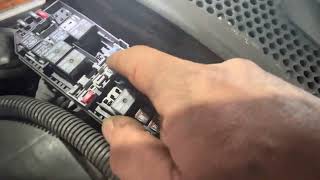
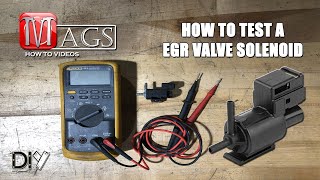
![How to Fix FORD P0403 Engine Code in 3 Minutes [2 DIY Methods / Only $4.12]](https://img.youtube.com/vi/7IL5jh0TiYQ/mqdefault.jpg)
Used OEM Parts in Stock
New Aftermarket Parts Available


The information in this article is provided for general reference and educational purposes only. Vehicle specifications, procedures, and part compatibility can vary by production date, trim level, and region. Always consult your vehicle's factory service manual and verify part numbers before purchasing or performing repairs. Safety-critical components such as airbags, seat belts, and braking systems should be installed by a qualified professional.
- Ford Focus:
- 🧭 Diagnostic Flowchart
- 🎬 Helpful Videos
- 🛍️ Shop This Part
- What's Unique About the 2008-2011 Ford Focus
- Symptoms You May Notice
- Most Likely Causes
- Rare But Worth Checking
- Diagnosis Steps
- Parts You'll Likely Need
- Related Codes That Often Appear With This One
- Platform-Specific Known Issues
- Technical Service Bulletins (TSBs) & Recalls
- Mechanic-Grade Diagnostic Values
- Scan Tool Commands That Help
- Wiring & Ground Locations
- Real Owner Repair Stories
- OEM Part Supersession History
- Other Known Issues on This Vehicle
- Used vs. New Parts: Buying Guide for This Vehicle
- Real Owner Stories
- 2011 Ford Focus 2.0L Duratec
- 2008 Ford Focus 1.8L Duratec HE
- 2008 Ford Focus 2.0L Duratec
- Related OBD-II Codes
- Frequently Asked Questions
- 🎟️ Get 5% Off