

P0403 on 2008-2013 Subaru Forester 2.0L Diesel: EGR Circuit Malfunction Causes and Fixes
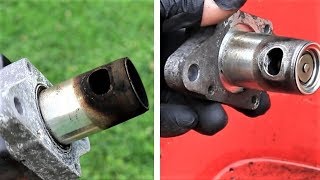
On the Subaru EE20 diesel engine, P0403 almost always means the entire EGR valve assembly has failed. Heavy soot buildup causes the valve to stick, which then burns out the internal electric motor. The most reliable fix is to replace the entire EGR valve assembly.
- P0403 on your diesel Forester indicates an electrical failure in the EGR valve circuit, but the root cause is almost always mechanical seizure from soot.
- This fault will disable your traction control and cruise control as a safety measure, illuminating their respective dash lights.
- The most reliable and long-term fix is to replace the entire EGR valve assembly with a new part (OEM part #14710AA741).
- While replacing the valve, it is highly recommended to clean the associated EGR passages and cooler to prevent future restrictions.
- This is a difficult DIY repair due to poor access, particularly a hidden bolt on the EGR cooler bracket.
What's Unique About the 2008-2013 Subaru Forester
The Subaru EE20 boxer diesel engine is known for EGR system problems. Unlike many vehicles where cleaning the EGR valve is a common fix, the P0403 code on this engine usually signifies a permanent electrical failure of the valve's internal motor, making replacement necessary. This code is frequently accompanied by P0409 ('EGR Sensor Circuit'), indicating a complete failure of the unit. As a programmed safety response, Subaru's ECU will also disable the traction control (VDC) and cruise control systems when this fault is detected, illuminating their respective lights on the dashboard.
Symptoms You May Notice
- Check Engine Light is on
- Traction control light (VDC) is on
- Cruise control light is flashing and the system is disabled.
- Reduced engine power and sluggish acceleration.
- Rough or unstable idle.
- Engine hesitation or knocking.
- Decreased fuel economy.
- Replacing O2 sensors. An owner on a forum mistakenly believed the issue was with O2 sensors before identifying the EGR valve.
Most Likely Causes
- Failed EGR Valve Assembly 🔴 High Probability → Shop Exhaust Gas Recirculation (EGR) Valve The EE20 diesel engine produces significant soot, especially with short-trip driving, which clogs the EGR valve. The valve pintle seizes, and the constant effort to move it burns out the internal electric motor, causing the P0403 electrical fault. A healthy valve makes a noticeable cycling sound upon engine shutdown; silence is a sign of failure.
How to confirm: Scan for codes; P0403 is often paired with P0409. Test the EGR solenoid circuit for proper voltage and ground signals. If the circuit is good but the valve doesn't operate when commanded by a scan tool (or make a clicking sound), the internal motor has failed.
Typical fix: Replace the entire EGR valve assembly. Cleaning is often a temporary fix at best, as the motor is usually already damaged or will fail shortly after.
Est. part cost: $100-$350 - Clogged EGR Passages/Cooler 🟡 Medium Probability The same soot that clogs the valve can also severely restrict the EGR cooler and the intake manifold passages, reducing flow even if the valve itself is working.
How to confirm: Visually inspect the EGR cooler and intake manifold ports when the EGR valve is removed. Look for heavy, thick carbon buildup restricting the passages.
Typical fix: Remove and manually clean the EGR cooler and intake manifold. Some owners report success using heavy-duty oven cleaner and a 🎬 Watch: How to clean a Subaru electronic EGR valve pressure washer on the cooler, though this should be done with care. Chemical cleaners like TUNAP 925 are also used professionally.
Est. part cost: $20-$40 for cleaning supplies - Wiring Harness or Connector Fault ⚪ Low Probability
How to confirm: Visually inspect the 5-pin wiring harness going to the EGR valve for any signs of chafing, melting, or corrosion. Check for a poor connection at the EGR solenoid harness, looking for worn, loose, or corroded pins.
Typical fix: Repair the damaged section of the wiring harness or clean/replace the connector.
Est. part cost: $10-$50
Rare But Worth Checking
- Faulty Powertrain Control Module (PCM): → Shop Engine Control Module (ECM) This is very rare. One owner on a Slovenian forum reported that after replacing the EGR valve, the P0403 code remained. The issue was traced to a faulty ECU driver, which was ultimately resolved by reprogramming the ECU to delete the EGR function. This should only be considered after all other possibilities have been exhausted.
Diagnosis Steps
- Read the fault codes with an OBD-II scanner. Confirm if P0403 is present, and check for other codes like P0409, as their presence together is a strong indicator of total valve failure.
- Inspect the wiring and 5-pin connector at the EGR valve. Look for any visible damage, corrosion, or loose connections.
- Using a capable scan tool, command the EGR valve to open and close while monitoring its position sensor data. If the valve does not respond, it points to an internal failure.
- Listen for the EGR valve cycling after shutting the engine off. A healthy valve will make an audible noise; a silent valve is likely dead.
- If the scan tool test is inconclusive, disconnect the EGR connector. Use a multimeter to check for 12V supply voltage at the appropriate pin with the ignition on.
- Check the resistance of the EGR solenoid's internal motor. An infinite reading (Open Loop) or zero ohms (short) indicates a failed motor.
- If wiring and power supply are good, but the valve is unresponsive, the EGR valve assembly has failed and needs replacement.
- While the EGR valve is removed, inspect the EGR cooler and intake manifold passages for heavy soot buildup and clean them as necessary.
Parts You'll Likely Need
- EGR Valve Assembly
(OEM #14710AA741)— This is the primary point of failure. The original part (14710AA740) was superseded by 14710AA741. The entire assembly, including the internal motor and sensor, fails due to soot buildup.
Trusted brands: Subaru (Genuine), Denso, NRF, Febi Bilstein, DELPHI, RIDEX, NTY
OEM price range: $270-$330
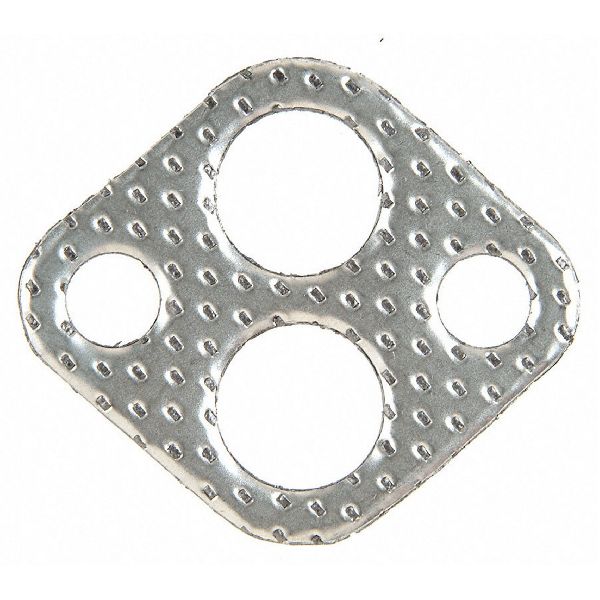
Aftermarket price range: $75-$150 - EGR Valve Gaskets — The gaskets between the EGR valve, cooler, and intake manifold should always be replaced to prevent exhaust and coolant leaks. New aftermarket valves often include them.
Trusted brands: Subaru (Genuine), Elring
OEM price range: $10-$20
Aftermarket price range: $5-$15
Related Codes That Often Appear With This One
- P0409 — P0409 ('EGR Sensor 'A' Circuit') relates to the position sensor within the EGR assembly. When the valve seizes mechanically and the motor burns out (P0403), the position sensor often reports an incorrect reading or performance issue, triggering P0409 simultaneously. Seeing both codes strongly points to a complete EGR valve failure.
Platform-Specific Known Issues
- On the EE20 engine, the EGR valve is located at the top left side of the engine, and access requires removing the top-mounted intercooler.
- A hidden 12mm bolt, often called the 'phantom bolt' by owners, secures the EGR cooler bracket to the engine block and is very difficult to access, significantly increasing the repair's difficulty.
- Failure of the EGR valve is a very common issue across all Subaru models equipped with the EE20 diesel engine, including the Legacy, Outback, and Impreza from the same era.
- Some owners have noted that to fully remove the EGR valve, the plastic intake manifold may need to be 🎬 See this step-by-step intake manifold and EGR removal unbolted and lifted slightly to provide enough clearance.
Mechanic-Grade Diagnostic Values
- EGR Valve Connector Voltage — expected: 12V at the ignition supply pin with key on, engine off.. Failure: A reading of 0V indicates an open or short in the supply circuit.
- EGR Solenoid Control Circuit — expected: Voltage should be low (near 0V) when the PCM commands the valve on, and high (near battery voltage) when commanded off.. Failure: No change in voltage when commanded by a scan tool, or voltage that doesn't match the commanded state.
- EGR Solenoid Current Draw — expected: Should be less than one amp when activated.. Failure: Current draw significantly higher than one amp suggests excessive resistance or a short in the solenoid.
Scan Tool Commands That Help
- Subaru Select Monitor (SSM): Active Test: EGR Valve Check — To command the EGR valve to open and close while the engine is running to verify its mechanical operation. The technician can observe engine RPM changes to determine if the valve is responding.
- Subaru Select Monitor (SSM): EGR Compulsory Learning / EGR Angle Learning — This is a critical step after replacing the EGR valve. The ECU must learn the closed-position voltage of the new valve's sensor. Failure to perform this adaptation can cause the P0409 code to return even with a new part, as the ECU will detect a mismatch during its self-test upon engine shutdown.
Wiring & Ground Locations
- EGR Valve Connector — On the EGR valve assembly, located at the top left side of the engine, partially under the intercooler.. This is a 5-pin connector that provides power, ground, and control signals to the EGR motor and receives position data from the sensor. A poor connection, corrosion, or wiring damage at this connector is a primary point of failure for the P0403 circuit code.
- Engine Ground Straps — Key grounds are typically from the engine block to the chassis (often below the battery tray) and from the transmission to the firewall.. While not a common cause for a specific P0403, a corroded or loose main engine ground can cause a variety of electrical issues and unstable reference voltages for sensors and actuators, including the EGR system. Verifying grounds is a good practice if multiple, seemingly unrelated electrical faults are present.
Real Owner Repair Stories
- subaruoutback.org user 'Kamillo' (2009 Subaru Outback 2.0L Diesel) — Check Engine Light with codes P0403 and P0409.
❌ Tried (didn't work) Replacing the original EGR valve with an aftermarket (NTY brand) valve.
✅ What actually fixed it The problem was only resolved after replacing the faulty aftermarket NTY valve with a genuine, original Subaru EGR valve.
OEM Part Supersession History
14710AA740→14710AA741— Likely an internal revision to improve reliability or address the common failure mode. The EE20 engine had several updates to meet changing emissions standards (Euro 4 to Euro 5), and parts were often revised.
Heads up: 14710AA741 is the correct and backward-compatible replacement for 14710AA740. Both are for the single, high-pressure EGR system on the Euro 4/5 engines found in this vehicle range.
Model Year Variations Within This Range
- 2008-2012 (Euro 4/Early Euro 5): These earlier models exclusively use a single, high-pressure EGR system. The P0403 code on these vehicles always refers to this single valve. These early engines are also most notorious for crankshaft failures.
- Post-2013 (Late Euro 5 / Euro 6): Later model Foresters (outside the specified 2008-2013 range) introduced a secondary, low-pressure EGR system after the DPF. While this doesn't affect the 2008-2013 models in question, it's a key difference when sourcing parts or information for EE20 engines in general.
Diagnostic Flowchart
Other Known Issues on This Vehicle
Issues unrelated to this code that are worth knowing about as an owner of this generation:
- Crankshaft / Bottom-End Failure 🔴 High — Most common in early Euro 4 engines (approx. 2008-2011). Failures can occur at relatively low mileage (50,000-80,000 miles). Attributed to issues like blocked oilways from excess sealant, incorrect bearing torque specs, or block flex.
- Diesel Particulate Filter (DPF) Clogging & Oil Dilution 🟠 Medium — Very common, especially for vehicles used for frequent short trips. The DPF fails to complete regeneration cycles, leading to clogging, warning lights, limp mode, and fuel diluting the engine oil. (Ref: Some owner reports mention a recall for oil dilution, but no specific TSB number is widely documented.)
- Dual-Mass Flywheel (DMF) and Clutch Failure 🟠 Medium — The DMF in manual transmission models can fail, causing vibrations and noise. This is sometimes related to or masks underlying crankshaft issues.
Used vs. New Parts: Buying Guide for This Vehicle
When a used part is the smart pick: A used EGR valve is strongly discouraged for this repair. The failure is due to an internal motor burnout caused by wear and soot accumulation. A used part from a donor vehicle is highly likely to have significant wear and could fail very soon after installation, if it works at all.
What to inspect on the donor part:
- Not applicable, as used parts are not recommended.
OEM-only on this vehicle (don't cheap out):
- EGR Valve Assembly
Aftermarket brands forum-validated for this vehicle:
- Denso (often the original equipment manufacturer for Subaru)
- DELPHI
Brands owners have reported issues with on this vehicle:
- NTY (A forum user reported a brand new NTY valve was faulty out of the box and only an OEM part fixed the issue).
- Unbranded or exceptionally cheap eBay/Amazon parts.
Real Owner Stories
Aggregated from forums and TSBs cited above. Mileages and costs reflect what owners reported in those sources.
2013 Subaru Outback EE20 Turbo Diesel
Symptoms: Owner struggled with the removal of the EGR system due to a specific hidden 12mm bolt on the cooler bracket.
What fixed it: Removal of the EGR system, highlighting the necessity of navigating the 'phantom bolt' for successful service.
Source hint: YouTube video 'Subaru 2013 Outback EE20 Turbo Diesel - EGR Removal - Phantom Bolt'
2008-2013 Subaru Forester EE20 Diesel
Symptoms: VDC and CEL lights illuminated; soot buildup caused the valve to seize, which subsequently burned out the internal motor.
What fixed it: Replacement of the EGR valve assembly after removing the intercooler for access.
Source hint: uk.subaruownersclub.com - 'P0409, seized EGR valve – Fixed'
2010 Subaru Outback 2.0D (EE20)
Symptoms: Experienced both P0403 and P0409 codes simultaneously; soot had seized the valve pintle.
What fixed it: Replacement of the EGR valve (Part 14710-AA740) as cleaning was deemed insufficient for a failed motor.
Source hint: subaruoutback.org - 'Error Code P0409 & P0403'
2009 Subaru Forester EE20 Diesel
Symptoms: Persistent P0403 error even after replacing the EGR valve; poor low-RPM performance.
What fixed it: Physically blocked the EGR and had the ECU reprogrammed to delete the EGR function.
Source hint: subaru-slo.net - 'EE20 motor, p0403 error'
Related OBD-II Codes
Frequently Asked Questions
I heard a clicking sound from the engine after I turned it off; is my EGR valve broken?
Can I just clean the EGR valve on my 2010 Forester Diesel to save money?
What is the 'phantom bolt' people mention regarding this repair?
Why is my Traction Control (VDC) light on when the code is for the EGR system?
Do I need to remove the intercooler to reach the EGR valve on my Forester?
Is there a specific part number I should look for when replacing the valve?
Helpful Videos
We Have This Part in Stock

The information in this article is provided for general reference and educational purposes only. Vehicle specifications, procedures, and part compatibility can vary by production date, trim level, and region. Always consult your vehicle's factory service manual and verify part numbers before purchasing or performing repairs. Safety-critical components such as airbags, seat belts, and braking systems should be installed by a qualified professional.
- Subaru Forester:
- 🧭 Diagnostic Flowchart
- 🎬 Helpful Videos
- 🛍️ Shop This Part
- What's Unique About the 2008-2013 Subaru Forester
- Symptoms You May Notice
- Most Likely Causes
- Rare But Worth Checking
- Diagnosis Steps
- Parts You'll Likely Need
- Related Codes That Often Appear With This One
- Platform-Specific Known Issues
- Mechanic-Grade Diagnostic Values
- Scan Tool Commands That Help
- Wiring & Ground Locations
- Real Owner Repair Stories
- OEM Part Supersession History
- Model Year Variations Within This Range
- Other Known Issues on This Vehicle
- Used vs. New Parts: Buying Guide for This Vehicle
- Real Owner Stories
- 2013 Subaru Outback EE20 Turbo Diesel
- 2008-2013 Subaru Forester EE20 Diesel
- 2010 Subaru Outback 2.0D (EE20)
- 2009 Subaru Forester EE20 Diesel
- Related OBD-II Codes
- Frequently Asked Questions
- 🎟️ Get 5% Off