

P0403 on 2009-2014 Subaru Outback 2.0L Diesel: EGR Circuit Malfunction Guide
P0403 on a Subaru EE20 diesel engine indicates an electrical fault in the Exhaust Gas Recirculation (EGR) valve control circuit. The most common cause is a complete failure of the EGR valve assembly, often due to the internal electric motor burning out after the valve gets stuck with heavy carbon buildup. This code frequently appears with P0409 and will disable the traction control and cruise control systems.
- P0403 on your diesel Outback points directly to an electrical problem in the EGR control circuit, most often caused by the EGR valve's internal motor burning out.
- This code is almost always accompanied by P0409 and will disable your traction control and cruise control.
- The root cause is typically a mechanically stuck valve due to carbon buildup, which then leads to the electrical failure.
- Replacement of the entire EGR valve assembly with a genuine OEM part (superseded part number 14710-AA741) is the most reliable fix; cleaning is often a temporary solution at best.
- Accessing the valve requires removal of the top-mounted intercooler.
What's Unique About the 2009-2014 Subaru Outback
The Subaru EE20 boxer diesel engine, particularly the Euro 5 versions, is notoriously prone to EGR system issues. The P0403 code is very often a companion to P0409 (EGR Position Sensor Performance), indicating a total failure of the integrated EGR valve assembly. A common failure narrative from owners is that heavy soot accumulation, exacerbated by short-trip driving, causes the valve to seize. The ECM continues to command the valve's internal motor, which eventually burns out from the strain, triggering the P0403 electrical fault. Unlike on some engines where cleaning is a reliable fix, on the EE20, the burnout of the internal motor often makes full replacement necessary.
Symptoms You May Notice
- Check Engine Light illuminated.
- Traction control light illuminated (VDC light).
- Flashing cruise control light / cruise control disabled.
- Reduced engine power and acceleration.
- Rough or unstable idle.
- Engine stalling in some cases.
- Reduced fuel economy.
- Engine hesitation or knocking.
- Replacing oxygen sensors. An owner on a forum mentioned they initially believed they needed to replace O2 sensors before identifying the EGR issue.
- Assuming cleaning is sufficient. Many owners report that cleaning a valve that is already throwing a P0403 code is a temporary fix at best, as the internal motor is already compromised and will fail again shortly.
Most Likely Causes
- Failed EGR Valve Assembly 🔴 High Probability → Shop Exhaust Gas Recirculation (EGR) Valve The internal electric motor within the EGR valve housing is a known weak point on the EE20 engine. It often burns out when the valve mechanism becomes clogged with soot and seizes, leading to an electrical circuit fault. This is the most frequently cited cause in owner forums.
How to confirm: Use a scan tool to command the EGR valve to open and close. An absence of an audible click or change in engine RPM suggests failure. If the circuit tests okay (see diagnosis steps), the valve's internal motor has failed. The simultaneous presence of P0409 is a strong indicator of complete assembly failure.
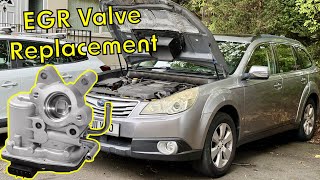
Typical fix: Replace the entire EGR valve assembly. While cleaning is sometimes attempted, it is often unsuccessful if the P0403 code is present, as this implies the internal motor has already failed electrically. Replacement requires removing the intercooler for access. 🎬 Watch: A complete walkthrough of the EGR removal and cleaning process.
Est. part cost: $250-$500 - Heavy Carbon Buildup Sticking the Valve 🟡 Medium Probability Diesel engines, especially those used for frequent short trips, produce significant soot which clogs the EGR valve and passages, restricting movement. This is the precursor to the electrical failure.
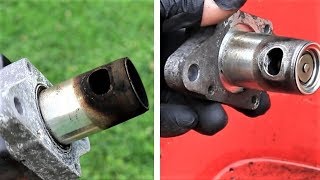
How to confirm: Remove the EGR valve and inspect it and the connecting passages for heavy, thick soot and carbon deposits that prevent the valve plate from moving freely.
Typical fix: Thoroughly clean the EGR valve and passages with a specialized EGR/carburetor cleaner and brushes. However, if the P0403 code has already been triggered, cleaning alone is unlikely to be a permanent fix as the motor is likely damaged.
Est. part cost: $10-$20 for cleaning supplies - Damaged Wiring or Corroded Connector ⚪ Low Probability The wiring harness connector to the EGR valve is exposed to engine bay heat and vibration, which can lead to degradation over time.
How to confirm: Visually inspect the wiring harness and the 5-pin connector at the EGR valve for signs of fraying, melting, or corrosion on the pins. Use a multimeter to perform continuity and voltage checks on the harness between the EGR valve and the ECM.
Typical fix: Repair the damaged section of the wiring harness or clean the connector pins with an electrical contact cleaner. If corrosion is severe, the connector may need to be replaced.
Est. part cost: $5-$50
Rare But Worth Checking
- Faulty Powertrain Control Module (PCM): → Shop Engine Control Module (ECM) This is a very rare cause. The PCM's internal driver for the EGR circuit can fail, but this should only be considered after the EGR valve and its entire circuit have been confirmed to be in good working order. One owner on a forum reported this as a final diagnosis after replacing the valve didn't solve the issue.
Diagnosis Steps
- Verify the presence of P0403 with an OBD-II scanner. Note any other codes, especially P0409, as this is highly significant for this vehicle.
- Visually inspect the EGR valve's 5-pin electrical connector and wiring harness for obvious damage, corrosion, or loose connections.
- With the ignition on and engine off, use a scan tool with bidirectional control to command the EGR valve to open and close. Listen for a distinct 'click' or motor sound from the valve. On the EE20, a healthy valve makes a noticeable cycling sound upon engine shutdown.
- If the valve does not actuate, disconnect the connector. Use a multimeter to check for 12V power supply on the appropriate pin and for continuity on the ground and control wires back to the ECM.
- Test the resistance of the EGR valve's internal motor/solenoid between the power and control pins. A reading of 0 ohms indicates a short, while an infinite reading (OL) indicates an open circuit, both of which condemn the valve.
- If the circuit wiring tests good but the valve does not operate with the scan tool, the EGR valve assembly itself is faulty and must be replaced.
- After replacement, clear the codes. Some sources suggest an EGR learning procedure may be required, which can be initiated with a Subaru-specific scan tool or may occur automatically over several drive cycles.
- If the code returns after replacing the valve with a new OEM part, meticulously re-check all wiring for intermittent shorts/opens. In extremely rare cases, the ECM driver circuit may be at fault.
Parts You'll Likely Need
- EGR Valve
(OEM #14710-AA741)— This is the most common point of failure. The original part number was 14710-AA740, 🎬 See this guide to find the hidden 'phantom bolt' during removal. which has been superseded by 14710-AA741. Using used or non-OEM parts is highly discouraged by owners as they often fail quickly.
Trusted brands: Subaru (OEM)
OEM price range: $450-$550
Aftermarket price range: $250-$400 - EGR Valve Gasket
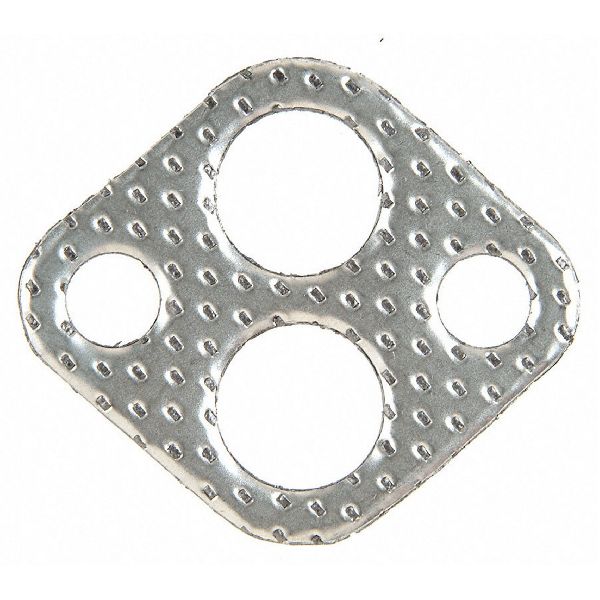
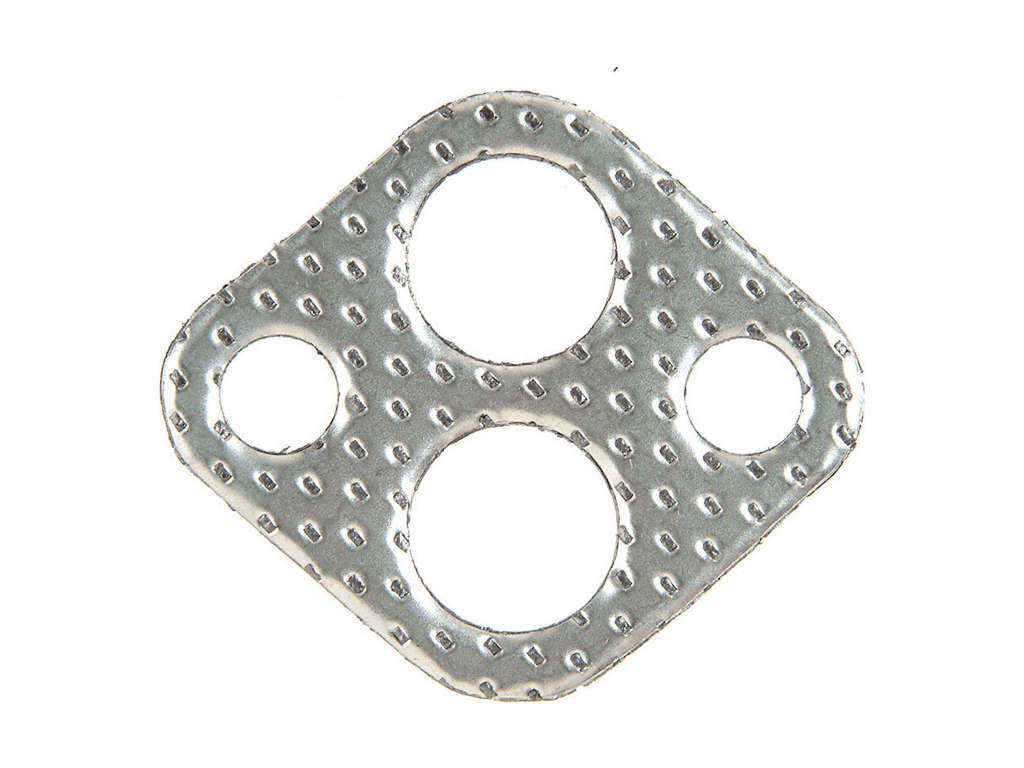
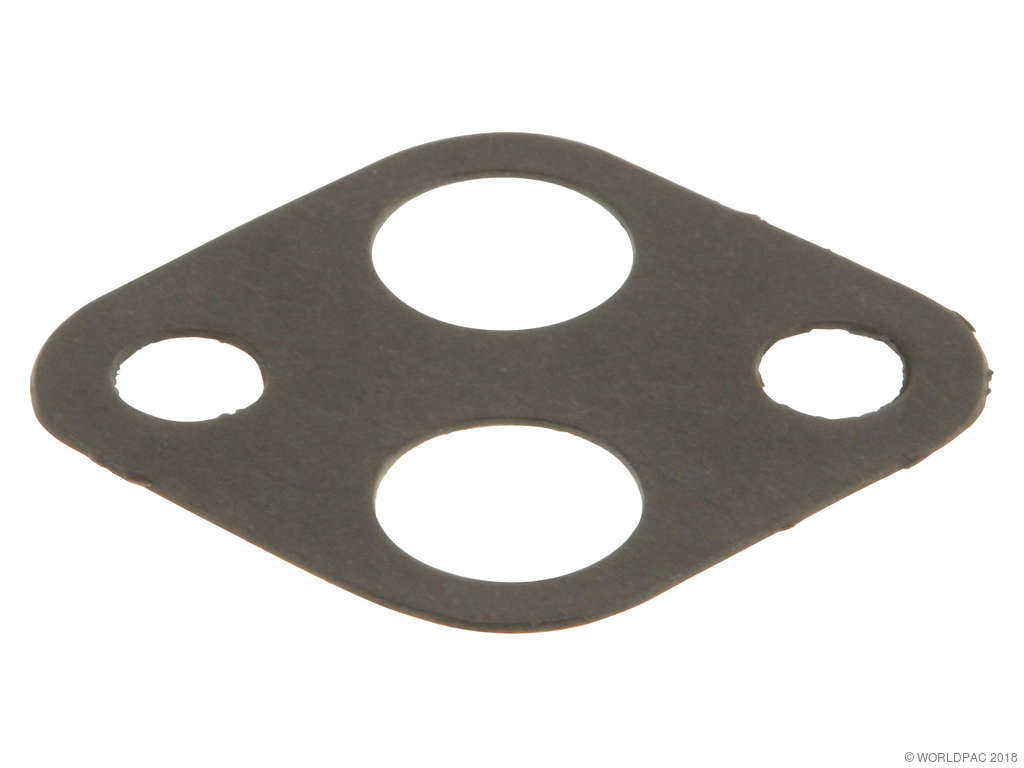
(OEM #14719AA040 or 14738AA060)— A new gasket must be used when replacing the EGR valve to prevent exhaust leaks. There may be multiple gaskets required depending on the connection point. Always verify the correct part number for your specific vehicle VIN.
Trusted brands: Subaru (OEM)
OEM price range: $10-$25
Aftermarket price range: $5-$15
Related Codes That Often Appear With This One
- P0409 — P0409 refers to the 'EGR Sensor 'A' Circuit'. The position sensor and control motor are integrated into one assembly on the EE20. A mechanical seizure (sticking) of the valve causes the motor to strain and burn out (P0403), while also causing the position sensor to report readings that don't match the ECM's commands (P0409). They almost always appear together in this failure scenario.
- P0406 — P0406 ('EGR Sensor 'A' Circuit High') can sometimes appear alongside P0403, further indicating a comprehensive electrical failure within the EGR valve assembly. One forum user reported seeing P0403 and P0406 together after multiple failed replacement attempts.
Platform-Specific Known Issues
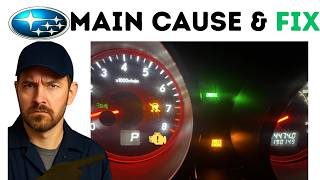
- On the Subaru EE20 diesel, failure of the EGR valve is a common issue that will illuminate the Check Engine Light, the solid Traction Control (VDC) warning light, and cause the cruise control light to flash, disabling both systems. This is a programmed ECU response to the engine fault. 🎬 Watch: Why your cruise control flashes when the engine light is on.
- The P0403 code is very frequently seen with P0409, indicating a comprehensive failure of the EGR valve unit rather than just a simple circuit problem. Attempting to fix with a non-OEM part often results in the codes returning quickly.
- Some owners opt for an 'EGR delete', which involves physically blanking off the valve and reprogramming the ECU to ignore the missing component. This is a common modification in the enthusiast community but may have legal and emissions testing implications.
Mechanic-Grade Diagnostic Values
- EGR Valve Connector - Power Supply Pin — expected: 12V (Battery Positive Voltage) with ignition on, engine off.. Failure: No voltage or significantly lower voltage indicates an open or short in the power supply circuit.
- EGR Valve Control Circuit to Ground Resistance — expected: Infinite resistance (OL) when disconnected from the PCM.. Failure: Any continuity to ground indicates a short circuit in the control wire.
- EGR Valve Internal Motor Resistance — expected: A specific Ohm value is not published in readily available public documents, but a healthy motor should show a consistent, low resistance. A Denso service manual for the EE20 engine lists a resistance of 2.10 ± 0.15 Ω for the Suction Control Valve, suggesting a similar low-resistance value would be expected for the EGR motor.. Failure: A reading of 0 ohms indicates a short, while an infinite (OL) reading indicates an open circuit. Both conditions condemn the valve.
Scan Tool Commands That Help
- Subaru Select Monitor (SSM) or equivalent high-level aftermarket scanner: Compulsory EGR learning — This function is critical after replacing the EGR valve. The ECU stores the closed-position sensor voltage of the old valve; if the new valve's closed voltage is different, the ECU will detect a fault (P0409) even if the part is new and functional. This command forces the ECU to learn the new valve's zero position.
- Any bidirectional OBD-II scanner: EGR Valve Actuation Test / Solenoid On/Off — Used during initial diagnosis to command the valve's internal motor to operate. Listening for an audible click or watching for a change in engine idle can quickly determine if the motor is completely dead (no click) or potentially stuck.
Wiring & Ground Locations
- EGR Valve Connector — On the EGR valve assembly, located at the top left side of the engine when viewed from the front.. This 5-pin connector is the sole electrical interface for the EGR valve. All power, ground, and control signals pass through it. Corrosion or damage here is a primary cause of P0403. Forum sources indicate the 5 pins likely correspond to: 12V Power, Ground, Position Sensor Signal, Motor +, and Motor -.
Real Owner Repair Stories
- subaruclub.co.uk user '___ian___' (2011 Subaru Outback 2.0D (EE20)) — P0409 code (often paired with P0403) and a hissing sound while driving.
❌ Tried (didn't work) Replacing the EGR valve with a new (non-OEM) part. The P0409 code returned after two engine starts.
✅ What actually fixed it The user identified that the ECU must perform a 'Compulsory EGR learning' procedure to adapt to the new valve's zero position voltage. The ECU increments a counter each time the engine stops if the new valve's resting voltage doesn't match the stored value, triggering the code after two failed checks. The ultimate fix is to use a Subaru Select Monitor (dealer tool) to run the learning procedure. Clearing the code with a generic scanner only temporarily resets the counter.
"I Checked Everything" — The Actual Cause
- While not a smoke test issue, a similar pattern exists for P0403 on this vehicle: a technician can replace the EGR valve, confirm all wiring is good, and find no faults, yet the code returns. The actual cause is that the ECU has not learned the new valve's closed position voltage. This requires a specific 'Compulsory EGR learning' procedure with a Subaru dealer tool (Select Monitor), a step often missed in standard repairs.
OEM Part Supersession History
14710-AA740→14710-AA741— Unspecified, but part revisions are typically made to improve reliability and address known failure points like the internal motor burnout or susceptibility to soot.
Heads up: The parts are interchangeable, but the newer 14710-AA741 is the recommended replacement. The original Denso part number corresponding to the Subaru PNs is 150100-005#.
Model Year Variations Within This Range
- 2009-2014: The EE20 engine in this period was primarily Euro 4 and later Euro 5 compliant. These versions use a single, high-pressure EGR system which is the subject of this P0403 fault. Later Subaru models (post-2014) with the Euro 6 version of the EE20 engine adopted a more complex dual-loop system with both high-pressure and low-pressure EGR valves, which would have different failure modes and diagnostics.
Diagnostic Flowchart
Used vs. New Parts: Buying Guide for This Vehicle
When a used part is the smart pick: For this specific EGR valve failure on the EE20 engine, buying a used part is almost never a smart choice. The failure is due to a combination of soot clogging and internal motor burnout, meaning a used part from a donor vehicle likely has significant wear and is prone to the same failure in short order.
What to inspect on the donor part:
- Not applicable, as used parts are not recommended.
OEM-only on this vehicle (don't cheap out):
- EGR Valve Assembly
Aftermarket brands forum-validated for this vehicle:
- While OEM (Subaru-branded, made by Denso) is most recommended by forum veterans, some owners have used valves from established OEM suppliers like Pierburg and Wahler with success. Nissens is another option mentioned. However, be aware that any replacement may require the dealer-level 'Compulsory EGR learning' procedure to be accepted by the ECU.
Brands owners have reported issues with on this vehicle:
- Unbranded, low-cost EGR valves from online marketplaces are frequently reported to fail quickly or be out-of-spec on arrival, causing the code to return immediately.
Real Owner Stories
Aggregated from forums and TSBs cited above. Mileages and costs reflect what owners reported in those sources.
2013 Subaru Outback 2.0L Diesel EE20
Symptoms: Three warning lights appeared on the dash: the engine light, electronic park brake light, and a flashing cruise control light. The scanner showed codes P0409, P0401, and P0403.
What fixed it: Replaced the EGR valve assembly. The owner discovered the spring inside the old unit was broken. All error lights and codes went away on their own after installing the new part.
Source hint: uk.subaruownersclub.com - EGR valve 2013 2lt P0409
Subaru with EE20 Diesel Engine
Symptoms: EGR valve seized due to heavy soot buildup, which caused the internal electric motor to burn out, triggering codes P0409 and P0403.
What fixed it: The entire EGR valve assembly was replaced, which is the standard fix for this failure mode.
Source hint: subaruclub.co.uk - 'P0409, seized EGR valve – Fixed'
Related OBD-II Codes
Frequently Asked Questions
Why did my Check Engine Light, Traction Control (VDC) light, and flashing cruise control light all come on at once with code P0403?
My scanner shows both P0403 and P0409. What does this combination mean for my Outback?
Can I just clean the EGR valve to fix a P0403 code on my 2.0L diesel?
What is an 'EGR delete' and is it a recommended fix for this problem?
After replacing the EGR valve, is there a special relearn procedure required?
Does this P0403 EGR valve issue affect other Subarus with the same diesel engine?
Helpful Videos
We Have This Part in Stock


The information in this article is provided for general reference and educational purposes only. Vehicle specifications, procedures, and part compatibility can vary by production date, trim level, and region. Always consult your vehicle's factory service manual and verify part numbers before purchasing or performing repairs. Safety-critical components such as airbags, seat belts, and braking systems should be installed by a qualified professional.
- Subaru Outback:
- 🧭 Diagnostic Flowchart
- 🎬 Helpful Videos
- 🛍️ Shop This Part
- What's Unique About the 2009-2014 Subaru Outback
- Symptoms You May Notice
- Most Likely Causes
- Rare But Worth Checking
- Diagnosis Steps
- Parts You'll Likely Need
- Related Codes That Often Appear With This One
- Platform-Specific Known Issues
- Mechanic-Grade Diagnostic Values
- Scan Tool Commands That Help
- Wiring & Ground Locations
- Real Owner Repair Stories
- "I Checked Everything" — The Actual Cause
- OEM Part Supersession History
- Model Year Variations Within This Range
- Used vs. New Parts: Buying Guide for This Vehicle
- Real Owner Stories
- 2013 Subaru Outback 2.0L Diesel EE20
- Subaru with EE20 Diesel Engine
- Related OBD-II Codes
- Frequently Asked Questions
- 🎟️ Get 5% Off