

P0404 on 2005-2012 Ford Escape 3.0L V6: EGR Performance Causes and Fixes
On the 3.0L V6 Ford Escape, code P0404 is almost always caused by a sticking EGR valve due to carbon buildup. The most common fix is replacing the EGR valve and thoroughly cleaning the related exhaust passages in the intake manifold. Expect to pay $150-$250 for a new valve. Be prepared for a difficult repair due to a frequently seized exhaust tube nut.
- P0404 on your Escape's 3.0L V6 points to the EGR valve not moving as commanded, usually due to it being stuck with carbon or having a failed internal sensor.
- The most likely fix is replacing the EGR valve.
- Crucially, you MUST clean the carbon buildup from the passages in the intake manifold when you replace the valve, or the code will likely return.
- Be prepared for a difficult repair, as the large nut connecting the exhaust pipe to the valve is often seized and hard to access.
- A rough idle that smooths out when you unplug the EGR valve's vacuum line (on older models) or that gets worse when commanded open with a scan tool can help confirm the diagnosis.
What's Unique About the 2005-2012 Ford Escape
For the Duratec 3.0L V6 in this era of Escape and its platform mates (Mercury Mariner, Mazda Tribute), the EGR system is highly prone to significant carbon buildup. This not only causes the EGR valve's pintle to stick, triggering the P0404 performance code, but also completely clogs the small passages leading into the intake manifold. Many owners replace the valve only to have the code return because these passages were not thoroughly cleaned out with brushes and solvents. The most challenging part of the repair is often breaking free the large nut connecting the exhaust tube to the EGR valve, which frequently seizes from years of heat cycles and rust.
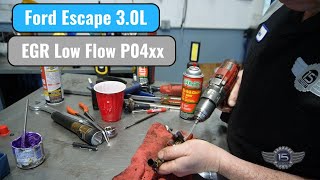
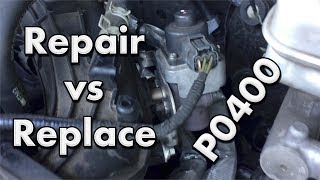
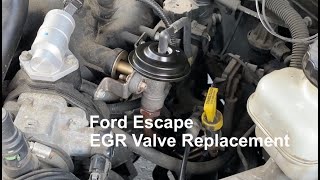
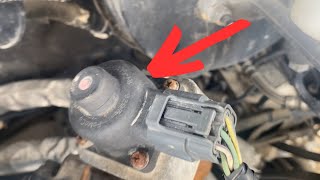
Generation note: This range covers two generations of the Ford Escape: the late first generation (2005-2007) 🎬 See this 2001-2007 Escape EGR replacement walkthrough and the second generation (2008-2012). 🎬 Watch: 2008-2012 Escape EGR location and replacement guide The 3.0L V6 and the general design of the EGR system are similar across these years, but always verify part numbers for your specific year before ordering as minor variations exist.
Symptoms You May Notice
- Check Engine Light is on
- Rough or erratic idle, sometimes stalling, especially when warm at a stop
- Engine hesitation or stumbling during acceleration
- Pinging or knocking sounds from the engine, particularly when accelerating or going up hills
- Reduced fuel economy
- Failure to pass an emissions/smog test
- Replacing the EGR valve without cleaning the clogged intake manifold passages. This is a very common reason for the code to return shortly after the repair, often with a P0401 (Insufficient Flow) code. 🎬 Watch: How to diagnose and clear low flow codes
Most Likely Causes
- Faulty or Sticking EGR Valve 🔴 High Probability → Shop Exhaust Gas Recirculation (EGR) Valve Carbon deposits from exhaust gas accumulate on the valve's pintle and seat, restricting its movement and causing it to stick open, closed, or in between. The internal potentiometer sensor can also wear out, sending incorrect position data to the PCM even if the valve itself moves.
How to confirm: With the engine idling, use a scan tool to command the EGR valve to open. The engine should stumble or stall. If there is no change in idle, the valve is likely stuck closed or a passage is blocked. You can also remove the valve for visual inspection; it should be free of heavy carbon and the internal spring should move smoothly. A key indicator of a failed position sensor is when scan tool data shows the valve position at a high percentage (e.g., 90-100%) when it is commanded to be at 0% at idle.
Typical fix: Replace the EGR valve. Cleaning is sometimes possible with solvents but is often a temporary fix if the internal sensor or mechanism is worn, which is a common failure mode.
Est. part cost: $150-$250 - Clogged EGR Passages 🟡 Medium Probability The same carbon that clogs the valve also builds up in the tube and, more critically, the small ports where exhaust gas enters the intake manifold. These ports are small and easily blocked.
How to confirm: When the EGR valve is removed, inspect the mounting port and the corresponding passages in the intake manifold. Use a small brush, pick, or even a drill bit (turned by hand) to see if they are blocked with hard carbon deposits. Often the blockage is not visible until you start digging into the ports.
Typical fix: Thoroughly clean the EGR passages in the intake manifold and the connecting tube using carburetor cleaner, stiff brushes (like gun cleaning brushes), and picks. This should be done whenever the EGR valve is replaced to prevent the code from returning.
Est. part cost: $5-$15 (for cleaning supplies) - Damaged Wiring or Connector ⚪ Low Probability The wiring harness to the EGR valve is located in a high-heat area and is subject to engine vibration. This can cause wires to become brittle and break internally, often right at the connector.
How to confirm: Visually inspect the electrical connector and wiring going to the EGR valve for any signs of melting, corrosion, or broken wires. Gently tug on each wire at the connector to ensure it's secure; a broken wire may stretch or pull out.
Typical fix: Repair the broken wire or replace the pigtail connector. The pigtail is available as a separate part (e.g., Motorcraft WPT-119).
Est. part cost: $15-$40
Diagnosis Steps
- Connect an OBD-II scanner and verify that P0404 is the primary code. Note any other codes present, especially P0401, P0402, or P0405.
- Using the scanner's live data, observe the 'EGR_CMD' (commanded percentage) and 'EGR_PCT' or 'EGR_VP' (actual position) PIDs at idle. At idle, EGR_CMD should be 0%. If EGR_PCT shows a high value (e.g., >20%), the valve is likely stuck open or the sensor has failed.
- With the engine at idle, use the scanner's bidirectional controls to command the EGR valve open in increments. Listen for a change in idle quality. The engine should run rough or stall; if it doesn't, a blockage or failed valve is likely.
- Allow the engine to cool completely. Soak the large EGR tube nut with a quality penetrating oil (like PB Blaster or Kroil) for an extended period. This is often the hardest part of the job and may require a large wrench (e.g., 1-1/16" or adjustable) and significant force.
- Remove the two 10mm bolts holding the EGR valve to the intake adapter. Remove the valve.
- Inspect the valve and the intake passages for carbon buildup. If passages are clogged, this is a key part of the problem.
- Clean the intake passages thoroughly with brushes, picks, and solvent. Ensure the passages are completely clear all the way through.
- Install a new EGR valve with a new gasket. It is generally recommended to replace rather than clean the old valve due to the high rate of internal sensor failure.
- Reconnect the exhaust tube, mounting bolts, and electrical connector. Ensure the large tube nut is tight to prevent exhaust leaks.
- Clear the trouble codes with the scanner and perform a test drive, ensuring the vehicle reaches operating temperature and is driven at various speeds to allow the EGR monitor to run.
Parts You'll Likely Need
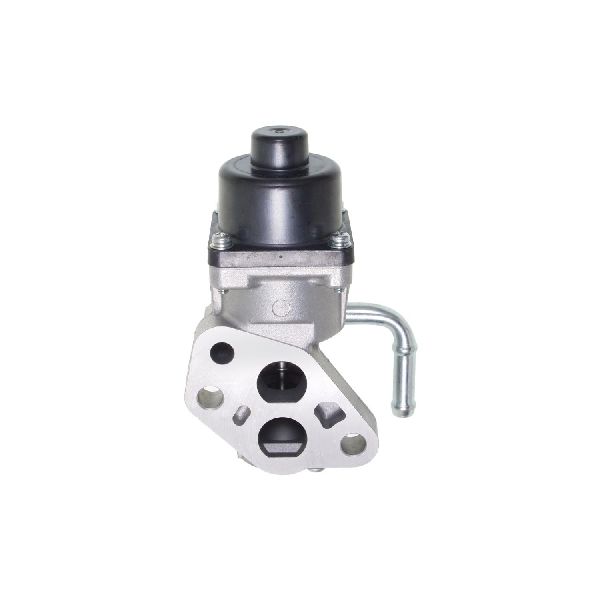
- Exhaust Gas Recirculation (EGR) Valve
(OEM #7L5Z9D475B (Motorcraft CX2067))— This is the component that fails most often, either from carbon buildup causing it to stick or from internal sensor failure.
Trusted brands: Motorcraft, Standard Motor Products (SMP), Delphi
OEM price range: $200-$300
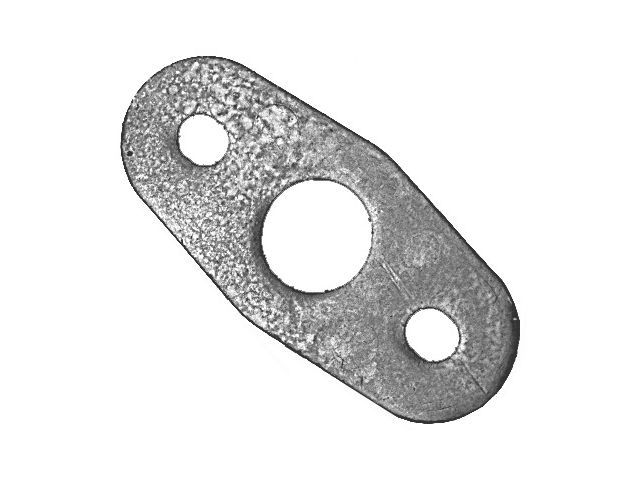
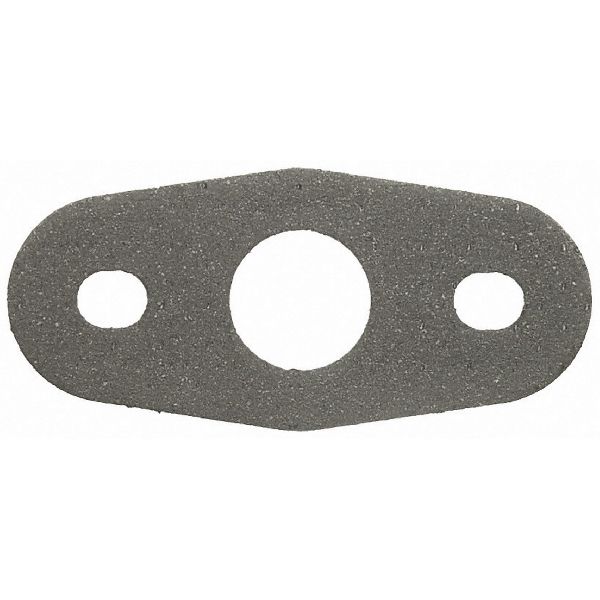
Aftermarket price range: $150-$250 - EGR Valve Gasket — A new gasket is required to ensure a proper seal when replacing the EGR valve. Most new valves include one.
OEM price range: $5-$10
Aftermarket price range: $2-$5 - EGR Valve Connector Pigtail
(OEM #WPT-119 / 3U2Z-14S411-JZA)— If the wiring is found to be broken at the connector during diagnosis, this part is needed to perform a lasting repair.
Trusted brands: Motorcraft, Dorman
OEM price range: $25-$40
Aftermarket price range: $15-$25
Related Codes That Often Appear With This One
- P0401 — P0401 (EGR Flow Insufficient) can appear if the valve is stuck closed or passages are blocked, which are root causes of P0404.
- P0402 — P0402 (EGR Flow Excessive) can appear if the valve is stuck open, which is a common failure mode that also triggers P0404.
- P0405 — P0405 (EGR Sensor 'A' Circuit Low) can appear alongside P0404 if the internal position sensor has an electrical failure.
Platform-Specific Known Issues
- The large nut connecting the EGR tube to the valve is notoriously difficult to remove due to rust and seizing from heat cycles. Generous use of penetrating oil and a proper-fitting large wrench are essential. Some mechanics resort to cutting the tube and replacing it if the nut will not break free.
- Access to the two 10mm bolts holding the valve to the intake can be tight, especially the rear bolt. A combination of extensions and swivels may be necessary.
- Across the Ford lineup, EGR issues often present as a rough condition with the Malfunction Indicator Light on; NHTSA ODI #10573470 notes that P0404 frequently appears alongside a range of EGR-related codes (P0401 through P0406) when the emission control system fails.
Mechanic-Grade Diagnostic Values
- EGR Position Sensor (EVP) Resistance — expected: Between 5500 ohms and 100 ohms when moving the valve from closed to open.. Failure: Readings outside this range, or a non-smooth, glitchy change in resistance indicates a faulty sensor.
- EGR Position Sensor (EVP) Reference Voltage — expected: ~5.0 Volts on the reference wire (Pin 1, GRN) with key on, engine off.. Failure: Significantly lower or no voltage points to a wiring or PCM issue.
- EGR Position Sensor (EVP) Signal Voltage — expected: A smooth voltage change as the valve is commanded to move. The exact voltage range varies but should not be static or show sudden drops/spikes.. Failure: No change in voltage when the valve is commanded open, or erratic voltage readings.
Scan Tool Commands That Help
- FORScan: Reset EGR Valve Adaptions — After replacing the EGR valve, this service function should be run to make the PCM relearn the full open and closed positions of the new valve. This can prevent performance issues or a recurring P0404 code.
- FORScan / Ford IDS: EGR Valve Commanded State / Output State Check — During diagnosis, this bidirectional control allows the technician to command the EGR valve open and closed to check for physical response (engine stumbling) and to monitor sensor feedback PIDs in real-time.
Wiring & Ground Locations
- E-15 / C1688 (EGR Valve Connector) — At the EGR valve itself, located at the rear of the engine, behind the intake manifold.. This is the main 8-pin connector for the EGR valve. Damage here from heat or vibration is a common cause of P0404. Pin 1 (GRN) is 5V reference, Pin 5 (LT GRN/BLK) is low reference/ground, and Pins 6, 7, and 8 are solenoid controls.
- G101 — For the 3.0L engine, this ground is located near the battery.. This is a primary engine ground. A poor connection here can cause various sensor and module issues, including erratic readings from the EGR position sensor, although it would likely cause multiple other codes as well.
- G104 — Located at the left front corner of the engine compartment, near the battery junction box.. Another critical chassis and engine ground point. Verifying it is clean and tight is a fundamental step in diagnosing any electrical fault code like P0404.
Real Owner Repair Stories
- Reddit user on r/fordescape (2005 Ford Escape 3.0L AWD) — Loss of power ('no umph') despite engine RPMs increasing.
❌ Tried (didn't work) Replacing the EGR valve initially.
✅ What actually fixed it The new EGR valve was immediately damaged because all three catalytic converters were completely clogged. The extreme backpressure from the clogged cats was the root cause of the power loss and ultimately destroyed the new EGR valve. Replacing all catalytic converters resolved the issue. - Ford Owner Complaint (NHTSA ODI #11065690) — An owner reported that even after a full inspection, a dealership had difficulty resolving a cluster of codes including P0401, P0404, and P1335, highlighting how elusive these electrical and EGR faults can be.
Model Year Variations Within This Range
- 2005-2008 vs 2009-2012: While the 3.0L engine and general EGR design are consistent, part numbers for the EGR valve can differ between the first generation (ending 2007) and the second generation (starting 2008). For example, some aftermarket parts are listed for 2004-2008, while others are for 2009-2012. Always confirm the part number with your vehicle's specific year and VIN before purchasing.
Diagnostic Flowchart
Other Known Issues on This Vehicle
Issues unrelated to this code that are worth knowing about as an owner of this generation:
- 6F35 Transmission Failure 🔴 High — Very common, especially on 2009-2012 models. Symptoms include harsh shifting, slipping, and delayed engagement, often appearing before 100,000 miles. (Ref: Subject of multiple class-action lawsuits, but no widespread recall was issued by Ford.)
- Rear Shock Tower Rust 🔴 High — Extremely common, especially in regions that use road salt. The passenger-side rear shock tower rusts completely through, causing the shock to detach. This is a major safety issue. (Ref: No recall issued, but aftermarket repair kits are widely available due to the prevalence of the problem.)
- Electronic Throttle Body Failure 🟠 Medium — Common across all engine types. The throttle body fails internally, causing the vehicle to go into 'limp mode' with a wrench light on the dash. Codes like P2111 are common. (Ref: NHTSA investigation PE13003 was opened for this issue, leading to some customer satisfaction programs but not a full recall for all years.)
- Alternator Failure and Difficult Replacement 🟠 Medium — The alternator is prone to failure and is located in a very difficult-to-access position on the 3.0L V6, requiring removal of the passenger side axle shaft for replacement.
- Power Steering Torque Sensor Failure 🔴 High — Common on 2008-2011 models with electronic power steering. The torque sensor in the steering column fails, causing a sudden loss of power assist. (Ref: Recall 14S05 / NHTSA 14V284 was issued to update software, but many owners still experience hardware failure requiring sensor replacement.)
Used vs. New Parts: Buying Guide for This Vehicle
When a used part is the smart pick: For this specific repair, a used part is almost never a smart choice. The primary failure modes are internal carbon buildup and electronic sensor wear, both of which are related to age and use. A used EGR valve from a junkyard is likely to have similar levels of wear and carbon as the part being replaced, offering no long-term reliability.
What to inspect on the donor part:
- Not applicable, as used purchase is not recommended.
Aftermarket brands forum-validated for this vehicle:
- Motorcraft (OEM)
- Standard Motor Products (SMP)
- Delphi
- Walker
Brands owners have reported issues with on this vehicle:
- Avoid unbranded, 'white box' parts from online marketplaces. While significantly cheaper, they have a high rate of premature failure and may not perform to OEM specifications, causing the P0404 code to return quickly.
Real Owner Stories
Aggregated from forums and TSBs cited above. Mileages and costs reflect what owners reported in those sources.
2003 Ford Escape 3.0L V6
Symptoms: Classic symptoms of a clogged EGR system, including hesitation and misfire-like feelings when driving uphill.
What fixed it: Cleaning the clogged intake passages, as the diagnosis confirmed blockages even when basic tests seemed to pass.
Source hint: Ford-Forums.com thread titled '2003 Ford escape P0401 - Ford-Forums.com'
2005-2012 Ford Escape 3.0L V6
Symptoms: Difficulty removing the seized EGR tube nut during a P0404 repair.
What fixed it: Breaking the seized EGR tube nut and thoroughly cleaning the intake ports to prevent the code from returning.
Source hint: Escape-City.com thread titled 'EGR Valve Replacement Experience'
Related OBD-II Codes
Frequently Asked Questions
Can I just clean the EGR valve on my 3.0L Duratec V6 to save money?
Why is the large nut on the EGR tube so difficult to remove on the Ford Escape?
Are there specific tools needed for the EGR bolts on the 2005-2012 Escape V6?
Does the Mercury Mariner or Mazda Tribute have this same P0404 issue?
What should I check besides the valve itself to ensure the P0404 doesn't return?
Is there a specific replacement wiring part if my EGR connector is damaged?
Helpful Videos
We Have This Part in Stock


The information in this article is provided for general reference and educational purposes only. Vehicle specifications, procedures, and part compatibility can vary by production date, trim level, and region. Always consult your vehicle's factory service manual and verify part numbers before purchasing or performing repairs. Safety-critical components such as airbags, seat belts, and braking systems should be installed by a qualified professional.
- Ford Escape:
- 🧭 Diagnostic Flowchart
- 🎬 Helpful Videos
- 🛍️ Shop This Part
- What's Unique About the 2005-2012 Ford Escape
- Symptoms You May Notice
- Most Likely Causes
- Diagnosis Steps
- Parts You'll Likely Need
- Related Codes That Often Appear With This One
- Platform-Specific Known Issues
- Mechanic-Grade Diagnostic Values
- Scan Tool Commands That Help
- Wiring & Ground Locations
- Real Owner Repair Stories
- Model Year Variations Within This Range
- Other Known Issues on This Vehicle
- Used vs. New Parts: Buying Guide for This Vehicle
- Real Owner Stories
- 2003 Ford Escape 3.0L V6
- 2005-2012 Ford Escape 3.0L V6
- Related OBD-II Codes
- Frequently Asked Questions
- 🎟️ Get 5% Off