

P0405 on 2003-2007 Honda Accord: EGR Circuit Low Causes and Fixes
On a 2003-2007 Honda Accord, P0405 almost always points to a faulty EGR valve assembly. The position sensor is built into the valve, making replacement the most common fix. Cleaning clogged EGR passages is also highly recommended, especially on 4-cylinder models where it is a frequent and compounding issue.
- P0405 on this Accord almost always means you need a new EGR valve because the sensor is built-in.
- Before replacing the valve, check its electrical connector for obvious damage.
- Carbon buildup is a secondary, but related, problem. Always inspect and clean the EGR passages when replacing the valve, especially on the 4-cylinder engine.
- The job is DIY-friendly, requiring basic hand tools and access to the top of the engine.
- Make sure to get the correct EGR valve for your engine (4-cylinder vs. V6) as they are different parts.
What's Unique About the 2003-2007 Honda Accord
For the 7th generation Honda Accord, the EGR position sensor is integrated directly into the EGR valve assembly. This design choice means that a sensor-specific code like P0405 very frequently condemns the entire EGR valve, not just a separate sensor. Furthermore, the 4-cylinder (K24) engine is notoriously prone to severe carbon buildup that clogs the intake manifold's EGR passages, often requiring a separate cleaning procedure. The V6 (J30) is more susceptible to the electronic failure of the valve itself, though clogging can still occur.
Symptoms You May Notice
- Check Engine Light is on
- Rough or erratic idle
- Engine hesitation or stumbling during acceleration
- Reduced fuel economy
- Engine stalling in some cases
- Failure to pass an emissions inspection
- Engine pinging or knocking
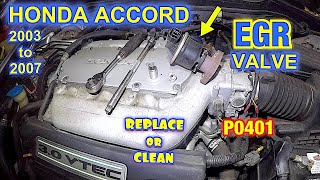
- Replacing oxygen (O2) sensors or the MAP sensor before properly diagnosing the EGR system. While EGR faults can affect the air-fuel mixture, P0405 specifically points to the EGR sensor circuit. 🎬 Watch this video to understand how to fix the P0405 circuit code.
- Replacing the EGR valve on a 4-cylinder model without cleaning the completely clogged intake manifold passages, leading to the code returning.
Most Likely Causes
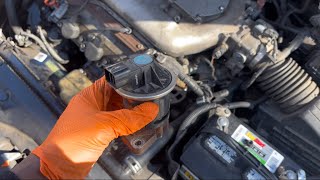
- Faulty EGR Valve Assembly 🔴 High Probability → Shop Exhaust Gas Recirculation (EGR) Valve The position sensor is integrated into the EGR valve. Internal failure of the sensor's electronics or mechanical wear is extremely common, making the entire valve assembly the point of failure. Aftermarket valves have a high failure rate according to owner forums, so OEM or a reputable brand like Standard Motor Products is recommended.
How to confirm: After confirming the wiring is intact, the most definitive test is to replace the EGR valve. A scan tool can monitor the EGR position sensor voltage (PID); if it's stuck low (typically <0.5V) and doesn't change when the valve is commanded, the valve assembly is bad.
Typical fix: Replace the entire EGR valve assembly and the corresponding gasket.
Est. part cost: $60-$220 - Clogged EGR Passages or Valve 🟡 Medium Probability The K24 4-cylinder engine is especially prone to carbon buildup completely blocking the EGR distribution passages in the intake manifold. Short-trip driving can accelerate this process.
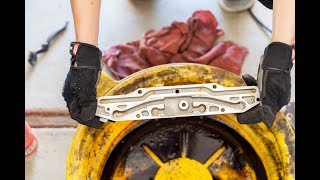
How to confirm: Remove the EGR valve and inspect it and the port on the intake manifold for heavy carbon deposits. On 4-cylinder models, it's essential to remove the EGR passage cover plate on the side of the intake manifold to inspect the individual runner ports. If they are clogged, they must be cleaned. 🎬 Watch EricTheCarGuy demonstrate how to clean these specific EGR passages.
Typical fix: Remove the EGR valve and/or intake manifold components to manually clean out carbon buildup with brushes, picks, and carburetor cleaner. A shop vacuum can help remove loose debris.
Est. part cost: $5-$20 (for cleaner and gaskets) - Damaged Wiring or Corroded Connector ⚪ Low Probability The wiring harness is exposed to high heat and vibration in the engine bay, which can cause wires to become brittle or connectors to fail over time. A short to ground on the signal wire is a common cause of a 'Circuit Low' code.
How to confirm: Visually inspect the EGR valve's electrical connector and wiring for any signs of damage, melting, or corrosion. Use a multimeter to check for 5V reference voltage, a good ground, and continuity on the signal wire back to the PCM.
Typical fix: Repair the damaged section of wiring or clean/replace the electrical connector.
Est. part cost: $5-$30
Rare But Worth Checking
- Faulty Powertrain Control Module (PCM): This is very rare. The PCM should only be considered after all other possibilities, including the valve and wiring, have been exhaustively tested and ruled out.
Diagnosis Steps
- Read the code with an OBD-II scanner and check for any other pending or stored codes.
- Visually inspect the EGR valve's electrical connector for damage, corrosion, or a loose fit. Check the wiring harness for any obvious signs of fraying or heat damage.
- With the key on and engine off, use a multimeter to test the connector. You should find a 5-volt reference wire, a ground wire, and a signal wire. Check for voltage on the reference and signal wires and for continuity to ground on the ground wire.
- If using a capable scan tool, monitor the live data for the EGR Position Sensor PID. The voltage should be low (e.g., ~0.5-1.0V) at idle and should change when the engine RPM is raised and the PCM commands the valve to open.
- If the voltage is stuck very low (e.g., <0.2 V) and the wiring tests okay, the EGR valve assembly is almost certainly faulty.
- Remove the two 12mm nuts holding the EGR valve to the engine.
- Inspect the valve and the intake manifold ports for heavy carbon buildup.
- On 4-cylinder models, it is highly recommended to also remove the EGR passage plate on the intake manifold and clean the individual ports. This is a critical step.
- If the valve is faulty, replace it. If it is just clogged, clean it and the passages thoroughly before reinstalling. Always use a new gasket.
- Clear the code and perform a drive cycle to ensure the issue is resolved.
Parts You'll Likely Need
- EGR Valve (4-Cylinder)
(OEM #18011-RAA-A00)— This is the most common failure point for code P0405, as the position sensor is integrated into the valve.
Trusted brands: Honda (OEM), Standard Motor Products, Dorman, SKP
OEM price range: $150-$220
Aftermarket price range: $60-$120 - EGR Valve (V6)
(OEM #18011-RCA-A00)— This is the most common failure point for code P0405 on the V6 engine. This part number supersedes older versions like 18011-P8A-A00 and 18011-P8E-A00.
Trusted brands: Honda (OEM), Standard Motor Products, Dorman, Walker
OEM price range: $160-$230
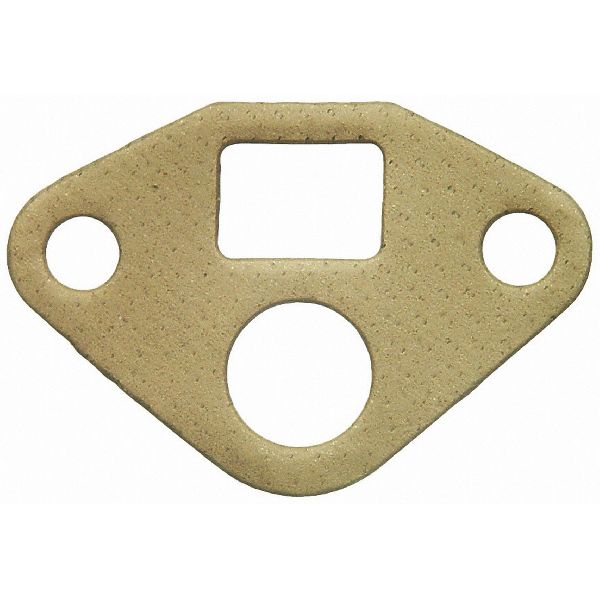
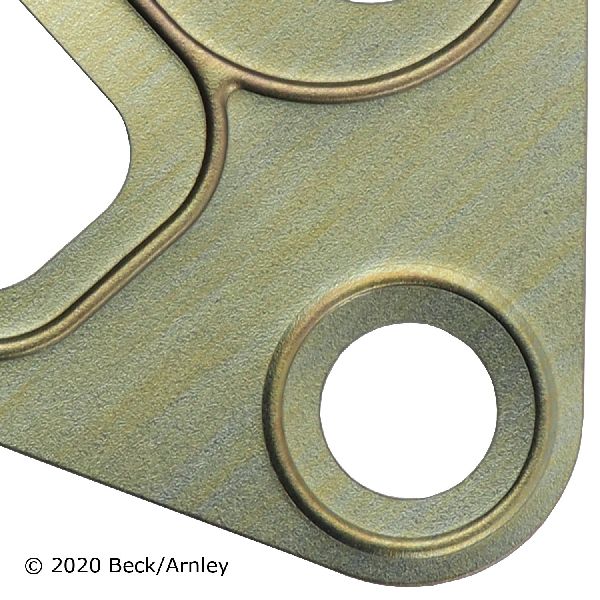
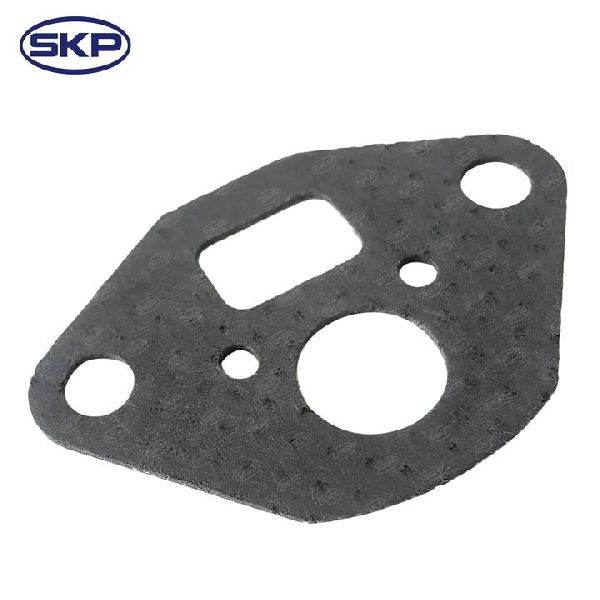
Aftermarket price range: $70-$150 - EGR Valve Gasket
(OEM #18715-PB2-000)— A new gasket is required whenever the EGR valve is removed for cleaning or replacement to prevent exhaust leaks.
Trusted brands: Honda (OEM), Fel-Pro
OEM price range: $5-$10
Aftermarket price range: $2-$5 - EGR Passage Gasket (4-Cylinder)
(OEM #17146-RAA-A01)— This gasket should be replaced if you remove the EGR passage cover on the intake manifold for cleaning, which is a common and necessary related repair on the K24 engine.
Trusted brands: Honda (OEM), Fel-Pro
OEM price range: $10-$15
Aftermarket price range: $5-$10
Related Codes That Often Appear With This One
- P0401 — Stands for 'EGR Flow Insufficient.' This code often appears alongside P0405 if the EGR passages are severely clogged with carbon, preventing gas from flowing even if the valve tries to open.
- P0404 — Stands for 'EGR Circuit Range/Performance.' This indicates the valve's position is not where the PCM expects it to be, which can be caused by sticking or intermittent electrical faults that also trigger P0405.
- P0406 — Stands for 'EGR Sensor A Circuit High.' This is the opposite of P0405 and can sometimes appear intermittently if there is a short or wiring issue causing the voltage to fluctuate wildly.
Platform-Specific Known Issues
- 4-Cylinder (K24): Mandatory Intake Manifold Passage Cleaning: On the 2.4L K24 engine, P0405 is very frequently accompanied by severely clogged EGR passages located under a cover plate on the intake manifold. Many owners report that simply replacing the EGR valve does not fix the issue long-term. The passages must be manually cleaned with brushes and solvent to restore proper flow. Failing to do this often results in other EGR codes like P0401 (Insufficient Flow) appearing later.
- V6 (J30): Valve Electronics More Common Failure Point: While the V6 engine's EGR passages can get dirty, they are less prone to complete blockage than the 4-cylinder's. For the J30 engine, the P0405 code is more commonly a result of the internal electronics of the EGR position sensor failing within the valve assembly itself. The repair is more straightforward, typically just involving the replacement of the EGR valve assembly.
Mechanic-Grade Diagnostic Values
- EGR Position Sensor Voltage (Scan Tool PID) — expected: ~0.5V to 1.0V with valve closed (idle), rising towards 5.0V as the valve is commanded open.. Failure: A reading stuck below 0.2V - 0.5V indicates a 'Circuit Low' fault.
- EGR Valve Connector - 5V Reference Voltage — expected: Approximately 5.0V on the Yellow/Blue wire (Pin 5) with key on, engine off.. Failure: Significantly lower or no voltage indicates a problem with the PCM or the wiring from the PCM.
- EGR Valve Connector - Ground — expected: Continuity to ground (near 0 ohms) on the Brown/White wire (Pin 1).. Failure: High resistance or an open circuit indicates a bad ground connection, likely affecting the sensor reading.
- EGR Passage Bolts Torque Spec (4-Cylinder K24) — expected: 8.7 ft-lbs. Failure: N/A - This is an installation specification.
Scan Tool Commands That Help
- Honda HDS (or equivalent professional scanner): EGR Valve Test / Actuator Test — This bidirectional command allows the technician to manually open and close the EGR valve while monitoring the position sensor voltage PID. If the command is sent but the voltage does not change (and the engine idle doesn't roughen), it strongly suggests a failed EGR valve assembly (either stuck mechanically or electrically dead).
Wiring & Ground Locations
- EGR Valve Connector (5-Pin) — Plugged directly into the EGR valve assembly, located on the intake manifold.. This is the primary point for electrical testing. A P0405 is a circuit code, so testing for power, ground, and signal at this connector is the first step after a visual inspection. The pins are typically: Pin 1 (BRN/WHT) - Sensor Ground, Pin 2 (RED/WHT) - Motor Control, Pin 3 (YEL/BLK) - Motor Control, Pin 4 (GRN/BLK) - Signal Output, Pin 5 (YEL/BLU) - 5V Reference.
- G101 — On the thermostat housing, below the intake tube on the driver's side of the engine bay. It is a common grounding point for multiple engine sensors.. A corroded or loose G101 ground can cause erratic voltage readings for many sensors, including the EGR position sensor. If you have multiple, seemingly unrelated sensor codes along with P0405, checking the integrity of this ground point is a critical diagnostic step.
Real Owner Repair Stories
- v6performance.net forum user (2003 Honda Accord V6 Coupe) — Check Engine Light with code P0405.
❌ Tried (didn't work) The user went straight to replacement based on common knowledge for this code.
✅ What actually fixed it Replacing the EGR valve assembly with a new OEM part and clearing the code resolved the issue permanently. - driveaccord.net forum user (2004 Honda Accord 4-cylinder (K24)) — Check Engine Light with P0405 and rough idle.
❌ Tried (didn't work) Initially considered just replacing the valve.
✅ What actually fixed it The user was advised by others to perform a full EGR passage cleaning on the intake manifold in addition to replacing the EGR valve. The combination of cleaning the heavily carboned passages and installing a new valve fixed the code and the idle issue.
OEM Part Supersession History
18011-P8A-A00, 18011-P8C-A00, 18011-PGE-A00, 18011-PXK-020, 18011-PXK-030→18011-RCA-A00— Part consolidation and potential design updates over the years for the V6 engine family.
Heads up: All previous part numbers are replaced by 18011-RCA-A00 for service. Using an older version from a different V6 application may lead to issues.
Model Year Variations Within This Range
- 2006-2007: The 2006-2007 models received a mid-cycle refresh which included the introduction of Drive-By-Wire (DBW) throttle for all models. While the EGR valve part numbers and the P0405 fault logic remained largely the same, diagnostics involving the throttle body and idle control are different from the 2003-2005 cable-throttle models.
Diagnostic Flowchart
Other Known Issues on This Vehicle
Issues unrelated to this code that are worth knowing about as an owner of this generation:
- Automatic Transmission Failure (V6 Models) 🔴 High — Very common, especially in 2003-2004 models, often occurring between 80,000 and 150,000 miles. Can result in gear slippage or complete failure. (Ref: NHTSA Recall #04V176000 (for 2003-2004 models) was issued to improve fluid flow to 2nd gear to prevent heat buildup and failure.)
- Power Steering Hose Leak 🟠 Medium — Extremely common. The high-pressure power steering feed hose deteriorates, causing fluid to leak onto the subframe and exhaust components. (Ref: Honda TSB 07-005 addresses this issue, and a recall was issued for V6 models.)
- Excessive Oil Consumption (4-Cylinder K24) 🟠 Medium — Widespread issue, often starting after 100,000 miles. Can be caused by stuck oil control rings or a faulty PCV valve. Consumption can be a quart or more every 1,000-2,000 miles. (Ref: No recall, but replacing the PCV valve is a common first step recommended by owners.)
- V6 Timing Belt Service 🔴 High — This is a required maintenance item, not a failure. The timing belt, water pump, and tensioner must be replaced every 105,000 miles or 7 years, whichever comes first. Ignoring this can lead to catastrophic engine failure.
- Stereo / HVAC Backlight Failure 🟡 Low — Very common on 2003-2004 models. The circuit board for the radio and climate control display fails, causing the backlights to go out.
- Rear Brake Caliper Sticking 🟡 Low — Common for the rear calipers to seize or stick, leading to accelerated and uneven brake pad and rotor wear.
Used vs. New Parts: Buying Guide for This Vehicle
When a used part is the smart pick: A used OEM EGR valve from a low-mileage (under 80,000 miles) donor vehicle can be a cost-effective option, especially for the V6 where electronic failure is the main issue. However, it is still a gamble on an electronic part. It is generally not recommended for the 4-cylinder, as the labor to clean the passages is significant, and you don't want to have to do it twice.
Donor-vehicle mileage cap: roughly under 80000 miles for the part to have meaningful remaining life.
What to inspect on the donor part:
- Verify the donor vehicle's mileage.
- Inspect the electrical connector pins for any corrosion or damage.
- Check the valve's pintle for free movement if possible; it should not be seized with carbon.
- Ask for a short warranty period (e.g., 30 days) from the salvage yard.
OEM-only on this vehicle (don't cheap out):
- EGR Valve Assembly: While some aftermarket brands are acceptable, cheap, unbranded aftermarket EGR valves found on sites like eBay and Amazon have a very high failure rate according to forum discussions. Sticking to OEM or top-tier aftermarket is highly recommended to avoid repeat labor.
Aftermarket brands forum-validated for this vehicle:
- Standard Motor Products (SMP)
- Hitachi (Often the OEM manufacturer)
- Walker Products
Brands owners have reported issues with on this vehicle:
- Unbranded or 'white-box' parts with no reputation or warranty are frequently reported to fail quickly.
Real Owner Stories
Aggregated from forums and TSBs cited above. Mileages and costs reflect what owners reported in those sources.
2007 Honda Accord V6
Symptoms: The owner received a P0405 trouble code.
What fixed it: The issue was resolved by replacing the EGR valve with an OEM part.
Source hint: driveaccord.net thread titled 'p0405-egr-sensor-a-circuit-low.547189/'
2004 Honda Accord EX 4-cylinder
Symptoms: The owner experienced a P0405 code.
What fixed it: The advice given in the forum was to clean the EGR passages in the intake manifold in addition to checking or replacing the EGR valve itself, highlighting the common clogging issue on the K24 engine.
Source hint: Reddit r/MechanicAdvice thread titled '2004_honda_accord_ex_p0405_code/'
Honda Accord V6 (2003-2007)
Symptoms: A P0405 code was present, which forum members confirmed usually points directly to a bad EGR valve.
What fixed it: The standard and confirmed fix among owners was the replacement of the EGR valve assembly.
Source hint: v6performance.net thread titled 'p0405-egr-sensor-a-circuit-low-input.198369/'
Related OBD-II Codes
Frequently Asked Questions
On my 4-cylinder 2004 Accord, is just replacing the EGR valve enough to fix code P0405?
I have a V6 Accord with P0405. Is it more likely a clogged passage or a bad valve?
Does the brand of the replacement EGR valve matter for my Honda Accord?
My scan tool shows the EGR position sensor voltage is stuck at 0.1V. What does that indicate?
Are other Honda or Acura models known for this same P0405 issue?
What are the main symptoms I might notice with a P0405 code besides the Check Engine Light?
Helpful Videos
![How to Fix P0405 Engine Code in 3 Minutes [2 DIY Methods / Only $4.66]](https://img.youtube.com/vi/e6zMeEsRc14/mqdefault.jpg)
We Have This Part in Stock


The information in this article is provided for general reference and educational purposes only. Vehicle specifications, procedures, and part compatibility can vary by production date, trim level, and region. Always consult your vehicle's factory service manual and verify part numbers before purchasing or performing repairs. Safety-critical components such as airbags, seat belts, and braking systems should be installed by a qualified professional.
- Honda Accord:
- 🧭 Diagnostic Flowchart
- 🎬 Helpful Videos
- 🛍️ Shop This Part
- What's Unique About the 2003-2007 Honda Accord
- Symptoms You May Notice
- Most Likely Causes
- Rare But Worth Checking
- Diagnosis Steps
- Parts You'll Likely Need
- Related Codes That Often Appear With This One
- Platform-Specific Known Issues
- Mechanic-Grade Diagnostic Values
- Scan Tool Commands That Help
- Wiring & Ground Locations
- Real Owner Repair Stories
- OEM Part Supersession History
- Model Year Variations Within This Range
- Other Known Issues on This Vehicle
- Used vs. New Parts: Buying Guide for This Vehicle
- Real Owner Stories
- 2007 Honda Accord V6
- 2004 Honda Accord EX 4-cylinder
- Honda Accord V6 (2003-2007)
- Related OBD-II Codes
- Frequently Asked Questions
- 🎟️ Get 5% Off